
6 Days in the Azores: A Day-by-Day Itinerary
A 6-day Azores itinerary: four days on São Miguel (Sete Cidades, Lagoa do Fogo, Furnas, whales) and two on Pico, with prices, car hire and weather tips.
- 🗓️ Trip length
- 6 days
- ☀️ Best time
- May to October; April to May for migrating whales
- 💰 Daily spend
- EUR 15-90 (sights, tours and entry fees only; excl. car, stay, meals)
- ✅ Facts checked
- 1 November 2026
Get ready for lush green volcanic islands floating in the middle of the Atlantic. The Azores are nine Portuguese islands roughly a third of the way from Lisbon to North America, known for crater lakes, hot springs, hydrangea hedges, tea fields and some of the best whale watching in Europe. This feel-good six-day plan spends four days on São Miguel, the largest and best-connected island, and two days on Pico, home of Portugal’s highest mountain, a UNESCO-listed vineyard landscape and a whaling past turned whale-watching present.
The pace is moderate and easy to enjoy. Most days involve driving, a short or medium walk and one thermal bath or boat trip. Two honest warnings shape the whole plan: you really need a rental car, and the weather changes constantly. A crater lake that is hidden in cloud at 10 am can be perfectly clear at 2 pm, so the plan leaves room to swap days around.
6 days in the Azores at a glance
| Day | Island and area | Highlights |
|---|---|---|
| 1 | São Miguel: Ponta Delgada and Sete Cidades | City gates and old town, Vista do Rei and Boca do Inferno viewpoints, the twin lakes |
| 2 | São Miguel: centre and north coast | Lagoa do Fogo, Caldeira Velha hot springs, Gorreana tea plantation |
| 3 | São Miguel: Furnas | Lake caldeiras and cozido, Terra Nostra Park, Poça da Dona Beija in the evening |
| 4 | São Miguel, then fly to Pico | Morning whale watching from Ponta Delgada, afternoon flight to Pico |
| 5 | Pico: west and south | Criação Velha vineyards (UNESCO), Gruta das Torres lava tube, Lajes do Pico |
| 6 | Pico: the mountain or the coast | Climb Mount Pico in good weather, or a coastal and whaling-museum day; fly out |
One planning rule before you start: keep a flexible day. Days 1 and 2 are the most weather-sensitive (both depend on clear views of crater lakes). If the forecast is poor, swap one of them with Furnas (Day 3), which is enjoyable in light rain because the hot pools are the main event.
Day 1: Ponta Delgada and Sete Cidades
Morning
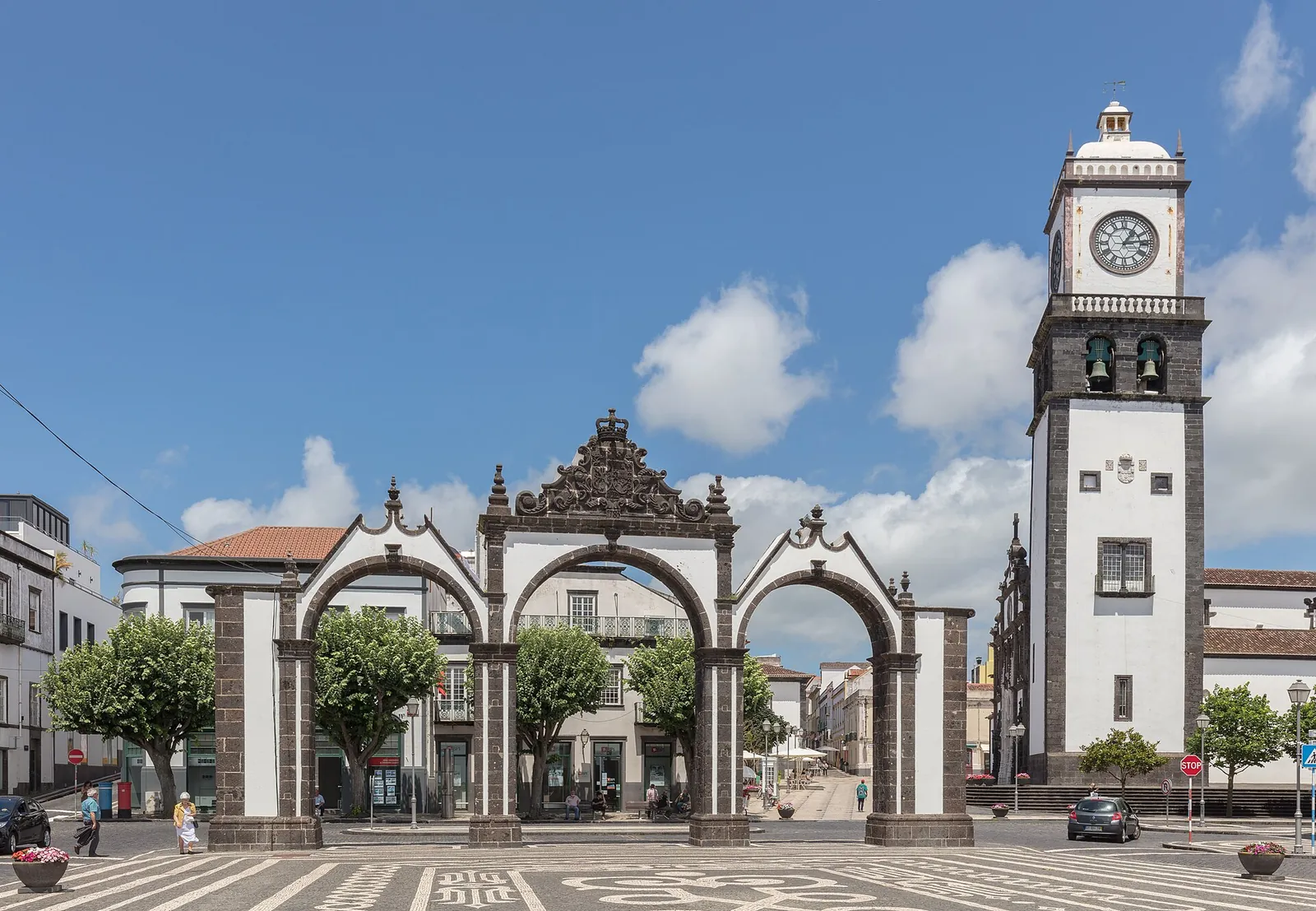
Welcome to the Azores! Most flights land at João Paulo II Airport in Ponta Delgada, a few minutes’ drive from the centre. Pick up your rental car and spend a relaxed first hour in town: the black-and-white Portas da Cidade (city gates), the church of São Sebastião behind them and the waterfront marina. Ponta Delgada is small, so an hour or two on foot covers the old centre.
Afternoon
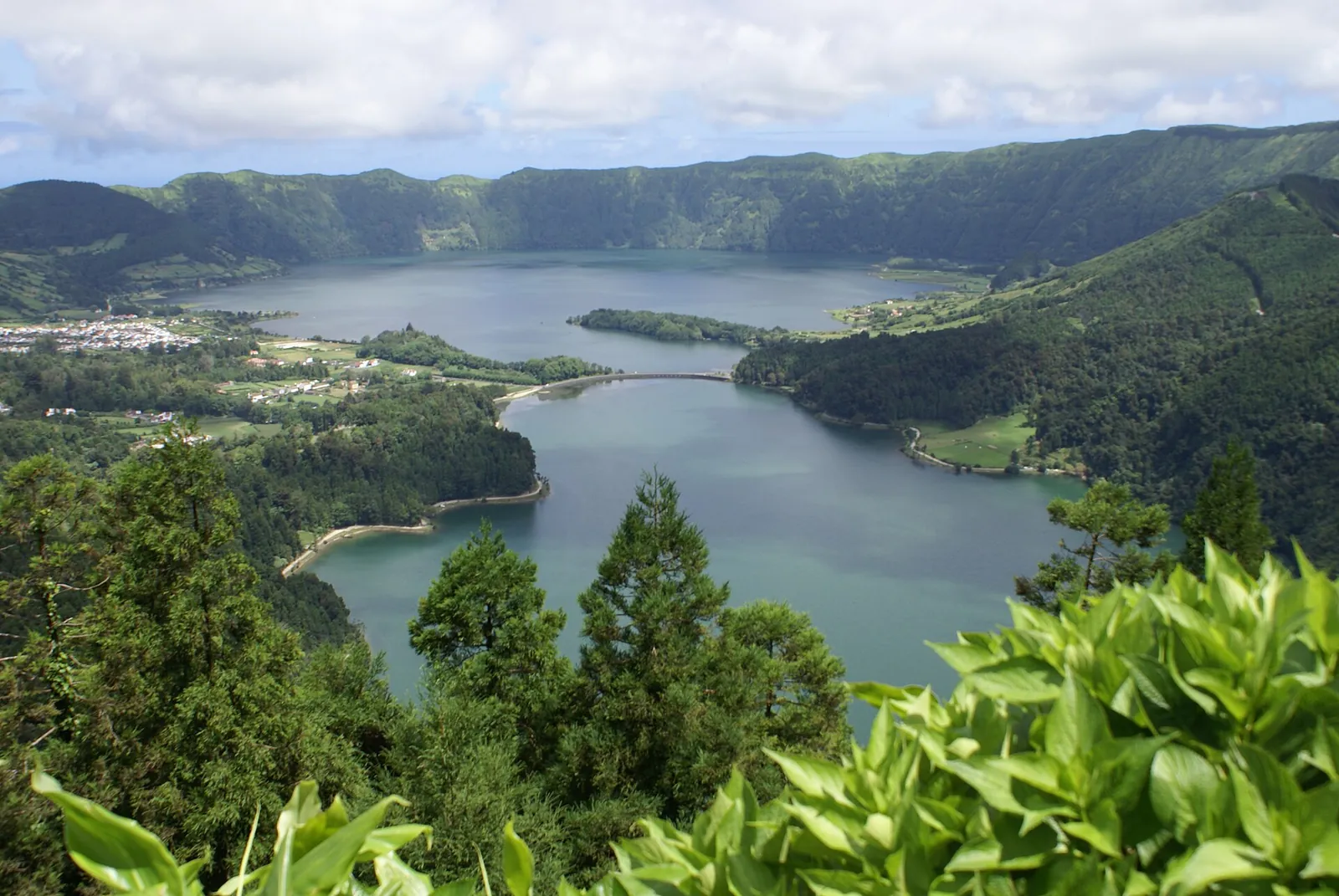
Now for the big wow moment. Drive about 30 to 40 minutes west and up into the hills to Sete Cidades, the island’s most photographed crater. At the rim, the Vista do Rei viewpoint looks down on the twin lakes, one often appearing green and the other blue. A short drive along the ridge brings you to the Miradouro da Boca do Inferno, reached by a short walk from the road, with a wider view over several lakes inside the caldera.
If you want a proper walk, the official PR03 SMI trail runs from Vista do Rei down to Sete Cidades village. Visit Azores lists it at about 7.7 km and around two hours in its current leaflet, and it is generally rated easy because most of it is downhill. It is one-way, so arrange a taxi back up to your car or walk it as part of a longer loop. Check the official trails portal for current status before you set off, because trails close after storms.
Down in the village, walk to the bridge between the two lakes and the little church of São Nicolau.
Evening
Back in Ponta Delgada, have dinner near the marina or in the old town. Try lapas (grilled limpets), local cheese from the islands, and a glass of Azorean wine.
If clouds hide the crater: go up anyway in the afternoon, or swap with Day 3. Sete Cidades viewed through fog is just grey.
Day 2: Lagoa do Fogo, Caldeira Velha and the tea fields
Morning
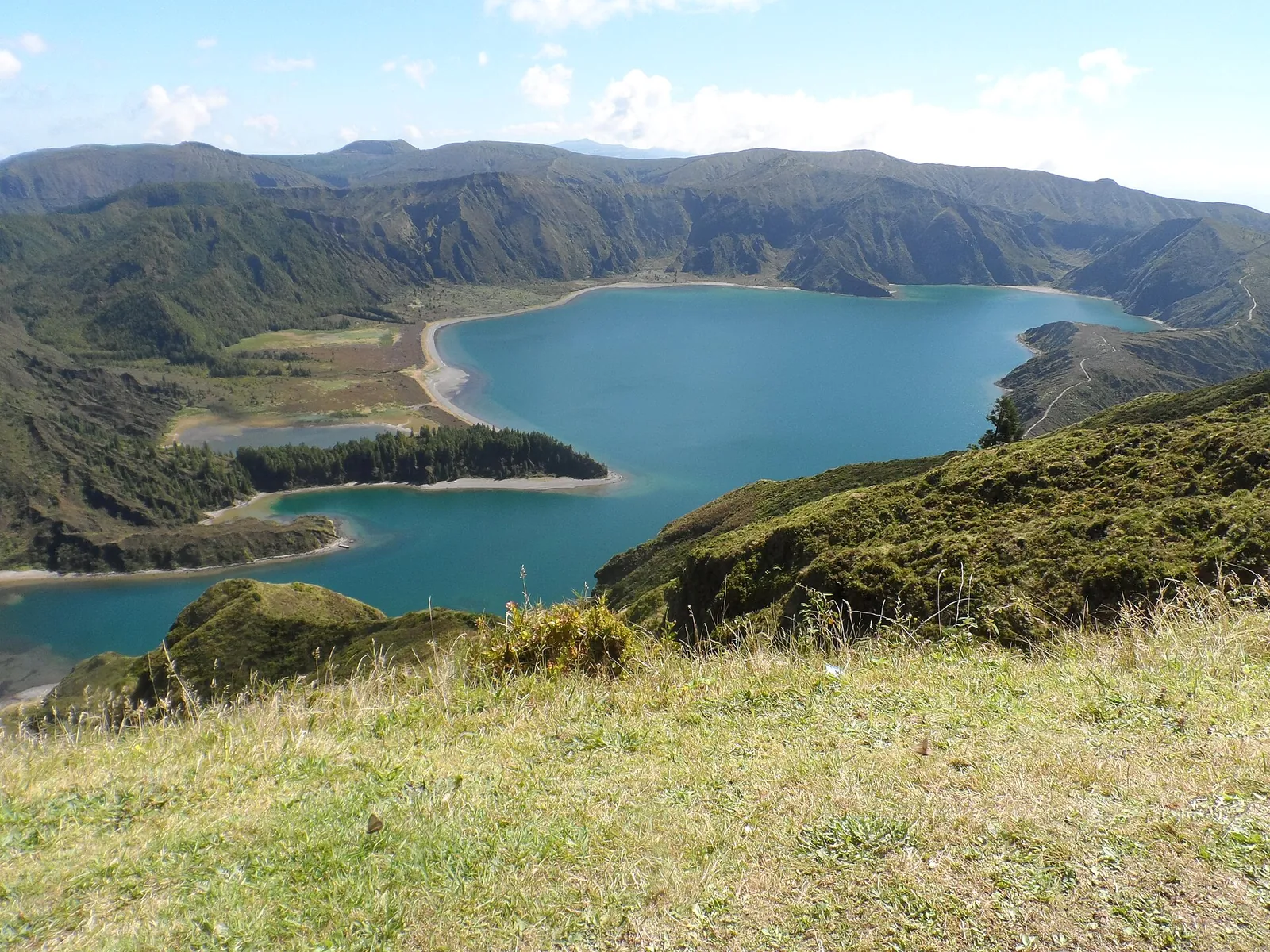
This is the day for jaw-dropping blues. Today’s star is Lagoa do Fogo (“Lake of Fire”), a large crater lake in the centre of the island inside a nature reserve. The road up gives you viewpoints over the lake and down to both coasts.
Access rules matter here. In recent summers the regional government closed the road to private and rental cars during the day and ran a shuttle instead. The scheme started in 2023 from 15 June, and in 2024 it ran from 15 June to 30 September. The official shuttle site says tickets cost EUR 5 (free for children under 6), are non-refundable, and the shuttle runs from 9 am to 7 pm. Boarding points are Caldeira Velha on the north side and Rota da Água on the south side, and one ticket lets you hop off at several stops on the day you book. The 2026 dates were not confirmed when we checked, so look at lagoadofogo.pt before you go. Outside the shuttle season you can usually drive up to the viewpoints yourself.
Afternoon
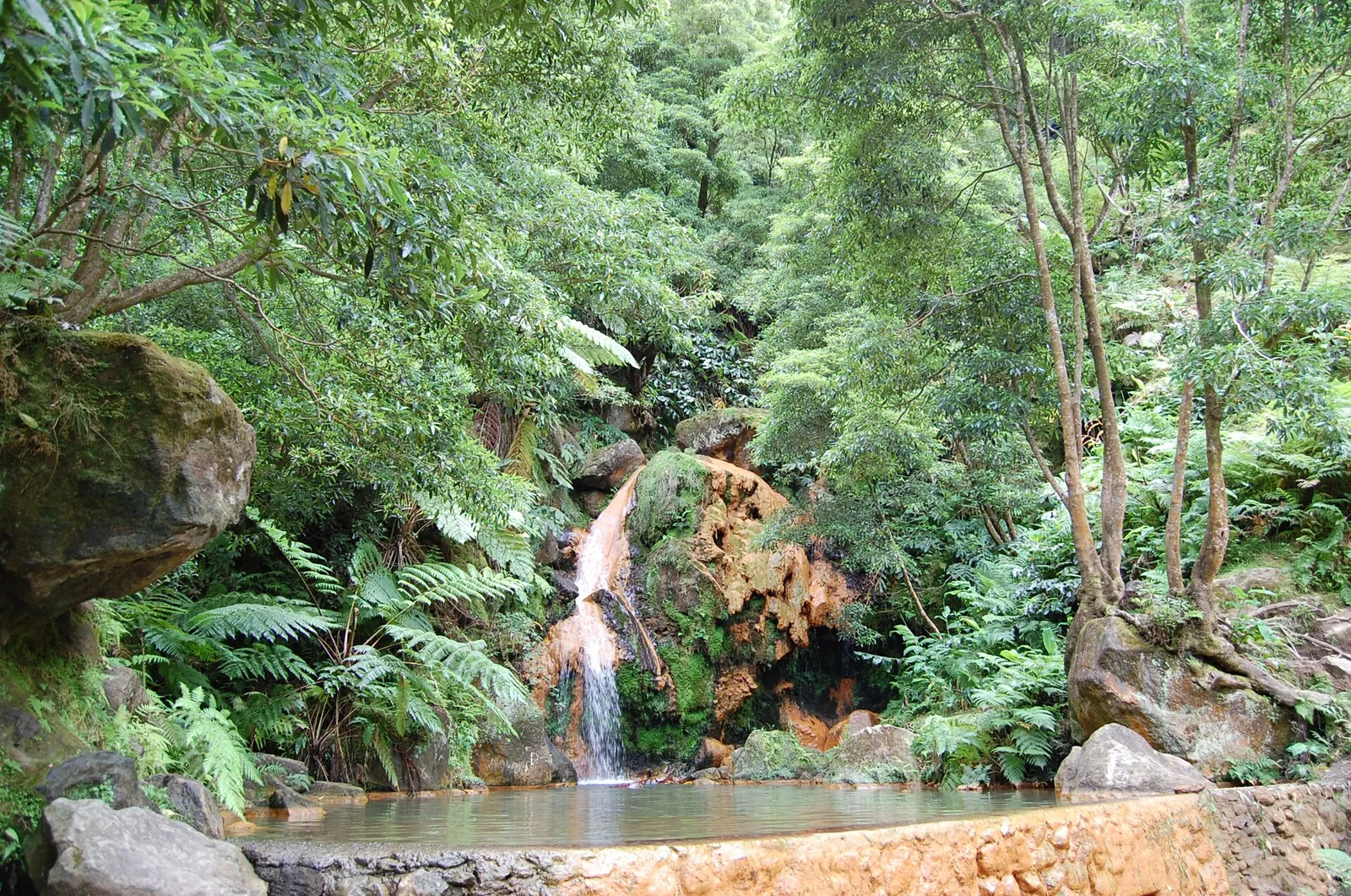
The north-side shuttle stop doubles as the next sight: Caldeira Velha, a protected area with warm thermal pools and a waterfall in a jungle-like ravine. The Azores Natural Parks ticket office lists EUR 10 for adults (15 to 64), EUR 5 for ages 7 to 14 and seniors, and free entry under 7, covering the interpretation centre and the pools. Entry is controlled and visits are time-limited, so book ahead in high season. Bring a swimsuit and a dark towel: iron-rich water stains light fabric.
Then drive east along the north coast to Gorreana, one of Europe’s oldest working tea plantations. Entry to the factory and the tasting area is free, and the rows of tea bushes running down towards the sea make a lovely short walk. Hours are typically daytime only; check before a late visit.

Evening
Stay on the north coast for dinner in Ribeira Grande, or head back to Ponta Delgada. If you plan to be in Furnas early tomorrow, a night in Furnas village works well.
Day 3: Furnas
Morning
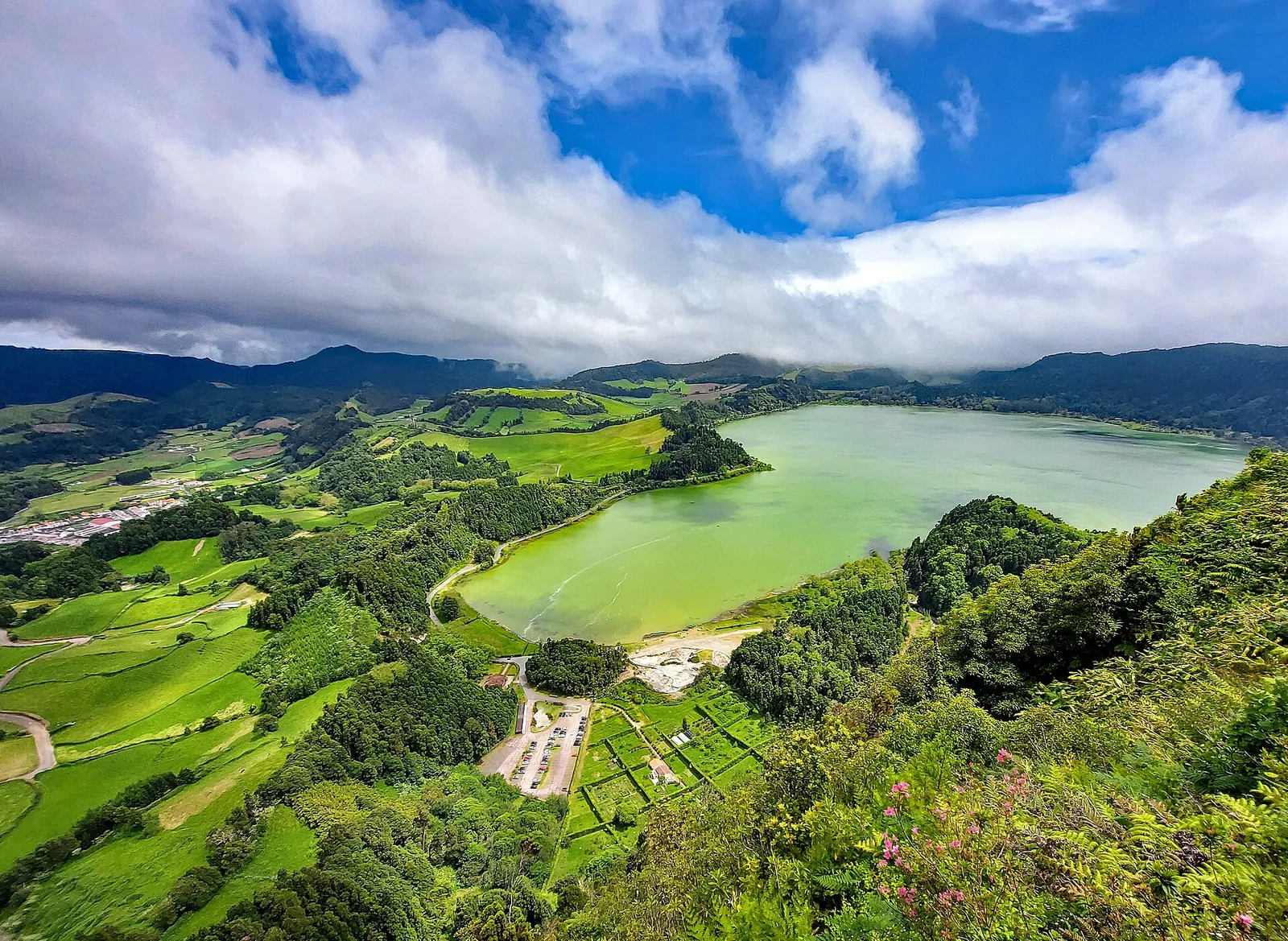
Save your appetite and pack a swimsuit! Furnas is a volcanic valley full of steaming vents, hot springs and gardens. Start at the Lagoa das Furnas lake, where pots of cozido (a meat and vegetable stew) are lowered into holes in the hot ground at the caldeiras and left to cook for several hours. You can watch the pots being lifted out late in the morning. A small entry charge for non-residents is collected at the lake area when the booth is staffed; tour listings put it at about EUR 3 per person, so have some cash ready.
For a walk, the official PRC06 SMI Lagoa das Furnas circular trail goes around the lake; see the Visit Azores leaflet for distance and the current route.
Afternoon
Have a cozido lunch in Furnas village. Many restaurants serve the stew cooked in the caldeiras, and some ask you to book a day ahead in busy months.
Then visit Parque Terra Nostra, a large historic garden with a big, warm, orange-brown thermal pool and smaller jacuzzis. The park’s official FAQ lists a general adult ticket of EUR 17 and EUR 14.50 for children and seniors, including the thermal pool and jacuzzis. Opening hours change by season, so check the official site on the day. Wear an old or dark swimsuit, remove silver jewellery, and use the showers afterwards.
Walk through the village to the Caldeiras das Furnas, where hot springs bubble right next to the street.
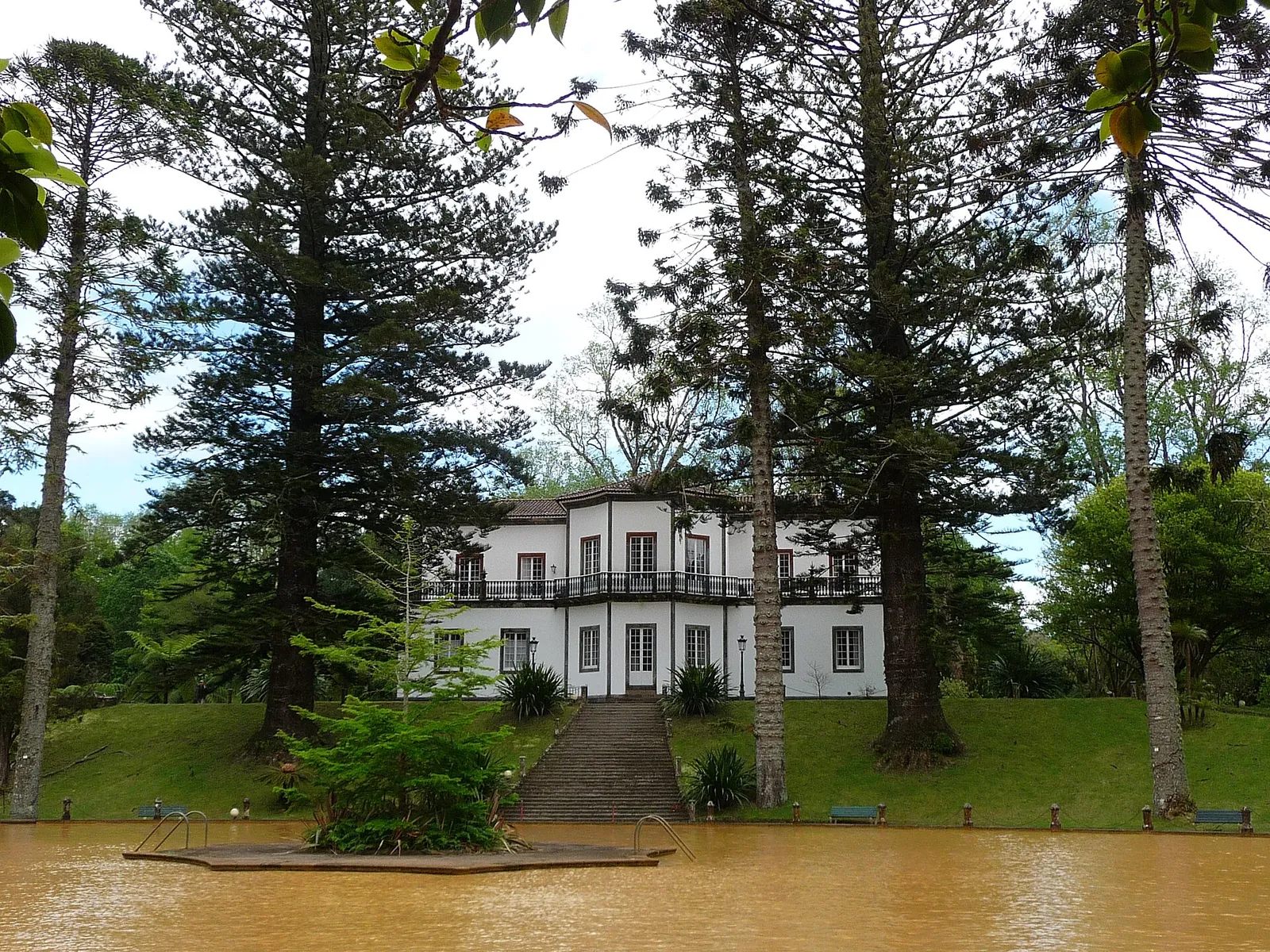
Evening
Poça da Dona Beija is a set of smaller thermal pools in Furnas that stays open into the evening, which makes it a good finale after the day-trippers leave. Prices and booking rules have changed over recent years, and online slots can sell out, so book on its official site rather than relying on old guide prices.
Day 4: Whales in the morning, Pico in the evening
Morning
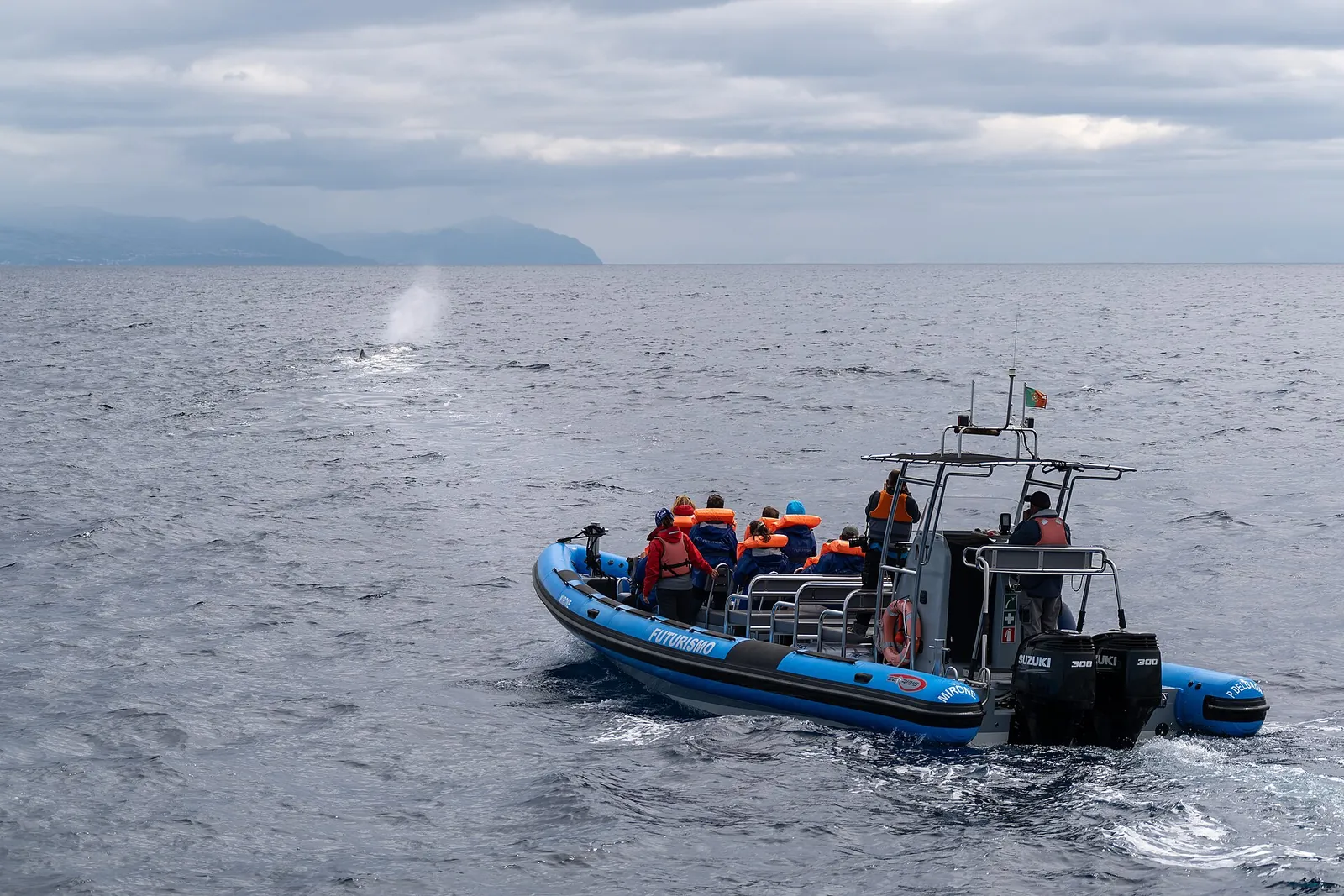
Get ready for a morning on the open ocean! São Miguel has several licensed whale-watching operators based at the Ponta Delgada marina. Standard trips last about 3 hours, and reseller listings for one major operator showed roughly EUR 64 to 70 per adult for a half-day trip. Visit Azores says more than 20 types of whales and dolphins, resident and migrating, can be seen around the islands.
Season matters:
- Sperm whales and common dolphins are around all year.
- Blue, fin and sei whales pass through mainly in spring, roughly April to May, on their way north.
- Summer usually brings the calmest seas.
- Many operators reduce or pause trips in the winter months, and trips are cancelled in rough seas.
Book a morning trip so that a cancellation can be moved to Day 6 on Pico if needed.
Afternoon
Drop the car and take the SATA Air Açores flight from Ponta Delgada to Pico. The nonstop flight takes about 55 minutes to an hour, with several flights a week; book early in summer and confirm times on the Azores Airlines website. Some services stop on Terceira, which adds time.
Alternative for Day 4 and later: if you prefer Terceira (UNESCO-listed Angra do Heroísmo and the Algar do Carvão volcanic chimney), the same structure works with a flight to Terceira instead. We chose Pico for this plan for its mountain, vineyards and whales.
Evening
Pick up a car at Pico airport (book in advance, the fleet is small) and stay around Madalena, the main port, which has restaurants and the ferry to Faial.
Day 5: Pico vineyards, lava tube and Lajes
Morning
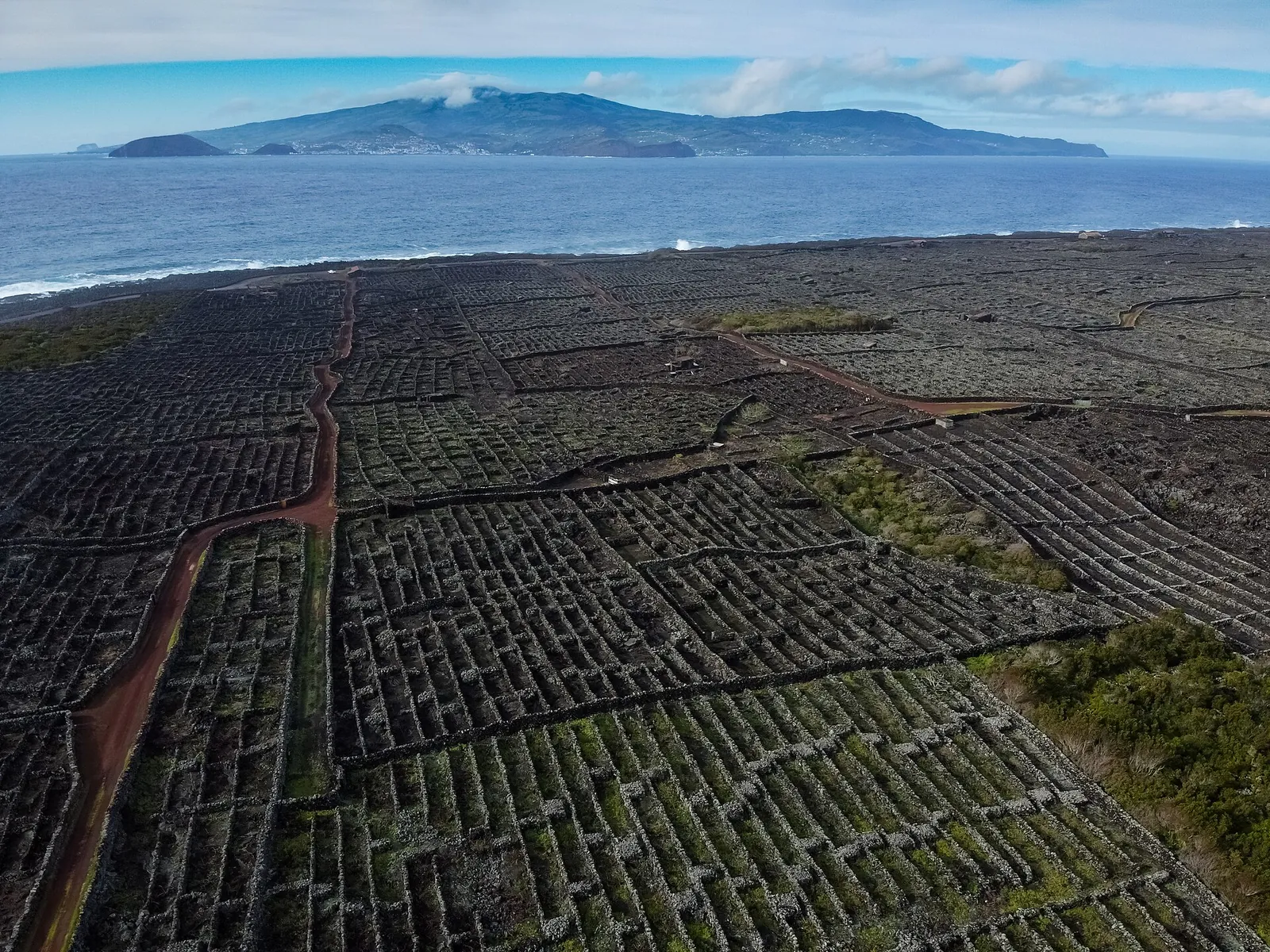
Say hello to Pico! Start just south of Madalena in Criação Velha, the heart of the Landscape of the Pico Island Vineyard Culture, inscribed by UNESCO in 2004. Here the volcanic rock is divided into thousands of small walled plots, called currais, which shelter the vines from wind and salt spray. UNESCO notes that winemaking here began in the 15th century and is still active on a small scale. Walk the paths between the walls and look for the windmill and the small tide pools along the shore.
Then drive inland to the Gruta das Torres, the largest known lava tube in Portugal at over 5 km long. Visits are guided, last about an hour and cover a short section with helmets and lamps provided. Times and fees are set by the Pico Natural Park visitor centre, so book or check on its page before you go.
Afternoon
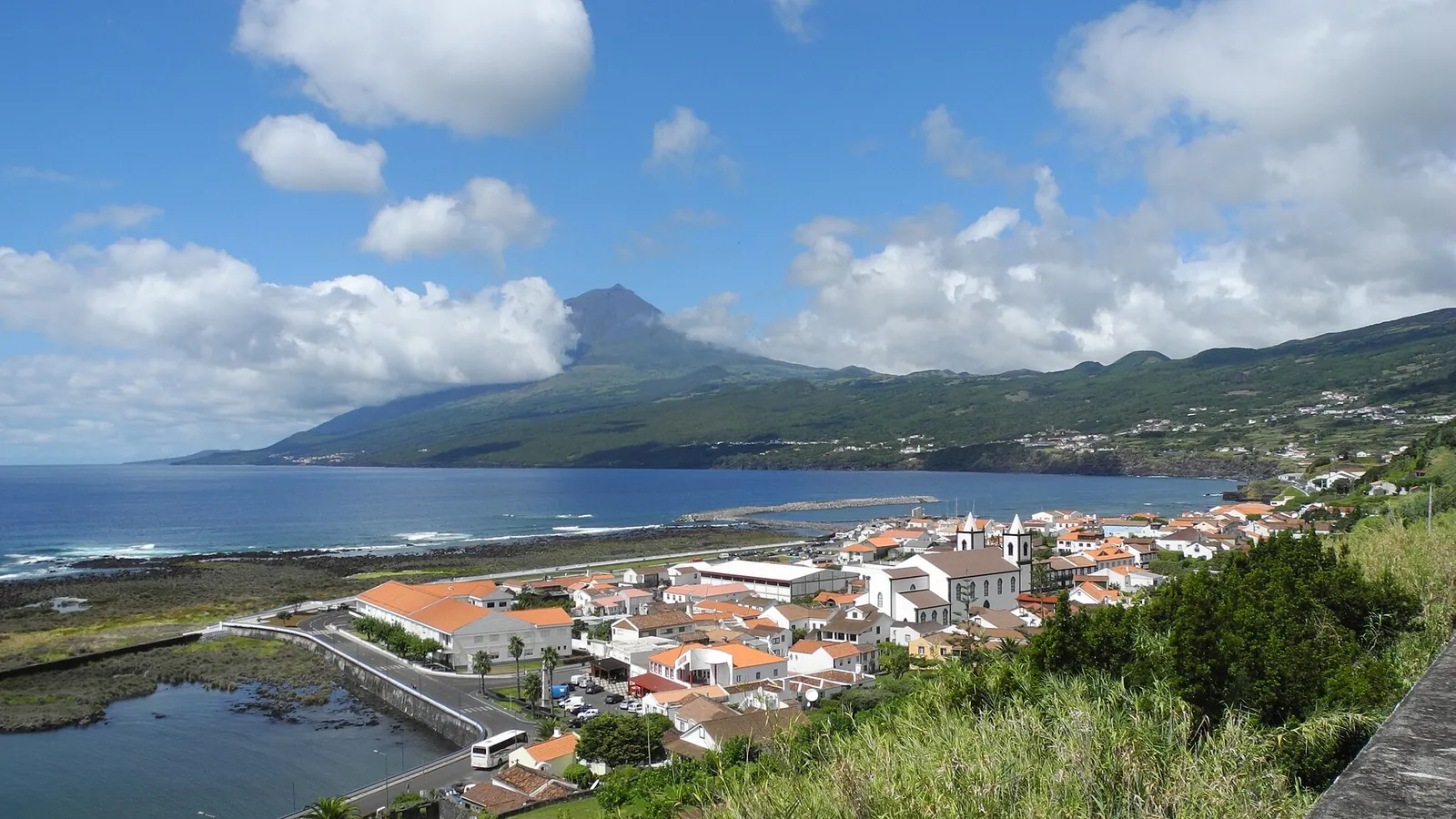
Cross the island to Lajes do Pico on the south coast, the old whaling village. The Museu dos Baleeiros (Whalers’ Museum), in the former boathouses, tells the story of open-boat whaling, which ended in the 1980s. Lajes is also the base of long-established whale-watching operators such as Espaço Talassa, whose 3-hour trips leave at 09:00 and 14:00, including environmental taxes and the observation permit. If your Day 4 boat trip was cancelled, this is your second chance.
Evening
Drive back along the south coast for sunset, then have dinner in Madalena with a local white wine from the volcanic vineyards. Faial and its town of Horta face you across the channel.
Day 6: Mount Pico or the coast, then fly out
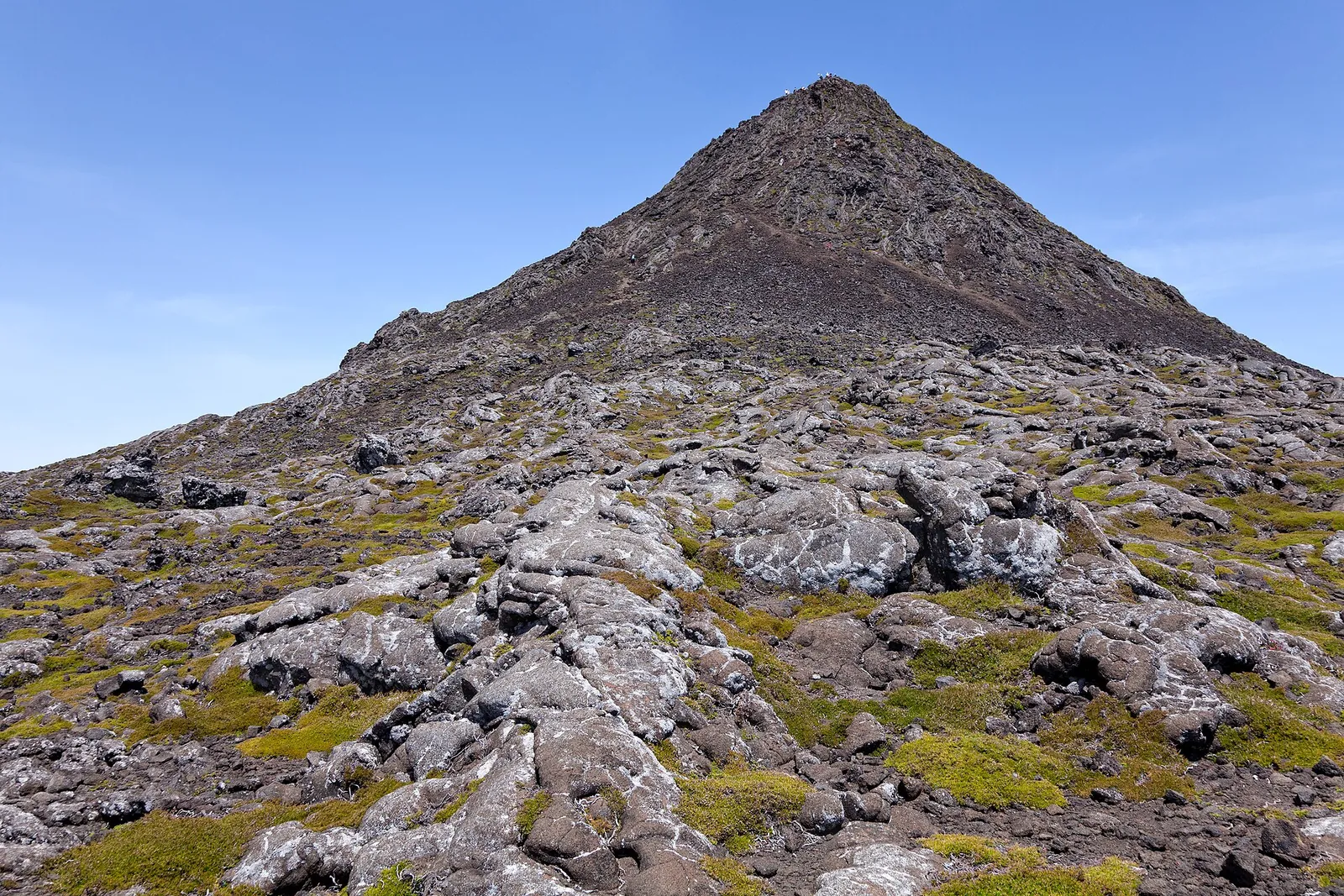
Your last day has a big choice in store: the mountain or the sea.
Option A: Climb Mount Pico (good weather only)
Mount Pico is Portugal’s highest mountain at 2,351 m. The climb starts at Casa da Montanha at about 1,200 m, where registration is compulsory under the nature reserve rules. Each climber gets a GPS tracking device, fees are charged by destination (the crater rim, the summit cone of Piquinho, or an overnight stay), and residents climb free. Fees are updated periodically, so check the official Montanha do Pico booking page for current prices before you go.
Be realistic: the round trip to the summit usually takes 7 to 8 hours on steep, loose volcanic ground, with no water on the way, and the climb can be closed in bad weather. This only fits Day 6 if your flight leaves in the evening. If you are not an experienced hiker, go with a licensed guide.
Option B: A coastal day
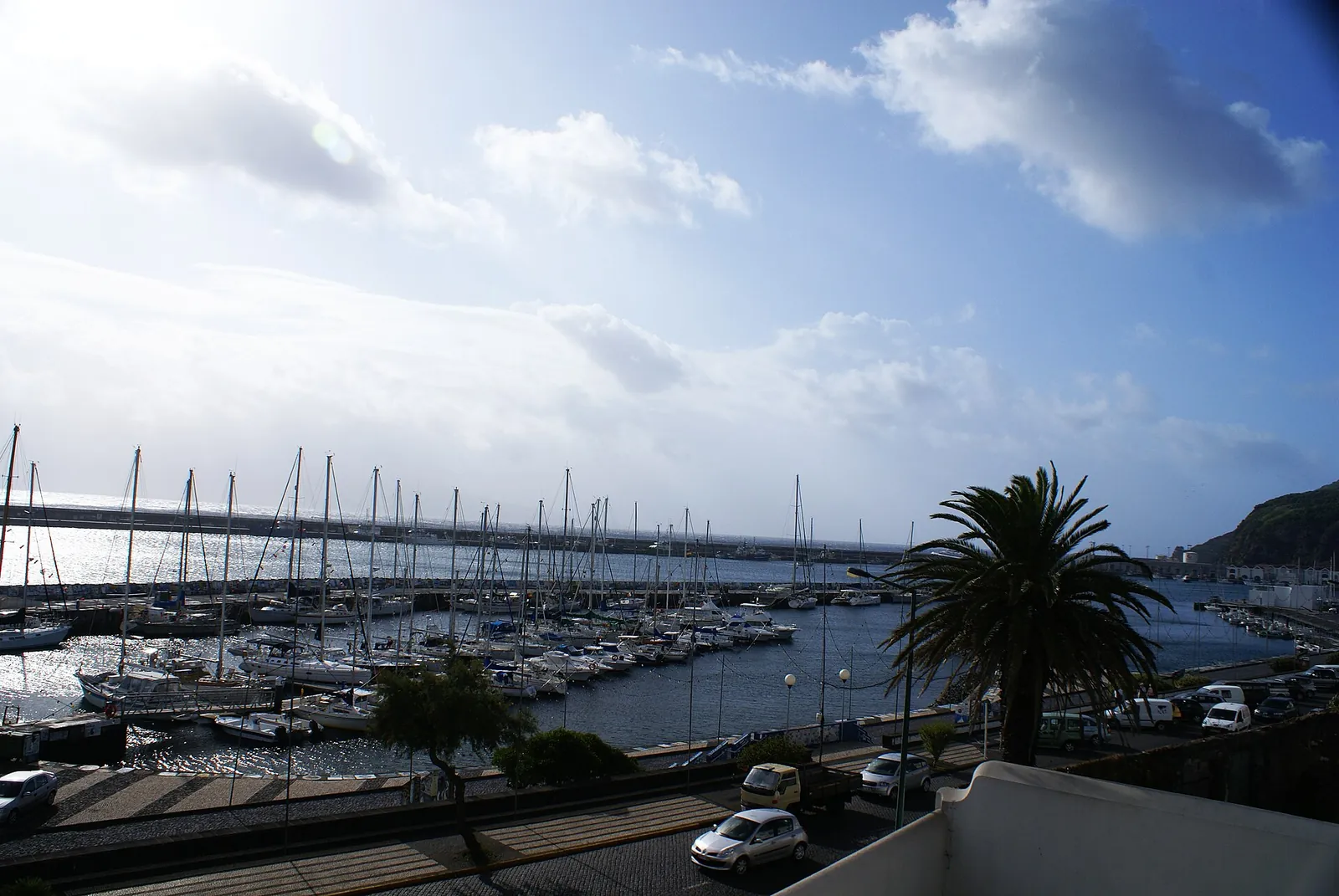
If the summit is in cloud or your flight is early, do a loop of the north coast villages, the lava pools at Madalena, and the Cachorro rock formations, a few minutes’ drive from the vineyards. Or take the short ferry from Madalena to Horta on Faial for its famous marina, where yachts crossing the Atlantic paint their names on the harbour walls. Atlânticoline runs the crossing in about half an hour; check the official timetable for sailings on your date.
Evening
Fly out from Pico, usually via Ponta Delgada or Lisbon depending on the season, or from Horta on Faial, which has more connections. Check flights before you build your last day around a summit attempt.
Getting there and getting around
Flights: Ponta Delgada on São Miguel has the most international and mainland connections. Inter-island flights are run by SATA Air Açores (part of the Azores Airlines group), with turboprops linking all nine islands. Book inter-island flights at the same time as your main ticket, as summer seats sell out.
Ferries: Atlânticoline runs inter-island ferries. The Madalena (Pico) to Horta (Faial) crossing runs all year, while longer routes between other islands are more seasonal. There is no practical ferry between São Miguel and Pico for a short trip, so fly.
Car hire: On both islands a car is the practical choice. Buses exist but are infrequent and built around locals’ commutes, not viewpoints. Book early for July and August, especially on Pico. Roads are narrow and winding with livestock, cyclists and sudden fog in the hills, so allow more time than the map suggests.
Taxis and tours: For one-way hikes (Sete Cidades) or if you prefer not to drive, local taxis and licensed tour operators cover the main sights.
Where to stay
- Ponta Delgada, São Miguel: The most practical base for Days 1, 2 and 4, with restaurants, the marina for whale watching and the airport close by.
- Furnas, São Miguel: A night here lets you enjoy the hot springs in the evening and the lake early in the morning.
- Ribeira Grande or the north coast: Quieter, close to Caldeira Velha and Gorreana.
- Madalena, Pico: The best base on Pico, with the airport, the ferry to Faial and the vineyards nearby.
- Lajes do Pico: Smaller and calmer, ideal if whale watching is your priority.
Budget
| Item | Typical cost |
|---|---|
| Lagoa do Fogo shuttle (when running) | EUR 5, under 6 free |
| Caldeira Velha (adult / 7 to 14 and seniors) | EUR 10 / EUR 5 |
| Parque Terra Nostra (adult / child and senior) | EUR 17 / EUR 14.50 |
| Furnas lake caldeiras area (non-residents) | About EUR 3, when the booth is open |
| Gorreana tea factory and tasting | Free |
| Whale watching, 3 hours, São Miguel | About EUR 64 to 70 (reseller listings) |
| Poça da Dona Beija, Gruta das Torres, Mount Pico fees | Check the official site |
| Ponta Delgada to Pico flight | Varies by date, check Azores Airlines |
Expect roughly EUR 15 to 90 per person per day for sights, thermal pools and tours, with the higher end on whale-watching days. These figures exclude flights, car hire, fuel, accommodation and meals. Many prices are only published on sites that change them each season, so treat this as a planning guide and check the official pages before you pay.
Practical tips
- Pack for four seasons: A waterproof jacket, warm layer and quick-dry clothes are essential year-round. Summer days are mild rather than hot.
- Thermal pool kit: Old dark swimsuit, flip-flops and a towel. Iron-rich water can stain light fabrics permanently.
- Check webcams and forecasts: Before driving up to a crater lake, look at a live webcam if available and the forecast for that specific spot. Conditions vary between coast and summit.
- Book ahead in summer: Rental cars, inter-island flights, whale trips, Caldeira Velha and evening slots at Poça da Dona Beija.
- Money: Portugal uses the euro. Cards are widely accepted, but keep some cash for small entry booths and village cafés.
- SIM and eSIM: If your home plan includes EU roaming, check the terms. Otherwise, buy a local SIM or an eSIM before you fly. Coverage can drop in the mountains.
- Visa and entry: The Azores are part of Portugal and the Schengen Area, so Portuguese and Schengen entry rules apply. Check the official Portuguese visa portal (vistos.mne.gov.pt) well before you book.
Heads-up
The Azores are relaxed and safe, but nature sets the rules here. Worth knowing before you go:
- Weather changes everything: Fog, rain and wind roll in quickly and can hide viewpoints for hours or cancel boat trips and flights. Build in slack, especially before an onward flight.
- Hiking: GOV.UK warns that hiking in Madeira and the Azores can be challenging, with narrow, uneven paths and heights, and ground that becomes slippery after rain. Choose trails that suit your fitness, tell your accommodation where you are going and carry a charged phone. Visit Azores publishes trail closures.
- Closed trails mean closed: Landslides and storms close paths. Check the official trails portal before setting out and stay off routes marked closed.
- The sea: Atlantic swells are strong. Swim at supervised spots or natural pools in calm conditions only. GOV.UK notes that people drown in the sea in Portugal every year.
- Earthquakes: GOV.UK lists earthquakes as a risk in Portugal and points to the regional seismic monitoring centre for the Azores. Small tremors are common and rarely felt; follow local instructions if one occurs.
- Driving: Narrow roads, cows on the move and sudden fog in the hills. Drive slowly and avoid mountain roads at night if you can.
- Emergencies: Call 112.
FAQ
Is 6 days enough for the Azores?
Six days is enough for a good look at São Miguel plus one other island. Seeing more islands needs more time, because flights and weather delays eat into short stays.
Do I need a car in the Azores?
Yes, for this plan. Public buses on São Miguel and Pico do not serve viewpoints and trailheads at useful times. The alternative is to book guided tours each day.
Can I drive to Lagoa do Fogo?
Outside summer, usually yes. In recent summers private cars were barred during the day and visitors used the EUR 5 shuttle from Caldeira Velha or Rota da Água, from 9 am to 7 pm. Check lagoadofogo.pt for the current season’s dates.
When is the best time for whale watching in the Azores?
Sperm whales and dolphins can be seen all year. For migrating blue, fin and sei whales, aim for spring, roughly April to May. Summer has the calmest seas. Many operators run fewer trips in winter.
São Miguel and Pico, or São Miguel and Terceira?
Pico suits hikers and wildlife lovers, thanks to the mountain, the vineyards and the whales off Lajes. Terceira suits travellers who want history, with the UNESCO-listed town of Angra do Heroísmo. Both work with the same flight-based plan.
Can I climb Mount Pico in a day?
Yes, if the weather is good and you are fit. Register at Casa da Montanha, carry plenty of water and expect 7 to 8 hours for the round trip. Do not plan it for the morning of an early flight.
Sources
Prices, hours and rules change. We checked these on 1 November 2026; please confirm on the official page before you book.
- Visit Azores: Whale watching (official tourism site)
- Visit Azores: Walking trails of the Azores (official trails portal)
- Visit Azores trails: PR03 SMI Vista do Rei to Sete Cidades (PDF leaflet)
- Visit Azores trails: PRC06 SMI Lagoa das Furnas (PDF leaflet)
- Lagoa do Fogo shuttle: official tickets and boarding points
- Azores Regional Government: shuttle service to Lagoa do Fogo
- Parque Terra Nostra: FAQ (tickets and thermal pool)
- Azores Natural Parks: Caldeira Velha ticket office
- Atlânticoline: timetables (inter-island ferries)
- Azores Airlines / SATA Air Açores (official site)
- UNESCO World Heritage Centre: Landscape of the Pico Island Vineyard Culture
- Espaço Talassa, Lajes do Pico (licensed whale-watching operator)
- Safety and security: Portugal travel advice (GOV.UK, FCDO)
- Portuguese visa portal (Ministry of Foreign Affairs)
Photo credits (12)
- The twin lakes of Sete Cidades from Vista do Rei: José Luís Ávila Silveira/Pedro Noronha e Costa, Public domain, via Wikimedia Commons
- Portas da Cidade and the clock tower in Ponta Delgada: Diego Delso, CC BY-SA 4.0, via Wikimedia Commons
- Lagoa do Fogo shining blue inside its green crater: Perri.G, CC BY-SA 4.0, via Wikimedia Commons
- Rows of tea bushes at Gorreana on the north coast: kuhnmi, CC BY 2.0, via Wikimedia Commons
- Furnas Lake framed by pink azaleas: P. Hughes, CC BY-SA 4.0, via Wikimedia Commons
- The old house and orange thermal pool at Terra Nostra: JopkeB, CC BY-SA 4.0, via Wikimedia Commons
- A whale spout beside a boat off São Miguel: Jules Verne Times Two, CC BY-SA 4.0, via Wikimedia Commons
- Walled vineyard plots of Criação Velha facing Faial: Manuel Silveira, CC BY-SA 4.0, via Wikimedia Commons
- Lajes do Pico with Mount Pico rising behind: Franzfoto, CC BY-SA 3.0, via Wikimedia Commons
- The rocky summit cone of Piquinho on Mount Pico: Unukorno, CC BY-SA 3.0, via Wikimedia Commons
- Painted yacht crews' murals on the Horta marina quay: José Luís Ávila Silveira/Pedro Noronha e Costa, Public domain, via Wikimedia Commons
- Warm waterfall pool at Caldeira Velha: ristok from Helsinki, Finland, CC BY-SA 2.0, via Wikimedia Commons
More Portugal itineraries
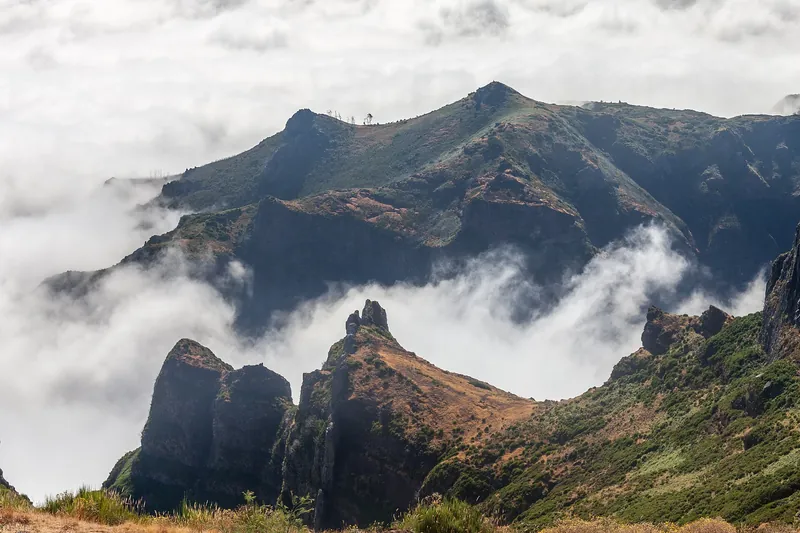 5 days
5 Days in Madeira: A Day-by-Day Itinerary
A 5-day Madeira itinerary: Funchal and Monte, Pico do Areeiro, west and east coast levada walks, plus 2026 trail fees and bus fares.
7 Days in Lisbon and Porto: A Day-by-Day Itinerary
A 7-day Portugal plan: 4 days in Lisbon with Belém and Sintra, the fast train north, then 3 days of Porto, port lodges and the Atlantic coast.
 8 days
8 Days in Portugal by Train: Lisbon, Sintra, Coimbra, Porto and the Douro
An 8-day Portugal plan by train: Lisbon's hills, a Sintra palace day, Coimbra's old university, Porto's riverside and a Douro Valley rail trip, with 2026 fares.
Compare all Portugal itineraries →
This is a researched plan, not a personal trip report. How we research · Affiliate disclosure