
3 Days in Bangkok: A Day-by-Day Itinerary
A 3-day Bangkok plan: Grand Palace, Wat Pho and Wat Arun, Chinatown, Jim Thompson House and the river, with verified prices, hours and transit tips.
- 🗓️ Trip length
- 3 days
- ☀️ Best time
- November to February
- 💰 Daily spend
- THB 1,500-3,500 excl. hotel (estimate)
- ✅ Facts checked
- 22 October 2026
Get ready for one of Asia’s most exciting cities: three days is the sweet spot for a first visit to Bangkok. It is enough time to see the great temples of the old royal quarter, ride the river, eat your way through Chinatown and still have a slower day for markets, a canal-side museum and a rooftop sunset. This plan suits first-timers, couples, families with older children and anyone on a city break before heading to the islands or the north.
The pace is happily moderate. Mornings are for the big sights, when it is cooler and queues are shorter. Afternoons mix indoor stops with river transport so you are not walking in the midday heat. Evenings are for food, and plenty of it. Each day is grouped by area, so you spend your time seeing the city rather than sitting in traffic.
At a glance
| Day | Area | Highlights |
|---|---|---|
| 1 | Rattanakosin (old town) and the river | Grand Palace and Wat Phra Kaew, Wat Pho, Wat Arun, riverside sunset |
| 2 | Chinatown, Siam and Pathum Wan | Yaowarat, Jim Thompson House, Siam shopping area, Lumphini Park |
| 3 | Chatuchak, Ari and the riverside | Weekend market (or a weekday alternative), cafés, evening on the Chao Phraya |
Day 1: Temples of the old royal city
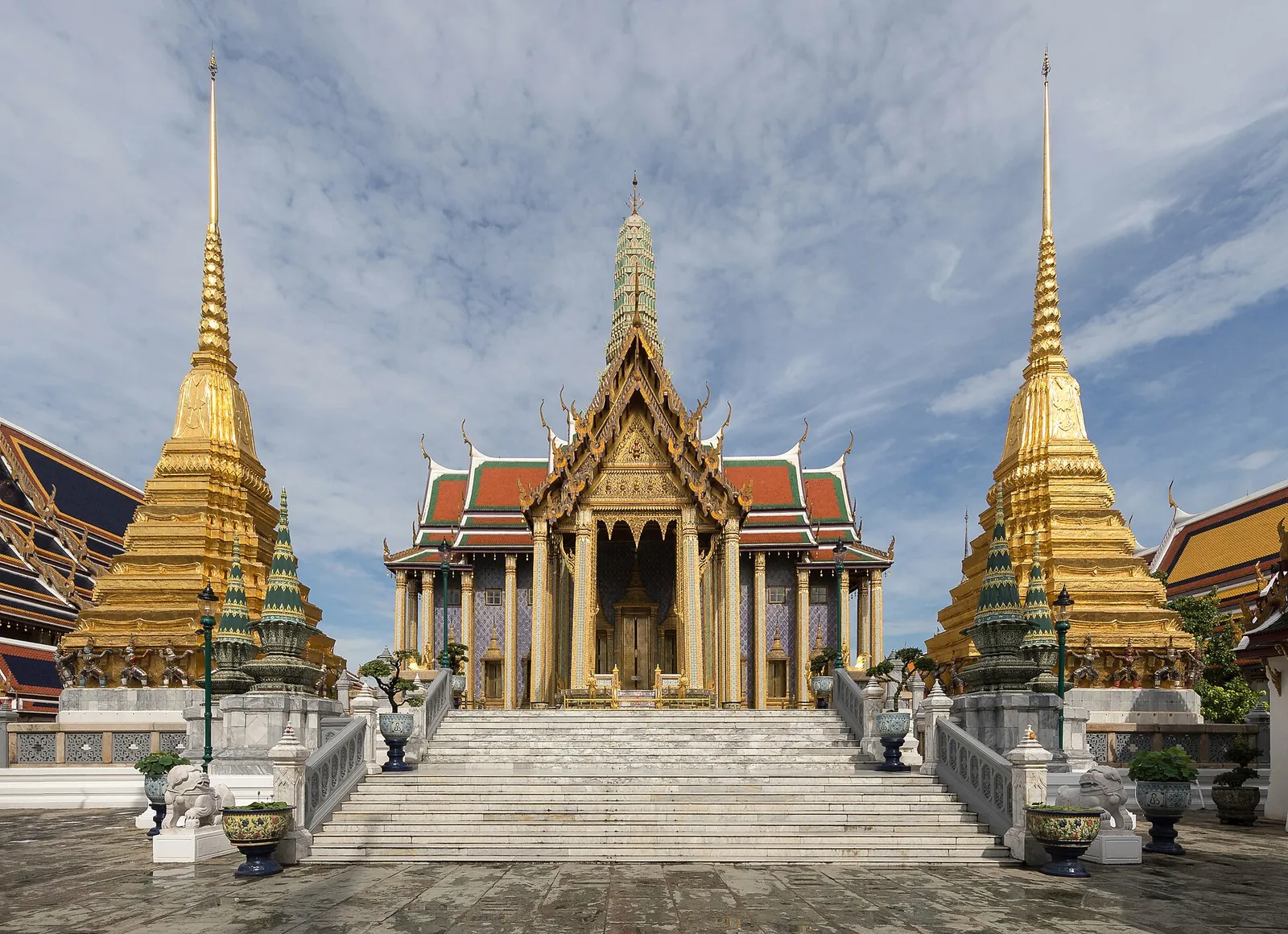
This is the day for glittering spires and golden Buddhas. Today you stay on the east bank of the Chao Phraya in Rattanakosin, the historic island where Bangkok was founded, and cross the river once to Wat Arun. Wear clothes that meet temple dress codes from the start of the day (see Practical tips), because the Grand Palace is strict.
Morning
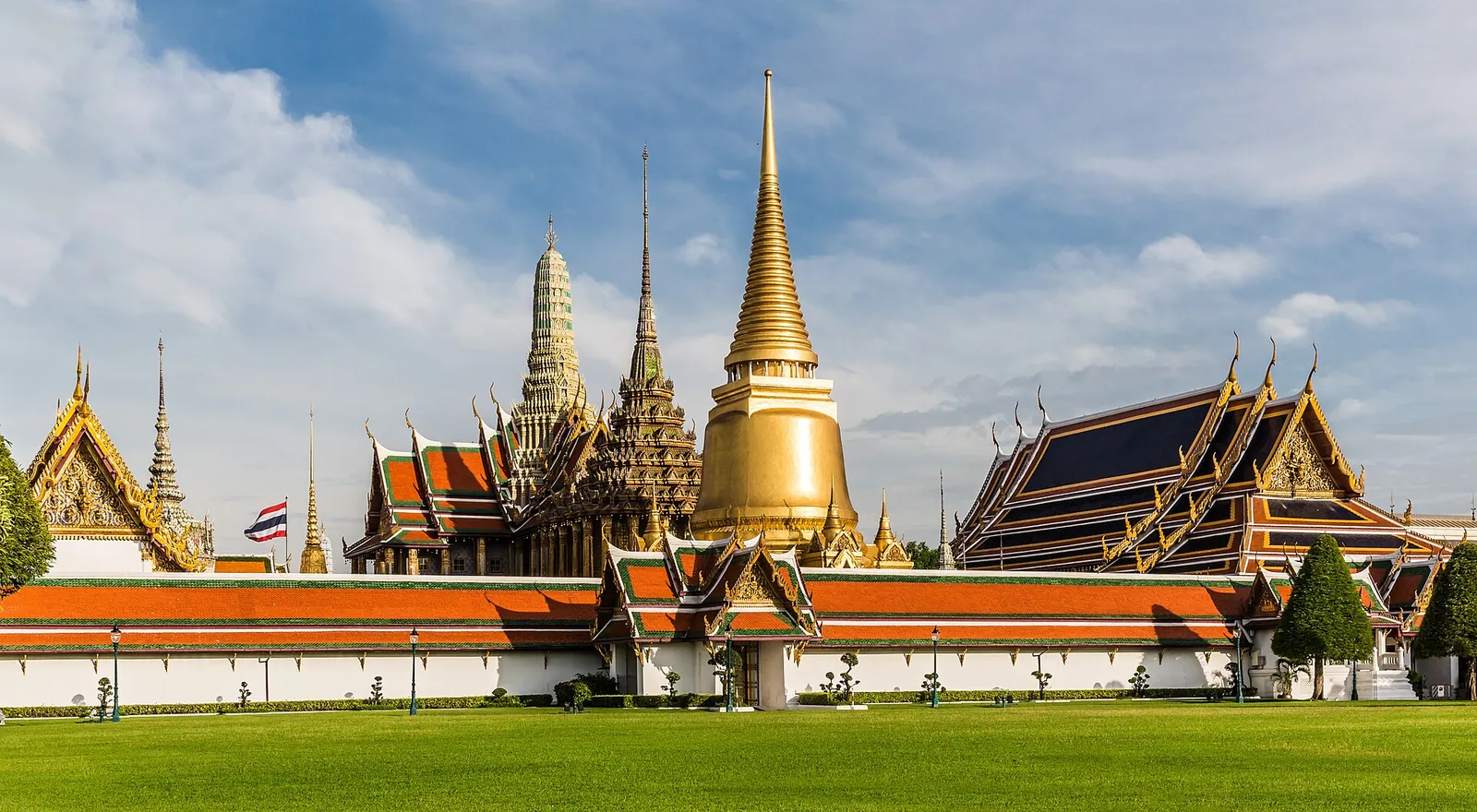
Start at the Grand Palace and Wat Phra Kaew (Temple of the Emerald Buddha), the most important site in the city. According to the official website it is open daily from 8:30 to 16:30, with tickets sold from 8:30 to 15:30. The ticket for foreign visitors costs THB 500 (about USD 14). Thai nationals enter free with ID.
The ticket is better value than many people realise. The official ticket page lists access to the Grand Palace, Wat Phra Kaew, the Queen Sirikit Museum of Textiles, the Arts of the Kingdom Museum (in Ayutthaya province, Wednesday to Sunday) and a Khon masked dance performance at Sala Chalermkrung Royal Theatre on weekdays. The ticket is valid for 7 days, with one visit to each site. You can buy at the gate or online through the official site, which we suggest so you can go straight in when the gates open.
Plan on two to three hours here. Arrive at opening time: by late morning the courtyards are busy and the stone paving holds the heat.
Afternoon
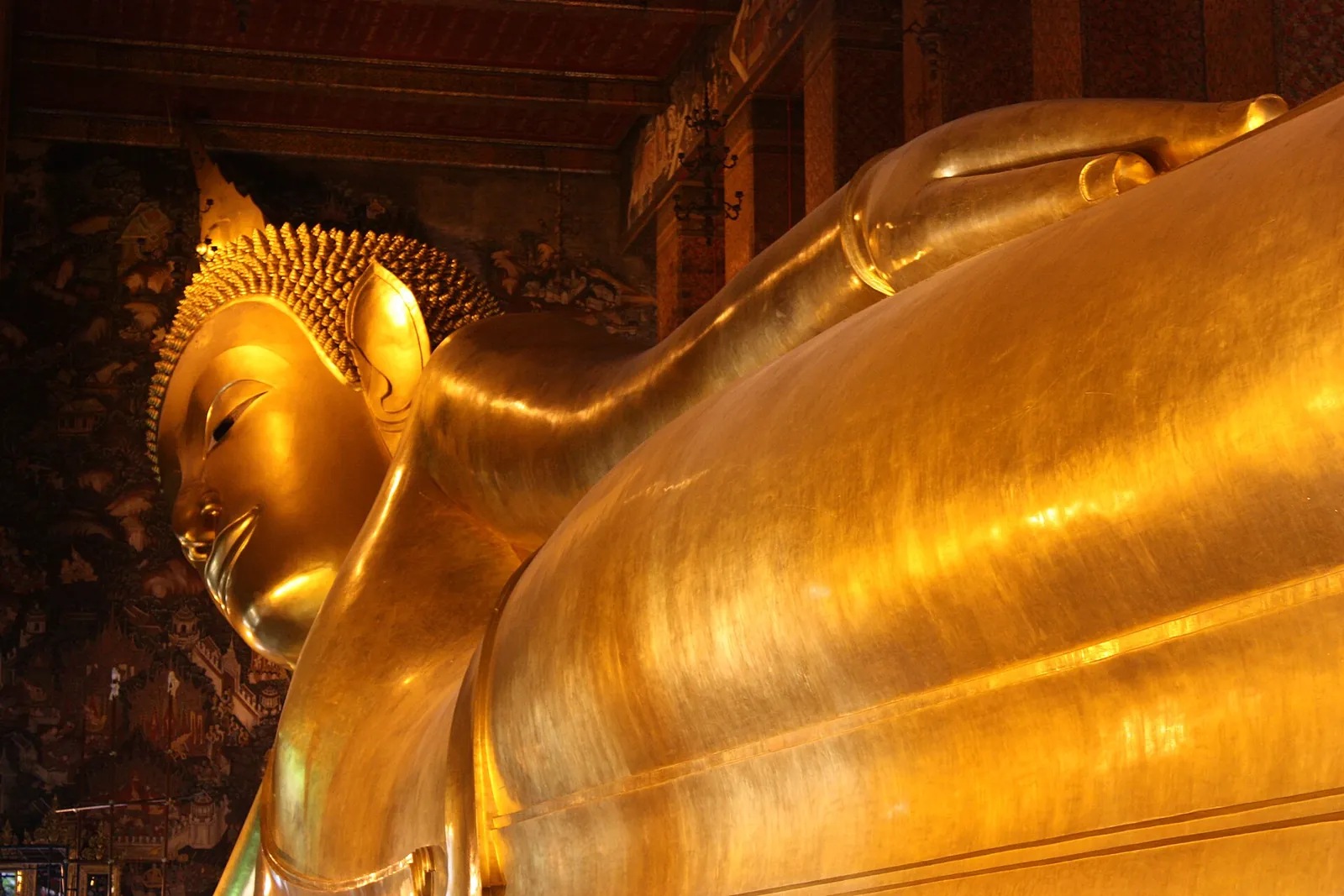
Walk south along Maha Rat Road to Wat Pho, home of the giant Reclining Buddha and one of the oldest temples in Bangkok. It is a short walk of roughly 10 to 15 minutes from the palace exit. Wat Pho’s official site gives opening hours of 8:00 to 19:30 every day and an admission fee of THB 300 (about USD 8). Children under 120 cm enter free.
Wat Pho is also known as a historic centre of traditional Thai massage, and a massage after a morning on your feet is a classic Bangkok move. Check prices at the counter on the day.
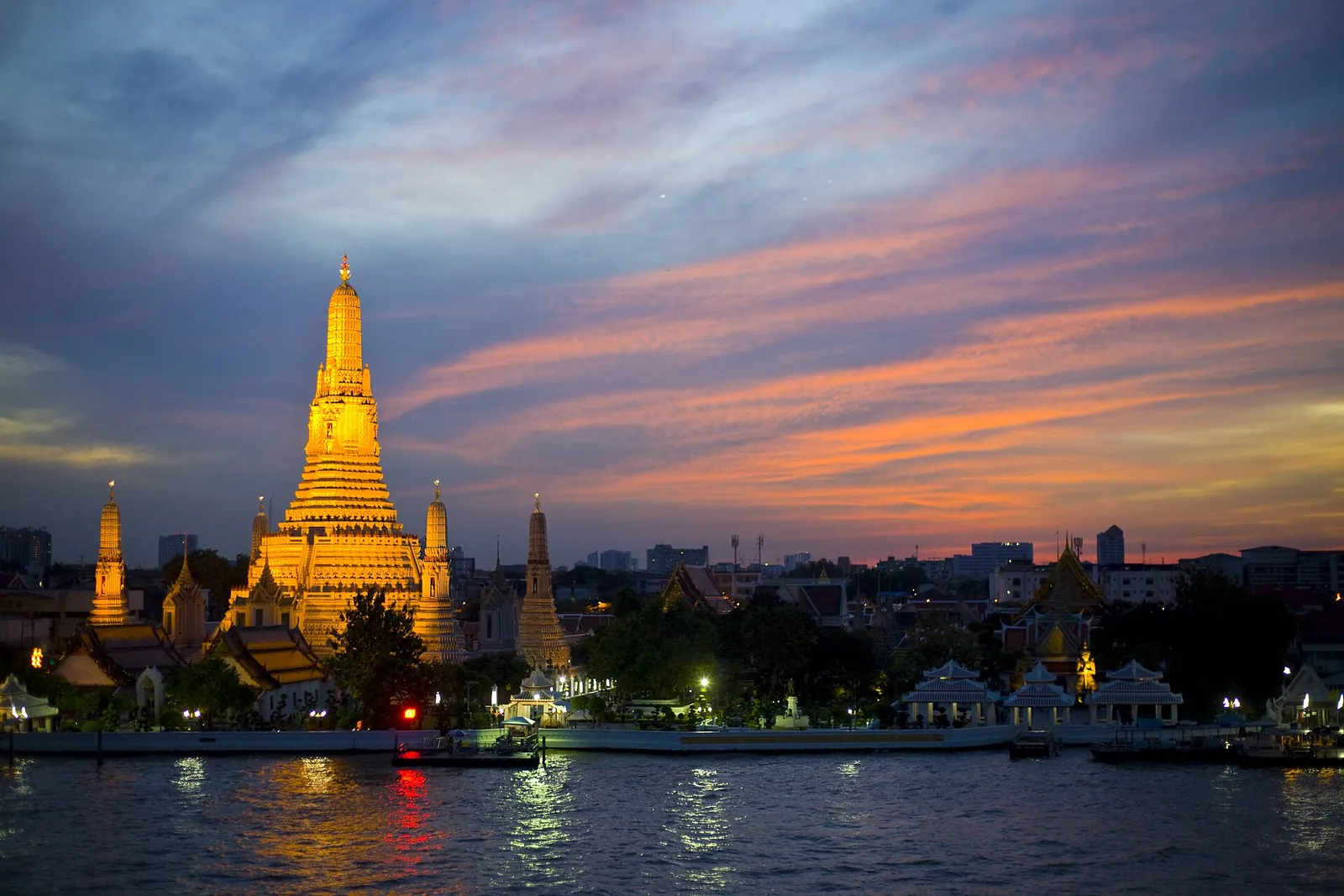
Have lunch around the Tha Tien pier area, then cross the river to Wat Arun (Temple of Dawn). A small cross-river ferry runs from the Tha Tien side to the Wat Arun side. The crossing only takes a few minutes. We could not confirm Wat Arun’s current entrance fee or opening hours on an official source, so check at the ticket desk or on an official channel before you go.
Wat Arun’s steep central prang is decorated with Chinese porcelain and is best viewed both up close and from across the water.
Evening
Cross back to the east bank and stay by the river for sunset. The view of Wat Arun lit up after dark from the Tha Tien side is one of the classic Bangkok images. For dinner, the streets around the old town and Phra Athit Road, a short ride or walk north, have plenty of simple Thai restaurants.
If you want a lively scene afterwards, Khao San Road is close by. If not, head back to your hotel early: Day 2 starts on foot.
Day 2: Chinatown, a silk king’s house and modern Bangkok
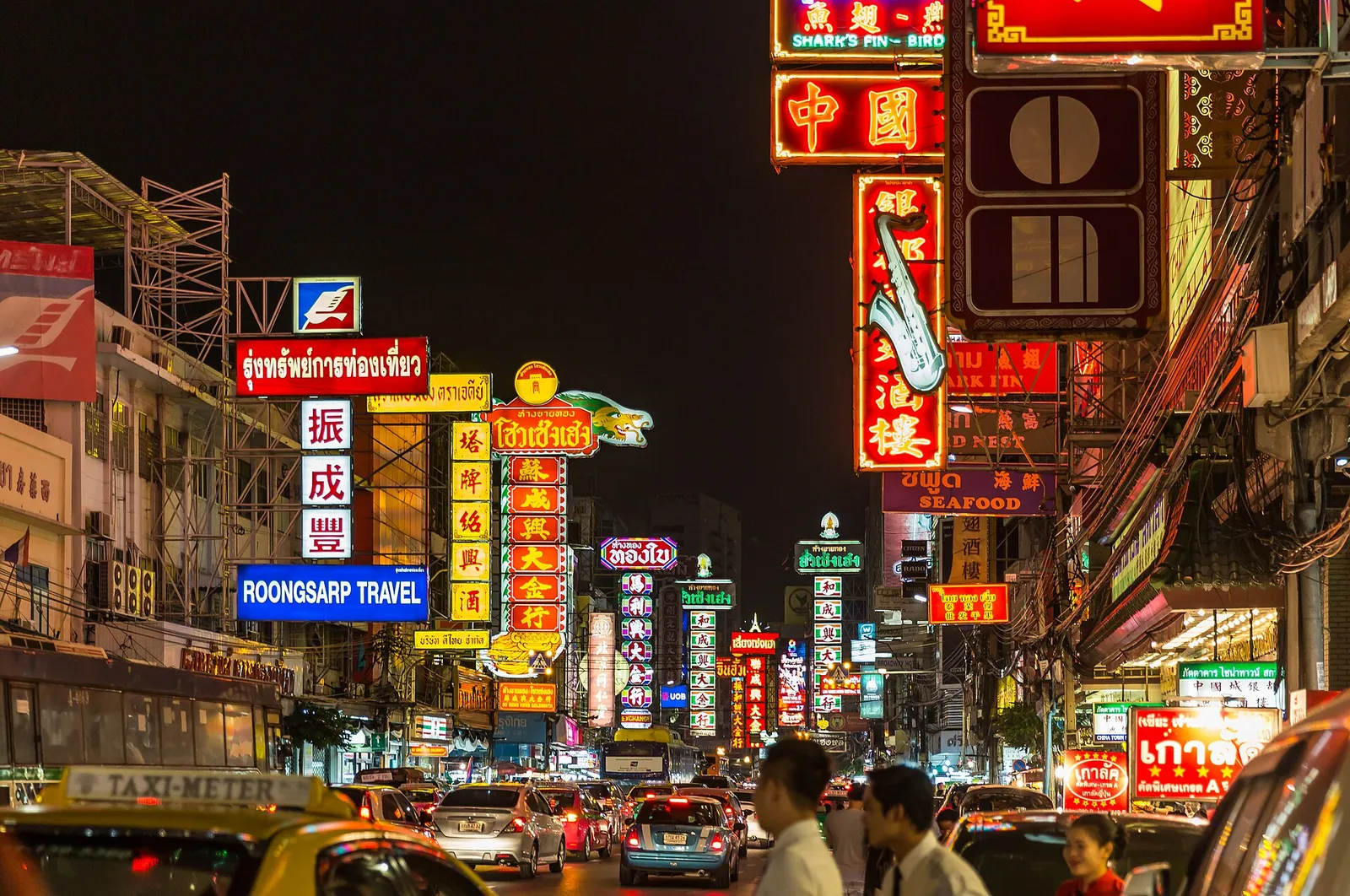
Save your appetite for this one! Today moves from old Bangkok to new Bangkok. You start in Chinatown, move by MRT and BTS to the Siam area, and finish in Lumphini Park or a rooftop bar.
Morning
Take the MRT Blue Line to Wat Mangkon or Hua Lamphong station for Yaowarat (Chinatown). Mornings here are about markets: the narrow lanes of Sampeng and the produce and dried goods shops of Yaowarat Road are at their most authentic before the tour groups arrive. Look in at Wat Traimit, home of a large gold Buddha, near the Hua Lamphong end of the district. Check the temple’s admission charge on site.
Chinatown is best explored on foot. Allow two to three hours and keep your route loose; the side lanes are the point.
Afternoon
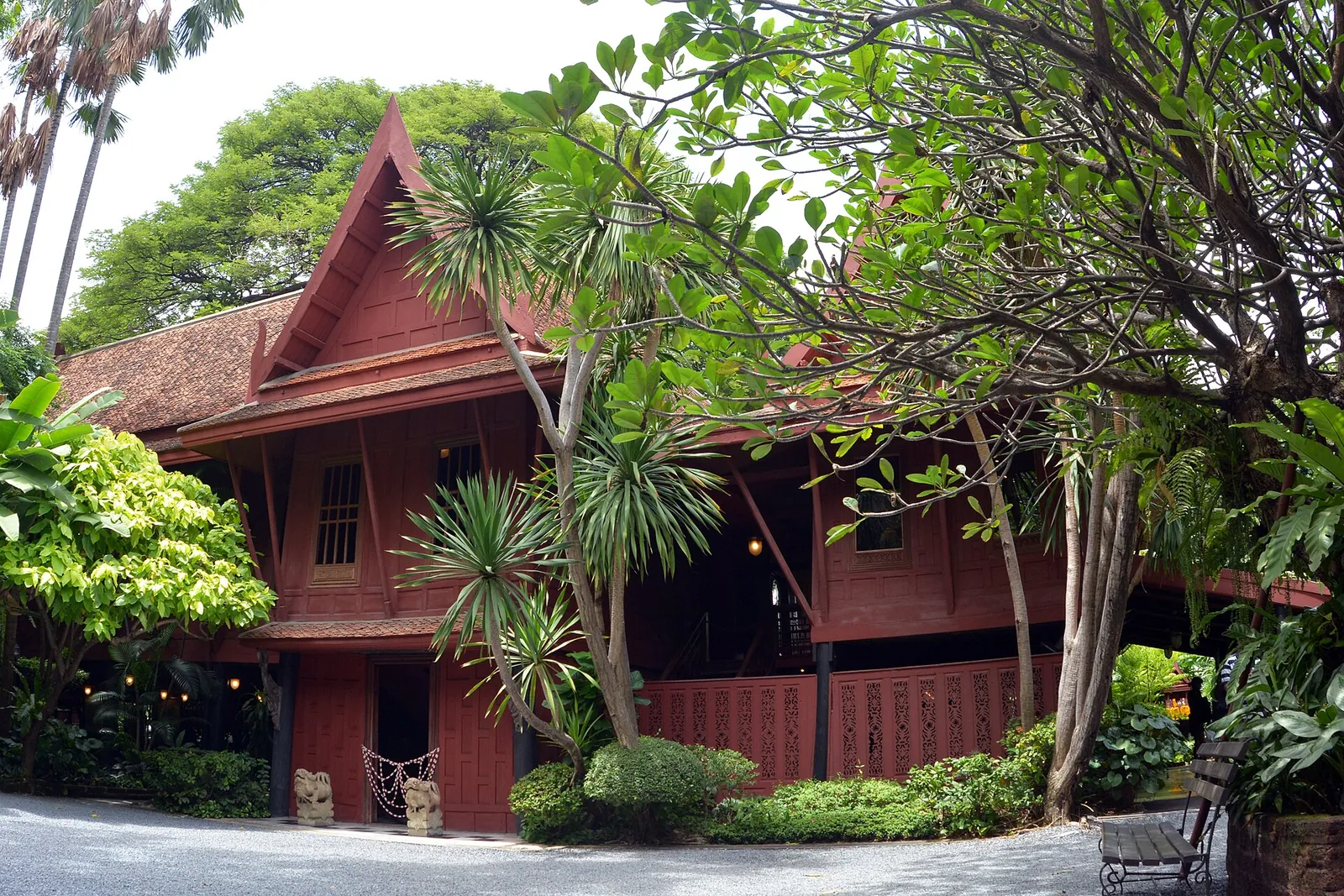
From Chinatown, take the MRT and change to the BTS (or take a taxi) to National Stadium BTS station for Jim Thompson House, the teak home and art collection of the American who helped revive Thai silk after the Second World War. The museum’s official site says it is open every day from 10:00 to 17:00, and adult admission is THB 250 (about USD 7). Visitors may only enter the main house with a guide, so build in time to join a guided group.
From here you are a few minutes from the Siam area, Bangkok’s main shopping district, with linked malls along the BTS line. It is an easy place to escape the afternoon heat, have a late lunch at a food court and pick up a SIM card or anything you forgot to pack.
Evening
Take the BTS or MRT to Lumphini Park for the cooler hours before sunset, when joggers and families fill the paths around the lake. Then choose your evening: a rooftop bar in the Silom or Sathorn business district for skyline views, or back to Yaowarat, where the street food stalls along Yaowarat Road come alive after dark.
If you prefer culture, this is a good evening for the Khon performance included in your Grand Palace ticket (weekdays only). Check the show time on the Grand Palace website and keep your ticket with you.
Day 3: Markets, cafés and the river
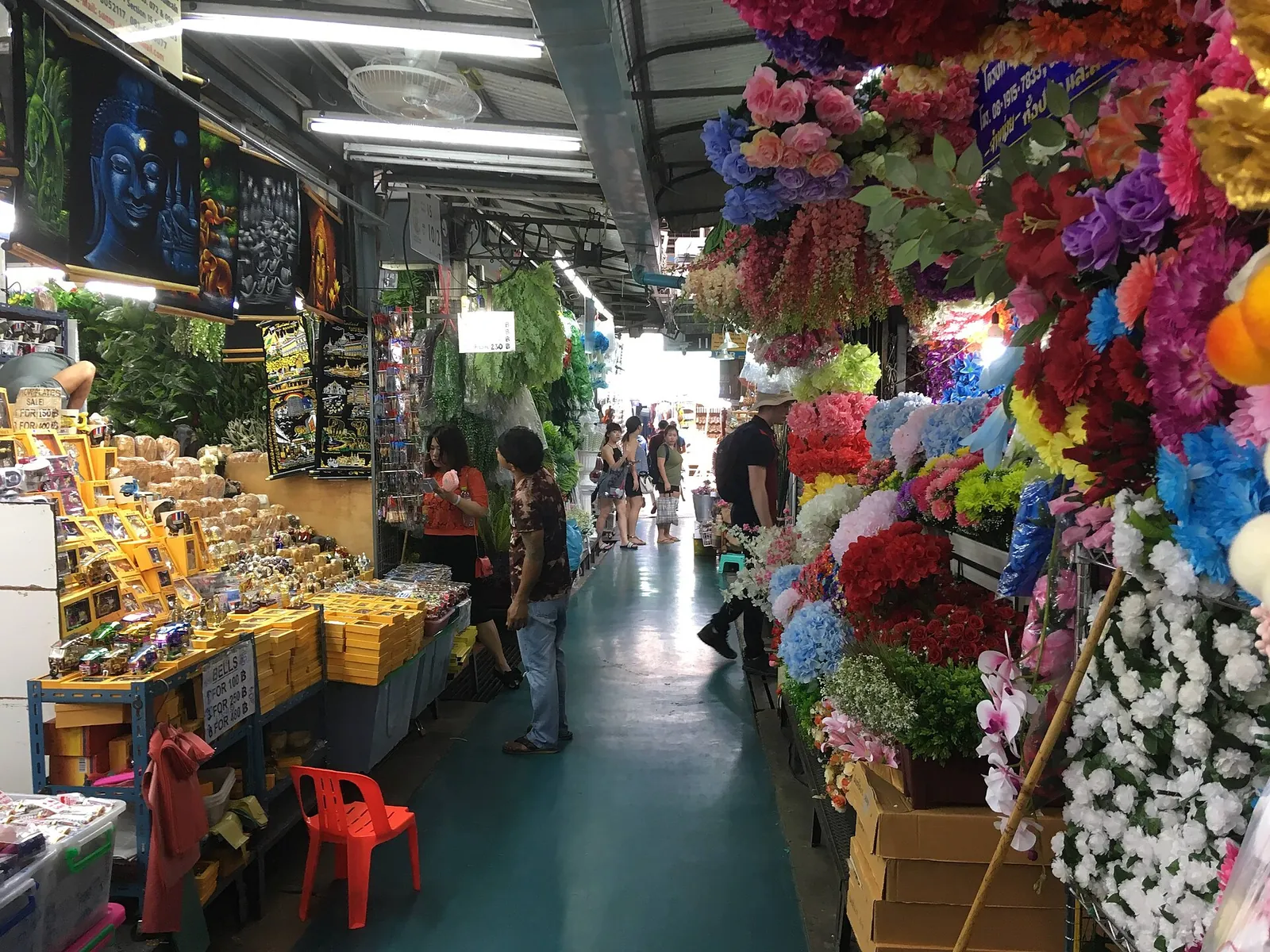
Your last day is all about browsing, sipping and floating along the river. Day 3 depends on the day of the week. Chatuchak Weekend Market is the headline on Saturdays and Sundays. On weekdays, swap it for a slower morning in Ari or a second visit to the old town.
Morning
If it is a weekend: take the BTS to Mo Chit or the MRT to Chatuchak Park or Kamphaeng Phet for Chatuchak Weekend Market, one of the largest markets in Asia, with thousands of stalls selling clothing, crafts, homeware, plants and food. We could not confirm current official opening hours, so check the official market channels before you go, and arrive early to beat the heat.
If it is a weekday: go to Ari, two BTS stops from Mo Chit, a leafy neighbourhood known for independent cafés and local restaurants. It is a relaxed way to see everyday Bangkok, and it pairs well with an afternoon on the water.
Afternoon
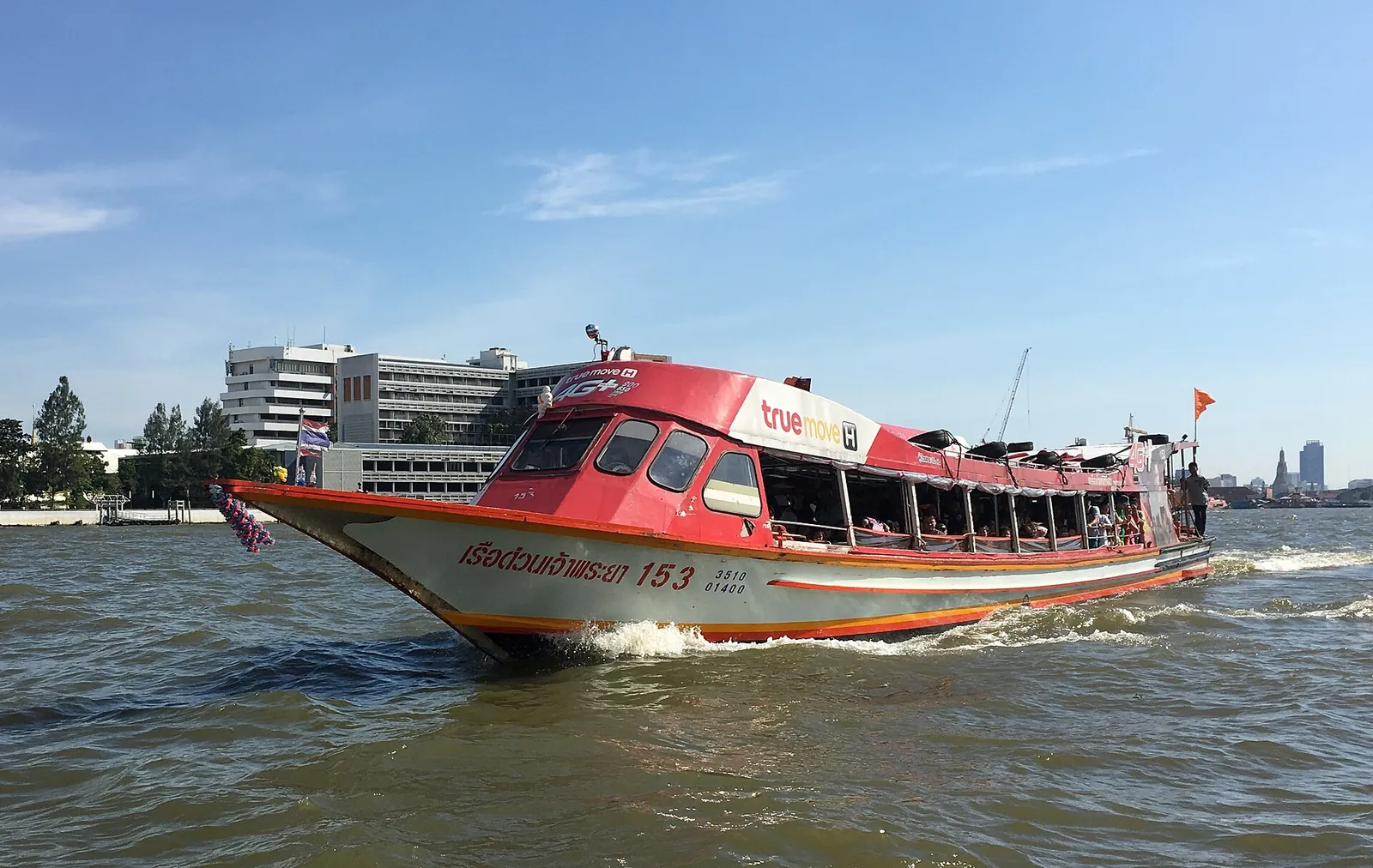
Head south by BTS to Saphan Taksin station, which connects to Sathorn Pier, the main hub of the Chao Phraya Express Boat. Riding the river is cheap, scenic and often faster than the roads. The operator’s website lists the Orange Line at a flat fare of THB 19 (about USD 0.50). Several other lines and a tourist boat service also run on the river, so check the official site for current routes, timetables and weekend service before you set out.
Use the boat to hop between riverside sights: back up to the old town for anything you missed on Day 1, or along the river to the shopping and dining complexes on both banks.
Evening
Stay on the river for your final evening. Sunset from the water, with temples and towers lit up along both banks, is a fitting finish. Dinner options range from riverside restaurants to the night markets and food halls along the river. Allow extra time back to your hotel if you are travelling on a Friday or Saturday night, when roads are at their busiest.
Getting there and getting around
From Suvarnabhumi Airport (BKK)
Most international flights land at Suvarnabhumi, east of the city.
- Airport Rail Link (City Line): runs from the station under the terminal to the city, with connections to the MRT at Makkasan and the BTS at Phaya Thai. It is the most predictable option at rush hour. We could not verify current fares and hours on an official operator site, so check before you travel. Note that an operator change for the line has been announced for 2027.
- Public taxi: use the official public taxi queue in the terminal rather than accepting offers inside the arrivals hall. Meter taxis from the airport add an airport surcharge, and expressway tolls are paid separately. Check the current surcharge on the Airports of Thailand website.
- Ride-hailing apps also operate in Bangkok. Pickup points are signposted at the airport.
Don Mueang Airport (DMK), north of the city, handles many low-cost flights. It is linked to the city by road and by the SRT Red Line from the nearby station.
Getting around the city
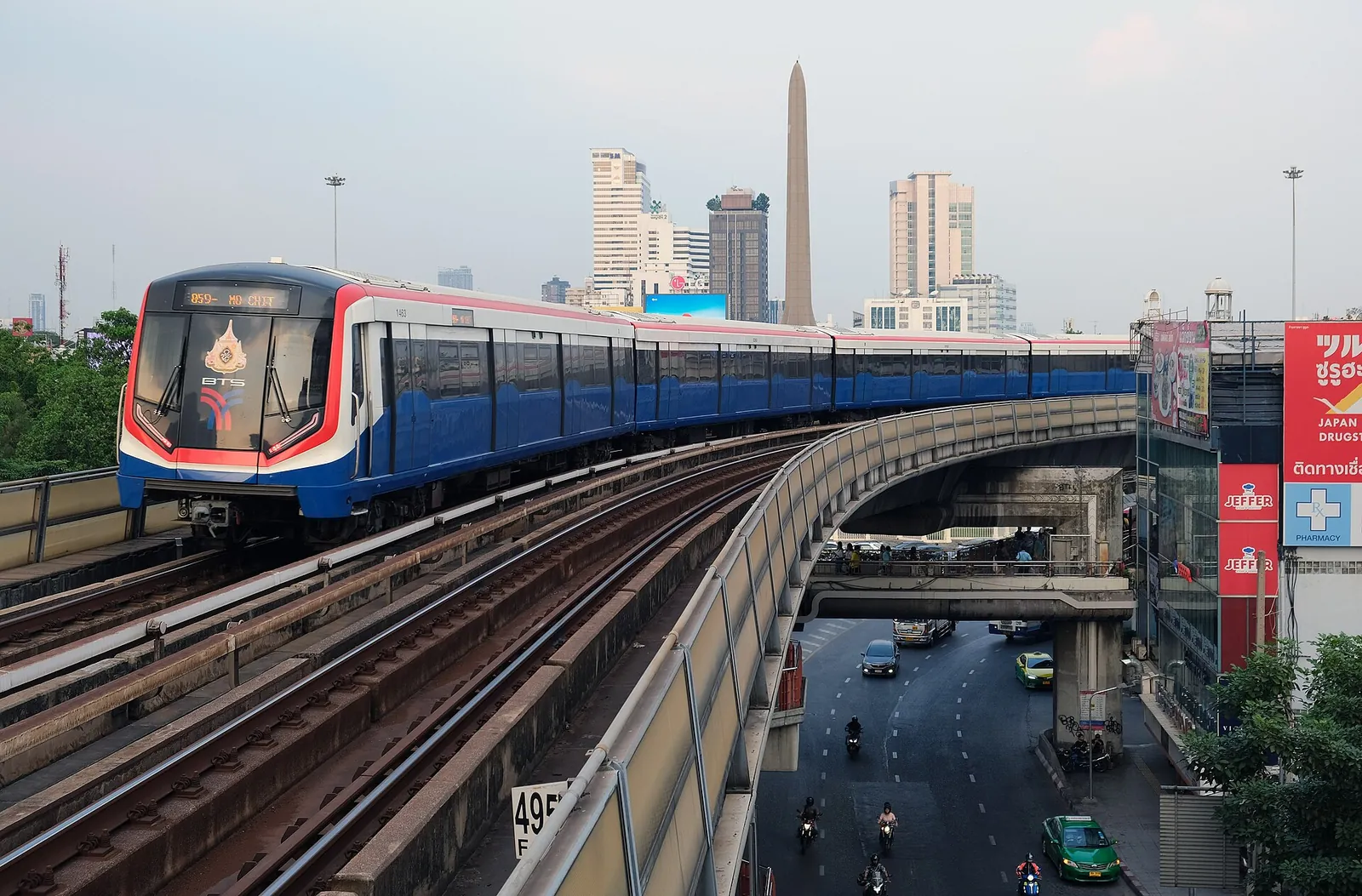
- BTS Skytrain: two main elevated lines (Sukhumvit and Silom) crossing at Siam. The BTS lists service hours of about 05:00 to 01:00, with the last trains from Siam shortly after midnight. Fares are distance-based; use the fare calculator on the BTS website.
- MRT Blue Line: the underground loop through Chinatown, Sukhumvit, Silom and Chatuchak. According to Thai PBS Verify, which confirmed it with the Mass Rapid Transit Authority of Thailand, fares from 3 July 2026 range from THB 17 to THB 44 (about USD 0.50 to 1.20), and apply to tokens and EMV contactless cards alike.
- Chao Phraya Express Boat: the best way to reach the old town and riverside sights. Orange Line flat fare THB 19.
- Taxis and tuk-tuks: taxis should use the meter. Tuk-tuks do not have meters: the Grand Palace’s own visitor information advises agreeing the price before you get in, as a tuk-tuk can end up costing more than a taxi.
BTS and MRT use separate ticketing systems, although contactless bank card payment is spreading across lines. Check your card is accepted at the gate before relying on it.
Where to stay
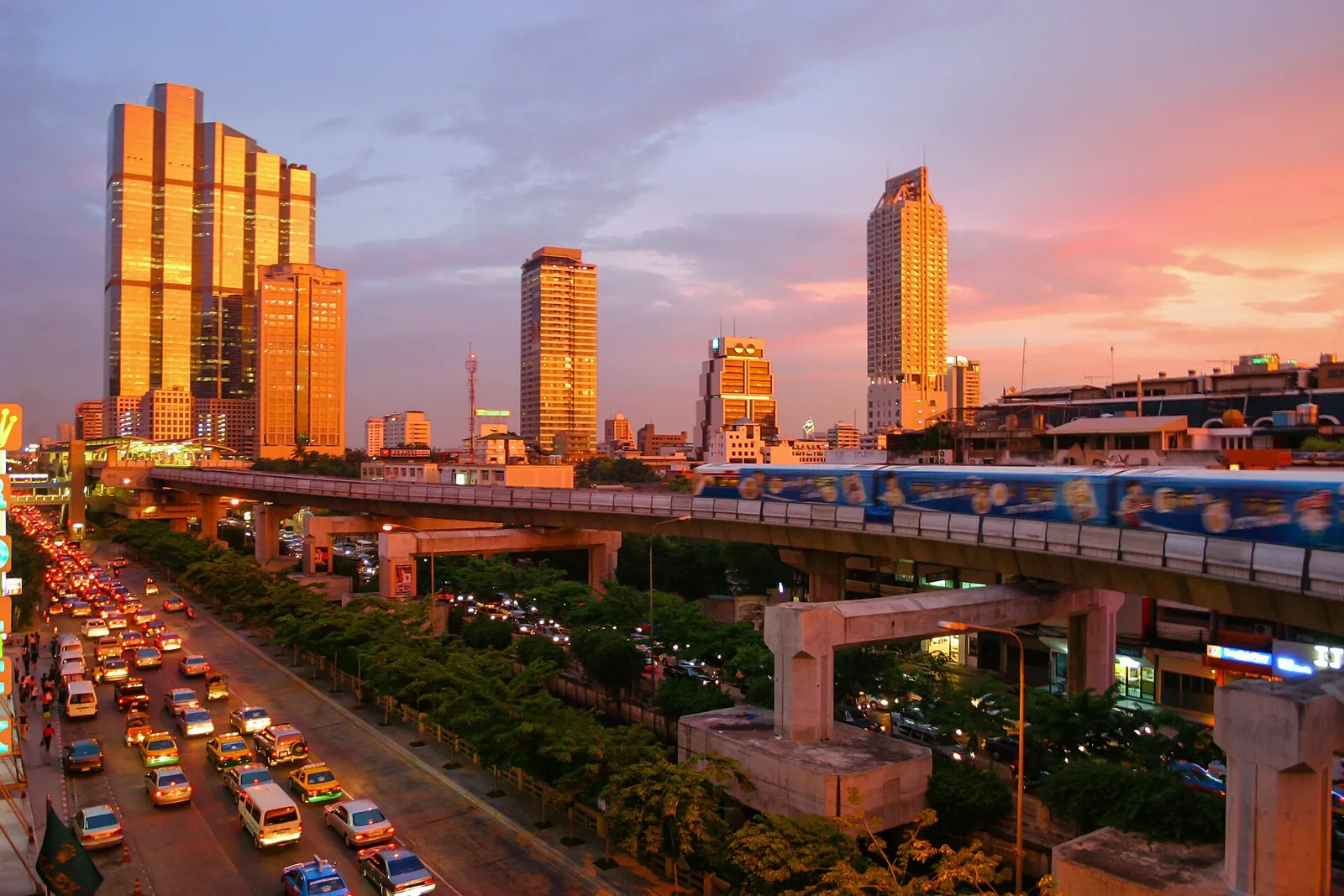
- Riverside (Charoen Krung and the Sathorn riverfront): best for first-timers who want easy boat access to the old town. Sunset views, and close to Saphan Taksin BTS and Sathorn Pier.
- Siam and Pathum Wan: the most central location for public transport, with BTS lines crossing at Siam and malls on your doorstep. Good for families and shoppers.
- Sukhumvit (Asok to Thong Lo): the widest choice of hotels, restaurants and nightlife, with both BTS and MRT (Asok and Sukhumvit stations). Good for longer stays and food lovers.
- Old town (Rattanakosin and Banglamphu): walking distance to the Grand Palace and Wat Pho, with a backpacker-friendly scene around Khao San Road. Quieter at night away from Khao San, but further from the BTS.
Budget
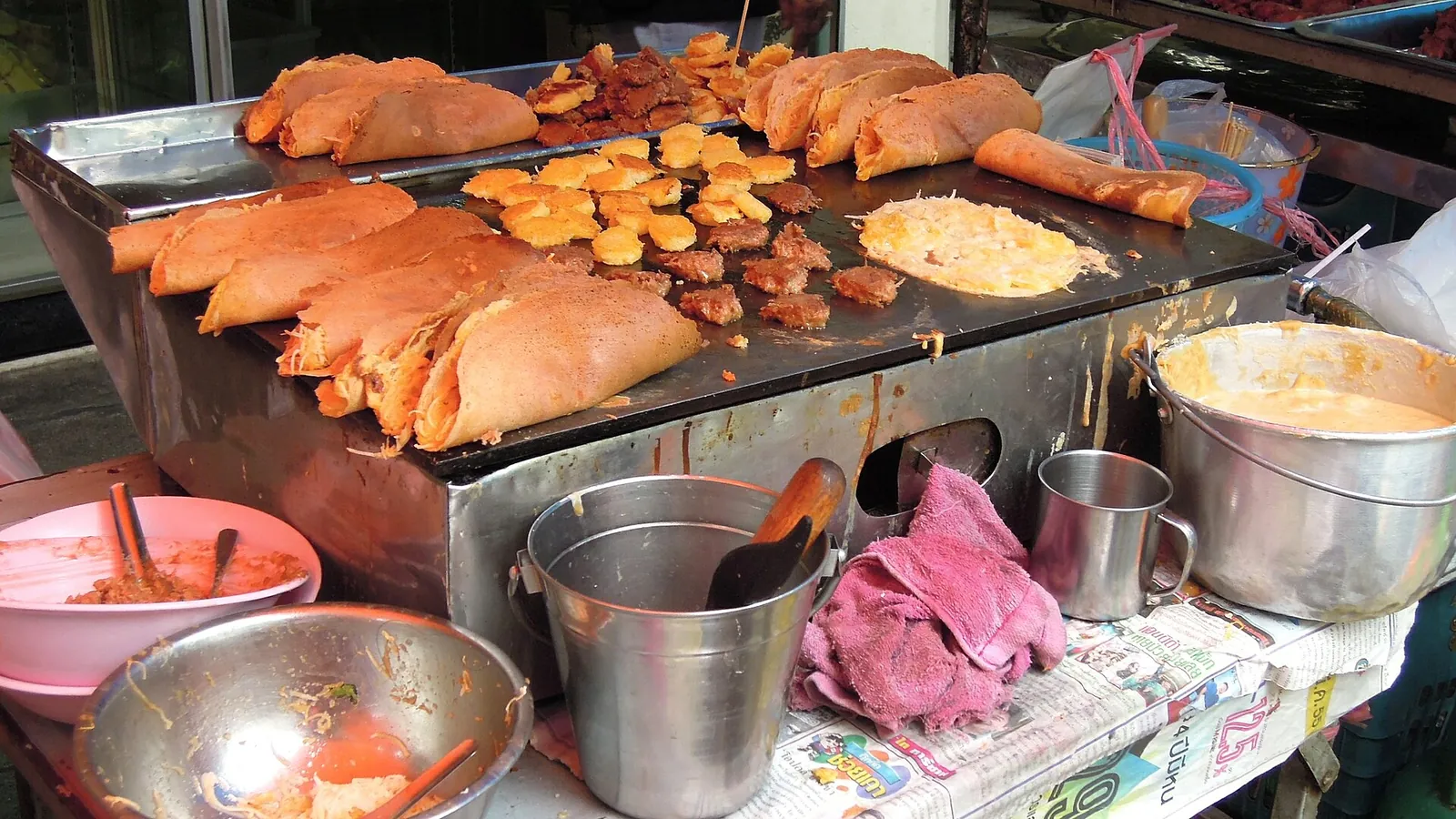
Our daily budget estimate of THB 1,500-3,500 per person (about USD 40-95) covers entrance fees, local transport, meals ranging from street food to sit-down restaurants, and a drink or two. It excludes accommodation, flights, shopping, spa treatments and guided tours. Prices below are those we could verify on official or primary sources on the check date.
| Item | Typical cost |
|---|---|
| Grand Palace and Wat Phra Kaew (foreign visitors) | THB 500 |
| Wat Pho | THB 300 |
| Jim Thompson House (adult) | THB 250 |
| Wat Arun | Check the official ticket desk |
| MRT Blue Line single journey | THB 17-44 |
| BTS Skytrain single journey | Distance-based, see BTS fare calculator |
| Chao Phraya Express Boat, Orange Line | THB 19 flat |
| Airport Rail Link to the city | Check the operator before travel |
The three paid sights alone come to THB 1,050 over the trip. Street food meals are inexpensive, while restaurants in hotels and malls cost considerably more, which is why the daily range is wide.
Practical tips
- Dress code: the Grand Palace is strict. Its official visitor information lists items that are not allowed, including sleeveless shirts, vests, short tops, see-through tops, short pants or hot pants, torn pants, tight pants, bike pants and mini skirts. Wat Pho also asks visitors to dress politely. Covering shoulders and knees, with closed or neat footwear, is the simple rule for all temples.
- Check opening times on the day: the Grand Palace’s official pages show slightly different closing times in different sections, and royal sites can close for ceremonies. Check the official site the evening before.
- Tuk-tuks: agree the fare before getting in, as the Grand Palace’s own visitor information advises.
- Drones: flying a drone over the Grand Palace is not allowed.
- Heat and hydration: plan outdoor sights for early morning and late afternoon, carry water and use the malls and museums for the hottest hours.
- SIM and eSIM: tourist SIM cards are sold at the airport and in shopping malls, and eSIMs can be bought before you fly. Bring your passport, as shops ask for it when registering a SIM.
- Money: Thai baht is the currency. Cards are widely accepted in malls and hotels, but street food, markets and boats are cash-based, so carry small notes.
- Entry requirements: rules depend on your nationality, so check the official Thailand e-Visa website before booking. In addition, all foreign travellers must complete the Thailand Digital Arrival Card (TDAC) online within three days before arrival, on the official immigration site tdac.immigration.go.th. Use only the official government website.
Heads-up: what to watch out for
Bangkok is a joy to explore, and a few simple habits keep it that way.
- Gem and jewellery “bargains”: Canada’s official travel advice describes scams where merchants sell lower-quality stones at inflated prices with a promise that you can resell them at a profit. Easy to avoid: skip any shop a stranger or driver steers you to, and only buy jewellery you would want at the price you pay.
- Licensed taxis only: the same advice recommends licensed taxis from official stands or a trusted ride-hailing app, and notes that vehicles with black and white plates are not insured to carry passengers and may not use meters.
- Tuk-tuks: fun for a short hop, but the Grand Palace’s visitor information warns they can cost more than a taxi, and the UK FCDO asks visitors to take care with bags in open transport. Agree the fare before you get in and keep your phone and bag on the inside.
- Vapes are illegal: the UK FCDO states that possessing or using any vape, e-cigarette, e-liquid or heat-not-burn device is illegal in Thailand. Simply leave them at home.
- Drones need registration: according to the UK FCDO, flying an unregistered drone is illegal, and drones must be registered with Thailand’s NBTC within 30 days of arrival. Flying over the Grand Palace is not allowed at all.
- Speak kindly of the royal family: criticising the Thai monarchy is illegal, and the UK FCDO notes the law is interpreted broadly and carries long prison sentences. Easy to avoid: keep opinions about the royal family to yourself, online too.
- Air quality: Canada’s advice says air pollution can be hazardous in Bangkok at times, and the UK FCDO notes high levels in large cities. On hazy days, check a local air quality reading and plan more indoor stops.
- Overloaded boats: passenger boat accidents have occurred due to overloading and poor maintenance, according to Canada’s travel advice. Stick to the regular river services and wait for the next boat if one looks packed.
FAQ
Is 3 days enough for Bangkok?
Yes, for a first visit. Three days covers the main temples, Chinatown, a museum, a market and time on the river at a comfortable pace. Add a fourth day if you want a day trip to Ayutthaya. Note that the Arts of the Kingdom Museum included in the Grand Palace ticket is in Ayutthaya province, so it fits that trip.
What is the best time to visit Bangkok?
November to February is the most comfortable period, with lower humidity and less rain. March to May is the hottest stretch, and the rainy season generally brings afternoon downpours later in the year.
Do I need to book the Grand Palace in advance?
It is not required, as tickets are sold at the gate from 8:30 to 15:30. Buying online on the official site in advance saves time at the ticket counter, especially in high season.
What should I wear to the temples?
Cover your shoulders and knees. The Grand Palace does not allow sleeveless tops, shorts, mini skirts, tight or torn trousers and see-through clothing. Wat Pho asks visitors to dress politely and does not allow shorts.
How do I get from the airport to the city cheaply?
The Airport Rail Link from Suvarnabhumi connects to the BTS at Phaya Thai and the MRT at Makkasan, and is usually the cheapest and most predictable option. Check the current fare with the operator before you travel.
Is the river boat worth using?
Yes. The Chao Phraya Express Boat is inexpensive (the Orange Line has a flat fare of THB 19), avoids road traffic and stops near the Grand Palace, Wat Pho, Wat Arun and the riverside hotels.
Sources
Prices, hours and rules change. We checked these on 22 October 2026; please confirm on the official page before you book.
- The Grand Palace: Buy Ticket
- The Grand Palace: Practical Information
- Wat Pho: Plan Your Visit
- Jim Thompson House Museum
- Chao Phraya Express Boat
- BTS Skytrain: Train Time and Frequency
- Thai PBS Verify: New fares for Bangkok's MRT Blue Line set at 17-44 baht
- Royal Thai Embassy Kuala Lumpur: Official Announcement on TDAC
- Thailand Digital Arrival Card (TDAC)
- Official Website of Thailand Electronic Visa
- UK FCDO: Thailand travel advice, Safety and security
- UK FCDO: Thailand travel advice, Health
- Government of Canada: Travel advice and advisories for Thailand
Photo credits (11)
- Golden spires of Wat Phra Kaew under a bright blue sky: Original image: Ninara from Helsinki, Finland. Edit: TSP, CC BY 4.0, via Wikimedia Commons
- Golden chedis framing Prasat Phra Thep Bidorn at Wat Phra Kaew: Basile Morin, CC BY-SA 4.0, via Wikimedia Commons
- Wat Arun glowing over the Chao Phraya at sunset: miketnorton, CC BY 2.0, via Wikimedia Commons
- Neon signs lighting up Yaowarat Road in Chinatown: Ninara from Helsinki, Finland, CC BY 2.0, via Wikimedia Commons
- Jim Thompson House among lush tropical gardens: Don Ramey Logan, CC BY-SA 3.0, via Wikimedia Commons
- Colourful flower stalls inside Chatuchak Weekend Market: Christophe95, CC BY-SA 4.0, via Wikimedia Commons
- An orange-flag Chao Phraya Express Boat on the river: Slleong, CC0, via Wikimedia Commons
- BTS Skytrain arriving at Victory Monument station: kallerna, CC BY-SA 4.0, via Wikimedia Commons
- Golden snacks on a griddle at a Bangkok street food stall: David McKelvey from Brisbane, Australia, CC BY 2.0, via Wikimedia Commons
- Golden sunset over Bangkok's towers and Skytrain: User:Diliff, CC BY-SA 3.0, via Wikimedia Commons
- The giant golden Reclining Buddha at Wat Pho: Wolfgang Holzem / https://ehalal.io/, CC BY-SA 4.0, via Wikimedia Commons
This is a researched plan, not a personal trip report. How we research · Affiliate disclosure