
3 Days in Brussels and Bruges: A Day-by-Day Itinerary
Three days in Brussels and Bruges: Grand-Place, Magritte and the Atomium, plus a Bruges day trip with the Belfry climb and a canal boat. Prices checked.
- 🗓️ Trip length
- 3 days
- ☀️ Best time
- April to June and September
- 💰 Daily spend
- About EUR 25-45 for sights and city transport (rooms, meals and intercity trains extra)
- ✅ Facts checked
- 24 October 2026
Get ready for chocolate-box squares, surrealist art, a giant shiny atom and the prettiest canals in northern Europe, all in one long weekend. This plan gives you two days in Brussels and one full day in Bruges, using Brussels as your base so you only unpack once.
The pace is relaxed but full: two to four headline sights a day, lots of strolling between them and time left over for waffles, frites and a long dinner. It suits first-timers, couples, friends and families with older kids who are happy to walk. Plan less, see more.
At a glance
| Day | Area | Highlights |
|---|---|---|
| Day 1 | Brussels Old Town and Mont des Arts | Grand-Place, Galeries Royales Saint-Hubert, Manneken Pis, Magritte Museum, Sablon |
| Day 2 | Bruges day trip | Belfry climb, Markt and Burg, canal boat, Michelangelo’s Madonna, Begijnhof |
| Day 3 | Heysel and the European Quarter | Atomium, Design Museum Brussels, Schuman area, farewell dinner |
One timing tip before you start: the Magritte Museum is closed on Mondays, so do not schedule Day 1 on a Monday.
Day 1: Grand-Place, Old Town and Magritte
Morning
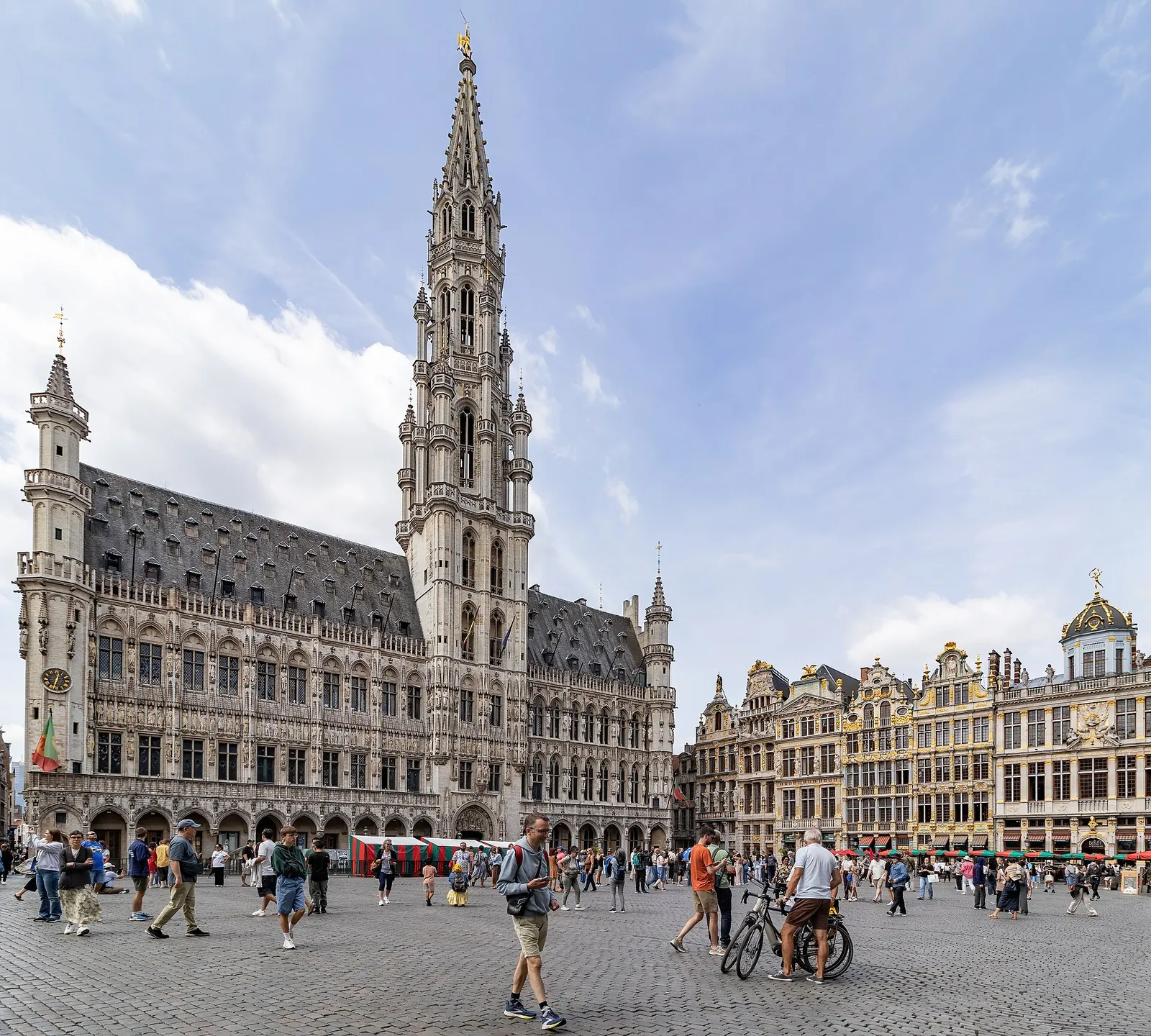
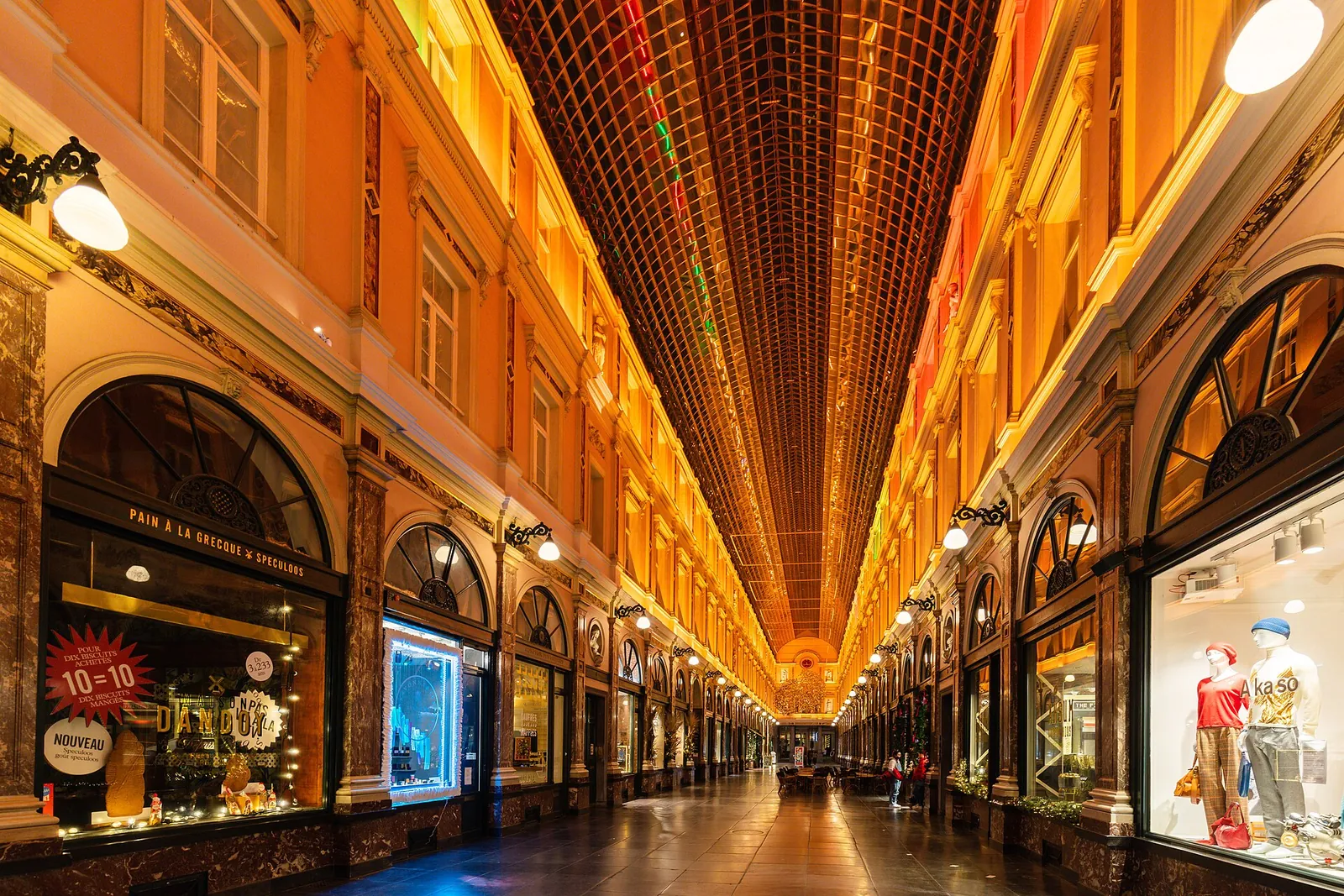
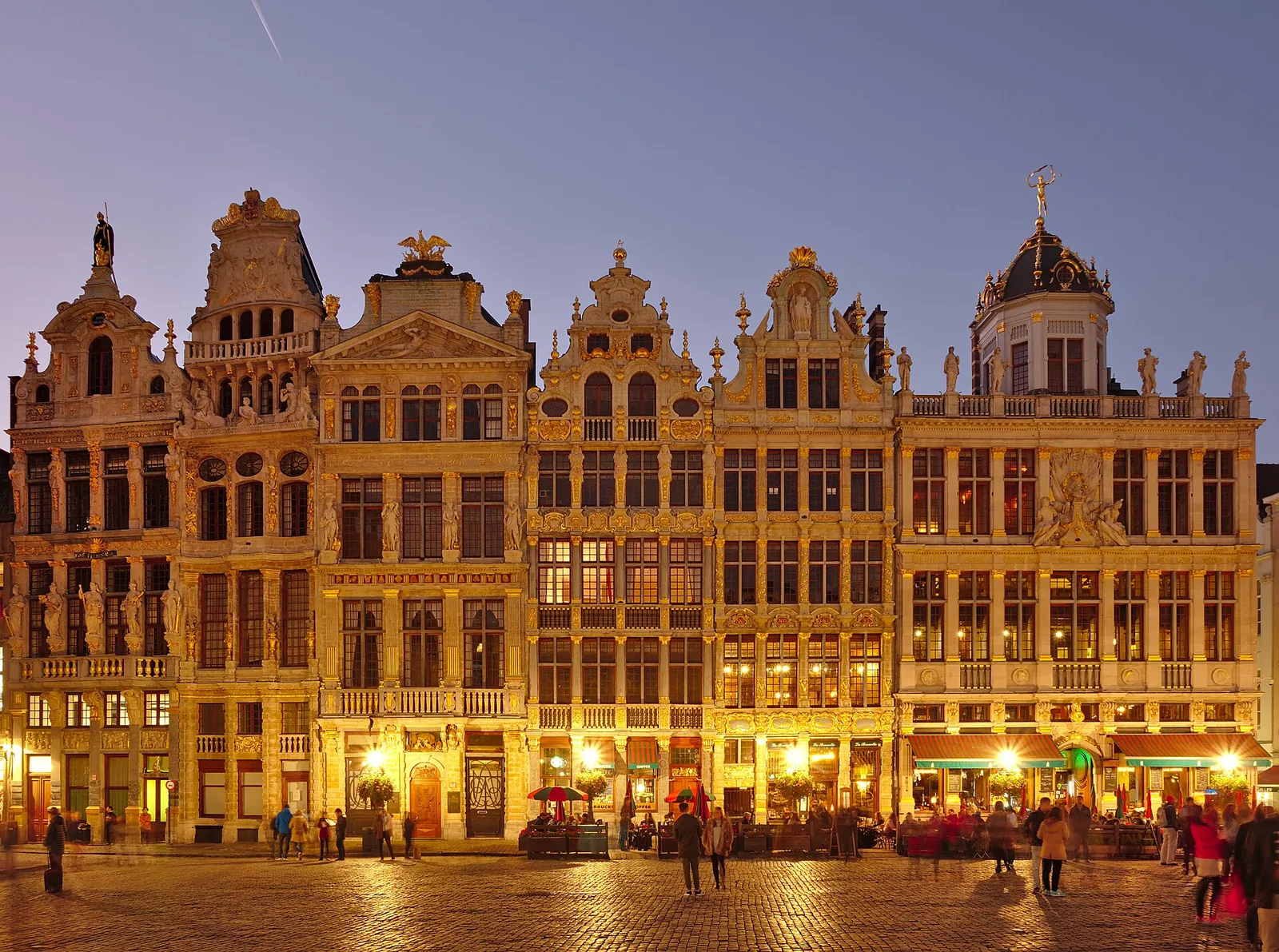
Your trip opens with a showstopper: the Grand-Place, the gilded heart of Brussels. It is free, open to all and at its most photogenic early in the day before the tour groups arrive. Take your time with the guild houses and the Gothic Town Hall, then wander into the elegant glass-roofed Galeries Royales Saint-Hubert, a two or three minute walk away, for a first look at Belgian chocolate shops.
Next, head to Manneken Pis, roughly five minutes on foot from the Grand-Place. He is famously tiny, so don’t expect a monument, just a fun photo stop with a waffle stand never far away.
Afternoon
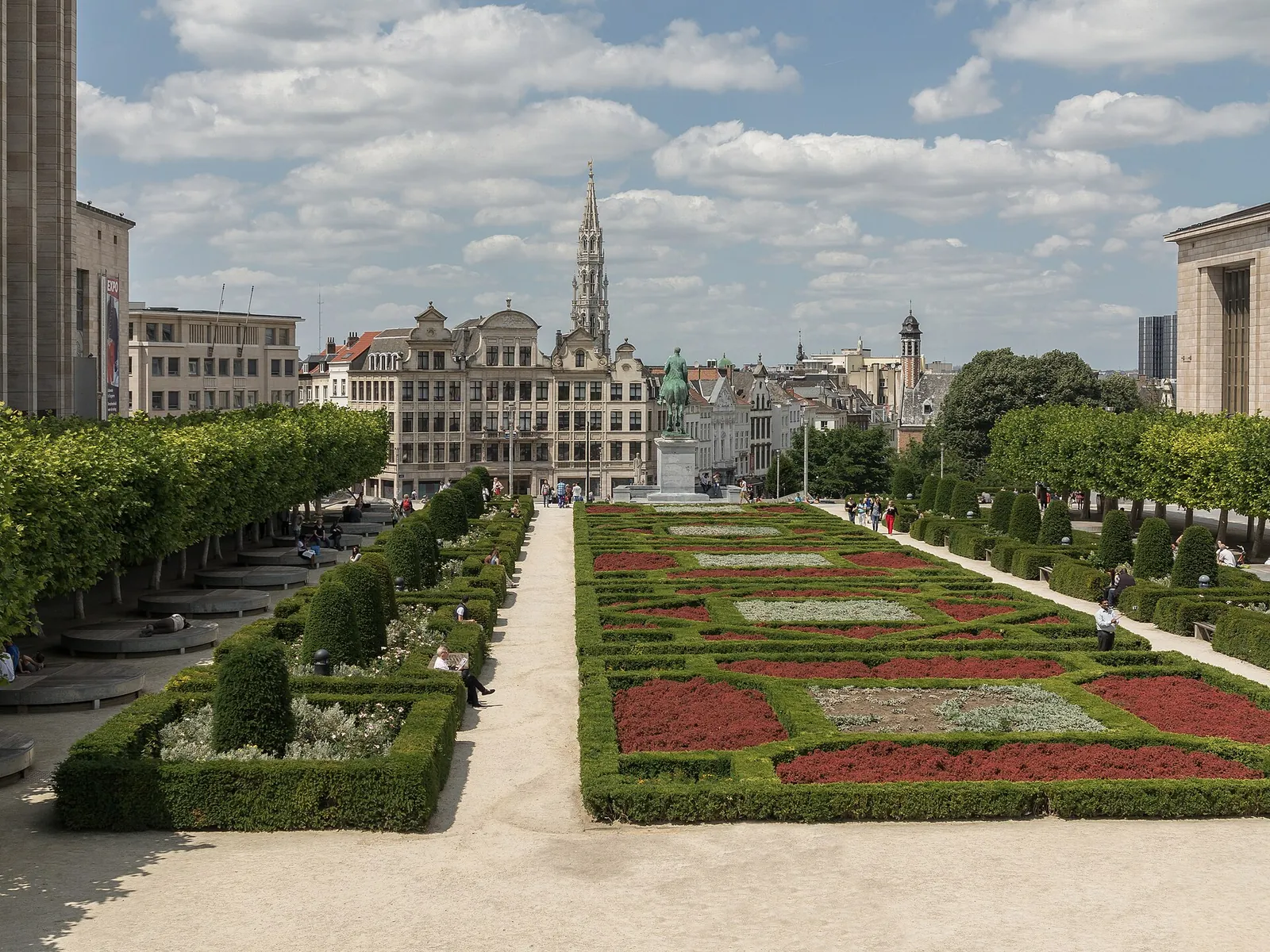
Walk uphill to the Mont des Arts (about 10 to 15 minutes from Manneken Pis) for one of the best free views over the Old Town. From there it is a short stroll to Place Royale and the Magritte Museum, part of the Royal Museums of Fine Arts of Belgium. It holds the world’s largest Magritte collection, with more than 230 artworks and archival items.
Good to know:
- Opening hours are Tuesday to Friday 10:00-17:00 and weekends 11:00-18:00. Ticket offices close at 16:30 on weekdays and 17:30 at weekends.
- The Magritte entrance at Place Royale 2 is reserved for visitors who booked online. Without a ticket, you go through the main entrance at Rue de la Régence 3. So book online on the official site.
- A combi ticket adds the Old Masters Museum. Check the official site for current prices.
- On the first Wednesday of each month, the permanent collections and the Magritte Museum are free from 13:00 (pick up your ticket at the desk on the day, subject to availability).
Afterwards, wander five to ten minutes down to the Sablon district for chocolatiers, antique shops and a café break.
Evening
Drift back to the Grand-Place to see it lit up after dark, then walk about 10 minutes to the Sainte-Catherine area for dinner. It is a lively spot for seafood, Belgian classics and a local beer.
Day 2: A day trip to Bruges
Morning
Get ready for a fairytale day! Take an early train from Brussels to Bruges. Trains run from the main Brussels stations, and you can check times and buy tickets in the SNCB app or on belgiantrain.be. Make sure you get off at “Brugge” station: Visit Bruges points out that Brugge Sint-Pieters is in the north-east and not the stop you want, while Brugge station is within walking distance of the historic centre. Allow roughly 20 to 25 minutes to walk to the Markt, or take a De Lijn bus.
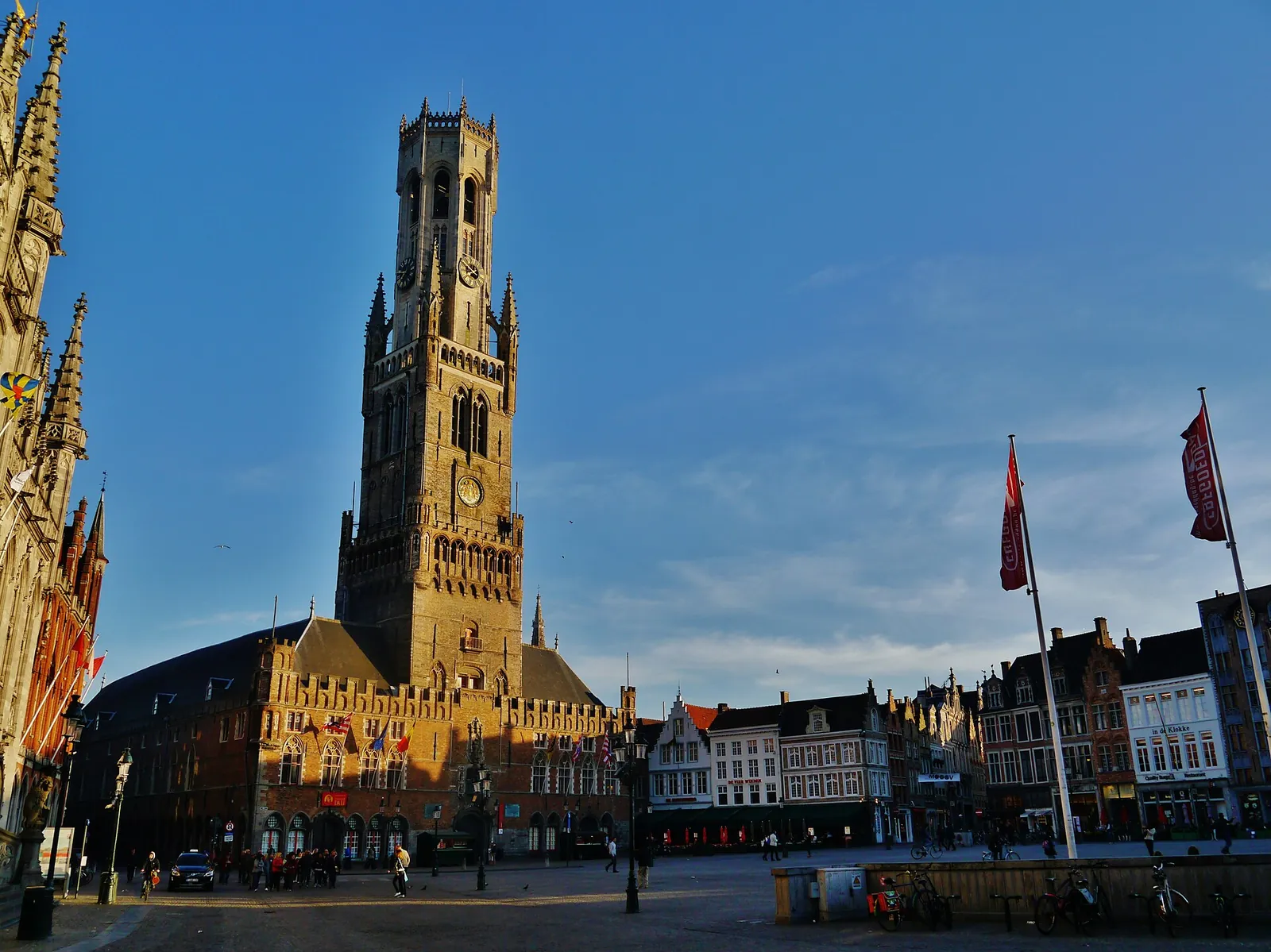
Your first big moment: climbing the Belfry on the Markt. It is 366 steps to the top of the 83-metre tower, and the view over the red rooftops is the reward.
- Book a time slot in advance on the Musea Brugge website. Visitor numbers are capped, with roughly 15 to 25 people starting the climb every 20 minutes.
- Prices: EUR 16 for adults at weekends and in the summer season (1 April to 2 November), EUR 15 on weekdays in the winter season (3 November to 31 March). Under-18s pay EUR 14 or 13, under-7s are free.
- Hours: 9:00-20:00 daily in summer. In winter it is 10:00-18:00 Monday to Friday and Sunday, 9:00-20:00 on Saturday. Last entry is one hour before closing.
From the Markt, walk two minutes to the Burg square, home to the ornate City Hall and the Basilica of the Holy Blood (check opening hours locally before you go).
Afternoon
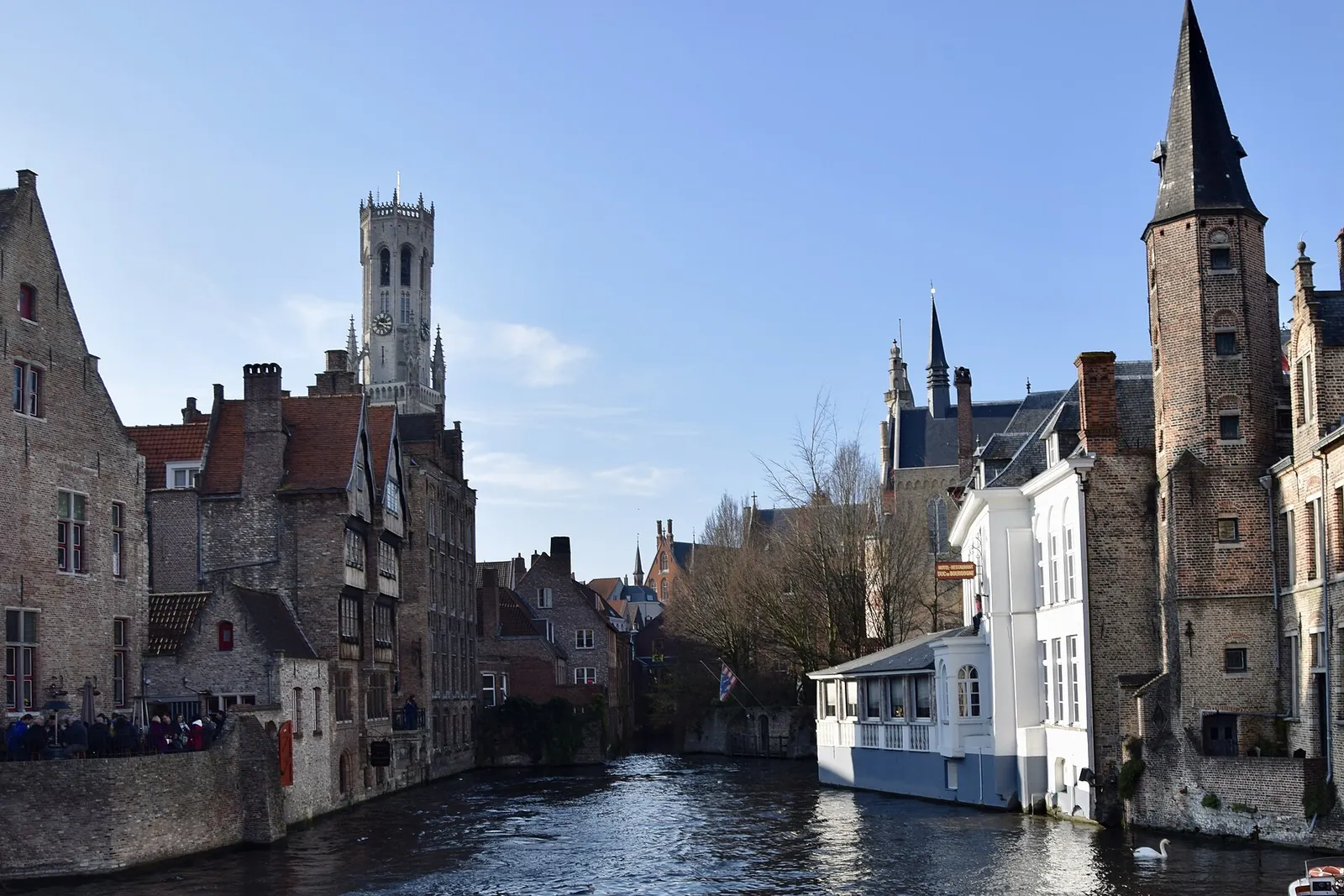
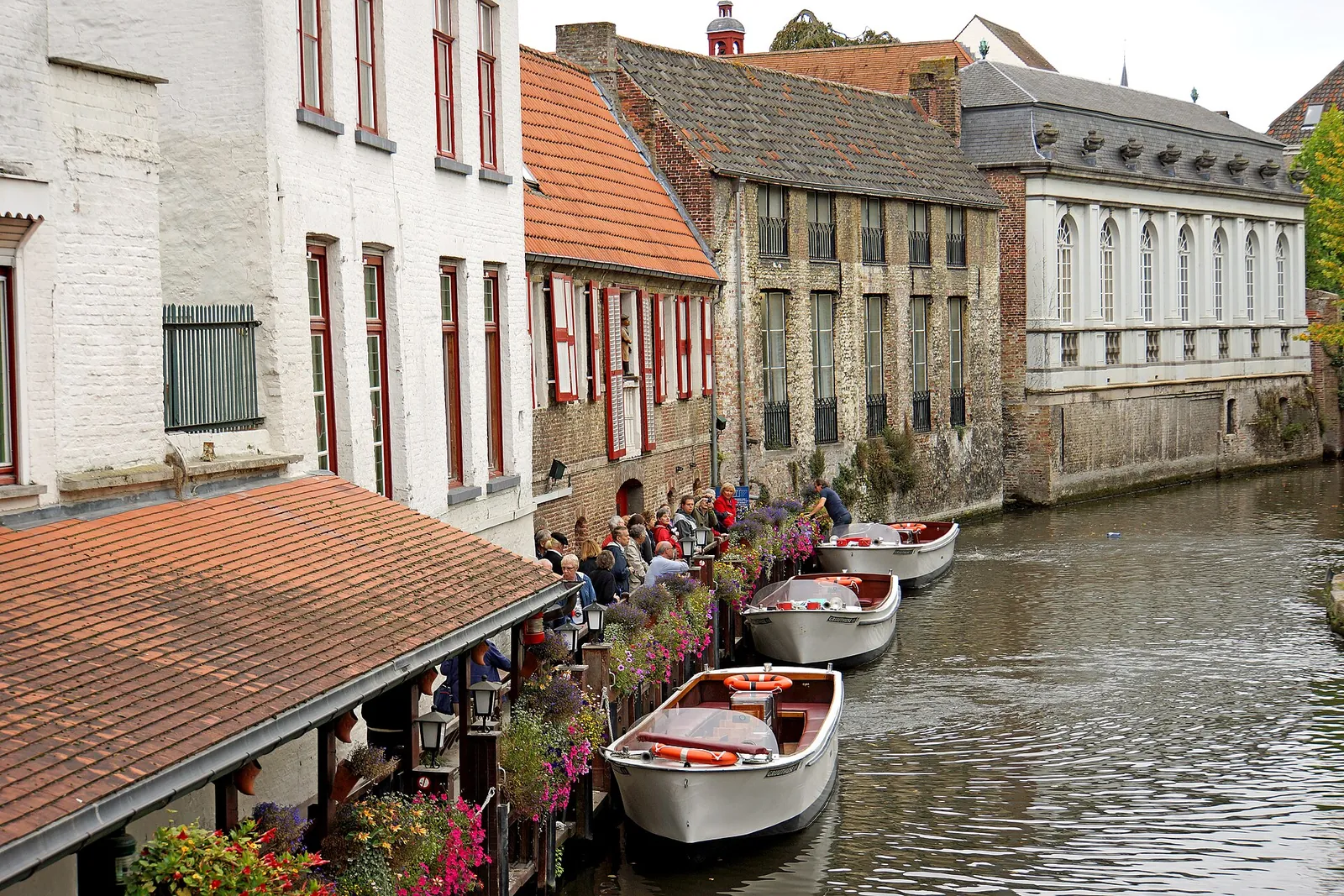
Stroll about three minutes to the Rozenhoedkaai, the classic Bruges postcard view, and hop on a canal boat. The tour lasts half an hour and shows you corners you can only see from the water.
- Price: EUR 15 for adults and EUR 9 for children aged 4 to 11, valid until 31 December 2026.
- You cannot book in advance as an individual. Buy at one of the five jetties (Huidenvettersplein 13, Rozenhoedkaai, Wollestraat 32, Nieuwstraat 11 or Katelijnestraat 4) and expect queues at busy times.
- Boats are guaranteed daily from March through October, 10:00-18:00, with the last departure half an hour before closing.
Then walk five to eight minutes to the Church of Our Lady (O.L.V.-kerk). Visiting the church is free, but the museum section with Michelangelo’s “Madonna and Child” and the tombs of Charles the Bold and Mary of Burgundy needs a ticket: EUR 10 standard, or EUR 19 combined with the neighbouring Gruuthusemuseum. It opens 9:30-17:00, and on Sunday 13:30-17:00.
Finish with a peaceful wander through the Begijnhof and along the Minnewater lake, about 10 minutes south. From there, Brugge station is roughly a 10 to 15 minute walk.
Evening
Catch a train back to Brussels for dinner, or linger in Bruges for golden-hour canal views before heading back. If you love art, swap the Begijnhof for the Groeninge Museum (check hours and prices on the Musea Brugge site).
Day 3: Atomium and the European Quarter
Morning
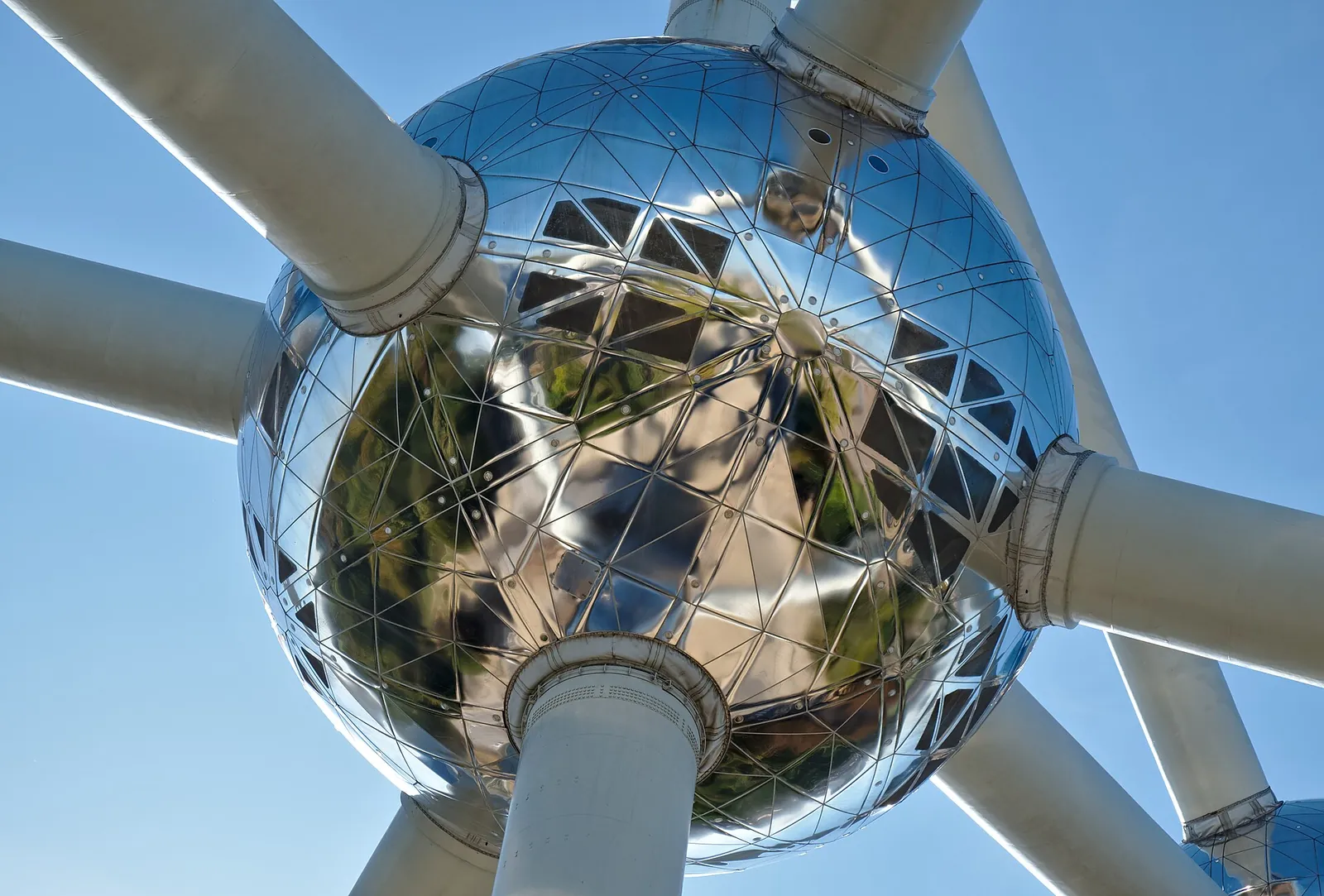
This is the day for something completely different. Ride the metro to Heysel/Heizel for the Atomium. According to the Atomium, line 6 runs direct from Brussels-South (about 15 minutes). From De Brouckère near the Grand-Place, take line 1 to Beekkant and switch to line 6, again about 15 minutes in total.
- Open daily 10:00-18:00, with last entry and ticket office closing at 17:30.
- Adult ticket: EUR 17, including the 5 accessible spheres and the nearby Design Museum Brussels (150 metres away, open 11:00-19:00).
- Arrive at 10:00 opening time. The Atomium advises avoiding the 11:00-15:00 peak.
- Right now, tickets are exceptionally sold on site only, and the Atomium warns of 45-minute to 2-hour waits. Check its website on the morning of your visit.
Afternoon
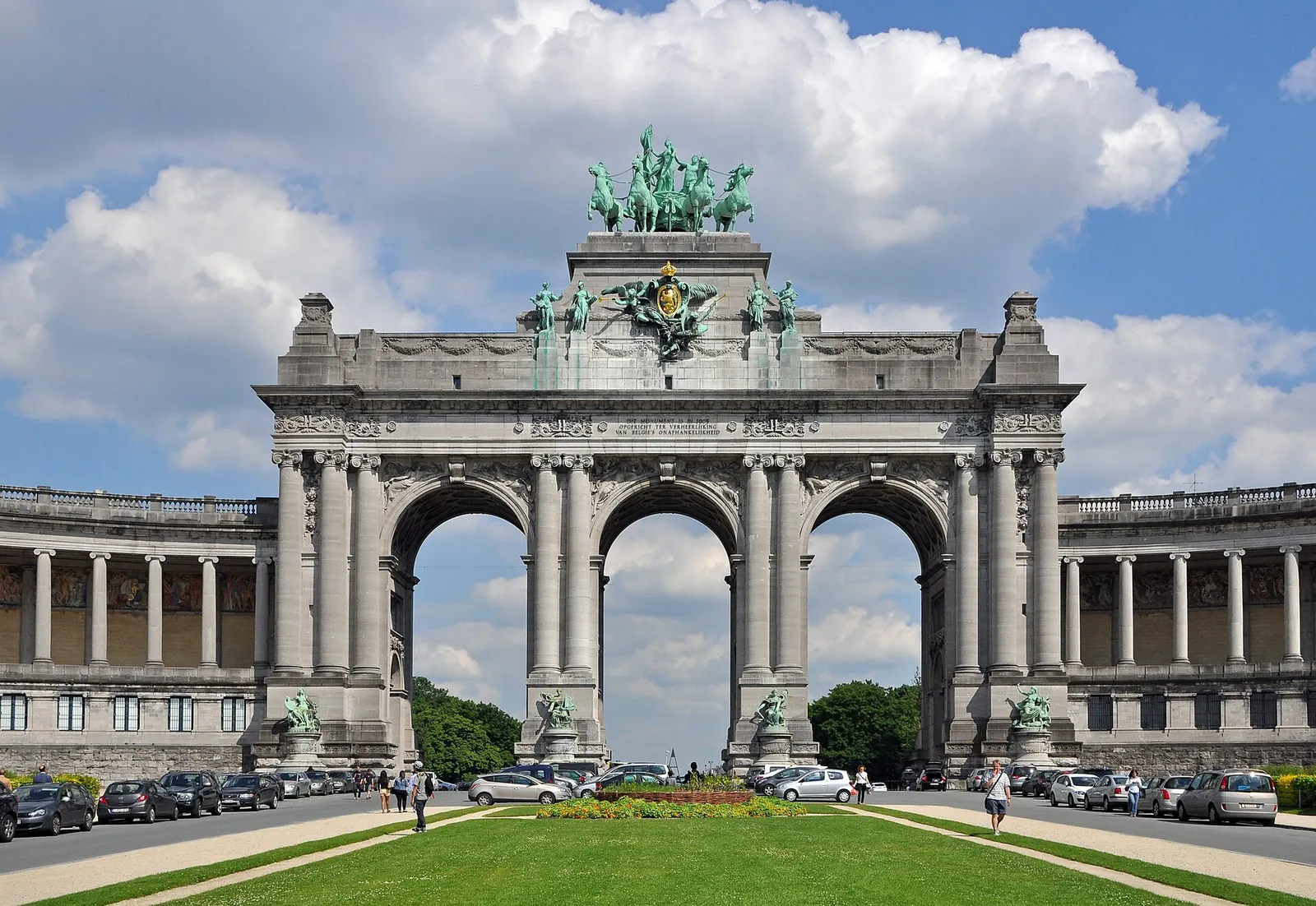
Head back towards the centre and on to Schuman, served by metro lines 1 and 5, for the European Quarter. Walk around the EU institution buildings, and if you’d like to go inside, check opening hours for the Parlamentarium visitor centre on the European Parliament’s official site. The green Parc du Cinquantenaire with its grand triumphal arch is a pleasant walk from Schuman.
Evening
Celebrate your last night with moules-frites or a Belgian beer tasting. Flying out? Bus 12 runs from the city to Brussels Airport, and you can use any STIB ticket in that direction.
Getting there and getting around
From Brussels Airport (Zaventem):
- Train: the station is directly under the terminal (level -1). The trip to Brussels-Central takes around 18 minutes. A Standard Ticket already includes the Brussels Airport Supplement. Check the current total fare in the SNCB app before you travel. Up to four children under 12 travel free with an adult. Keep your ticket handy: you scan it at the gates to enter and exit the airport station.
- Bus 12 (Airport Line): a direct STIB link to the city. From the airport you need an “Airport2City” fare: EUR 7.90 with contactless or a MOBIB card, EUR 8.40 with a paper ticket. Regular Brupass tickets are not valid from the airport. Within the first hour you can connect onto the metro, for example at Schuman (lines 1 and 5) or Trône (lines 2 and 6).
From Brussels South Charleroi Airport: it is much further from the city and, as Brussels Airport notes, needs a bus transfer to the nearest train station. Check the airport’s official site for current shuttle and train options.
Getting around Brussels: STIB runs the metro, trams and buses.
- Contactless is easiest: tap your bank card, phone or watch. One journey costs EUR 2.40, connections within 60 minutes are free, and you never pay more than EUR 8.50 a day.
- Brupass tickets: EUR 2.70 for one journey, EUR 18.90 for ten, or EUR 9.50 for a 1-day ticket on a MOBIB card. Brupass also covers SNCB, TEC and De Lijn within the Brussels-Capital Region.
Getting around Bruges: the centre is compact and best on foot. Many streets are car-free or restricted, and De Lijn buses link the station with the centre.
Where to stay
- Grand-Place and Ilot Sacré: stay right in the action and walk everywhere. Perfect for first-timers on a short break, though it is the busiest and noisiest area at night.
- Sainte-Catherine and Dansaert: a little calmer, with great restaurants and bars on your doorstep. Ideal for food lovers and couples.
- Around Brussels-Central and Mont des Arts: the smartest choice for this plan. Airport trains arrive here, it is an easy starting point for your Bruges day trip (check departures in the SNCB app), and the Magritte Museum and Sablon are a short walk away.
- Bruges (as an alternative): if you dream of quiet canals after the day-trippers leave, spend one night in Bruges and shuffle the days around.
Budget
Prices below come from official sources as of 24 October 2026. Accommodation, meals, intercity trains and flights are not included, as they vary widely by season and style.
| Item | Typical cost |
|---|---|
| STIB journey (contactless) | EUR 2.40, max EUR 8.50 per day |
| Brupass 1 journey / 10 journeys | EUR 2.70 / EUR 18.90 |
| Airport bus 12 (Airport2City) | EUR 7.90 contactless, EUR 8.40 paper |
| Airport train to Brussels-Central | Check the SNCB app |
| Return train Brussels to Bruges | Check the SNCB app |
| Magritte Museum | Check the official site |
| Atomium (adult, incl. Design Museum Brussels) | EUR 17 |
| Bruges Belfry (adult) | EUR 15-16 depending on season and day |
| Bruges canal boat (adult) | EUR 15 |
| O.L.V.-kerk Museum (adult) | EUR 10 (church itself free) |
| Musea Brugge Card, 72 hours | EUR 49 standard (lower rates for younger visitors) |
Your sights and city transport add up to roughly EUR 25-45 a day on this plan, depending on the day. The Musea Brugge Card covers the Belfry and other Musea Brugge locations for 72 hours, so it only pays off if you add more museums, such as the Groeninge.
Practical tips
- Closing days: the Royal Museums of Fine Arts (including Magritte) close on Mondays and on some public holidays such as 1 January, 1 May, 1 and 11 November and 25 December.
- Bag checks: the Royal Museums run extra security checks, and suitcases are only accepted in the cloakroom if smaller than 55x50x35 cm. Drop your luggage at your hotel first.
- Churches: the Church of Our Lady can close for weddings or funerals, so check the calendar on the Musea Brugge site. Modest clothing is a kind gesture in any active church.
- Money: Belgium uses the euro. Contactless cards work on all STIB transport and for Belfry tickets, so you will rarely need much cash.
- SIM and eSIM: an eSIM bought before departure, or a local prepaid SIM from a shop in town, keeps maps and transport apps running. Travellers with an EU SIM can usually use their home allowance, but check with your provider.
- Apps to download: SNCB (trains), STIB-MIVB (Brussels transport) and De Lijn (Bruges buses).
- Entry rules: Belgium is part of the Schengen area. Visa requirements depend on your nationality, so check the official Belgian Immigration Office portal at dofi.ibz.be and the FPS Foreign Affairs site at diplomatie.belgium.be well before you book. For any new EU-wide entry formalities, see the official EU site travel-europe.europa.eu.
Heads-up
A few friendly warnings so nothing spoils your trip:
- Atomium queues and closures: tickets are currently on site only, with possible waits of 45 minutes to 2 hours. When strong winds blow, the top Panorama sphere can close (with reduced admission). The Atomium also shuts for annual maintenance from 18 January to 5 February 2027.
- Wrong station in Bruges: get off at “Brugge”, not “Brugge Sint-Pieters”, unless you fancy a much longer walk.
- Belfry and weather: the Belfry is open year-round but may close in exceptional cases due to bad weather. With 366 steps to climb, pace yourself and take breaks on the way up.
- Winter boats: from November through February, only one jetty is guaranteed to run boat tours each day (on a rotation), and timings can change with the weather.
- Bank card blocks on STIB: you need at least EUR 2.40 available on your card when you tap. If not, STIB says the card gets blocked for travel until you contact Client Support.
- Don’t drive in: the Brussels-Capital Region is a Low Emission Zone, and foreign-registered vehicles must register first (free). Parking around the Atomium is not guarded, and Bruges has many car-free streets. Trains and the metro are simply easier.
FAQ
Can I really see Bruges as a day trip from Brussels?
Yes. Trains link the two cities, and the centre of Bruges is compact enough to cover the highlights in one day. Check times and fares in the SNCB app.
What should I book in advance?
Book a Belfry time slot on the Musea Brugge site and a Magritte Museum ticket online, which also gets you the quicker Place Royale entrance. Canal boats cannot be pre-booked, and Atomium tickets are currently sold on site only.
Is the Musea Brugge Card worth it?
At EUR 49 for 72 hours, only if you plan to visit several Musea Brugge locations. For just the Belfry and the O.L.V.-kerk Museum, single tickets cost less.
Can I pay for Brussels public transport with my card?
Yes. Tap a contactless bank card, phone or watch at the validator: EUR 2.40 per journey, with a daily cap of EUR 8.50. From the airport on bus 12, the Airport2City fare of EUR 7.90 applies.
When is the best time to go?
Late spring and September usually bring comfortable sightseeing weather. Bruges boat tours are guaranteed daily from March through October, which makes those months extra appealing.
Which day should I avoid for museums?
Monday. The Magritte Museum and the Old Masters Museum are closed, so plan your Brussels art day for Tuesday to Sunday.
Sources
Prices, hours and rules change. We checked these on 24 October 2026; please confirm on the official page before you book.
- Brussels Airport: Train to and from Brussels Airport
- SNCB: By train to Brussels Airport-Zaventem
- STIB-MIVB: Airport line
- STIB-MIVB: Your bank card is your ticket
- STIB-MIVB: Brupass and Brupass XL tickets and season tickets
- Atomium: Opening hours
- Atomium: Prices
- Atomium: Access
- Atomium: Plan your visit
- Royal Museums of Fine Arts of Belgium: Opening hours
- Royal Museums of Fine Arts of Belgium: Collections tickets
- Musea Brugge: Belfort
- Visit Bruges: Belfort (Belfry)
- Musea Brugge: O.L.V.-kerk Museum
- Musea Brugge: Tickets
- Visit Bruges: Bruges by boat
- Visit Bruges: Travelling to and in Bruges
Photo credits (10)
- Rozenhoedkaai canal and the Belfry of Bruges: Ank Kumar, CC BY-SA 4.0, via Wikimedia Commons
- Brussels Town Hall towering over the Grand-Place: iMahesh, CC BY-SA 4.0, via Wikimedia Commons
- Mont des Arts garden with the Old Town beyond: Michielverbeek, CC BY-SA 4.0, via Wikimedia Commons
- The Belfry of Bruges glowing on the Markt: Zairon, CC BY-SA 4.0, via Wikimedia Commons
- Canal boats moored along a quiet Bruges canal: Dennis G. Jarvis, CC BY-SA 2.0, via Wikimedia Commons
- The triumphal arch of Parc du Cinquantenaire under blue sky: Marc Ryckaert, CC BY 3.0, via Wikimedia Commons
- A shiny Atomium sphere against a clear blue sky: Trougnouf (Benoit Brummer), CC BY-SA 4.0, via Wikimedia Commons
- Golden glow inside the Galeries Royales Saint-Hubert: Diego Delso, CC BY-SA 4.0, via Wikimedia Commons
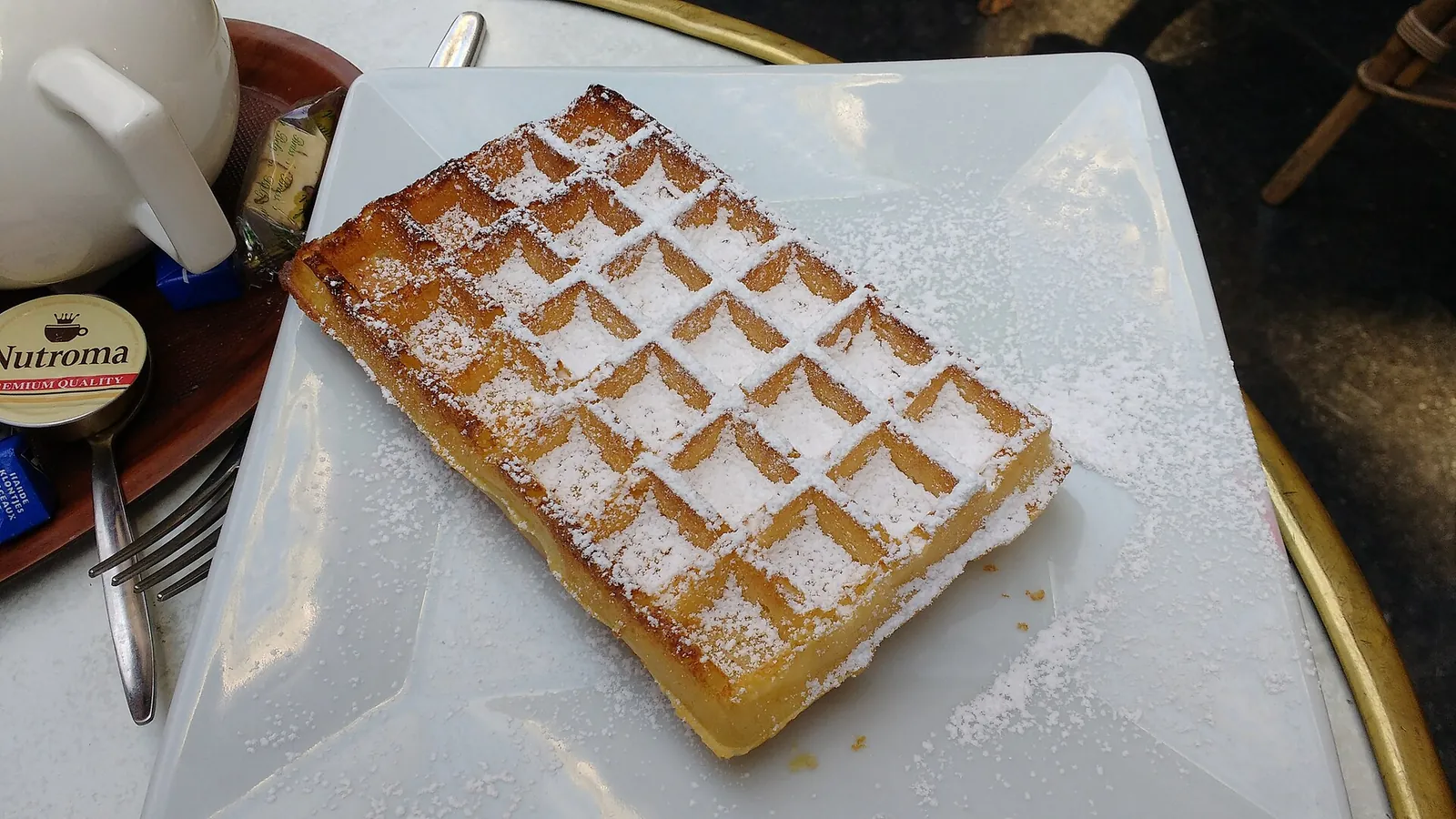
- A Brussels waffle dusted with powdered sugar: Fernando Losada Rodríguez, CC BY-SA 4.0, via Wikimedia Commons
- Guild houses of the Grand-Place lit up at twilight: Trougnouf (Benoit Brummer), CC BY 4.0, via Wikimedia Commons
This is a researched plan, not a personal trip report. How we research · Affiliate disclosure