
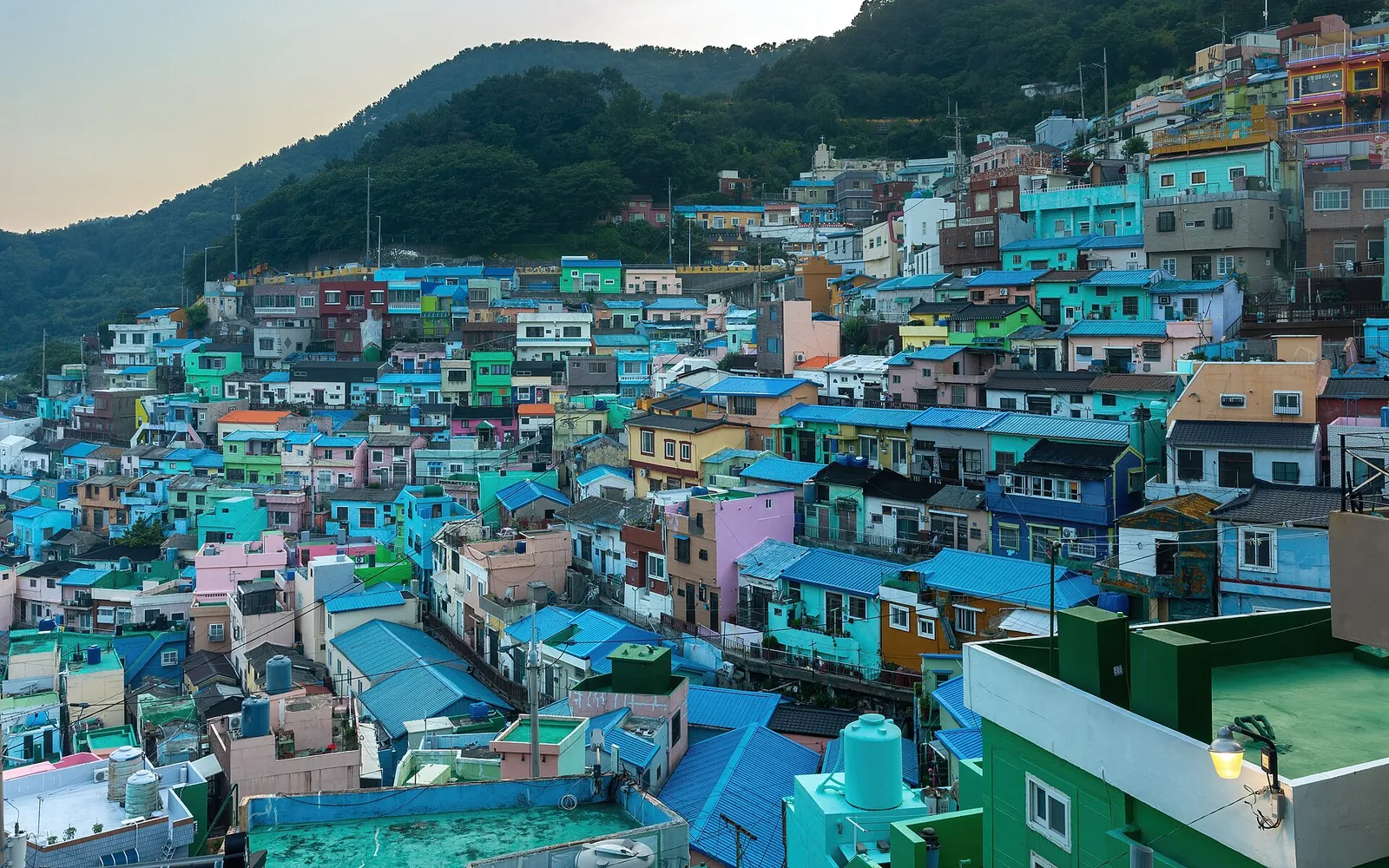
3 Days in Busan: A Day-by-Day Itinerary
A 3-day Busan plan: Gamcheon's painted hillside, Jagalchi market, seaside Haedong Yonggungsa, Haeundae views and Yeongdo cliffs, with verified fares and hours.
- 🗓️ Trip length
- 3 days
- ☀️ Best time
- Spring and autumn
- 💰 Daily spend
- Varies by season, see the Budget section for verified costs
- ✅ Facts checked
- 24 October 2026
Get ready for a city that has it all: pastel hillside villages, a temple perched right on the sea rocks, a fish market buzzing with life, and long sandy beaches backed by glittering towers. Busan is South Korea’s great port city, and three days is a lovely amount of time to taste its best side without rushing.
This plan suits first-timers who like a steady but relaxed pace: one area per day, grouped so you are not zig-zagging across town. Each day mixes one “big” sight with plenty of time to wander, snack and stare at the sea. Busan is hilly and spread out along the coast, so pack comfortable shoes and lean on the metro.
At a glance
| Day | Area | Highlights |
|---|---|---|
| 1 | Saha-gu and Nampo (old downtown) | Gamcheon Culture Village, Jagalchi Fish Market, Nampo-dong streets, Yongdusan Park |
| 2 | Gijang and Haeundae (east coast) | Haedong Yonggungsa Temple, Haeundae Blueline Park, Haeundae Beach, Busan X the Sky |
| 3 | Yeongdo, Seomyeon and Gwangalli | Taejongdae cliffs, Huinnyeoul Culture Village, Seomyeon, Gwangalli Beach at night |
Day 1: Painted hills and the old port
Morning
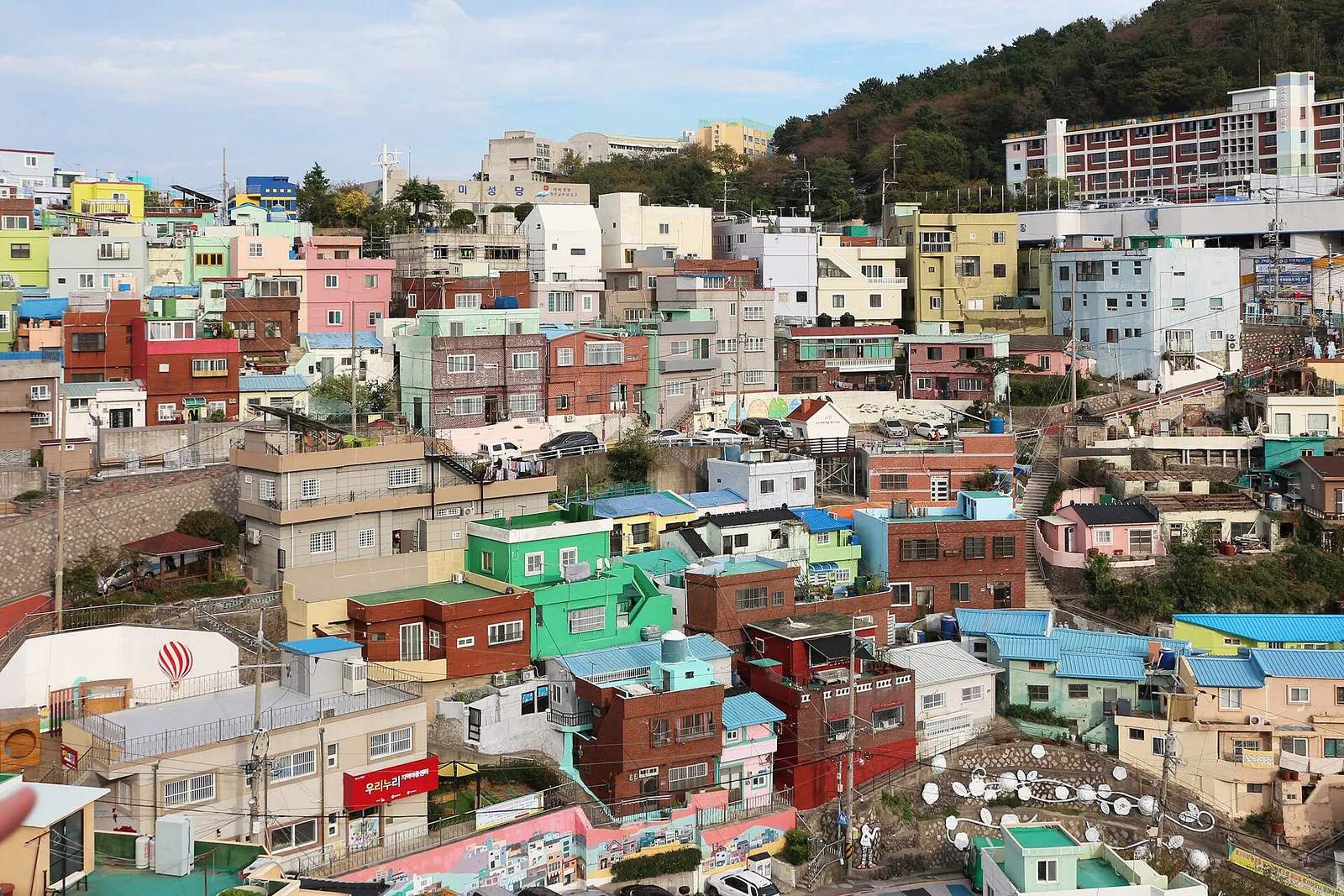
Kick things off in Busan’s most photographed, most colourful neighbourhood. Gamcheon Culture Village was built by Korean War refugees who stacked their homes in staircase fashion up the foothills of a coastal mountain. Today its alleys are decorated with murals and sculptures created by the residents, and the Korea Tourism Organization lists it as open 24 hours, all year round.
For the easiest visit, head first to the Gamcheon Culture Village Tourist Information Center (203 Gamnae 2-ro, Saha-gu). It opens 09:00 to 18:00 from March to October and 09:00 to 17:00 from November to February, has tourist guides on duty and offers baggage storage. That last point is handy if you are arriving or leaving with luggage.
Getting there: most visitors take the metro to Toseong Station and then a short village bus ride up the hill. Check current bus numbers at the information centre or in a local map app such as Naver Map or KakaoMap, which tend to be more accurate in Korea than international apps.
We suggest arriving soon after the information centre opens, when the lanes are calmer and the morning light is soft on the coloured rooftops. Allow two to three hours to wander, climb the viewpoints and stop for a coffee.
Afternoon
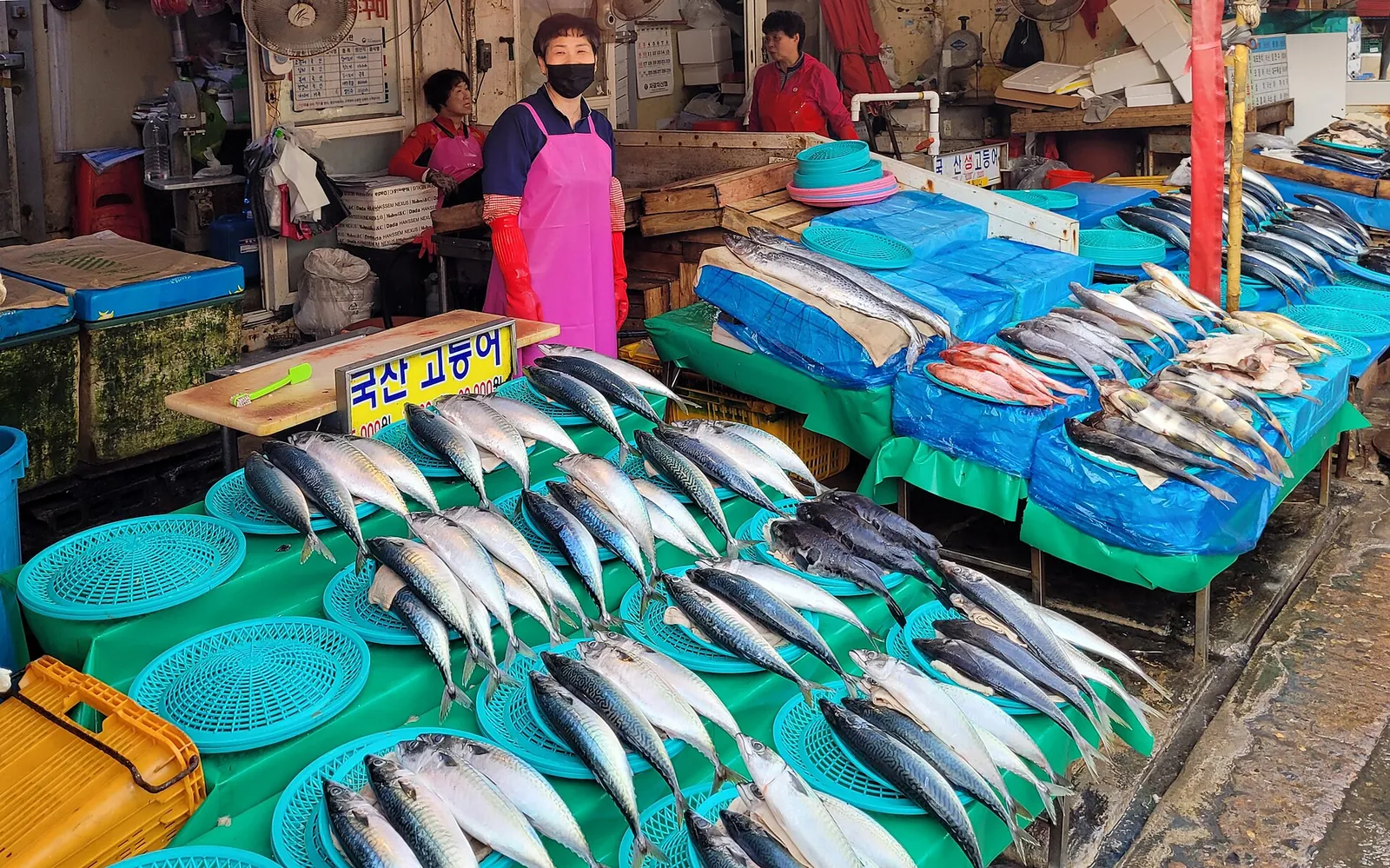
Head back down the hill towards the waterfront for Jagalchi Fish Market, Busan’s famous seafood market by the old port. Walk the stalls to see the day’s catch, and if you are feeling adventurous, ask about having your pick prepared at one of the market restaurants. Opening days can vary, so check the official market information before you go.
From Jagalchi, the lively Nampo-dong streets are right next door. Wander the street food alleys, the covered market lanes and the shopping streets of Gwangbok-ro. This is the best place on Day 1 to graze on snacks rather than sit down for a long lunch.
Evening
As the light fades, walk up to Yongdusan Park, which sits on a small hill above Nampo-dong and is home to Busan Tower (also called Busan Diamond Tower). The tower’s observatory looks out over the harbour and the city lights. Opening hours and ticket prices change from time to time, so check the official site before you go.
Finish with dinner back in the Nampo-dong and Gwangbok-ro area, where you will find everything from casual noodle shops to grilled seafood.
Day 2: Sea temple and the Haeundae coast
Morning
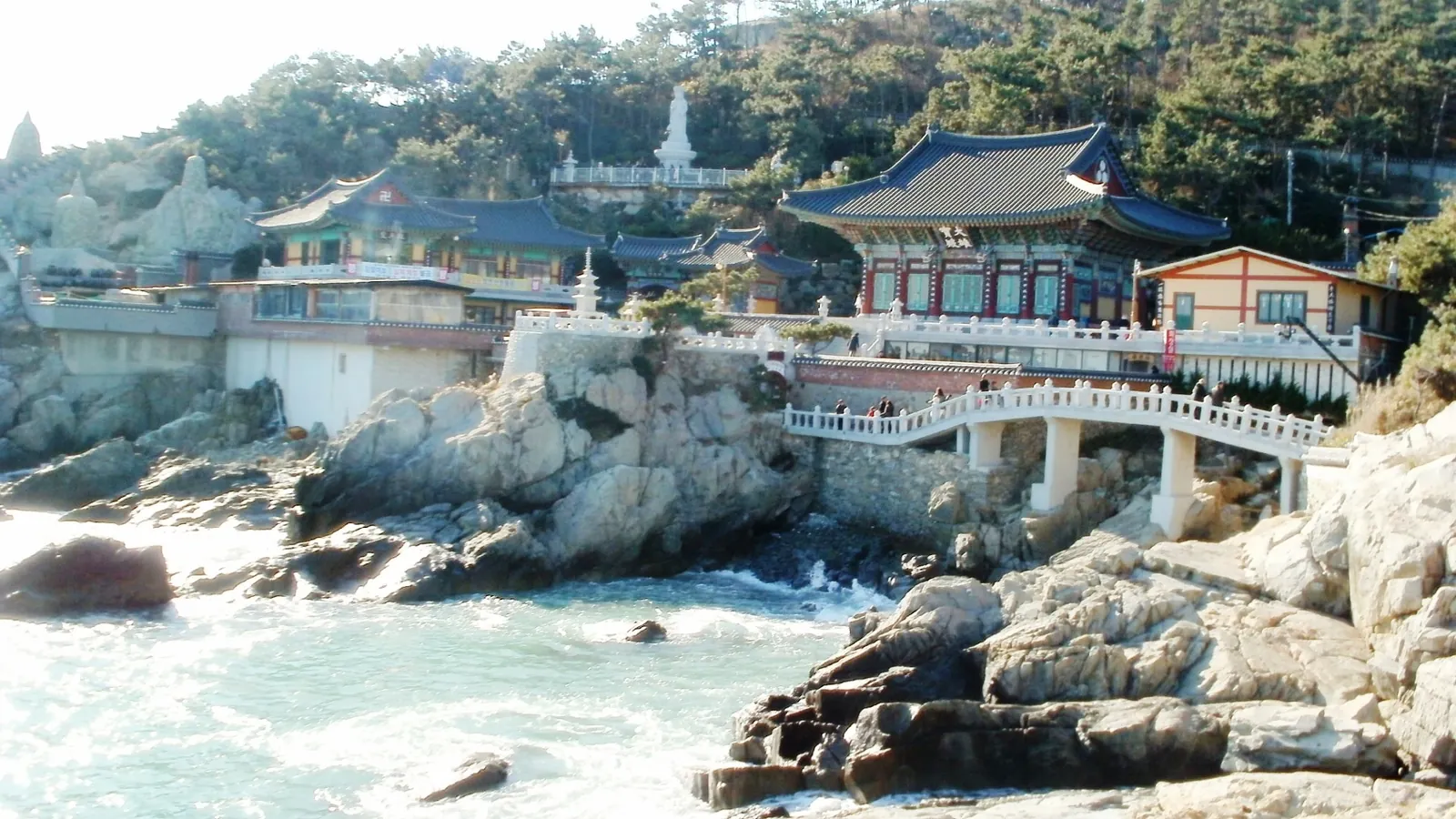
Get ready for a glorious seaside day: today is all about the east coast. Make an early start for Haedong Yonggungsa Temple in Gijang, one of the few Korean temples built right on the shoreline rather than in the mountains. According to Visit Busan and the Korea Tourism Organization, it is open every day from 04:30 to 19:20 (last entry 18:50), and admission is free.
The temple was first built in 1376 during the Goryeo dynasty, destroyed during the Imjin War and rebuilt in the early 1930s. Do not miss the coastal trail around the temple, which forms part of the Haeparang Trail Route 1. The “sunrise rock” here is a favourite spot for watching the horizon over the sea, so early birds are well rewarded.
This is an active place of worship, so keep voices low, follow any signs about photography inside the halls and dress modestly as a sign of respect.
Afternoon
Make your way back towards Haeundae and spend the afternoon at Haeundae Blueline Park, a former railway line along the coast that now has two ways to ride: the elevated Sky Capsule (small pods that run above the coastline) and the ground-level Haeundae Beach Train. Fares are updated from time to time, so always go by the price shown on the official Blueline Park booking page at checkout. We suggest booking the Sky Capsule in advance on the official site, especially at weekends.
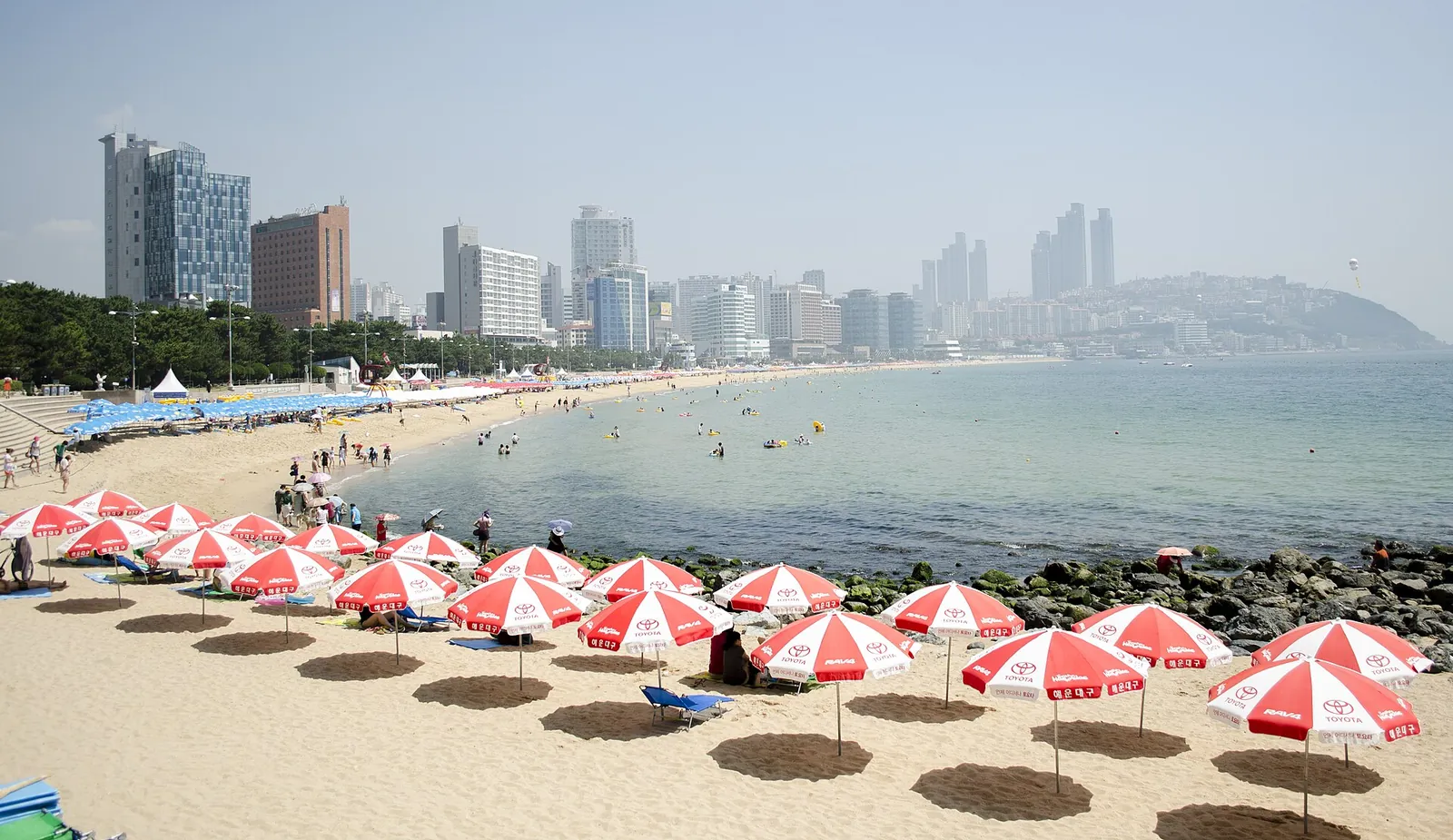
Afterwards, stroll along Haeundae Beach, Busan’s best-known stretch of sand. Even outside swimming season, the promenade is a cheerful place for a walk, people-watching and an ice cream.
Evening
Time your evening for Busan X the Sky, the observatory at the top of one of the skyscrapers overlooking Haeundae. According to the official Visit Busan Pass listing, it is open every day from 10:00 to 21:00 (last entry 20:30) and does not require a reservation. Tickets are KRW 29,000 for adults (13 and over) and KRW 26,000 for children aged 36 months to 12 years and seniors over 65, with free entry for infants under 36 months (documents required).
Go up around sunset if you can, so you see the coastline in daylight and then watch the city light up. Afterwards, find dinner around Haeundae, where you can choose from seafood, barbecue and casual street snacks.
Day 3: Cliffs, cafés and a bridge of lights
Morning
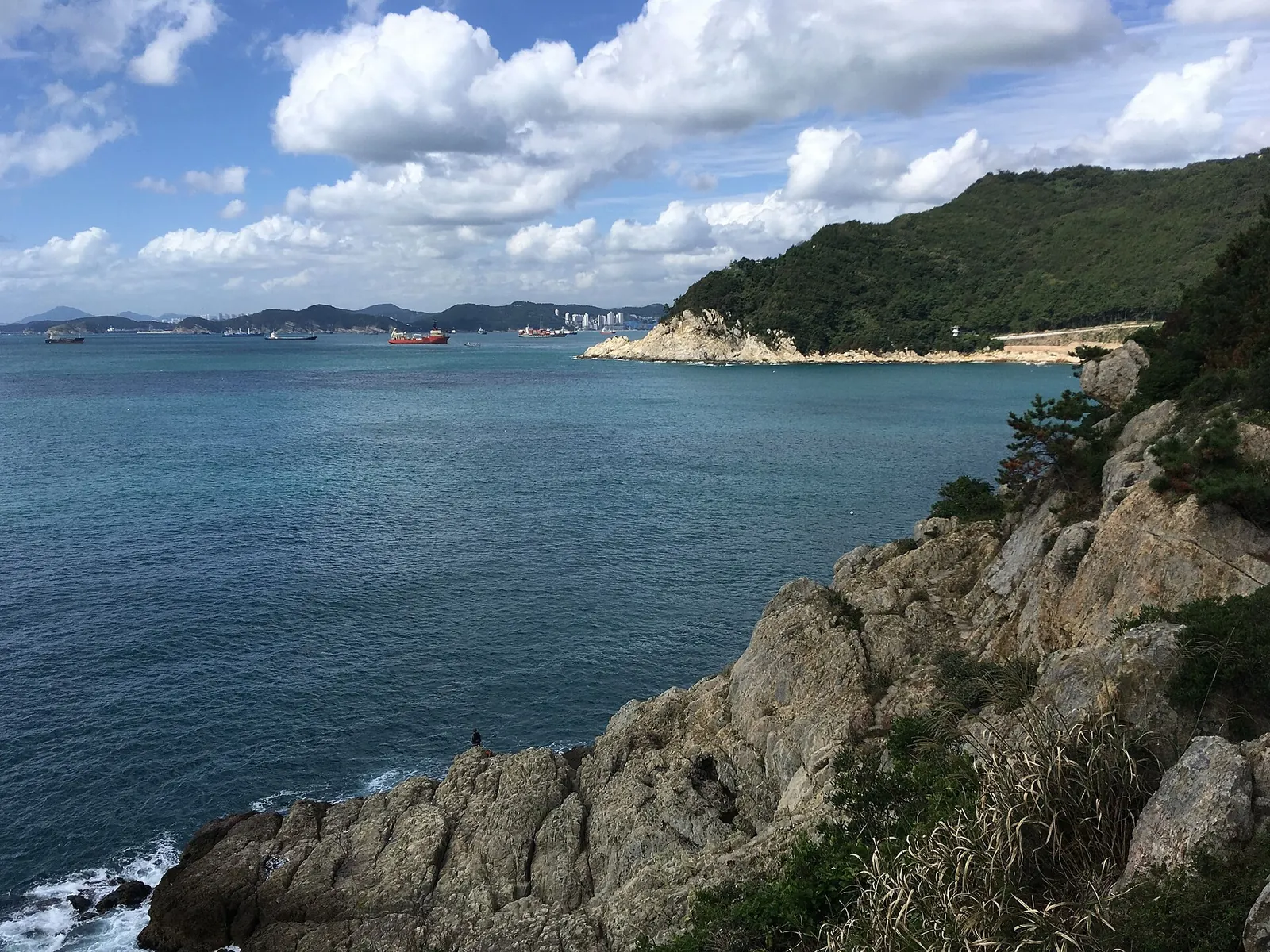
Save your best walking legs for today! Cross to Yeongdo, the island district just across the water from Nampo, and head for Taejongdae, a rugged coastal park known for its cliffs, lighthouse and wide sea views. There is a small tourist train inside the park as well as walking paths; check the official site for the current schedule and fare. Allow a good half day if you want to walk rather than ride.
Afternoon
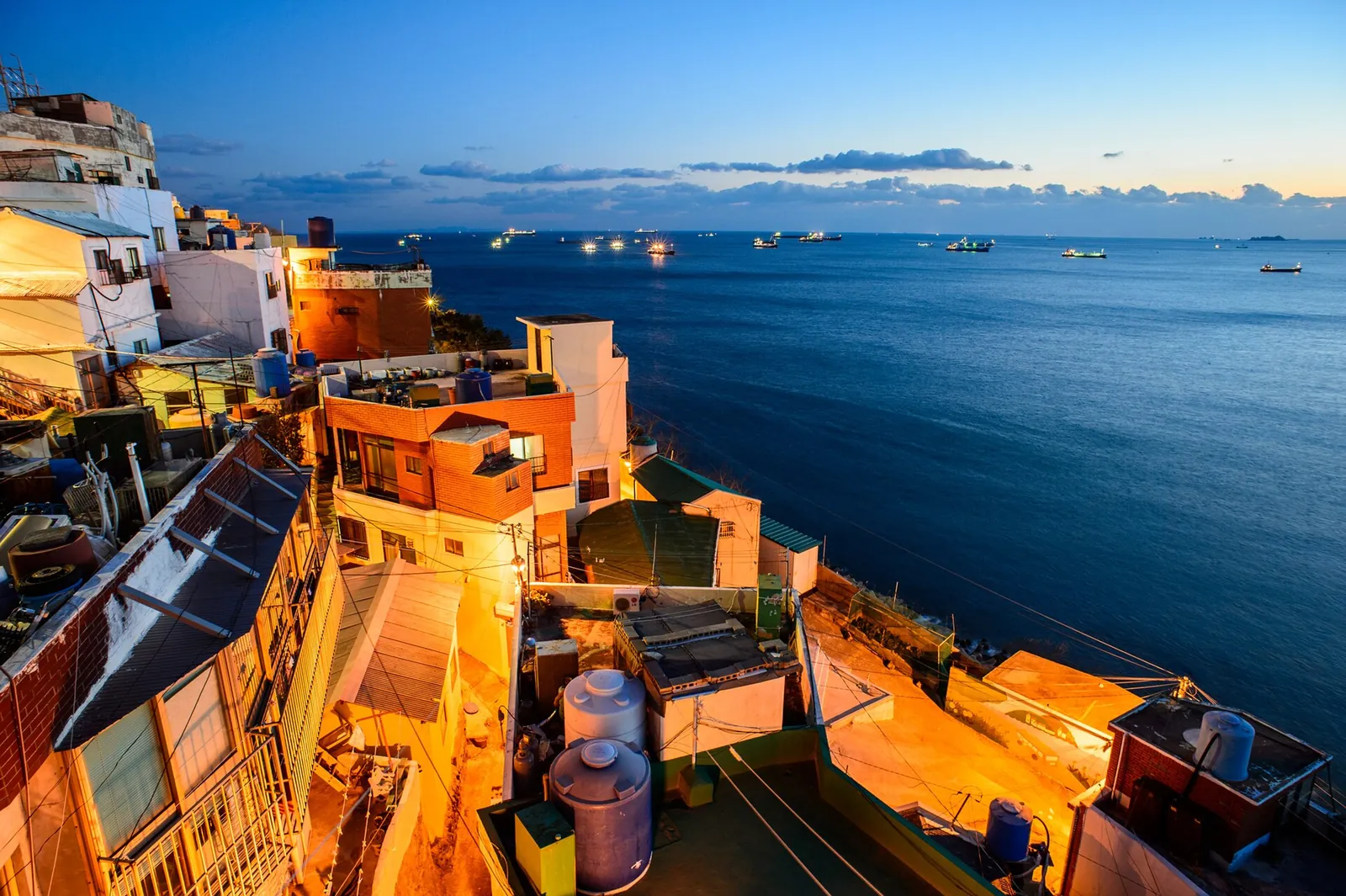
Stay on Yeongdo for Huinnyeoul Culture Village, a cluster of white-washed houses and small cafés clinging to the cliffs above the sea. The coastal walking path below it is a gentle, scenic stroll. As with Gamcheon, people live here, so keep noise down and avoid peeking into homes.
Later in the afternoon, take the metro to Seomyeon, Busan’s busy downtown hub. It is a great place for shopping, people-watching and a café break. Nearby Jeonpo Cafe Street is packed with independent coffee shops if you need a recharge.
Evening
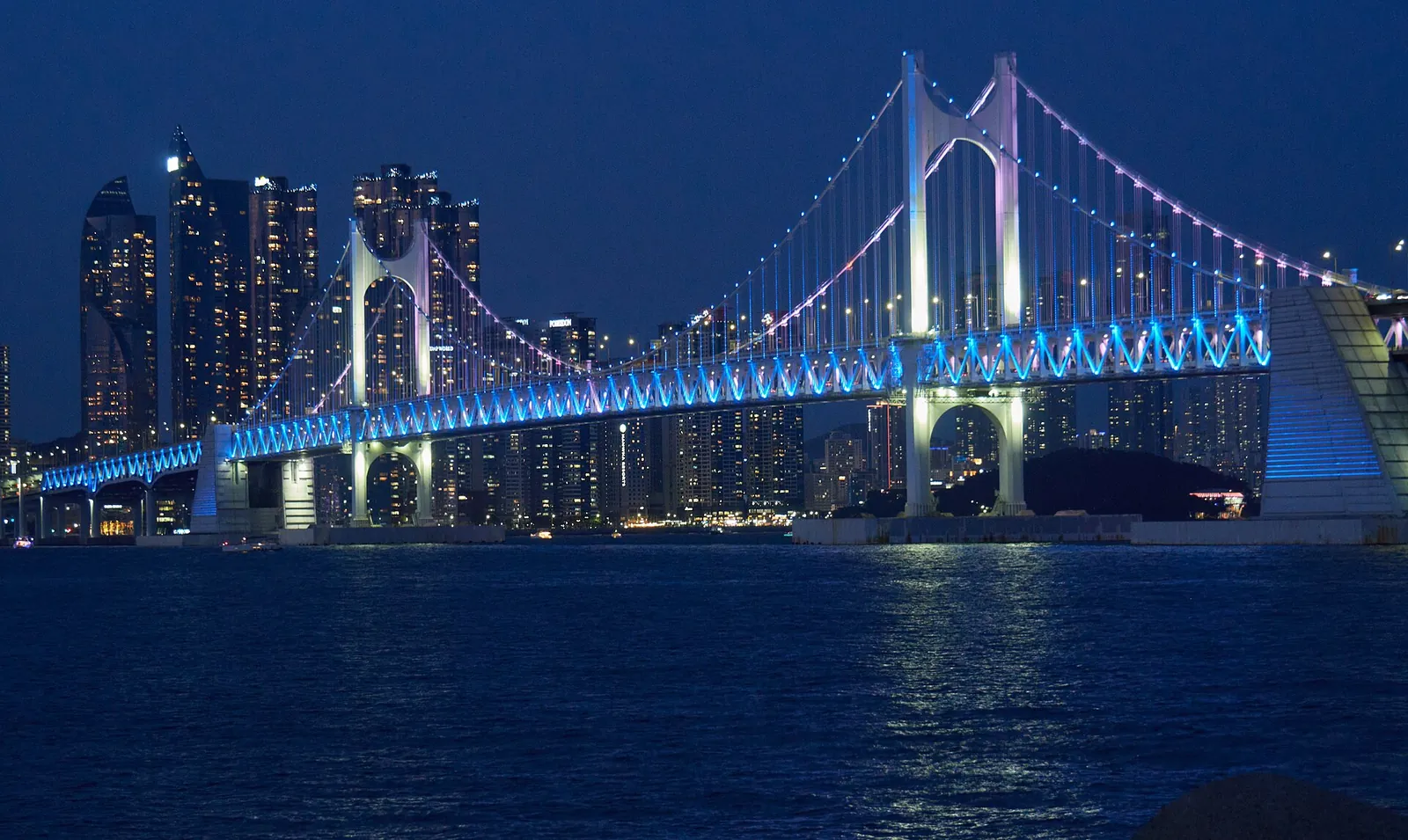
What a way to finish: end your trip at Gwangalli Beach, where Gwangan Bridge stretches across the bay and lights up after dark. Grab a seat at one of the seafront restaurants or simply sit on the sand and enjoy the view. Special events such as drone light shows are held at Gwangalli on some evenings; check the official Busan tourism channels for the current schedule before you plan around one.
Getting there and getting around
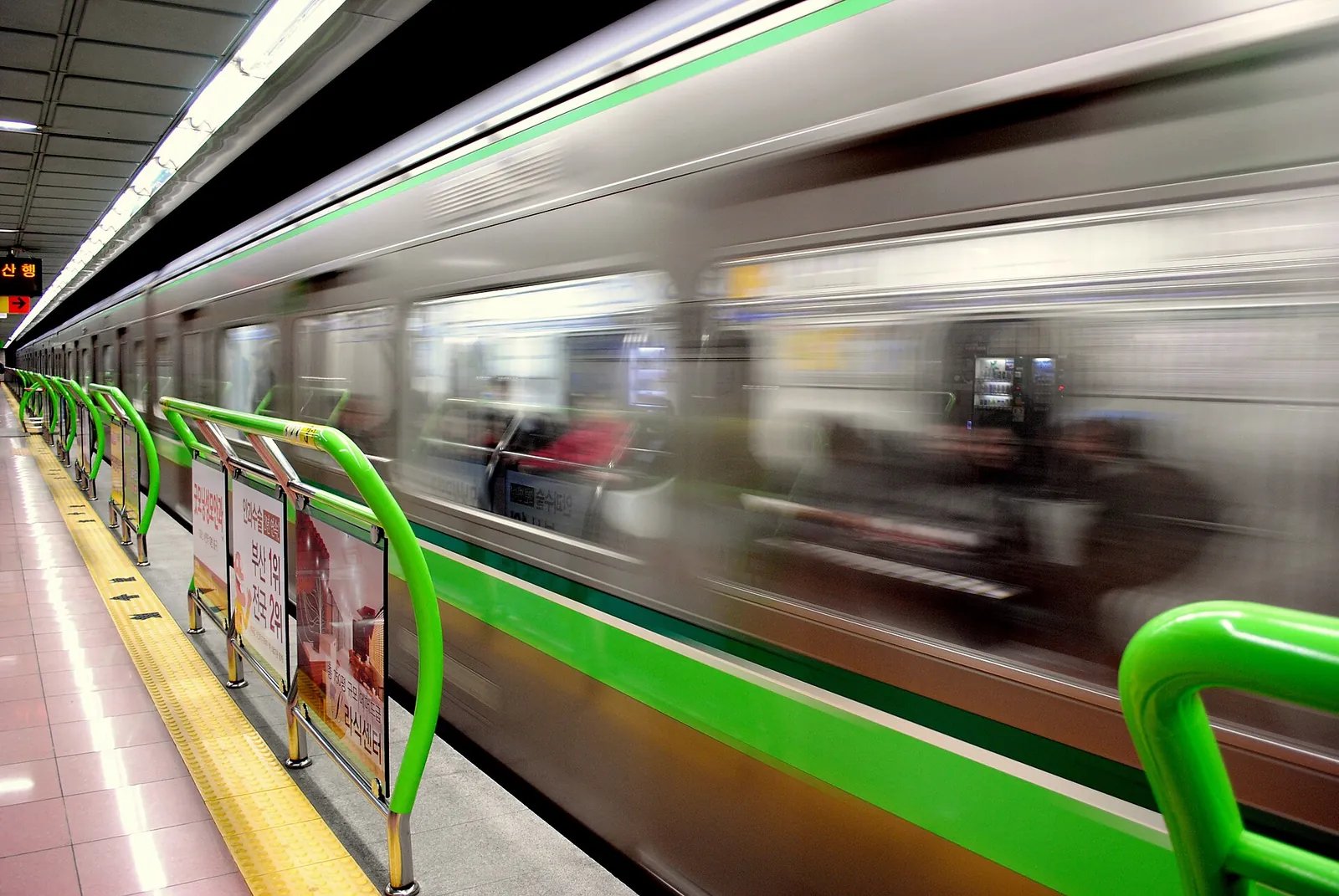
From Gimhae International Airport
Busan’s main airport is Gimhae International Airport (PUS), west of the city.
- Busan-Gimhae Light Rail (BGL): the light rail connects the airport area with the Busan Metro at Sasang and Daejeo. The official adult fare is KRW 1,600 for one section or KRW 1,800 for two sections with a transportation card, or KRW 1,700 and KRW 1,900 with a one-time pass. Children aged 6 to 12 ride free with a transportation card.
- Airport limousine bus: an airport limousine route serves the Haeundae area (the official Busan X the Sky listing names “Airport Limousine 2” among its access options). Check the current fare and timetable on the official airport website.
- Taxi: use the official taxi rank outside arrivals. Check the airport’s official site for current guidance.
From Seoul
KTX high-speed trains run from Seoul to Busan Station, which is a convenient arrival point for Nampo and Day 1. Check current journey times and fares on Korail’s official website and book ahead for weekends and public holidays.
Getting around Busan
The Busan Metro is your best friend. According to Busan Transportation Corporation, adult fares are:
| Ticket type | Section 1 | Section 2 |
|---|---|---|
| Transit card or mobile ticket | KRW 1,600 | KRW 1,800 |
| Single-use QR ticket | KRW 1,700 | KRW 1,900 |
Single-use QR tickets are sold at station vending machines. If you prefer a pass, the official app sells a 1-day ticket (unlimited trips on the day of purchase, KRW 6,000) and a 3-day ticket (unlimited trips for 3 consecutive days, KRW 13,000), which fits this itinerary neatly.
With a transit card such as T-money or Cashbee, you get a transfer discount when you switch to another type of public transport within 30 minutes: you pay the highest fare of the systems used rather than paying twice.
The Visit Busan Pass is another option. Busan Metropolitan City launched it for foreign visitors in 2023 in 24-hour and 48-hour versions, combining free entry to selected paid attractions with a rechargeable transport card function. Busan X the Sky currently appears on the pass with free admission to the observation deck. Check the official Visit Busan Pass site for today’s prices and included attractions before deciding if it pays off for your plans.
Where to stay
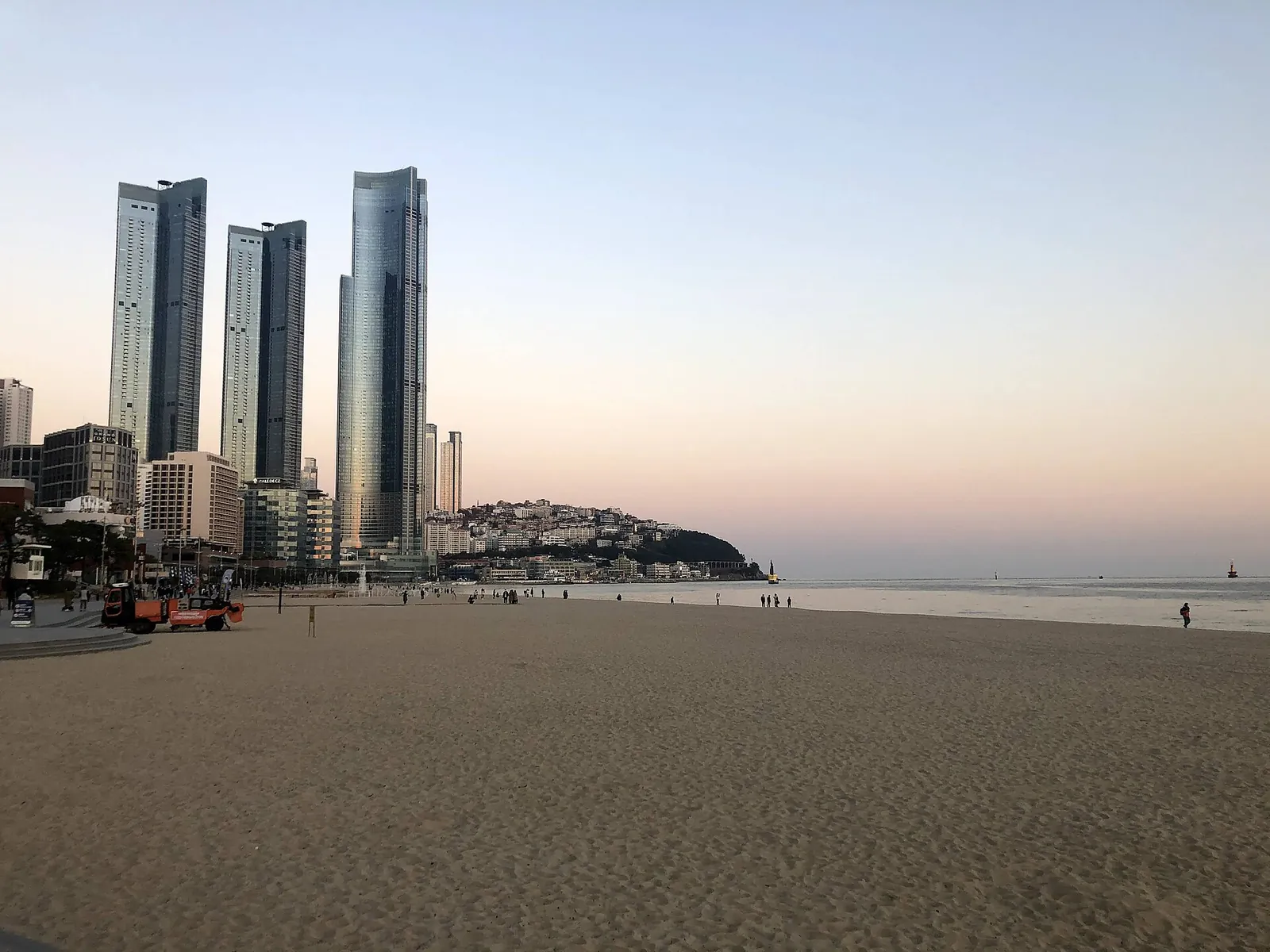
- Haeundae: best for beach lovers and first-timers who want a resort feel, with easy access to Day 2 sights, plenty of restaurants and sea views. It is further from the old downtown, so expect longer rides on Day 1.
- Seomyeon: the central transport hub and nightlife district. A smart, practical base if you want to reach every part of the city easily and enjoy late-night food and shopping.
- Nampo-dong and Busan Station area: ideal if you arrive by KTX or want to be close to Jagalchi, Gamcheon and Yeongdo. Lively street food and markets right outside the door.
- Gwangalli: a relaxed, slightly quieter beach base with great bridge views at night and lots of cafés, good for couples and repeat visitors.
Budget
These are the costs we could verify on official sources today. They exclude flights, accommodation, meals, shopping and tours.
| Item | Typical cost |
|---|---|
| Metro or BGL ride, transit card, adult (section 1 / section 2) | KRW 1,600 / KRW 1,800 |
| Metro single-use QR ticket, adult (section 1 / section 2) | KRW 1,700 / KRW 1,900 |
| Metro mobile 1-day ticket (official app) | KRW 6,000 |
| Metro mobile 3-day ticket (official app) | KRW 13,000 |
| Busan X the Sky, adult (13+) | KRW 29,000 |
| Busan X the Sky, child (36 months to 12) or senior (65+) | KRW 26,000 |
| Haedong Yonggungsa Temple | Free |
| Gamcheon Culture Village (open 24 hours) | Free to walk around |
| Haeundae Blueline Park Sky Capsule and Beach Train | Check the official site |
| Busan Tower observatory | Check the official site |
| Visit Busan Pass (24 or 48 hours) | Check the official site |
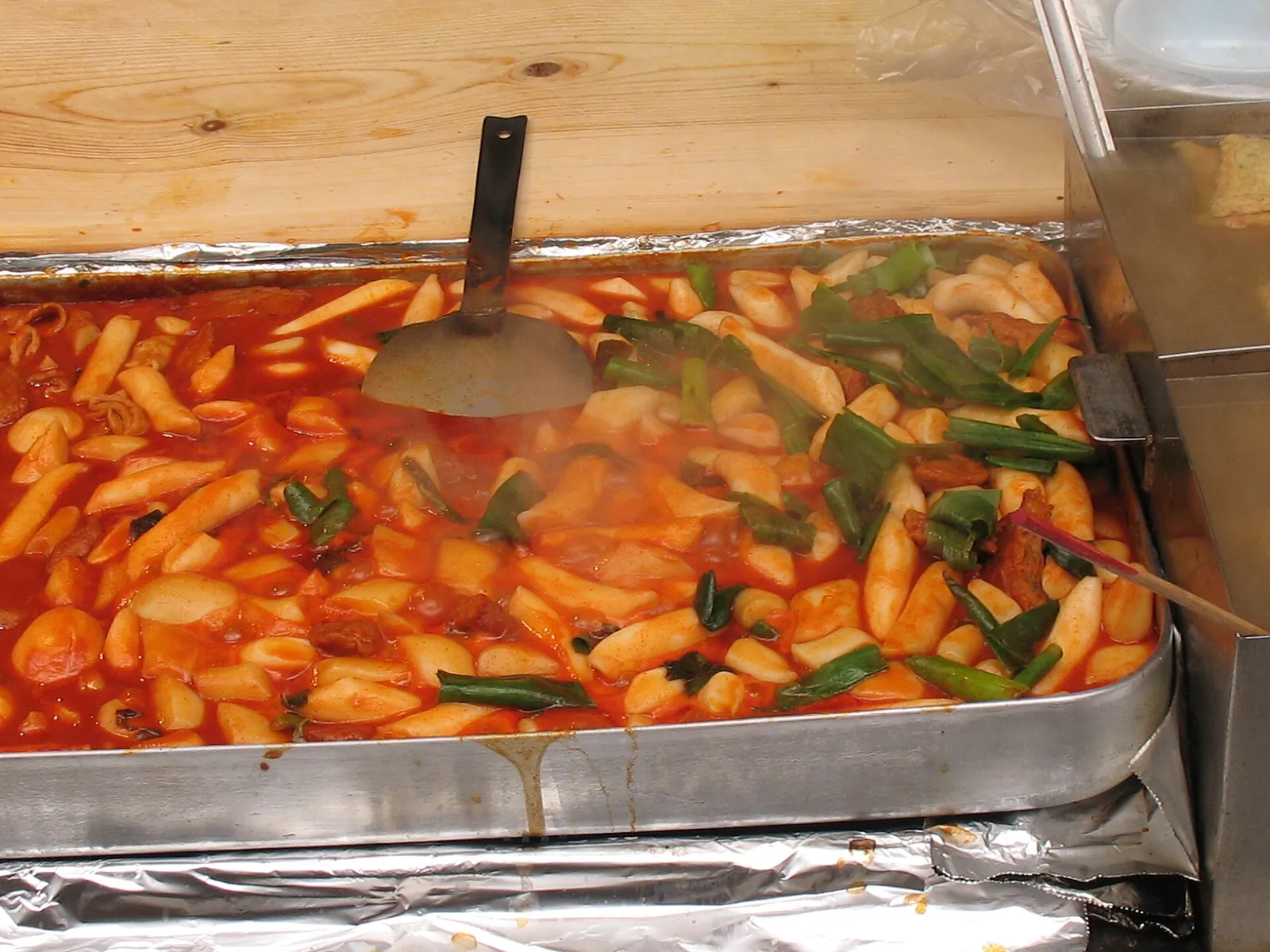
Hotel and restaurant prices swing a lot by season and neighbourhood, so compare live prices for your dates. Street food in Nampo-dong and the markets is an easy way to keep food costs down.
Practical tips
- Visa and entry: South Korea uses an electronic travel authorisation called K-ETA for many visa-free visitors, and some nationalities are temporarily exempt until 31 December 2026. Rules depend on your passport, so check your own situation on the official K-ETA portal at https://www.k-eta.go.kr/portal/apply/index.do before you book.
- Temple etiquette: dress modestly at Haedong Yonggungsa (we suggest covering shoulders and knees), speak quietly and be mindful of people praying.
- Residential villages: Gamcheon and Huinnyeoul are lived-in neighbourhoods. Keep your voice down, do not enter private doorways and ask before photographing people.
- Opening days: the big sights in this plan (Haedong Yonggungsa, Gamcheon and Busan X the Sky) are listed as open all year round, but market stalls and smaller venues set their own days off. Check before you go.
- Transit card: buy a T-money or Cashbee card on day one and keep it topped up. It saves time at ticket machines and unlocks transfer discounts.
- Maps: Naver Map and KakaoMap usually give the most reliable walking and transit directions in Korea.
- SIM or eSIM: set up an eSIM before you fly or pick up a SIM or data plan on arrival. Compare providers for the best deal for your stay.
- Money: the currency is the Korean won (KRW). Carry a payment card plus a little cash for markets and small street-food stalls.
Heads-up
Busan is a welcoming, easy city to explore, and the U.S. State Department rates South Korea at its lowest advisory level, “exercise normal precautions”. A few things are still worth knowing before you go:
- Fake K-ETA websites: Korean embassies warn that non-official sites charge far more than the official fee, in one case 20 times more, with reports of sites charging over USD 100. Apply only through the official K-ETA website or the official K-ETA app.
- Demonstrations: public demonstrations are common in South Korea and are mostly peaceful, but they can disrupt transport with little notice. The UK government notes that it is illegal for foreign nationals to take part in political activities in South Korea, so avoid large gatherings.
- Civil emergency drills: the South Korean government holds civil emergency drills throughout the year. If you hear sirens or see a drill, follow local instructions calmly.
- Peninsula tensions: the security situation can change with little notice, for example after missile tests by North Korea. Keep an eye on the news and follow local authority advice.
FAQ
Is 3 days enough for Busan?
Yes, three days covers the highlights comfortably: the old port and Gamcheon, the east coast with Haedong Yonggungsa and Haeundae, and Yeongdo plus Gwangalli. With more time, add a temple in the hills or a day trip outside the city.
Do I need to book Busan X the Sky in advance?
No. The official Visit Busan Pass listing says it is available without reservation. It is open daily from 10:00 to 21:00, with last entry at 20:30.
How much does Haedong Yonggungsa cost to visit?
Nothing. Entry is free, and the temple is open every day from 04:30 to 19:20, with last entry at 18:50.
What is the best way to get around Busan?
The metro. A transit card ride costs KRW 1,600 for one section for adults, and the official app’s 3-day ticket costs KRW 13,000 for unlimited trips over 3 consecutive days.
How do I get from Gimhae Airport to the city?
The Busan-Gimhae Light Rail links the airport area to the Busan Metro at Sasang and Daejeo, from KRW 1,600 with a transportation card. Limousine buses and taxis are also available; check the official airport site for current fares.
Do I need a K-ETA?
It depends on your nationality. Check the official K-ETA portal at https://www.k-eta.go.kr/portal/apply/index.do and only apply there or via the official app.
Sources
Prices, hours and rules change. We checked these on 24 October 2026; please confirm on the official page before you book.
- Visit Busan: Haedong Yonggungsa Temple in Gijang
- Visit Busan: Gamcheon Culture Village Tourist Information Center
- VisitKorea (Korea Tourism Organization): Busan Gamcheon Culture Village
- VisitKorea (Korea Tourism Organization): Haedong Yonggungsa Temple
- Visit Busan Pass: Busan X the Sky
- Busan Transportation Corporation: Urban rail fare guide
- Busan Transportation Corporation: How to use (QR and mobile tickets)
- Busan Transportation Corporation: Downtown transfer fare
- Busan-Gimhae Light Rail Transit: Fares
- Busan Metropolitan City: Busan to Launch Visit Busan Pass for Foreigners
- Consulate General of the Republic of Korea in Atlanta: Extension of K-ETA Temporary Exemption
- Embassy of the Republic of Korea in Ireland: K-ETA notice and warning on non-official websites
- GOV.UK Foreign travel advice: South Korea, Safety and security
- GOV.UK Foreign travel advice: South Korea, Entry requirements
- U.S. Department of State: South Korea Travel Advisory
Photo credits (11)
- Colourful hillside houses of Gamcheon Culture Village at sunset: Basile Morin, CC BY-SA 4.0, via Wikimedia Commons
- Pastel rooftops climbing the hills of Gamcheon Culture Village: Bernard Gagnon, CC0, via Wikimedia Commons
- Fresh fish laid out at a Jagalchi Market stall: Bernard Gagnon, CC0, via Wikimedia Commons
- Haedong Yonggungsa Temple perched on rocks above the sea: Anna L Martin, CC BY 2.0, via Wikimedia Commons
- Red and white parasols lining sunny Haeundae Beach: StephNurnberg, CC BY 2.0, via Wikimedia Commons
- Rocky cliffs and turquoise sea at Taejongdae, Yeongdo: Christophe95, CC BY-SA 4.0, via Wikimedia Commons
- Huinnyeoul Culture Village glowing above the sea at dusk: Appleysj, CC BY-SA 4.0, via Wikimedia Commons
- Gwangan Bridge lit up blue over Gwangalli Beach: lumoplank, CC0, via Wikimedia Commons
- Haeundae towers and beach in soft evening light: A Fun Couple, CC BY 2.0, via Wikimedia Commons
- A tray of spicy tteokbokki at a street food stall: Jens Ohlig, CC BY-SA 2.0, via Wikimedia Commons
- A Busan Metro Line 2 train pulling into the station: Raíssa Ruschel, CC BY 2.0, via Wikimedia Commons
This is a researched plan, not a personal trip report. How we research · Affiliate disclosure