
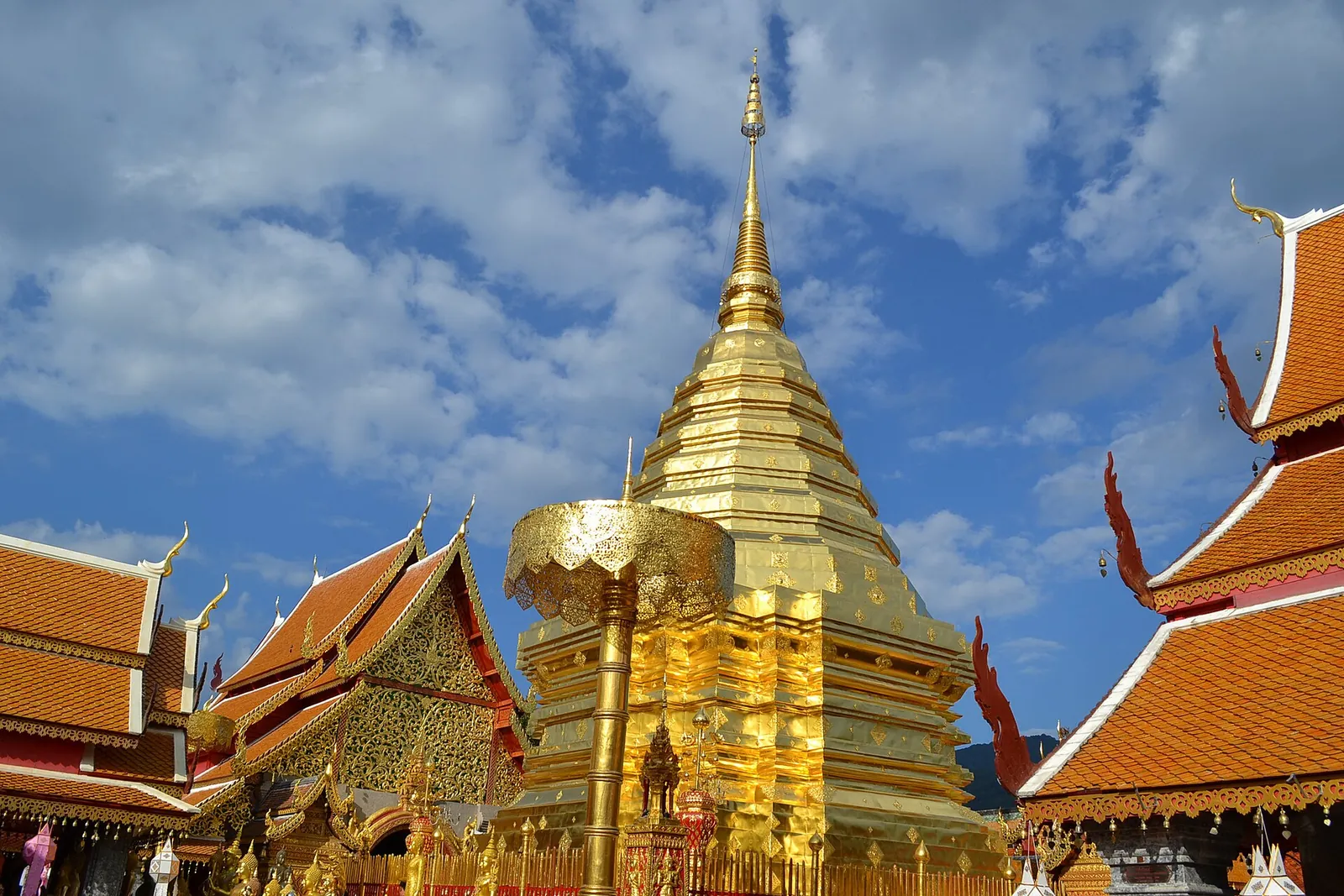
4 Days in Chiang Mai: A Day-by-Day Itinerary
A 4-day Chiang Mai plan: Old City temples, Doi Suthep, a Doi Inthanon day trip and night markets, with checked opening hours, transport tips and safety notes.
- 🗓️ Trip length
- 4 days
- ☀️ Best time
- November to January
- 💰 Daily spend
- Varies: check current prices (see Budget section)
- ✅ Facts checked
- 24 October 2026
Get ready for golden temples, misty mountains and the best night markets in northern Thailand. Chiang Mai is the old capital of the Lanna kingdom, and four days is the sweet spot: enough time to wander the moated Old City, ride up to Doi Suthep, spend a full day on Thailand’s highest mountain and still have a slow final day for markets and food.
This plan suits first-timers, couples, families and anyone who likes culture with a relaxed rhythm. The pace is moderate: one main area per day, early starts to beat the heat, and long, lazy evenings. Days 1 and 4 are flexible, so you can swap them around to catch the weekend walking streets or the museums’ opening days.
At a glance
| Day | Area | Highlights |
|---|---|---|
| 1 | Old City | Wat Phra Singh, Wat Chedi Luang, Lanna museums, Tha Phae Gate |
| 2 | Doi Suthep and Nimmanhaemin | Wat Phra That Doi Suthep, Wat Umong, Nimman cafes |
| 3 | Doi Inthanon National Park | Waterfalls, summit nature trail, royal pagodas |
| 4 | Riverside and markets | Warorot Market, Ping River, Royal Park Rajapruek or a cooking class |
Day 1: Temples and Lanna culture in the Old City
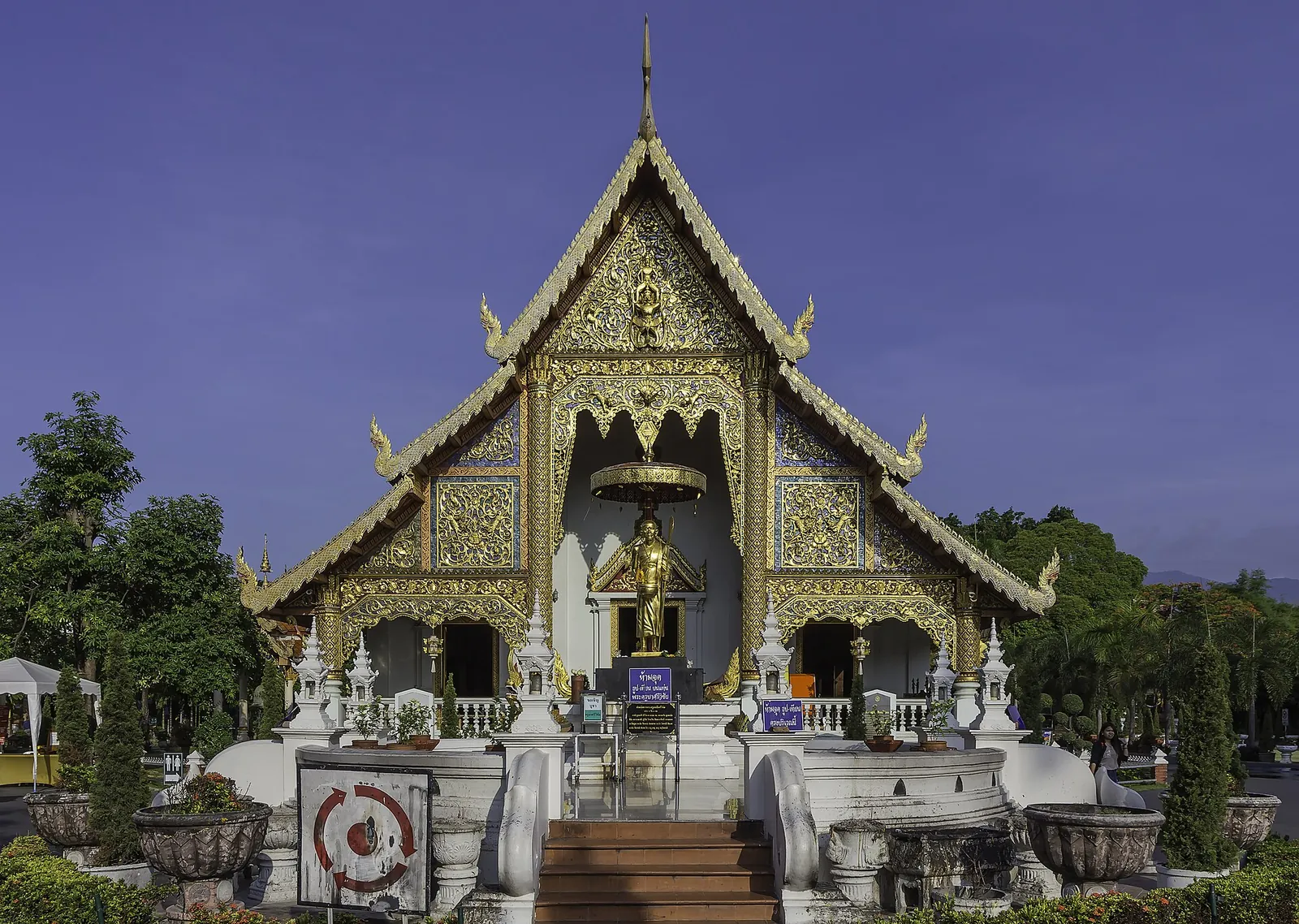
Get ready for a gloriously golden first day! The square Old City has a moat and old brick walls around it. It’s compact and flat, so you’ll spend most of today on foot. The stops are a short stroll apart. When your legs (or the sun) say enough, a ride-hailing car or a red shared truck can take you to the next one.
Morning
Start at Wat Phra Singh on Sam Lan Road. Its Wihan Lai Kham houses Phra Phutthasihing, which the Chiang Mai provincial government describes as the city’s most sacred Buddha image. During Songkran (13 to 15 April) the image is carried through town so locals can bathe it with scented water. The province lists opening hours as 8:00 to 17:00.
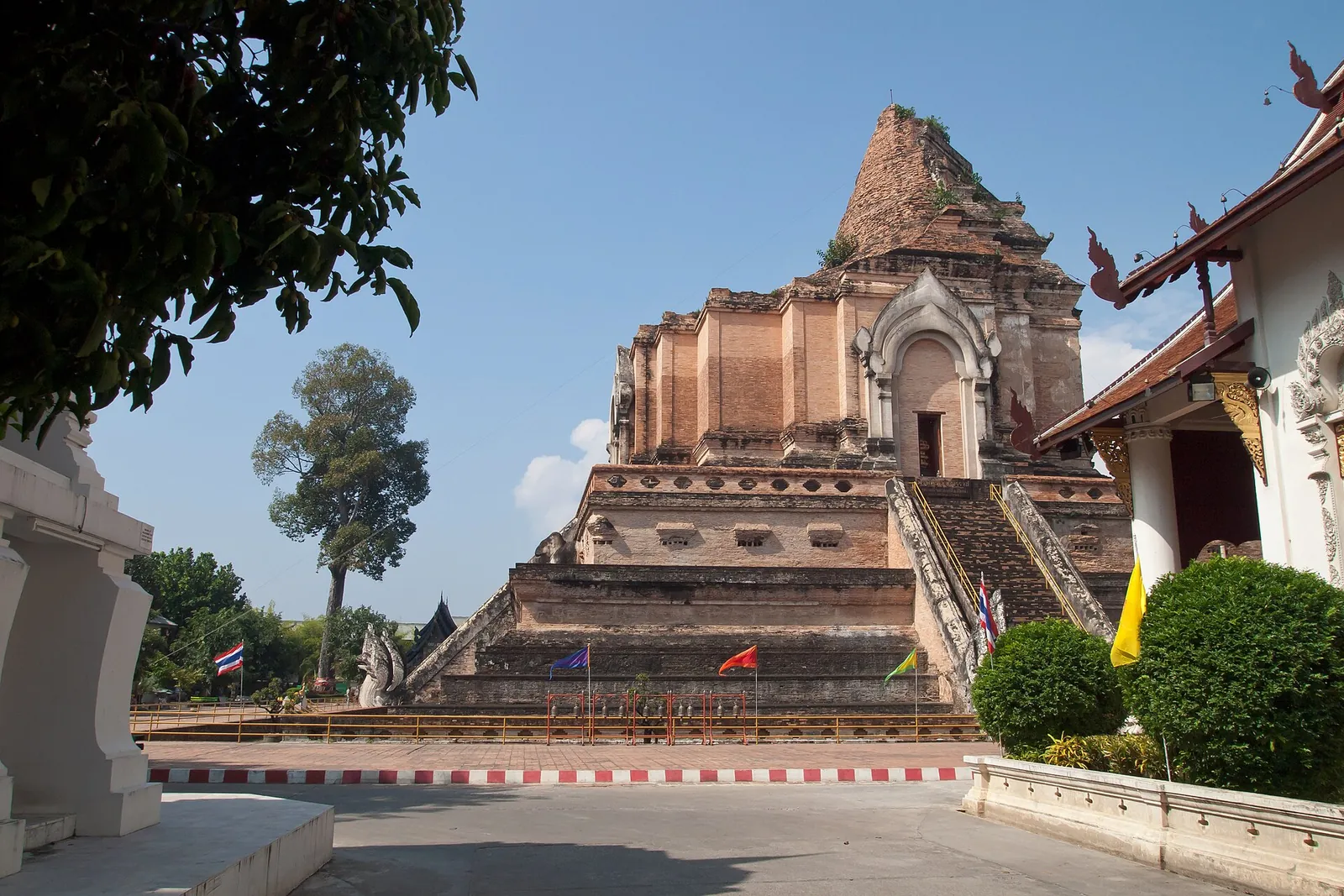
Walk east through the lanes to Wat Chedi Luang, home to the largest chedi in Chiang Mai. The original was completed in 1481 and damaged by an earthquake in 1545. What’s left is a huge ruined tower that’s hard to forget. The province lists it as open daily, 8:00 to 17:00. Some temples may ask foreign visitors for an entrance fee: check on arrival.
Afternoon
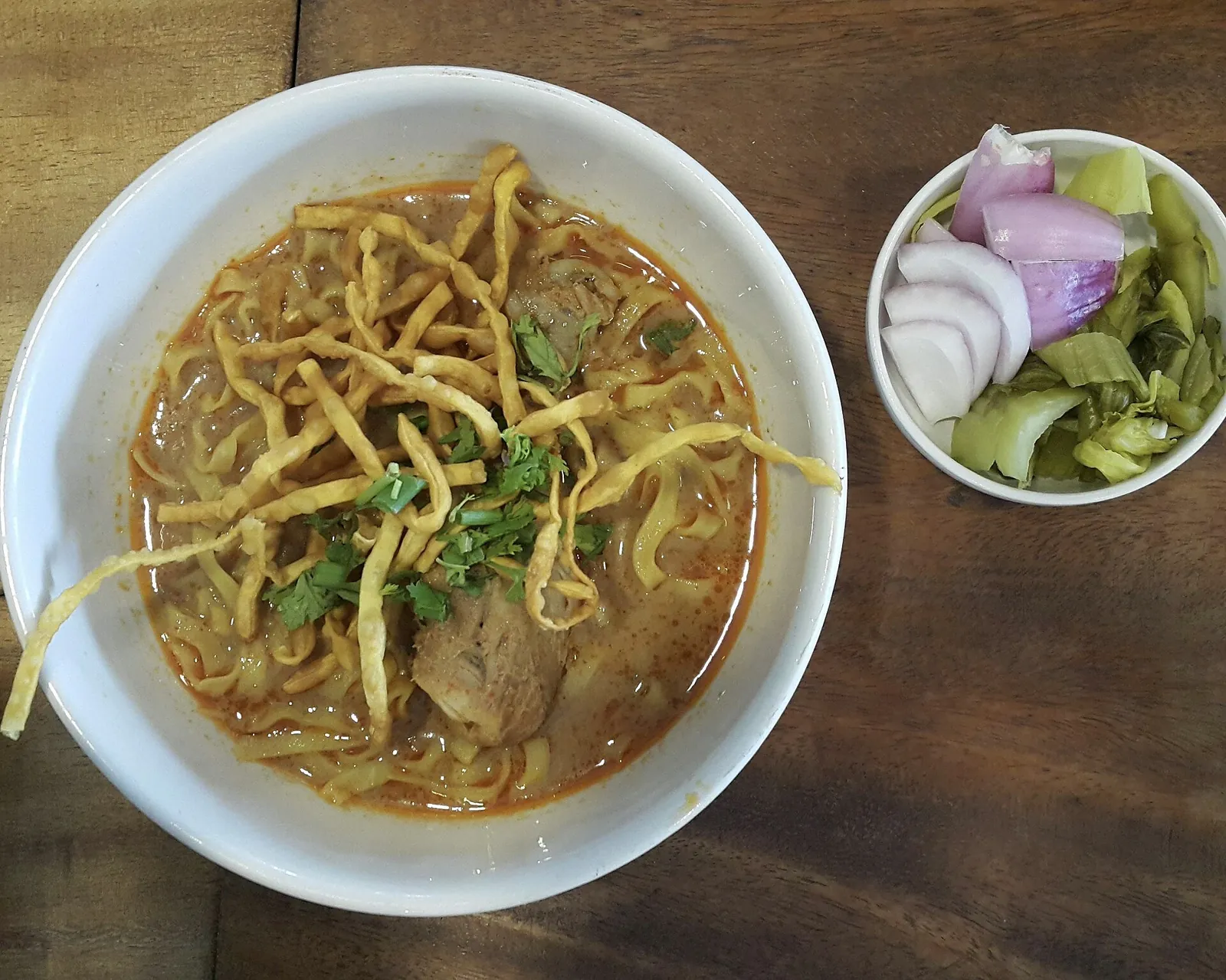
After a long lunch (a bowl of khao soi, the curry noodle soup of the north, is the classic choice), head to the Three Kings Monument area on Prapokklao Road. Two excellent municipal museums sit side by side here:
- Chiang Mai City Arts & Cultural Centre: the story of the city from its founding to today. Open 08:30 to 16:30, Wednesday to Sunday, closed Monday and Tuesday. Adults THB 90, children THB 40.
- Lanna Folklife Museum: traditions, crafts and daily life in old Lanna. Same hours and closing days, adults THB 90, children THB 40.
The Chiang Mai Historical Centre next door is temporarily closed for renovation, so don’t plan around it. If your Day 1 falls on a Monday or Tuesday, swap it with Day 4.
Evening
Stroll east to Tha Phae Gate for golden-hour photos. If it’s a Sunday, you’re in luck. The provincial government says the Sunday Walking Street (Thanon Kon Dern Tha Phae) runs along Tha Phae Road towards Ratchadamnoen Road from 17:00 to 22:00. It’s the biggest walking street market in Chiang Mai, full of handicrafts, clothes, lamps and northern snacks. On other nights, walk a little further east to the Night Bazaar area for street food and shopping.
Day 2: Doi Suthep and the Nimman neighbourhood
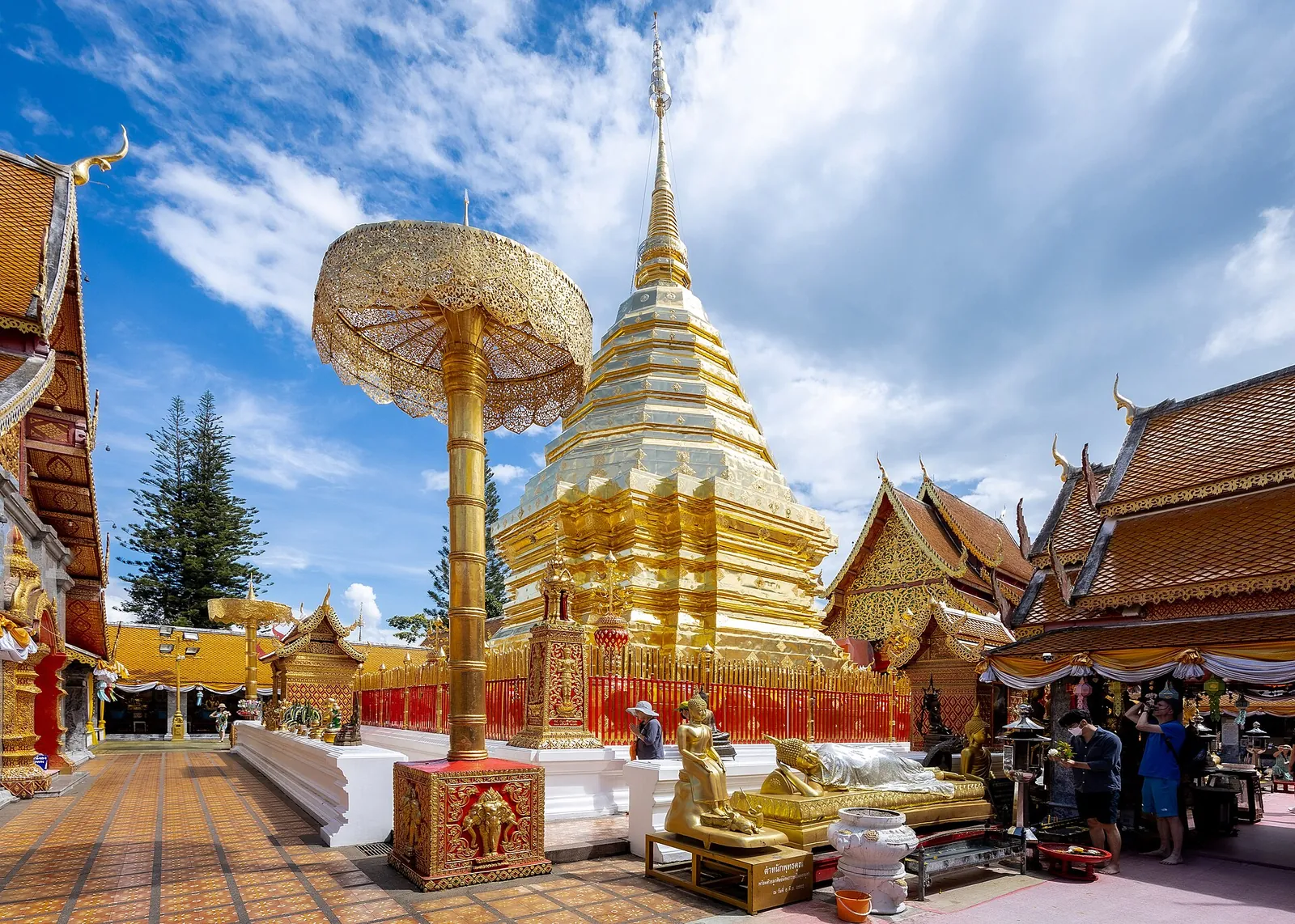
This is the day for big views and great coffee! You head up the mountain that watches over the city, then come back down to the creative, cafe-filled west side.
Morning
Go early. Wat Phra That Doi Suthep sits high on the mountain of Doi Suthep. The provincial government puts it about 3,520 feet above sea level and dates the temple to 1383. It lists opening hours as 6:00 to 17:00. Going early means cooler air, clearer views and fewer crowds.
The easiest way up is a ride-hailing car or a shared red truck (songthaew). Agree the price before you set off. At the top, you can climb the long staircase lined with naga serpents, just like the pilgrims do. Then walk around the golden chedi and step onto the terrace for views over the city. Foreign visitors pay a fee: check the current amount at the ticket desk.
Further up the same road is Bhubing Palace, a royal residence with beautiful gardens. Check its official site for opening days and dress rules before adding it to your morning.
Afternoon
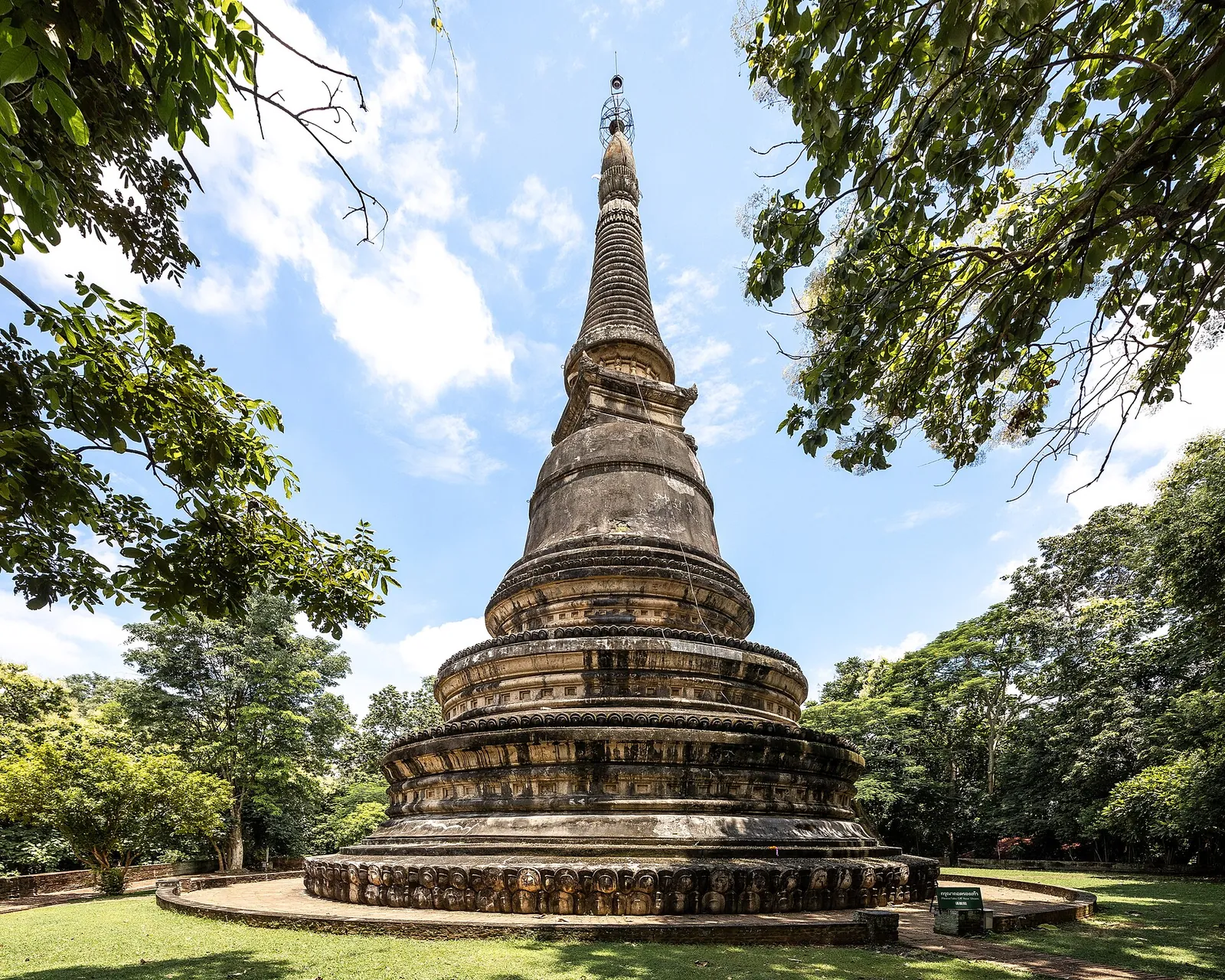
Head back down to the foothills for Wat Umong, a peaceful forest temple known for its old tunnels and shady grounds. It’s a short ride from the base of the mountain. Check visiting hours locally.
From there, it’s a short ride to Nimmanhaemin Road (“Nimman”), the city’s coolest neighbourhood. You’ll find specialty coffee, design shops, galleries and dessert spots along its small numbered side streets (sois). If you like crafts, take a slow wander through the artists’ village of Baan Kang Wat near Wat Umong.
Evening
Stay in Nimman for dinner and rooftop sunsets. If it’s a Saturday, head to the Wua Lai Saturday Walking Street near Chiang Mai Gate instead, open 17:00 to 22:00. Many of the sellers live on Wua Lai Street, which is home to silversmiths, so look out for handmade silver.
Day 3: Doi Inthanon, the roof of Thailand
Waterfalls, cool forests and mountain views: today is a big adventure! Doi Inthanon is the highest mountain in Thailand, and good roads make it easy to visit. Take Highway 107 to Chom Thong, then follow the signs. It’s a full day, so most visitors join a licensed tour or hire a car with a driver. Pack a warm layer, because it can be chilly at the top even when the city is hot.
Morning
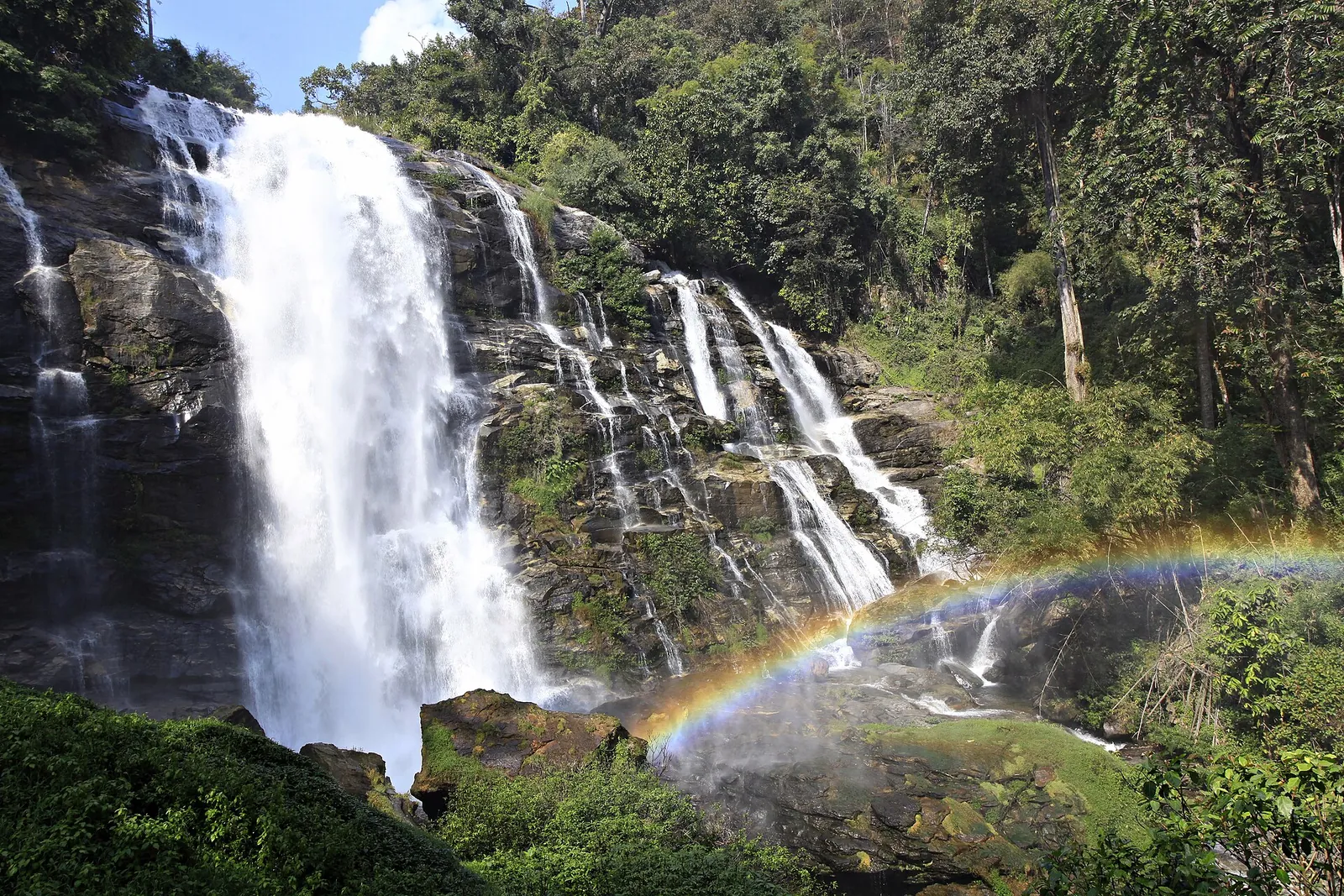
Leave early. On the way up, the provincial guide picks out Mae Ya waterfall, one of the grandest in Thailand, and Mae Klang waterfall, a shady picnic spot. Higher up, rainbows often form in the spray of Wachirathan (Vajiratan) waterfall.
Pay the national park entrance fee at the checkpoint. Thailand’s Department of National Parks sets the fees for foreign visitors, so check the current amount before you go.
Carry on to the summit for the Ang Ka Luang nature trail. It’s a short walk through forest covered in moss and ferns, with rhododendrons and green-tailed sunbirds.
Afternoon
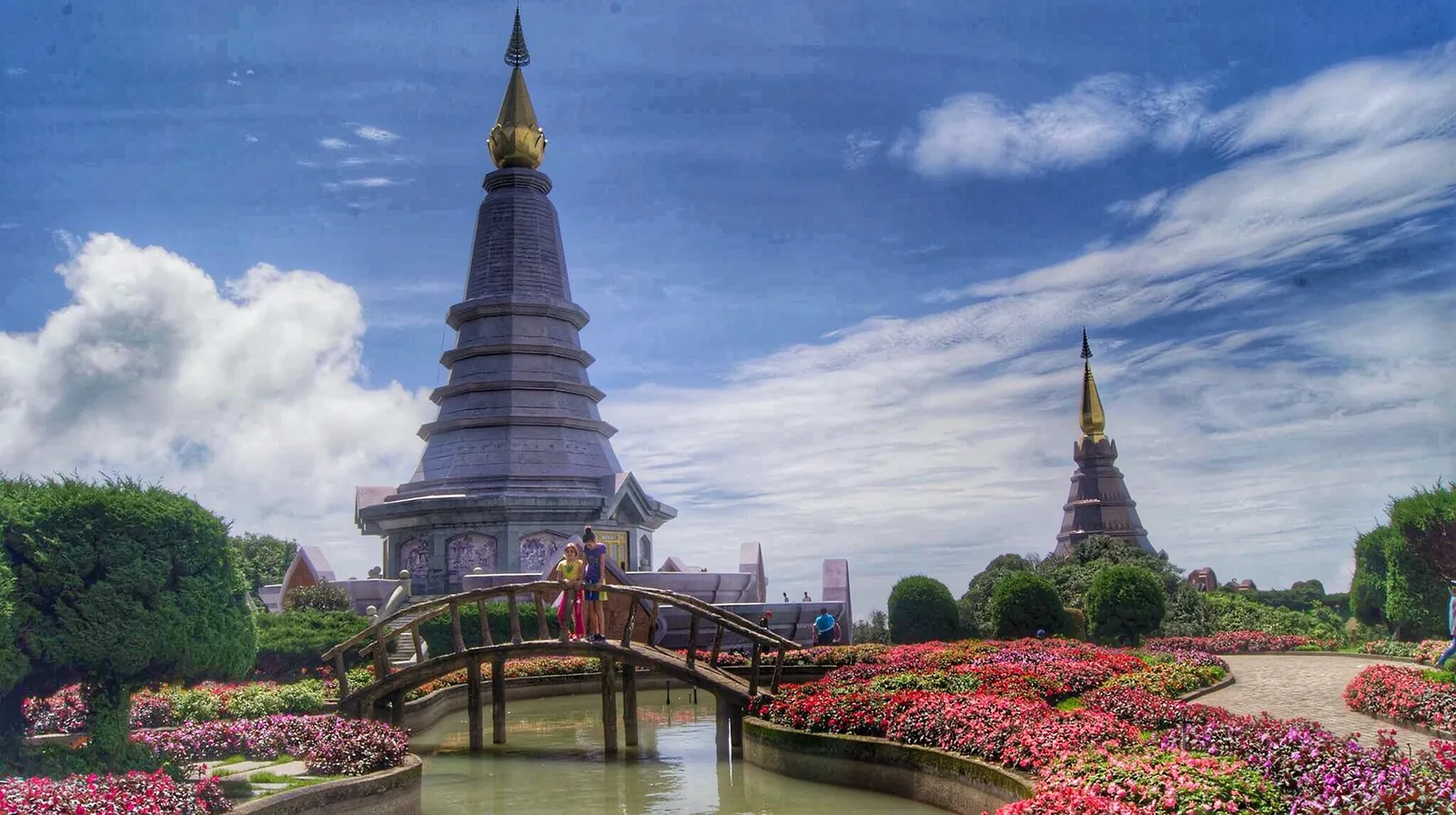
Visit the twin royal pagodas, Phra Maha That Naphamethanidon and Naphaphonphumisiri, set among flower gardens with sweeping views (there may be a separate fee). Nature lovers should ask about Kew Mae Pan, a short trail of about 3 km known for wildflowers, rhododendrons and orchids in late winter. Trails can close for the season, so check with the park on the day.
On the way down, browse the villagers’ stalls at Mong market near the park office for fresh and dried mountain produce. Then stop at the Inthanon Royal Project area and its glasshouse of winter plants.
Evening
You’ll get back to town tired and happy. Keep it simple: a riverside dinner or a foot massage near your hotel.
Prefer animals to mountains? If you’re thinking of visiting elephants instead, read the Heads-up section first.
Day 4: Markets, the river and a slow goodbye
Morning
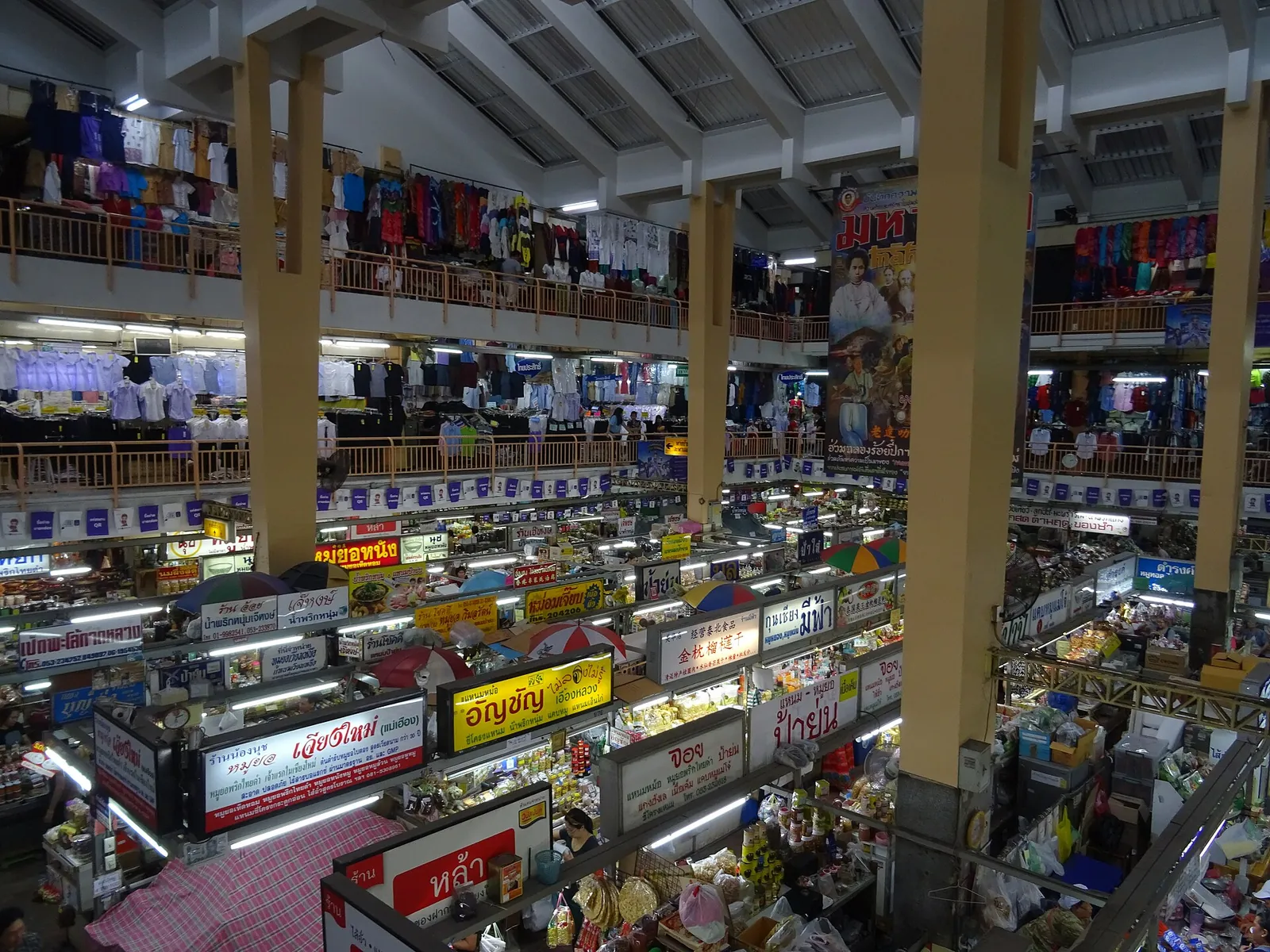
Save your appetite and your shopping bag for this one! Start at Warorot Market (Kad Luang), the city’s big, busy local market near the Ping River. Hunt for northern sausage (sai ua), dried fruit, local coffee and textiles, then wander the flower stalls along the river.
If you skipped the Old City museums on Day 1, here’s your chance (Wednesday to Sunday only).
Afternoon
Pick your pace:
- Royal Park Rajapruek: huge themed gardens made for a royal flower and garden expo in 2006 to 2007. Highlights include the Ho Kham Luang royal pavilion, the orchid garden and the international gardens. The provincial tourism page lists it as open daily 8:00 to 18:00, adults THB 100 and children THB 50. Bring an umbrella, because it gets very hot.
- A Thai cooking class: many schools start with a market visit, then teach you a handful of northern and central Thai dishes. Book a day or two ahead.
Evening
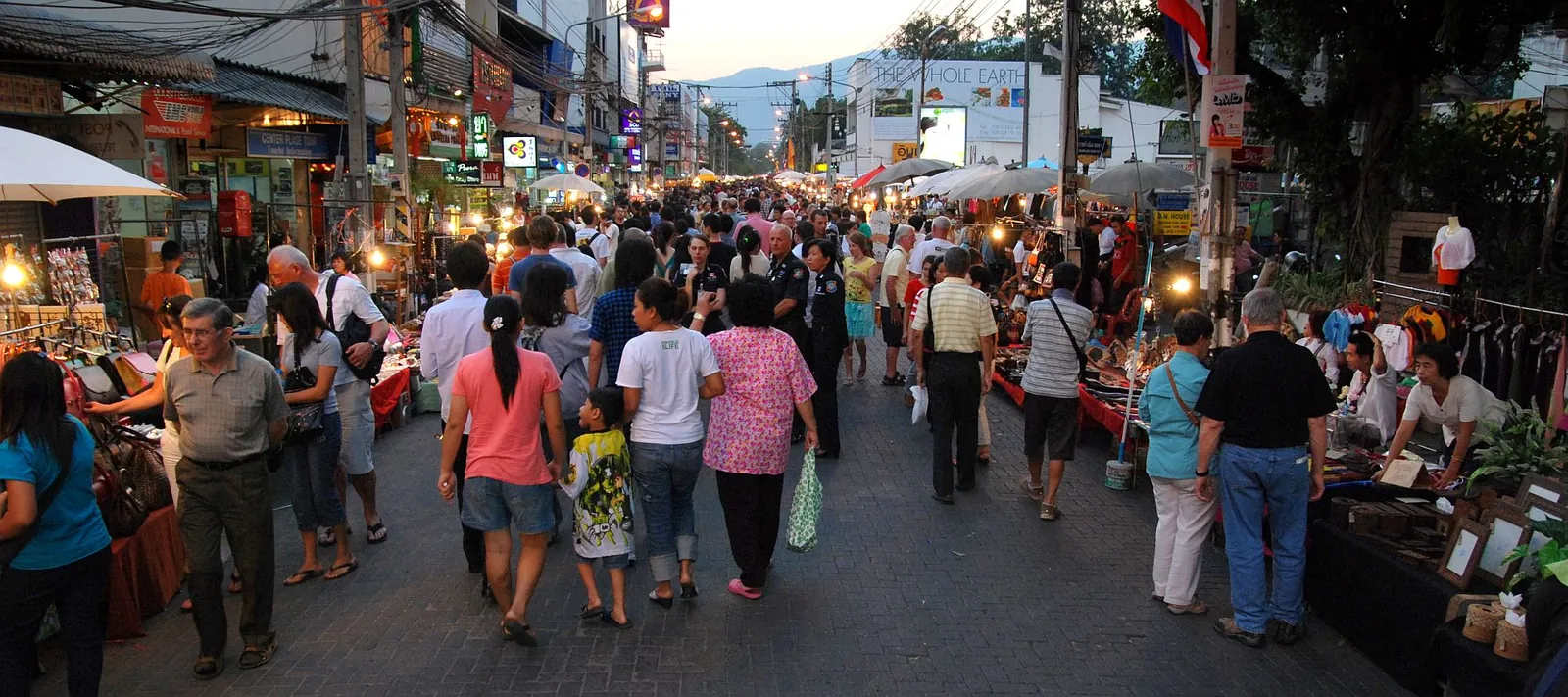
Celebrate your last night at the Night Bazaar or by the river. Try a northern-style set dinner and pick up last-minute souvenirs. If it’s a Saturday or Sunday, catch whichever walking street you missed.
Getting there and getting around
Arriving by air. Chiang Mai International Airport (CNX) is close to the city. Fares change, so check the airport’s official information when you land. The Government of Canada advises using licensed taxis from official taxi stands, limousine services or a trusted ride-sharing app. Avoid unlicensed cars with black and white licence plates: they aren’t properly insured to carry passengers.
Arriving by train. Long-distance trains run from Bangkok to Chiang Mai, including overnight services. Check times and fares on the State Railway of Thailand’s official channels, and book sleeper berths early.
Getting around town.
- On foot: the Old City is flat and easy to explore.
- Ride-hailing apps: handy for Doi Suthep, Nimman and the airport, with the price shown before you book.
- Red shared trucks (songthaew): flexible and local. Agree the fare before you get in.
- Tuk-tuks: fun for short hops. Agree the price first. Canada notes that disputes with taxi and tuk-tuk drivers do happen.
- Scooters: we don’t recommend them for visitors (see Heads-up).
Chiang Mai has no metro and no city transport card, so keep small notes and coins handy.
Where to stay
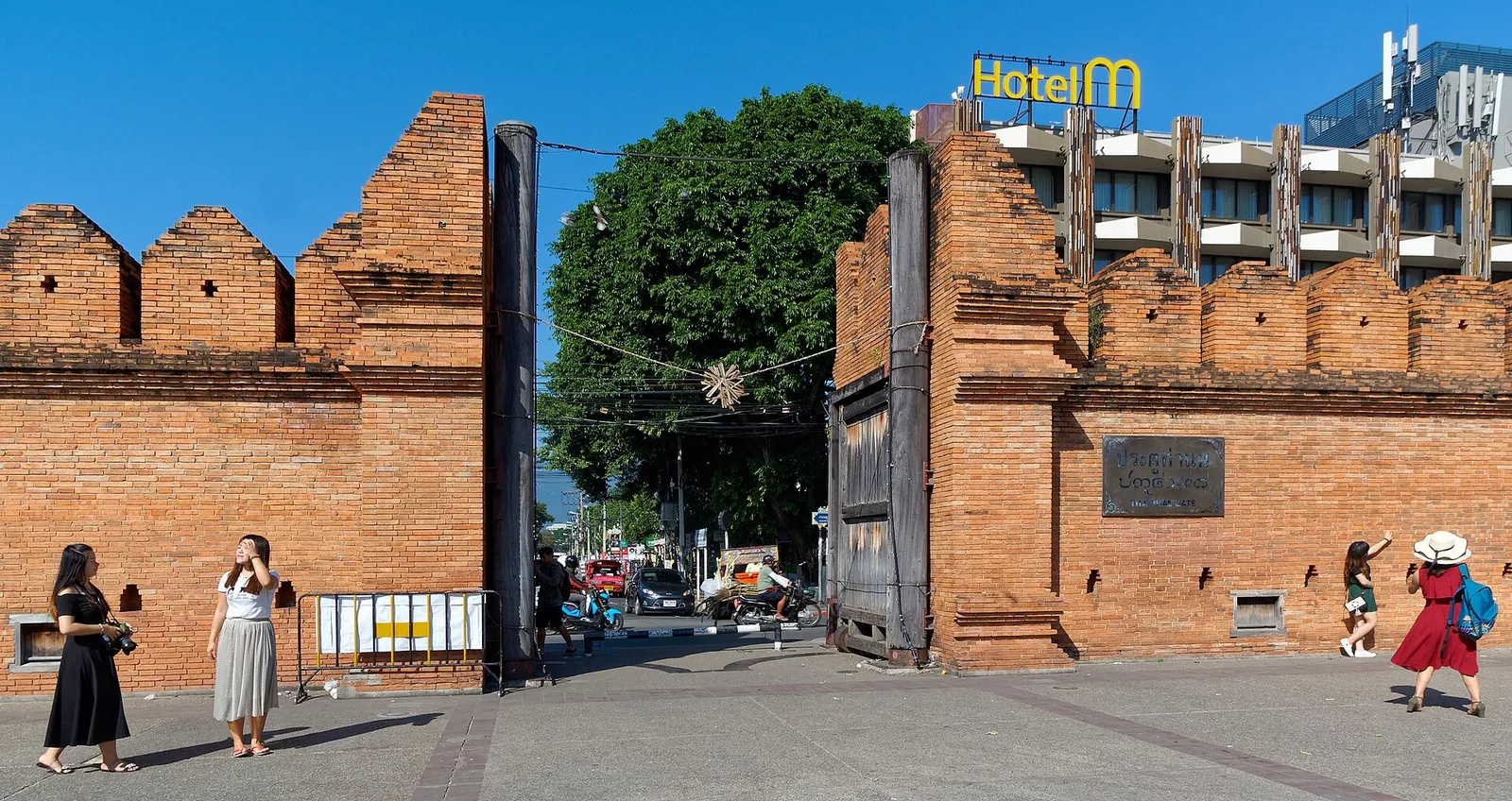
- Old City: walkable, full of temples, cafes and guesthouses. Best for first-timers and anyone who wants the Sunday Walking Street on their doorstep.
- Tha Phae Gate and Night Bazaar area: lively, central and close to the river and Warorot Market. Good for night owls and shoppers.
- Nimmanhaemin: modern, trendy and focused on food, near the road up to Doi Suthep. Suits couples, digital nomads and cafe lovers.
- Riverside (Ping River): calmer and prettier, great for a slower, romantic stay. You’ll need rides more often to reach the Old City.
Budget
Mid-range prices for hotels, meals and rides change with the season and demand. So we only list costs we confirmed on official sources today. Not included: flights, travel insurance, visa fees and tours.
| Item | Typical cost |
|---|---|
| Chiang Mai City Arts & Cultural Centre | THB 90 adult, THB 40 child |
| Lanna Folklife Museum | THB 90 adult, THB 40 child |
| Royal Park Rajapruek | THB 100 adult, THB 50 child (provincial listing) |
| Wat Phra That Doi Suthep | Fee for foreign visitors: check at the ticket desk |
| Doi Inthanon National Park entry | Check the Department of National Parks |
| Airport transfer, rides and tours | Check the official airport counter or your app |
| Hotel and meals | Check current rates |
Practical tips
- Dress for temples: cover your shoulders and knees, take off your shoes where others do, and keep a light scarf in your bag.
- Closing days: the city museums at the Three Kings Monument are closed on Monday and Tuesday.
- Walking streets: Saturday (Wua Lai) and Sunday (Tha Phae) only, 17:00 to 22:00.
- Money: carry some cash for markets and shared trucks. The FCDO advises using ATMs inside banks and never letting your card out of sight.
- SIM or eSIM: buy a local SIM at the airport or set up an eSIM before you fly. Have your passport ready to register it.
- Laws to know: smoking in public can mean a fine of up to THB 5,000, and owning or using vapes and e-cigarettes is illegal. Alcohol sales are restricted between midnight and 11:00, with some exceptions for licensed venues. Criticising the monarchy is illegal.
- Weather: the rainy season usually runs from May to October. Check the Thai Meteorological Department for warnings.
- Emergencies: tourist police 1155, police 191.
Heads-up
Chiang Mai is a joy, and knowing a few things keeps it that way. These points come from official government travel advice.
- Smoke haze: the UK government (FCDO) says Chiang Mai gets seasonal smoke haze from farmers burning trees and crops, and pollution sometimes reaches dangerous levels. Canada notes smog comes back every dry season. Check air quality before outdoor days, especially if you have asthma or a heart condition.
- Scooters: Thailand has a lot of road accidents, especially involving motorbikes. Rental scooters in tourist areas are often unregistered. Your insurance may not cover you without the right licence, and helmets are required by law. Canada advises not riding motorbikes in Thailand at all.
- Rental and passport scams: never leave your passport as a deposit for a rental. Canada reports cases where renters were accused of damage and their passports were held back.
- Gem and jewellery “bargains”: Canada warns about sellers offering low-quality stones at high prices, with promises that you can resell them at a profit.
- Unlicensed taxis: use official taxi stands or a trusted app. Don’t share taxis with strangers.
- Elephant trips: the FCDO warns that elephant treks can be dangerous, and visitors have been seriously injured and killed. Use a reliable, licensed operator.
- Mountain roads and waterfalls: heavy rain can cause flash floods and landslides in the north, and waterfalls are especially at risk. Canada advises against driving mountain roads at night, especially in the rainy season.
- Drinks: drink spiking happens in tourist areas, and methanol in alcoholic drinks has caused deaths in Thailand. Never leave your drink unattended.
- Drones: flying an unregistered drone is illegal. Register it with the NBTC within 30 days of arrival.
- Closed attraction: the Chiang Mai Historical Centre is temporarily closed for renovation.
Visa and entry. Entry rules depend on your passport and have changed recently. Check the official Thai e-Visa portal at thaievisa.go.th and your own government’s travel advice before you book. All foreign nationals must fill in the free Thailand Digital Arrival Card online at tdac.immigration.go.th within 3 days before arrival.
FAQ
Is 4 days enough for Chiang Mai?
Yes. Four days covers the Old City, Doi Suthep, a full day at Doi Inthanon and a relaxed market day. Add a fifth day if you want a cooking class and a spa day without rushing.
When is the best time to visit Chiang Mai?
November to January is a sweet spot. The rainy season (usually May to October) is over, and you’re ahead of the smoke haze that can build up later in the dry season. Always check air quality and weather warnings before you go.
Do I need to pre-book anything?
Book Doi Inthanon tours or a car with a driver a day or two ahead, plus cooking classes and sleeper berths on the train. You pay at the door for temples and museums.
Can I visit Doi Suthep without a tour?
Yes. A ride-hailing car or a shared red truck will take you up. Agree the price first and go early for cooler air and smaller crowds.
What should I wear to temples?
Clothes that cover your shoulders and knees, and shoes you can slip off easily. Light long trousers or a long skirt work well in the heat.
Is Chiang Mai safe for tourists?
Generally yes, with normal care. Follow the Heads-up section: avoid scooters, unlicensed cars and gem deals, watch your drinks, and check air quality in the dry season.
Sources
Prices, hours and rules change. We checked these on 24 October 2026; please confirm on the official page before you book.
- FCDO Thailand travel advice: Safety and security
- FCDO Thailand travel advice: Entry requirements
- FCDO Thailand travel advice: Health
- Government of Canada: Thailand travel advice
- Official Thailand Digital Arrival Card (TDAC)
- U.S. Embassy & Consulate in Thailand: Thailand Digital Arrival Card notice
- Official Website of Thailand Electronic Visa (Ministry of Foreign Affairs)
- Chiang Mai Province: Tourism
- Chiang Mai City Arts & Cultural Centre (City Heritage Centre, Chiang Mai Municipality)
- Lanna Folklife Museum (City Heritage Centre, Chiang Mai Municipality)
- Chiang Mai Historical Centre (City Heritage Centre, Chiang Mai Municipality)
- Thai Meteorological Department
Photo credits (11)
- The golden chedi of Wat Phra That Doi Suthep: เทวประภาส มากคล้าย, CC BY 3.0, via Wikimedia Commons
- Gilded Lanna facade of Wat Phra Singh in the Old City: Stefan Fussan, CC BY-SA 3.0, via Wikimedia Commons
- The huge brick ruin of Wat Chedi Luang under blue sky: Vyacheslav Argenberg, CC BY 4.0, via Wikimedia Commons
- Golden umbrellas and chedi on the Doi Suthep terrace: Supanut Arunoprayote, CC BY 4.0, via Wikimedia Commons
- An old chedi among shady trees at Wat Umong: Supanut Arunoprayote, CC BY 4.0, via Wikimedia Commons
- Wachirathan waterfall with a rainbow in the spray: KOSIN SUKHUM, CC BY-SA 4.0, via Wikimedia Commons
- The royal pagodas on Doi Inthanon above flower gardens: ElliotJW, CC BY-SA 4.0, via Wikimedia Commons
- Colourful stalls inside busy Warorot Market: Christophe95, CC BY-SA 4.0, via Wikimedia Commons
- Strolling the Sunday Walking Street at dusk: Takeaway, CC BY-SA 4.0, via Wikimedia Commons
- A bowl of khao soi with pickles and shallots: Chainwit., CC BY-SA 4.0, via Wikimedia Commons
- Tha Phae Gate and the old city walls on a sunny day: Jakub Hałun, CC BY-SA 4.0, via Wikimedia Commons
This is a researched plan, not a personal trip report. How we research · Affiliate disclosure