
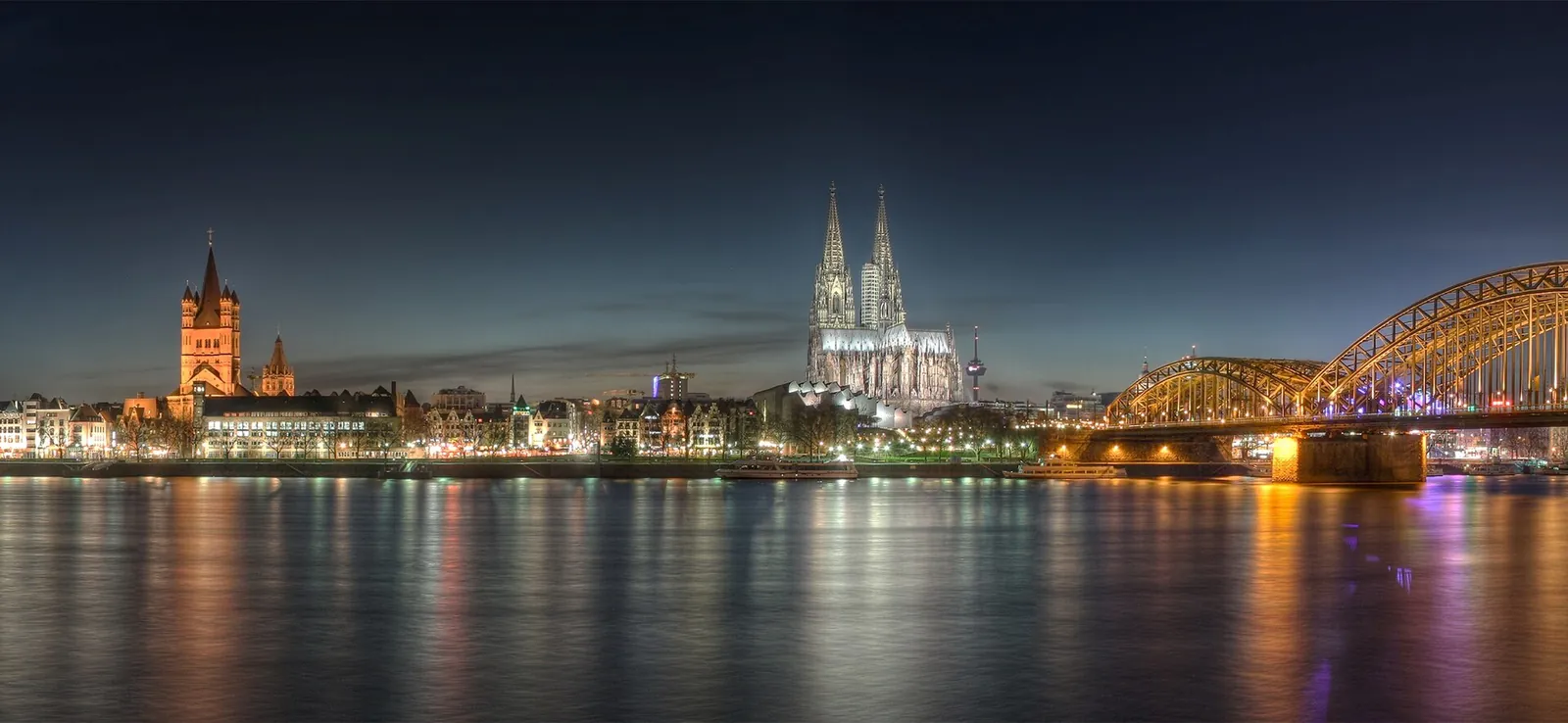
3 Days in Cologne: A Day-by-Day Itinerary
A 3-day Cologne itinerary: the cathedral and its tower, Roman Cologne and the Chocolate Museum, then a day trip to Beethoven's Bonn or Charlemagne's Aachen.
- 🗓️ Trip length
- 3 days
- ☀️ Best time
- May to September, late November to December
- 💰 Daily spend
- EUR 25-45 for sights and local transport (excl. stay and meals)
- ✅ Facts checked
- 1 November 2026
Get ready for one of Germany’s friendliest cities. Cologne greets you with a Gothic cathedral so big it seems to fill the sky, two thousand years of Roman history under your feet, a riverside promenade made for slow evenings and a beer culture all of its own. This plan suits first-timers who want the headline sights, plus a taste of the wider Rhineland on a relaxed day trip.
The pace is easy. Cologne’s centre is compact and mostly flat, so Days 1 and 2 are on foot with the odd tram ride. Day 3 takes a regional train to either Bonn, Beethoven’s birthplace, or Aachen, the city of Charlemagne. Pick the one that excites you most.
At a glance
| Day | Area | Highlights |
|---|---|---|
| 1 | Cathedral and Old Town | Cologne Cathedral, tower climb and treasury, Hohenzollern Bridge, Museum Ludwig, Rhine promenade |
| 2 | Roman Cologne and the Rhine harbour | Römisch-Germanisches Museum, Rheinauhafen and the crane houses, Chocolate Museum, Belgian Quarter |
| 3 | Day trip | Bonn (Beethoven-Haus, old town) or Aachen (UNESCO cathedral and treasury) |
One planning rule first: closing days clash. Museum Ludwig is closed on Mondays (except public holidays), and the Römisch-Germanisches Museum is closed on Tuesdays. So make sure Day 1 is not a Monday and Day 2 is not a Tuesday. The Beethoven-Haus is open to individual visitors Wednesday to Monday, so pick Aachen if your Day 3 is a Tuesday. Also note 11 November: the carnival season opens that day, the cathedral tower and treasury close, and the Roman museum is shut too.
Day 1: The cathedral and the Old Town
Morning
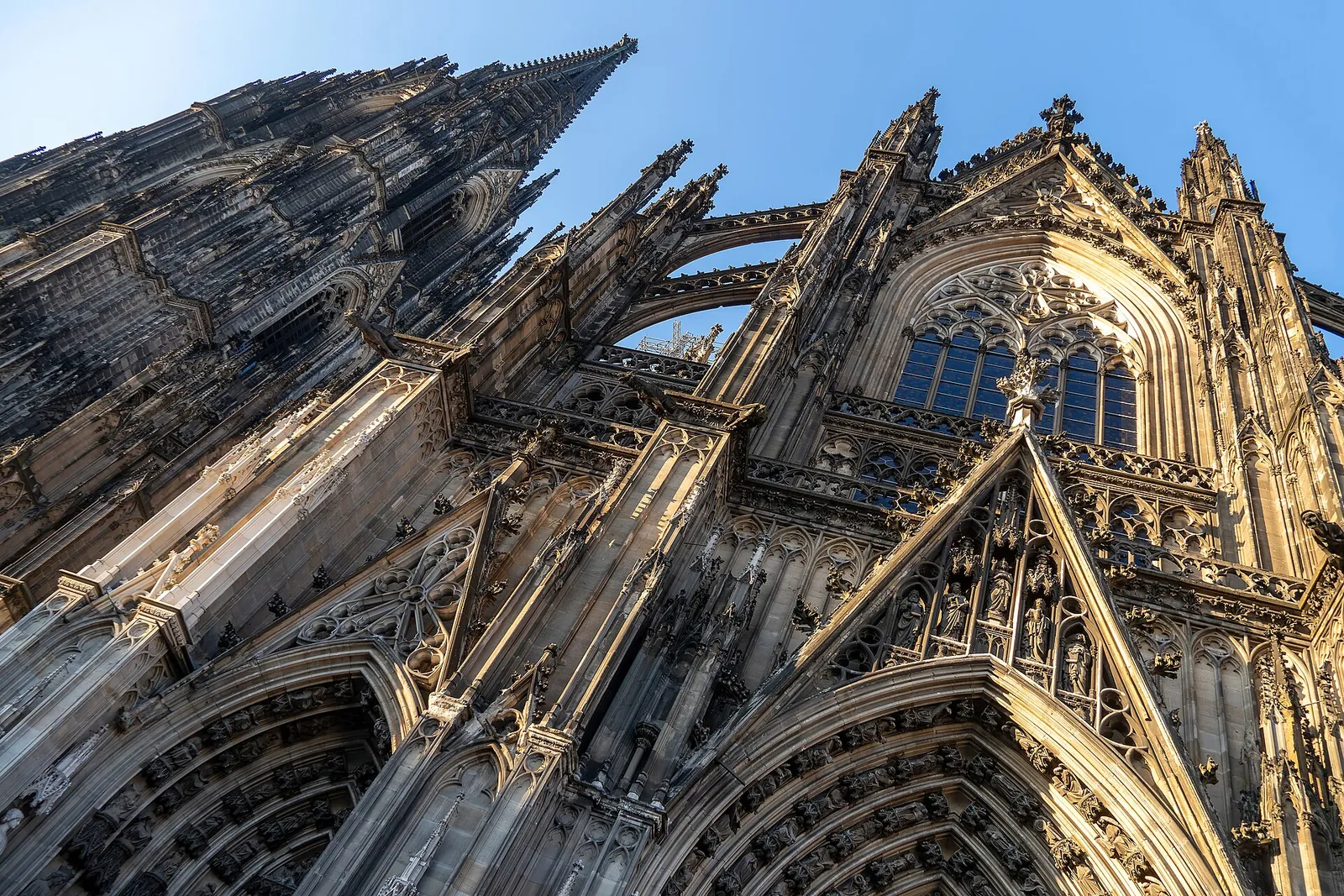
Welcome to Cologne! Step out of the main station (Köln Hauptbahnhof) and the Kölner Dom is right in front of you. It is a UNESCO World Heritage Site and the city’s beating heart, and it takes a moment to grasp its scale.
A big change for 2026: since 1 July 2026, tourist visits to the cathedral interior need a ticket. A standard ticket costs EUR 12, reduced EUR 6, and children aged 13 and under are free. Tourist visiting hours are Monday to Saturday from 10:00 am to 5:45 pm (last entry 5:30 pm), and Sundays and church holidays from 1:30 pm to 4:30 pm (last entry 4:15 pm). The cathedral itself is open from 6:00 am to 8:00 pm for prayer, and anyone coming to pray, attend a service or light a candle enters free through the North Transept. We suggest booking online on the cathedral’s official ticket shop to save time at the ticket office.
Once inside, take in the soaring nave, the stained glass and the golden Shrine of the Three Kings behind the high altar.
Fancy the best view in town? The South Tower climb is 533 steps with no lift, winding up a spiral staircase to almost 75 metres before you reach the viewing platform. It costs EUR 8 (reduced EUR 4) and opens 9:00 am to 6:00 pm from March to October, and 9:00 am to 4:00 pm from November to February, with last entry 30 minutes before closing. On Sundays and public holidays the bell chamber stays closed until 2:00 pm. The tower also shuts on several carnival days and holidays, so check before you climb.
The Treasury (Domschatzkammer) shows gold, reliquaries and vestments in vaulted cellars. It opens daily 10:00 am to 6:00 pm (last entry 5:30 pm) for EUR 8, and a tower plus treasury combined ticket is EUR 12.
Afternoon
Walk round to the back of the cathedral and you reach Museum Ludwig, one of Europe’s big modern art museums, with pop art, German expressionism and a large Picasso collection. It opens Tuesday to Sunday from 10:00 am to 6:00 pm, and until 10:00 pm on the first Thursday of the month. Adult entry is EUR 15.40, reduced EUR 10.40, and under-18s go free. On the first Thursday, entry for non-residents drops to EUR 7 from 5:00 pm. Allow two to three hours.
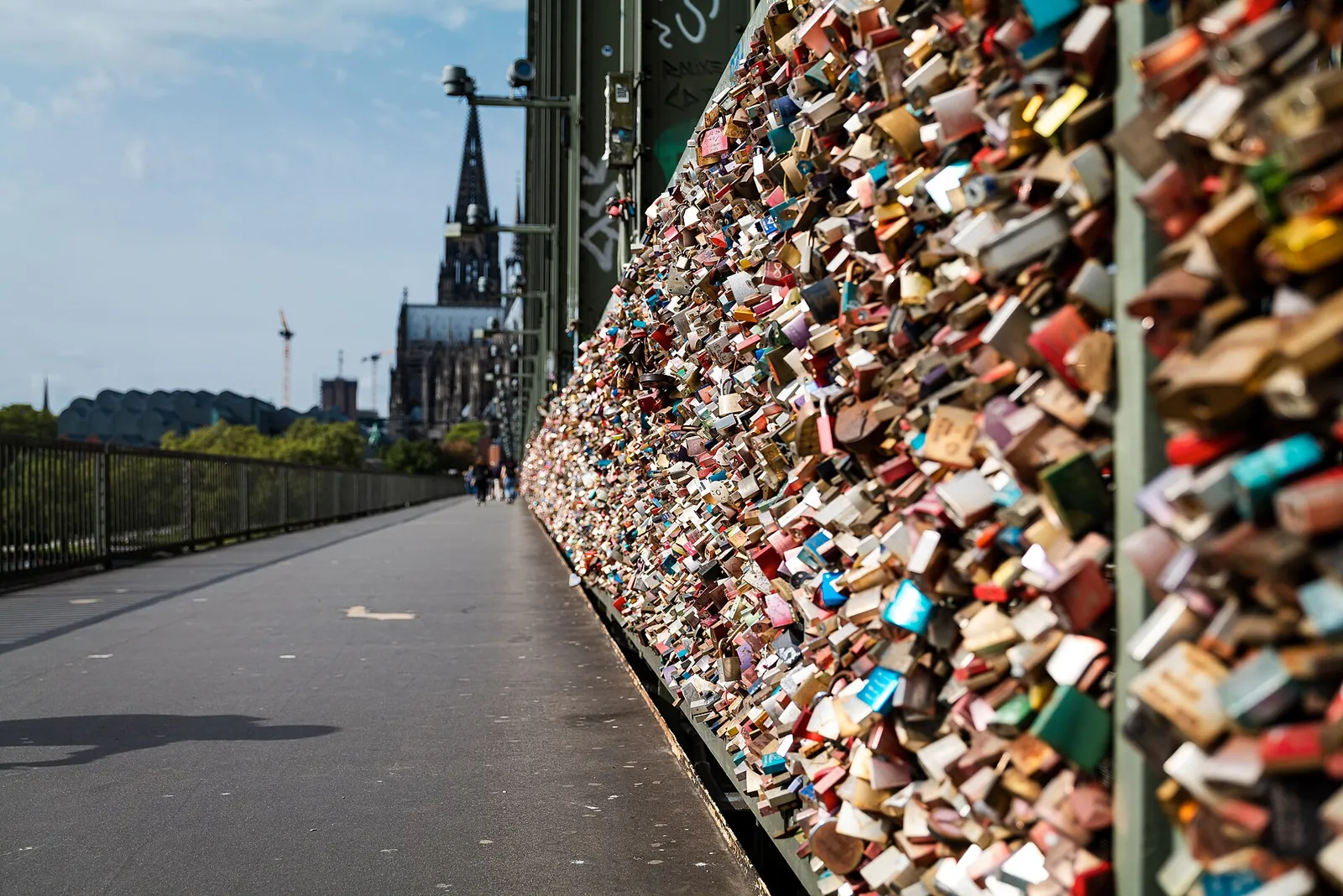
Afterwards, walk onto the Hohenzollern Bridge, right beside the museum. The railway bridge is covered in thousands of “love locks” left by couples, and the view back to the cathedral is the classic Cologne postcard.
Evening
Save your evening for the cosy side of Cologne. Head south from the cathedral into the Altstadt (Old Town), around Alter Markt and Heumarkt, then down to the Rhine promenade. This is where Cologne relaxes. Try a traditional brewhouse for Kölsch, the local beer served in slim glasses. Waiters keep bringing fresh ones until you place your beer mat on top of the glass. Brewhouses fill up on weekend evenings, so arrive early or reserve.
Day 2: Roman Cologne and the Rhine harbour
Morning
Today is all about time travel! Cologne was founded by the Romans, and you will meet them at the Römisch-Germanisches Museum. Note the move: the museum’s main building next to the cathedral is closed for renovation, so the collection is shown in the Belgisches Haus at Cäcilienstraße 46, near Neumarkt (about a 15-minute walk from the cathedral, or a short tram ride). The famous Dionysus mosaic and the Poblicius monument stay in the closed building and cannot be seen for now.
The temporary museum opens Wednesday to Monday from 10:00 am to 6:00 pm, and until 10:00 pm on the first Thursday of the month (except public holidays). Entry is EUR 6, reduced EUR 3.50. It is closed on 11 November 2026 for the carnival season opening. Allow one to two hours.
Afternoon
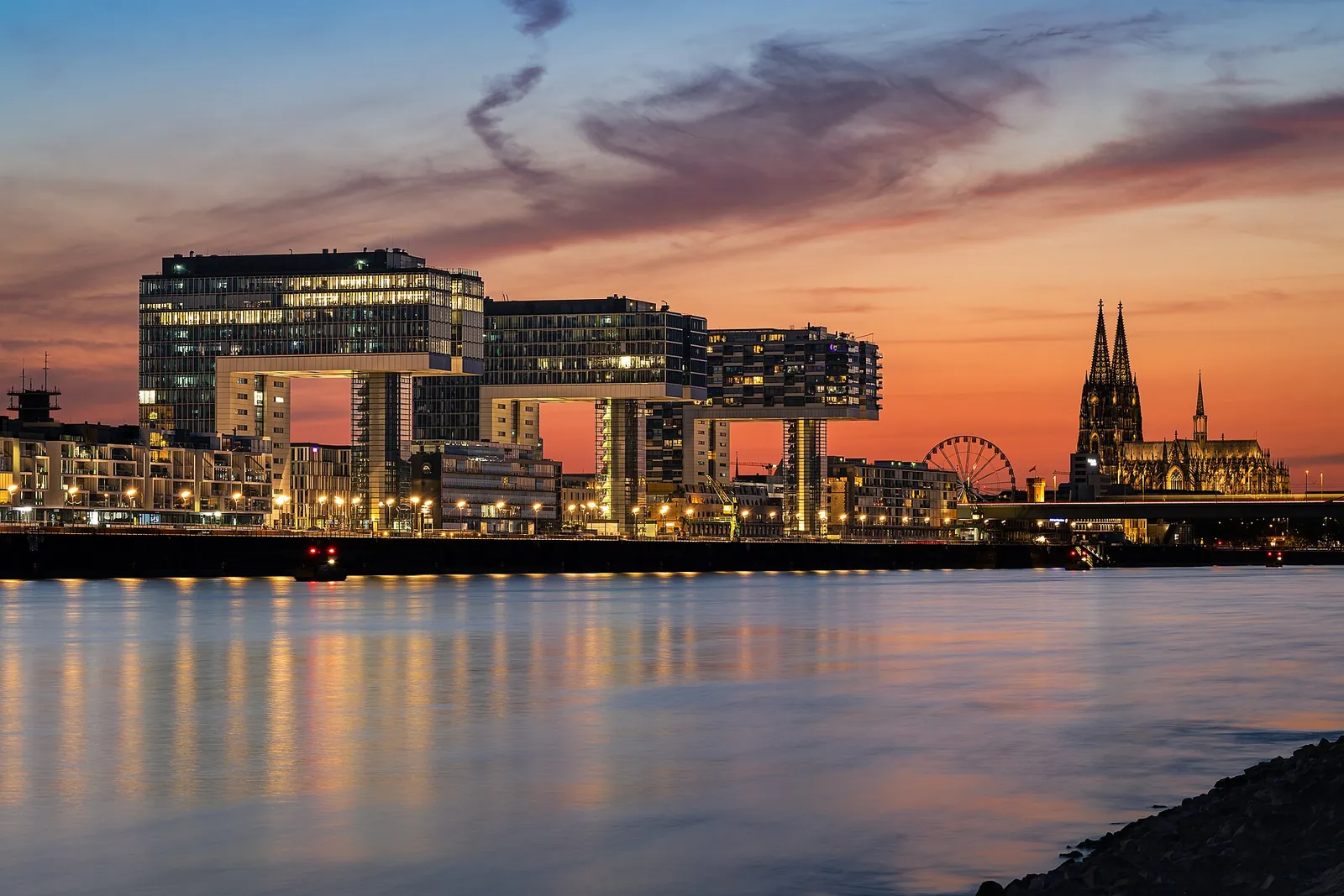
From Neumarkt, walk east towards the Rhine and then south along the river to the Rheinauhafen, the old harbour turned smart waterfront. Look up at the three Kranhäuser (crane houses), office and apartment towers shaped like giant harbour cranes. The walk is roughly 20 to 30 minutes and pleasant in good weather.
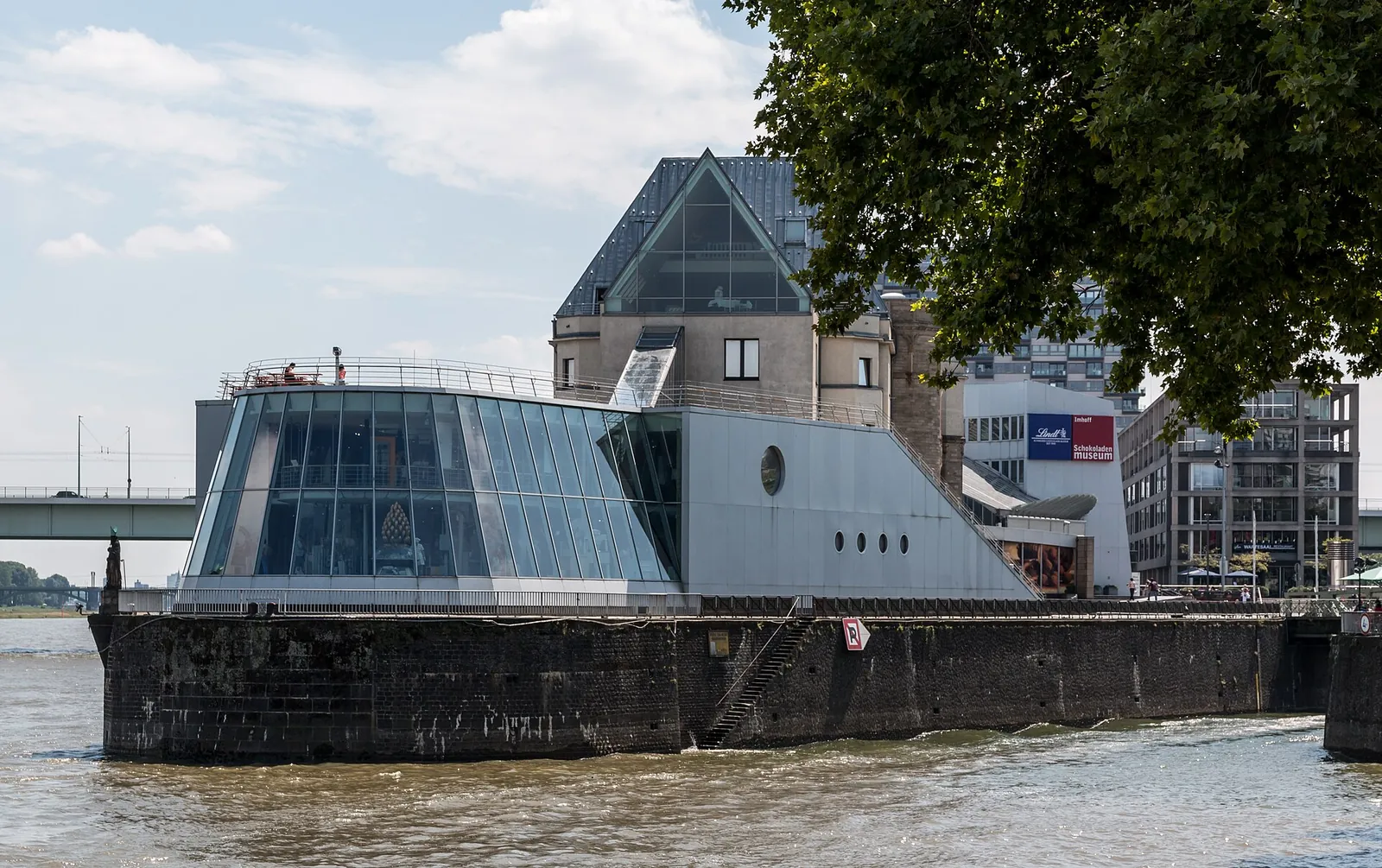
On a small peninsula in the harbour sits the Chocolate Museum (Schokoladenmuseum), at Am Schokoladenmuseum 1a. You follow cocoa from the plantation to a working production line, and yes, there is a chocolate fountain. It opens daily from 10:00 am to 6:00 pm, with last admission an hour before closing. Adults pay EUR 17.50 Monday to Friday and EUR 19 at weekends and on public holidays. Children under 6 go free, and young people up to 18 pay EUR 10 on weekdays. The museum’s own pages disagree about Monday closures in winter: it lists 2, 9 and 16 November 2026 as closed, and its FAQ mentions closed Mondays in November and from January to March. Check the website if your visit falls on a Monday. Buying online lets you skip the box office queue, and early morning or late afternoon is usually quieter.
Evening
Take a tram west to the Belgian Quarter (Belgisches Viertel), streets of independent shops, cafés and bars around Brüsseler Platz. It is a relaxed, local spot for dinner and a drink.
Day 3: Day trip to Bonn or Aachen
This is the day to stretch your legs beyond Cologne, and both options are a treat. Both cities sit inside the regional Rheinlandtarif fare network, which since 1 June 2026 covers the VRS area around Cologne and Bonn and the AVV area around Aachen. That makes a day ticket simple (see “Getting around” below). Check the Deutsche Bahn or KVB journey planner for current train times, as they change with timetables and engineering works.
Option A: Bonn, Beethoven’s city
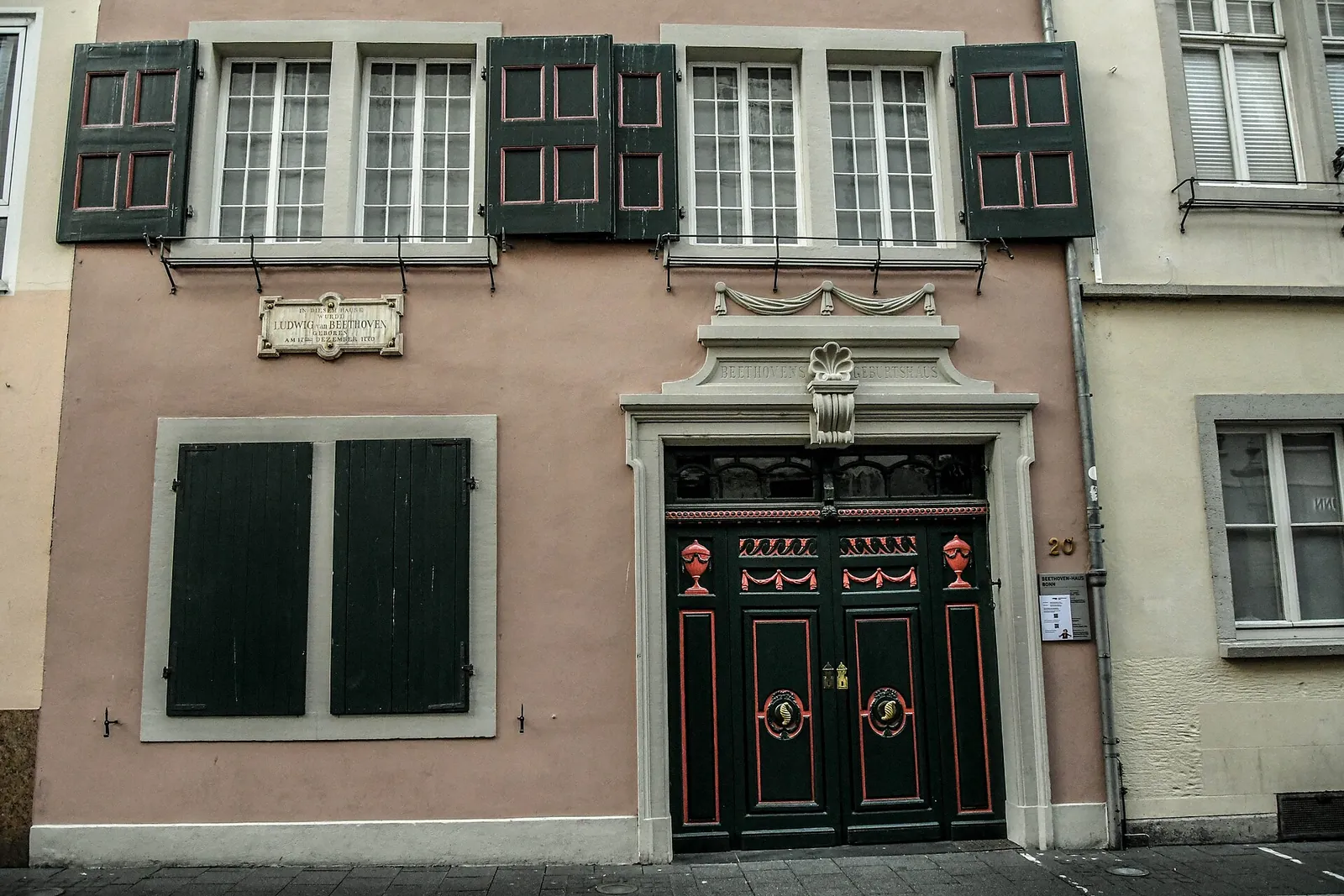
Morning: Take a regional train south along the Rhine to Bonn, the former West German capital. Walk into the old town to the Beethoven-Haus at Bonngasse 20, where Ludwig van Beethoven was born in 1770. The museum holds instruments, manuscripts and portraits. It opens Wednesday to Monday from 10:00 am to 6:00 pm (Tuesdays only for pre-booked groups). Adults pay EUR 15 and children EUR 10, rising to EUR 17 and EUR 12 during the “Beethoven by Warhol” exhibition from 9 September 2026 to 5 April 2027. Tickets are sold at Bonngasse 21, opposite the entrance. It closes on several carnival and Christmas days, so check first.
Afternoon: Wander the old town squares and the green Rhine promenade, then head back to Cologne for the evening.
Option B: Aachen, Charlemagne’s city
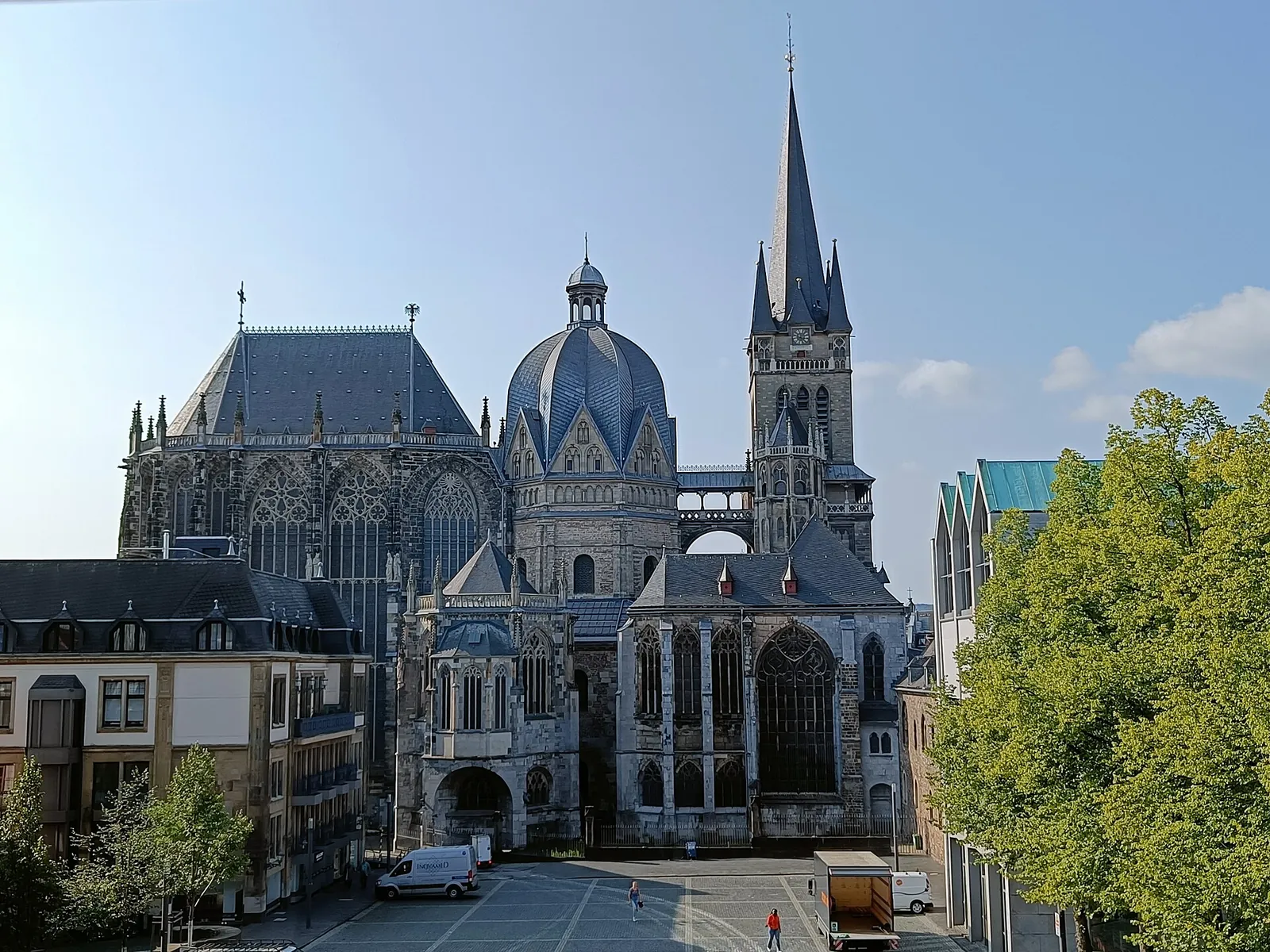
Morning: Take a regional train west to Aachen, near the Belgian and Dutch borders. The highlight is Aachen Cathedral, built around Charlemagne’s palace chapel and one of Germany’s first UNESCO World Heritage Sites. Visiting is free outside service times. Tourist hours are Monday to Thursday 11:00 am to 6:00 pm, Friday and Saturday 11:00 am to 7:00 pm, and Sunday 1:00 pm until late afternoon. The cathedral warns that hours can change at short notice for services, concerts and events, with special arrangements in October and November 2026, so check the homepage for the current week. Photographing the interior costs a EUR 1 contribution.
The Gothic choir and Charlemagne’s throne can only be seen on a guided tour: EUR 8.50 for adults, EUR 4.50 reduced, with an English tour daily at 2:00 pm.
Afternoon: Cross to the Cathedral Treasury, packed with medieval gold and reliquaries. It opens Tuesday to Sunday 10:00 am to 6:00 pm and Monday 10:00 am to 2:00 pm, and costs EUR 8 (reduced EUR 4). Then try Aachener Printen, the city’s spiced gingerbread biscuit, before the train back.
Evening
Back in Cologne, finish on a high and end your trip with a sunset walk on the east bank of the Rhine at Deutz, which gives the best panoramic view of the cathedral and the Old Town across the water.
Getting there and getting around
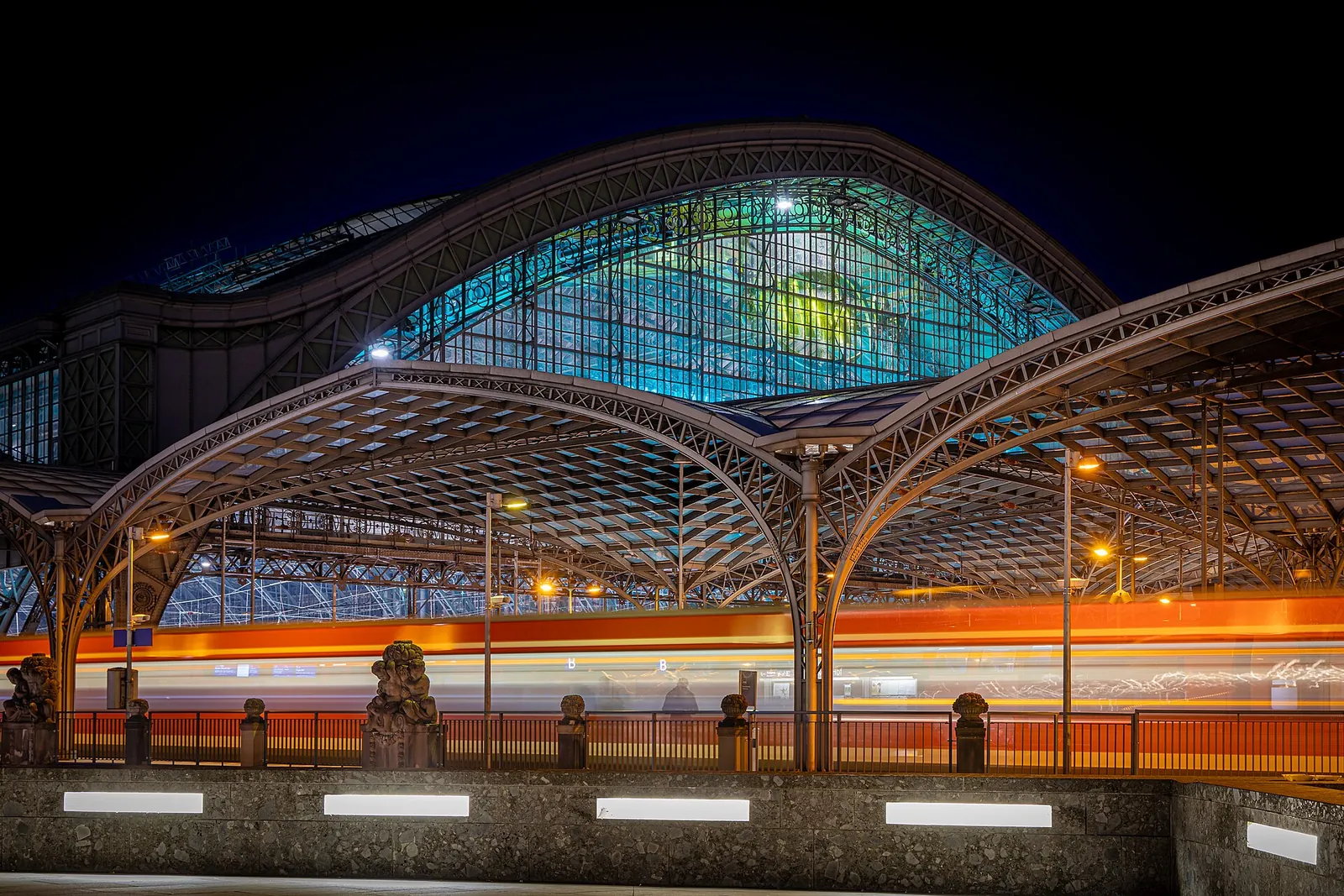
From Cologne Bonn Airport: The airport has its own railway station beneath the terminals, with S-Bahn and regional trains to Köln Hauptbahnhof. The airport lies within the city of Cologne, so a fare-level 1b ticket covers the trip: a single costs EUR 4.00 under the Rheinlandtarif. Check the DB or KVB journey planner for current lines and journey times.
Fares (Rheinlandtarif, from 1 June 2026):
- Single ticket within Cologne (level 1b): EUR 4.00. Cologne, Bonn and Aachen each count as level 1b for travel inside the city.
- 24hTicket for Cologne (level 1b): EUR 9.60 for one person, EUR 19.20 for up to five people.
- 24hTicket for the whole Rheinland network (level 3): EUR 27.80 for one person, EUR 55.60 for up to five. This is the easy option for the Bonn or Aachen day trip, valid on buses, trams and regional trains.
- 24hTicket for all of North Rhine-Westphalia: EUR 39.80 (one person).
- Deutschlandticket: EUR 63 per month for unlimited local and regional transport (2nd class) across Germany. It is a subscription, so it suits longer stays more than a short city break.
Validate paper tickets before you travel.
KölnCard: Free travel on buses, trams, S-Bahn and regional trains (2nd class) within the city of Cologne, plus discounts at many museums and up to 50% off many city tours. It costs EUR 9 for 24 hours or EUR 18 for 48 hours, or EUR 19 and EUR 38 for groups of up to five. It gives a discount at the cathedral treasury only, not on the cathedral or tower tickets. Buy it at tourist information, KVB and DB ticket machines, online or in the VRS app, and validate it before your first trip.
Where to stay
- Altstadt and around the cathedral: The most convenient base, steps from the main station and the Rhine. Lively and busy, especially on weekend nights.
- Belgian Quarter: Stylish and local, full of cafés and small bars, with easy tram links. Great for couples and food lovers.
- Deutz (east bank): Across the river with cathedral views, close to the trade fair grounds and Köln Messe/Deutz station. Practical and often calmer.
- Südstadt and Rheinauhafen: A residential feel near the harbour and Chocolate Museum, good for slower travellers and families.
Budget
| Item | Typical cost |
|---|---|
| Cathedral interior, tourist visit | EUR 12 (reduced EUR 6, under-14s free) |
| Cathedral tower | EUR 8 (reduced EUR 4) |
| Cathedral treasury | EUR 8 (reduced EUR 4) |
| Tower plus treasury combined | EUR 12 |
| Museum Ludwig | EUR 15.40 (under-18s free) |
| Römisch-Germanisches Museum | EUR 6 (reduced EUR 3.50) |
| Chocolate Museum, adult | EUR 17.50 weekdays / EUR 19 weekends |
| Beethoven-Haus, adult | EUR 15 (EUR 17 during the Warhol exhibition) |
| Aachen Cathedral guided tour / treasury | EUR 8.50 / EUR 8 |
| Single ticket within Cologne | EUR 4.00 |
| 24hTicket Cologne / whole Rheinland network | EUR 9.60 / EUR 27.80 |
| KölnCard 24h / 48h | EUR 9 / EUR 18 |
A full-price visitor doing everything on Days 1 and 2 spends about EUR 63 on admissions (cathedral, the tower plus treasury combined ticket, Museum Ludwig, the Roman museum and the Chocolate Museum), plus around EUR 20 to 45 on Day 3 depending on Bonn or Aachen and the day ticket. Our daily range covers sights and local transport only. It excludes accommodation, meals, drinks, flights and long-distance trains.
Practical tips
- Plan around closing days: Museum Ludwig is closed on Mondays, the Römisch-Germanisches Museum on Tuesdays, and the Beethoven-Haus on Tuesdays for individual visitors.
- Book the cathedral online on the official ticket shop, especially at weekends and in December.
- Respect services: Tourist visits pause during worship in both Cologne and Aachen cathedrals. Dress modestly and keep your voice low.
- Cards and cash: Cards are widely accepted, but carrying some euros for small cafés and market stalls is wise.
- SIM and eSIM: EU roaming applies for European SIMs. Other visitors can buy a local SIM or an eSIM before arrival.
- Visa and entry: Rules depend on your nationality. Check the German Federal Foreign Office visa pages (auswaertiges-amt.de) well before you travel.
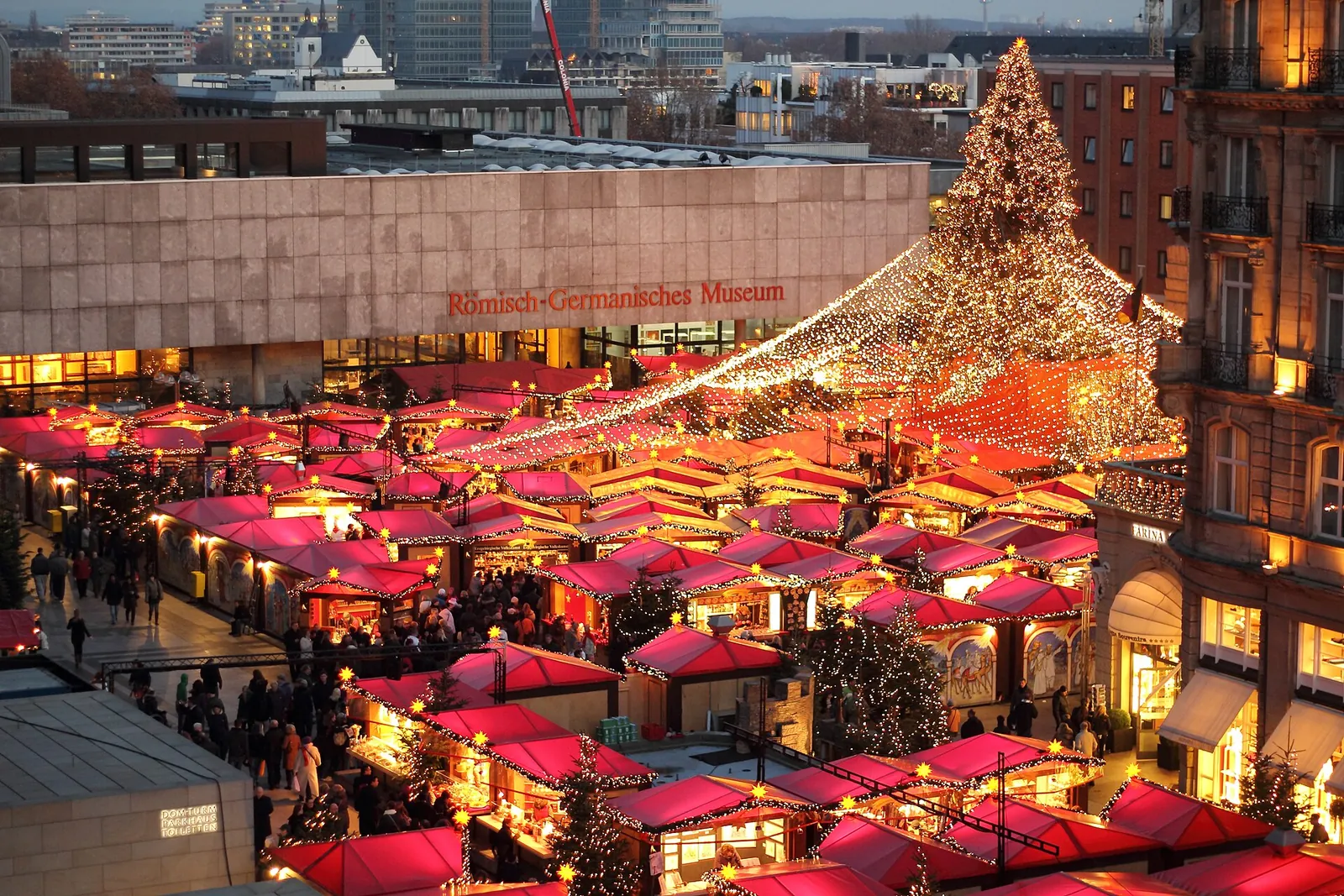
- Christmas markets: Cologne’s famous markets, including the one in front of the cathedral, run from about mid to late November until just before Christmas. Exact 2026 dates were not confirmed on official pages at the time of writing, so check the Cologne Tourism site.
Heads-up
Cologne is a warm, welcoming city, and a little awareness keeps your trip smooth:
- Pickpockets and bag-snatching: The UK government’s travel advice for Germany names mugging, bag-snatching and pickpocketing as the main risks, especially at airports, railway stations and crowded places. The main station and the square in front of the cathedral are exactly that, so keep valuables zipped away and never leave bags unattended.
- Counterfeit money: The same advice warns about counterfeit currency. Change money only at banks, cash machines or official exchanges, and check your change.
- Security: The advice says terrorists are very likely to try to carry out attacks in Germany, with markets, crowded gatherings and cultural events among potential targets. Stay alert at Christmas markets and carnival, and follow police instructions.
- Carnival crowds: The season opens on 11 November and peaks before Lent. It is huge fun, but expect packed trams, closed attractions (the cathedral tower and treasury shut on key days) and lots of alcohol on the streets.
- Tower climb: 533 steps and no lift. Not recommended if you have heart, knee or breathing problems or a fear of heights.
- Emergencies: Call 112 for ambulance or fire, and 110 for the police.
FAQ
Is 3 days enough for Cologne?
Yes. Two days cover the cathedral, the Old Town, Roman Cologne and the Rhine harbour at a comfortable pace, and the third day adds Bonn or Aachen. Stay a fourth day to do both.
Do I have to pay to enter Cologne Cathedral?
Since 1 July 2026, yes, for tourist visits: EUR 12 standard, EUR 6 reduced, and free for children aged 13 and under. Entry to pray or attend a service remains free through the North Transept.
Is the KölnCard worth it?
It is cheap (EUR 9 for 24 hours) and includes city transport, so it pays off if you ride trams and visit several partner museums. It does not cover the Bonn or Aachen trip or the cathedral ticket, so for Day 3 a Rheinland-wide 24hTicket is the better buy.
How do I get from Cologne Bonn Airport to the city centre?
Take a train from the airport station beneath the terminals to Köln Hauptbahnhof. A single ticket within Cologne costs EUR 4.00. Check the DB or KVB journey planner for current departures.
When is the best time to visit Cologne?
Late spring and summer are great for the riverside. Late November and December bring the Christmas markets, and carnival from 11 November to Lent is unforgettable if you love a party.
Sources
Prices, hours and rules change. We checked these on 1 November 2026; please confirm on the official page before you book.
- Opening hours and visiting (Kölner Dom, official site)
- Admission fees valid from 1 July 2026 (Kölner Dom ticket flyer)
- Turmbesteigung, climbing the cathedral tower (Kölner Dom)
- Domschatzkammer, the cathedral treasury (Kölner Dom)
- Cathedral tickets (Kölner Dom online ticket shop)
- Tickets and opening hours (Museum Ludwig)
- Öffnungszeiten und Eintrittspreise (Römisch-Germanisches Museum Köln)
- Plan your visit (Schokoladenmuseum Köln)
- Rheinlandtarif fares (KVB, Cologne transport operator)
- 24hTicket (KVB)
- KölnCard (Cologne Tourism)
- KölnCard (VRS transport association)
- Museum: opening hours and admission (Beethoven-Haus Bonn)
- A place to visit (Aachen Cathedral, official site)
- Aachen Cathedral (official site)
- Safety and security: Germany travel advice (GOV.UK, FCDO)
- Getting help: Germany travel advice (GOV.UK, FCDO)
- Visa and Service (German Federal Foreign Office)
Photo credits (11)
- Cologne Cathedral and Hohenzollern Bridge glowing at dusk over the Rhine: Ahgee ASR688 (derivative work: ZH2010), CC BY-SA 3.0, via Wikimedia Commons
- The soaring west front of Cologne Cathedral under blue sky: Elisabeth Schittenhelm, CC BY-SA 4.0, via Wikimedia Commons
- Colourful love locks on the Hohenzollern Bridge, cathedral behind: Thomas Berwing, CC BY-SA 4.0, via Wikimedia Commons
- The Kranhäuser and the cathedral at sunset on the Rhine: Superbass, CC BY-SA 4.0, via Wikimedia Commons
- The Chocolate Museum on its peninsula in the Rheinauhafen: Dietmar Rabich, CC BY-SA 4.0, via Wikimedia Commons
- The pink facade of the Beethoven-Haus in Bonn: Asif Masimov, CC BY-SA 3.0, via Wikimedia Commons
- Aachen Cathedral with its domes and spire under blue sky: Karmakolle, CC BY-SA 4.0, via Wikimedia Commons
- Köln Hauptbahnhof's arched train hall lit up at night: Superbass, CC BY-SA 4.0, via Wikimedia Commons
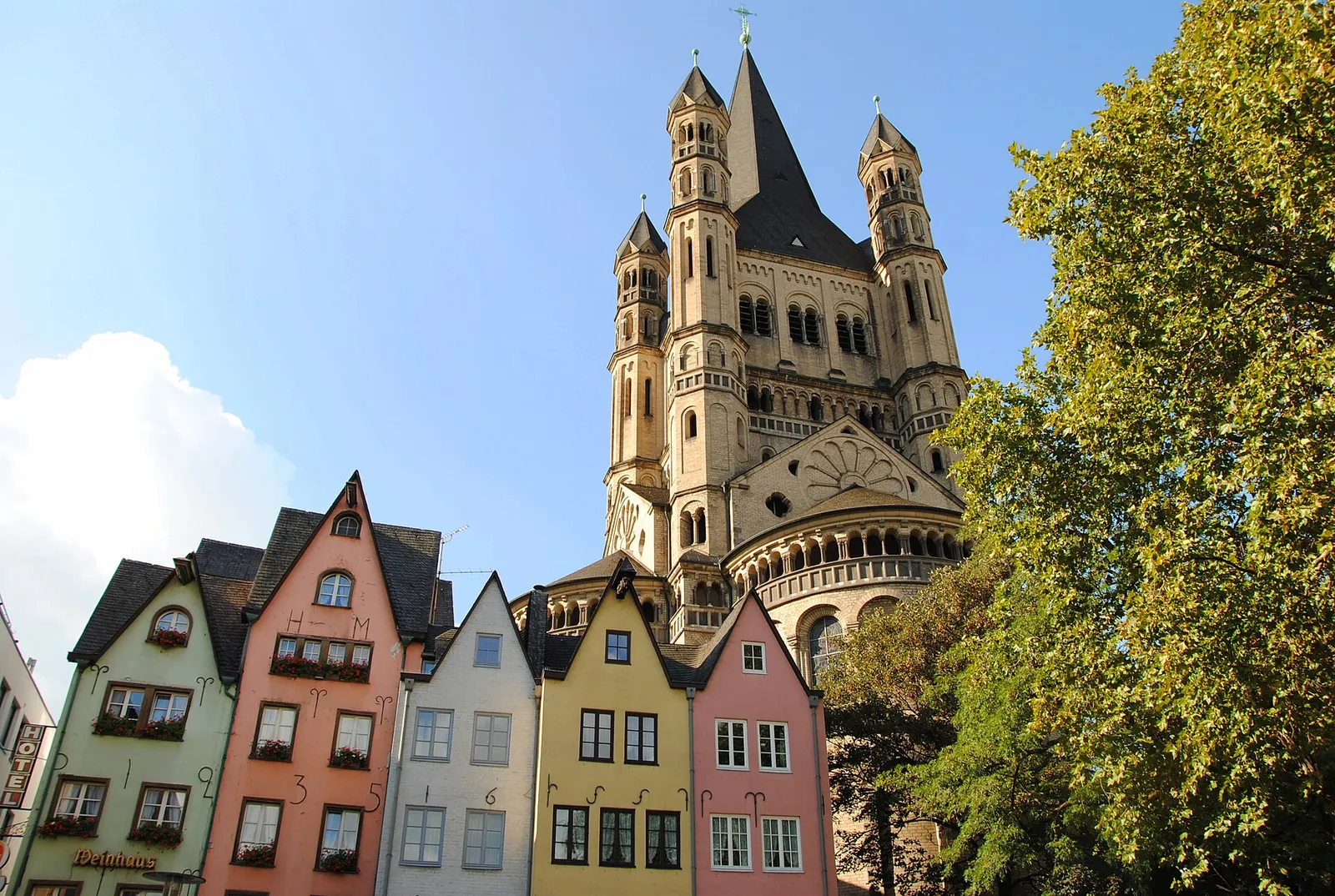
- Colourful old town houses below Groß St. Martin in Cologne: Leandro Neumann Ciuffo, CC BY 2.0, via Wikimedia Commons
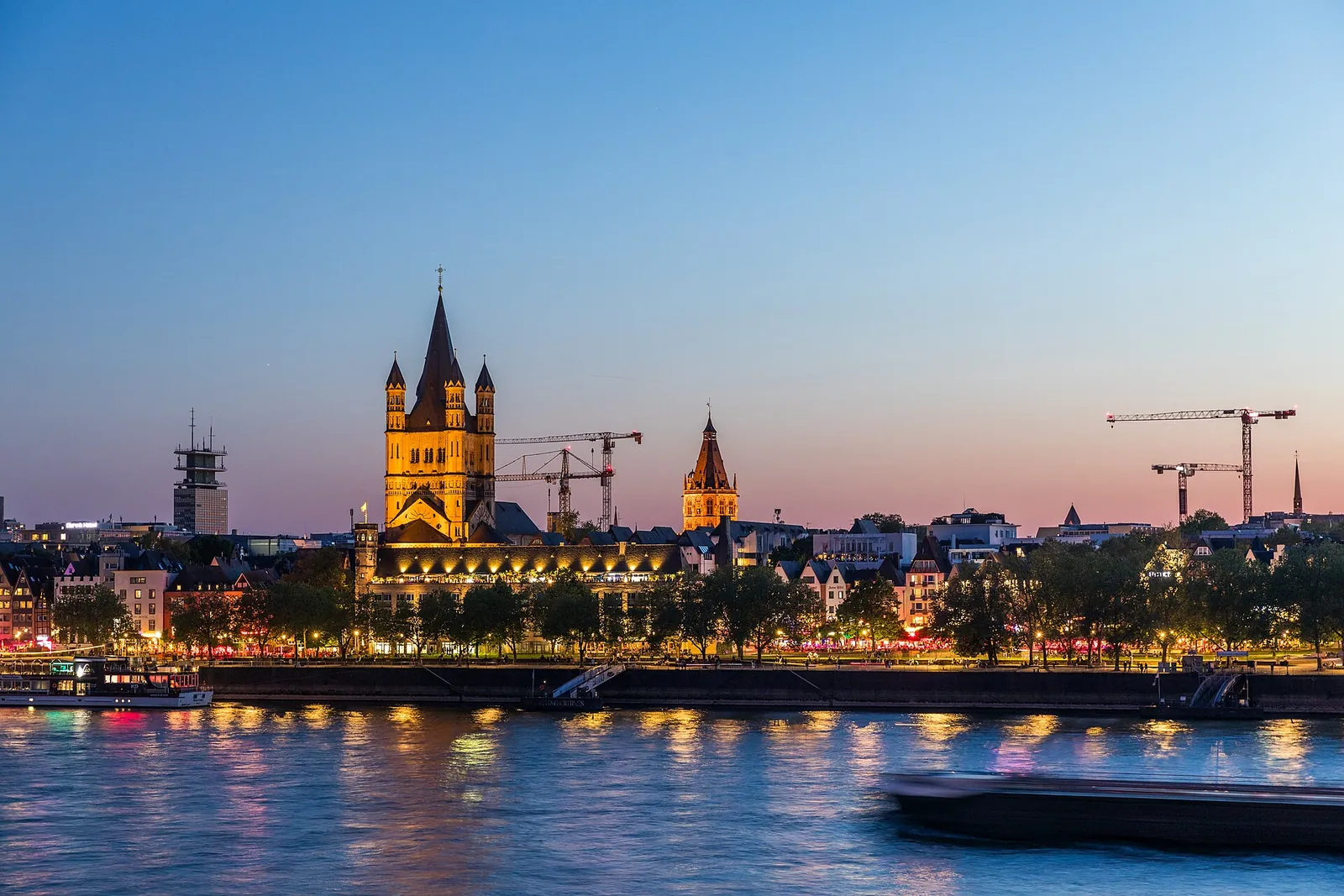
- Groß St. Martin and the Rhine promenade at blue hour: Raimond Spekking, CC BY-SA 4.0, via Wikimedia Commons
- Christmas market stalls and tree beside Cologne Cathedral: Superbass, CC BY-SA 3.0, via Wikimedia Commons
More Germany itineraries
 3 days
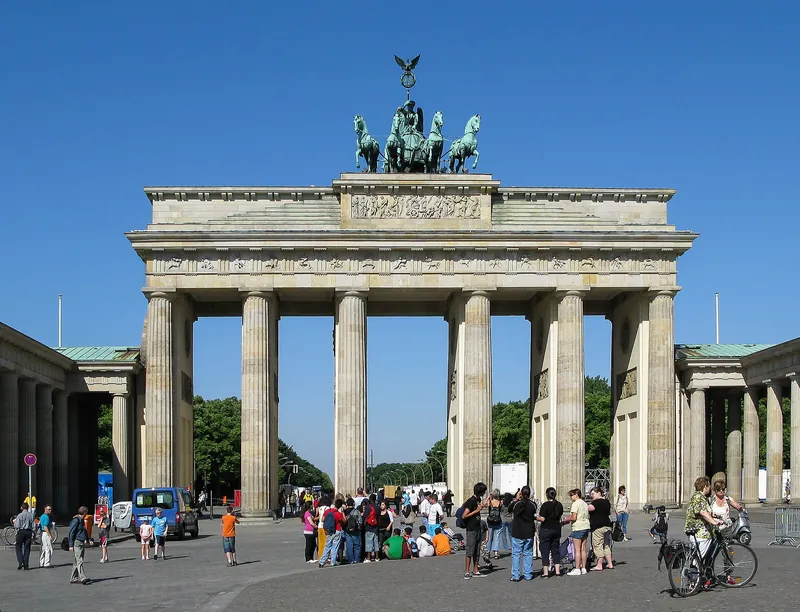
3 Days in Berlin: A Day-by-Day Itinerary
3 days in Berlin, all walkable: Reichstag dome, Museum Island, East Side Gallery and the Berlin Wall Memorial, with verified 2026 fares and hours.
 3 days
3 Days in Munich: A Day-by-Day Itinerary
3 days in Munich at an easy pace: Old Town and Residenz, Nymphenburg and BMW Welt, Deutsches Museum and the English Garden.
 3 days
3 Days in Hamburg: A Day-by-Day Itinerary
3 days in Hamburg: Speicherstadt, Elbphilharmonie Plaza, Miniatur Wunderland, harbour ferry line 62 and the Michel, with fares and hours checked November 2026.
Compare all Germany itineraries →
This is a researched plan, not a personal trip report. How we research · Affiliate disclosure