
4 Days in the Faroe Islands: A Day-by-Day Itinerary
A 4-day Faroe Islands road trip: Tórshavn, Gásadalur and Lake Sørvágsvatn, Saksun and Gjógv, then Kallur lighthouse or Mykines, with checked fees and tolls.
- 🗓️ Trip length
- 4 days
- ☀️ Best time
- May to August for long days, open trails and puffins; autumn and winter need extra caution
- 💰 Daily spend
- Car hire and rooms are the big costs; hiking fees DKK 200-500 per site, sub-sea tunnels DKK 100-175
- ✅ Facts checked
- 1 November 2026
Get ready for green cliffs dropping straight into the North Atlantic, waterfalls that pour into the sea, grass-roofed villages and roads that dive under the ocean through lit sub-sea tunnels. The Faroe Islands are a group of 18 islands between Iceland and Norway, and they are small enough that you can see the highlights of the main islands in four well-planned days with a hire car.
This plan is perfect for confident drivers and hikers who want to soak up the famous viewpoints at a steady pace. Day 1 is the capital, Tórshavn. Day 2 covers Vágar, the island with the airport, for Gásadalur, the Múlafossur waterfall and the “lake above the ocean”. Day 3 crosses to the north for Saksun, Eiði and Gjógv. Day 4 gives you a choice: the Kallur lighthouse on Kalsoy, or the puffin island of Mykines in summer.
At a glance
| Day | Area | Highlights |
|---|---|---|
| 1 | Tórshavn and southern Streymoy | Tinganes old town, harbour, Kirkjubøur |
| 2 | Vágar | Múlafossur and Gásadalur, Lake Sørvágsvatn and Trælanípa, Bøur |
| 3 | Northern Streymoy and Eysturoy | Saksun, the Eysturoy sub-sea tunnel, Eiði, Gjógv gorge |
| 4 | Kalsoy or Mykines | Kallur lighthouse hike, or the Mykines ferry and puffin colony (summer only) |
One planning rule before you start: weather decides the order. Ferries, helicopters and cliff hikes all depend on wind, fog and sea conditions. Keep Day 4 flexible, and swap days around when the forecast is better for one of them. If you hope to visit Mykines, book the ferry well ahead and treat it as the first day you would cancel, not the last.
Before you set off: fees, tolls and the weather
- Hiking fees. Several of the best-known walks cross private farmland, and the landowners charge a fee. The current amounts are listed on the Visit Faroe Islands hiking fees page, and they are in this guide. The same page says new legislation on sustainable tourism “will affect these mandatory fees”, so check it again just before your trip.
- Sustainability fee. Since 1 February 2026, visitors aged 16 and over staying in paid accommodation pay a sustainability fee of DKK 20 per night, capped at DKK 200 in total, according to Visit Faroe Islands. Your accommodation collects it.
- Sub-sea tunnel tolls. Four tunnels under the sea charge tolls; the prices are in the Getting there section. With a hire car, you pay the rental company, not the tunnel company.
- Weather. The GOV.UK travel advice for Denmark, which also covers the Faroe Islands, says the weather can change quickly and you should prepare for the activity you are planning. Expect wind, rain and fog in any month, and bring waterproof layers and boots with good grip.
- Money. The local currency is the Faroese króna, which is used alongside the Danish krone at the same value. Prices in this guide are in DKK. Cards are widely accepted.
Day 1: Tórshavn and Kirkjubøur
Ease in with a gentle first day: get used to the roads and the weather while you explore one of the smallest and most charming capitals in Europe.
Morning
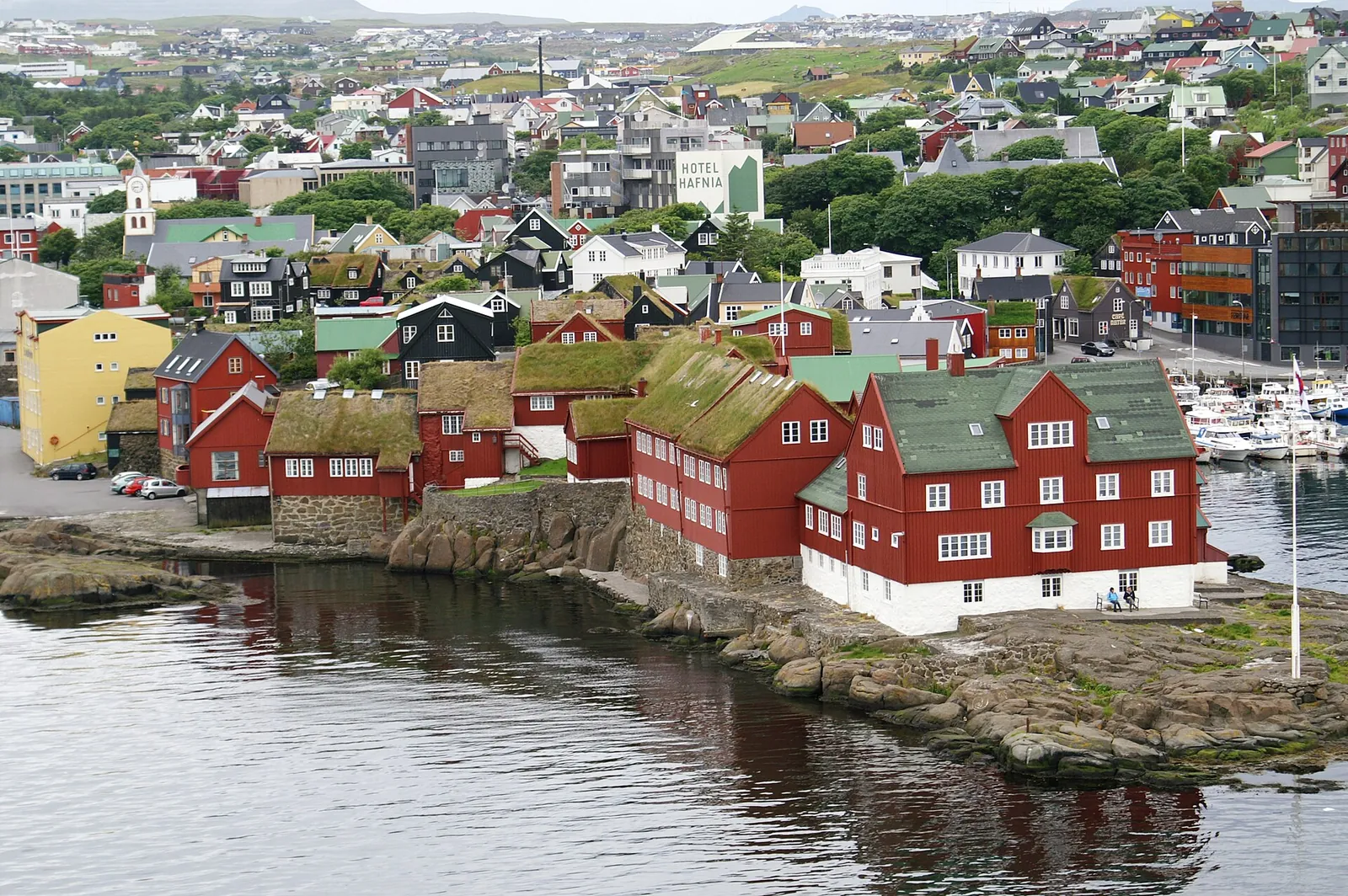
Pick up your car at Vágar Airport and drive to Tórshavn, about 45 minutes away through the Vágatunnilin sub-sea tunnel. Start on Tinganes, the small rocky headland between the two harbours, where the Faroese parliament met in Viking times. Today it is a cluster of red-painted wooden government buildings with grass roofs, and you can walk freely through its narrow lanes. Please keep your voice down, as some buildings are working offices.
Afternoon
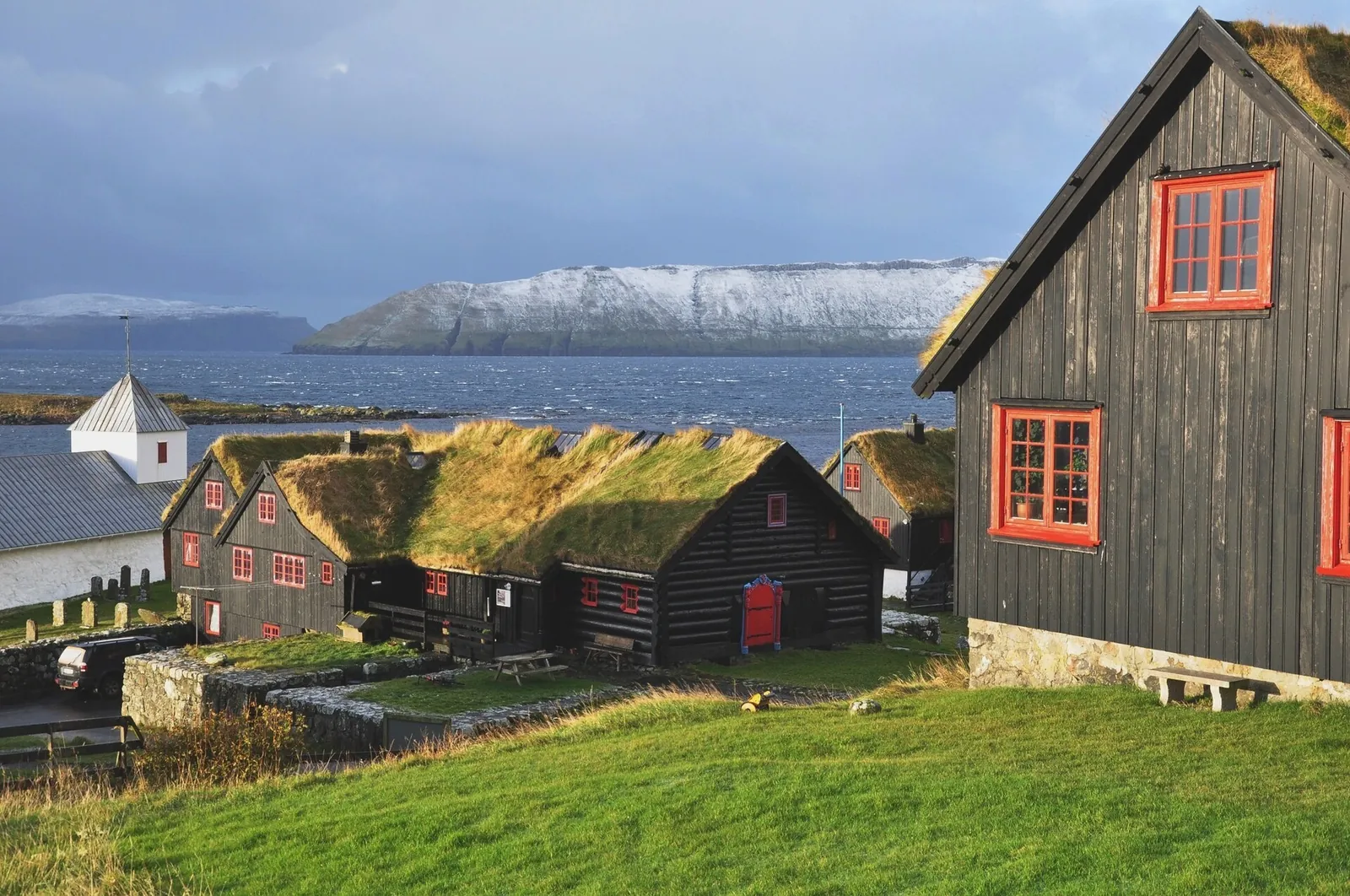
Walk the old town streets behind the harbour, then have lunch in town. In the afternoon, drive about 20 minutes south to Kirkjubøur, the old church centre of the islands, with the ruined Magnus Cathedral, the medieval church of Saint Olav and the old Kirkjubøargarður farmhouse at the water’s edge. Opening times for the buildings vary by season, so check locally before you go. The view out to the islands of Hestur and Koltur is worth the trip on its own.
Evening
Back in Tórshavn, enjoy dinner by the harbour. If the evening is clear, walk up to the old fort at Skansin above the harbour for a view over the town.
Day 2: Vágar, Gásadalur and the lake above the ocean
Get your camera ready, because today is the day for the most photographed views in the islands, all on Vágar, close to the airport.
Morning
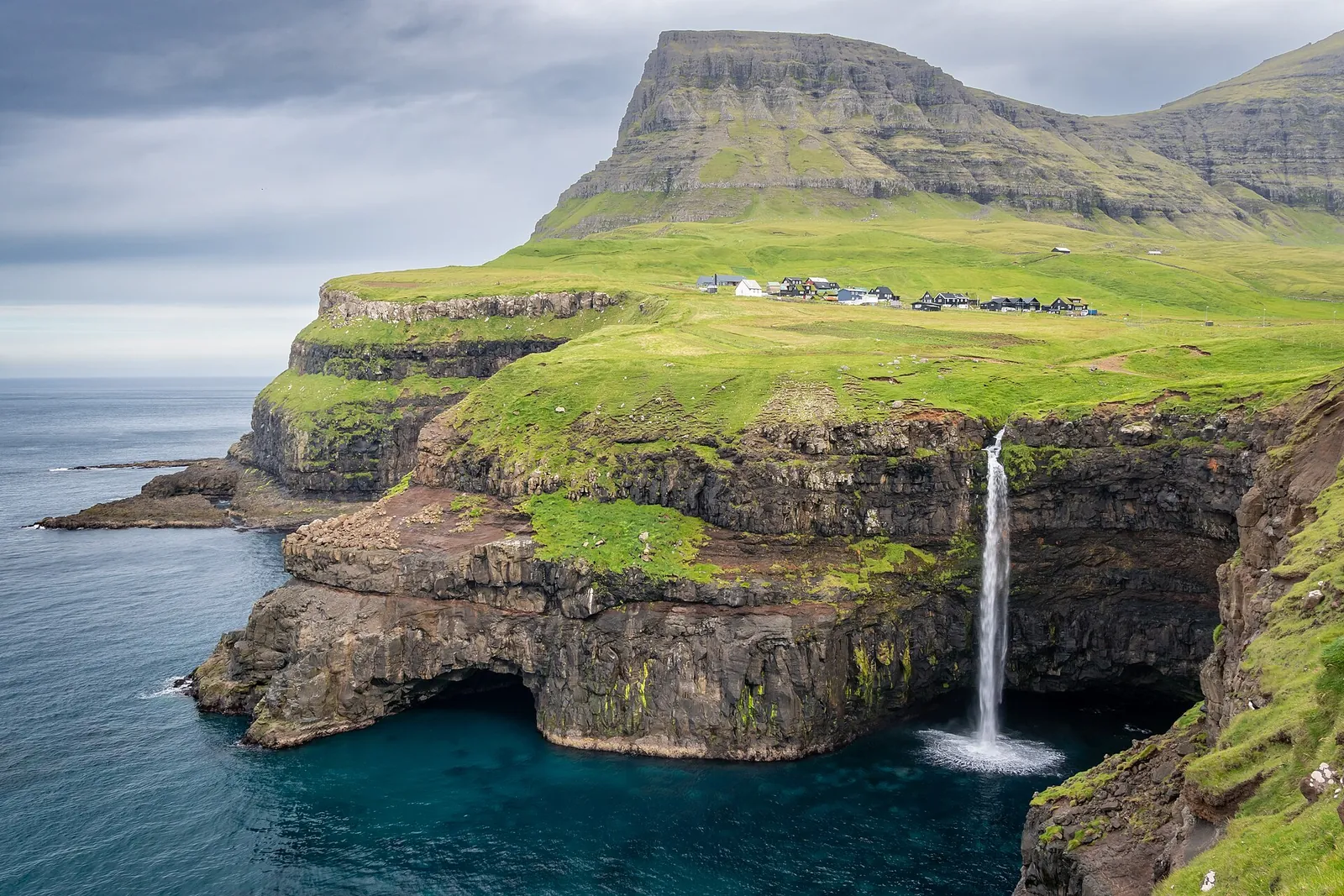
Drive west to Gásadalur, a tiny village high on the cliffs that was reached only by a mountain path until a road tunnel opened in 2004. Just before the village, follow the short path to the viewpoint over Múlafossur, the waterfall that drops off the cliff straight into the sea. Visit Faroe Islands does not list a fee for Gásadalur. Stay behind any fences and well back from the edge, as the grass on Faroese cliffs can be wet and slippery.
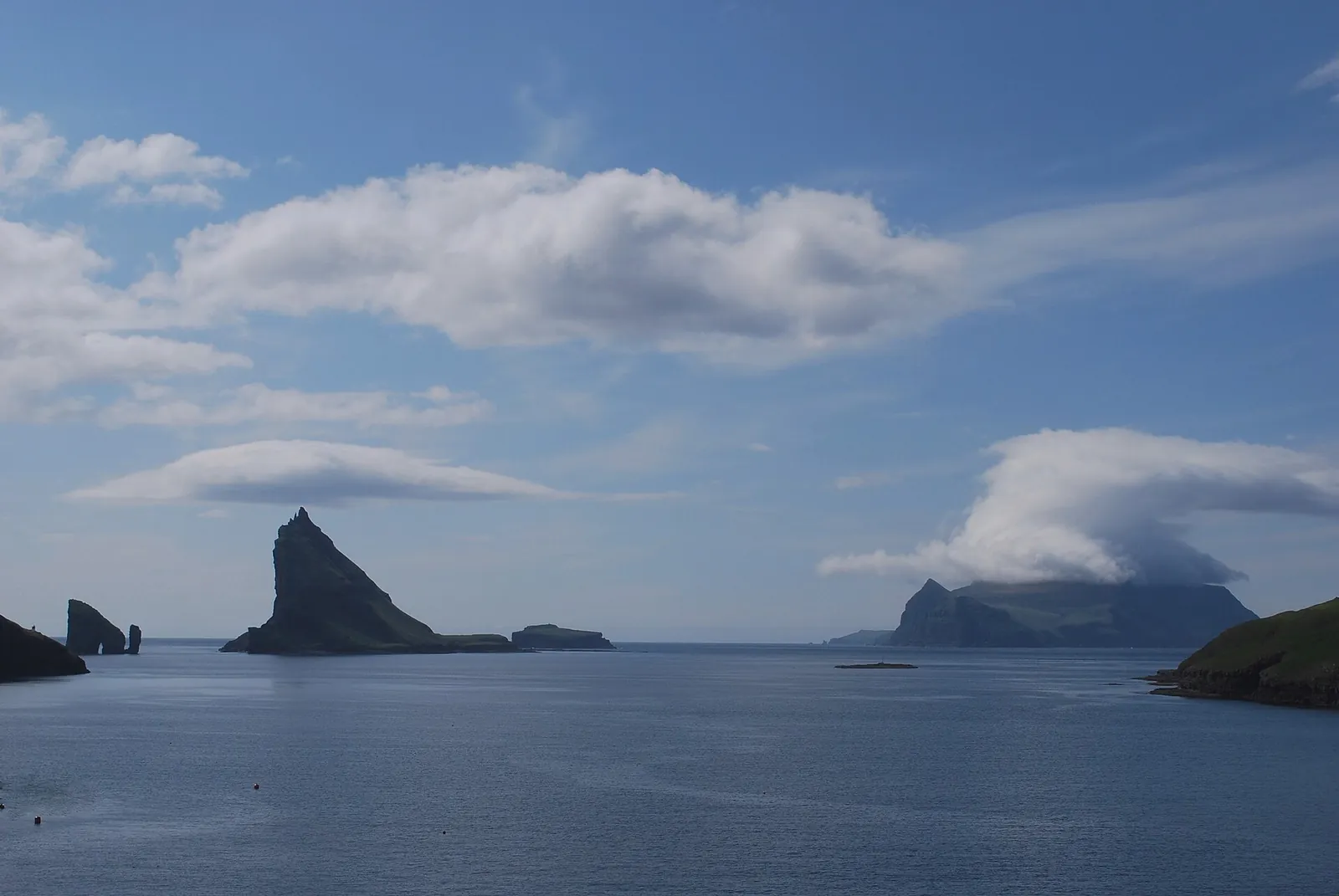
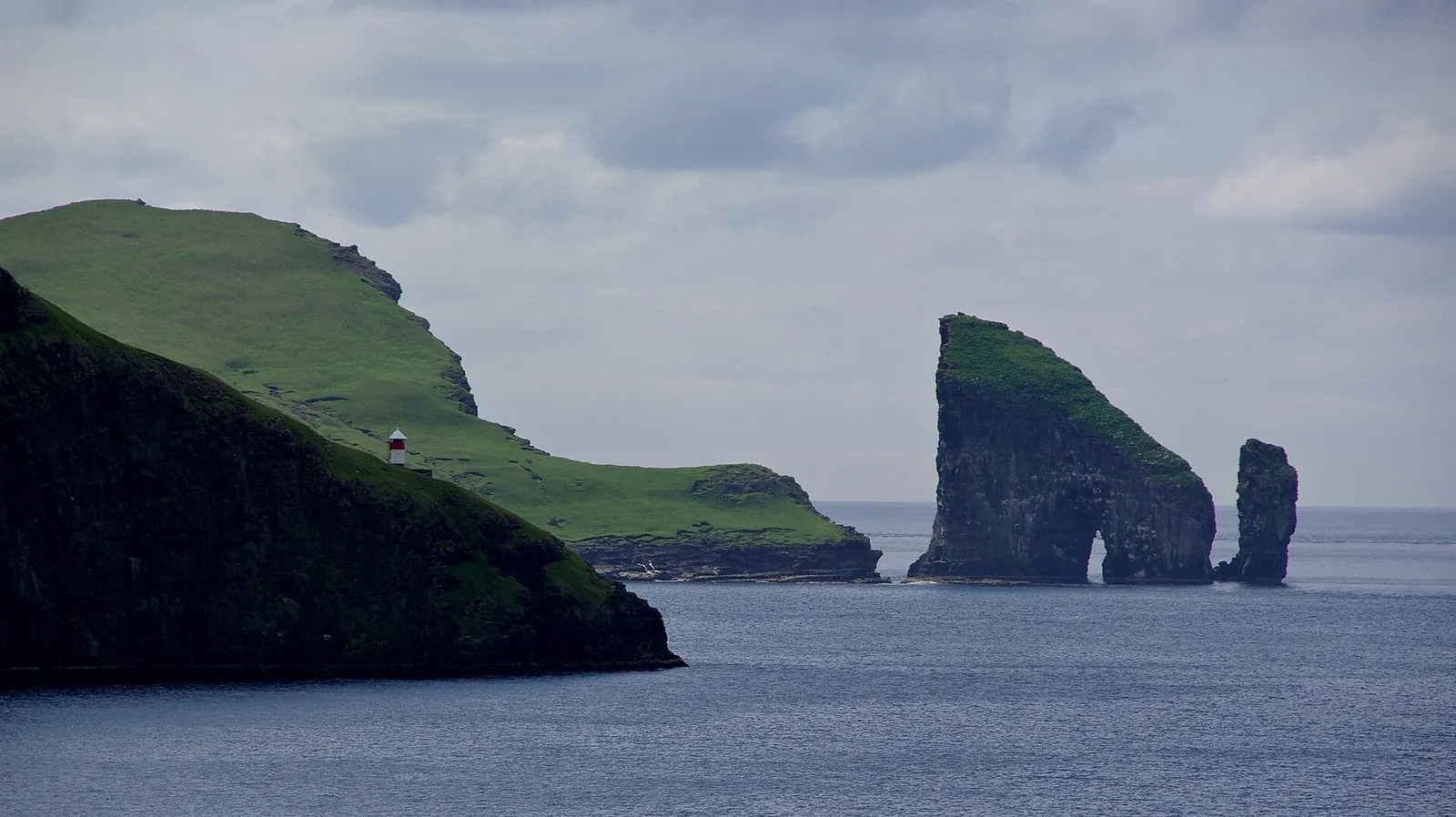
On the way back, stop in Bøur, a pretty village of black wooden houses facing the sea stacks of Tindhólmur and Drangarnir.
Afternoon
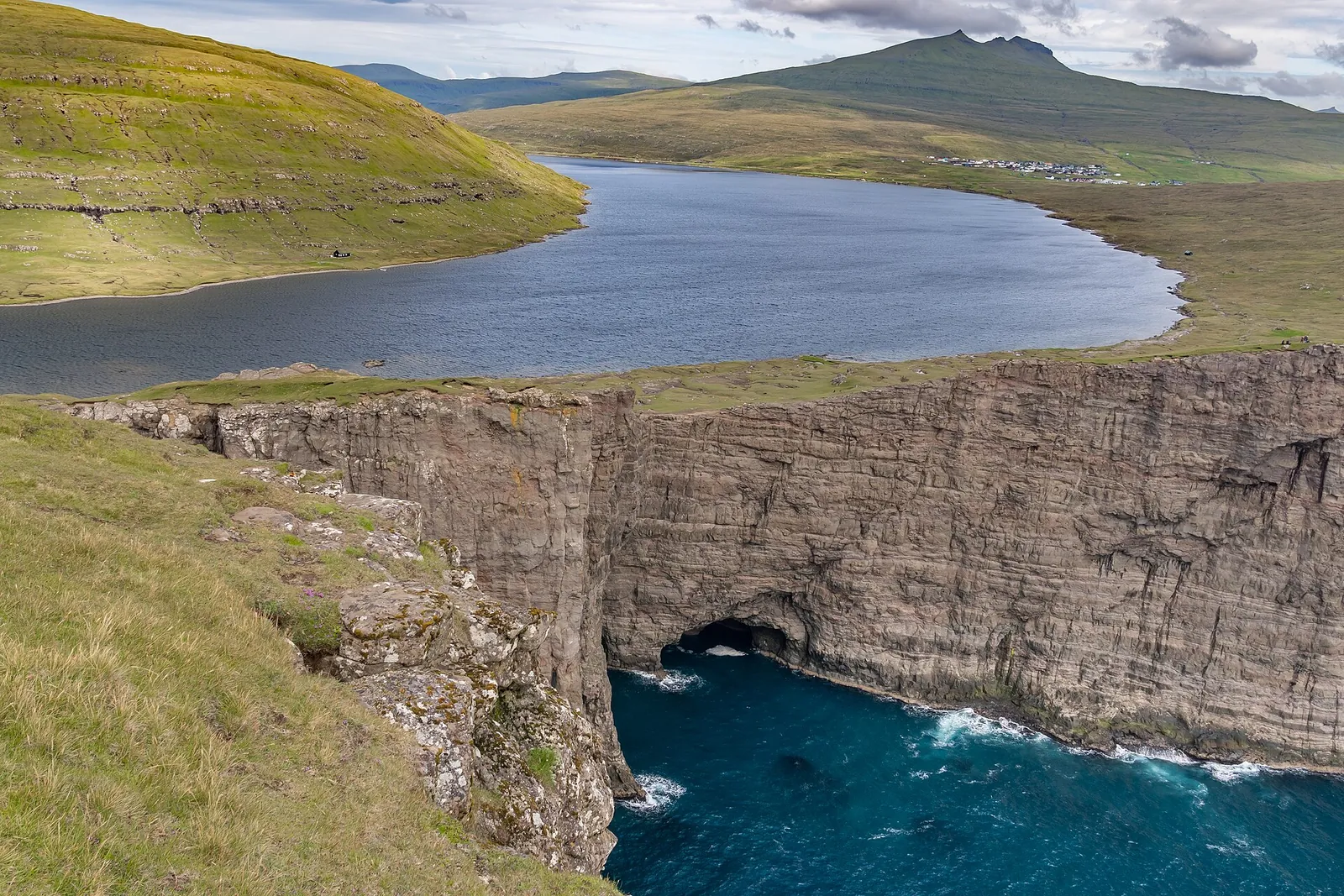
Head to the trailhead near Miðvágur for the walk along Lake Sørvágsvatn to the cliff of Trælanípa. From the right angle, the lake seems to hang above the ocean, and the walk ends at the Bøsdalafossur waterfall, where the lake spills into the sea.
This route crosses private land and a fee is required. According to Visit Faroe Islands, it costs DKK 200 per person without a guide. With a guide, the fee is DKK 450 per adult and DKK 150 for children aged 7 to 14, with children 6 and under free. Guided hikes leave daily at 9:00, 12:00 and 15:00, and the guided fee includes a guide and an information brochure. A packed lunch can be added for DKK 100. The walk is mostly on gentle ground, but the cliff edge at Trælanípa has a sheer drop, so keep well back, especially in wind.
The famous sea stacks of Drangarnir are a separate walk that can only be done with a guide. Visit Faroe Islands lists DKK 600 per person, with tours on Wednesdays, Saturdays and Sundays at 11:00 and 13:00 between 1 April and 1 October.
Evening
Stay on Vágar or in Sørvágur if you plan to take the Mykines ferry on Day 4; otherwise drive back to Tórshavn. The Vágatunnilin toll is charged when you drive out of Vágar, so you only pay once for the round trip.
Day 3: Saksun, Eiði and Gjógv
Get ready for a day of winding valley roads, two of the prettiest villages in the islands and a drive under the sea through a tunnel with a roundabout.
Morning
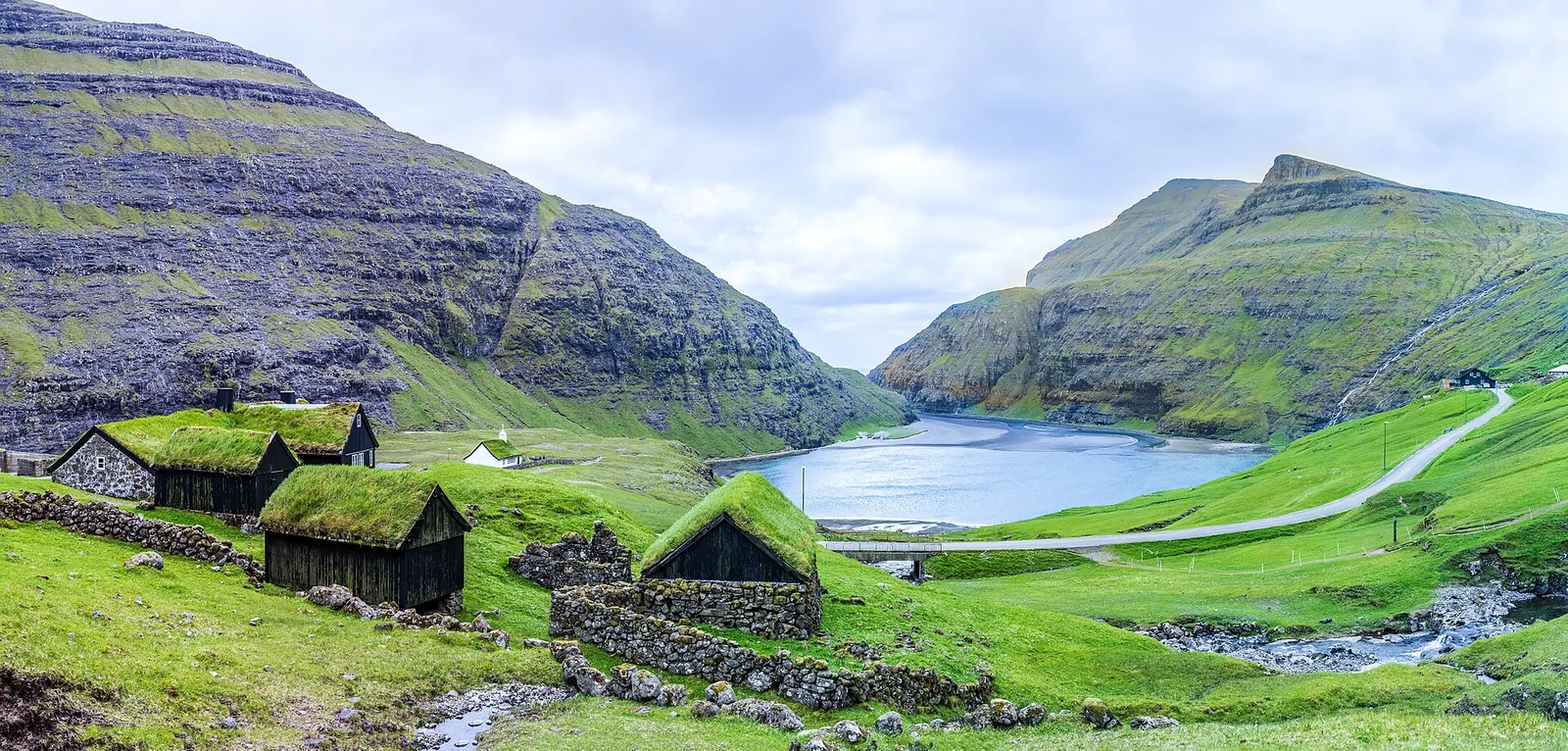
Drive north on Streymoy to Saksun, a scattering of houses with a white church above a tidal lagoon at the end of a long valley. The road ends in a narrow single-track stretch, so drive slowly and use the passing places. The village and the lagoon have had a history of access charges and changes, and Visit Faroe Islands’ hiking fees page does not list Saksun, so check locally for any signs or gates before you walk down to the lagoon. The turf-roofed farm here, Dúvugarðar, runs as a museum in summer; check its own opening times and entry price before you go.
Afternoon
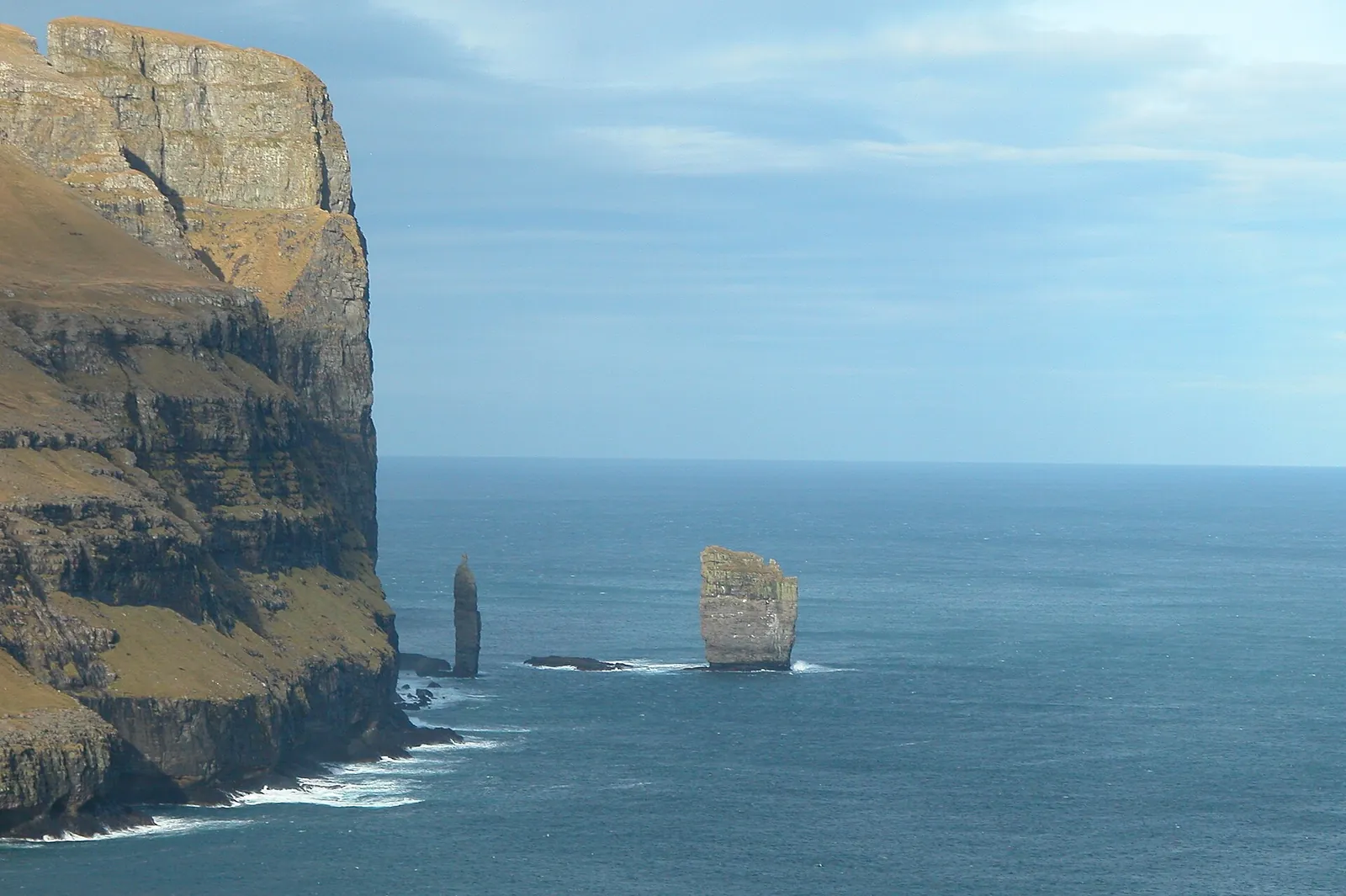
Cross to the island of Eysturoy through the Eysturoyartunnilin, the sub-sea tunnel that includes a lit roundabout deep under the fjord. The toll for this tunnel is charged one way, so you pay again on the way back. Continue north to Eiði, with views out to the sea stacks Risin and Kellingin, and over the shoulder of Slættaratindur, the highest mountain in the islands.
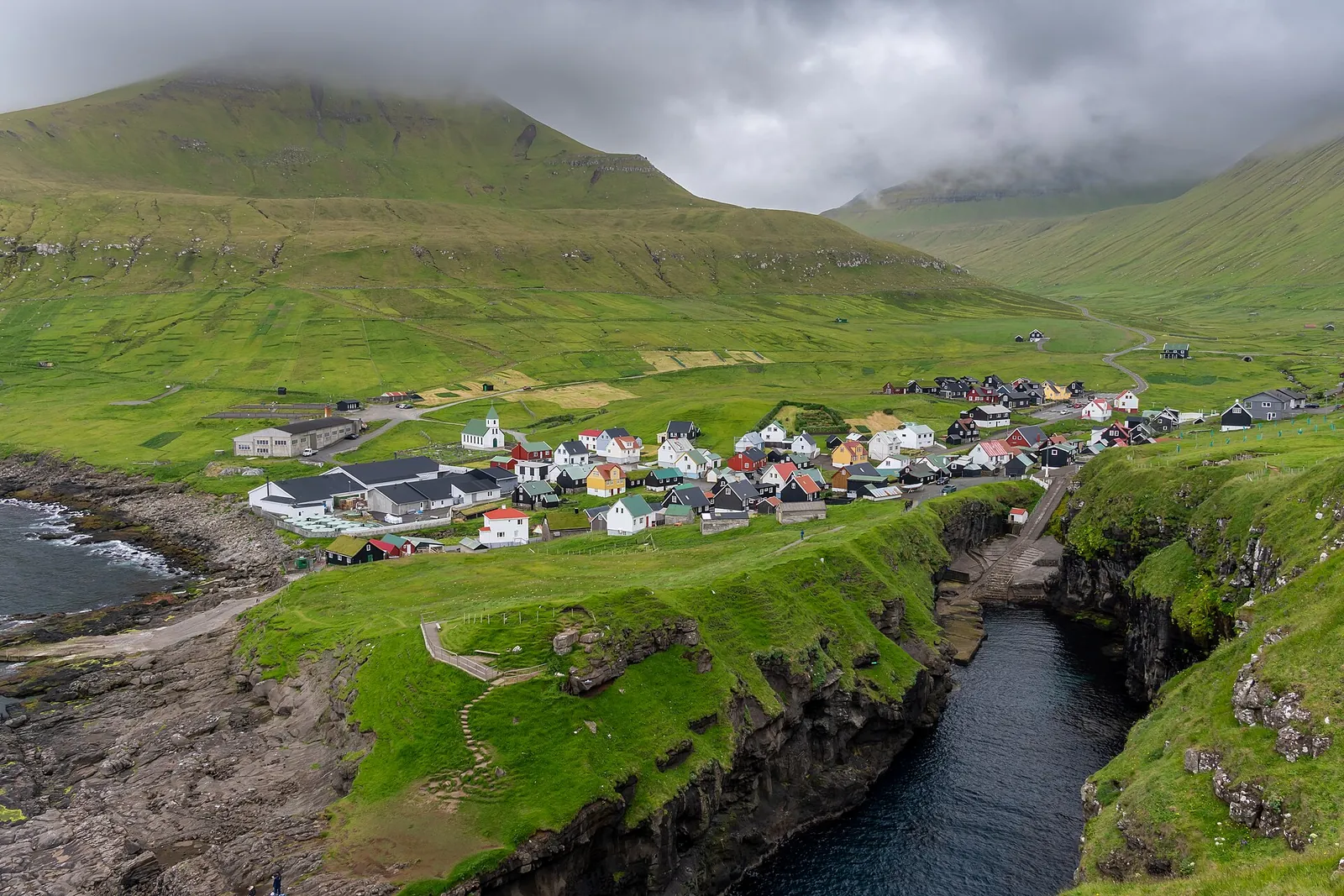
Then follow the narrow road to Gjógv, a village named after the deep sea-filled gorge that serves as its natural harbour. A path leads above the gorge to a viewpoint, and the village itself is a lovely place for a coffee. Visit Faroe Islands does not list a hiking fee for Gjógv.
Evening
Return south through the Eysturoy tunnel to Tórshavn, or stay in the north if you plan the Kalsoy trip tomorrow. Klaksvík, on Borðoy, is the base for the Kalsoy ferry and is reached through the Eysturoy and Norðoy tunnels.
Day 4: Kallur lighthouse on Kalsoy, or Mykines in summer
Your last day brings a happy dilemma. Choose one. Both are weather-dependent, so check the forecast the evening before.
Option A: Kallur lighthouse
Morning. Drive to Klaksvík and take the SSL ferry, route 56, to Syðradalur on Kalsoy. SSL’s terms say trips on route 56 must be booked in its booking system, so reserve a place for your car in advance, and check the timetable and fares on ssl.fo. Drive the length of the island through a string of tunnels to Trøllanes, the village at the northern tip.
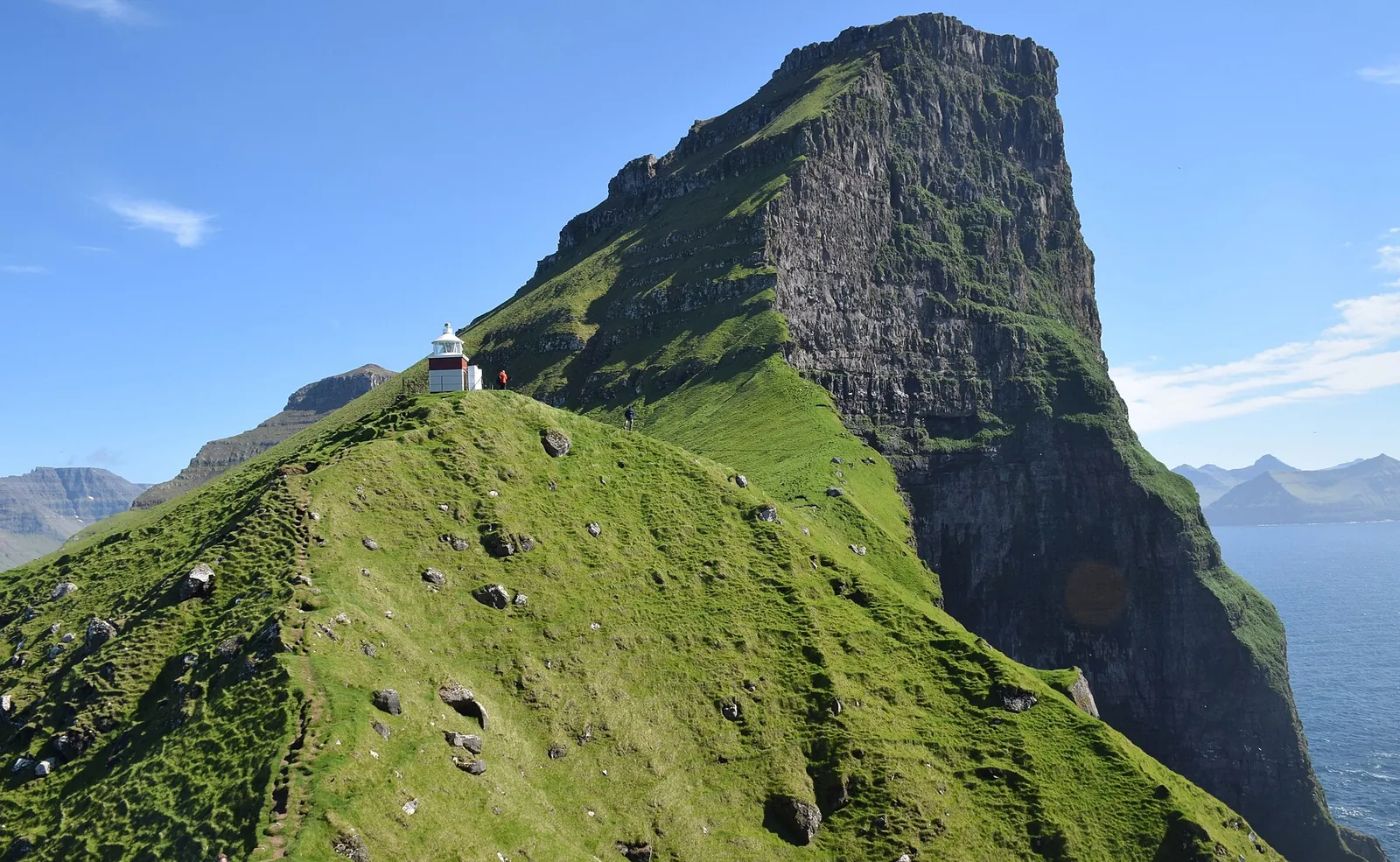
Afternoon. From Trøllanes, walk up the grassy slopes to the Kallur lighthouse, standing on a narrow ridge above sheer cliffs, with views back along the island’s jagged peaks. According to Visit Faroe Islands, the hike carries a mandatory fee of DKK 200 for adults and DKK 100 for ages 13 to 17, free for children under 13. The fee does not include a guide, and credit cards are accepted on site. At the time of checking, the official fee page showed no closure notice for Kallur. The final ridge near the lighthouse is narrow and exposed, so turn back in strong wind, fog or wet conditions.
Evening. Drive back to Syðradalur for the ferry. Do not miss the last sailing, as there is no other way off the island by car.
Option B: Mykines (May to August)
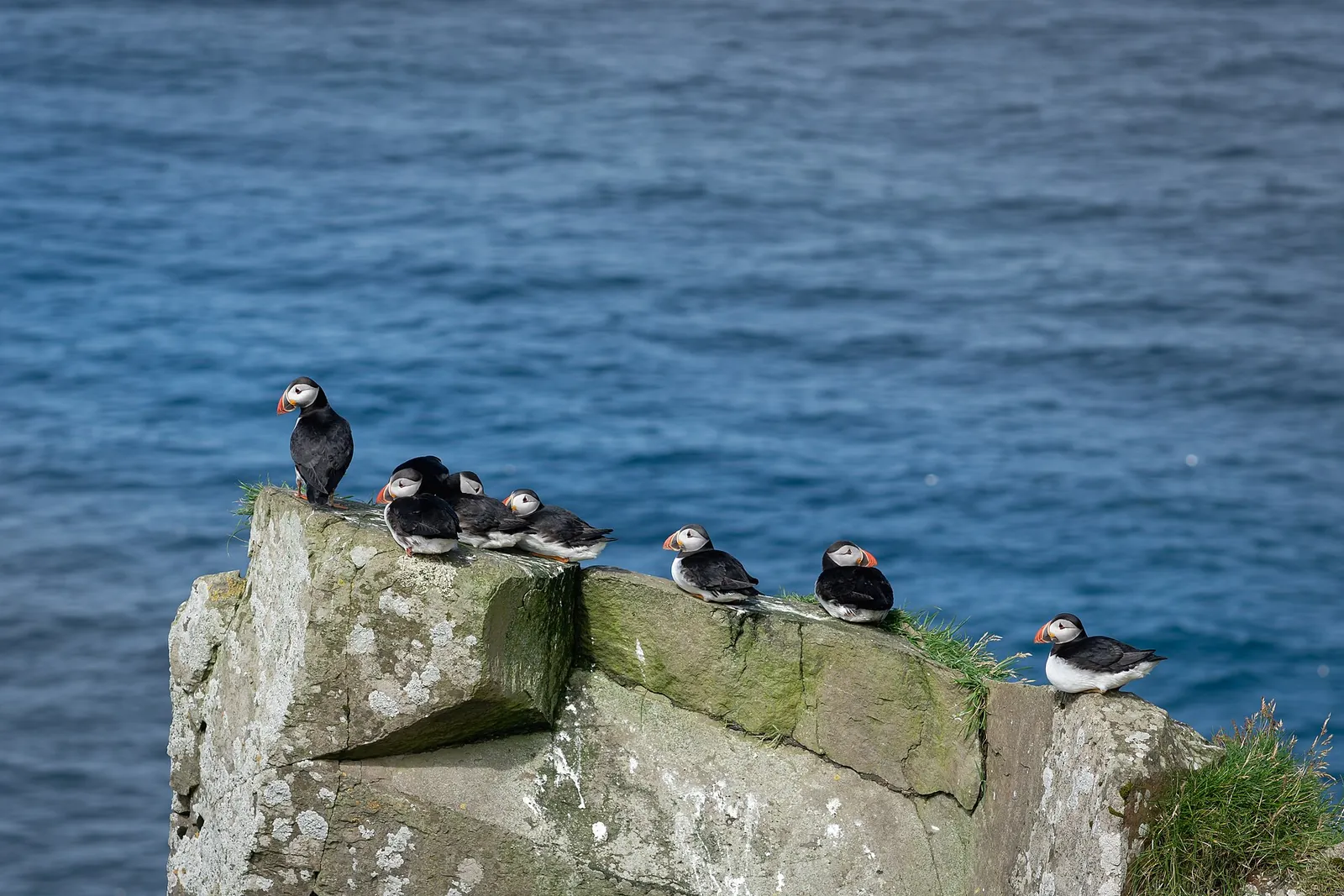
Morning. Mykines is the westernmost island and home to large seabird colonies, with puffins in summer. The SSL ferry, route 36, runs from Sørvágur on Vágar. In the 2026 summer season, from 1 May to 31 August, SSL listed daily departures from Sørvágur at 9:30, 13:30 and 17:30, returning from Mykines at 10:15, 14:15 and 18:15. The crossing takes about 45 minutes. Outside summer the ferry runs far less often, and in the 2026 winter timetable only on Tuesdays, Thursdays and Saturdays. Book through the SSL booking system, and check fares on ssl.fo. SSL warns that boarding and leaving the ferry can mean a small step or jump between the boat and the quay.
Afternoon. On Mykines, the rules are stricter than anywhere else in this guide. Visit Faroe Islands says that between 1 May and 31 August, visitors over 15 pay DKK 500, or DKK 400 if booked online in advance, on top of the ferry ticket, and a guide is mandatory on the island during that period. At the time of checking, the same page said that the path to the Mykines lighthouse is closed after a landslide, with a risk of further slides, while other areas of the island remain open. Follow your guide and stay on the paths, as the puffin burrows break easily underfoot.
Evening. Take the afternoon ferry back to Sørvágur. Atlantic Airways also flies a helicopter service to Mykines, but it is mainly for residents, visitors can usually only book one way, and bookings open just a few days before the flight. Check the Atlantic Airways helicopter page for the current fares and rules, and never rely on the helicopter for your return.
Getting there and getting around
Flying in: Vágar Airport is the only airport in the Faroe Islands. Check the airlines’ own sites for current routes, which vary by season.
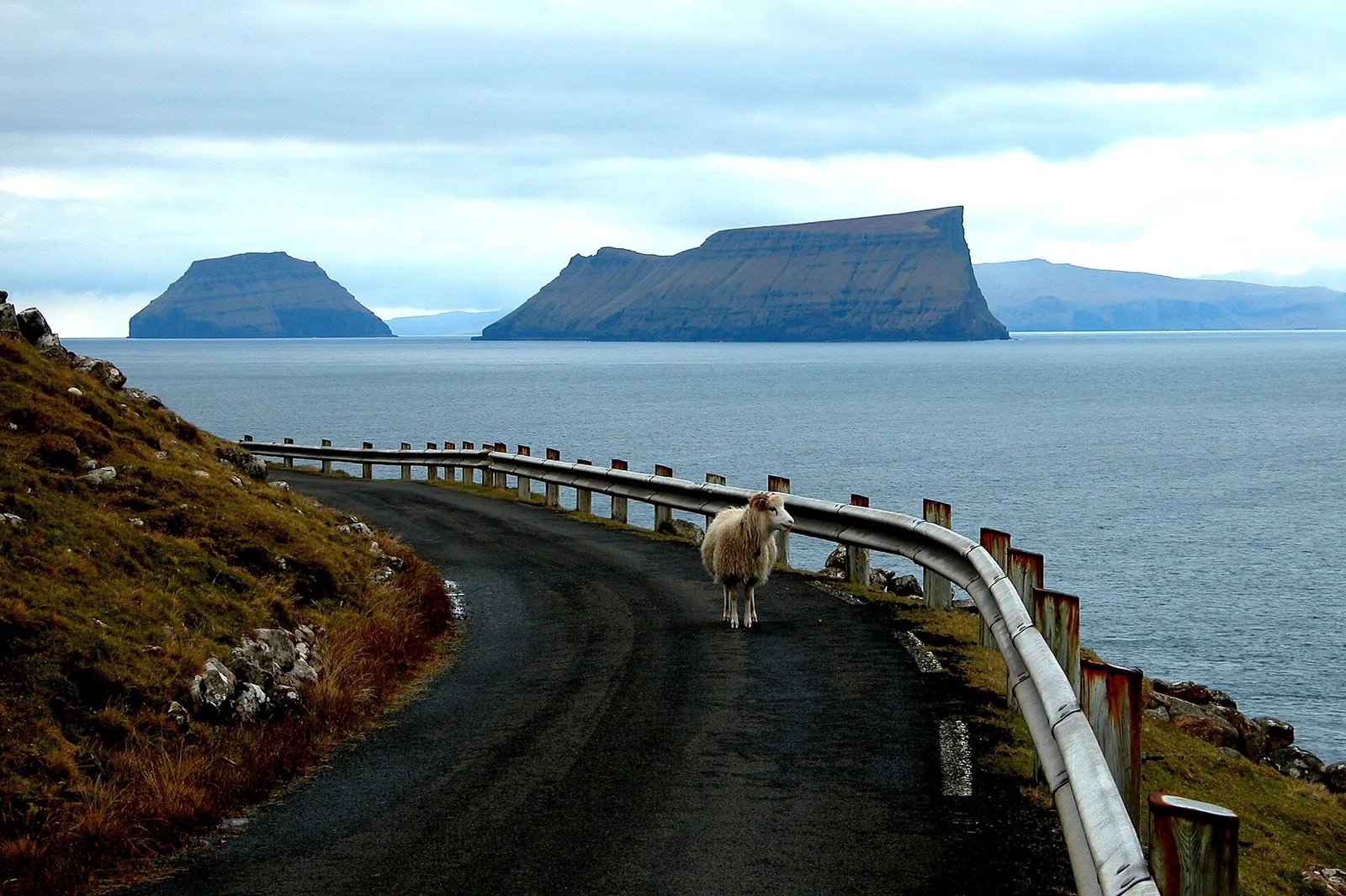
Car hire: This plan needs a car. Visit Faroe Islands says hire cars can be booked online, through a travel agent or at Vágar Airport. Book early in summer, when cars run short. Main roads are good, but village roads are narrow, and the islands still have several one-lane tunnels with passing bays, where you may have to reverse. GOV.UK notes that smaller roads may be unpaved and winding. Watch for sheep on the road at all times.
Sub-sea tunnel tolls (cars under 3,500 kg, without subscription, according to Tunnil):
| Tunnel | Single trip |
|---|---|
| Vágatunnilin (Vágar to Streymoy) | DKK 50, charged for both directions when leaving Vágar |
| Norðoyatunnilin (Eysturoy to Borðoy and Klaksvík) | DKK 50, charged for both directions |
| Eysturoyartunnilin, Streymoy to Eysturoy | DKK 175 one way |
| Eysturoyartunnilin, Strendur to Runavík | DKK 125 one way |
| Sandoyartunnilin (to Sandoy) | DKK 175 one way |
For hire cars, Tunnil says you pay the rental company, not the tunnel company, and lists the rental rates as DKK 100 per return trip for the Vágar and Norðoy tunnels and DKK 175 one way for the Eysturoy and Sandoy tunnels. Rental cars cannot get a tunnel subscription, and some rental companies set their own prices, so ask about tunnel charges when you collect the car. On this plan, a typical total is one Vágar return, two crossings of the Eysturoy tunnel, and one return through the Norðoy tunnel if you go to Kalsoy.
Buses and ferries: SSL runs the public buses and island ferries, with timetables on ssl.fo. Buses link Tórshavn with the airport and the main villages, but the timings make this four-day plan hard without a car.
Entry: GOV.UK notes that the Faroe Islands are not members of the EU. If you are not a Danish or Nordic citizen, check the entry rules for your passport with the official Faroese or Danish authorities before you book. GOV.UK also says a UK GHIC or EHIC cannot be used in the Faroe Islands, though a reciprocal agreement covers British nationals for necessary treatment. This is not a substitute for travel insurance.
Where to stay
- Tórshavn: The widest choice of hotels, guesthouses and restaurants, and a central base for Days 1 and 3.
- Vágar (Sørvágur or Miðvágur): Close to the airport, Gásadalur and Lake Sørvágsvatn, and right by the ferry if you choose Mykines.
- Klaksvík: The second town, ideal the night before the Kalsoy ferry.
- Gjógv or Eiði: Small and peaceful, good for a quiet night in the north. Rooms are few, so book early.
Accommodation is limited across the islands, especially from June to August. Book every night in advance.
Budget
| Item | Typical cost |
|---|---|
| Lake Sørvágsvatn and Trælanípa, without guide / with guide (adult) | DKK 200 / DKK 450 |
| Drangarnir guided hike | DKK 600 |
| Kallur lighthouse (adult / ages 13 to 17) | DKK 200 / DKK 100 |
| Mykines hiking fee with mandatory guide, May to August (over 15) | DKK 500, or DKK 400 booked online in advance |
| Sub-sea tunnels with a hire car | DKK 100 return (Vágar, Norðoy), DKK 175 one way (Eysturoy) |
| Sustainability fee (age 16 and up, paid accommodation) | DKK 20 per night, maximum DKK 200 |
| Ferries to Kalsoy and Mykines | Check ssl.fo |
| Car hire, fuel, rooms | Vary widely by season; check current prices |
The figures exclude flights, meals and insurance. On this route, a Day 2 with the unguided lake walk and a Day 4 at Kallur adds up to DKK 400 per adult in hiking fees, plus tunnel tolls. Choosing Mykines raises that by several hundred kroner. Car hire and accommodation are by far the biggest costs, and they rise sharply in summer.
Practical tips
- Book the fixed points first: the hire car, your rooms, the Kalsoy car ferry and, in summer, the Mykines ferry and hiking fee.
- Check the fee page: Visit Faroe Islands warns that the new sustainable tourism rules may change hiking fees. Look again in the week before you travel.
- Carry a card: Fees are often paid at the trailhead, and cards are widely accepted, including at Kallur.
- Layers, always: waterproof jacket and trousers, a warm hat and gloves, and boots with good grip, even in July.
- Daylight: Summer days are very long, which makes this plan easy. In late autumn and winter, daylight is short, so plan the cliff walks for the middle of the day.
- Respect the farmland: Close gates behind you, keep dogs on a lead, and stay on paths through grazing land.
- Emergencies: call 112 for ambulance, fire or police.
Heads-up
The Faroes are safe and welcoming, but the landscape and weather deserve respect:
- Cliff edges: The best views are from the tops of sheer cliffs, with wet grass and few railings. Keep well back from the edge, particularly at Trælanípa, Kallur and above Múlafossur, and do not walk near the edge in strong wind.
- Fog: Fog can roll in fast and hide paths and drops. If you cannot see the route ahead, turn back.
- Closed paths: The Mykines lighthouse path was closed after a landslide at the time of checking. Never walk past closure signs.
- Guides where required: Drangarnir, Enniberg and Mykines in summer require a guide, according to Visit Faroe Islands. Hiking these without one is not allowed.
- Weather and transport: Ferries and helicopter flights can be cancelled at short notice for weather. SSL itself has posted weather cancellations on the Mykines route. Leave a buffer before your flight home.
- Narrow roads and tunnels: In one-lane tunnels, pull into a passing bay when a car comes towards you, and be ready to reverse on narrow village roads.
- Whale products: GOV.UK notes that it is illegal to import whale products from the Faroe Islands into the UK or EU.
FAQ
Is 4 days enough for the Faroe Islands?
Yes, for the main islands. Four days with a car covers Tórshavn, Vágar, northern Streymoy, Eysturoy and one of Kalsoy or Mykines. Add a fifth day if you want both, or a buffer day for bad weather.
Do I have to pay to hike in the Faroe Islands?
On some routes, yes. According to Visit Faroe Islands, the Lake Sørvágsvatn and Trælanípa walk costs DKK 200 without a guide, Kallur lighthouse costs DKK 200 for adults, and Mykines costs DKK 500 (DKK 400 booked online) from May to August, with a mandatory guide. Many other walks and viewpoints have no fee. The rules are changing under new legislation, so check the official page before you go.
Is the Kallur lighthouse open?
At the time of checking, the Visit Faroe Islands fee page listed the Kallur hike with a DKK 200 adult fee and showed no closure. Conditions can change, so check the page and local signs on the day, and do not walk the exposed ridge in bad weather.
When can I see puffins on Mykines?
In summer. The Mykines visitor rules and the main ferry timetable run from 1 May to 31 August, which is the season to plan for. Book the ferry and the hiking fee early, and remember that the lighthouse path was closed after a landslide at the time of checking.
How much are the sub-sea tunnel tolls?
According to Tunnil, with a hire car you pay the rental company DKK 100 per return trip for the Vágar and Norðoy tunnels and DKK 175 one way for the Eysturoy and Sandoy tunnels. Ask your rental company how it charges.
Do I need a car?
For this four-day plan, yes. Buses and ferries reach many villages, but the timetables make it hard to see Gásadalur, Saksun, Gjógv and Kalsoy in four days without your own car.
Sources
Prices, hours and rules change. We checked these on 1 November 2026; please confirm on the official page before you book.
- Hiking fees in the Faroe Islands (Visit Faroe Islands, official tourism site)
- Hiking guidelines and restrictions (Visit Faroe Islands)
- Getting around (Visit Faroe Islands)
- Sustainability fee (Visit Faroe Islands)
- Tunnel prices, English (Tunnil, sub-sea tunnel operator)
- Timetable 36 Sørvágur to Mykines (SSL, public transport operator)
- Terms and conditions, route 56 Klaksvík to Kalsoy (SSL)
- Helicopter fares and conditions (Atlantic Airways)
- Denmark travel advice, also covering the Faroe Islands (GOV.UK, FCDO)
- Denmark travel advice, entry requirements (GOV.UK, FCDO)
Photo credits (12)
- Múlafossur waterfall pouring into the sea below Gásadalur: Ekrem Canli, CC BY-SA 4.0, via Wikimedia Commons
- Red grass-roofed houses on Tinganes in Tórshavn harbour: Dickelbers, CC BY-SA 3.0, via Wikimedia Commons
- Grass-roofed houses and the white church at Kirkjubøur: Vincent van Zeijst, CC BY-SA 3.0, via Wikimedia Commons
- The sea stack Tindhólmur under blue skies off Bøur: Erik Christensen, CC BY-SA 3.0, via Wikimedia Commons
- Lake Sørvágsvatn seen from the Trælanípa cliff: Ekrem Canli, CC BY-SA 4.0, via Wikimedia Commons
- Turf-roofed houses above the lagoon at Saksun: MiroRosa, CC BY-SA 4.0, via Wikimedia Commons
- The sea stacks Risin and Kellingin beside towering cliffs: Erik Christensen, Porkeri (Contact at the Danish Wikipedia), CC BY-SA 3.0, via Wikimedia Commons
- Kallur lighthouse on its green ridge on Kalsoy: Maxdifra74, CC BY-SA 4.0, via Wikimedia Commons
- A row of puffins on a sea rock at Mykines: Ekrem Canli, CC BY-SA 4.0, via Wikimedia Commons
- A sheep on a winding coastal road with island views: Erik Christensen, CC BY-SA 3.0, via Wikimedia Commons
- Colourful village of Gjógv above its sea gorge: Ekrem Canli, CC BY-SA 4.0, via Wikimedia Commons
- The Drangarnir sea stacks and arch off Vágar: Stanisław Soluch, CC BY-SA 3.0, via Wikimedia Commons
More Europe itineraries
 4 days
4 Days in Bucharest and Brasov: A Day-by-Day Itinerary
A 4-day Romania itinerary: Bucharest's Palace of Parliament and Old Town, then Brasov's Black Church, Tampa and Bran or Peles castle.
 4 days
4 Days in London: A Day-by-Day Itinerary
A 4-day London itinerary: Westminster, St Paul's and the Tower, the British Museum and Greenwich, with checked fares and ticket prices.
 4 days
4 Days in Malta: A Day-by-Day Itinerary
A 4-day Malta itinerary: Valletta, the Hypogeum and Three Cities, a Gozo day trip, then Ħaġar Qim and Mdina, with checked ticket prices and bus fares.
This is a researched plan, not a personal trip report. How we research · Affiliate disclosure