
3 Days in Kuala Lumpur: A Day-by-Day Itinerary
A 3-day Kuala Lumpur plan: old town and Chinatown, Batu Caves and the Petronas Twin Towers, then the Lake Gardens museums. Verified prices and hours.
- 🗓️ Trip length
- 3 days
- ☀️ Best time
- June to July or February (drier spells)
- 💰 Daily spend
- RM 60-220 for tickets and transit, excl. hotel and meals
- ✅ Facts checked
- 22 October 2026
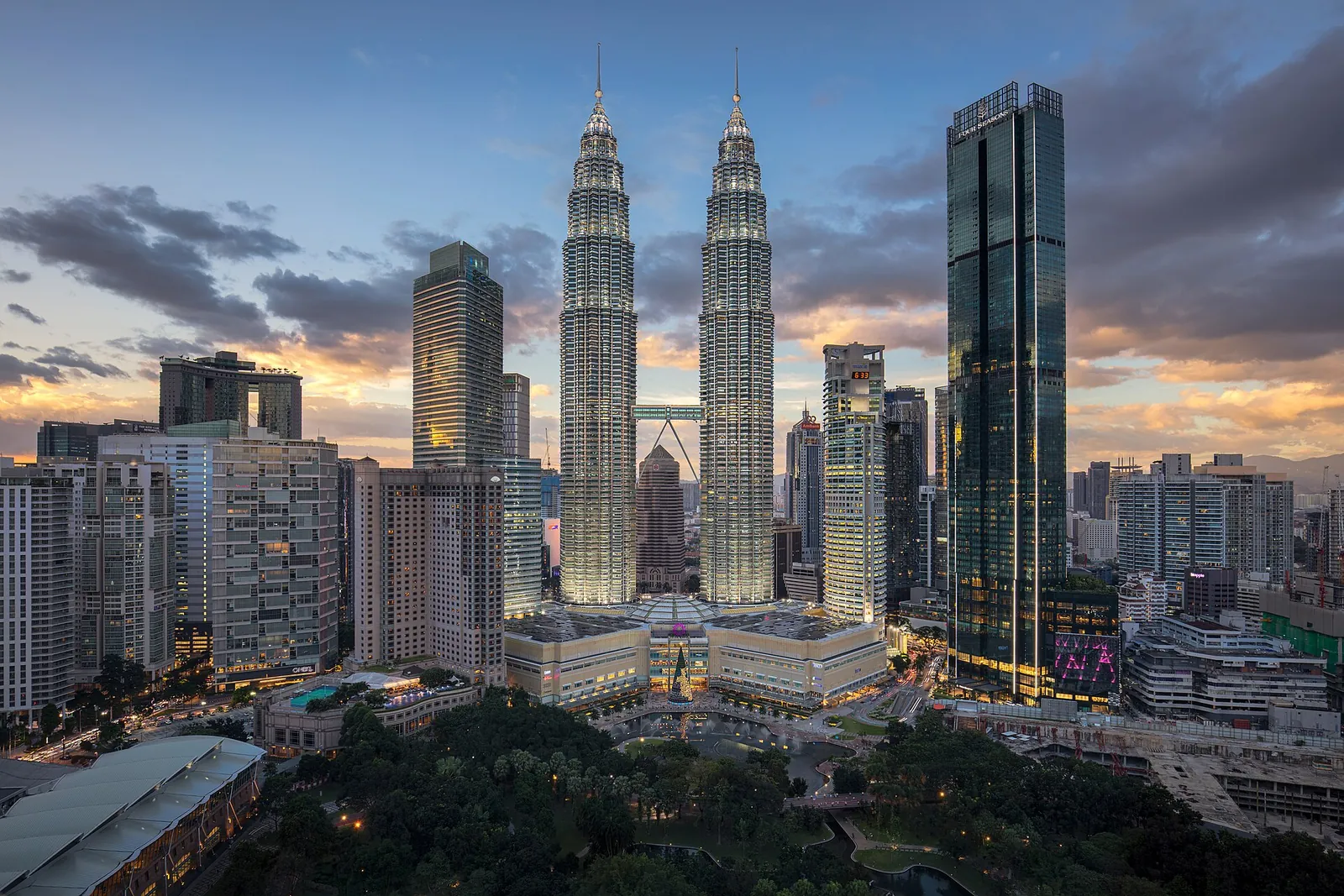
Get ready for Kuala Lumpur, a city that packs a lot into a compact centre: colonial-era squares, a lively Chinatown, Hindu cave temples on the edge of town, a leafy park full of museums, and the Petronas Twin Towers glowing over it all. Three days is enough to see the big names without rushing, and to leave room for long, slow meals, which is half the fun of visiting.
You’ll love this plan if you’re a first-time visitor or city-breaker who likes a steady pace: two or three main sights a day, grouped by area so you spend more time exploring and less time in traffic. It leans on the rail network and short walks, with the hottest hours of the day saved for air-conditioned museums and malls.
At a glance
| Day | Area | Highlights |
|---|---|---|
| 1 | Old town and Chinatown | Merdeka Square, Sultan Abdul Samad Building, Masjid Jamek, Central Market, Petaling Street, Kampung Baru at night |
| 2 | Batu Caves and KLCC | Batu Caves temple stairs, KLCC Park, Petronas Twin Towers Skybridge and observation deck, fountain show |
| 3 | Lake Gardens (Tun Abdul Razak Heritage Park) | KL Bird Park, Perdana Botanical Garden, Islamic Arts Museum, National Mosque, National Museum, Bukit Bintang |
Day 1: Old town, Chinatown and Kampung Baru
Morning
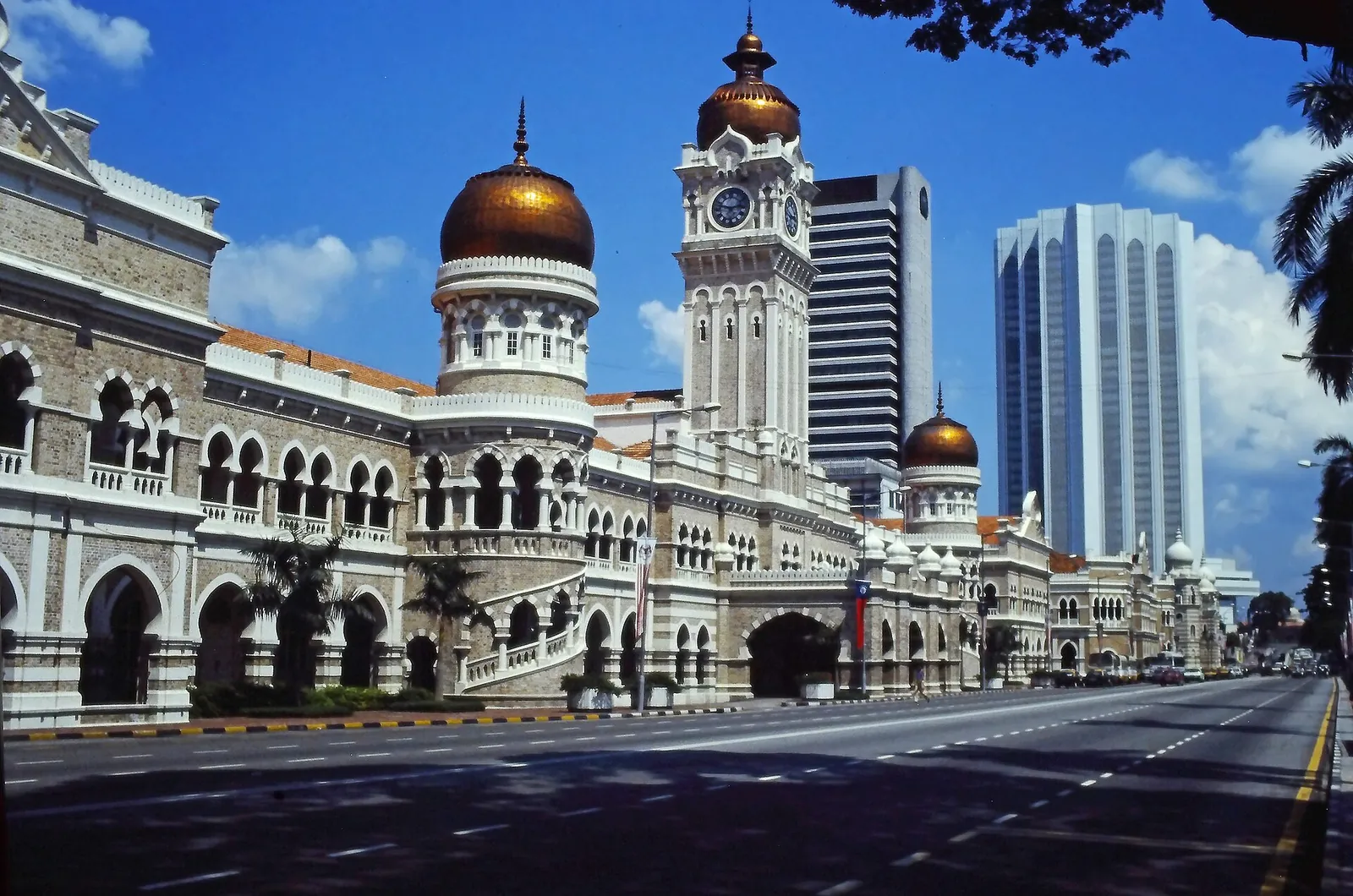
Kick off your trip at Merdeka Square (Dataran Merdeka), the large green where Malaysia’s independence was declared. The nearest station is Masjid Jamek, served by the LRT Ampang, Sri Petaling and Kelana Jaya lines, and the square is a short walk from there. Go early: the grass and the stone pavements soak up heat fast after 10am.
Across the road stands the Sultan Abdul Samad Building, with its copper domes and clock tower. It reopened to the public in early 2026 after restoration and now houses the KL City Gallery. Opening hours and admission fees were not consistent across sources at the time of writing, so check the KL City Gallery website before you go.
From the square, walk a few minutes to Masjid Jamek, one of the city’s oldest mosques, set at the point where the Klang and Gombak rivers meet. This confluence gave Kuala Lumpur (“muddy confluence”) its name. Visiting hours for non-Muslims vary around prayer times, so check signs at the entrance and dress modestly, with shoulders and knees covered.
Afternoon
Walk south (about 10 to 15 minutes, or one stop on the LRT to Pasar Seni) to Central Market (Pasar Seni), an Art Deco building full of craft and batik stalls. It is a comfortable, air-conditioned place to browse during the hottest part of the day.
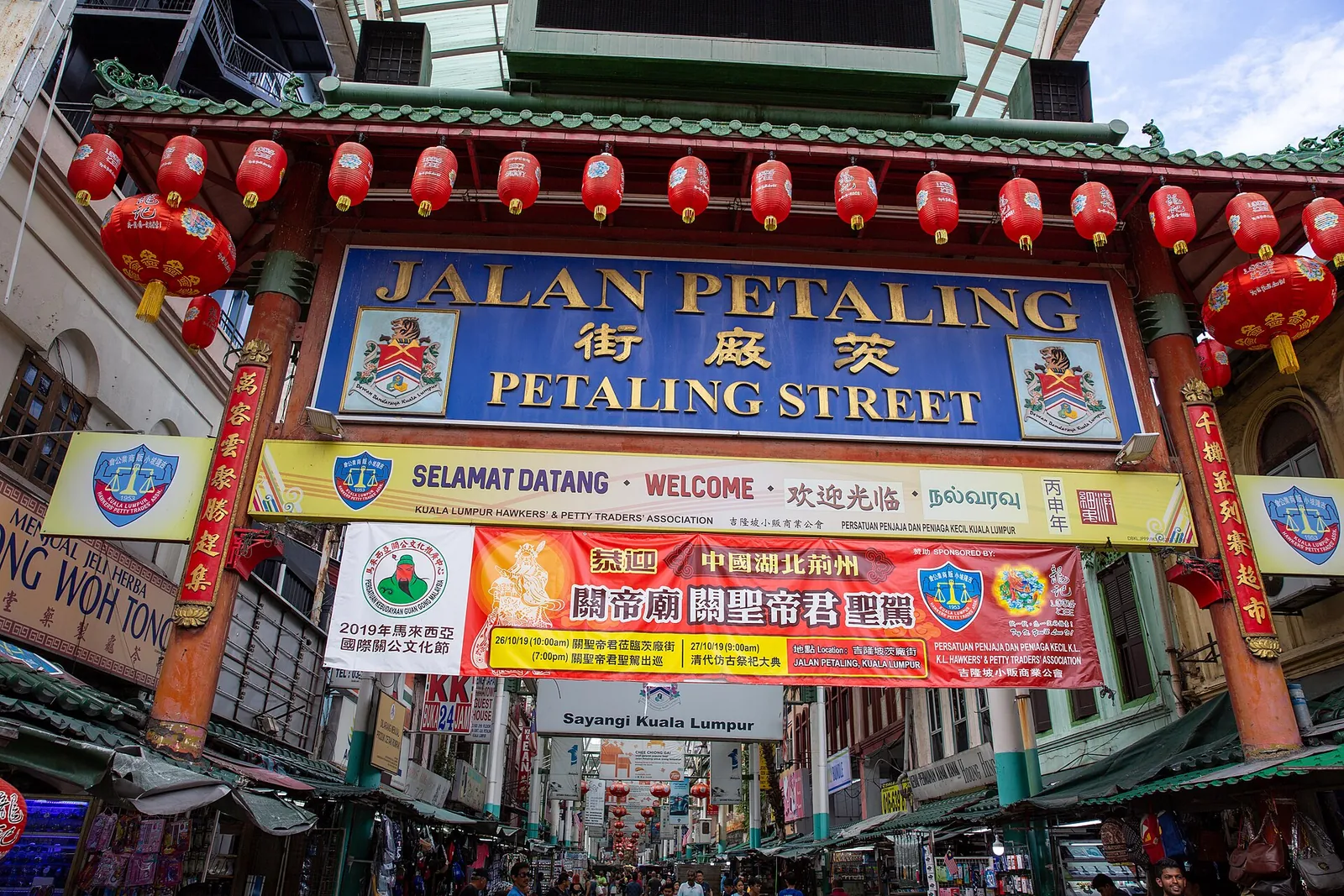
From there, cross into Chinatown and Petaling Street, where covered market lanes run alongside old shophouses. Nearby are the Sri Mahamariamman Temple, a Hindu temple with a richly decorated gate tower, and the Guan Di Temple, both within a few minutes’ walk of each other. Remove your shoes at the temple entrances and follow any posted guidance on photography.
Save your appetite for a late lunch here: noodle shops and kopitiam (traditional coffee shops) line the side streets.
Evening
Head back to your hotel to rest, then take the LRT to Kampung Baru, a Malay neighbourhood of wooden houses that sits in sight of the Petronas Twin Towers. In the evening its street-food stalls come alive, and the contrast between village-style homes and the skyline is one of KL’s best free views. Walk the pedestrian bridge (Saloma Link) towards the KLCC side for photos of the towers lit up.
Day 2: Batu Caves and the Petronas Twin Towers
Morning
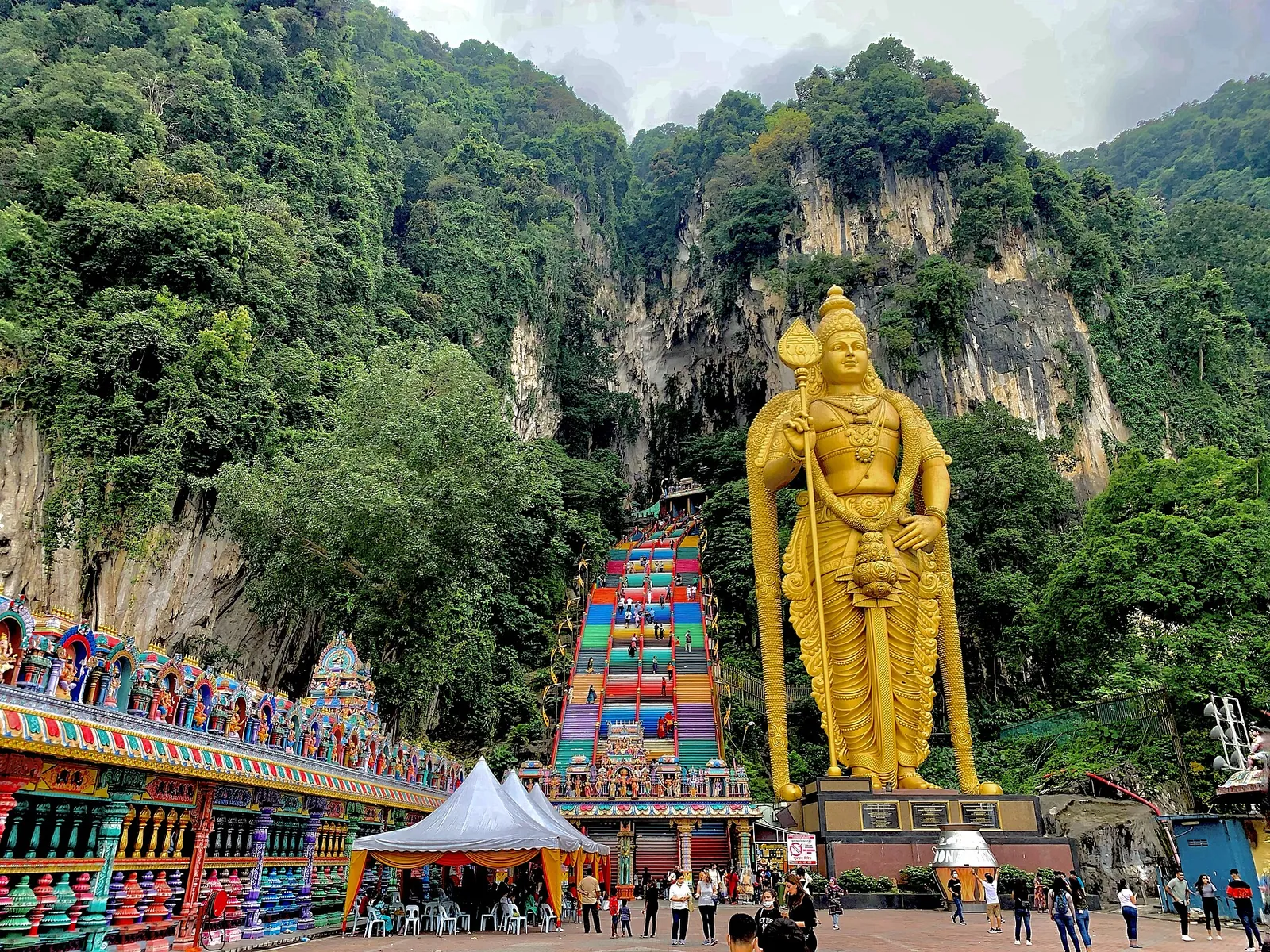
This is the day for the big icons! Set off early for Batu Caves, a limestone hill on the northern edge of the city with Hindu shrines built into its caves. The most direct public option is the KTM Komuter train from KL Sentral to Batu Caves station, which drops you at the foot of the site. KTM Komuter is run separately from the Rapid KL network, so buy a separate ticket and check the KTMB timetable before you leave, as trains on this branch are not as frequent as the city metro lines. A Grab ride is the easy alternative.
The main draw is the colourful staircase of 272 steps, guarded by a huge golden statue of Lord Murugan, leading up to the Temple Cave. The main stairway and Temple Cave have traditionally been free to enter, while some side caves charge their own admission, so check signs on site for current fees. Two things to know:
- Dress code: this is an active place of worship. Cover your shoulders and knees. Bring a sarong or scarf in case you need to cover up.
- Monkeys: long-tailed macaques live on the steps and are bold around food and plastic bags. Keep snacks out of sight.
Allow two to three hours including the climb and travel time. Arriving early means cooler stairs and smaller crowds.
Afternoon
Return to the city and have lunch, then rest through the heat. In the late afternoon, take the LRT Kelana Jaya Line to KLCC station. The free GoKL City Bus Green Line also runs between Bukit Bintang and KLCC, according to the Petronas Twin Towers visitor information.
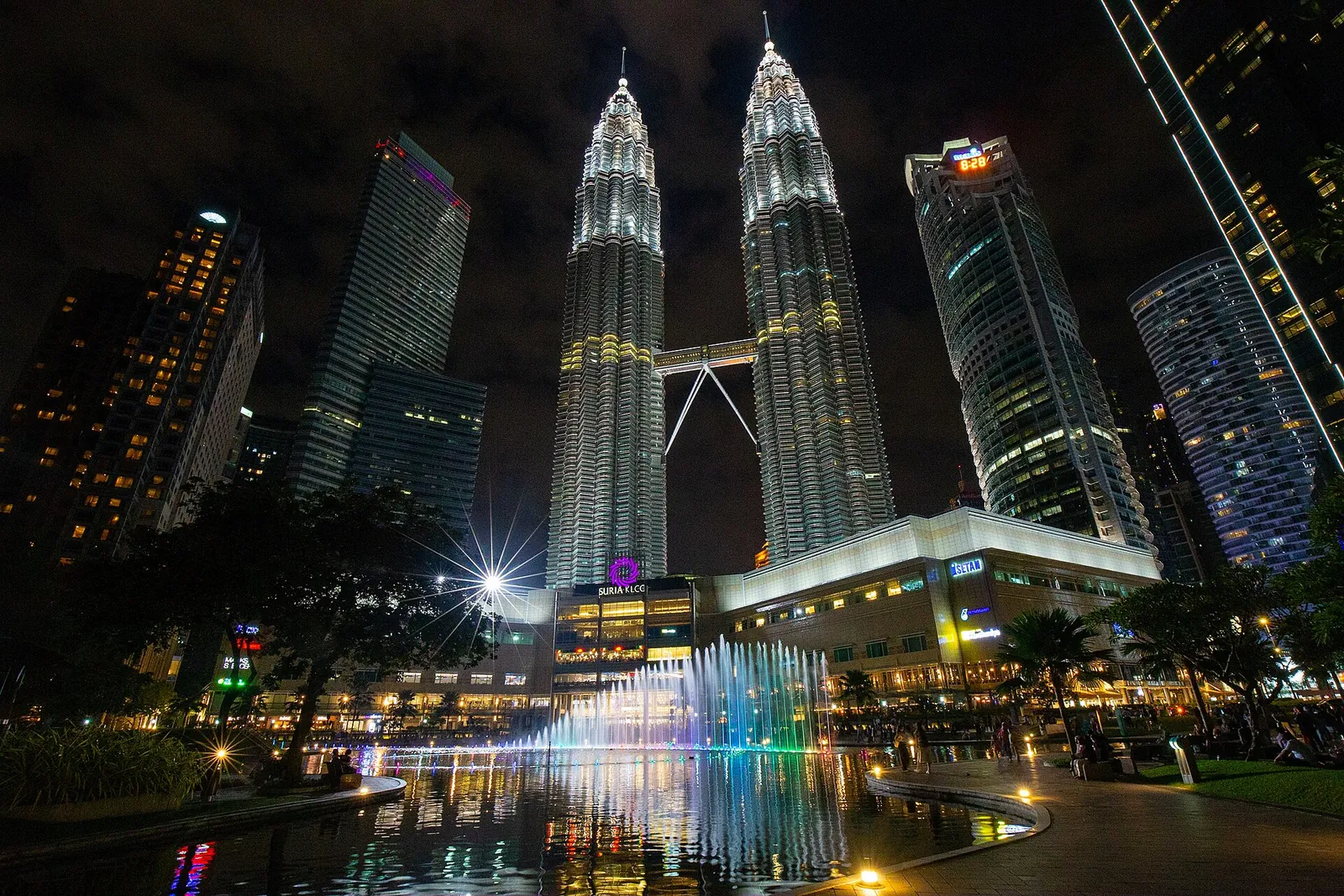
Walk through KLCC Park, a landscaped garden with paths and a lake directly behind the towers, before your tower visit.
Evening
Visit the Petronas Twin Towers. The tour takes you to the Skybridge linking the two towers and up to the observation deck on level 86. Book a timed ticket on the official e-ticket site in advance: slots sell out, visitors must arrive 15 minutes before their time slot, and late arrivals can be refused entry without a refund.
Key details from the official site:
- Hours: Tuesday to Sunday and public holidays, 9.00am to 10.30pm, last admission 9.30pm.
- Mondays: open only on the 2nd, 4th and 5th Monday of the month (9.00am to 8.00pm, last admission 7.00pm). Closed on the 1st and 3rd Monday unless it is a public holiday. Remaining 2026 Monday closures include 2 and 16 November and 7 and 21 December.
- Non-Malaysian adult (13 to 60) normal admission: RM 127 on weekdays, RM 137 on weekends. Evening Experience tickets cost RM 157 (weekday) or RM 167 (weekend).
- Bags and personal items go through security scanning, and food and drink are not allowed inside.
After your visit, stay in KLCC Park for the evening light and the fountain show on the park lake, then browse or eat at the Suria KLCC mall at the base of the towers.
Day 3: Lake Gardens museums and Bukit Bintang
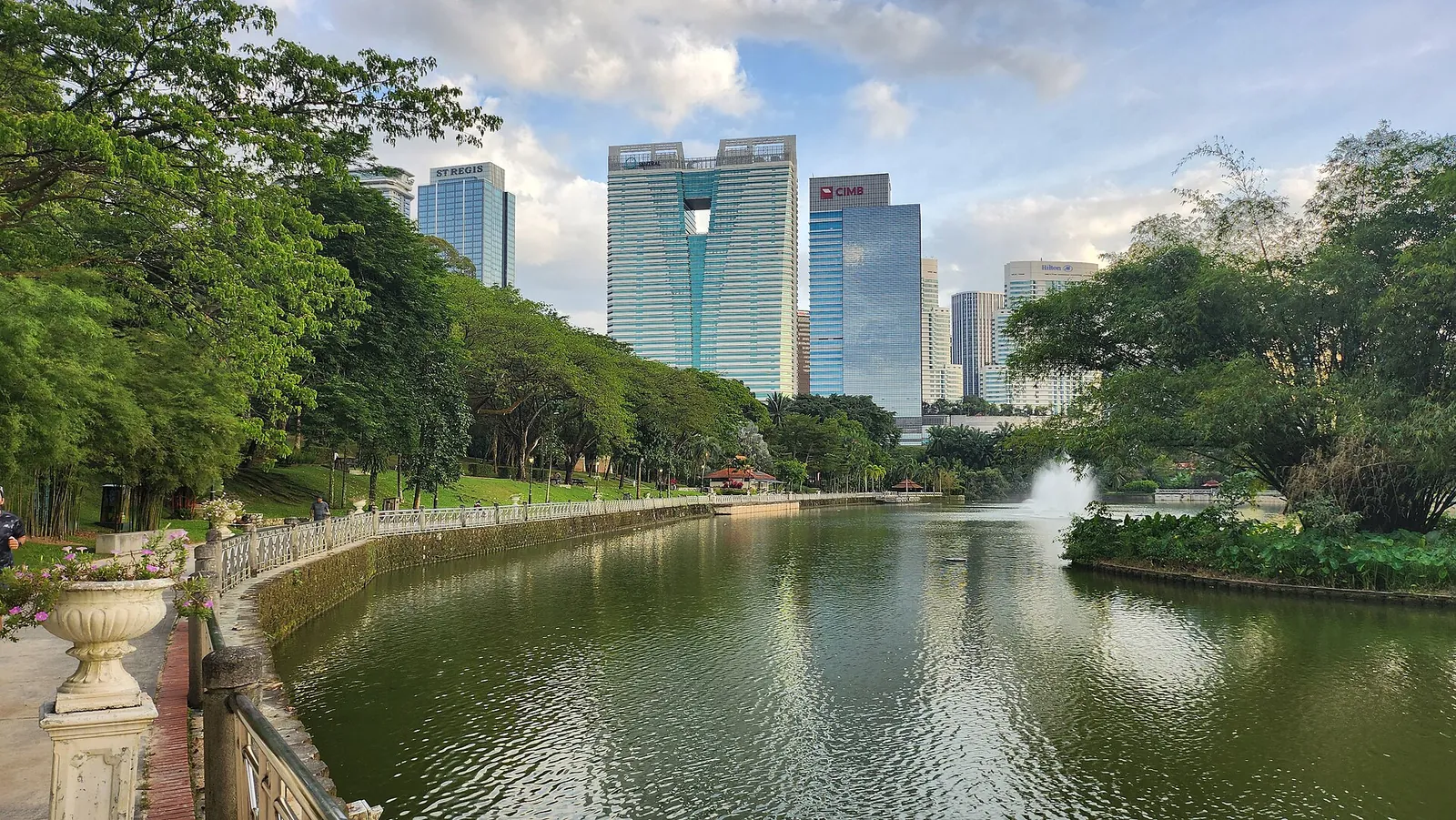
Your last day is a green and gorgeous one. The Lake Gardens (officially Tun Abdul Razak Heritage Park) is a large green area west of the old town that holds several of the city’s best sights within walking distance of each other. It gets hot, so start early and save the museums for midday.
Morning
Begin at KL Bird Park, a large walk-through aviary with more than 3,000 birds. It opens daily from 9.00am to 5.30pm, including public holidays. Standard tickets are RM 90 for adults and RM 70 for children; you can buy online through the official website.
Afterwards, stroll through the Perdana Botanical Garden next door, with its lake, shaded paths and themed gardens. It makes a pleasant, unhurried walk before the day heats up.
Afternoon
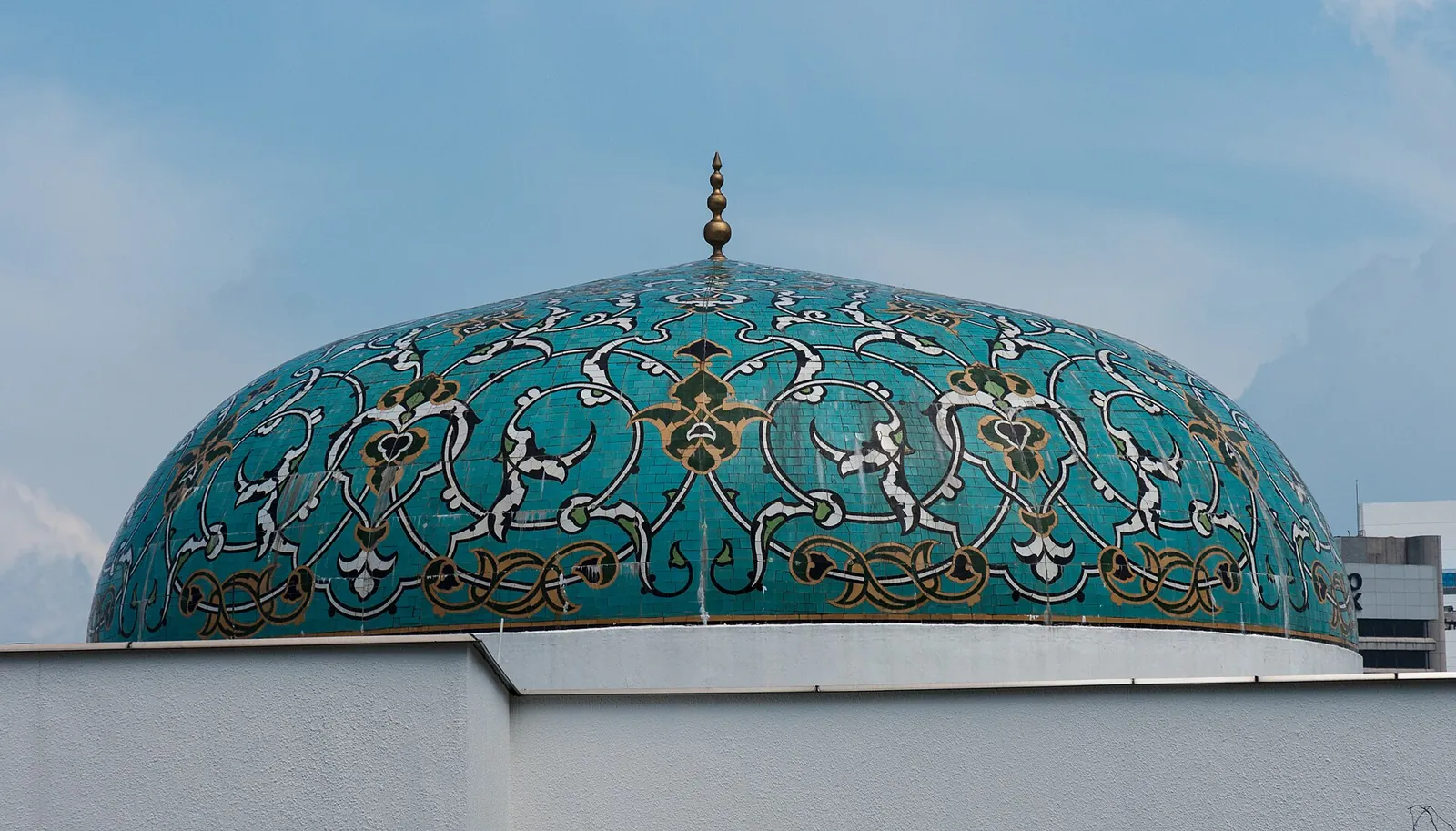
Walk down to the Islamic Arts Museum Malaysia, one of the best museums in the region, with galleries of manuscripts, textiles, ceramics and architectural models of mosques from around the world. It is open daily from 9.30am to 6.00pm (last entry 5.30pm). Tickets are RM 20 for adults and RM 10 for students with ID; children under 6 enter free. It closes only on the Hari Raya Aidilfitri and Hari Raya Aidiladha holidays. Its restaurant is a good lunch stop.
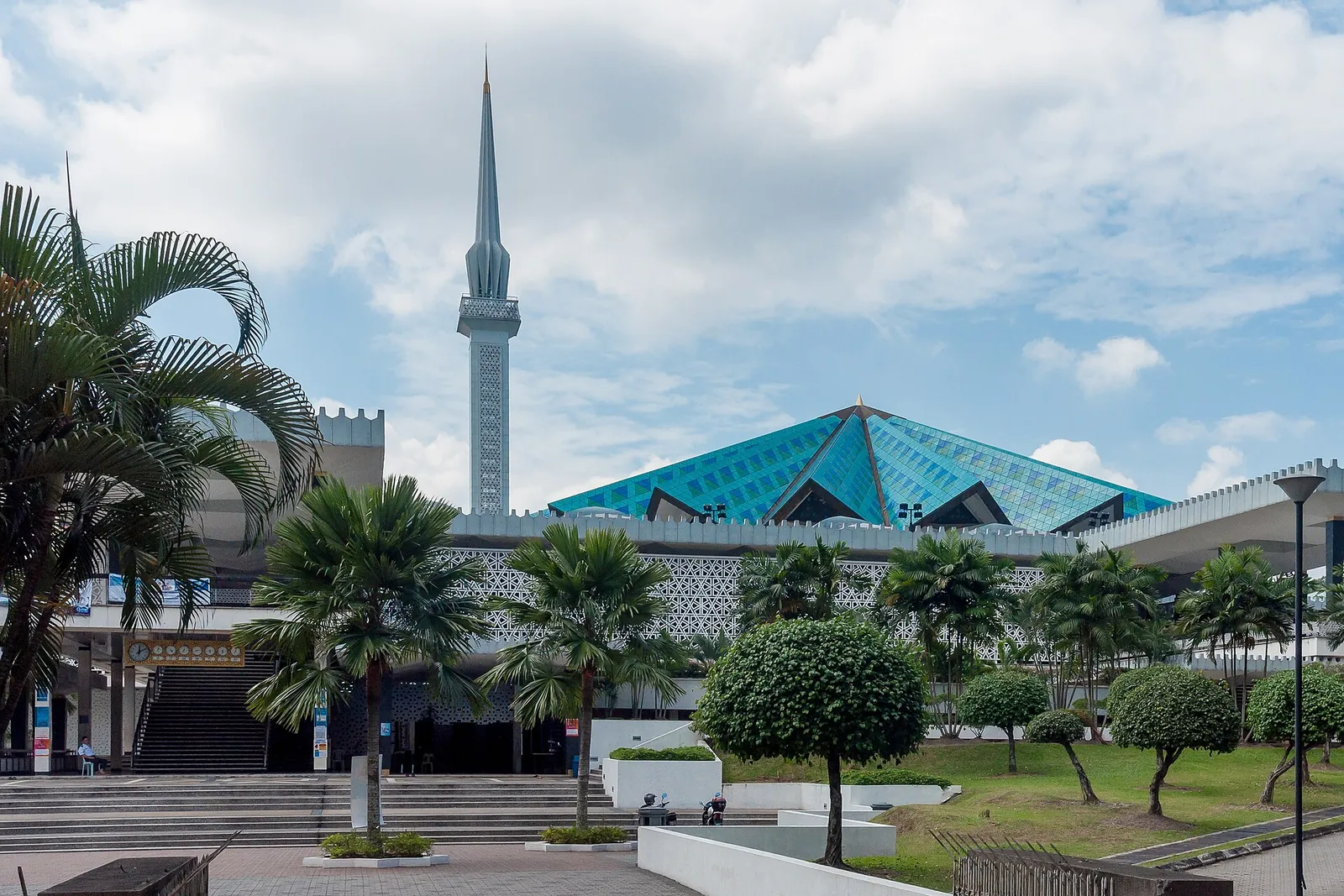
A few minutes away is the National Mosque (Masjid Negara), a modernist mosque with a star-shaped roof. Non-Muslim visitors are welcome outside prayer times, but official visiting hours could not be confirmed, so check at the entrance on the day. Modest dress is required and robes are usually provided to visitors.
Finish at the National Museum (Muzium Negara), which covers Malaysia’s story from prehistory to independence. It is open daily from 9.00am to 5.00pm, with last ticket sales at 4.30pm, and costs RM 5 for non-Malaysian visitors. It is closed on the first two days of Hari Raya Aidilfitri and the first day of Hari Raya Aidiladha. Muzium Negara MRT station is right beside it, making it an easy exit point.
Evening
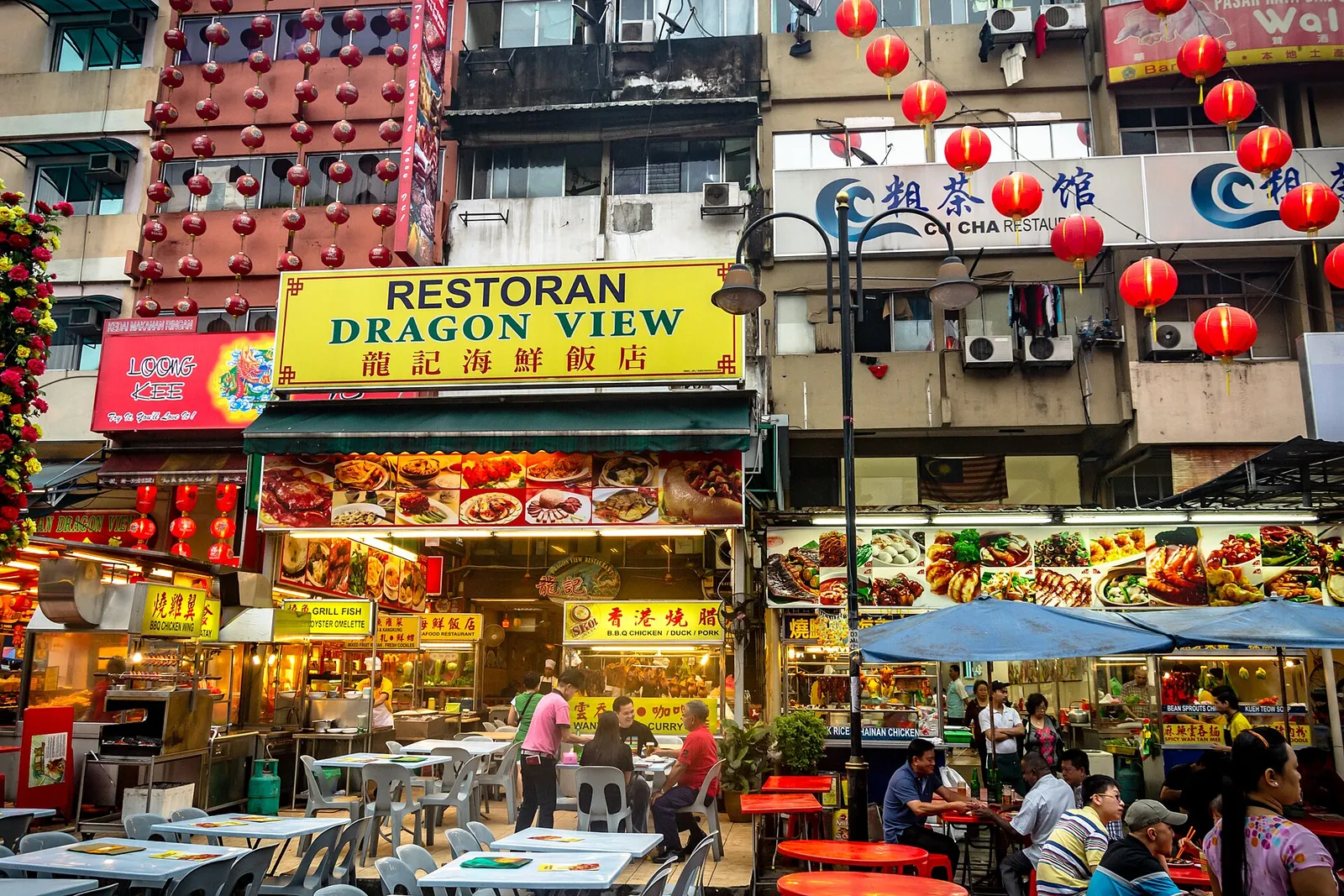
Take the MRT to Bukit Bintang, KL’s shopping and entertainment district. Spend your last evening wandering the malls, then head to Jalan Alor, a street lined with open-air food stalls and restaurants that fills up after dark. If you would rather have one more skyline view, the KL Tower (Menara Kuala Lumpur) has observation decks; check opening hours and prices on its official website, as we could not verify them.
Getting there and getting around
Entry: most foreign visitors must complete the free Malaysia Digital Arrival Card (MDAC) online before arrival, and visa rules depend on your nationality. Check both on the Immigration Department of Malaysia’s official portal (imigresen-online.imi.gov.my), and avoid unofficial websites that charge fees for the arrival card.
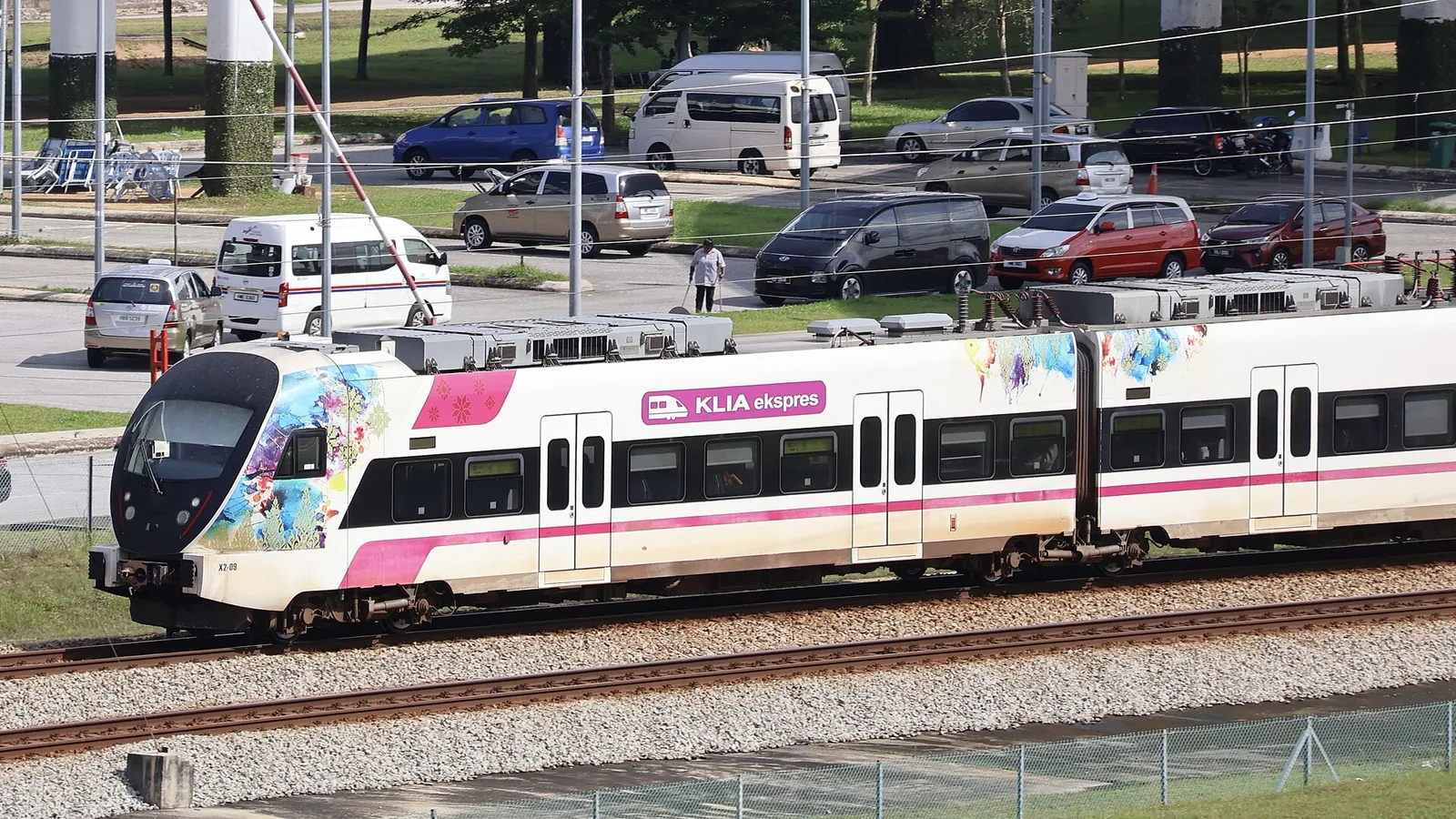
From the airport: Kuala Lumpur International Airport (KLIA) has two terminals, T1 and T2. The KLIA Ekspres non-stop train is the fastest link to KL Sentral, the city’s main transport hub:
| KLIA Ekspres | Details |
|---|---|
| Adult (16+) single / return | RM 55 / RM 100 |
| Child (6 to 15) single / return | RM 25 / RM 45 |
| Children under 6 | Free (up to 3 per adult ticket) |
| Journey time | About 28 minutes KL Sentral to T1, plus about 3 minutes to T2 |
| Frequency | About every 20 minutes, every day |
| Online discount | 10% off via the KLIA Ekspres app and website |
After 11.00pm, trains stop at all stations, and service from the airport runs until 1.00am. Groups of three or more can use the Group Saver fare (RM 40 per person). The slower KLIA Transit train runs on the same tracks and stops at intermediate stations. Grab (ride-hailing) is also widely used from the airport; prices vary with time and demand.
In the city: Rapid KL runs the LRT, MRT and Monorail lines, plus city buses. Most central sights in this plan sit near a station: Masjid Jamek and Pasar Seni (old town and Chinatown), KLCC (Twin Towers), Muzium Negara (Lake Gardens) and Bukit Bintang. Rapid KL lines accept the Touch ‘n Go card and sell tourist and city passes; check current pass types and prices on myrapid.com.my. Note that Rapid KL passes do not cover KTM Komuter trains, which you need for Batu Caves.
The free GoKL City Bus links several central areas, including Bukit Bintang and KLCC. For short trips in heat or rain, Grab is inexpensive and widely available. If you take a taxi, ask the driver to use the meter, as the Petronas Twin Towers visitor guide advises.
Where to stay
- KLCC: Walking distance to the Twin Towers, KLCC Park and Suria KLCC, with an LRT station on the doorstep. Best for first-timers who want the skyline outside their window and polished, easy surroundings.
- Bukit Bintang: The liveliest area for shopping, food streets and nightlife, with MRT and Monorail stations. Suits travellers who want to step out of the hotel straight into restaurants and late-night activity.
- Chinatown and the old town (Pasar Seni, Masjid Jamek): Close to heritage sights, street food and the rail interchanges, often with lower-priced options. Good for budget-minded travellers and anyone who enjoys walking older streets.
- KL Sentral and Brickfields: The airport train terminates here, and KTM Komuter for Batu Caves leaves from here. Practical for short stays, early flights, and travellers who want simple transport connections. Brickfields (Little India) next door adds South Indian food and shops.
Budget
The table below covers verified ticket and transport prices for this plan. It excludes accommodation, meals, Grab rides, shopping, KTM Komuter fares and sights whose prices we could not verify.
| Item | Typical cost |
|---|---|
| KLIA Ekspres airport train, adult single | RM 55 (10% off online) |
| Petronas Twin Towers, non-Malaysian adult | RM 127 weekday / RM 137 weekend |
| KL Bird Park, adult | RM 90 |
| Islamic Arts Museum, adult | RM 20 |
| National Museum, non-Malaysian | RM 5 |
| Batu Caves main Temple Cave | Traditionally free (side caves charge separately) |
| Merdeka Square, Kampung Baru, KLCC Park, Perdana Botanical Garden | Free to walk |
On a typical day, tickets and in-city transit for this plan run roughly RM 60 to 220 per person, depending on whether it is your Twin Towers day. Food costs vary widely: hawker stalls and kopitiam are very affordable, while mall restaurants and rooftop bars cost far more.
Practical tips
- Dress for temples and mosques: cover shoulders and knees, and carry a light scarf or sarong. You will remove shoes at most temples and mosques.
- Heat and rain: KL is hot and humid year-round. According to the Malaysian Meteorological Department, most of Peninsular Malaysia has its wettest spells around October to November and April to May, and its driest around June to July and February. Afternoon thunderstorms are common, so plan outdoor sights for the morning.
- Closing days: Petronas Twin Towers closes on the 1st and 3rd Monday of each month. Several museums close on the main Hari Raya holidays, whose dates follow the lunar calendar. Check before you visit.
- Money: the currency is the Malaysian ringgit (RM, MYR). Cards are widely accepted in malls and attractions, but carry some cash for street food, markets and small temples.
- SIM and eSIM: local SIM cards and eSIMs are sold at the airport and in the city; you will need your passport to register a SIM.
- Arrival card scams: officials warn that fake websites imitate the MDAC portal and charge fees. Use only the government site.
- Taxis: use Grab or a metered taxi, and confirm the meter is running before you set off.
Heads-up: what to watch out for
Kuala Lumpur is a joy to explore, and a few simple habits keep it that way.
- Bags on the wall side: bag-snatching happens in the big cities, sometimes by thieves on motorbikes who grab bags carried on the road side. Easy to avoid: wear your bag across your body and on the side away from the traffic.
- Card and ATM care: the UK government notes that card and ATM fraud is widespread in Malaysia. Good to know: use machines inside banks or malls, shield your PIN, and keep an eye on your card when paying.
- Watch your drink: there have been cases of strangers offering spiked drinks, even in reputable bars, and methanol in alcohol cannot be detected by taste or smell. Easy to avoid: accept drinks only from the bar staff, and buy spirits in established venues.
- Taxis with a meter: outside the airport, taxis should use the meter, and at the airport you pay with a fixed-price coupon bought at the counter in the terminal. Easy to avoid: agree on the meter before setting off, or book through an app.
- Crossing the road: drivers, especially motorbike riders, do not always stop at traffic lights or pedestrian crossings. Good to know: look both ways even on a green signal, and use the pedestrian bridges where they exist.
- Covered up for worship: you may be refused entry to places of worship if your shoulders and knees are not covered. Easy to avoid: pack a light scarf or sarong on temple and mosque days.
- Passport and the law: visitors must carry ID by law, so keep your passport with you, and Malaysia has a zero-tolerance policy on drug offences with very severe penalties. Good to know: a photo of your passport is handy, but carry the real thing.
- Haze season: smoke from forest fires in Indonesia can bring haze between June and October, and city air pollution can make breathing conditions worse. Good to know: check the official Air Pollutant Index (APIMS) and swap outdoor plans for museums on hazy days.
FAQ
Is 3 days enough for Kuala Lumpur?
Yes, for the main sights. Three days covers the old town, Chinatown, Batu Caves, the Twin Towers and the Lake Gardens museums at a comfortable pace. Add a fourth day if you want a day trip, such as Putrajaya or Malacca.
Do I need to book the Petronas Twin Towers in advance?
It is strongly recommended. Tickets are sold in timed slots, popular evening slots fill up, and the official site advises buying online. Arrive 15 minutes before your slot.
How do I get from KLIA to the city centre?
The KLIA Ekspres train is the fastest way: about 28 minutes from Terminal 1 to KL Sentral, roughly every 20 minutes, for RM 55 one way for adults (10% less when booked online). From KL Sentral you can connect to the LRT, MRT, Monorail and KTM Komuter.
What should I wear to Batu Caves?
Clothing that covers your shoulders and knees, plus comfortable shoes for the 272 steps. It is an active Hindu temple, so modest dress is expected for everyone.
Which day is best for the Twin Towers?
Any day from Tuesday to Sunday. Avoid the 1st and 3rd Monday of the month, when the attraction is closed. Weekday tickets are slightly cheaper than weekend ones.
When is the best time to visit Kuala Lumpur?
KL can be visited year-round. For a better chance of drier weather, aim for June to July or February. October to November tends to be the wettest period, though showers are often short and the city has plenty of indoor sights.
Sources
Prices, hours and rules change. We checked these on 22 October 2026; please confirm on the official page before you book.
- KLIA Ekspres: Products and Fares
- PETRONAS Twin Towers: Admission and Ticketing
- PETRONAS Twin Towers: Getting Here
- Islamic Arts Museum Malaysia: Visit Us
- Department of Museums Malaysia: National Museum (Muzium Negara)
- KL Bird Park: Plan Your Visit
- Malaysian Meteorological Department: Malaysia's Climate
- Immigration Department of Malaysia: Malaysia Digital Arrival Card (MDAC)
- UK FCDO Foreign Travel Advice: Malaysia, Safety and security
- UK FCDO Foreign Travel Advice: Malaysia, Health
- Department of Environment Malaysia: Air Pollutant Index Management System (APIMS)
Photo credits (11)
- Petronas Twin Towers glowing at sunset over Kuala Lumpur: James Kerwin from Tbilisi, CC BY 2.0, via Wikimedia Commons
- Copper domes of the Sultan Abdul Samad Building under blue sky: Jan Kranendonk (https://www.jankranendonk.nl), CC BY-SA 4.0, via Wikimedia Commons
- Red lanterns at the Petaling Street gate in Chinatown: Shesmax, CC BY-SA 4.0, via Wikimedia Commons
- Rainbow stairs and golden Lord Murugan statue at Batu Caves: Chainwit., CC BY-SA 4.0, via Wikimedia Commons
- Petronas Twin Towers lit up above the KLCC fountains: Bruce Poon, CC BY-SA 4.0, via Wikimedia Commons
- Leafy lake in Perdana Botanical Garden with city towers beyond: Renek78, CC BY-SA 4.0, via Wikimedia Commons
- Turquoise tiled dome of the Islamic Arts Museum Malaysia: CEphoto, Uwe Aranas, CC BY-SA 3.0, via Wikimedia Commons
- KLIA Ekspres train arriving at the airport station: S5A-0043, CC BY 4.0, via Wikimedia Commons
- Busy open-air food stalls on Jalan Alor at night: Alexander Synaptic, CC BY-SA 4.0, via Wikimedia Commons
- Rambutans, mangosteens and fresh fruit piled high at a market stall: Shesmax, CC BY-SA 4.0, via Wikimedia Commons
- National Mosque minaret and blue roof framed by palms: CEphoto, Uwe Aranas, CC BY-SA 3.0, via Wikimedia Commons
This is a researched plan, not a personal trip report. How we research · Affiliate disclosure