
3 Days in Nice and the French Riviera: A Day-by-Day Itinerary
A 3-day Nice plan: Old Town and Castle Hill, Matisse and Chagall in Cimiez, Villefranche, then Èze and Monaco by bus and train, with verified fares and hours.
- 🗓️ Trip length
- 3 days
- ☀️ Best time
- April to June, September to October
- 💰 Daily spend
- EUR 10-45 for sights and local transport (excl. stay and meals)
- ✅ Facts checked
- 24 October 2026
Get ready for three days of blue water, pastel facades and some of the best art on the Mediterranean. This plan suits first-timers who want to see Nice and two of the Riviera’s highlights: the hilltop village of Èze and the tiny principality of Monaco. You won’t need a car. Everything here uses Nice’s trams and buses and the coastal train.
The pace is relaxed but full: one area each morning, another each afternoon, and evenings by the sea. Nice is compact and easy to walk, so expect plenty of steps and a few hills. If you only want to unpack once, Nice makes a great base.
At a glance
| Day | Area | Highlights |
|---|---|---|
| 1 | Old Nice, Castle Hill, Port | Cours Saleya, Baroque lanes, free Castle Hill park, Promenade des Anglais at sunset |
| 2 | Cimiez and Villefranche-sur-Mer | Musée National Marc Chagall, Musée Matisse, an afternoon in a fishing harbour (or Villa Ephrussi de Rothschild) |
| 3 | Èze and Monaco | Bus 82 to Èze village, the Nietzsche path down to the sea, Oceanographic Museum, train back to Nice |
One planning rule before you start: both the Matisse and Chagall museums are closed on Tuesdays, so make sure Day 2 does not fall on a Tuesday. Swap Day 2 and Day 3 if needed.
Day 1: Old Nice, Castle Hill and the Promenade
Morning
Welcome to the Riviera! Start at Place Masséna, the black-and-white checkerboard square where tram line 1 runs through the city centre. From here it’s a few minutes on foot into Vieux Nice (Old Nice), a maze of narrow ochre and terracotta lanes.
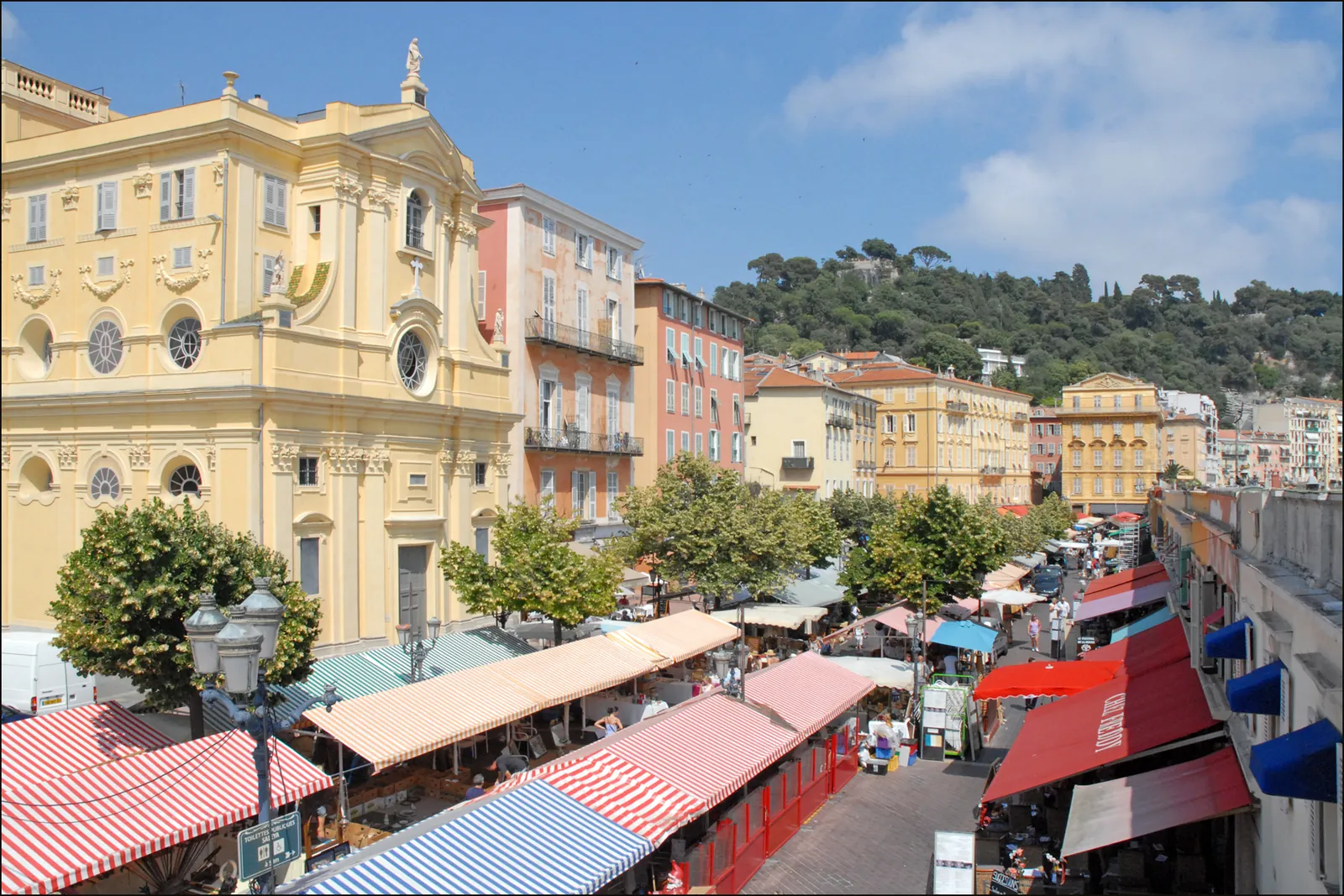
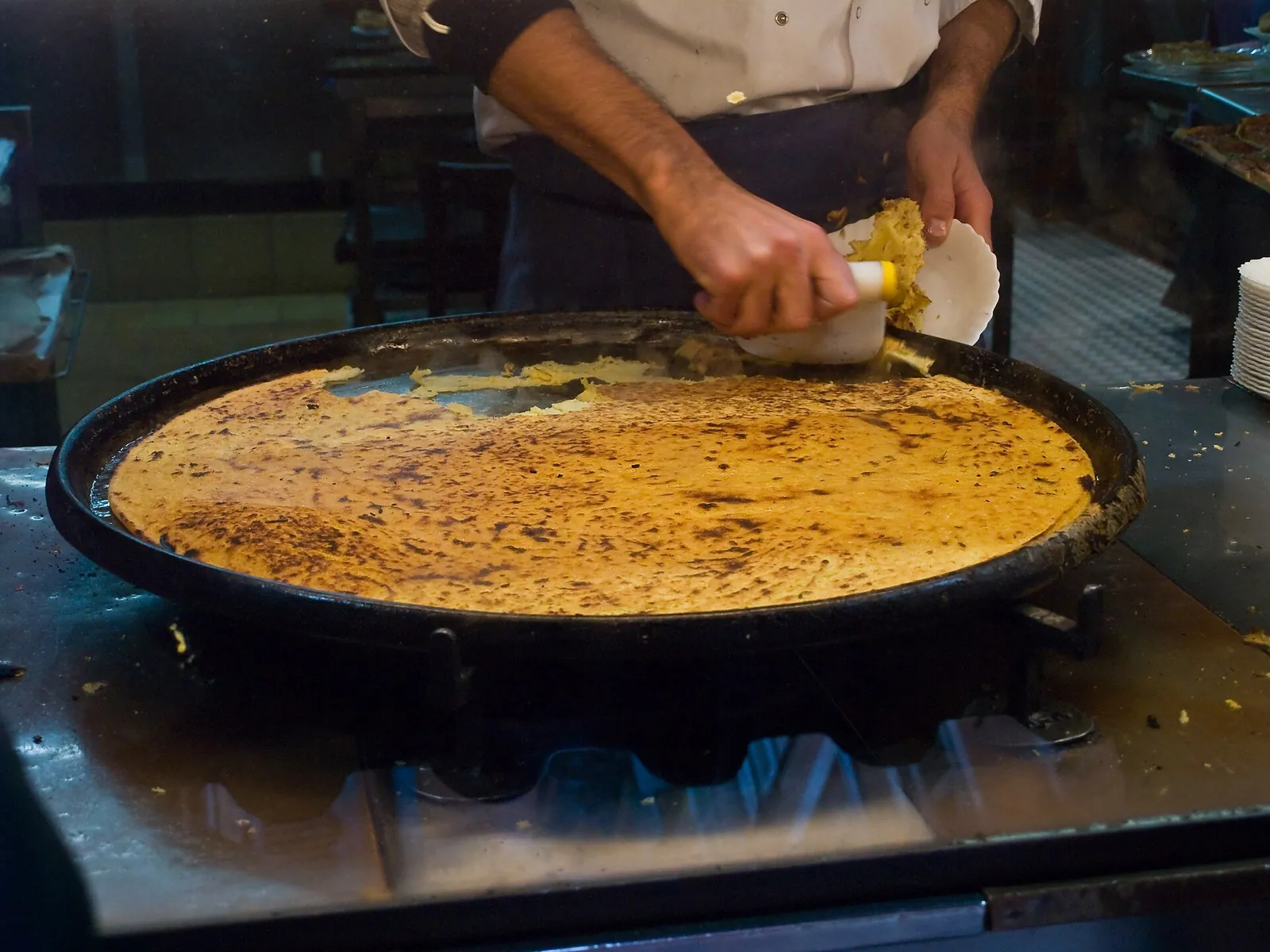
Head first for Cours Saleya, the long market street that runs parallel to the sea. Stalls set up here most mornings. What’s on sale changes with the day (flowers, fresh produce or other stalls), so check the tourist office website if you want a particular market. Then wander the lanes behind it, look inside the Baroque churches and try socca, the crisp chickpea pancake that is Nice’s favourite street snack.
Afternoon
From the eastern end of Old Nice, climb to the Parc de la Colline du Château (Castle Hill). Entry is free. From 1 October to 31 March it opens daily from 8:30 am to 6:00 pm, and from 1 April to 30 September from 8:30 am to 8:00 pm. The stairs take roughly 15 to 20 minutes at an easy pace. There is also a lift on the seafront side, but check that it’s running.
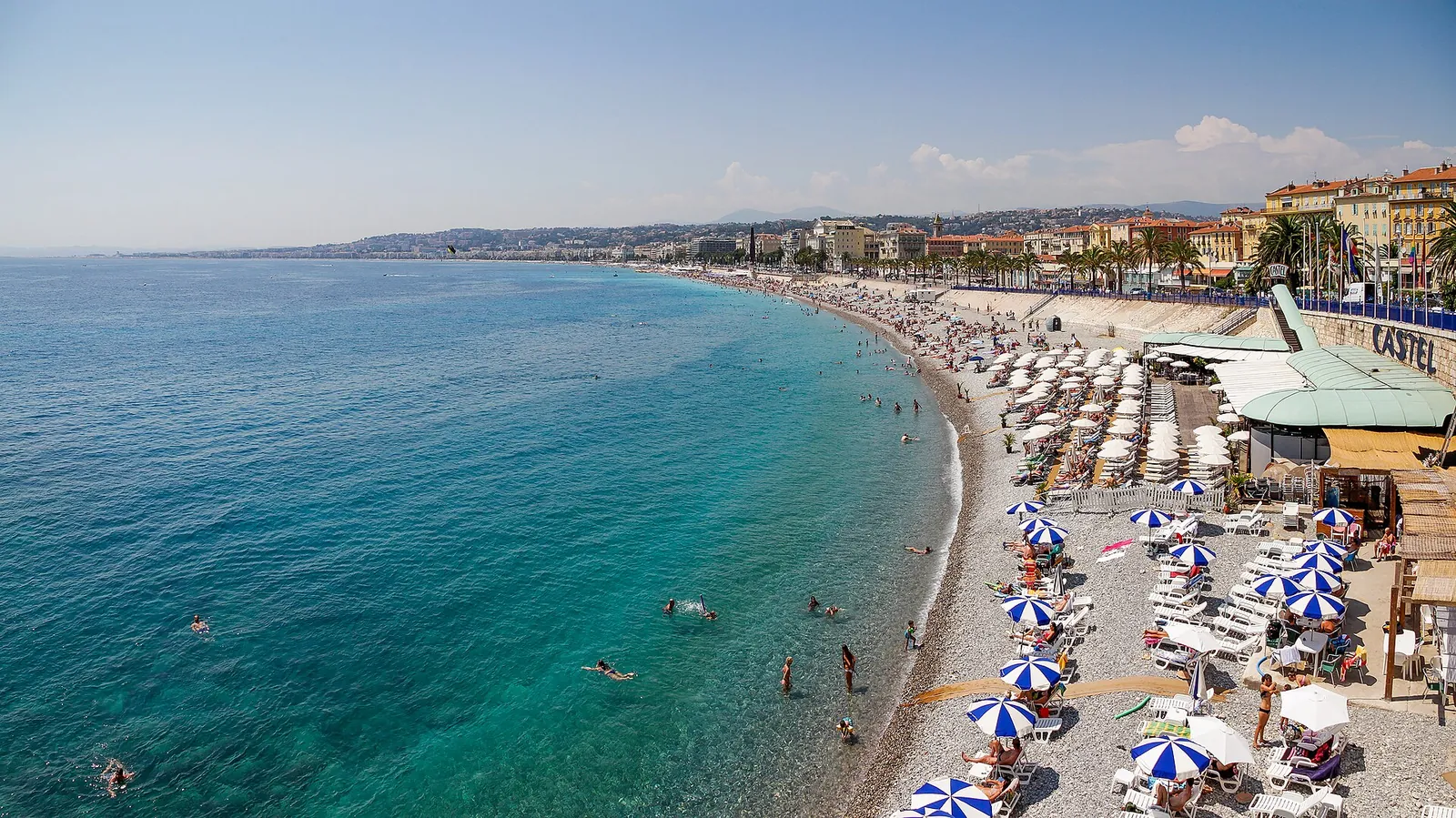
At the top you get the classic postcard view over the Baie des Anges, the Old Town rooftops and the harbour. Take your time: there are shady paths, an artificial waterfall and plenty of benches.
Walk down the eastern side to Port Lympia, about 10 to 15 minutes. The colourful harbour is the last stop on tram line 2, so getting back to the centre later is easy.
Evening
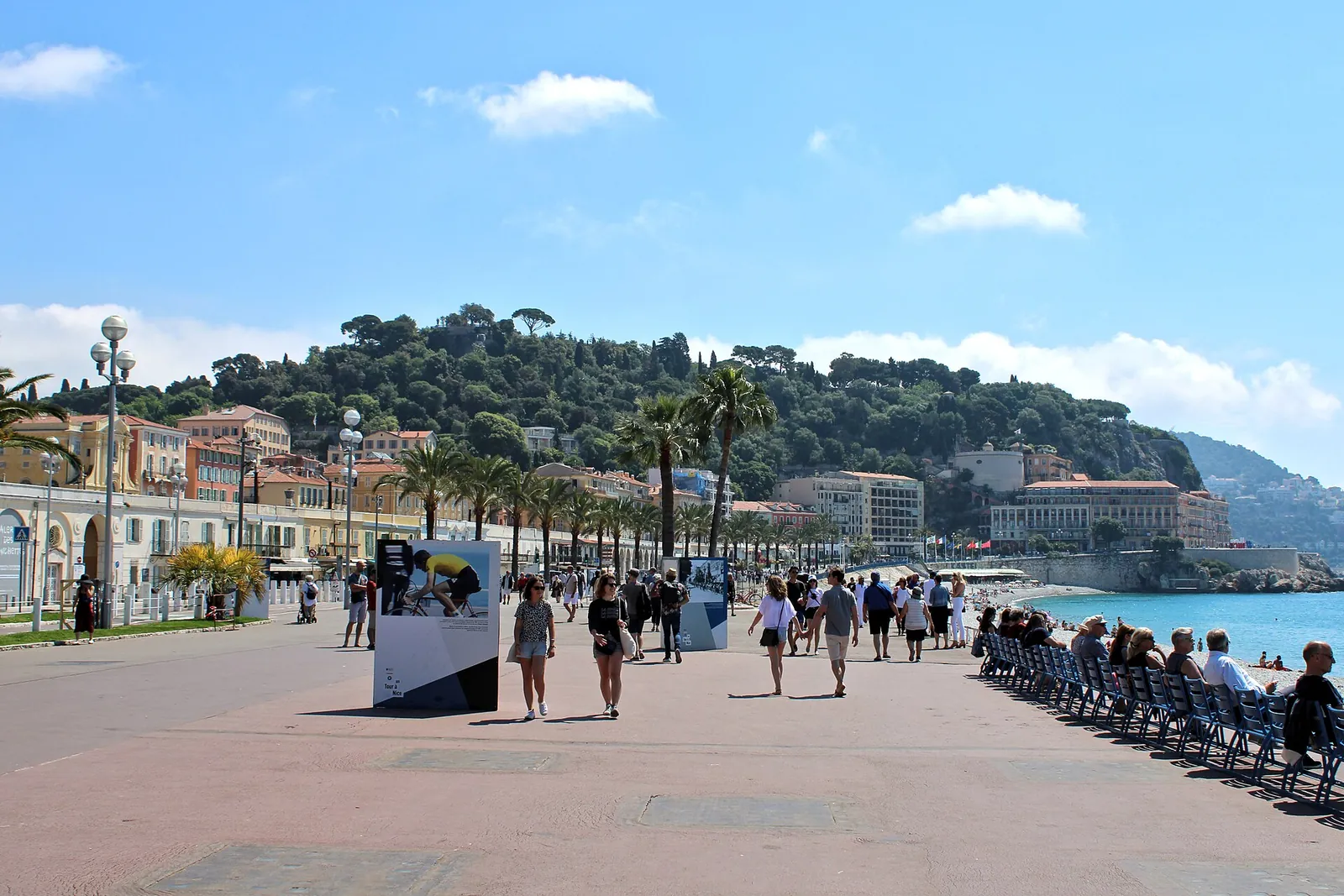
Walk back west along the water to the Promenade des Anglais for sunset. Grab one of the famous blue chairs and watch the light change over the bay. Then head back to Old Nice or the Port area for dinner.
Tip: if you plan to ride the tram several times today, a 1-day pass costs €7 (see “Getting there and getting around” below).
Day 2: Art in Cimiez and a harbour afternoon
Morning
Get ready for a gloriously arty day: today is for two artists who loved Nice. Begin at the Musée National Marc Chagall. It holds the largest public collection of Chagall’s work, centred on his 17-painting “Biblical Message”.
- Hours: closed Tuesday. Until 31 October 2026 it opens 10:00 am to 1:00 pm and 2:30 pm to 6:00 pm. From 1 November 2026 to 30 April 2027 it opens 10:00 am to 1:00 pm and 2:30 pm to 5:00 pm. Ticket sales stop 30 minutes before closing.
- Price: €10 (€12 during temporary exhibitions), free for under-18s.
Arrive at 10:00 am so you finish before the lunchtime closure. Then continue uphill to the Cimiez district. It’s a steady climb of roughly 20 to 30 minutes on foot. You can also take a Lignes d’Azur bus: check the route on the operator’s journey planner.
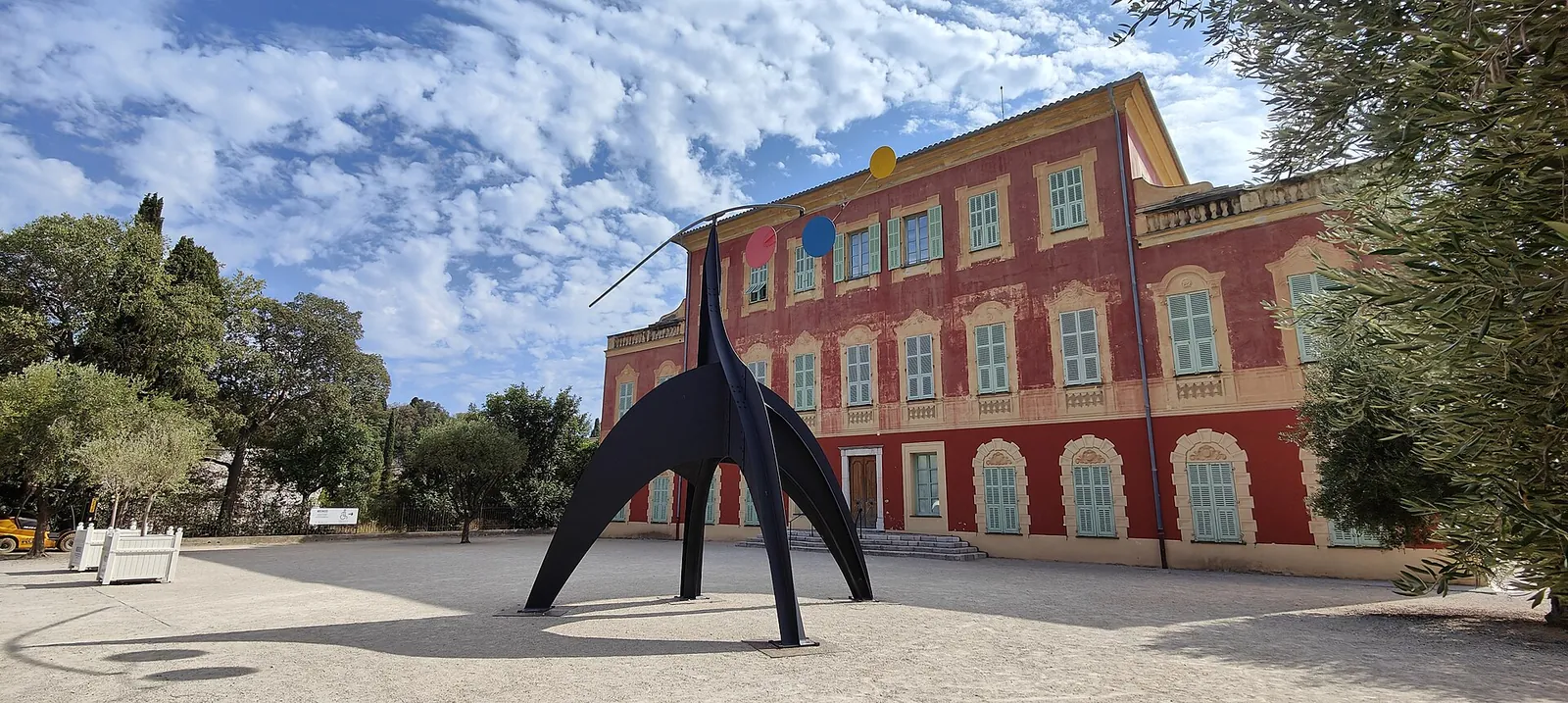
The Musée Matisse is in a Genoese villa in the olive grove of the Cimiez gardens, next to the remains of the Roman arena.
- Hours: closed Tuesday. From 1 April to 31 October it opens 10:00 am to 6:00 pm. From 1 November to 31 March it opens 10:00 am to 5:00 pm. It is also closed on 1 January, Easter Sunday, 1 May and 25 December.
- Price: €10 for a single entry, or €15 for the city’s 4-day pass covering 10 museums. Under-18s and students get in free with proof.
The 4-day pass is good value if you also want to see other city-run museums during your stay. The Chagall museum is a national museum, so it has its own ticket.
Afternoon
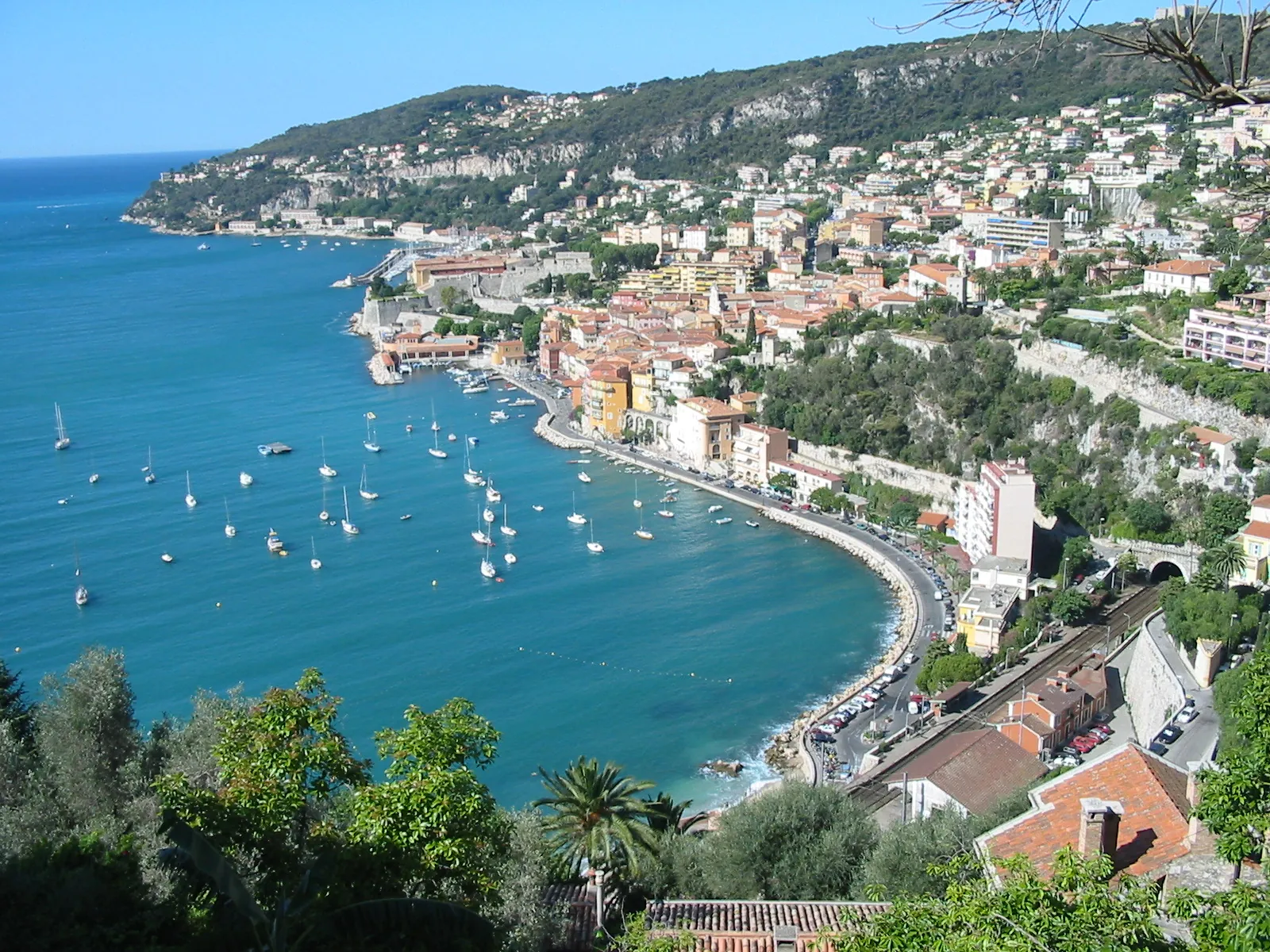
Head back down to Nice-Ville train station and take the coastal train east to Villefranche-sur-Mer, one of the prettiest harbours on the coast. Trains on the coastal line between Cannes, Nice, Monaco and Menton run every 15 minutes on weekdays, so you rarely wait long. Check the fare and exact times on the TER website or the SNCF Connect app.
Spend the afternoon wandering the old village’s stepped lanes, the waterfront and the sheltered bay that makes Villefranche so photogenic.
Prefer gardens and a palace? Visit the Villa Ephrussi de Rothschild in Saint-Jean-Cap-Ferrat instead of Villefranche. It’s a Belle Époque villa with famous themed gardens, owned by the Académie des Beaux-Arts. Full price is €18, or €12 for ages 7 to 17 and students aged 18 to 25, with an audio guide included. Booking online is recommended, but an online ticket doesn’t get you in any faster. Opening hours change by season, so check the “Opening times and access” page on the villa’s website before you go. Look up the best Lignes d’Azur bus to get there at the same time.
Evening
Take the train back to Nice. Have dinner around Port Lympia or the Old Town, then finish with an evening walk on the Promenade.
Day 3: Èze village and Monaco
Morning
Today is the big Riviera day, full of cliff-top views and sparkling sea, so start early. From Vauban bus station in eastern Nice, take Lignes d’Azur bus 82. It runs from Vauban to Èze village and on to Plateau de la Justice. Check the timetable on the Lignes d’Azur website the night before, because buses run less often than in the city.
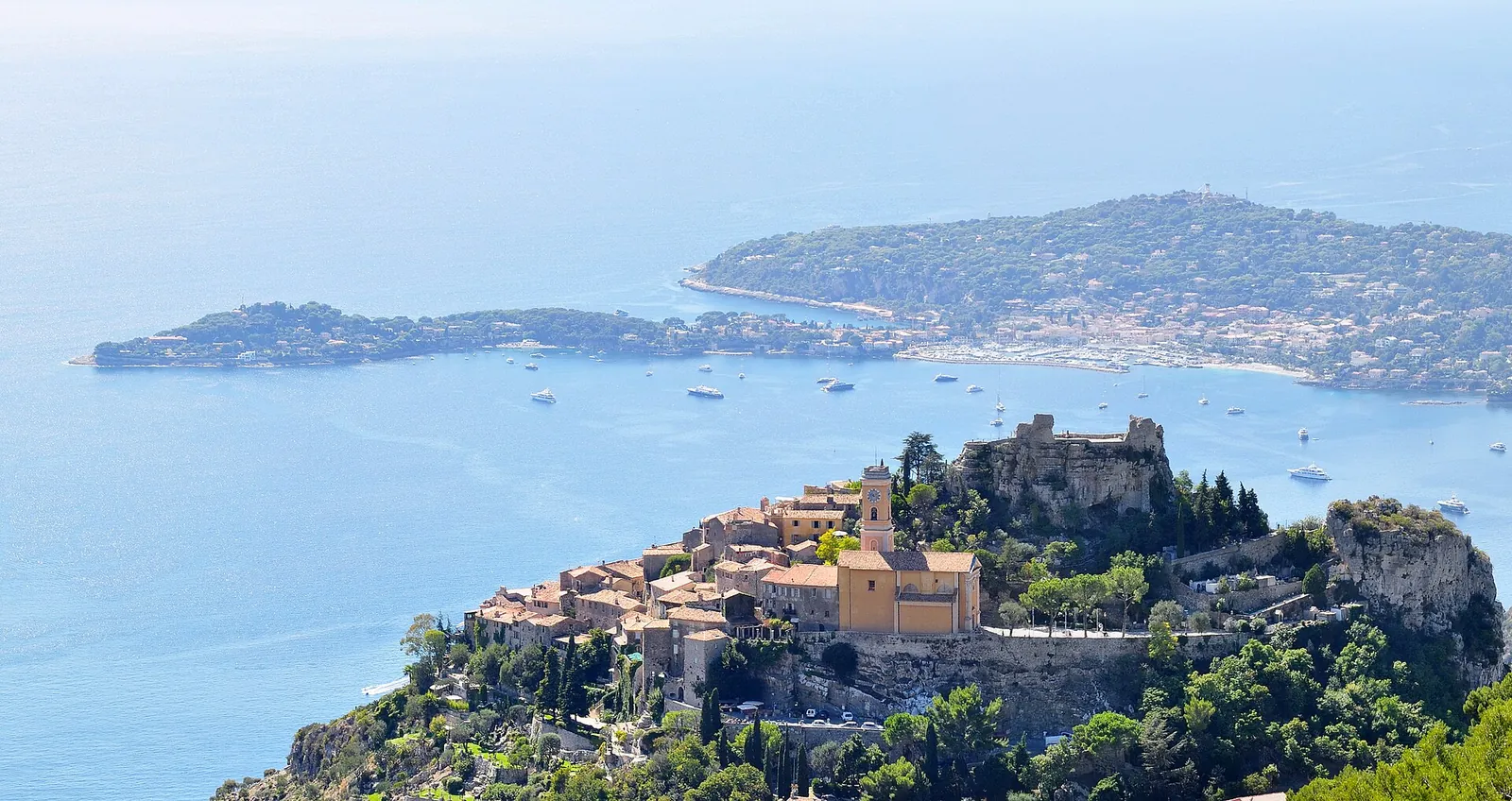
Èze village is a medieval village perched high above the sea. Climb to the top to the Jardin Exotique d’Èze, a cactus and succulent garden among the ruins of a fortress. Its view is one of the best on the whole coast. Prices and opening hours change with the seasons, so check the garden’s official website.
Then walk down to the sea on the Chemin de Nietzsche, a path named after the philosopher. It starts at the bottom of the village and drops 400 metres over about 2 kilometres to the seafront at Èze-sur-Mer. The path is steep and rocky, so wear proper shoes and carry water. If you’d rather skip the descent, take bus 82 back towards Nice and catch the train to Monaco from there.
Afternoon
From Èze-sur-Mer, take the TER coastal train on to Monaco. Walk up to Monaco-Ville, the old town on “the Rock”.
The star here is the Musée Océanographique de Monaco, a grand museum built into the cliff face. It has aquariums, a sea turtle area and a rooftop terrace. Adult tickets cost €20.50 or €22.50 depending on the time of year. Students and children aged 4 to 17 pay €13 to €14, and under-4s go free. Buy tickets on the museum’s official website and check that day’s opening hours.
The Prince’s Palace is about 5 minutes’ walk from the museum, and you can buy combined tickets. The palace’s State Apartments only open for part of the year: in 2026 they were open from late March to mid-October. Outside those dates you can enjoy the palace square and the views but not the rooms inside. Check the official palace visits website for dates.
Evening
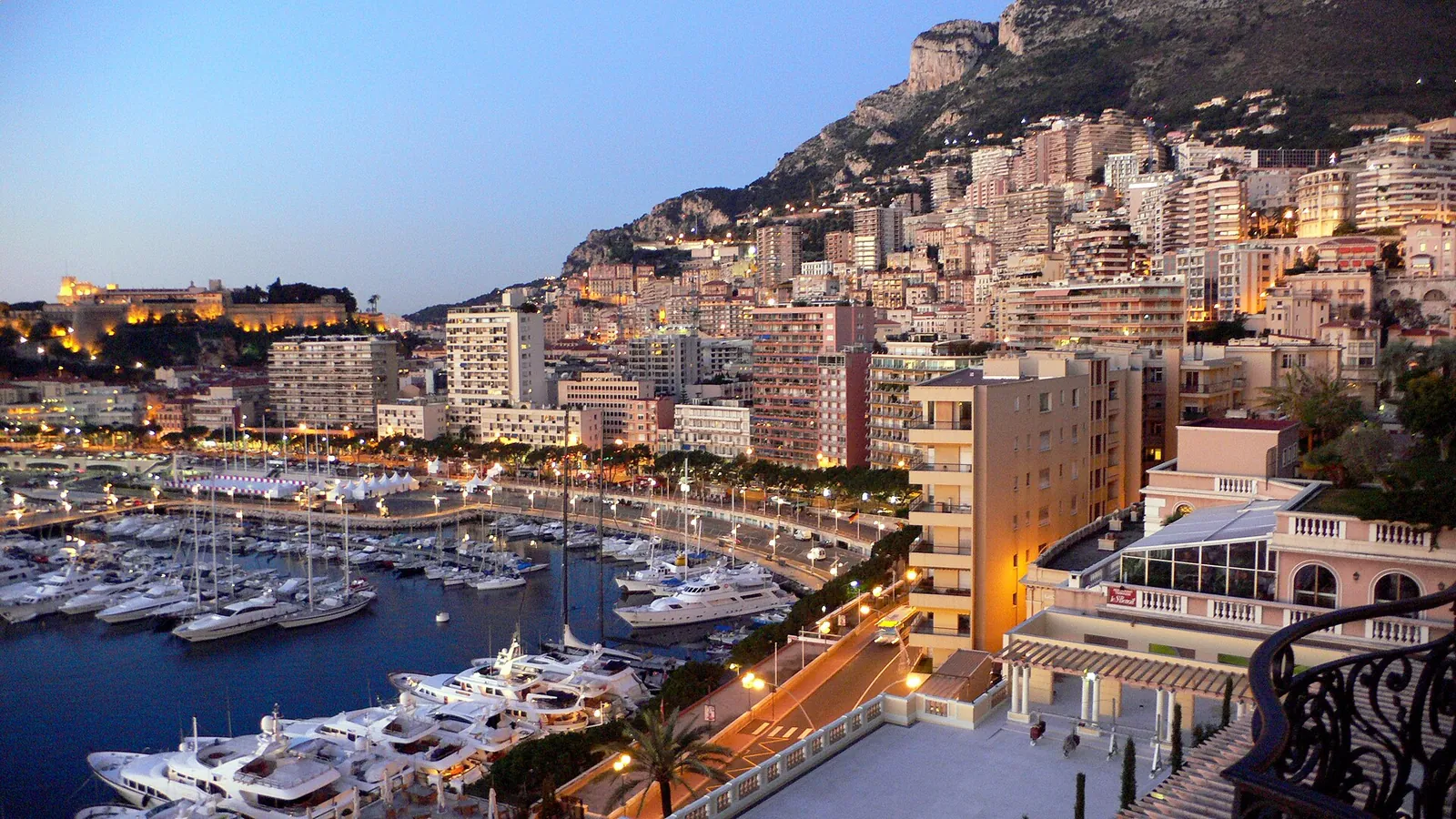
Walk down past the harbour to the Monte-Carlo side to see the famous casino square and the yachts. Then take the train back to Nice. The trip takes about 20 minutes, and a full-price single ticket on the regional TER trains costs €6.10. On weekdays trains run every 15 minutes until 10 pm, then every 30 minutes until about 11:30 pm. They run later at weekends. Check the time of the last train before you sit down to dinner.
Getting there and getting around
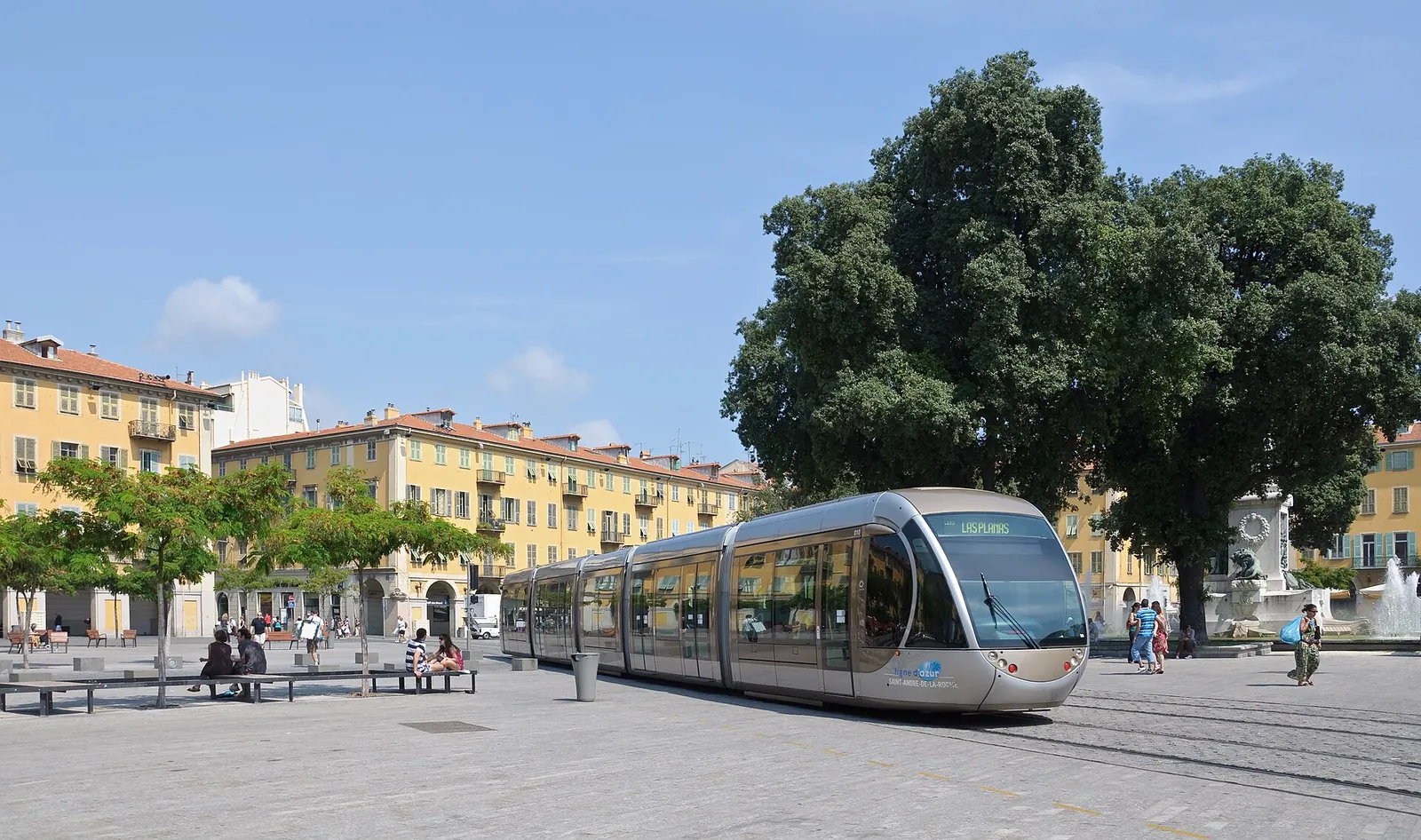
From the airport by tram (best value). Tram line 2 runs from Nice Côte d’Azur Airport (Terminals 1 and 2) through the city centre to Port Lympia. You can change to line 1 at Jean Médecin. Trams run about every 7 minutes. Towards the city, the first leaves at 4:05 am and the last at 12:35 am, every day except 1 May. The whole trip from Terminal 2 to Port Lympia takes about 30 minutes.
You need a special ticket to ride to or from the airport: the €10 “Aéro” return ticket. Every ticket machine sells it, including the ones on the airport tram platforms. Travel between Terminal 2, Terminal 1 and the Grand Arénas stop is free.
By train. Nice Saint-Augustin station is about a 7-minute walk from Terminal 1 (exit A0) along a dedicated walkway. Regional TER trains run along the coast between Cannes, Nice, Monaco and Menton. Buy tickets on the TER website or in the SNCF Connect app.
By taxi. Taxis run day and night and give receipts if you ask. For current airport fares, check the taxi page on the airport’s official website.
Around town: Lignes d’Azur. Nice’s trams and buses use one set of fares across the whole metropolitan area. Paper tickets have been replaced by a rechargeable card called “La Carte”. It needs a €2 refundable deposit, and you can top it up at ticket machines, sales points or in the Lignes d’Azur app. Main fares:
| Ticket | Price |
|---|---|
| Solo (one journey, connections within 74 minutes) | €1.70 |
| Return journey | €3.40 |
| Airport return (“Aéro”) | €10 |
| 1-day pass | €7 |
| 2-day pass | €13 |
| 7-day pass | €20 |
You can’t buy tickets on trams, and buses only sell an emergency card. Buy at the platform machines, which take coins or bank cards but not notes. Validate your ticket every time you board.
Where to stay
- Vieux Nice (Old Town): best if you love atmosphere and want markets and lanes on your doorstep. Expect narrow streets and some noise in the evening.
- City centre, between Place Masséna and the Promenade: the all-rounder. The beach, shops and restaurants are all walkable, and tram lines 1 and 2 are close by. Great for first-timers.
- Jean Médecin and around Nice-Ville station: the practical choice for day trips. You’re a short walk from the coastal trains and on the airport tram line.
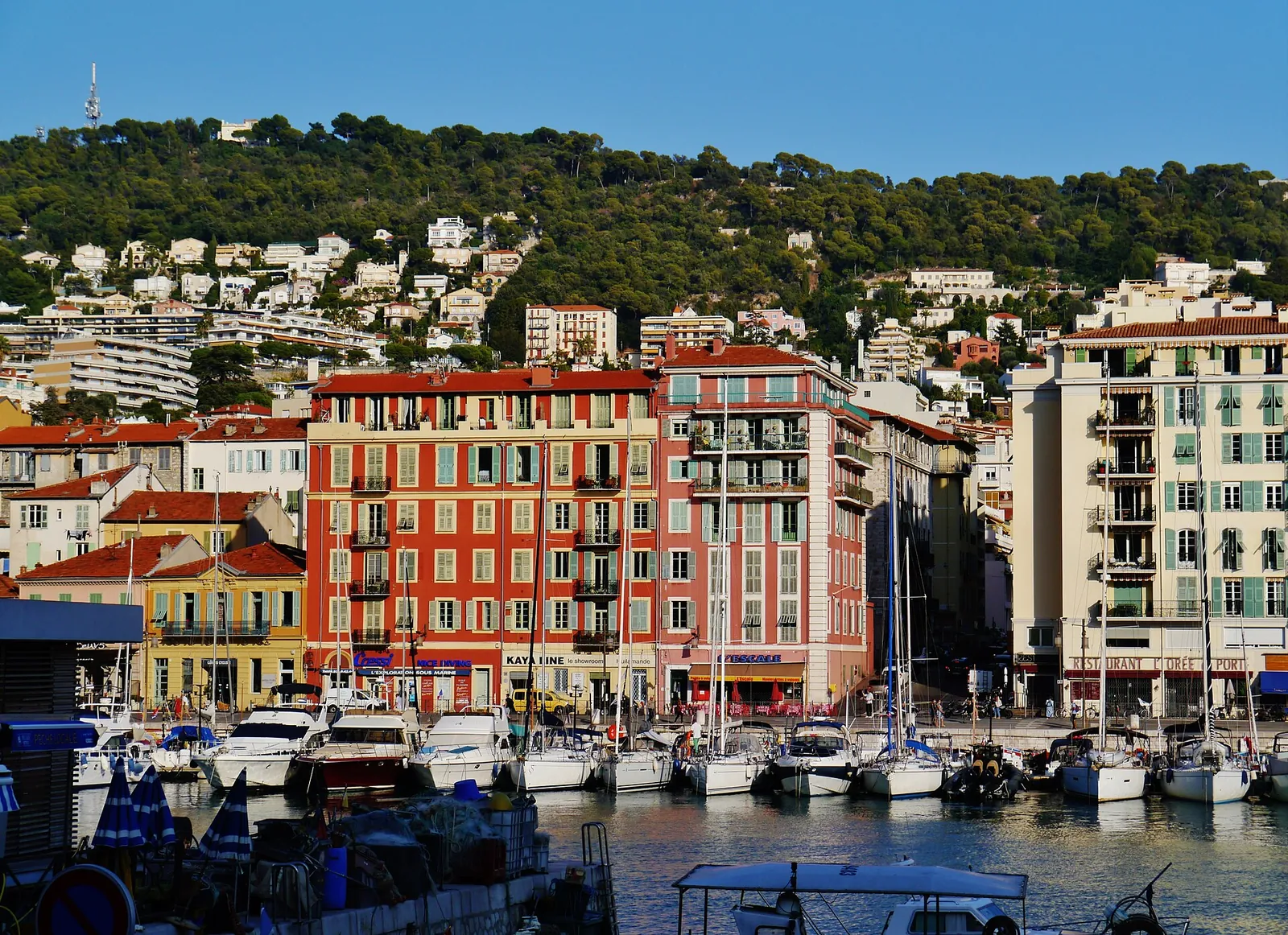
- Port Lympia: a more local feel, harbourside restaurants and the last stop on tram line 2. Good for couples and repeat visitors who like a slightly quieter base.
Budget
These are verified costs for sights and transport. Accommodation and meals vary a lot by season and style, so check current rates when you book. Flights are not included.
| Item | Typical cost |
|---|---|
| Tram or bus, single journey | €1.70 |
| Lignes d’Azur 1-day / 2-day pass | €7 / €13 |
| Airport tram return (“Aéro”) | €10 |
| Train Nice to Monaco, full-price single | €6.10 |
| Parc de la Colline du Château | Free |
| Musée Matisse | €10 (or €15 for the 4-day, 10-museum pass) |
| Musée National Marc Chagall | €10 (€12 during exhibitions) |
| Villa Ephrussi de Rothschild | €18 |
| Musée Océanographique de Monaco | €20.50 or €22.50 |
| Jardin Exotique d’Èze, Villefranche train | Check the official sites |
| Accommodation and meals | Check current rates |
On this plan, sights and local transport come to roughly €10 to €45 per person per day, depending on which paid sights you choose.
Practical tips
- Closing days: the Matisse and Chagall museums are both closed on Tuesdays. The Matisse museum is also closed on 1 January, Easter Sunday, 1 May and 25 December.
- Seasonal hours: many attractions switch to shorter winter hours on 1 November. If you’re travelling in late October or early November, double-check the hours for your date.
- Carry ID: in France you must be able to prove who you are when asked, or within 4 hours at a police station. Your passport is the safest option.
- Dress and comfort: wear sturdy shoes for Castle Hill, Cimiez and the Nietzsche path. In churches, covering your shoulders is respectful.
- Money: France and Monaco both use the euro. Bank cards are handy for ticket machines, which take coins and cards but not notes.
- SIM and eSIM: buying an eSIM before you fly is the easiest way to have data when you land. If you’re coming from outside the EU, check your home provider’s roaming charges first.
- Visa and entry: entry rules depend on your nationality and change over time, so we don’t summarise them here. Check whether you need a visa, and apply if you do, on France-Visas, the French government’s official visa website: https://france-visas.gouv.fr/en/. Monaco is a separate country that you reach directly from France, so make sure your entry conditions also cover the day trip.
Heads-up
The Riviera is a joy, and a little awareness keeps it that way. These points come from official sources, such as the UK government’s travel advice for France, and from the attractions themselves.
- Pickpockets: the UK Foreign Office (FCDO) warns that pickpockets can work in gangs: one person distracts you while another goes into your bag. Wear your bag across your body, keep valuables in separate pockets and stay alert around attractions and cash machines.
- Face-covering ban: covering your face in public places is illegal in France, and this includes full veils. The fine can be up to €150, and the law applies to tourists.
- Sea swimming: most beaches have lifeguards and warning flags. Learn what the flags mean and follow them, and follow local advice if there are jellyfish.
- Heat and wildfires: summers can be hotter than normal. The wildfire risk is highest along the Mediterranean coast in hot, dry weather, and forests and some sites can be closed at short notice. Check the alerts from Météo-France, the national weather service.
- Strikes and demonstrations: strikes can disrupt public transport, and demonstrations can start with little warning. Check your transport operator’s updates on travel days.
- Drinks: buy your own drinks and keep them in sight so nobody can spike them.
- Closed palace rooms in Monaco: the Prince’s Palace State Apartments only open for part of the year, so don’t plan your Monaco day around them in late autumn or winter.
- The Nietzsche path: it drops 400 metres in about 2 kilometres. It’s not a walk for sandals, and it can be tough in the midday heat.
- Emergencies: dial 112.
FAQ
Is 3 days enough for Nice and the French Riviera?
Yes, for a first visit. Three days covers Nice’s Old Town, its two great art museums and a full day in Èze and Monaco. Cannes, Antibes or Menton would need an extra day.
Do I need a car?
No. Trams and buses cover Nice, bus 82 goes to Èze village, and coastal trains link Nice, Villefranche-sur-Mer, Èze-sur-Mer and Monaco. Nice to Monaco takes about 20 minutes by train.
What is the cheapest way from the airport to the city?
Tram line 2 with the €10 “Aéro” return ticket. Trams run about every 7 minutes and take around 30 minutes from Terminal 2 to Port Lympia, stopping in the city centre on the way.
Which day are the main museums closed?
Tuesday, for both the Musée Matisse and the Musée National Marc Chagall. Plan your art day for any other day of the week.
Is there a museum pass in Nice?
Yes. The City of Nice sells a 4-day pass for 10 museums at €15, which includes the Musée Matisse. The Chagall museum is a national museum and sells its own ticket.
Can I visit the Prince’s Palace in Monaco in autumn?
The State Apartments only open for part of the year, and in 2026 they closed in mid-October. Outside those dates you can still enjoy the palace square, the views and the Oceanographic Museum nearby.
Sources
Prices, hours and rules change. We checked these on 24 October 2026; please confirm on the official page before you book.
- Musée Matisse Nice (Ville de Nice official site)
- Musée National Marc Chagall (Nice Côte d'Azur Tourist Office)
- Parc de la Colline du Château (Nice Côte d'Azur Tourist Office)
- Bus Lignes d'Azur fares (Nice Côte d'Azur Tourist Office)
- Getting around Nice (Meetin Nice Côte d'Azur, convention bureau of the tourist office)
- Getting to the airport by train (Nice Côte d'Azur Airport)
- Horaires des trains Nice - Monaco (TER Sud Provence-Alpes-Côte d'Azur, SNCF)
- How to get to Èze (Nice Côte d'Azur Tourist Office)
- Rates (Villa Ephrussi de Rothschild official site)
- Practical information (Musée Océanographique de Monaco)
- Individual visitors and prices (Musée Océanographique de Monaco)
- Visiter le Palais Princier en 2026 (Monaco Tribune)
- Safety and security: France travel advice (GOV.UK, FCDO)
- France-Visas, the official visa website for France
Photo credits (10)
- Turquoise Baie des Anges curving along Nice's pebble beach: Ximonic (Simo Räsänen), CC BY-SA 4.0, via Wikimedia Commons
- Striped market awnings on sunny Cours Saleya: dalbera, CC BY 2.0, via Wikimedia Commons
- Strolling the palm-lined Promenade des Anglais: Alexander Migl, CC BY-SA 4.0, via Wikimedia Commons
- Red Genoese villa of the Musée Matisse in Cimiez: Al*from*Lig, CC BY-SA 4.0, via Wikimedia Commons
- Villefranche-sur-Mer's sheltered turquoise bay: Tom Corser, CC BY-SA 2.0 uk, via Wikimedia Commons
- Èze village perched above the sea and Cap Ferrat: Tobi 87, CC BY-SA 3.0, via Wikimedia Commons
- Yachts in Monaco's harbour below the city: Herry Lawford from Stockbridge, UK, CC BY 2.0, via Wikimedia Commons
- Nice tram crossing sunny Place Garibaldi: Myrabella, CC BY-SA 3.0, via Wikimedia Commons
- Colourful facades above the boats of Port Lympia: Zairon, CC BY-SA 4.0, via Wikimedia Commons
- Golden socca crêpe fresh from the pan: Myrabella, CC BY-SA 3.0, via Wikimedia Commons
This is a researched plan, not a personal trip report. How we research · Affiliate disclosure