
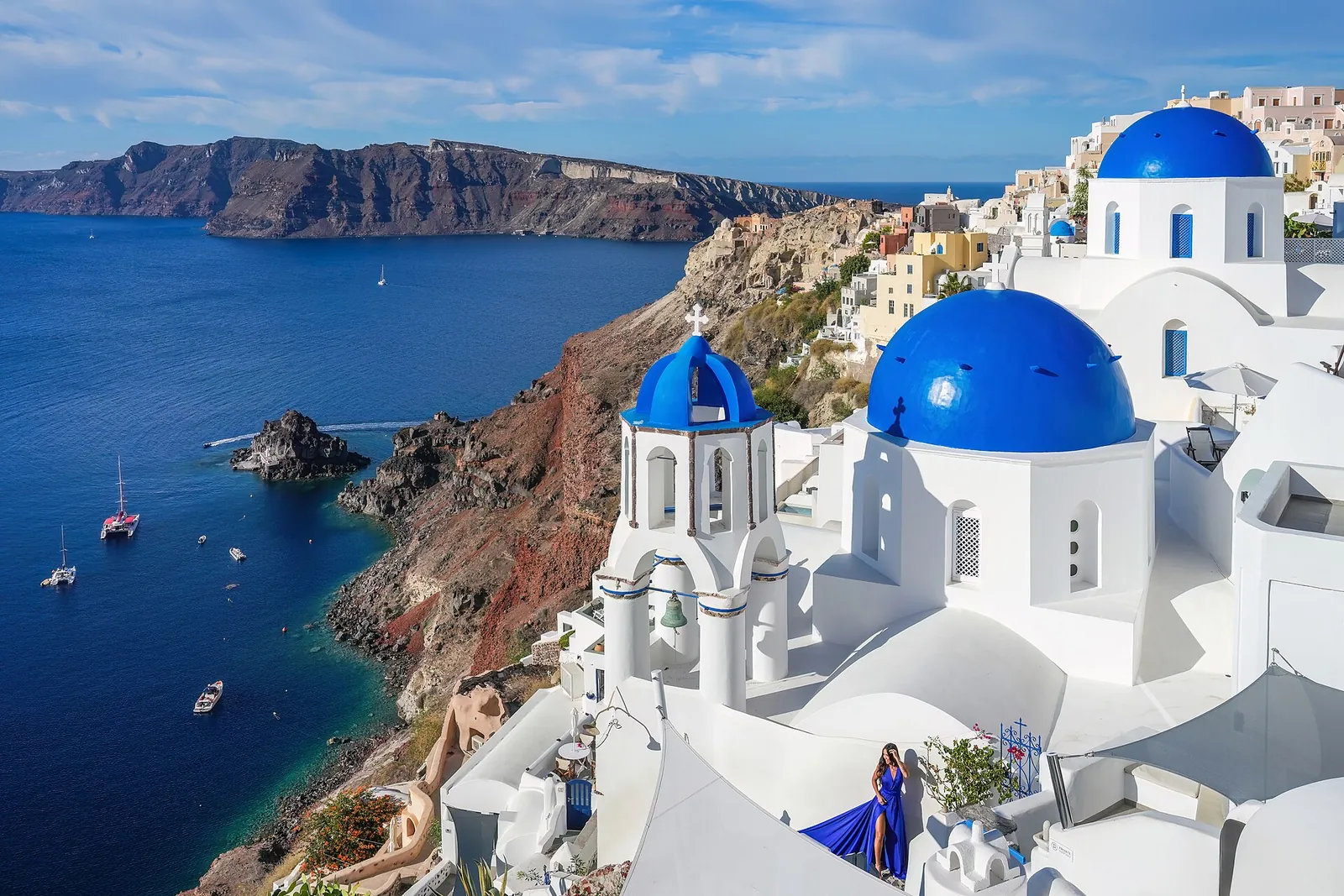
3 Days in Santorini: A Day-by-Day Itinerary
A 3-day Santorini plan covering Fira, Akrotiri, Ancient Thera and Oia, with verified ticket prices, opening days, KTEL bus fares and safety tips.
- 🗓️ Trip length
- 3 days
- ☀️ Best time
- April to June, September to October
- 💰 Daily spend
- EUR 20-40 for sights and buses (rooms and meals extra)
- ✅ Facts checked
- 24 October 2026
Get ready for whitewashed villages balanced on the edge of a drowned volcano, Bronze Age frescoes that still look fresh, and sunsets that make whole crowds go quiet. This 3-day plan suits first-timers who want the famous views and the island’s deep history too, without renting a car or overplanning.
The pace is relaxed but full. You’ll use Fira as your hub, since every public bus route on the island starts and ends there. You get one day on the caldera rim, one in the prehistoric south and one for Ancient Thera and Oia. Mornings go to the sights that close mid-afternoon, and evenings stay free for sunsets.
At a glance
| Day | Area | Highlights |
|---|---|---|
| 1 | Fira, Firostefani, Imerovigli | Museum of Prehistoric Thera, Archaeological Museum of Thera, caldera path, cable car to the Old Port |
| 2 | South: Akrotiri, Perissa, Pyrgos | Prehistoric town of Akrotiri, black-sand beach, hilltop village evening |
| 3 | East and north: Kamari, Oia | Ancient Thera on its mountain, Oia lanes and sunset |
Best start days: The Archaeological Museum of Thera closes on Mondays, the Museum of Prehistoric Thera closes on Tuesdays and Ancient Thera closes on Wednesdays. Starting Day 1 on any day from Wednesday to Sunday keeps every stop open. From November to March, Akrotiri also closes on Tuesdays, so in winter don’t let Day 2 fall on a Tuesday.
Day 1: Fira and the caldera rim
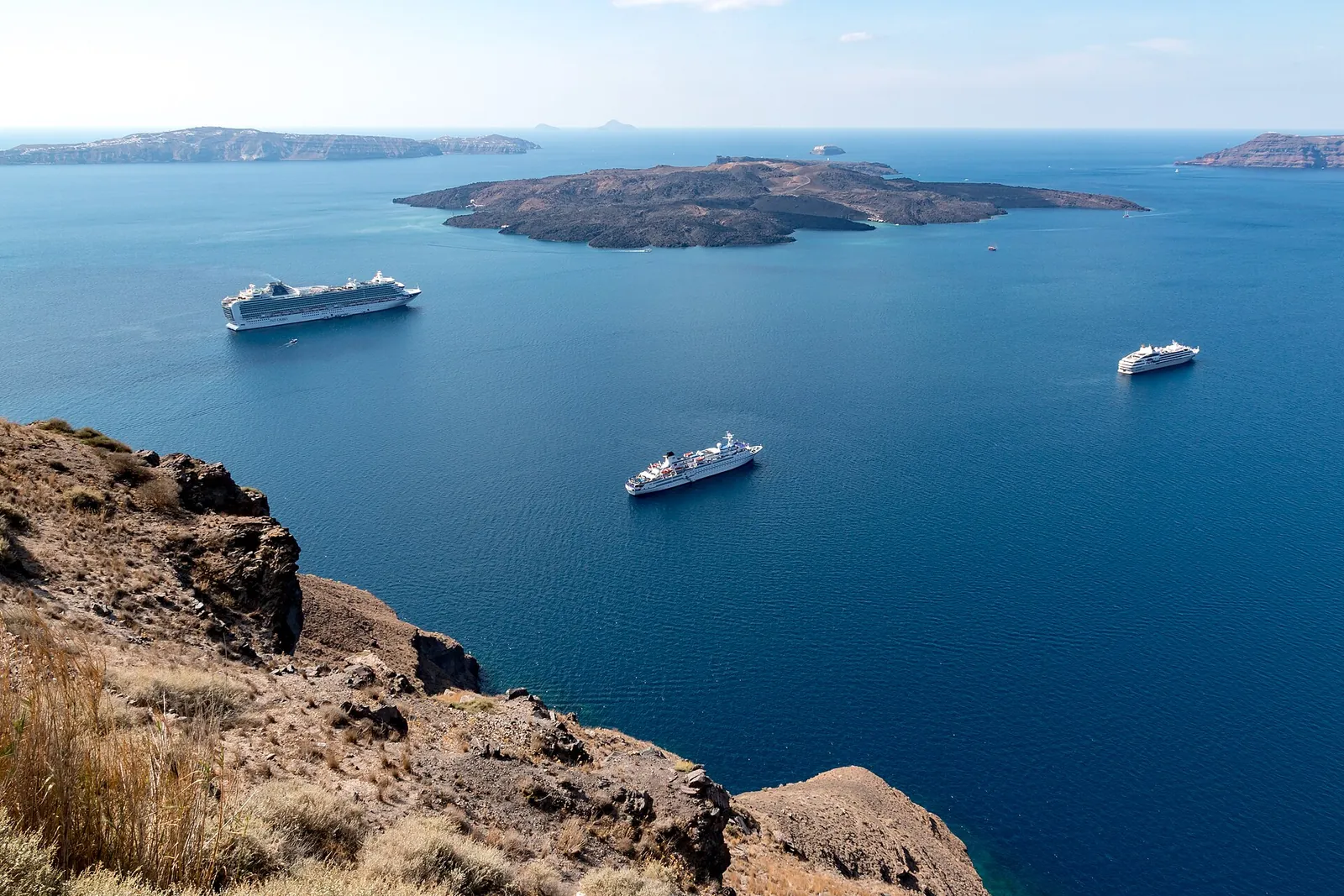
Morning
Welcome to the caldera! Start in Fira, the island’s capital, with the place that explains everything you’re about to see. The Museum of Prehistoric Thera is about 2 minutes on foot from Theotokopoulou Central Square. It shows finds from the prehistoric town at Akrotiri, including 28 wall paintings such as the famous “Fishermen” and “Saffron Gatherers”.
- Hours: 08:30-15:30 all year, closed Tuesdays. Last admission is 20 minutes before closing.
- Tickets: EUR 10 full, EUR 5 reduced. You can buy online through the official Hellenic Heritage ticket site (tickets.hh.gr).
Next, walk about 5 minutes from the square to the Archaeological Museum of Thera. It holds finds from Ancient Thera and its cemeteries, so it’s a good preview for Day 3.
- Hours: Tuesday to Sunday 08:30-15:30. From April to October it stays open until 21:00 on Saturdays. Closed Mondays.
- Tickets: EUR 10 full, EUR 5 reduced.
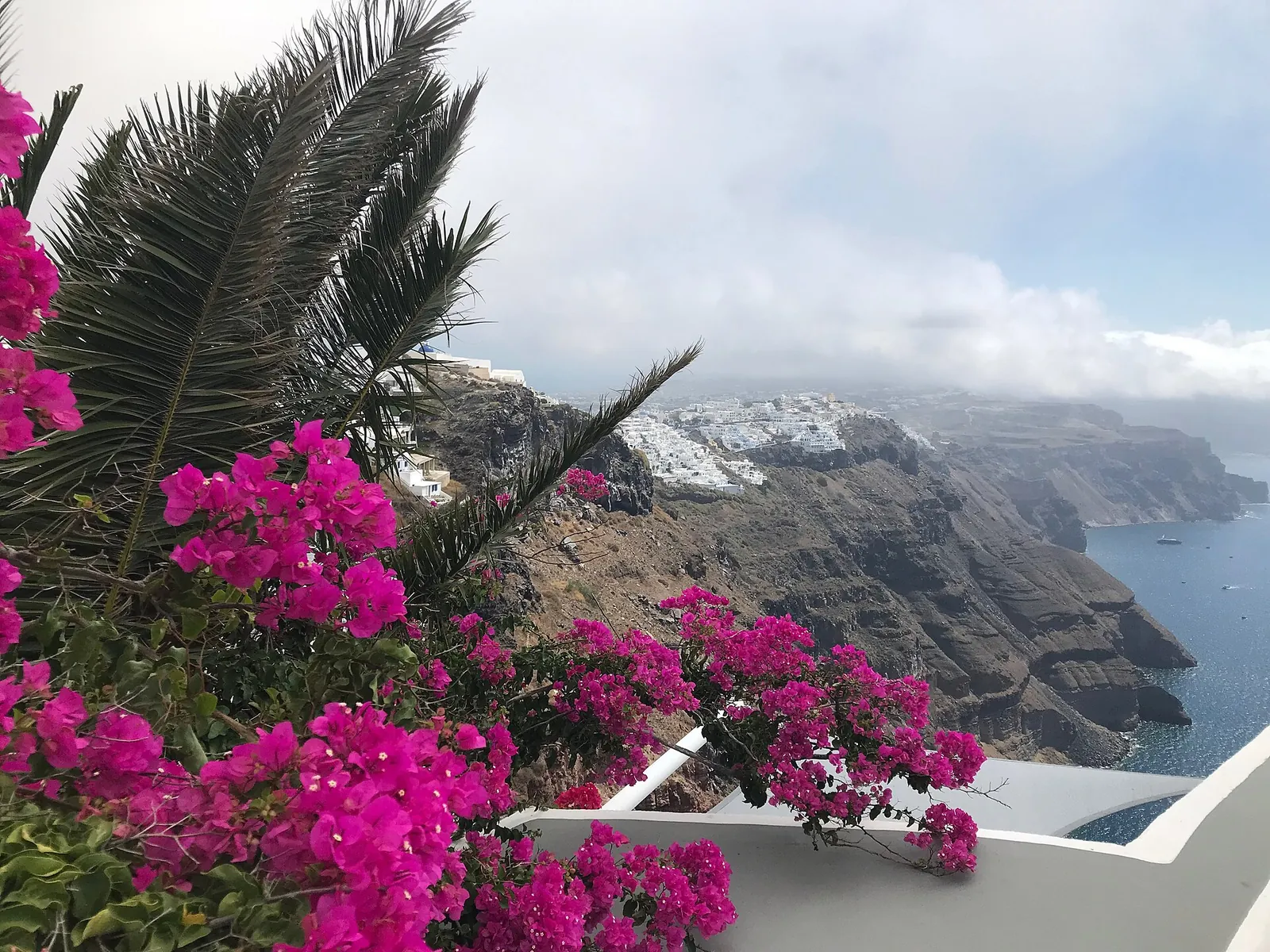
Afternoon
After lunch, follow the paved caldera path north out of Fira toward Firostefani and Imerovigli. The views over the caldera are some of the best on the island, and you can turn back whenever you like. If you’d rather save your legs, the KTEL bus links Fira with Imerovigli and Firostefani.
Feeling adventurous? Ride the Santorini Cable Car down to the Old Port and back up. The operator says the trip takes about three minutes.
- Fare: EUR 10 one way for adults and EUR 5 reduced (children aged 6-12 and some other groups). Children under 6 ride free. Luggage costs EUR 5. Prices are subject to change.
- Payment: cash in euros or card. E-tickets are sold on the official ticketing site (tickets.santorinicablecar.gr).
- Important: the cable car will not run from 1 December 2026 to 15 April 2027 because of scheduled upgrade works. It may reopen sooner if the works finish early, so check the official site.
Evening
Find a spot on the rim in Fira or Imerovigli for sunset, then have dinner back in Fira. Since Fira is the transport hub, you’ll have the shortest trip home if you stay there.
Day 2: Prehistoric south and a black-sand afternoon
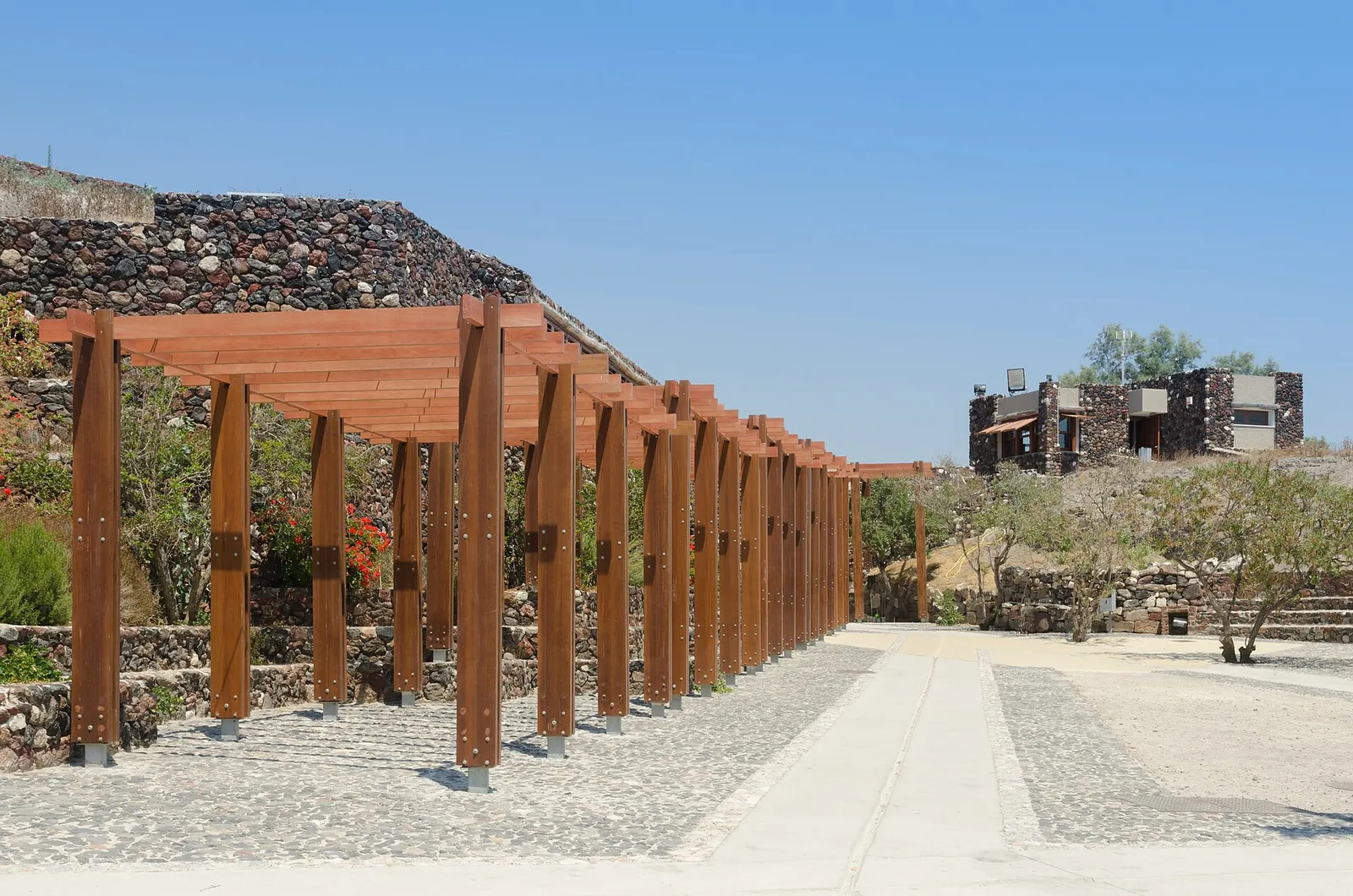
Morning
This is the day for a Bronze Age city and black sand. Take the KTEL bus from Fira toward Akrotiri. The fare is EUR 2.20 to either Akrotiri village or Akrotiri beach. Aim to arrive early, because the covered site is cooler and calmer in the morning.
The prehistoric town of Akrotiri is the highlight of the trip for many visitors: a Bronze Age town preserved under volcanic ash, where the frescoes you saw yesterday were found. Hellenic Heritage lists the site as about 30 minutes on foot from Akrotiri village.
- Tickets: EUR 20 full, EUR 10 reduced. Book a ticket on tickets.hh.gr before you go.
- Hours (they change through the year):
- 1 April to 31 August: daily 08:00-20:00, but Mondays and Thursdays 08:30-15:30
- 1 to 15 September: 08:00-19:30 (Mon and Thu 08:30-15:30)
- 16 to 30 September: 08:00-19:00 (Mon and Thu 08:30-15:30)
- 1 to 15 October: 08:00-18:30 (Mon and Thu 08:30-15:30)
- 16 to 31 October: 08:00-18:00 (Mon and Thu 08:30-15:30)
- 1 November to 31 March: 08:30-15:30, closed Tuesdays
- The site has a café, a shop, toilets and Wi-Fi.
Afternoon
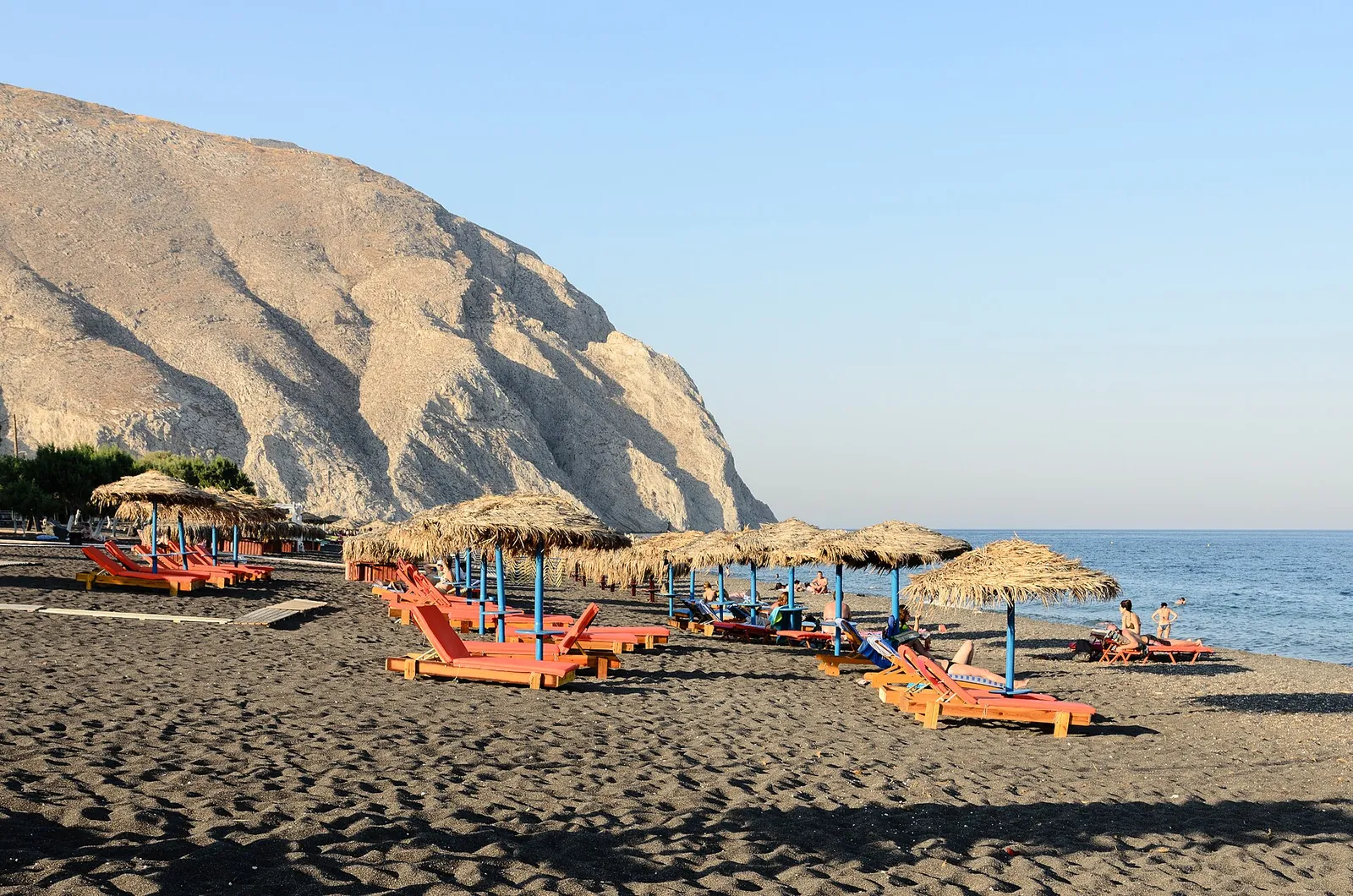
Ride back to Fira and change to the bus for Perissa and Perivolos (EUR 2.70 from Fira) for a lazy afternoon on the long black-sand beach. Buses run hub-and-spoke from Fira, so allow time for the change.
Swim only where it feels safe. Many organised beaches use flags, and a red flag means you must not go in the water.
Evening
Head to Pyrgos, a hilltop village inland (EUR 2.20 by bus from Fira). Its quiet lanes and high viewpoints make a lovely, less crowded sunset. If you’re interested in religious art, check the Hellenic Heritage site for the opening hours of the Collection of Icons and Ecclesiastical Heirlooms in Pyrgos. Afterwards, return to Fira for dinner.
Day 3: Ancient Thera and Oia
Morning
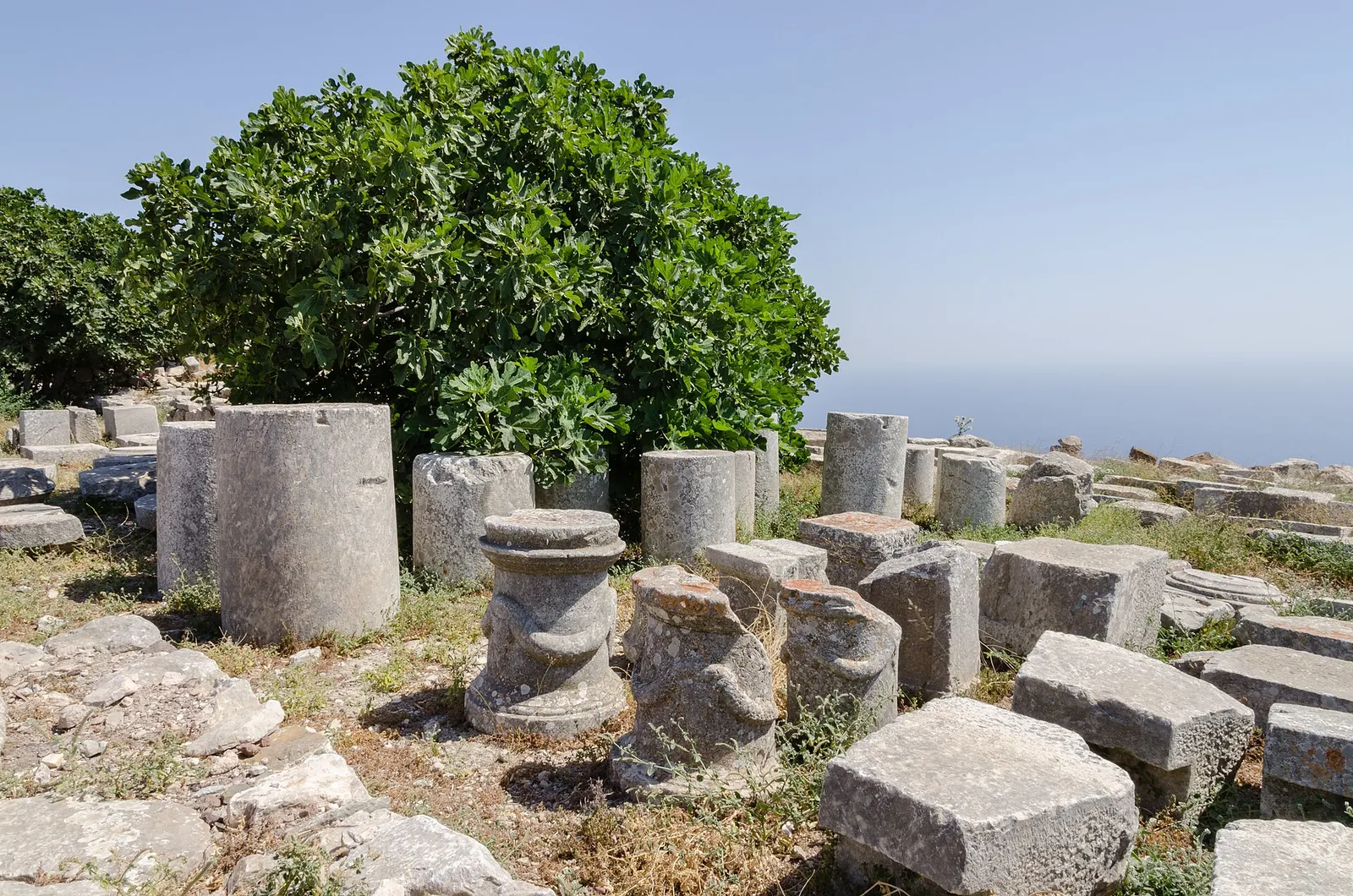
Save the best for last: take the bus from Fira to Kamari (EUR 2.20). High above the beach, on the island’s steep southeast headland, sits Ancient Thera, a city founded in the 8th century BC. Its temples, agora, theatre and streets look out over the Aegean.
- Getting up: Hellenic Heritage gives about 1 hour 10 minutes on foot from Kamari or about 10 minutes by car. The climb is steep and exposed, so go early and carry water.
- Hours: 1 April to 31 October and in March, 08:30-15:30, closed Wednesdays. In November it opens only Friday to Sunday, 08:30-15:30. From 1 December to 28 February, visits are by appointment only (+30 210 3250148).
- Tickets: EUR 10 full, EUR 5 reduced, sold on tickets.hh.gr.
Afternoon
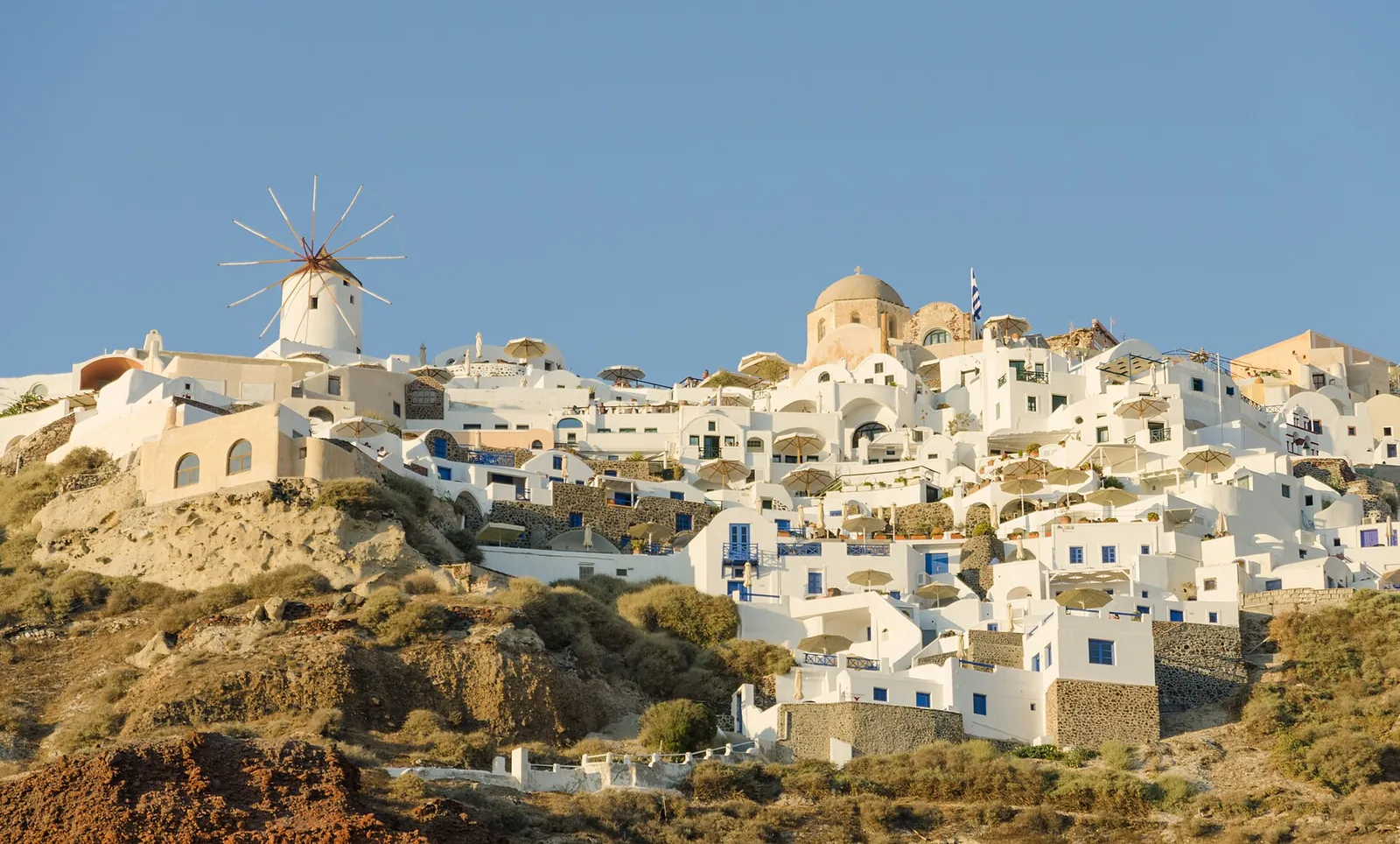
Go back down to Kamari and catch the bus to Fira, then take the bus north to Oia (EUR 2.20 from Fira). Spend the afternoon wandering the marble lanes, blue domes and old captains’ houses. If your legs are still keen, walk down the steps to the little harbour of Ammoudi below the village.
Evening
Oia’s sunset is world-famous, and the viewpoints fill up fast. Arrive well before sunset or watch from a quieter spot along the village edge. Check the last bus back to Fira on the KTEL timetable before you settle in. On the late-October timetable the last listed Fira to Oia departure is 21:00, but timetables change by season.
Getting there and getting around
Entry and visas: Greece is part of the Schengen Area. Rules depend on your passport, so check the Hellenic Ministry of Foreign Affairs visa pages at https://www.mfa.gr/en/service-category/visas/ well before you book.
From Santorini airport (JTR): KTEL Santorini runs the Fira to Kamari to Monolithos to Airport route. The fare is EUR 2.20, and KTEL says the trip from Fira takes about 10 minutes. Departures on the current timetable run roughly hourly through the day, but they change by season, so check ktel-santorini.gr. Taxi fares from the airport aren’t published on an official source we could verify, so confirm the price before you set off or book a transfer in advance.
From the ferry port (Athinios): The KTEL bus from Fira to the port costs EUR 2.70. Ferry schedules and journey times vary by operator and season, so check with your ferry company.
Cruise passengers: Ships anchor below Fira at the Old Port. The cable car (EUR 10 one way) is the quick way up, but remember it won’t run from 1 December 2026 to 15 April 2027.
Buses on the island: KTEL is the public bus network, and almost every route starts in Fira. The official price list shows single fares by route and no day pass. Most trips cost EUR 2.20, while Perissa and the port cost EUR 2.70. Night journeys between 00:30 and 05:00 cost 25% more. KTEL’s website also links to a one-page timetable PDF.
Car, scooter or quad? You don’t need one for this plan. If you do rent, read the quad warning in the Heads-up section first.
Where to stay
- Fira: The best base for this itinerary. Every bus route starts here, both museums are a short walk away, and there are plenty of places to eat. Choose it if you want convenience above all.
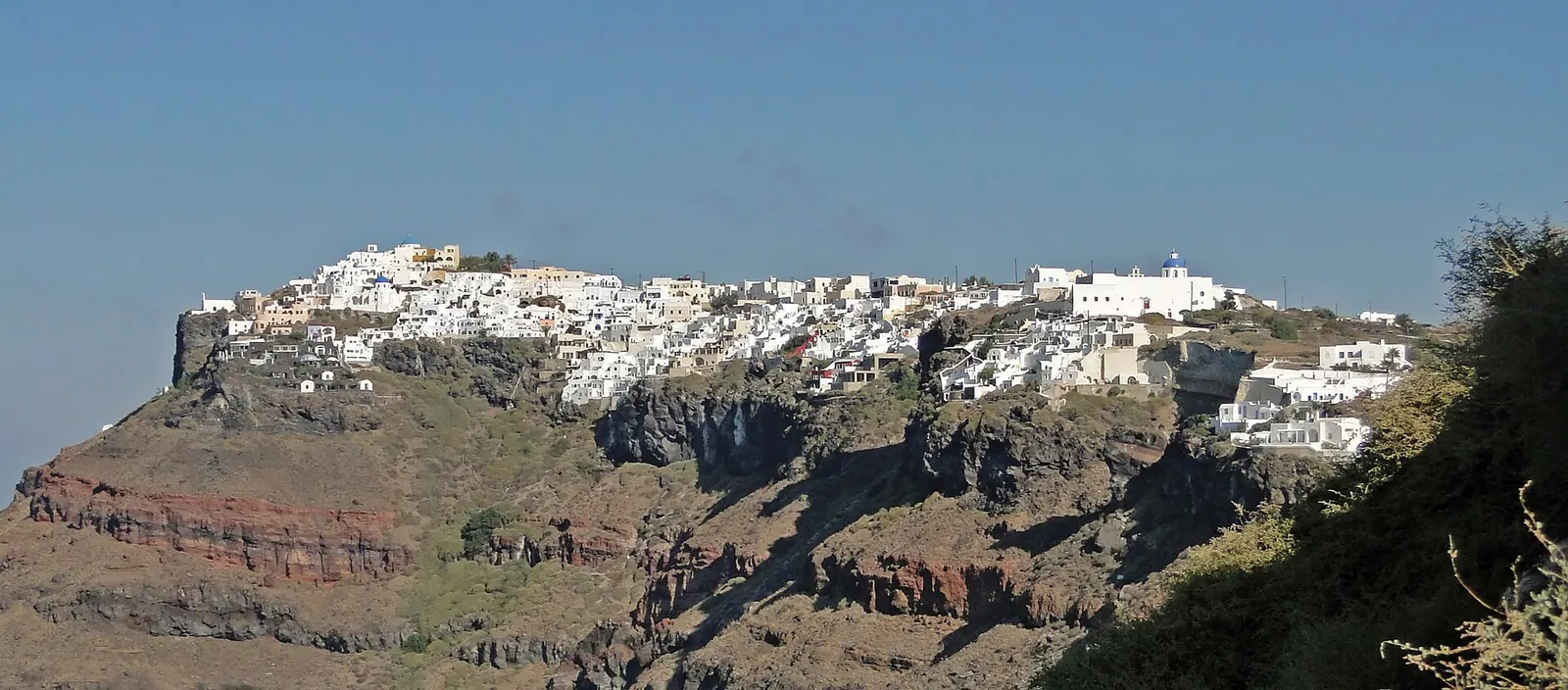
- Firostefani and Imerovigli: A little north of Fira along the caldera path, with a quieter feel and big views, and still close to Fira by bus or on foot. Great for couples and anyone after calm evenings.
- Oia: Romantic and very photogenic, but busiest around sunset and further from the southern sights. Choose it if the views matter more to you than easy logistics.
- Kamari or Perissa: Black-sand beach villages on the east coast, a good choice for families and beach lovers. Kamari is the starting point for Ancient Thera.
Budget
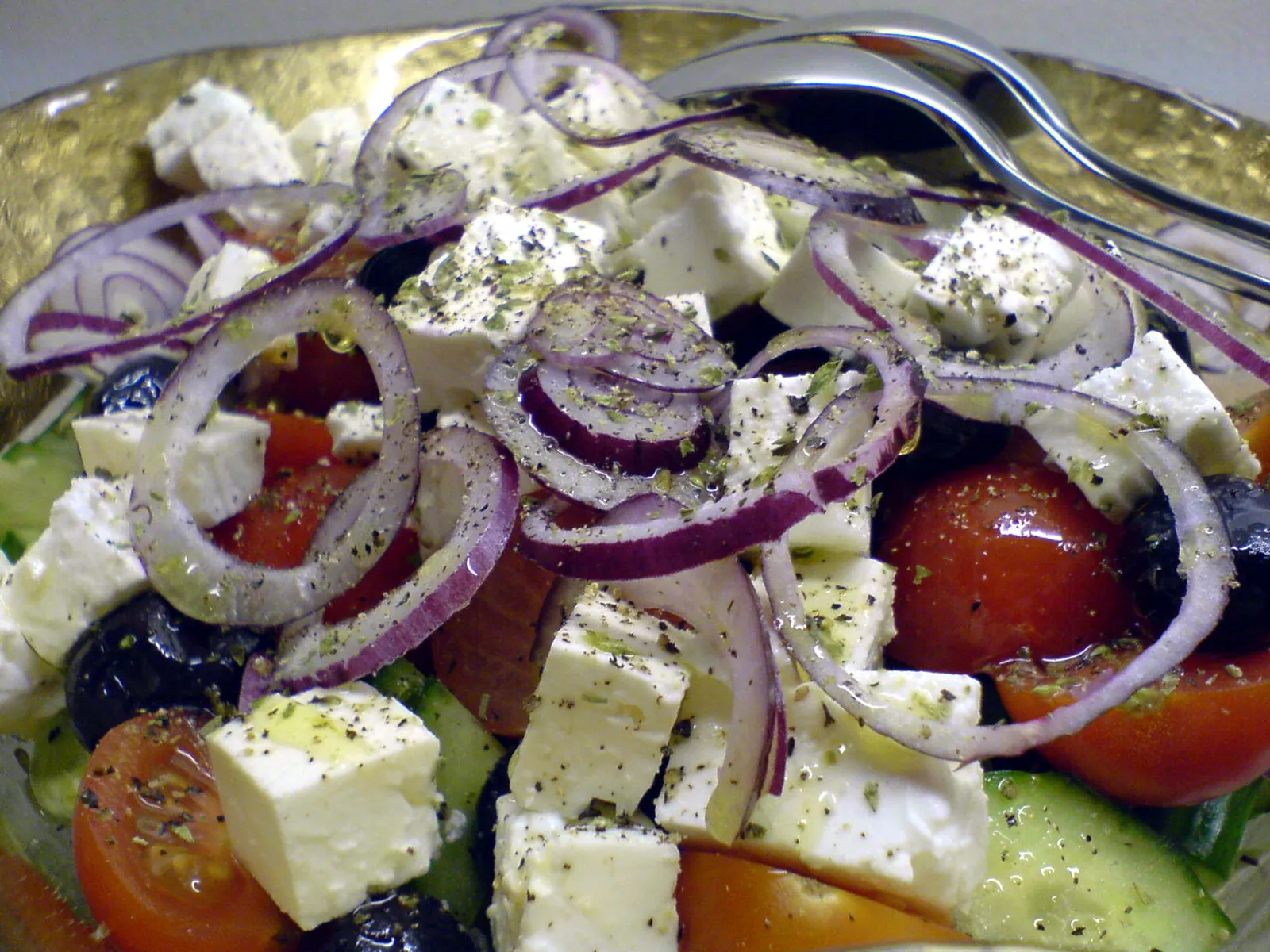
The figures below come from official operator and Ministry of Culture sources. The frontmatter range (EUR 20-40 a day) covers only sightseeing tickets and buses for this plan. It doesn’t include accommodation, food, taxis, boat trips or flights. Prices for those vary a lot by season, so check current offers.
| Item | Typical cost |
|---|---|
| Akrotiri prehistoric site | EUR 20 (reduced EUR 10) |
| Museum of Prehistoric Thera | EUR 10 (reduced EUR 5) |
| Archaeological Museum of Thera | EUR 10 (reduced EUR 5) |
| Ancient Thera | EUR 10 (reduced EUR 5) |
| Cable car, one way | EUR 10 (reduced EUR 5, luggage EUR 5) |
| KTEL bus: Fira to Oia, Akrotiri, Kamari, Pyrgos or the airport | EUR 2.20 |
| KTEL bus: Fira to Perissa or Athinios port | EUR 2.70 |
| Night bus surcharge (00:30-05:00) | +25% |
| Rooms, meals, taxis, boat tours | Varies widely, check current prices |
Money-saving tip: Admission to the four Hellenic Heritage sites above is free on 6 March, 18 April, 18 May, the last weekend of September and 28 October. It’s also free on the first and third Sunday of each month from 1 November to 31 March.
Heads-up
Santorini is a joy, and a little preparation keeps it that way. These points come from official sources:
- Seasonal closures: The cable car is shut from 1 December 2026 to 15 April 2027. Ancient Thera opens by appointment only from December to February and only Friday to Sunday in November. All four heritage sites close on 1 January, 25 March, 1 May, Easter Sunday, and 25 and 26 December.
- Heat and hiking: The UK government’s travel advice warns that trails in Greece often lack shade and markings vary. Avoid hiking in peak sun, and take a hat, sunscreen, plenty of water and proper shoes. This matters most on the caldera path and the climb to Ancient Thera. If you get into trouble, call 112.
- Wildfires: The same advice notes a high wildfire risk from April to October. Don’t leave litter (especially glass) and make sure cigarettes are fully put out. Causing a fire is a criminal offence in Greece, even by accident.
- Earthquakes: Greece has a risk of earthquakes. Turn on emergency alerts on your phone so Greek Civil Protection warnings reach you. You can find your nearest assembly point on mysafetyplan.gov.gr (in Greek).
- Quad bikes: GOV.UK reports serious injuries and deaths from quad bike accidents every year. Unless you’re experienced, we suggest skipping them, and check that your insurance covers them if you do ride.
- Taxis at night: Official advice is to use pre-arranged transport or licensed cabs, and to keep an eye on your drinks in bars.
- Bills: By law, restaurants in Greece must give you an itemised bill. Ask for one and keep receipts.
- Behaviour: Greek police can arrest people for rowdy or indecent behaviour, especially when drunk. Always carry your passport, because police may not accept a copy.
- Water sports: Only book with licensed centres, and ask for a safety briefing before you start.
Practical tips
- Dress code: Light, breathable clothes are best. Carry a scarf or light layer so you can cover your shoulders if you step into a church. Wear good walking shoes, because the lanes are steep and the marble can be slippery.
- Closing days to remember: The Archaeological Museum closes on Mondays, the Museum of Prehistoric Thera on Tuesdays, Ancient Thera on Wednesdays, and Akrotiri on Tuesdays from November to March. Most sites close at 15:30 outside summer, with last entry 20 minutes earlier.
- Pre-book: Buy timed tickets for Akrotiri and the museums on the official Hellenic Heritage ticket site (tickets.hh.gr), and buy cable car e-tickets on tickets.santorinicablecar.gr. Avoid third-party resellers.
- SIM or eSIM: An eSIM bought before you fly is the simplest option. You can also buy a SIM from a Greek mobile operator’s store, but check their ID requirements first. Akrotiri and the Museum of Prehistoric Thera list Wi-Fi among their facilities.
- Money: Greece uses the euro. The cable car takes cash or card. Carry some small euro notes and coins for buses and small cafés.
- Emergency number: 112.
FAQ
Is 3 days enough for Santorini?
Yes, for the highlights. Three days covers the caldera villages, both major archaeological sites, a beach and the Oia sunset at an easy pace. Add a fourth day if you want a boat trip or more time on the beach.
Can I do this itinerary without a car?
Absolutely. KTEL buses from Fira reach Oia, Akrotiri, Kamari, Perissa, Pyrgos, the airport and the port, with most fares at EUR 2.20. For the climb from Kamari to Ancient Thera, either walk (about 1 hour 10 minutes) or take a short taxi ride.
Which is better, Akrotiri or Ancient Thera?
They cover different eras, so both are worth seeing if you can. Akrotiri is a Bronze Age town preserved under volcanic ash. Ancient Thera is a later city on a mountaintop with sweeping views. If you only have time for one, Akrotiri is the more unusual of the two.
Does the cable car run all year?
Not this winter. The operator has announced it will not run from 1 December 2026 to 15 April 2027 because of upgrade works. Outside that period, a one-way adult ticket costs EUR 10.
When are museums and sites free?
On 6 March, 18 April, 18 May, the last weekend of September and 28 October. They’re also free on the first and third Sunday of each month from November to March.
Do I need a visa for Greece?
It depends on your passport. Greece follows the Schengen rules. Check the Hellenic Ministry of Foreign Affairs visa pages at https://www.mfa.gr/en/service-category/visas/ for the official requirements.
Sources
Prices, hours and rules change. We checked these on 24 October 2026; please confirm on the official page before you book.
- Hellenic Heritage: Akrotiri, Thera
- Hellenic Heritage: Museum of Prehistoric Thera
- Hellenic Heritage: Archaeological Museum of Thera
- Hellenic Heritage: Ancient Thera
- KTEL Santorini: Price list (Τιμοκατάλογος)
- KTEL Santorini: Routes and timetables
- Santorini Cable Car: About the Cable Car (upgrade notice)
- Santorini Cable Car: Price List (EN, PDF)
- GOV.UK: Greece travel advice, Safety and security
- Hellenic Republic, Ministry of Foreign Affairs: Visas
Photo credits (9)
- Blue domes of Oia above the shining caldera: Giles Laurent, CC BY-SA 4.0, via Wikimedia Commons
- Ships anchored in the deep blue caldera below Fira: Dietmar Rabich, CC BY-SA 4.0, via Wikimedia Commons
- Pink bougainvillea on the caldera path at Imerovigli: Zde, CC BY-SA 4.0, via Wikimedia Commons
- Sunny entrance path to the Akrotiri archaeological site: Norbert Nagel, CC BY-SA 3.0, via Wikimedia Commons
- Black-sand Perissa beach under the Mesa Vouno cliff: Norbert Nagel, CC BY-SA 3.0, via Wikimedia Commons
- Column drums and a green tree at Ancient Thera: Norbert Nagel, CC BY-SA 3.0, via Wikimedia Commons
- Oia's white houses and windmill on the cliff edge: Norbert Nagel, CC BY-SA 3.0, via Wikimedia Commons
- Imerovigli and Fira strung along the caldera rim: Bernard Gagnon, CC BY-SA 3.0, via Wikimedia Commons
- A colourful Greek salad topped with feta: cyclonebill, CC BY-SA 2.0, via Wikimedia Commons
This is a researched plan, not a personal trip report. How we research · Affiliate disclosure