
5 Days in Yellowstone and Grand Teton: A Day-by-Day Itinerary
A 5-day loop from Jackson Hole: Jenny Lake, Old Faithful, Grand Prismatic, Mammoth, Lamar Valley and Yellowstone's Grand Canyon, with 2026 fees and road dates.
- 🗓️ Trip length
- 5 days
- ☀️ Best time
- Late May to September (full road loop open)
- 💰 Daily spend
- Car-dependent: see the Budget table for verified park fees
- ✅ Facts checked
- 1 November 2026
Get ready for the wild heart of the American West. Yellowstone gives you erupting geysers, rainbow-coloured hot springs, a canyon with a 308-foot waterfall and valleys where bison, elk and wolves roam. Right next door, Grand Teton adds jagged granite peaks rising straight out of a valley floor, mirror-still lakes and some of the most photographed views in North America.
This plan is made for first-timers with a rental car who want all the headline sights without rushing every minute. It starts and ends at Jackson Hole Airport, which sits inside Grand Teton National Park, and moves your base twice so you are never driving across the whole of Yellowstone in one go. Expect early starts and a fair amount of driving: NPS notes that around 50 miles of road separate Old Faithful from the Grand Canyon of the Yellowstone.
Important for timing: this full loop only works when Yellowstone’s road network is open. In 2026, most park roads opened between mid-April and late May and closed to regular vehicles on 31 October, and the high Dunraven Pass section ran from 22 May to 12 October (NPS Park Roads). As of 1 November 2026, the NPS says only the road between Mammoth Hot Springs and the Northeast Entrance stays open to cars through winter. So plan this trip for late May to September, and check the Park Roads page for 2027 dates, which had not been published when we checked.
At a glance
| Day | Area | Highlights |
|---|---|---|
| 1 | Grand Teton: Jenny Lake | Visitor center at Moose, Jenny Lake shuttle boat, Hidden Falls and Inspiration Point, Schwabacher Landing |
| 2 | Grand Teton north to Old Faithful | Signal Mountain Summit Road, Oxbow Bend, South Entrance, Upper Geyser Basin, Old Faithful |
| 3 | Geyser country to Mammoth | Grand Prismatic overlook, Norris Geyser Basin, Mammoth Hot Springs terraces |
| 4 | Lamar Valley and the Grand Canyon | Dawn wildlife in Lamar Valley, Dunraven Pass, Artist Point, Brink of the Lower Falls, Hayden Valley |
| 5 | Yellowstone Lake and back to Jackson | Yellowstone Lake shore, West Thumb, a last look at the Tetons, fly home |
Day 1: Grand Teton and Jenny Lake
Morning
Welcome to Wyoming, and what a first day it is! Pick up your rental car at Jackson Hole Airport and head for the Craig Thomas Discovery and Visitor Center at Moose, open daily from 10 April to 31 October in 2026. Rangers there have the latest trail and wildlife news.
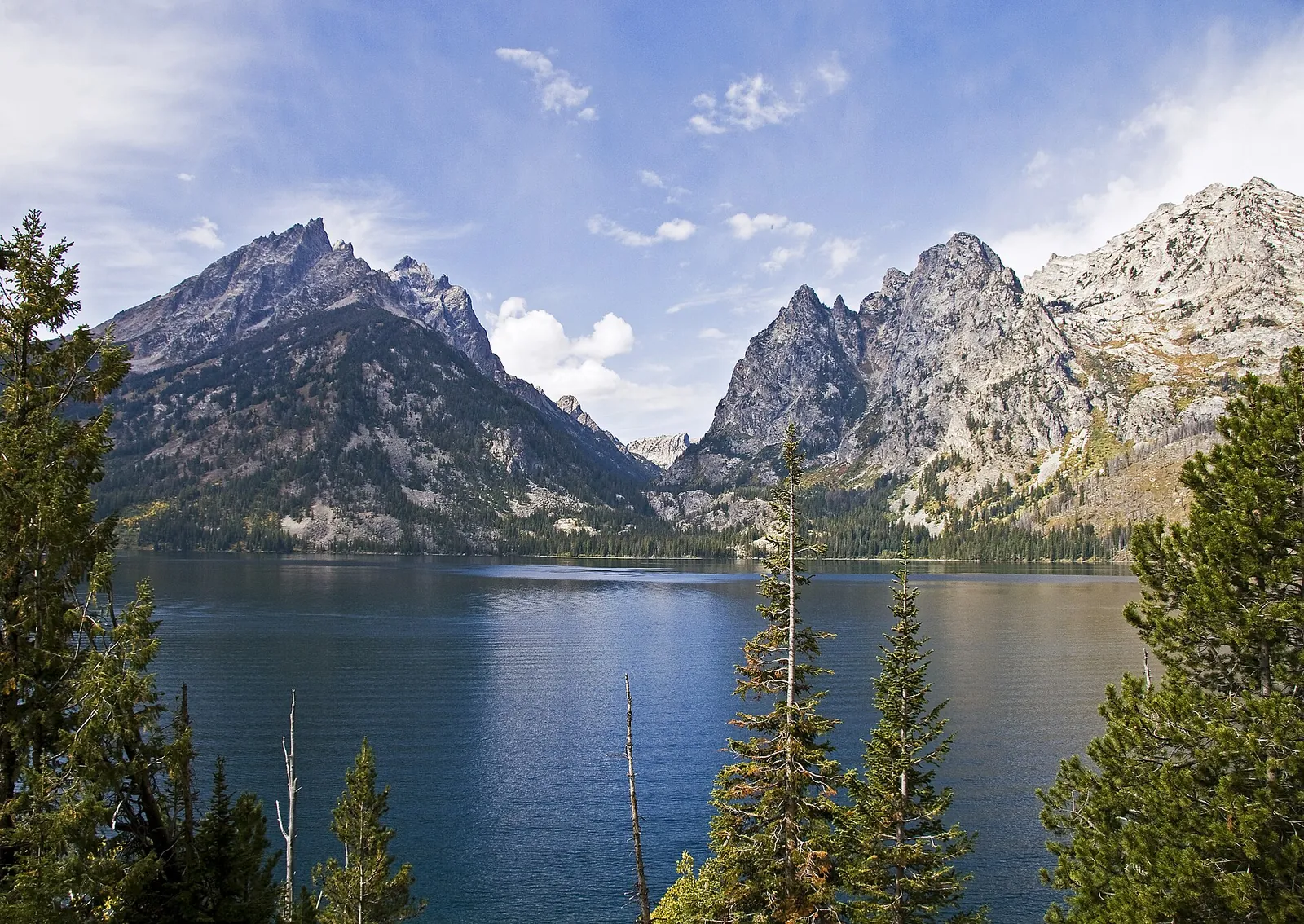
Then drive on to Jenny Lake, a glacier-carved lake at the foot of the Tetons. The star of the morning is the Jenny Lake shuttle boat, which crosses from the East Shore Boat Dock to the West Shore and saves you about 2 miles of walking each way. The NPS says boats run every 10 to 15 minutes, no reservations are taken, and you pay at the East Shore dock. The NPS page lists USD 20 for an adult round trip (ages 12 to 61), USD 17 for seniors and USD 12 for children aged 2 to 11, but it was last updated in January 2025, so confirm current fares with Jenny Lake Boating. Their 2026 season ran from 15 May to 30 September, with longest hours (7:00 am to 7:00 pm) from 6 June to 7 September. Expect queues in June to August.
Afternoon
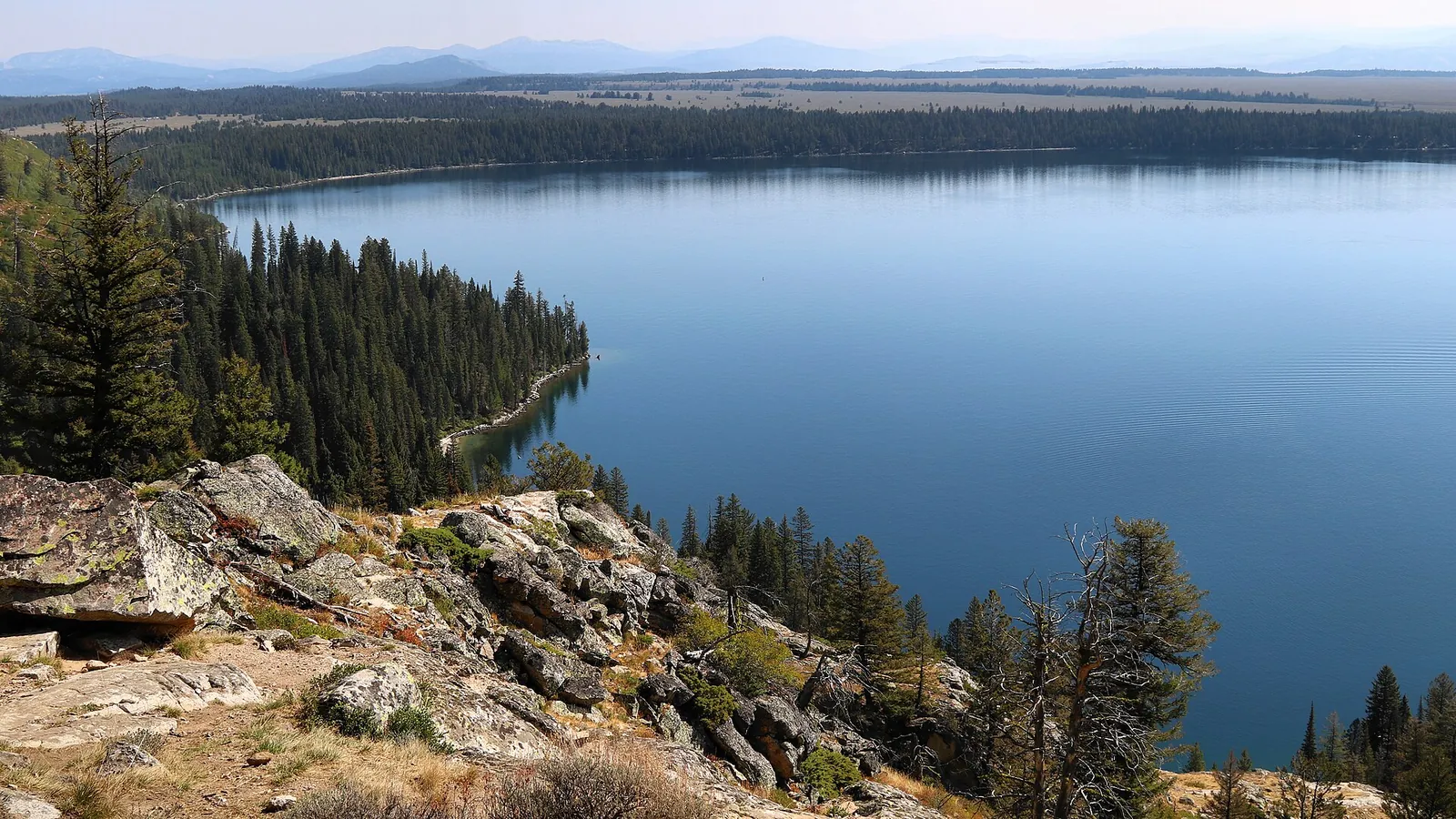
From the West Shore dock it is about half a mile to Hidden Falls, then another steep half mile up to Inspiration Point, 420 feet above the lake. With the boat, NPS rates the whole outing as 1.8 miles round trip, about 2.5 hours and 550 feet of climbing. Walking the whole way round instead is 5.7 miles and 870 feet of climbing.
Evening
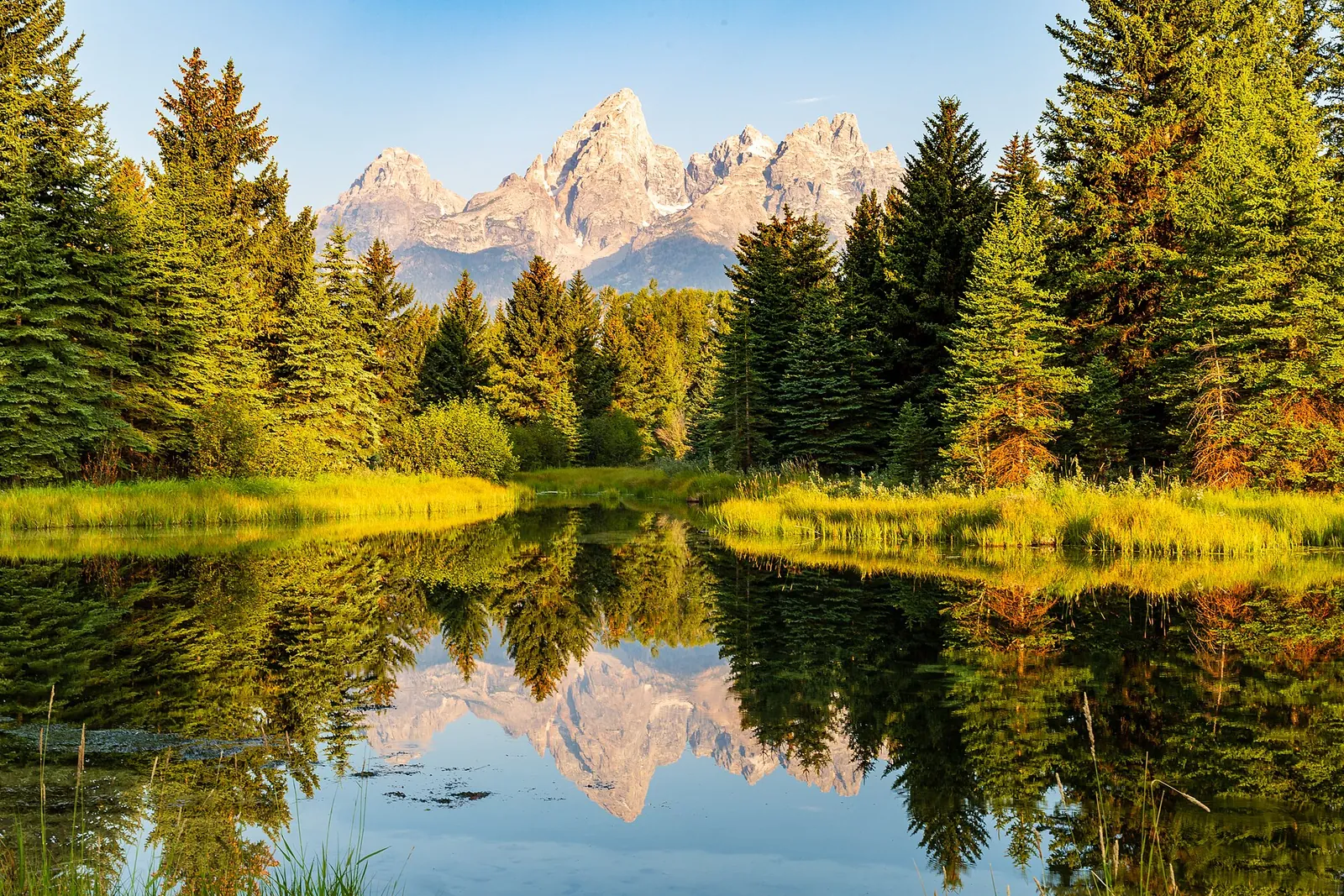
Finish at Schwabacher Landing, a side channel of the Snake River where, on calm days, the water mirrors the Teton Range. NPS notes the riparian habitat attracts moose and beavers, so scan the willows. Stay in Jackson tonight.
Day 2: North through the Tetons to Old Faithful
Morning
This is the day you trade granite peaks for geysers! Start early with the Signal Mountain Summit Road, a narrow, roughly 5-mile drive that climbs about 800 feet to panoramic views over the Teton Range, Jackson Hole and Jackson Lake. Trailers and RVs are not allowed, and the road is closed in winter.
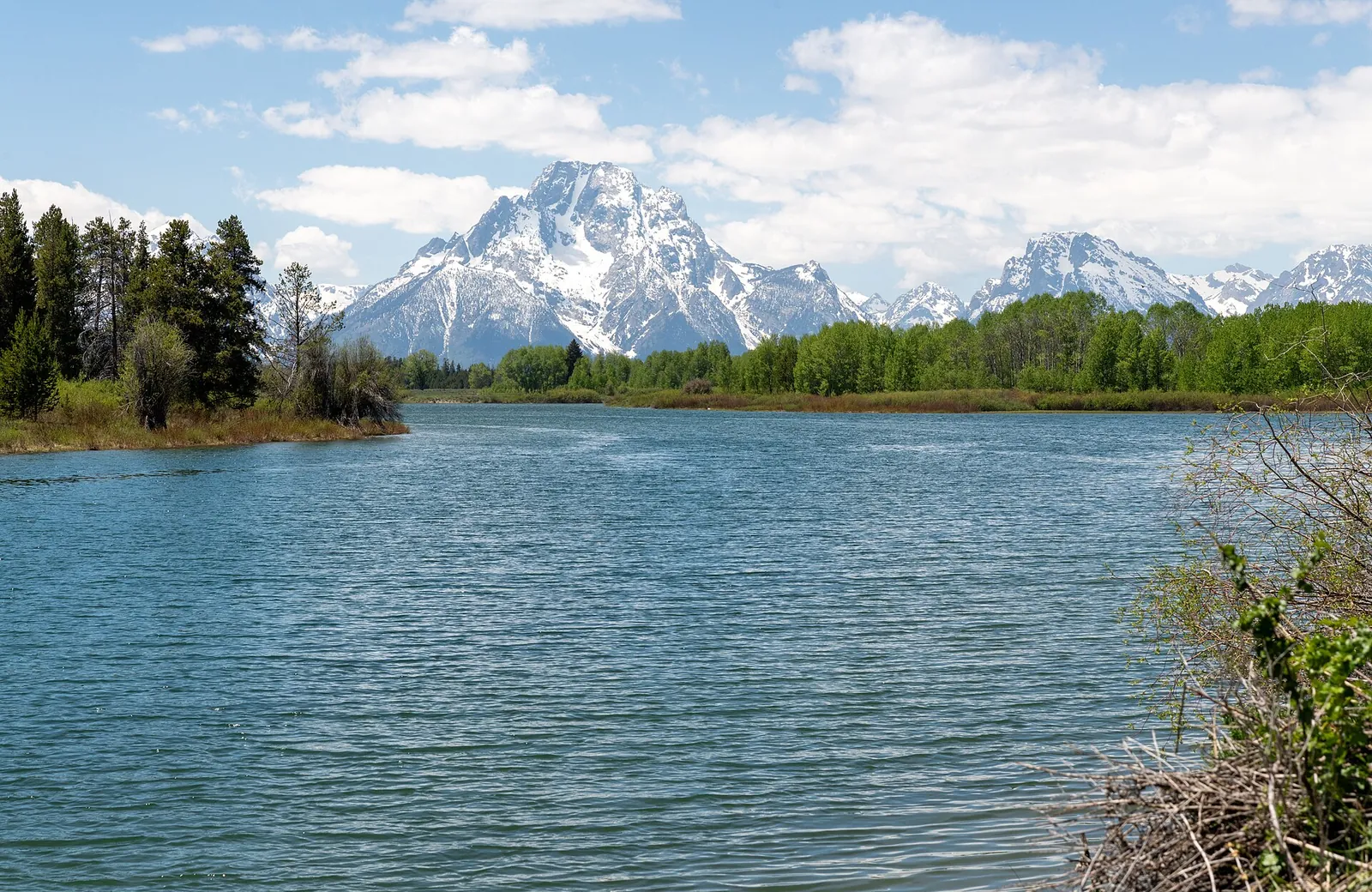
Continue north to Oxbow Bend, a paved pullout on the Snake River between Jackson Lake Junction and Moran Junction. NPS lists pelicans, herons, otters, moose and bears among the wildlife here, and it is a classic sunrise and sunset photo stop.
Then drive north into Yellowstone through the South Entrance. Remember that each park charges its own entrance fee. NPS average drive times: South Entrance to Grant Village 50 minutes, then Grant Village to Old Faithful 40 minutes, longer with wildlife jams or roadworks.
Afternoon
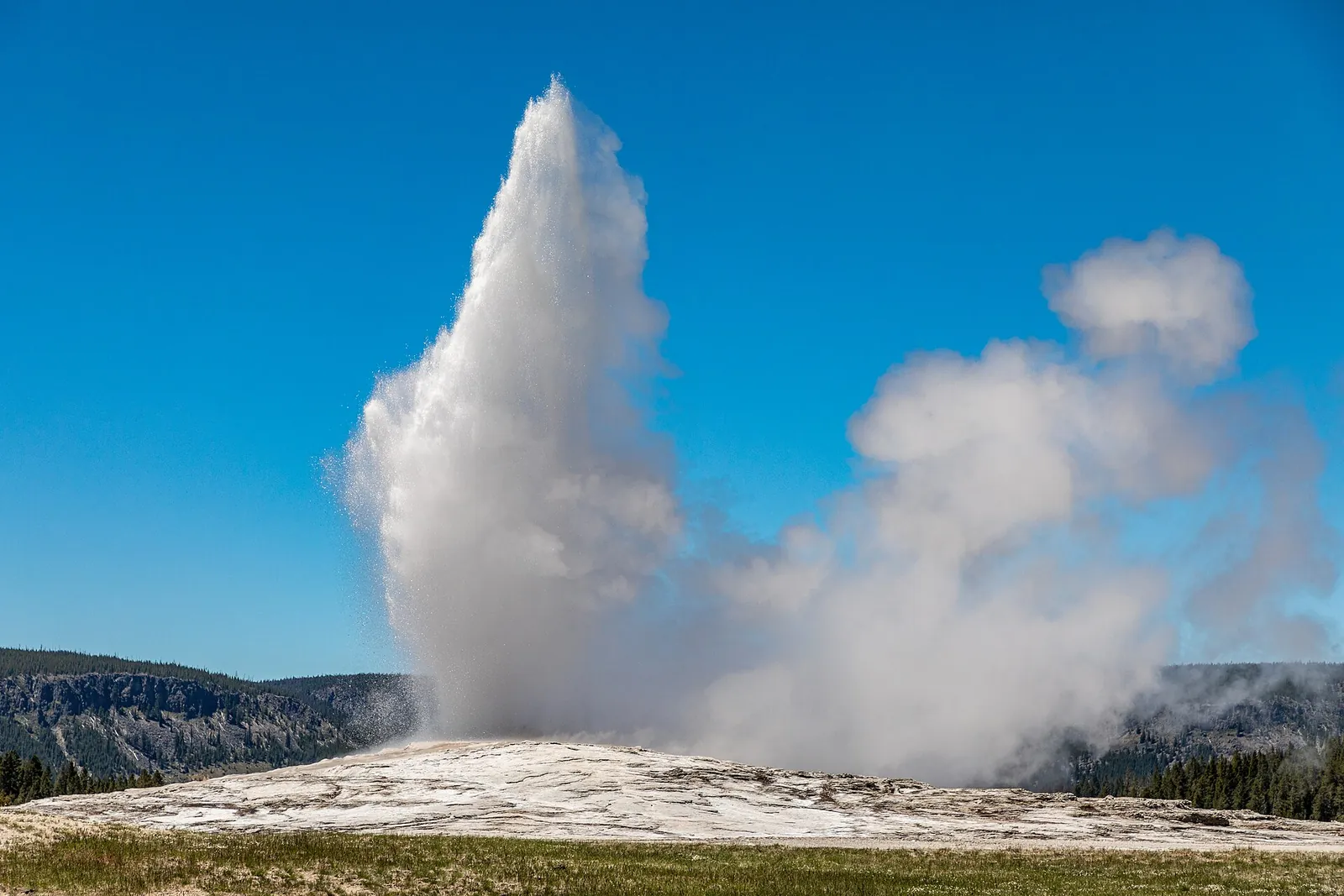
Welcome to the Upper Geyser Basin, home to about 150 geysers within a single square mile, plus hundreds of hot springs. NPS regularly predicts five big ones: Castle, Grand, Daisy, Riverside and Old Faithful. Old Faithful erupts at a median interval of about 102 minutes (plus or minus 10), with eruptions lasting 1.5 to 5 minutes and averaging 130 feet high. Check the predicted time in the NPS App, then walk the boardwalks between eruptions.
Evening
Catch an evening eruption, then stay at Old Faithful (book far ahead) or in West Yellowstone. From the West Entrance, NPS gives 30 minutes to Madison Junction and 35 to 45 minutes on to Old Faithful.
Day 3: Grand Prismatic, Norris and Mammoth Hot Springs
Morning
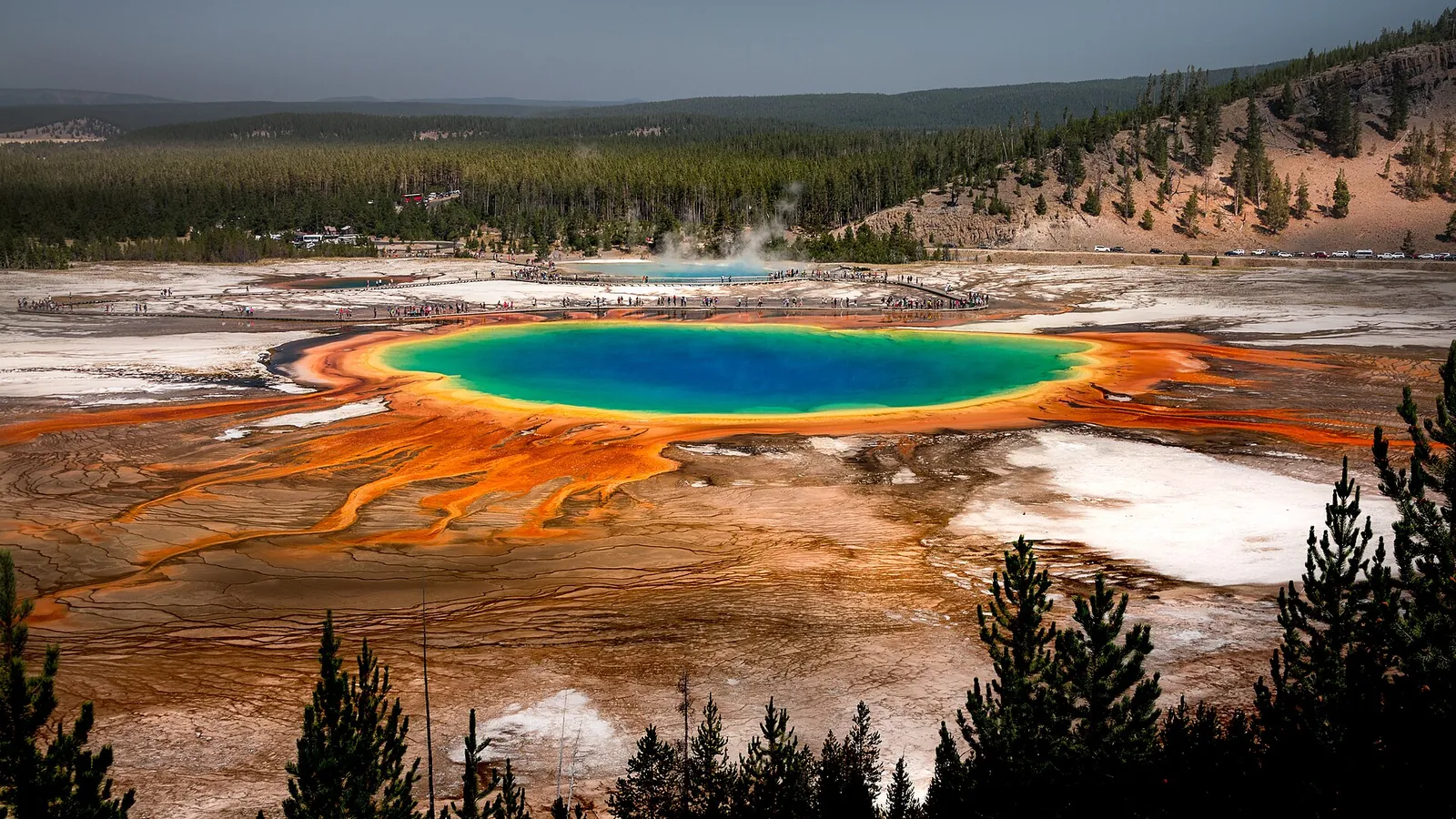
Get your camera ready for the most colourful day of the trip. Head north to Grand Prismatic Spring, Yellowstone’s largest hot spring and more than 121 feet deep. For the famous aerial-style view, park at the Fairy Falls Trailhead, about 1 mile south of Midway Geyser Basin, and walk the Grand Prismatic Overlook Trail: about 0.6 mile each way with a 105-foot climb. Parking is very limited, so arrive early. Afterwards, walk the boardwalk at Midway Geyser Basin, past Excelsior Geyser Crater, which pours more than 4,000 gallons of water a minute into the Firehole River.
Afternoon
Drive on to Norris Geyser Basin (Madison Junction to Norris Junction is about 30 minutes). Walk the 3/4-mile Porcelain Basin trail and the 1.5-mile Back Basin loop, home to Steamboat Geyser, the tallest geyser in the world. Its major eruptions reach 300 to 400 feet but are unpredictable and can be years apart, so treat a big one as pure luck.
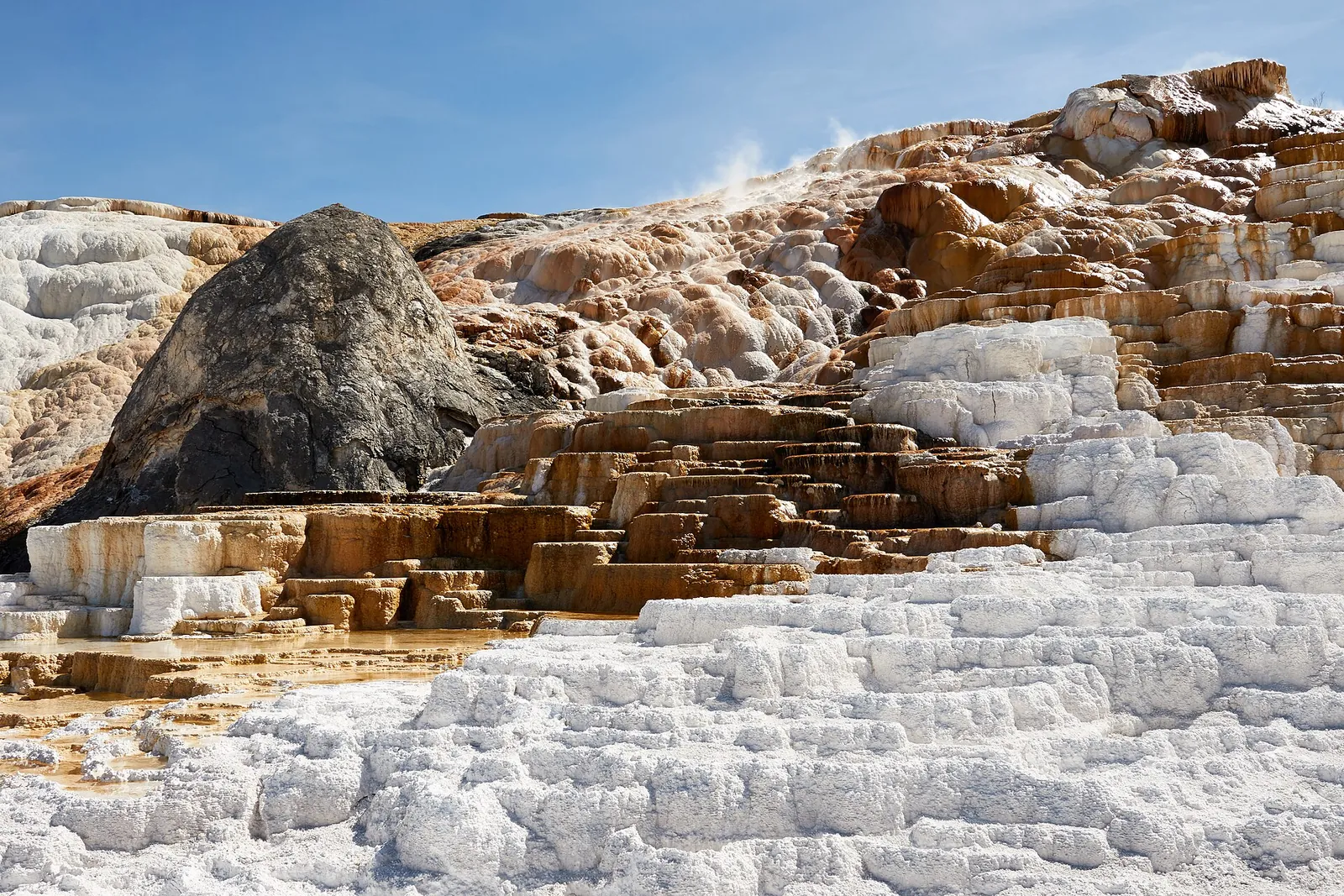
Continue to Mammoth Hot Springs (about 45 minutes). The travertine terraces change constantly, sometimes visibly within a day. Walk the boardwalks of the Lower Terraces, which include steep sections and several hundred stairs, then drive the one-way, 1.5-mile Upper Terrace Drive. Trailers, buses and motor homes are not allowed on it.
Evening
Stay in Gardiner, just outside the North Entrance, about 15 minutes from Mammoth.
Day 4: Lamar Valley and the Grand Canyon of the Yellowstone
Morning
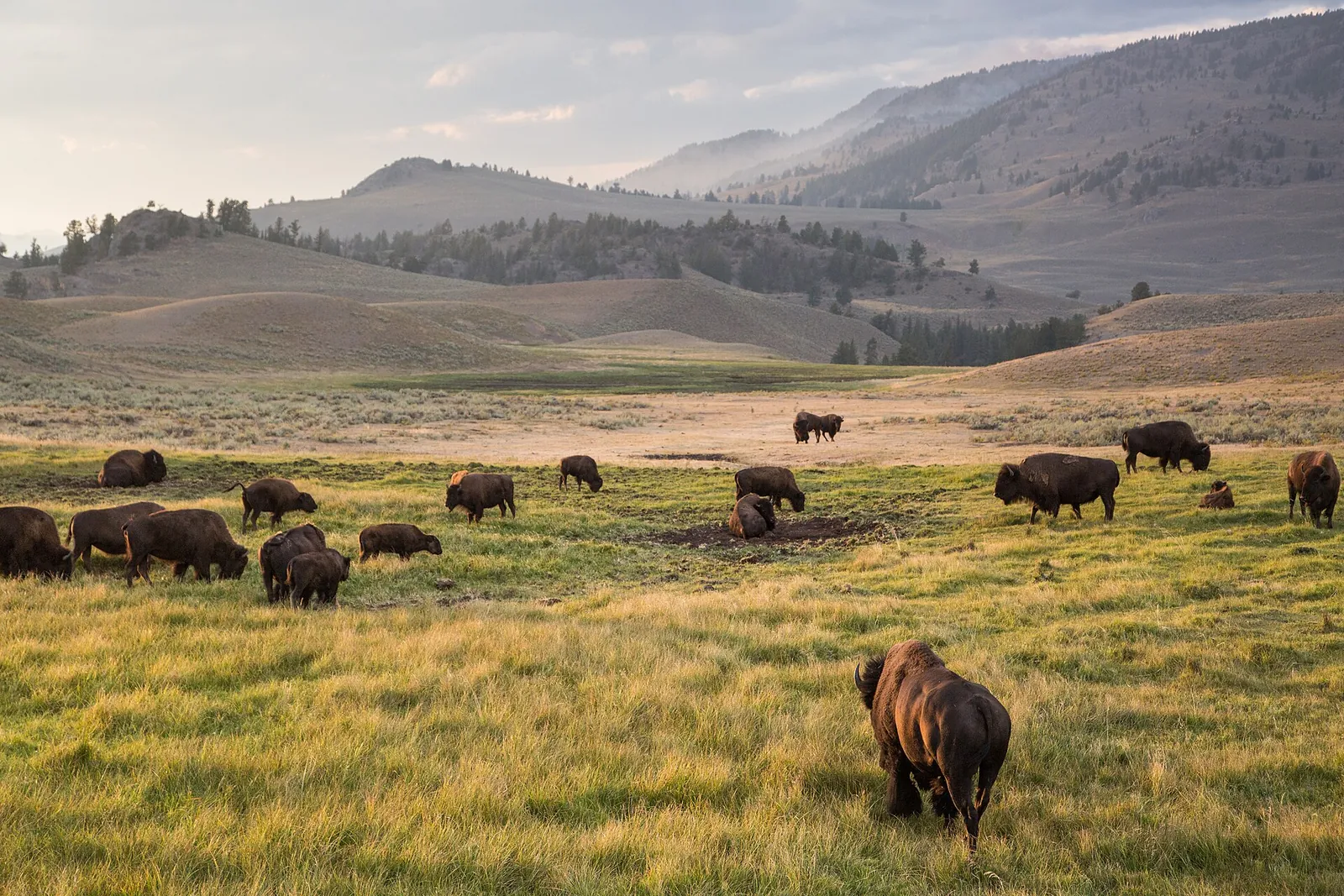
Set the alarm early: this is your big wildlife morning. Lamar Valley in the park’s northern range is one of the world’s best places to watch wolves, a famous wolf-watching spot since their reintroduction in 1995, and bison are common here. NPS says wildlife is easiest to see in early morning and evening, and wolves are most active around dawn and dusk. Mammoth to Tower Junction takes about 40 minutes; Lamar Valley lies east of Tower.
Heads-up for 2026 travellers: the Gardner River High Bridge, half a mile southeast of Mammoth on the way to Tower, has single-lane traffic with delays of up to 15 minutes from 13 April to 24 November 2026, and oversized vehicles cannot cross.
Afternoon
Drive south over Dunraven Pass to Canyon Village (Tower Junction to Canyon about 50 to 60 minutes). This high road had the shortest season on the loop in 2026, so check it is open on your dates.
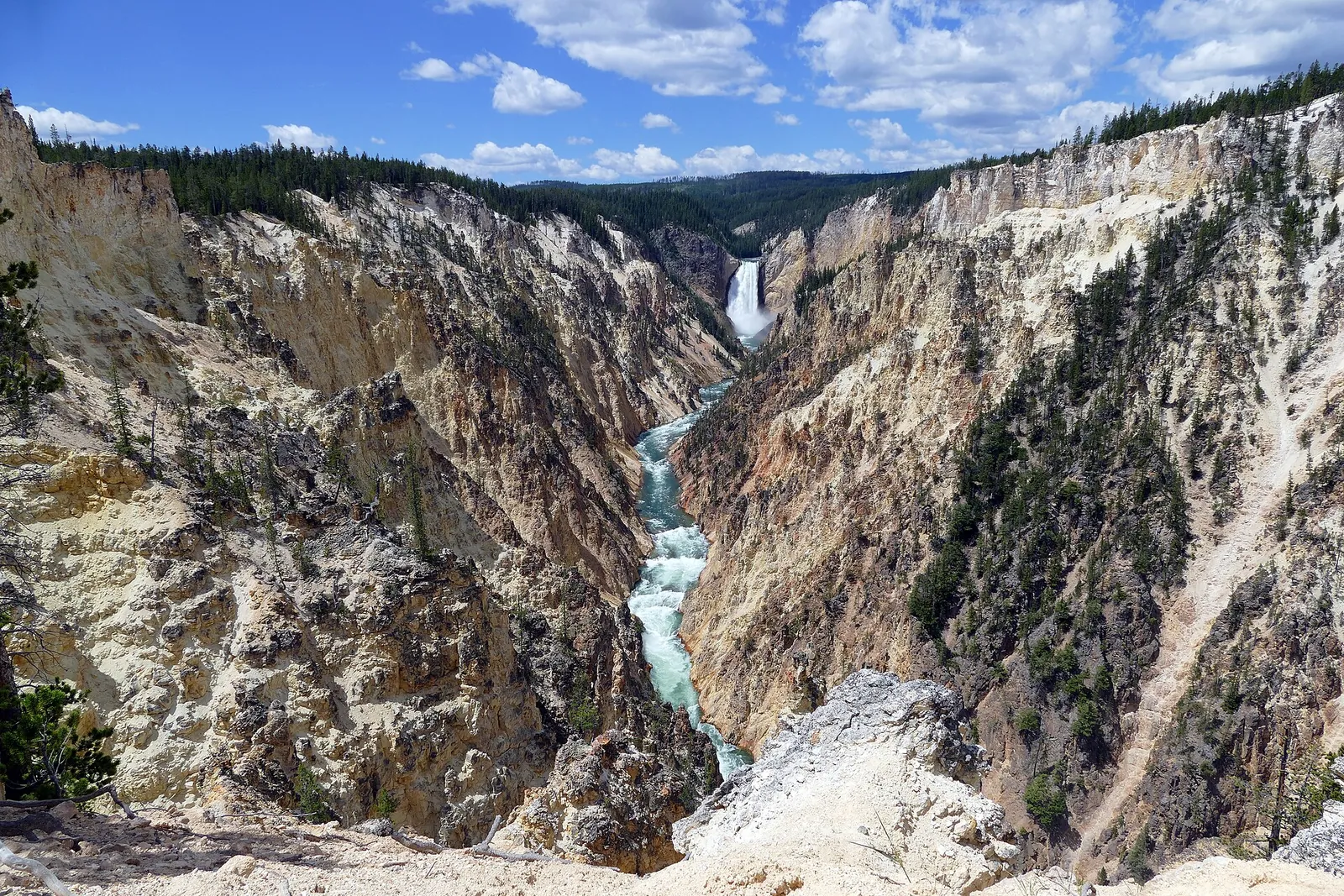
The Grand Canyon of the Yellowstone is roughly 20 miles long and more than 1,000 feet deep. Its Upper Falls drop 109 feet and its Lower Falls 308 feet. On North Rim Drive, stop at Lookout Point and the Brink of the Lower Falls. The paved paths at the top give views of both falls, while the steep trail down to the brink is not recommended for people with heart, lung or other health conditions. Then cross to South Rim Drive for the Upper Falls Viewpoints and Artist Point, a paved overlook at the end of the road with the classic view of the Lower Falls.
Evening
Drive into Hayden Valley, which begins about five miles south of Canyon Junction. NPS calls it one of the best places in the park to see large mammals: grizzlies in spring and early summer, bison herds through summer and the August rut, and coyotes almost always. Stay in the Canyon area or around Yellowstone Lake.
Day 5: Yellowstone Lake and back to Jackson
Morning
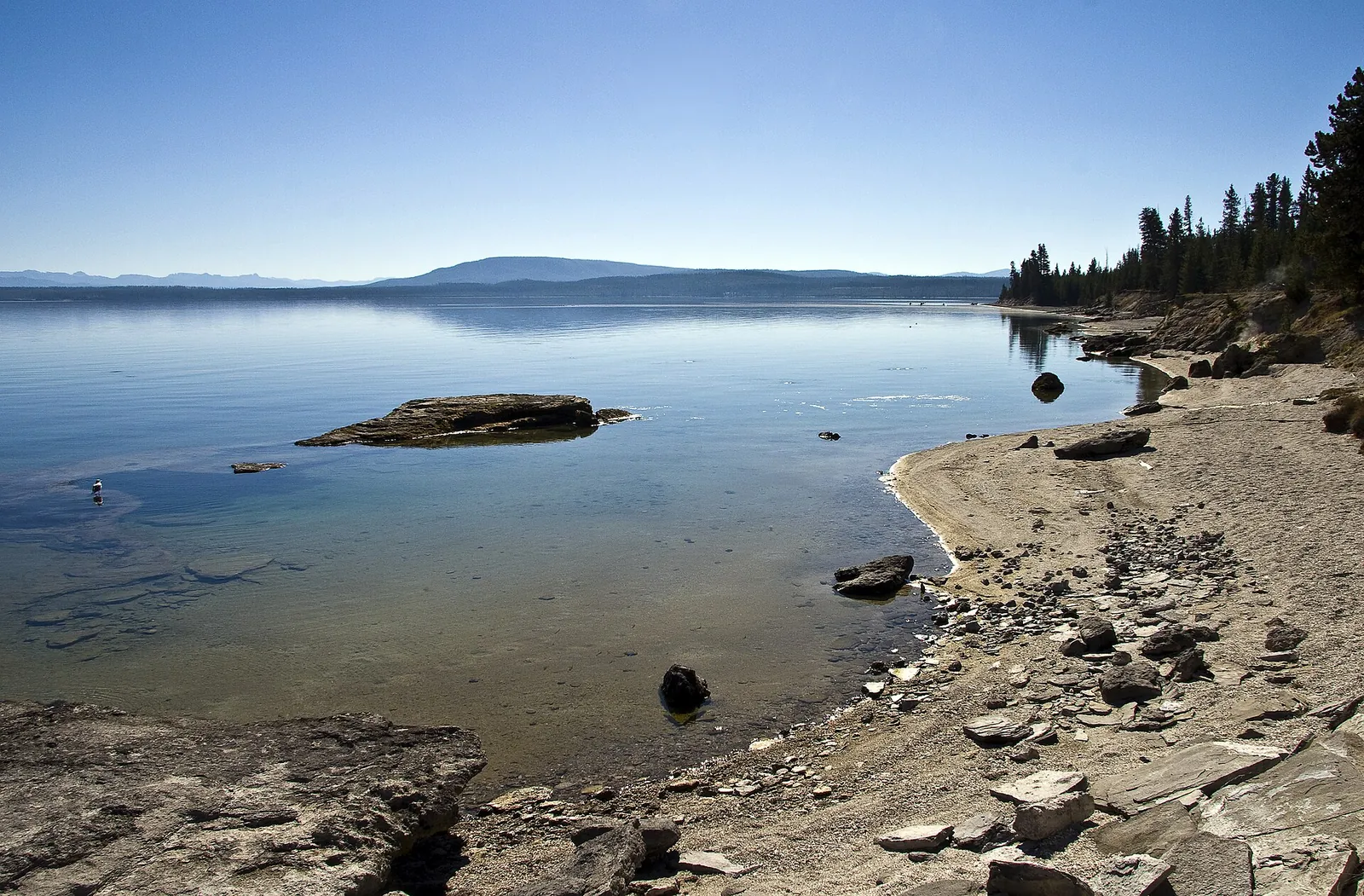
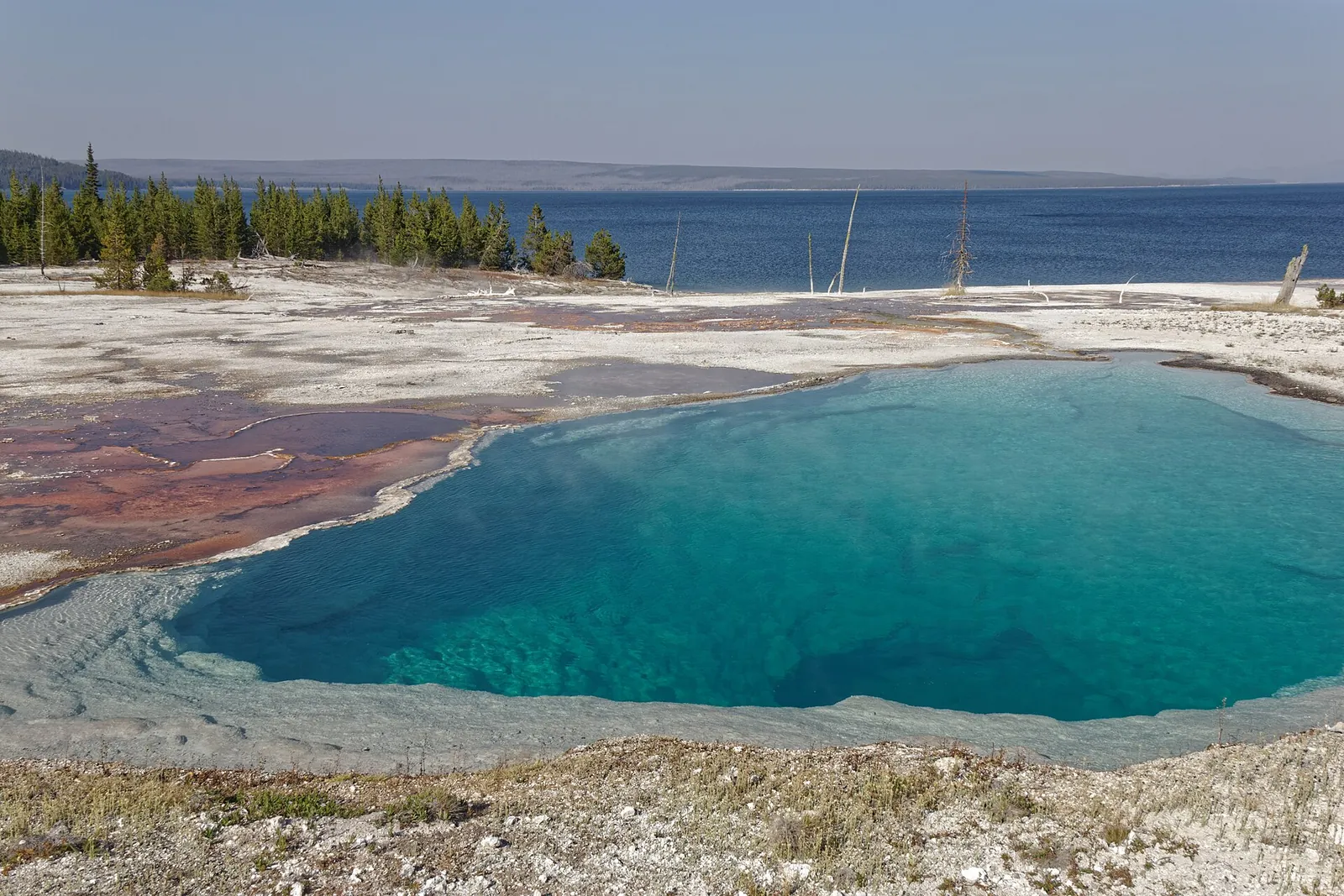
Save some wonder for the finale. Drive south to Yellowstone Lake (Canyon to Lake Village is about 35 minutes) and enjoy the huge mountain lake in the morning light. Continue along the shore to West Thumb, then on to Grant Village (Lake Village to Grant about 45 minutes).
Afternoon
Leave through the South Entrance and drive south through Grand Teton for a last look at the peaks. If you missed Oxbow Bend on Day 2, stop now. Allow plenty of time to reach Jackson Hole Airport: wildlife jams, construction and summer traffic can all slow you down, and NPS warns its drive times “may be significantly longer”.
Getting there and getting around
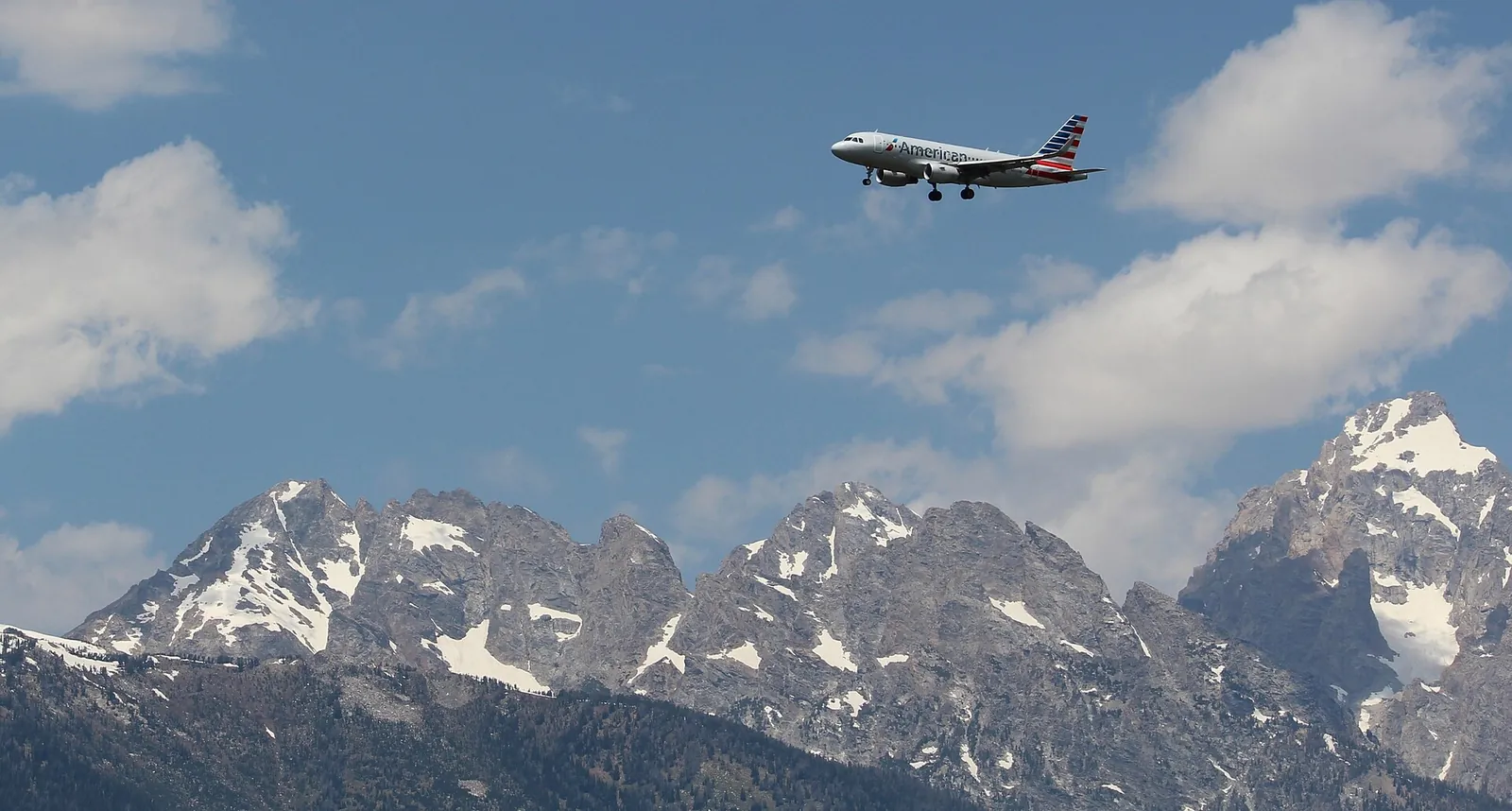
Airports. NPS lists year-round commercial flights to Jackson and Cody (Wyoming), Bozeman and Billings (Montana) and Idaho Falls (Idaho). West Yellowstone has seasonal flights from Salt Lake City from early May to mid-October. This plan uses Jackson Hole Airport, which sits inside Grand Teton National Park. The airport lists taxis, Uber and Lyft pickups and rental cars.
You need a car. NPS states plainly that public transportation is not available in Yellowstone. Buses reach some gateway towns, but none will get you around the park; private tours are the only alternative to driving.
Speed and roads. The general limit in Yellowstone is 45 mph unless posted otherwise, and traffic accidents are the most common cause of injury and death in the park, according to NPS. Grand Teton has its own works in 2026: the Moose-Wilson Road between the Rockefeller Preserve and Moose was closed to all use, with roughly 20-minute delays at the Moose Entrance roundabout and near Moran Junction during the autumn construction window.
Fuel. Yellowstone lists gas stations at Canyon, Fishing Bridge, Grant Village and Old Faithful as open 24/7.
Where to stay
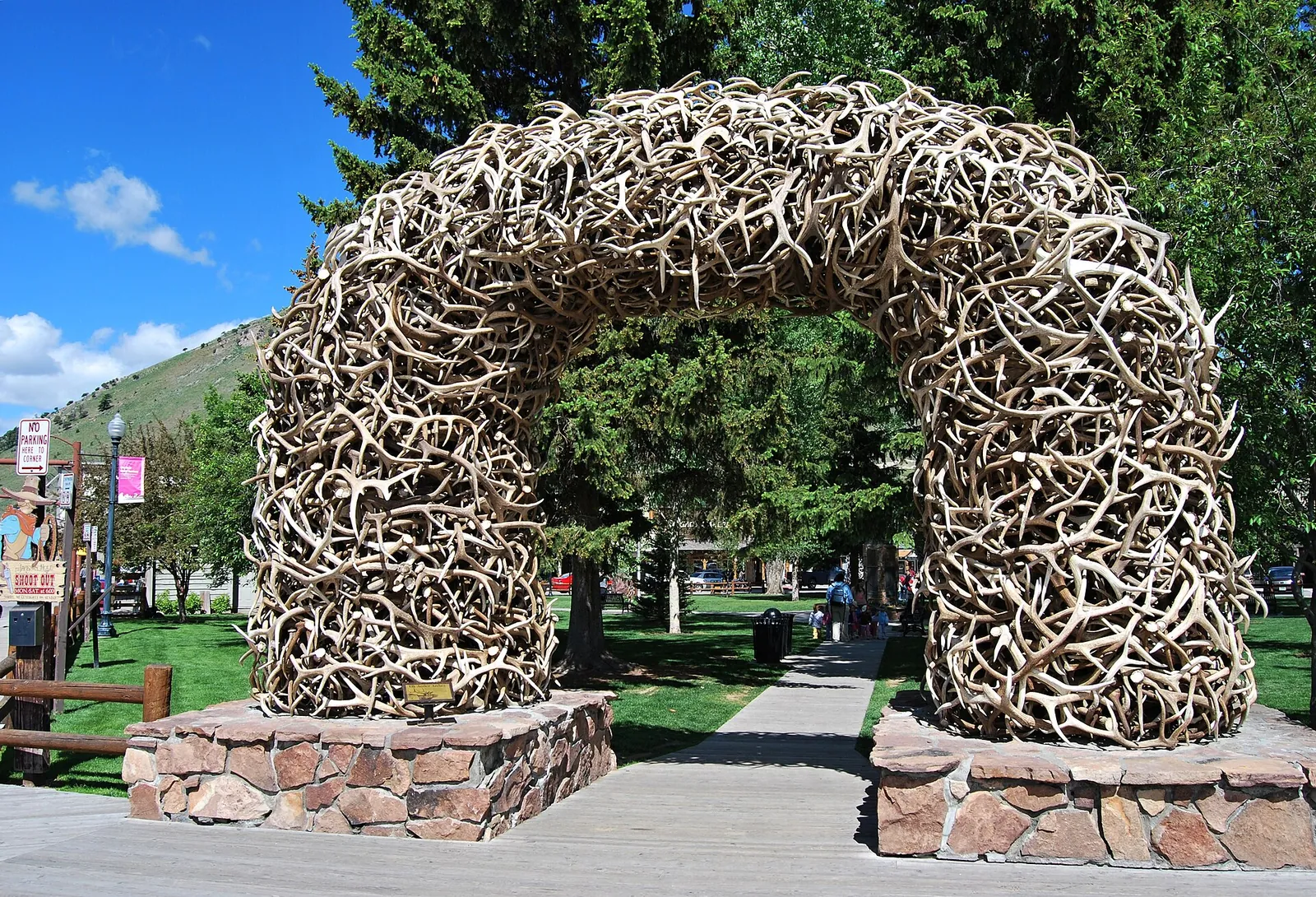
Jackson (Days 1 and 5). The biggest town on the loop, close to the airport and Grand Teton.
Old Faithful area or West Yellowstone (Day 2). Old Faithful puts you at the geysers for evening eruptions; West Yellowstone, outside the West Entrance, has more choice.
Gardiner (Day 3). A small town by the North Entrance, about 15 minutes from Mammoth Hot Springs, and the closest base for a dawn trip to Lamar Valley.
Canyon or Lake area (Day 4). Central for the Grand Canyon of the Yellowstone, Hayden Valley and the drive south. NPS stresses that all park campgrounds and lodging require reservations and are often booked well in advance, so book as soon as your dates are fixed.
Budget
These are the costs we could verify on official pages. Accommodation, fuel, food, car rental and flights are excluded.
| Item | Typical cost |
|---|---|
| Yellowstone entrance, private vehicle (7 days) | USD 35 |
| Grand Teton entrance, private vehicle (7 days) | USD 35 |
| Nonresident fee, each park (non-US residents aged 16+) | USD 100 per person, per park |
| America the Beautiful pass, US residents (annual) | USD 80 |
| America the Beautiful pass, non-US residents (annual) | USD 250 |
| Jenny Lake shuttle boat, adult round trip (NPS listing, confirm locally) | USD 20 |
| Grand Prismatic overlook, geyser basins, viewpoints | Free with park entry |
The pass maths. Yellowstone and Grand Teton are both among the 11 parks that charge non-US residents aged 16 and over a USD 100 per-person fee in 2026, on top of the vehicle fee. Two non-US adults sharing a car would pay USD 70 in vehicle fees plus USD 400 in nonresident fees for these two parks. The USD 250 Non-Resident Annual Pass covers the vehicle and the nonresident fee for the passholder plus up to three additional adults, so for international visitors it is clearly the better deal. US residents pay USD 70 in vehicle fees here, so the USD 80 annual pass only pays off if you visit another fee-charging site within the year.
Practical tips
- Book early: park lodging and campgrounds sell out well in advance. No reservation is needed to enter either park, but you do need a pass.
- Download the NPS App before you arrive: it works offline for maps, tours and Old Faithful predictions, and mobile signal is patchy across both parks.
- Geyser predictions pause when the Old Faithful Visitor Education Center is closed, typically early November to mid-December and mid-March to mid-April.
- Altitude: most of Yellowstone sits more than a mile above sea level. If you get headaches, nausea or dizziness, NPS advises descending to lower elevation.
- Driving licence: UK travellers may need a 1949 International Driving Permit depending on the state, and hire companies may require one, says GOV.UK. Other nationalities should check with their rental company.
- Entry to the USA: requirements depend on your passport. Check the US State Department visa portal at travel.state.gov, and if you travel under the Visa Waiver Program, apply for an ESTA only through the official esta.cbp.dhs.gov site.
Heads-up
Both parks are wonderful, and a few rules keep them that way for you:
- Stay on the boardwalks. NPS says people have been severely injured or killed after stepping off them in thermal areas, where the ground can give way. Swimming or soaking in hot springs is prohibited, and the Firehole River Swim Area was listed as closed in late October 2026.
- Give wildlife space. Stay at least 100 yards (91 m) from bears, wolves and cougars and 25 yards (23 m) from all other animals, including bison and elk. NPS says bison have injured more people in Yellowstone than any other animal.
- Carry bear spray and hike in groups. One can per person, in a holster you can reach fast, not inside your pack. Hike in groups of three or more and make noise: NPS reports that 91% of people injured by bears were alone or with one partner. Keep the spray out of hot cars, as it can explode at 120°F.
- Use pullouts properly. When you stop for wildlife, get all four wheels off the road. Traffic accidents cause more injuries than animals.
- Seasonal closures are real. Outside late May to early October some roads on this loop are closed, and weather can close any road at short notice. Check the NPS Current Conditions pages each morning.
- Wildfire and weather: GOV.UK advises checking forecasts before mountain drives and following any wildfire evacuation orders.
FAQ
Is 5 days enough for Yellowstone and Grand Teton?
Yes, for a first visit that covers the headline sights: Jenny Lake, Old Faithful, Grand Prismatic, Mammoth, Lamar Valley and the Grand Canyon of the Yellowstone. Add a day or two if you want longer hikes or extra wildlife mornings.
Can I visit Yellowstone in November?
Not on this route. After 31 October most park roads close to regular cars, and only the road between Mammoth Hot Springs and the Northeast Entrance stays open. From mid-December to mid-March, the interior is reached by snowcoach or snowmobile only.
Do I need a reservation to enter Yellowstone?
No. NPS says reservations are not required to enter the park in 2026, but you need an entrance pass, and all lodging and campgrounds require bookings.
Does one ticket cover both parks?
No. Yellowstone and Grand Teton each charge their own fee (USD 35 per private vehicle for 7 days). An America the Beautiful pass covers both.
When does Old Faithful erupt?
Roughly every 102 minutes on median, within a range of 54 to 118 minutes. Check the current prediction in the NPS App or at the visitor center rather than guessing.
Sources
Prices, hours and rules change. We checked these on 1 November 2026; please confirm on the official page before you book.
- Fees & Passes, Yellowstone National Park (NPS)
- Fees & Passes, Grand Teton National Park (NPS)
- Nonresident Fees (NPS)
- Park Roads, Yellowstone National Park (NPS)
- Operating Hours & Seasons, Yellowstone National Park (NPS)
- Current Conditions, Yellowstone National Park (NPS)
- Operating Hours & Seasons, Grand Teton National Park (NPS)
- Alerts & Conditions, Grand Teton National Park (NPS)
- Directions and Transportation, Yellowstone National Park (NPS)
- Directions, Grand Teton National Park (NPS)
- Old Faithful and the Upper Geyser Basin, Yellowstone (NPS)
- Grand Prismatic Overlook Trail (NPS)
- Norris Geyser Basin, Yellowstone (NPS)
- Mammoth Hot Springs Trails (NPS)
- Upper Terrace Drive (NPS)
- Lamar Valley, Wildlife Watching (NPS)
- Canyon Village and the Grand Canyon, Yellowstone (NPS)
- Grand Canyon of the Yellowstone (NPS)
- Inspiration Point, Grand Teton (NPS)
- Jenny Lake West Shore Boat Dock (NPS)
- Jenny Lake Boating (shuttle operator)
- Signal Mountain Summit Road (NPS)
- Oxbow Bend (NPS)
- Schwabacher Landing (NPS)
- Safety, Yellowstone National Park (NPS)
- Top 10 things to know about visiting Yellowstone, 2026 summer season (NPS news release)
- Transportation, Jackson Hole Airport
- USA travel advice, safety and security (GOV.UK, FCDO)
- U.S. Visas (U.S. Department of State)
Photo credits (13)
- Sunrise on the Tetons mirrored at Schwabacher Landing: Andrew Parlette from Elkridge,MD, US, CC BY 2.0, via Wikimedia Commons
- Jenny Lake with Cascade Canyon and the Teton peaks: Acroterion, CC BY-SA 4.0, via Wikimedia Commons
- Looking down on Jenny Lake from Inspiration Point: Larry D. Moore, CC BY 4.0, via Wikimedia Commons
- Mount Moran above the Snake River at Oxbow Bend: Hansueli Krapf, CC BY-SA 4.0, via Wikimedia Commons
- Old Faithful erupting under a clear blue sky: Dietmar Rabich, CC BY-SA 4.0, via Wikimedia Commons
- Rainbow rings of Grand Prismatic Spring from the overlook: Bernd Thaller from Graz, Austria, CC BY 2.0, via Wikimedia Commons
- White travertine terraces at Mammoth Hot Springs: Frank Schulenburg, CC BY-SA 4.0, via Wikimedia Commons
- A bison herd grazing in golden Lamar Valley: Neal Herbert, Public domain, via Wikimedia Commons
- Lower Falls and the Grand Canyon of the Yellowstone: Yellowstone National Park from Yellowstone NP, USA, Public domain, via Wikimedia Commons
- Calm blue Yellowstone Lake near West Thumb: Acroterion, CC BY-SA 4.0, via Wikimedia Commons
- Turquoise hot spring at West Thumb beside the lake: Dirtsc, CC BY-SA 3.0, via Wikimedia Commons
- A plane flying past the snowy Teton peaks near Jackson Hole: WikiSniki17, CC BY-SA 4.0, via Wikimedia Commons
- Elk antler arch on the town square in Jackson: Pavel Špindler, CC BY 3.0, via Wikimedia Commons
More United States itineraries
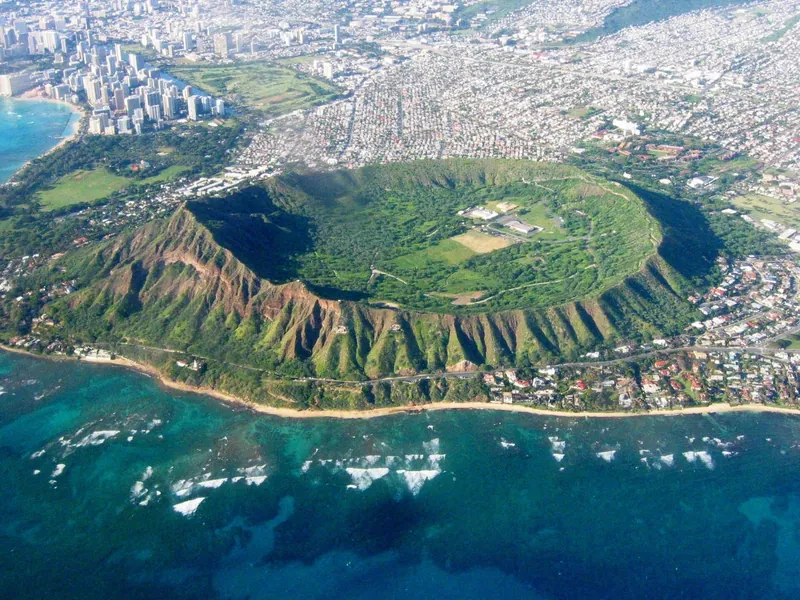 5 days
5 Days on Oahu: A Day-by-Day Itinerary
A 5-day Oahu itinerary: Waikiki and Diamond Head, Pearl Harbor, Hanauma Bay, the North Shore and Kailua, with reservation rules, bus fares and honest car-hire advice.
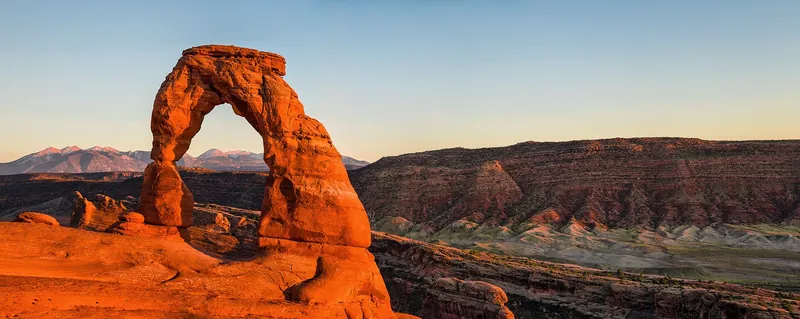 6 days
6 Days in Utah's National Parks: A Day-by-Day Itinerary
A 6-day Utah road trip from Las Vegas: Zion, Bryce Canyon, Capitol Reef, Arches and Canyonlands, with 2026 entrance fees, permits and shuttle rules.
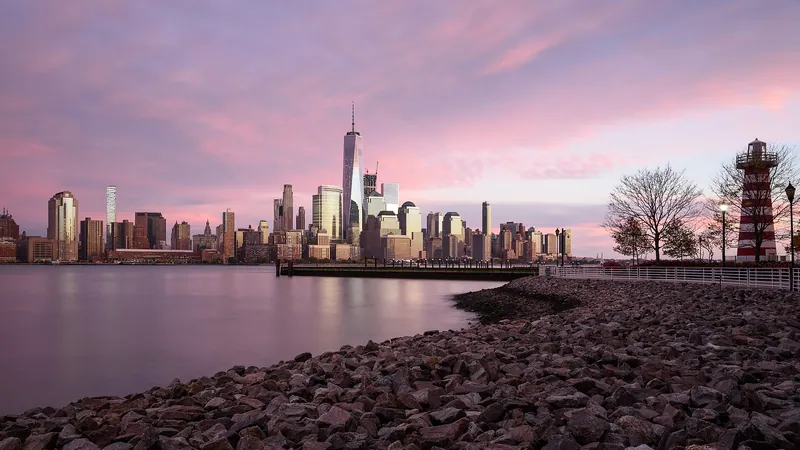 7 days
7 Days in New York City: Itinerary with a DC Day Trip
A 7-day New York City itinerary with a rail day trip to Washington DC: Statue of Liberty, the Met, Central Park, Brooklyn and the National Mall.
Compare all United States itineraries →
This is a researched plan, not a personal trip report. How we research · Affiliate disclosure