
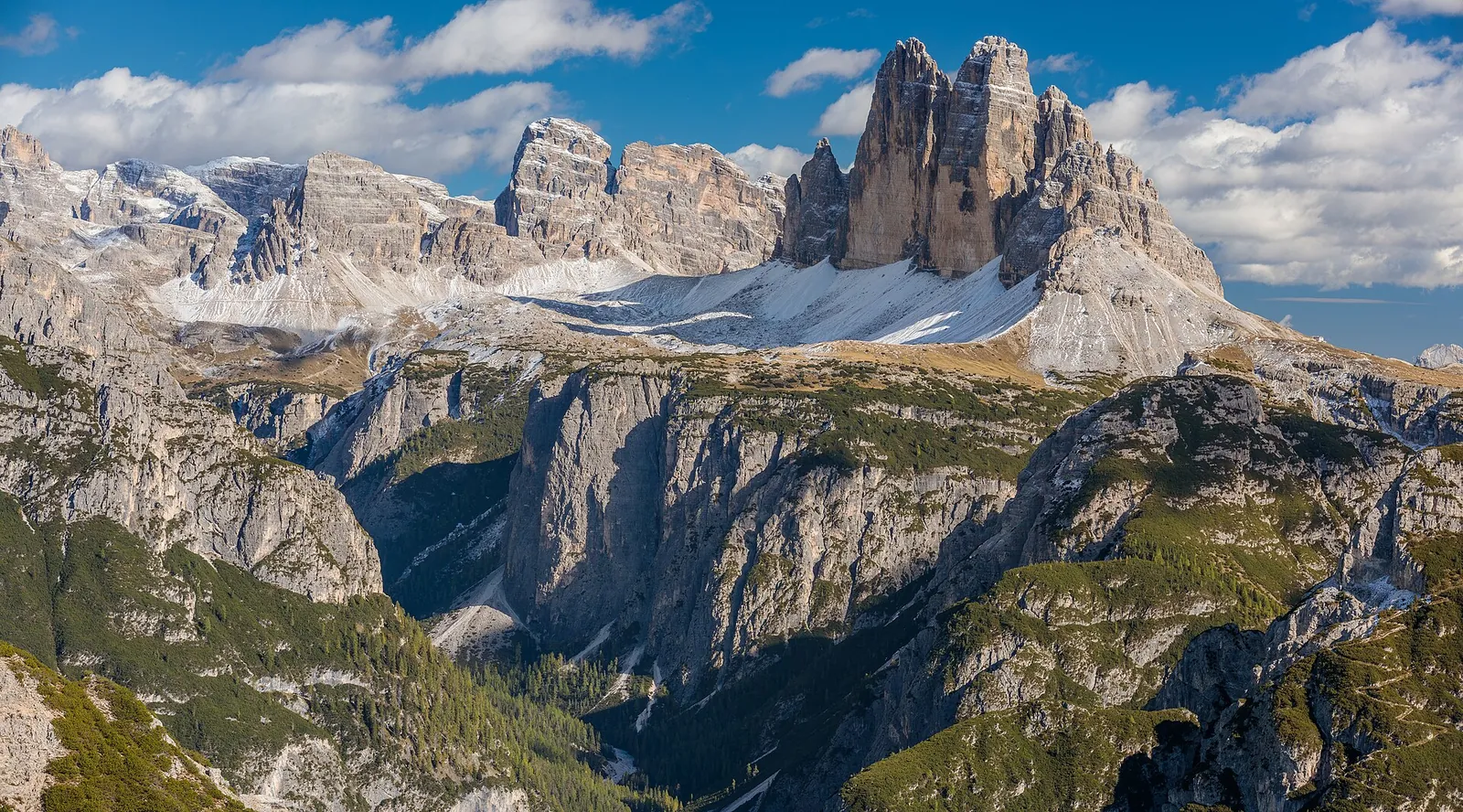
5 Days in the Dolomites: A Day-by-Day Itinerary
A 5-day Dolomites plan: Seceda and Alpe di Siusi from Ortisei, the Lagazuoi cable car on the way to Cortina, the Tre Cime loop and Lago di Braies.
- 🗓️ Trip length
- 5 days
- ☀️ Best time
- Mid-June to late September
- 💰 Daily spend
- EUR 25-80 for lifts, buses and access fees (excl. stay, meals and car hire)
- ✅ Facts checked
- 1 November 2026
Get ready for the most dramatic mountains in Europe. The Dolomites give you jagged pale peaks rising straight out of green meadows, wooden farmhouses, mountain huts serving dumplings and apple strudel, and a network of cable cars that lifts you to big views without a climb. The range is a UNESCO World Heritage Site, and it straddles two cultures: German and Ladin in South Tyrol, Italian in the Veneto around Cortina.
You are going to love this one. The plan suits first-timers who want the famous postcard views at a steady pace, with easy to moderate walks rather than technical climbs. You spend two nights in Ortisei in Val Gardena for Seceda and the Alpe di Siusi, cross the high passes to Cortina d’Ampezzo on Day 3, then use Cortina as a base for the Tre Cime loop and Lago di Braies. A car makes Day 3 much easier; the other days work well on lifts and buses.
At a glance
| Day | Area | Highlights |
|---|---|---|
| 1 | Ortisei and Seceda | Cable cars to the Seceda ridge, the Odle peaks, a walk down past mountain huts, Ortisei old town |
| 2 | Alpe di Siusi | Gondola from Ortisei to Europe’s largest high alpine meadow, flat walks with views of Sassolungo and Sciliar |
| 3 | The passes to Cortina | Passo Gardena, Alta Badia, Passo Falzarego and the Lagazuoi cable car, evening in Cortina |
| 4 | Tre Cime di Lavaredo | The classic loop around the Three Peaks from Rifugio Auronzo |
| 5 | Lago di Braies | The lake loop at the foot of the Croda del Becco, then onward travel |
Season note, please read first. Almost everything in this plan depends on lifts, mountain roads and seasonal buses. The Seceda lifts and the Alpe di Siusi gondolas ran from 22 May to 2 November 2026, the Lagazuoi cable car from 6 June to 18 October 2026, and the Tre Cime shuttle bus from Dobbiaco from 31 May to 11 October 2026. Between early November and the start of the ski season, and again in April and early May, most lifts close for maintenance and many huts and hotels shut. Late June to mid-September is the safest window for this itinerary. Dates for summer 2027 are usually published in spring, so check each operator before you book.
Booking note. Three highlights now need advance booking in summer: a time slot for the Seceda ascent, a parking slot for the Tre Cime toll road (or a seat on the shuttle), and either a parking reservation or a bus seat for Lago di Braies in July and August. Sort these out as soon as your dates are fixed.
Day 1: Ortisei and Seceda
Morning
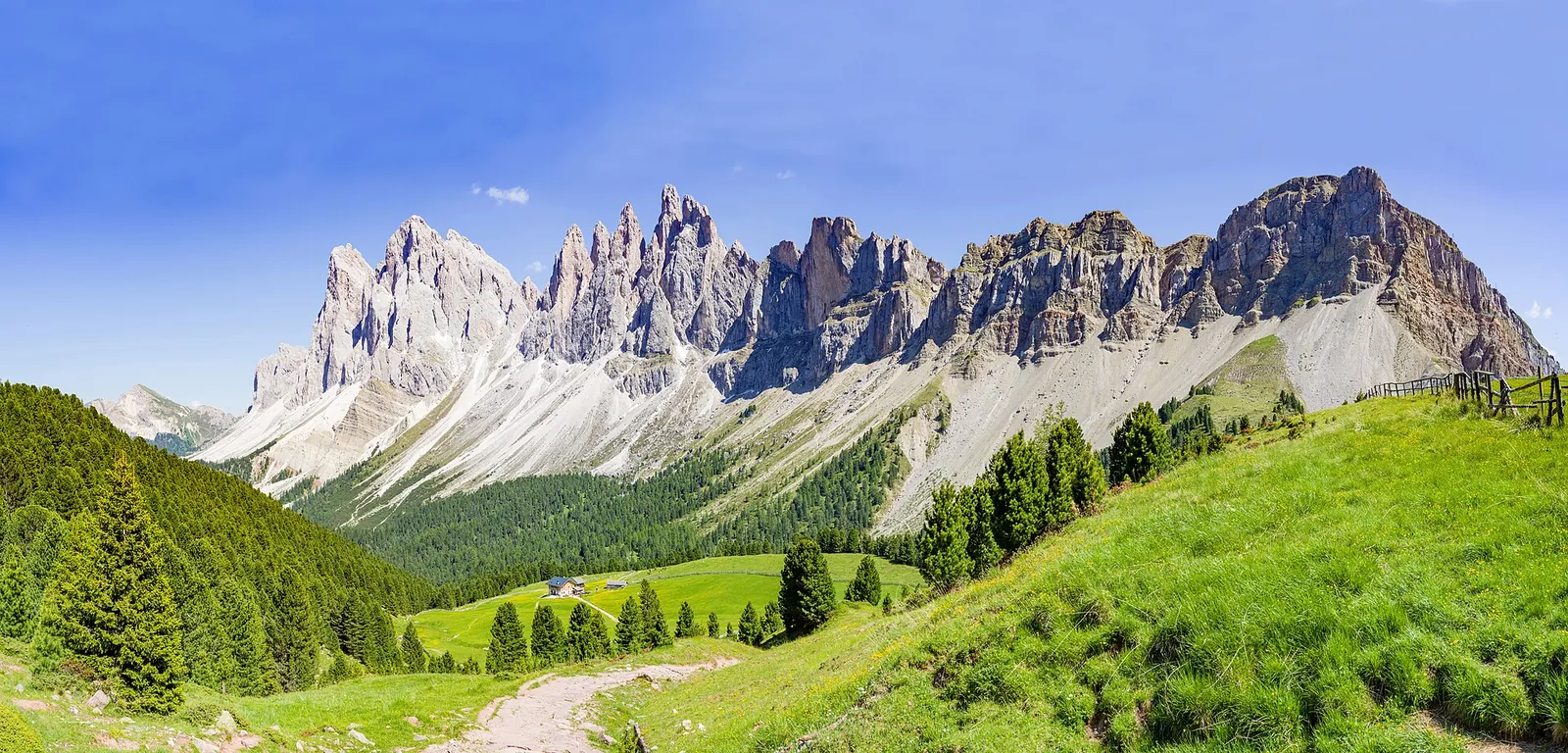
Welcome to Val Gardena, and what a way to begin! Start in Ortisei (St. Ulrich in German, Urtijëi in Ladin), the valley’s main village, with a pedestrian centre full of woodcarving shops. From the village it is a short walk to the valley station of the Ortisei to Furnes gondola, which connects with the Furnes to Seceda cable car up to the ridge at about 2,500 metres.
The operator, Seceda S.p.A., lists the 2026 summer season as 22 May to 2 November, daily from 8:30 am to 5:00 pm. An adult return to the top costs EUR 74, and a single costs EUR 49 in either direction. Juniors aged 8 to 15 pay EUR 37 return, and children under 8 ride free with a paying adult. Since summer 2026, ascents run in fixed 30-minute time slots: book online at seceda.it (buying up to 7 days ahead gives a 5% early-booking discount) or at the ticket office. Tickets are non-refundable and valid only for the chosen slot. The Dolomiti SuperSummer card is not valid on these lifts; the Gardena Card is, but holders must still reserve a slot.
Go up early. At the top, a short walk brings you to the famous view of the Odle (Geisler) peaks and the steep grassy ridge that drops away to one side. Stay behind the fences on the ridge edge.
Afternoon
Instead of riding straight down, walk part of the way. A popular option is to descend on marked paths towards the huts on the slopes below the ridge, stop for lunch at one of them, and pick up the lifts again at the Furnes middle station. Paths are well signed, but the descent is steep in places, so wear proper hiking shoes. If you would rather keep it simple, a single ride down costs EUR 49, or ride the whole route both ways on the return ticket.
Evening
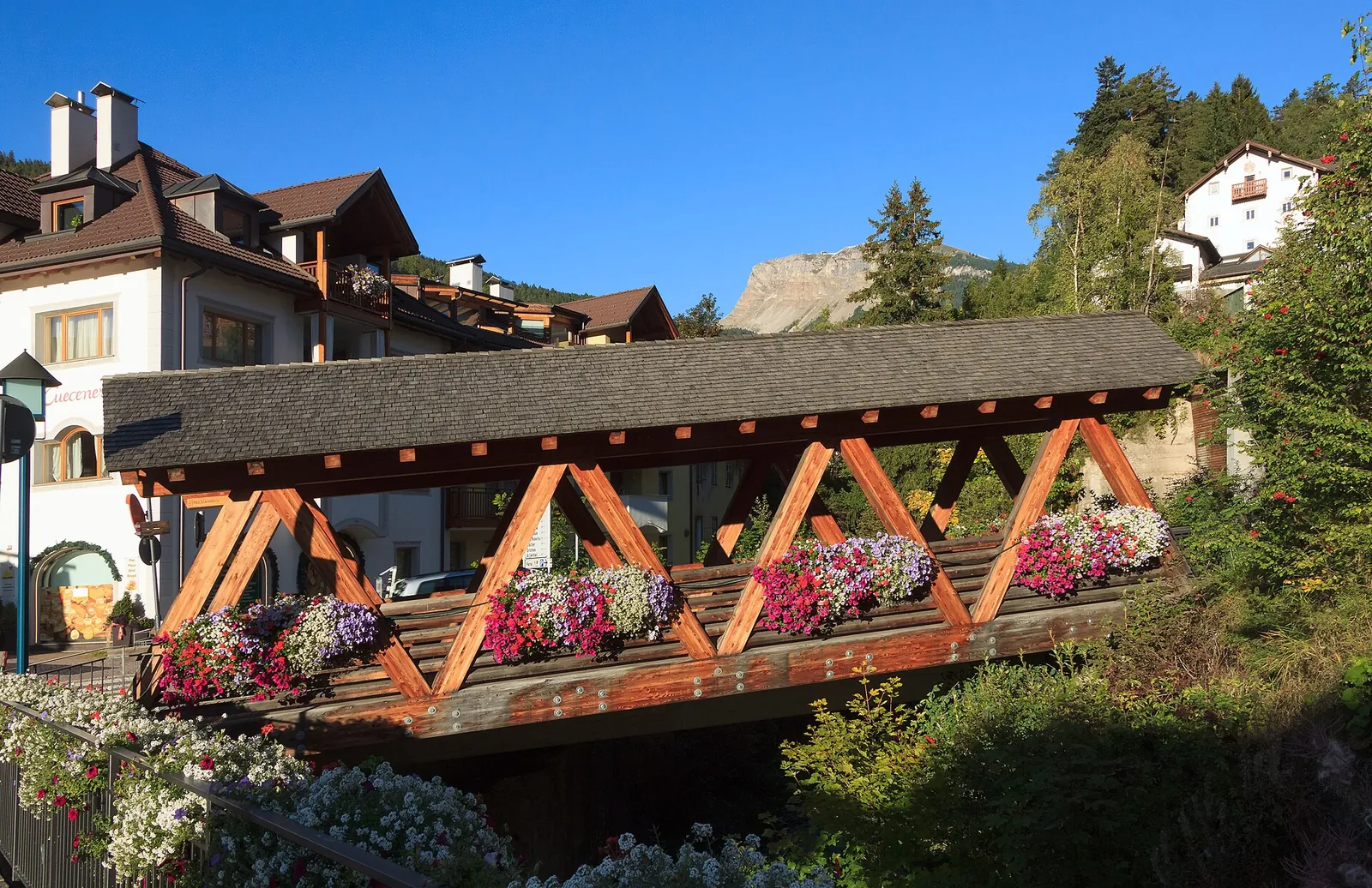
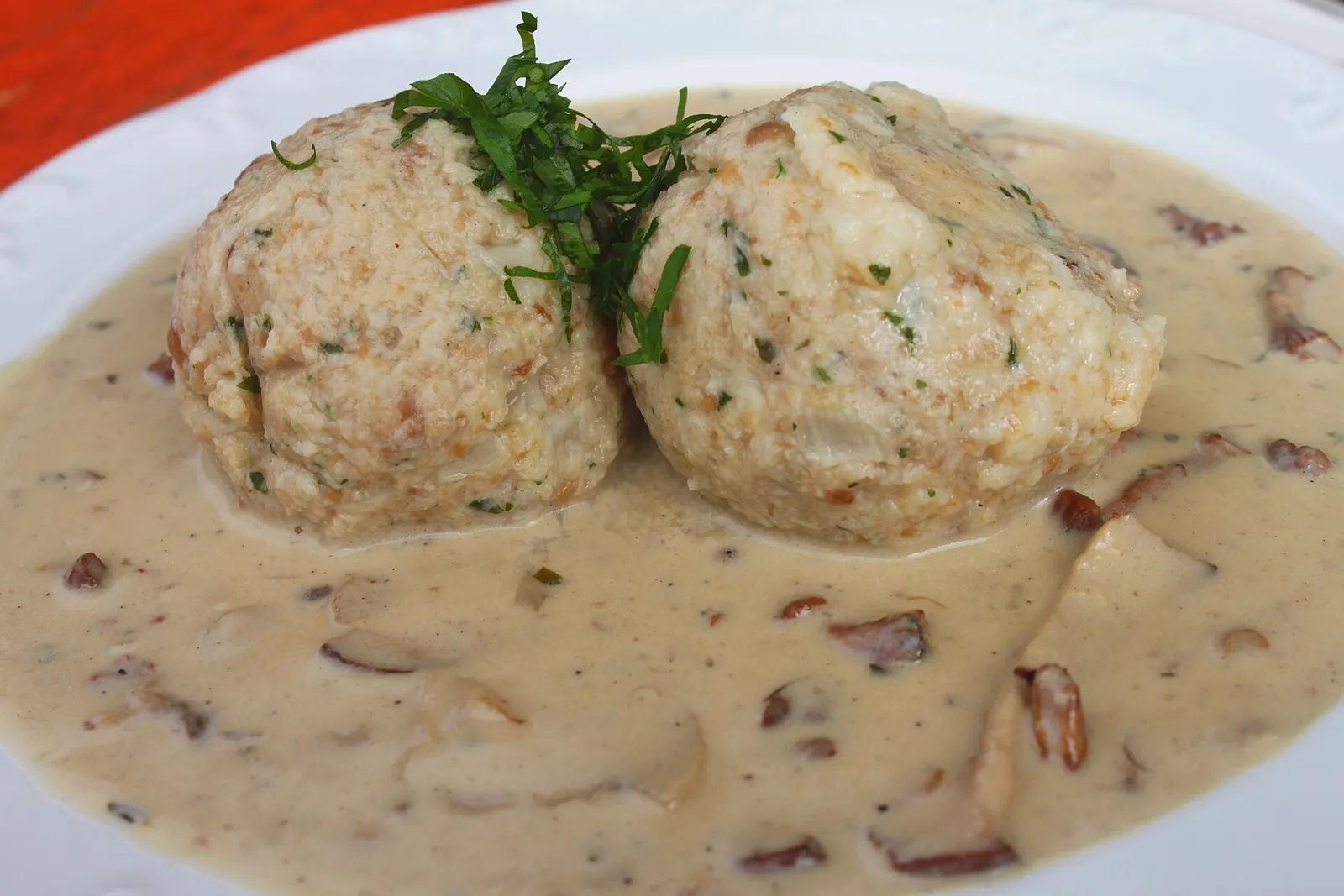
Back in Ortisei, stroll the old centre and the church of St. Ulrich, then try South Tyrolean classics for dinner: canederli (bread dumplings), schlutzkrapfen (spinach and cheese ravioli) and speck.
Day 2: Alpe di Siusi
Morning
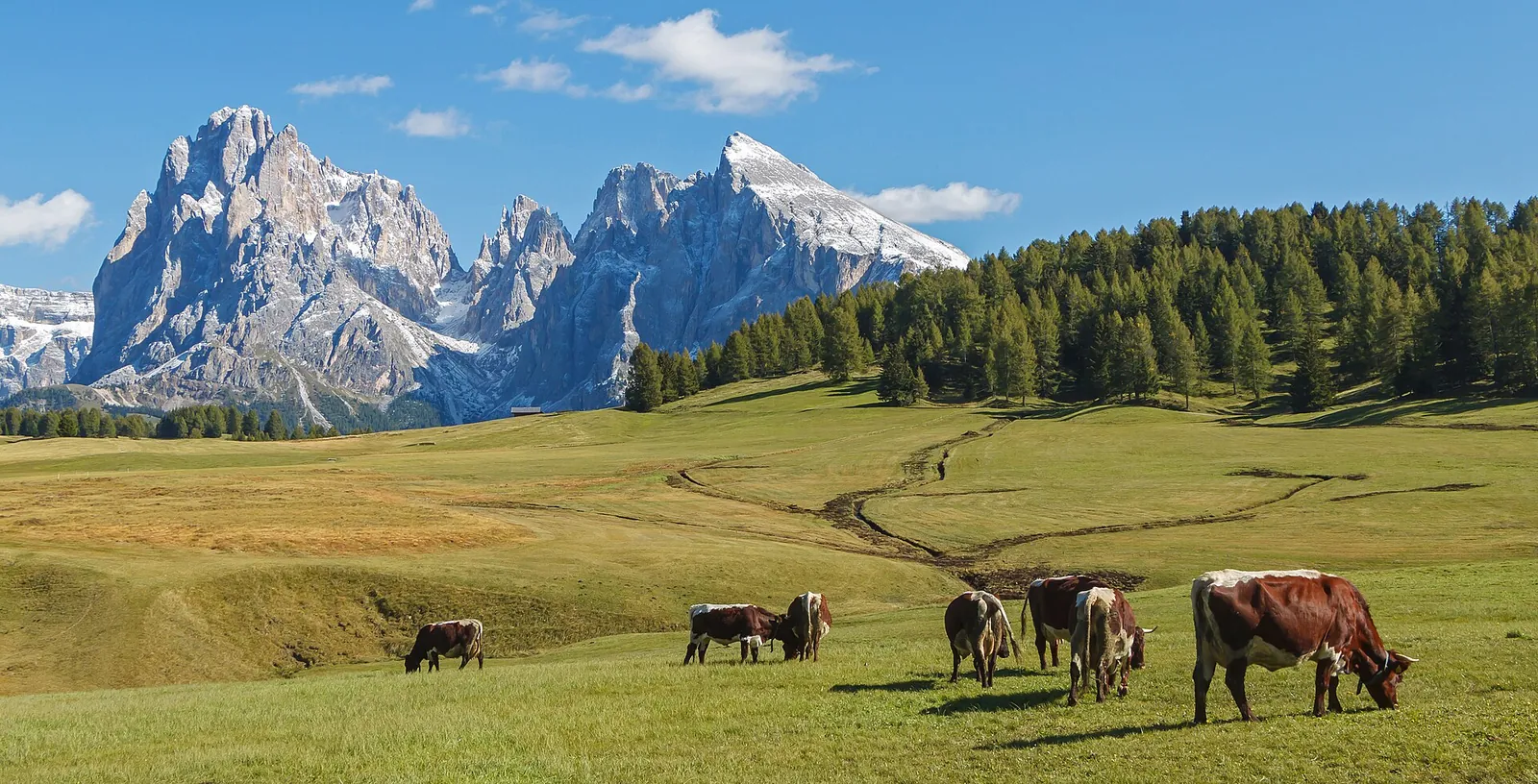
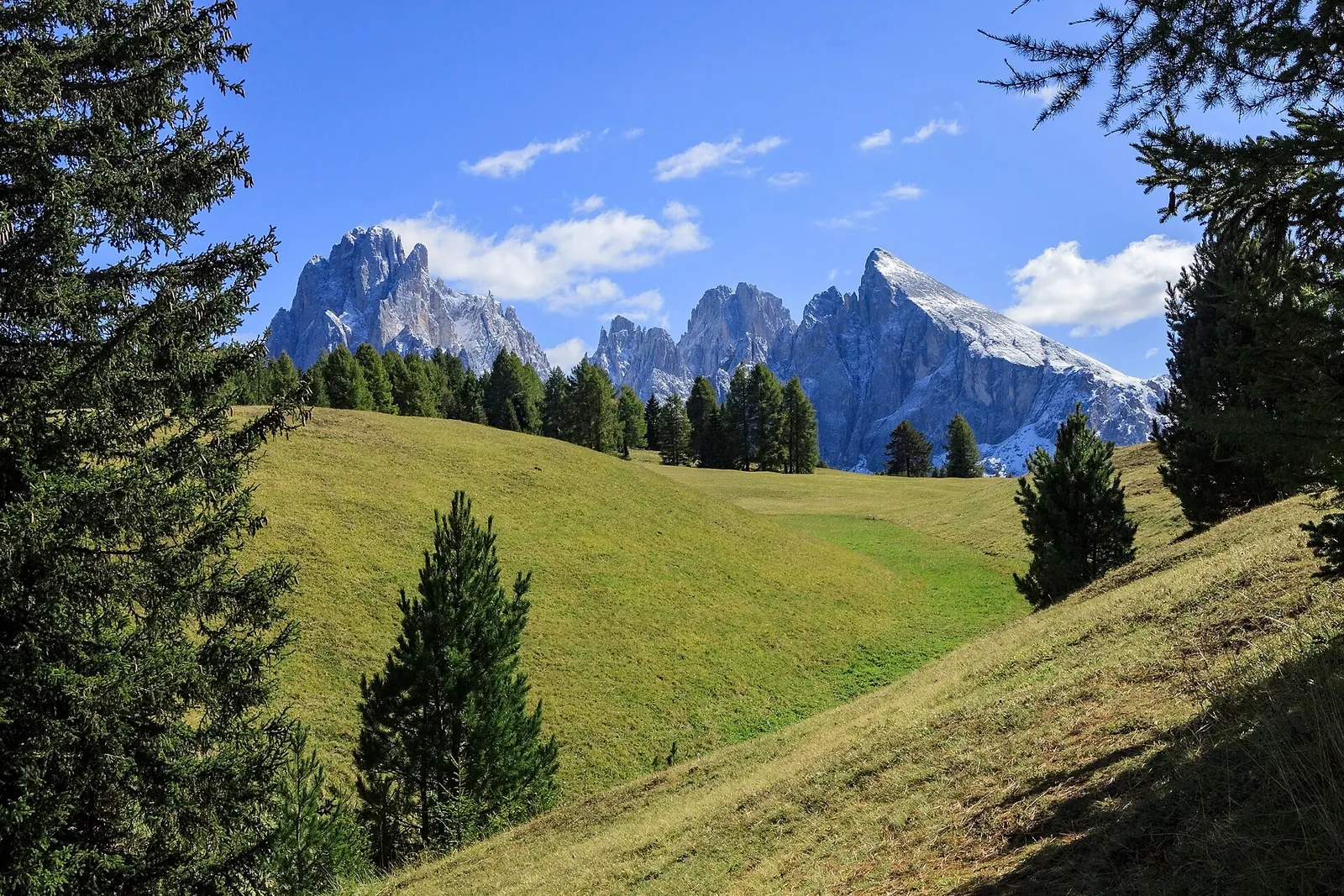
This is the day for wide open meadows and big skies on the Alpe di Siusi (Seiser Alm), a vast high plateau of meadows and hay huts beneath the Sassolungo and Sciliar peaks. From Ortisei, take the Ortisei to Alpe di Siusi gondola right from the village. According to Seiser Alm tourism, it ran from 1 May to 2 November 2026, from 8:30 am to 6:00 pm between 6 June and 16 October and to 5:00 pm in the shoulder weeks. An adult return costs EUR 39 and a single EUR 26. Juniors aged 8 to 14 pay EUR 27.30 return, and children under 8 ride free with a paying adult.
The plateau is gentle walking country. Wide, mostly level paths and farm tracks lead between the huts, and you can easily build a two to four hour walk with a long lunch. Pick up a free trail map at the tourist office or the lift station.
Afternoon
Walk across the meadows towards Compatsch (Compaccio), the main hub on the plateau, with views of Sassolungo on one side and the flat-topped Sciliar on the other. From Compatsch, the Seiser Alm cable car descends to Siusi allo Sciliar in about 15 minutes (EUR 21 single, EUR 30 return for adults in 2026). That drops you on the other side of the mountain, though, so if your car or hotel is in Ortisei, the simplest plan is to loop back to the Ortisei gondola and ride down the way you came.
Driving up? When the cable car runs, the road to the Alpe di Siusi is closed to private traffic from 9:00 am to 5:00 pm, according to Seiser Alm Marketing. Only guests staying in accommodation on the plateau are exempt. You can drive up before 9:00 am or after 5:00 pm. Outside the cable car season the road is open all day.
Evening
Return to Ortisei for a relaxed evening. If you are driving tomorrow, plan an early night: Day 3 is long.
Day 3: Over the passes to Cortina, with the Lagazuoi cable car
Morning
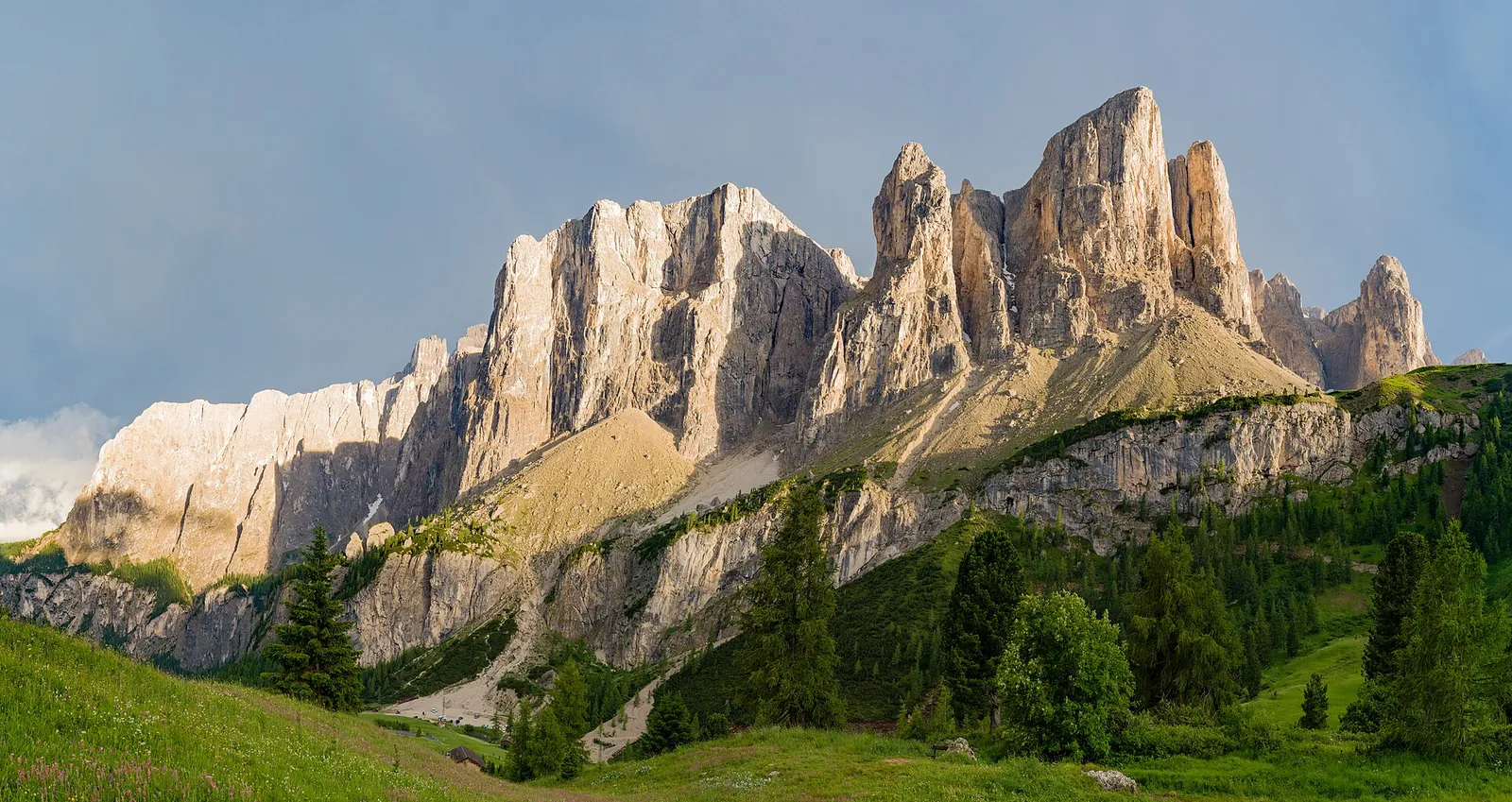
Road trip day! Today you cross some of the most scenic roads in the Alps. Leave Ortisei and drive up through Selva to Passo Gardena (Grödner Joch), with the walls of the Sella group right beside the road. Descend into Alta Badia, the Ladin valley around Colfosco, Corvara and La Villa, a good place for a coffee stop.
From Alta Badia, continue over Passo Valparola to Passo Falzarego at about 2,105 metres. Mountain roads are narrow and winding, with cyclists and motorbikes everywhere in summer, so allow plenty of time and use the lay-bys for photos.
Afternoon
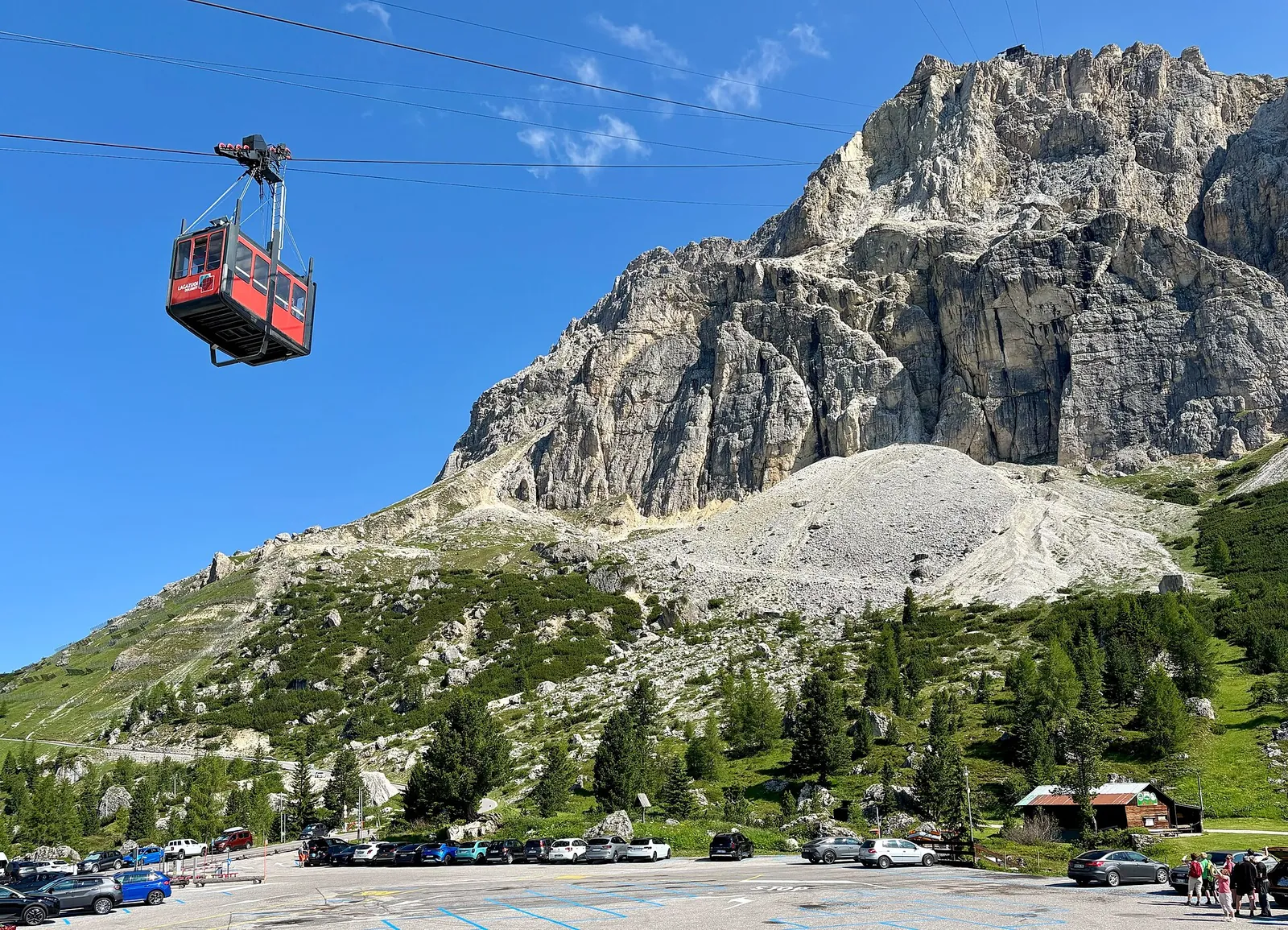
At Passo Falzarego, ride the Lagazuoi cable car to about 2,732 metres in under three minutes. The top station sits next to Rifugio Lagazuoi, with one of the widest panoramas in the Dolomites, and the mountain is full of First World War tunnels and trenches from the fighting between Italian and Austro-Hungarian troops. The operator lists the 2026 season as 6 June to 18 October; check current fares and hours at lagazuoi.it before you go, as they are not included in the main summer passes for Alta Badia (cardholders get a discount).
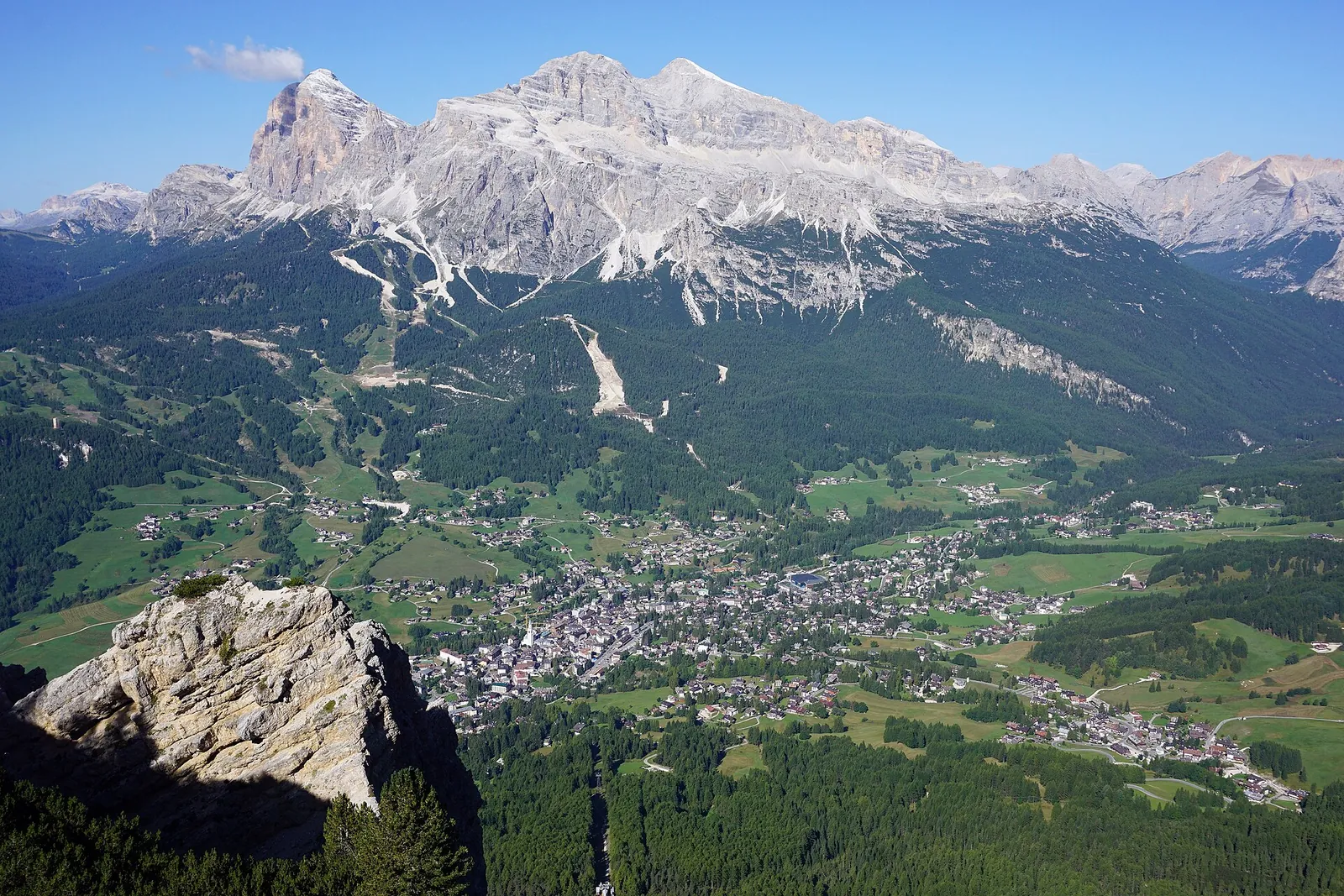
Then drive the last stretch down to Cortina d’Ampezzo, about 30 to 40 minutes from the pass. Cortina, host town of the 2026 Winter Olympics with Milan, is a stylish small town in a wide green bowl ringed by peaks.
Without a car? Public transport between Val Gardena and Cortina involves several changes and seasonal lines. Plan it with the südtirolmobil journey planner the day before, or consider a guided pass tour from Ortisei.
Evening
Stroll Corso Italia, Cortina’s pedestrian main street, and have dinner in town. Book ahead in high season.
Day 4: The Tre Cime di Lavaredo loop
Morning
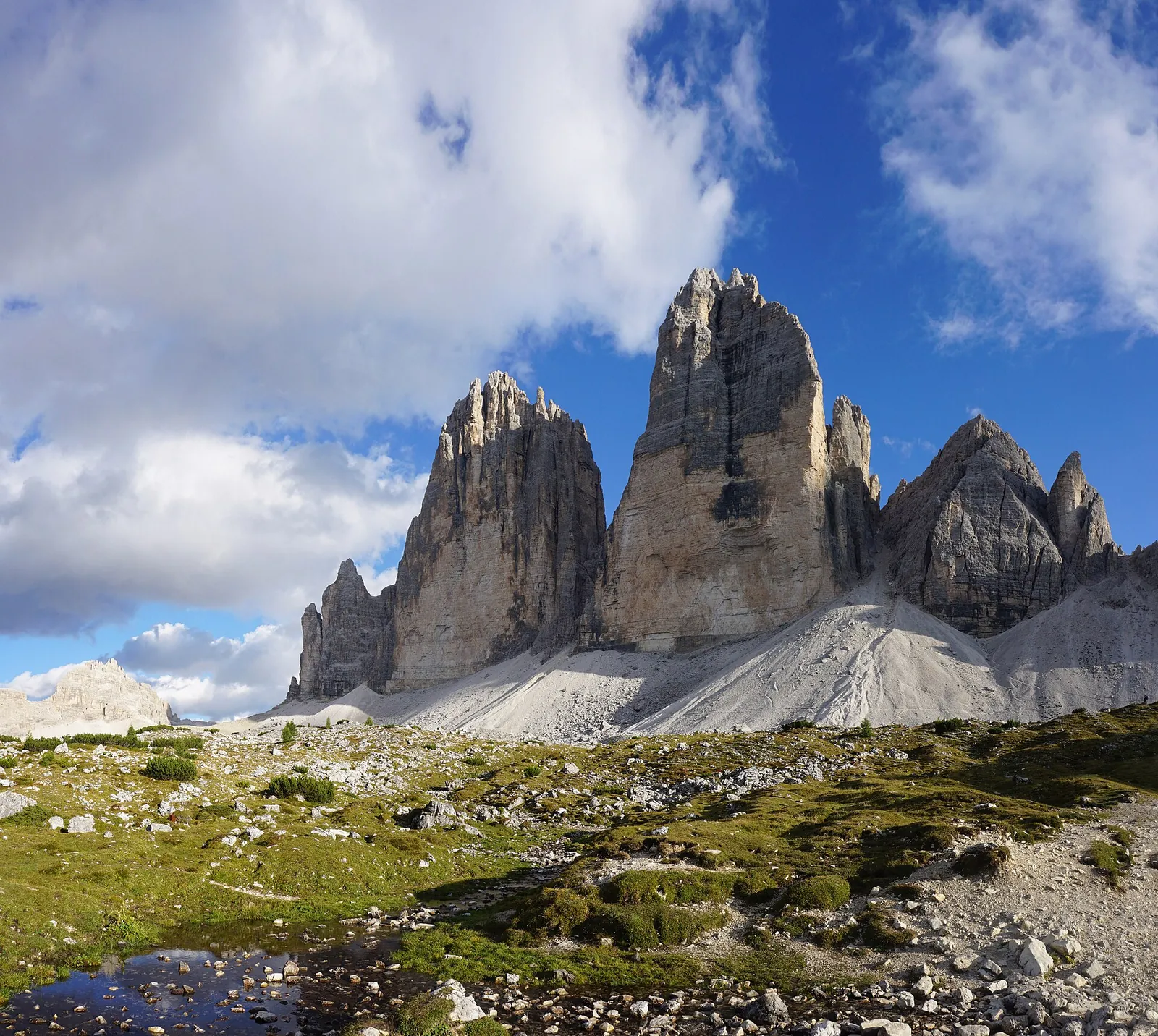
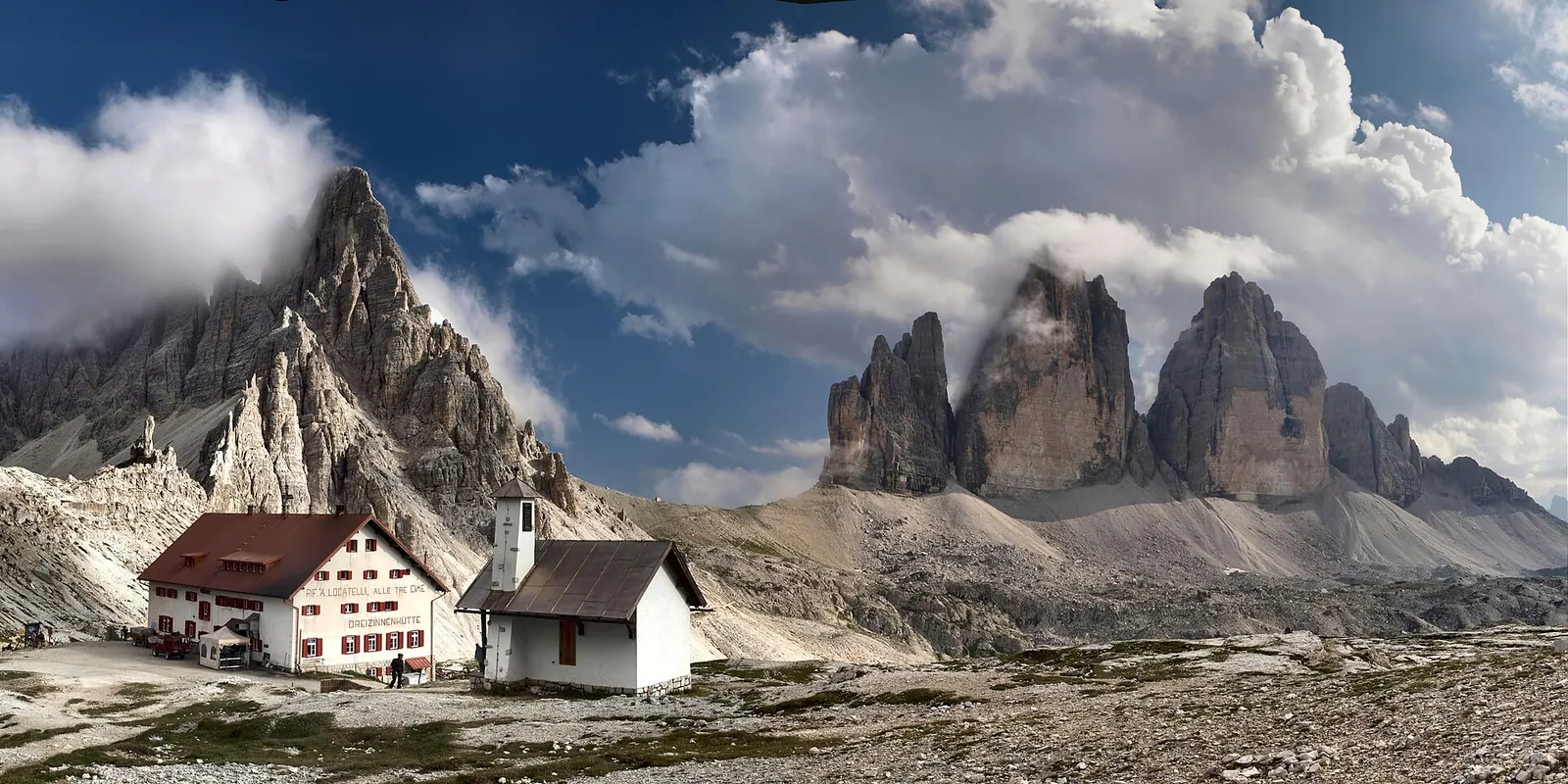
Lace up your boots, because today is the big one: the Tre Cime di Lavaredo (Drei Zinnen), three huge rock towers that are the symbol of the Dolomites. The classic way to see them is the loop walk from Rifugio Auronzo at 2,333 metres, roughly 10 km with a few hundred metres of ascent. Most hikers take 3.5 to 5 hours including stops. The path is wide and well used, but it is high mountain terrain, so bring layers, rain gear, sun protection and water.
By car: The last 6 km to Rifugio Auronzo is a toll road from near Lago d’Antorno above Misurina. In 2026 it cost EUR 40 per car, EUR 26 per motorbike and EUR 60 per campervan, and an online reservation was mandatory, with a date and an entry time slot chosen in advance through the Comune di Auronzo booking portal. Your number plate is checked at the gate. Access can be suspended in snow, and the road normally runs from late May to October.
By bus: The line 444 shuttle runs from Dobbiaco (Toblach) to Rifugio Auronzo. In 2026 the main timetable ran 14 June to 11 October, with the first bus leaving Dobbiaco bus station at 7:20 am and reaching the hut at 8:19 am. Seats must be booked and paid online (drei-zinnen.bz/ticket), and South Tyrol guest cards are not valid. An adult return costs EUR 22. From Cortina, get to Dobbiaco on line 445: in 2026 buses left Cortina (Scuole stop) at 8:05 and 10:05 am among other times, reaching Dobbiaco station in about 40 minutes. The 444 also stops at the Misurina junction on the way up, which can shorten the trip; check connections in the timetable before you book.
Afternoon
Walk the loop anticlockwise or clockwise: either way you pass Rifugio Lavaredo and reach the saddle near Rifugio Locatelli (Dreizinnenhütte), where the famous north faces of the Three Peaks appear all at once. Stop for lunch at Locatelli, then continue around the back of the peaks and return to Auronzo. Note your last bus back carefully: in 2026 the final 444 down left Rifugio Auronzo at 6:08 pm.
Evening
Back in Cortina, rest your legs. If you drove, consider stopping at Lago di Misurina on the way down for the reflection of the peaks at sunset.
Day 5: Lago di Braies
Morning
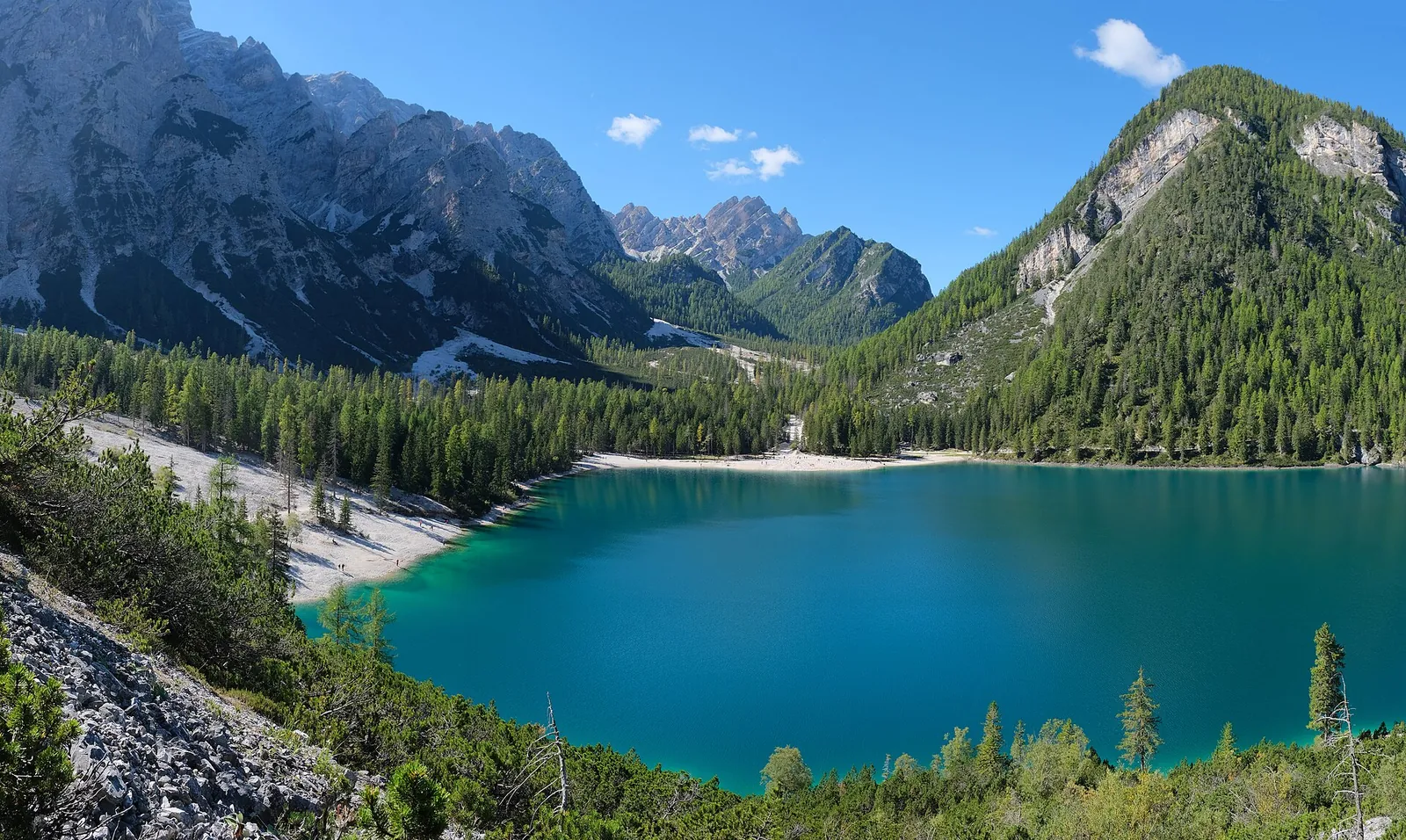
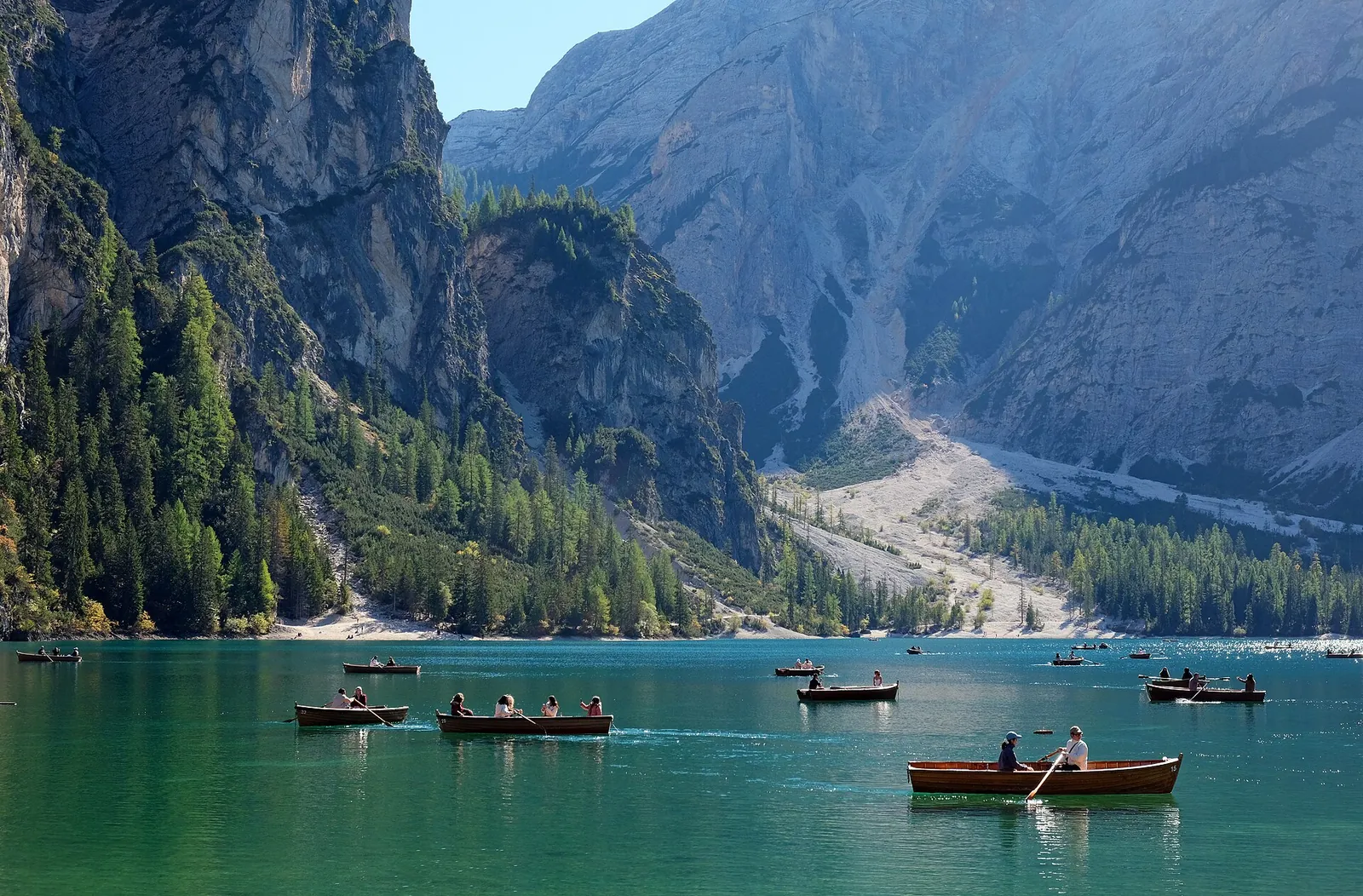
Save the prettiest water for last: you finish with the Dolomites’ most photographed lake. Lago di Braies (Pragser Wildsee) lies at the head of a side valley off Val Pusteria, with the Croda del Becco rising straight above the emerald water. Entry to the lake is free, and the circular path is about 3.6 km, around 1 hour, and easy enough for families, with part of it suitable for pushchairs. You can rent a rowing boat at the lake; bringing your own boat or paddleboard is not allowed.
Access rules matter here. According to the Braies tourism office, from 1 July to 15 September 2026 the valley road was open from 9:00 am to 4:00 pm only to public transport, walkers, cyclists and drivers with an online reservation. The reservation, bookable from early June at prags.bz/ticket, was a EUR 44 combined ticket including a full-day transit permit, a guaranteed parking space and a EUR 22 voucher for the restaurants and shops. You can still drive in before 9:00 am, but parking is not guaranteed. From 16 September there were no traffic restrictions, though parking is paid and limited.
By bus: Line 442 from Dobbiaco and line 439 from Monguelfo (Welsberg) serve the lake. In the regulated period, seats must be booked and paid online. An adult return cost EUR 13 and a single EUR 7 in 2026. From Cortina, take line 445 to Dobbiaco and change to the 442.
Afternoon
Walk the loop early, before the crowds arrive, then have lunch at the hotel restaurant by the lake or picnic on the southern beaches. From Braies, you are well placed for onward travel: Dobbiaco and Monguelfo have train stations on the Val Pusteria line, and Cortina Express buses link Cortina with Venice.
Evening
Head home, or stay one more night in Val Pusteria and catch a train in the morning.
Getting there and getting around
From Venice: Cortina Express (Fly Bus) runs buses from Venice Marco Polo Airport and Venice Mestre to Cortina d’Ampezzo and other Dolomites destinations, with tickets online, in its app or on board. The ride is a little over two hours. Check cortinaexpress.it for the current timetable and fares, which vary by season.
From Bolzano: Bolzano is on the Brenner railway line from Verona and Innsbruck. From Bolzano, regional bus line 350 runs up to Val Gardena and Ortisei. Use the südtirolmobil website or app for current times, especially the last bus of the evening.
Buses in South Tyrol: The südtirolmobil network covers Val Gardena, Val Pusteria and the Braies and Tre Cime lines. Note that the special shuttles to Braies (439, 442) and Tre Cime (444) need online booking and prepayment in summer, and regular guest and mobility cards are not valid on them.
Driving: A car gives you the most freedom on Day 3, but mountain roads are busy in summer, parking at trailheads is limited, and the Alpe di Siusi, Tre Cime and Braies all have access rules. Check each one the day before.
Lift passes: The Dolomiti SuperSummer card covers many lifts in the region, but not the Seceda lifts. Local cards such as the Gardena Card (EUR 124 for 3 days or EUR 160 for 6 days for adults in 2026, valid 6 June to 11 October) can pay off if you plan several lift days in one valley.
Where to stay
- Ortisei: The best base in Val Gardena, with lifts to both Seceda and the Alpe di Siusi from the village and a lively pedestrian centre. Good for first-timers.
- Selva or Santa Cristina: Quieter villages further up Val Gardena, closer to Passo Gardena for an early start on Day 3.
- Cortina d’Ampezzo: Stylish and full of restaurants, with buses to Dobbiaco for Tre Cime and Braies. Pricier in high season.
- Dobbiaco (Toblach): A practical, good-value alternative for Days 4 and 5, with direct shuttles to both Tre Cime and Braies and a train station.
Budget
| Item | Typical cost |
|---|---|
| Seceda lifts, adult return / single (2026) | EUR 74 / EUR 49 |
| Ortisei to Alpe di Siusi gondola, adult return / single | EUR 39 / EUR 26 |
| Seiser Alm cable car (Siusi), adult return / single | EUR 30 / EUR 21 |
| Lagazuoi cable car | Check lagazuoi.it |
| Tre Cime toll road, per car (booking required) | EUR 40 |
| Line 444 shuttle to Tre Cime, adult return / single | EUR 22 / EUR 16 |
| Braies combined parking ticket (1 July to 15 September) | EUR 44 (incl. EUR 22 voucher) |
| Lines 439 and 442 to Braies, adult return / single | EUR 13 / EUR 7 |
| Gardena Card, 3 or 6 days (adult) | EUR 124 / EUR 160 |
Days 1 and 4 are the expensive ones: Seceda alone is EUR 74 per adult, and Tre Cime is EUR 40 per car or EUR 22 per person by bus, plus the bus from Cortina. The Alpe di Siusi and Braies days are closer to EUR 15 to 40. Our daily range covers lifts, local buses and access fees only. It excludes accommodation, meals at the huts, drinks, car hire, fuel, parking outside the listed sites and the local tourist tax, which is charged per person per night by your accommodation.
Practical tips
- Book the three bottlenecks early: your Seceda time slot, the Tre Cime toll road or 444 shuttle, and Braies parking or bus seats in July and August.
- Start early every day: light is best, paths are emptier, and afternoon thunderstorms are common in summer.
- Pack for the mountains: layers, a waterproof jacket, sun cream and sunglasses even on warm days. It can be 15 degrees cooler at 2,500 metres than in the valley.
- Wear proper hiking shoes for Seceda and the Tre Cime loop.
- Carry cash: many mountain huts accept cards now, but not all, and signal can be patchy.
- Check the weather and lift status the evening before, and have a valley plan (Ortisei or Cortina) for a rainy day.
- SIM and eSIM: EU roaming applies for European SIMs. Other visitors can buy an Italian SIM or an eSIM before arrival.
- Visa and entry: Rules depend on your nationality. Check the Italian Foreign Ministry’s official visa portal (vistoperitalia.esteri.it) well before you travel.
Heads-up
The Dolomites are friendly and well organised, but mountains deserve respect. A few things are worth knowing so nothing spoils your trip:
- Mountain risks: The UK government’s travel advice for Italy says hiking and mountaineering have specific risks, which are greater if you go alone. Check forecasts and conditions and be equipped for the worst case.
- Thunderstorms: Summer storms build quickly in the afternoon. Turn back early if the sky darkens, and keep off exposed ridges.
- Ridge edges: At Seceda the grass drops away steeply. Stay on the paths and behind the fences, especially when taking photos.
- Seasonal closures: Most lifts, many huts and the Tre Cime shuttle stop running in autumn and do not reopen until the next season. Do not plan a lift-based trip in November or April.
- Lago di Braies: Swimming is discouraged, and walking on the lake when it is frozen is forbidden.
- Wildfires and heat: GOV.UK notes that wildfires are a risk in the summer months. Follow local alerts and never light fires.
- Pickpockets: Crime in the mountains is low, but the same advice warns about bag-snatching and pickpocketing in city centres, so watch your bags in Venice or Bolzano on the way in.
- Emergencies: Call 112, including for mountain rescue if you are lost or injured.
FAQ
Is 5 days enough for the Dolomites?
Yes, for a first visit focused on the headline sights. Five days covers Seceda, the Alpe di Siusi, a scenic pass day, the Tre Cime loop and Lago di Braies. Add two or three days if you want longer hikes, a via ferrata or a slower pace with rest days.
Do I need a car in the Dolomites?
Not strictly. Lifts and buses cover Days 1, 2, 4 and 5, and the Braies and Tre Cime shuttles exist precisely to keep cars out. A car makes the pass crossing on Day 3 far easier, though, and gives you flexibility for early starts.
Do I need to book Seceda in advance?
Since summer 2026 the Seceda ascent runs in fixed 30-minute time slots, so booking online at seceda.it is the safe option in high season. Part of the capacity is kept for the ticket office, but you may have to wait.
How do I get to Tre Cime di Lavaredo without a car?
Take bus line 445 from Cortina to Dobbiaco, then the line 444 shuttle to Rifugio Auronzo. The 444 must be booked and paid online in advance, and in 2026 an adult return cost EUR 22.
Can I drive to Lago di Braies?
Yes, but from 1 July to 15 September the valley is closed to cars between 9:00 am and 4:00 pm unless you have an online parking reservation (EUR 44 in 2026, including a EUR 22 voucher). You can arrive before 9:00 am without one, but parking is not guaranteed.
When is the best time to visit the Dolomites?
Late June to mid-September, when lifts, huts and seasonal buses all run. July and August are busiest; late June and early September are quieter and often still have stable weather.
Sources
Prices, hours and rules change. We checked these on 1 November 2026; please confirm on the official page before you book.
- Seceda summer 2026: timetable and prices (Seceda S.p.A., lift operator)
- New regulations for the Seceda ascent, summer 2026 (Val Gardena)
- Ropeway systems in summer: Ortisei to Alpe di Siusi gondola (Seiser Alm tourism)
- Seiser Alm aerial cableway in summer (Seiser Alm tourism)
- Alpe di Siusi cable car and road access (Seiser Alm Marketing)
- Lagazuoi cable car (official site)
- Toll road to Tre Cime di Lavaredo open, reservation required (Dolomiti.it)
- Summer 2026 bus timetable, lines 439, 442 and 444 (Drei Zinnen Dolomites tourism)
- Line 445 Toblach to Misurina and Cortina, 2026 timetable (südtirolmobil)
- Pragser Wildsee: access, parking and buses (Prags/Braies tourism office)
- Lake Braies circular hike (Pustertal tourism)
- Cortina Express, buses from Venice to the Dolomites (official site)
- Safety and security: Italy travel advice (GOV.UK, FCDO)
- Visto per l'Italia (Italian Ministry of Foreign Affairs visa portal)
Photo credits (13)
- The Tre Cime di Lavaredo rising above a wide Dolomites valley: Ximonic (Simo Räsänen), CC BY-SA 4.0, via Wikimedia Commons
- The jagged Odle peaks above green summer meadows: Wolfgang Moroder, CC BY-SA 4.0, via Wikimedia Commons
- Flower-decked wooden bridge in Ortisei: H. Zell, CC BY-SA 3.0, via Wikimedia Commons
- Cows grazing on the Alpe di Siusi below Sassolungo: H. Zell, CC BY-SA 3.0, via Wikimedia Commons
- Rolling green meadows of the Alpe di Siusi: H. Zell, CC BY-SA 3.0, via Wikimedia Commons
- Sella group walls glowing above Passo Gardena: Wolfgang Moroder, CC BY-SA 3.0, via Wikimedia Commons
- Red Lagazuoi cable car climbing above Passo Falzarego: kallerna, CC BY-SA 4.0, via Wikimedia Commons
- The Three Peaks of Lavaredo under a blue summer sky: kallerna, CC BY-SA 4.0, via Wikimedia Commons
- Rifugio Locatelli facing the north faces of the Tre Cime: Elio Pallard, CC BY-SA 4.0, via Wikimedia Commons
- Emerald Lago di Braies framed by forest and peaks: kallerna, CC BY-SA 4.0, via Wikimedia Commons
- Rowing boats on the green water of Lago di Braies: kallerna, CC BY-SA 4.0, via Wikimedia Commons
- Cortina d'Ampezzo in its green bowl beneath the peaks: kallerna, CC BY-SA 4.0, via Wikimedia Commons
- Bread dumplings in a creamy mushroom sauce: Benreis, CC BY 3.0, via Wikimedia Commons
More Italy itineraries
 5 days
5 Days in Naples and the Amalfi Coast: Itinerary
5 days in Naples, Pompeii, Sorrento and the Amalfi Coast: a day-by-day plan with checked 2026 ticket prices, closing days and airport transfers.
 4 days
4 Days in Milan and Lake Como: A Day-by-Day Itinerary
A 4-day Milan and Lake Como itinerary: the Duomo, the Last Supper, Brera and the Navigli, then trains and ferries to Varenna and Bellagio.
 6 days
6 Days in Sardinia: A Road-Trip Itinerary from Cagliari to Alghero
A 6-day Sardinia road trip: Cagliari, Nora, the Su Nuraxi nuraghe, Tharros and the Sinis coast, Bosa, Alghero, Neptune's Grotto and La Pelosa beach.
Compare all Italy itineraries →
This is a researched plan, not a personal trip report. How we research · Affiliate disclosure