
3 Days in Ghent and Antwerp: A Day-by-Day Itinerary
3 days in Ghent and Antwerp: the Ghent Altarpiece, Belfry and Gravensteen castle, a canal boat, then Antwerp's cathedral, Rubens and the MAS rooftop.
- 🗓️ Trip length
- 3 days
- ☀️ Best time
- April to June and September
- 💰 Daily spend
- About EUR 25-45 for sights and city transport (rooms, meals and intercity trains extra)
- ✅ Facts checked
- 1 November 2026
Get ready for Flanders’ two most underrated cities. Ghent is a medieval university town with a castle in the middle of it, canals lined with guild houses and one of the most important paintings in Western art. Antwerp, a short direct train ride away, is bigger and brasher: a port city of Rubens, diamonds, fashion and a cathedral that holds its own against anything in Europe. Together they make a brilliant three-day trip.
This plan is made for first-timers who love art, history and good food, and who would rather walk than ride. The pace is relaxed: a day and a half in each city, by train, tram and on foot. Bruges is covered in our separate Brussels and Bruges itinerary, so this route skips it.
At a glance
| Day | Area | Highlights |
|---|---|---|
| 1 | Ghent old town | Ghent Altarpiece in St Bavo’s Cathedral, the Belfry climb, St Michael’s Bridge, Graslei and Korenlei |
| 2 | Ghent, then Antwerp | Gravensteen castle, Patershol, a canal boat, train to Antwerp, Grote Markt by evening |
| 3 | Antwerp | Cathedral of Our Lady and its Rubens altarpieces, the Rubens Experience, MAS museum and its free rooftop |
A planning note before you start: watch the Monday closures in Antwerp. The MAS and the Museum Plantin-Moretus are closed on Mondays, so make sure Day 3 does not fall on a Monday. Also note that the Museum Plantin-Moretus is closed for renovation from 3 August to 4 December 2026, and the historic Rubens House residence is temporarily closed for renovation too. Details are in Day 3.
Day 1: Ghent’s old town and the Mystic Lamb
Morning
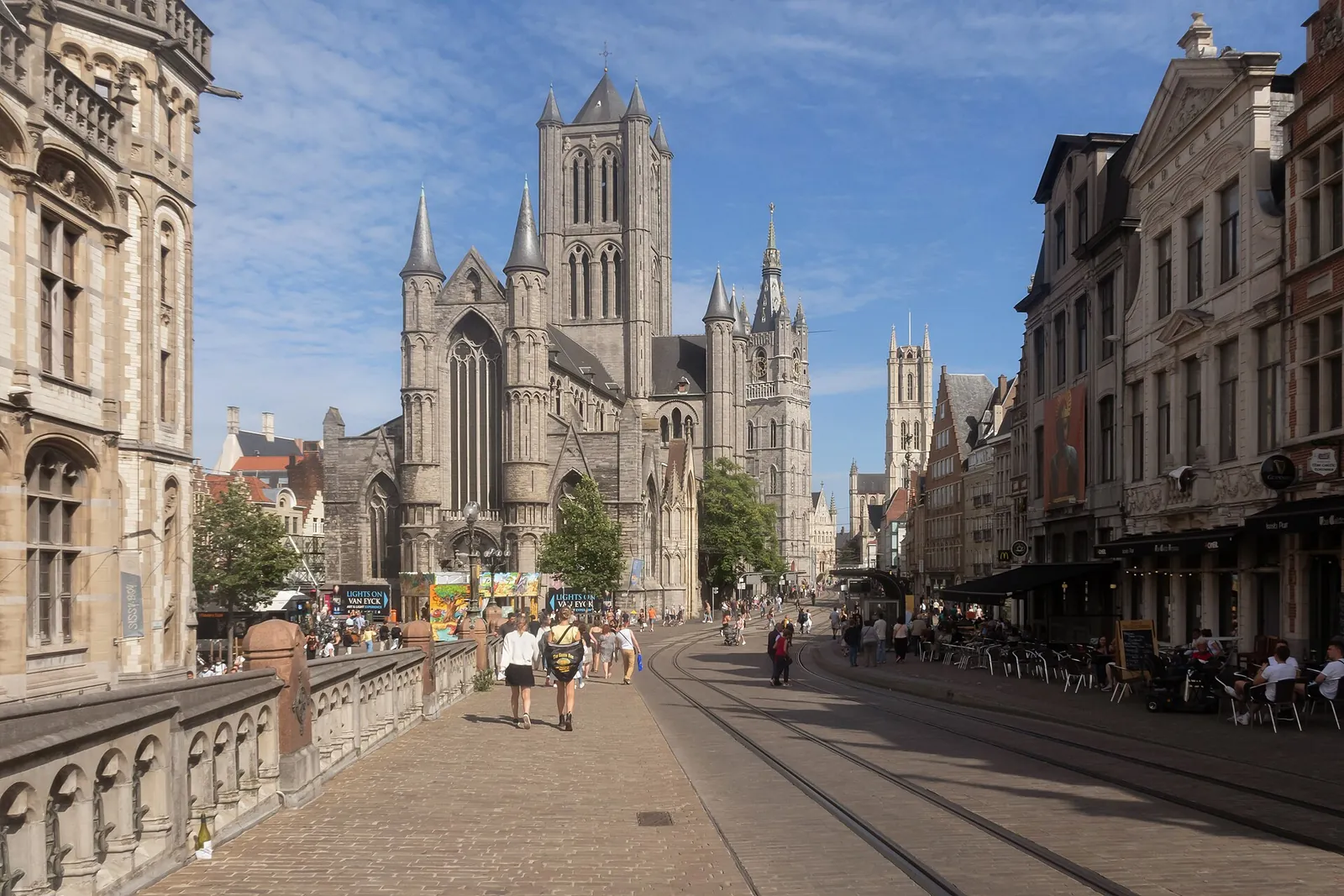
Welcome to Ghent! This is the day for the city’s big icons, so kick off at St Bavo’s Cathedral (Sint-Baafskathedraal) on Sint-Baafsplein, home of the Ghent Altarpiece, the “Adoration of the Mystic Lamb” painted by the Van Eyck brothers and completed in 1432. Visit Gent calls it one of the most influential paintings ever made, and it is the reason many people come to the city at all.
The cathedral is open Monday to Saturday from 8:30 am to 5:30 pm and Sunday from 1:00 pm to 5:30 pm. The Mystic Lamb visitor centre opens Monday to Saturday from 10:00 am to 5:00 pm and Sunday from 1:00 pm to 5:00 pm. You have two options:
- Ghent Altarpiece only: a 25-minute visit, EUR 12.50.
- Altarpiece plus Augmented Reality tour: a 60-minute tour, EUR 16 (EUR 8 for children under 12). Last entry for the tour is at 4:00 pm.
The cathedral’s ticket page notes that the panels are shown opened at the 10:15 am slot and closed at the 5:15 pm slot, so if you want to see both faces of the altarpiece, aim for the first or last time slot. Book a timed ticket on the cathedral’s official site: Visit Gent warns that tickets sell out quickly, especially on weekends and holidays.
One honest heads-up: the upper register of the inner panels is being restored. According to Visit Gent, from Tuesday to Friday you can watch the restorers at work in Ghent’s Museum of Fine Arts, while on weekends and holidays the panels are set up for public view. The cathedral also notes that some panels are replaced by high-quality colour photographs during the restoration, which is scheduled to finish in spring 2027. It is still a moving visit, but check the cathedral site for the current setup.
Afternoon
Walk out of the cathedral and look up: right across the square stands the Belfry (Belfort), with a gilded dragon guarding the old town from its spire. It is open every day from 10:00 am to 6:00 pm, with last tickets at 5:00 pm, and closed on 24, 25 and 31 December and 1 January. Standard admission is EUR 13, and children up to 12 go free. To reach the top you climb about a hundred steps to the first floor and then take the lift. Note that the lift does not go down, so plan on walking the stairs on the way out.
From the Belfry, stroll west past St Nicholas’ Church to St Michael’s Bridge (Sint-Michielsbrug), about five minutes on foot. This is the classic spot for the postcard view of Ghent’s three towers lined up in a row.
Evening
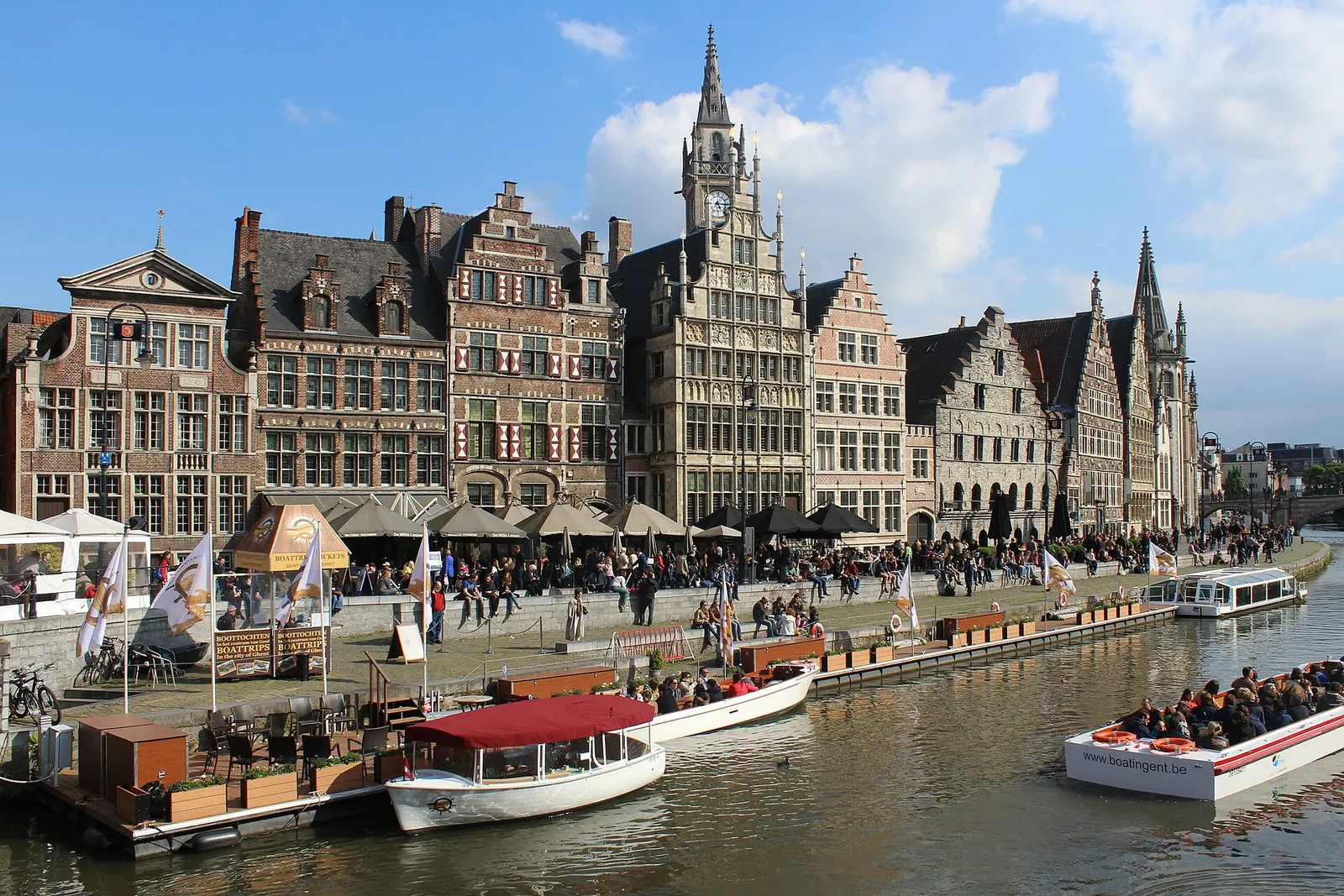
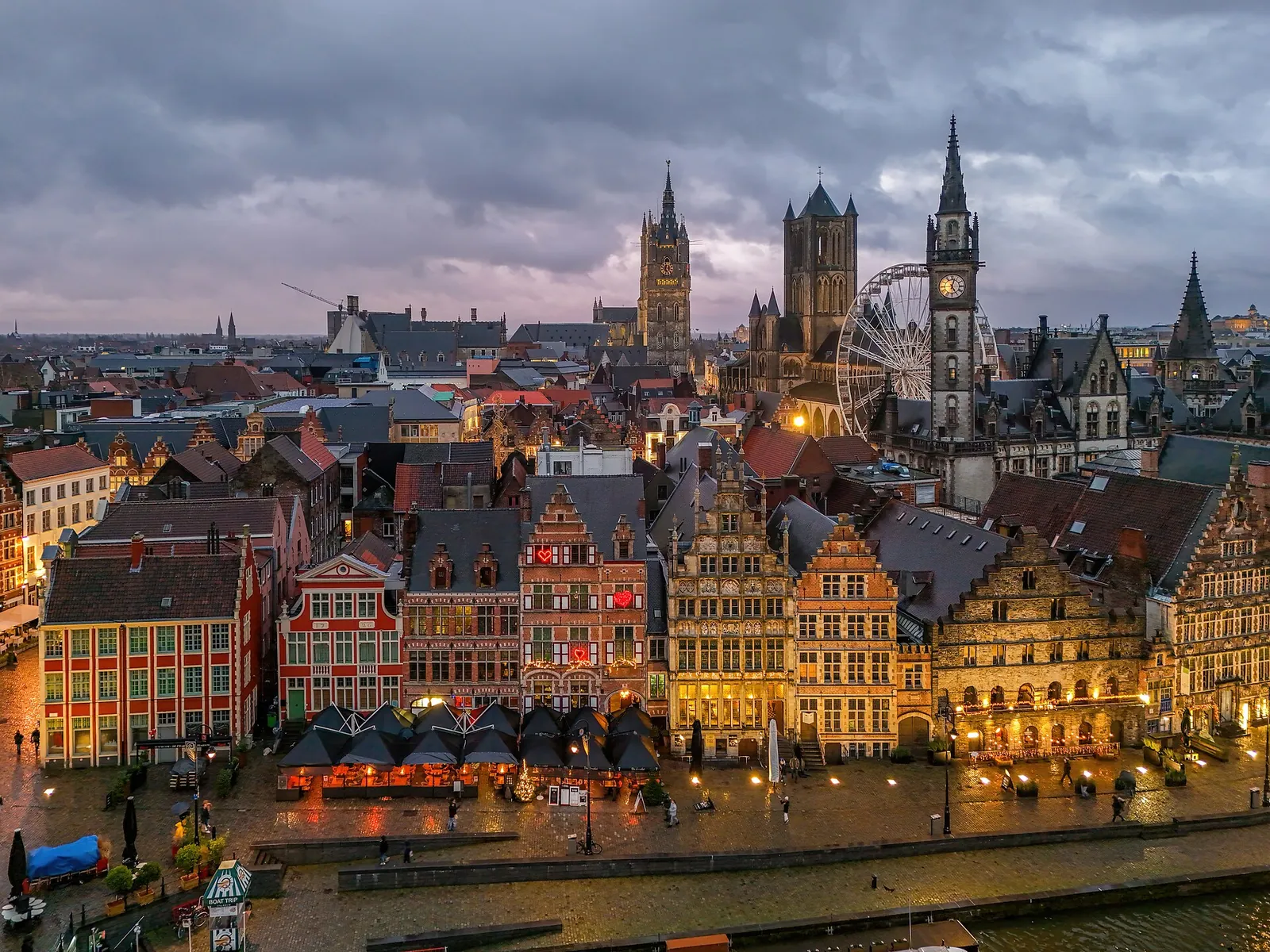
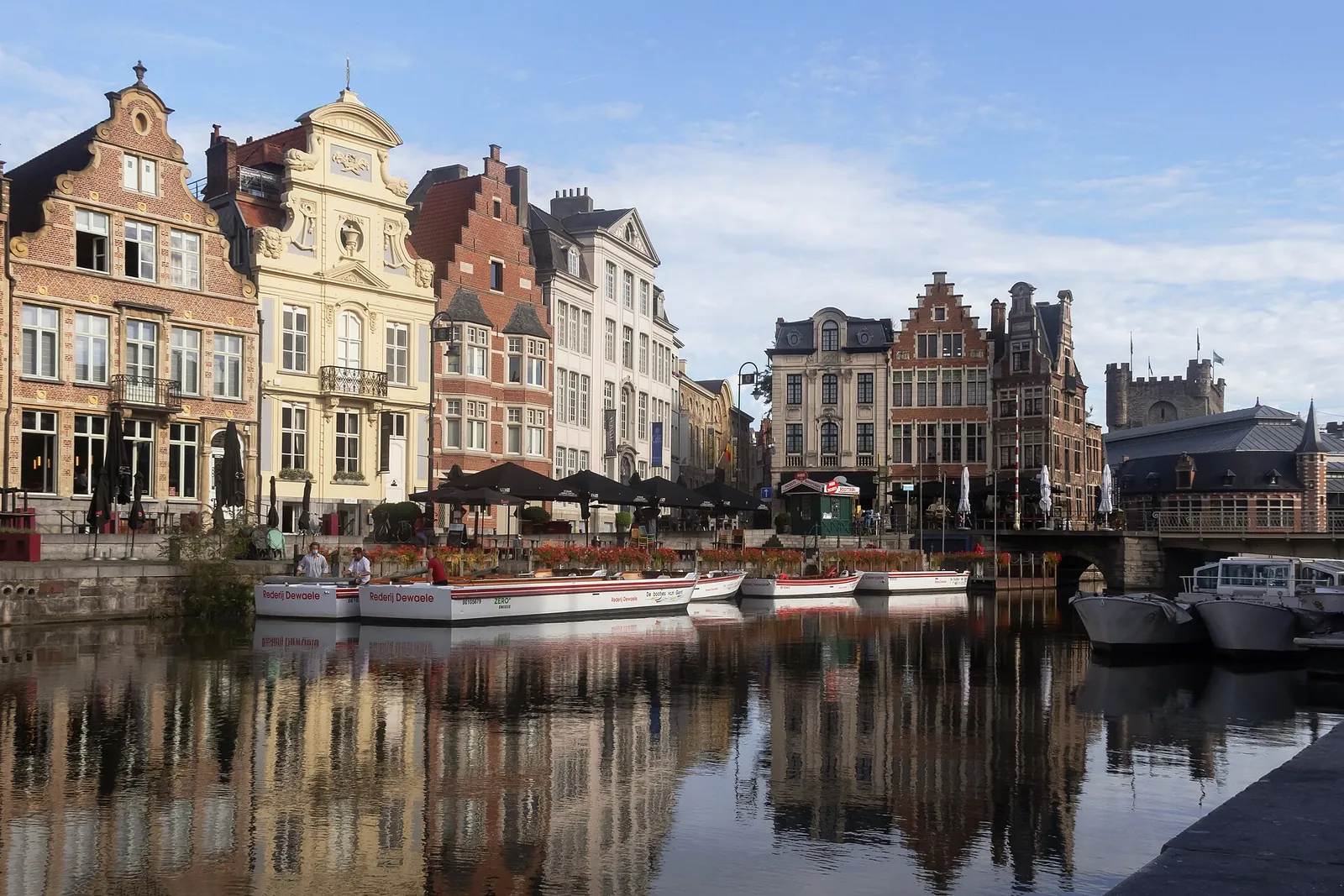
Save the best light for last: go down to the water at Graslei and Korenlei, the two quays facing each other across the Leie. The guild houses on Graslei are among the most photographed buildings in Belgium, and both quays fill up with people on warm evenings. After dinner nearby, return to St Michael’s Bridge to see the old town lit up.
Day 2: Gravensteen, a canal boat and on to Antwerp
Morning
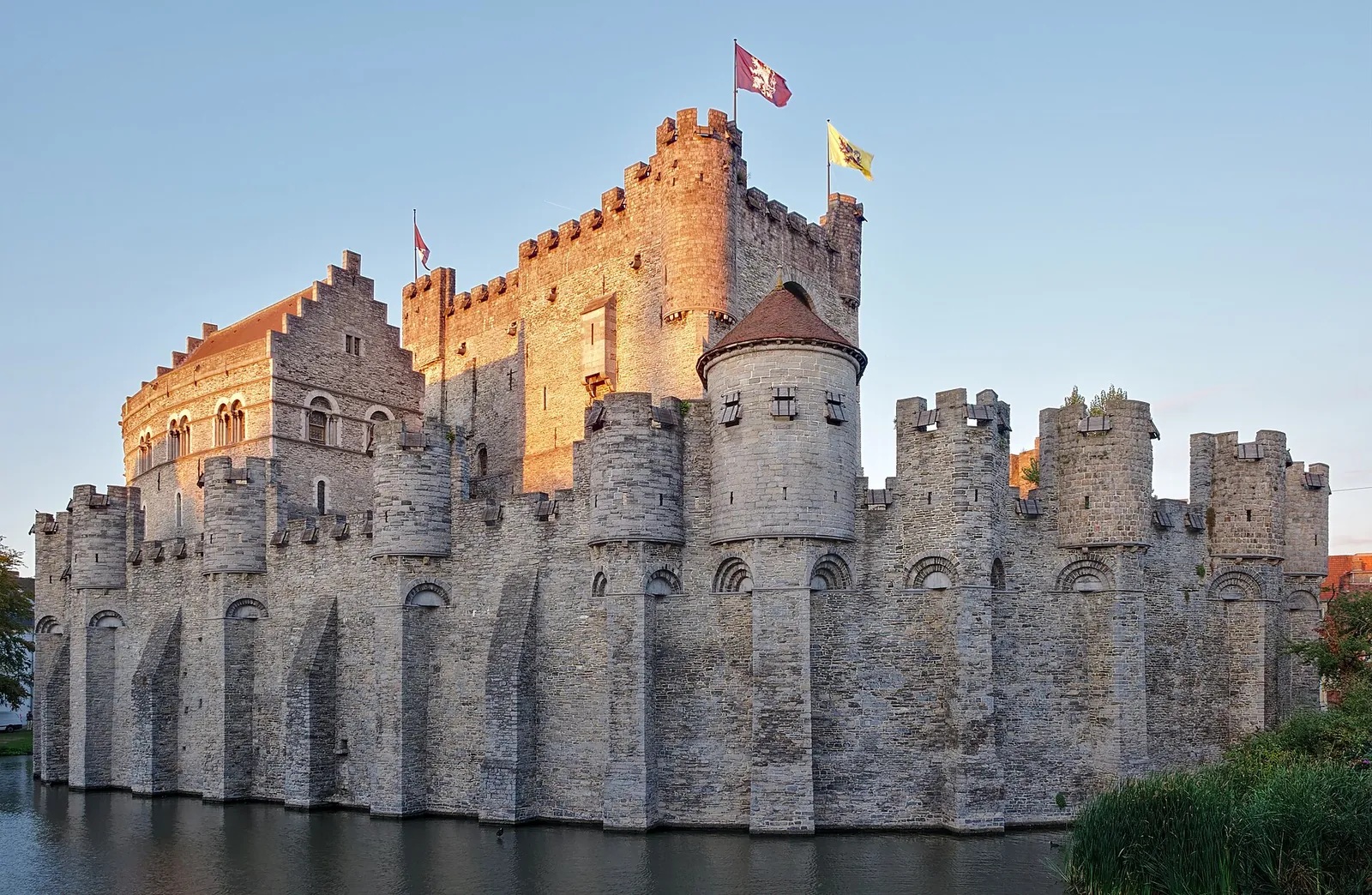
Get ready for a real castle! Start at the Gravensteen (Castle of the Counts) on Sint-Veerleplein, a five-minute walk from Graslei. It is a real medieval fortress in the middle of the city, with narrow tower stairs, battlements and a big view from the top.
The castle opens every day from 10:00 am to 6:00 pm, with last tickets at the desk at 4:40 pm, and closes on 24, 25 and 31 December and 1 January. Standard admission is EUR 15, and an audio guide is included. Children up to 12 enter free. The castle recommends reserving online so you are sure of your slot, although you can buy at the desk while capacity allows. There are no lockers or cloakroom, so travel light.
Behind the castle lies the Patershol, a small maze of cobbled streets and old houses that is now one of Ghent’s favourite places to eat.
Afternoon
After lunch, see the city from the water on a canal boat trip. Several operators run tours from the centre, and the captain also acts as your guide. Visit Gent lists a basic price of EUR 7.50 (EUR 4.50 for under-12s) and says the traditional tour runs every day, but each company sets its own schedule and fares, so check with the operator. Boat trips are included in the CityCard Gent.
Then head to Gent-Sint-Pieters station. Trams 1 and 3 run there from the centre every 10 minutes, according to Visit Gent. Direct trains connect Gent-Sint-Pieters with Antwerpen-Centraal; check the SNCB (belgiantrain.be) journey planner for current times and fares. Luggage lockers are available at both Ghent railway stations.
Evening
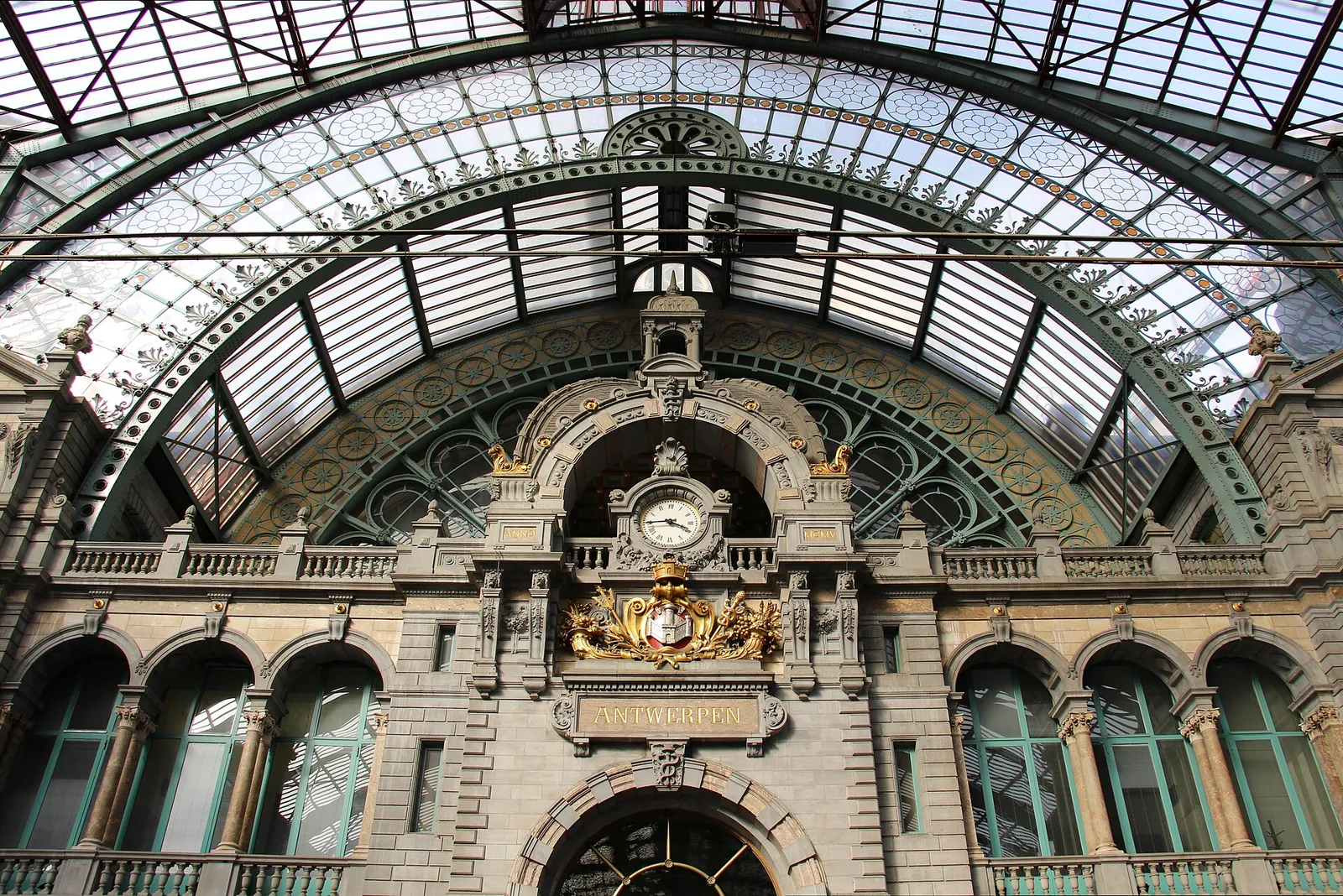
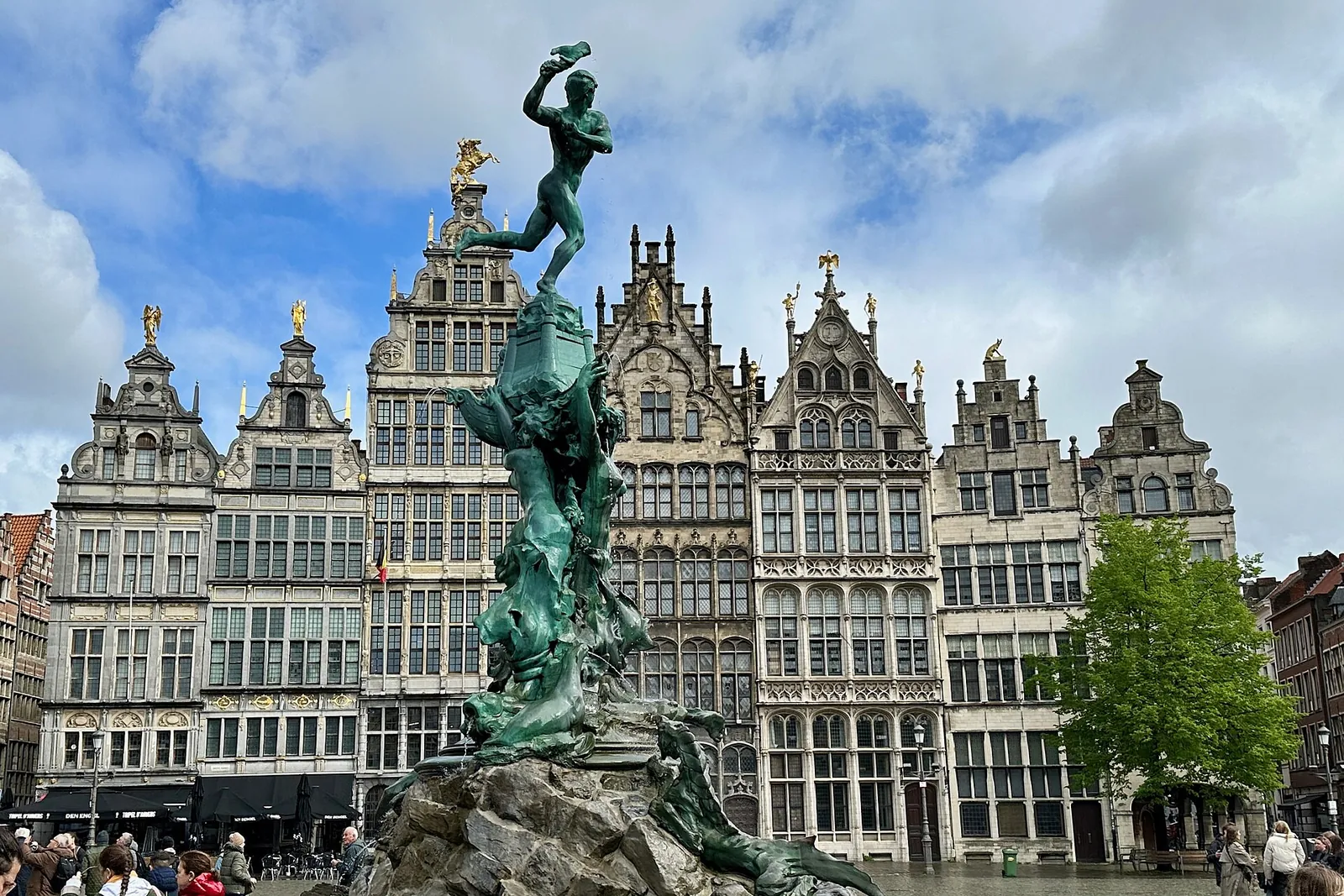
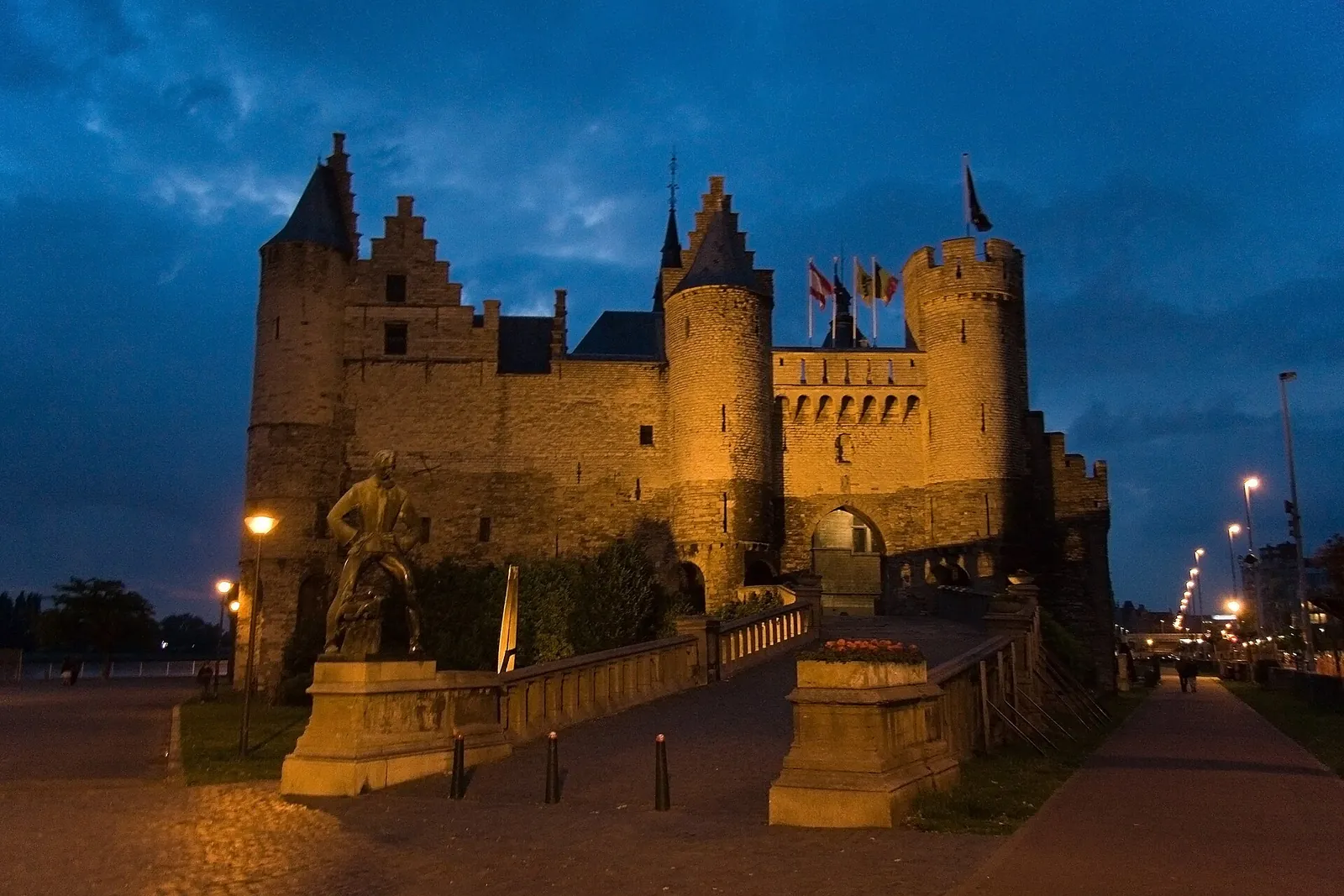
Arriving at Antwerpen-Centraal is part of the show: the station hall is one of the most impressive in Europe, so take a few minutes to look up before you head into the city. Walk down the Meir shopping street to the Grote Markt (about 20 to 25 minutes on foot, or hop on a tram). The square is framed by Renaissance guild houses and the City Hall, with the Brabo fountain in the middle. Finish with dinner in the old centre and a walk along the Scheldt to Het Steen, the castle by the river.
Day 3: Antwerp, Rubens and the MAS
Morning
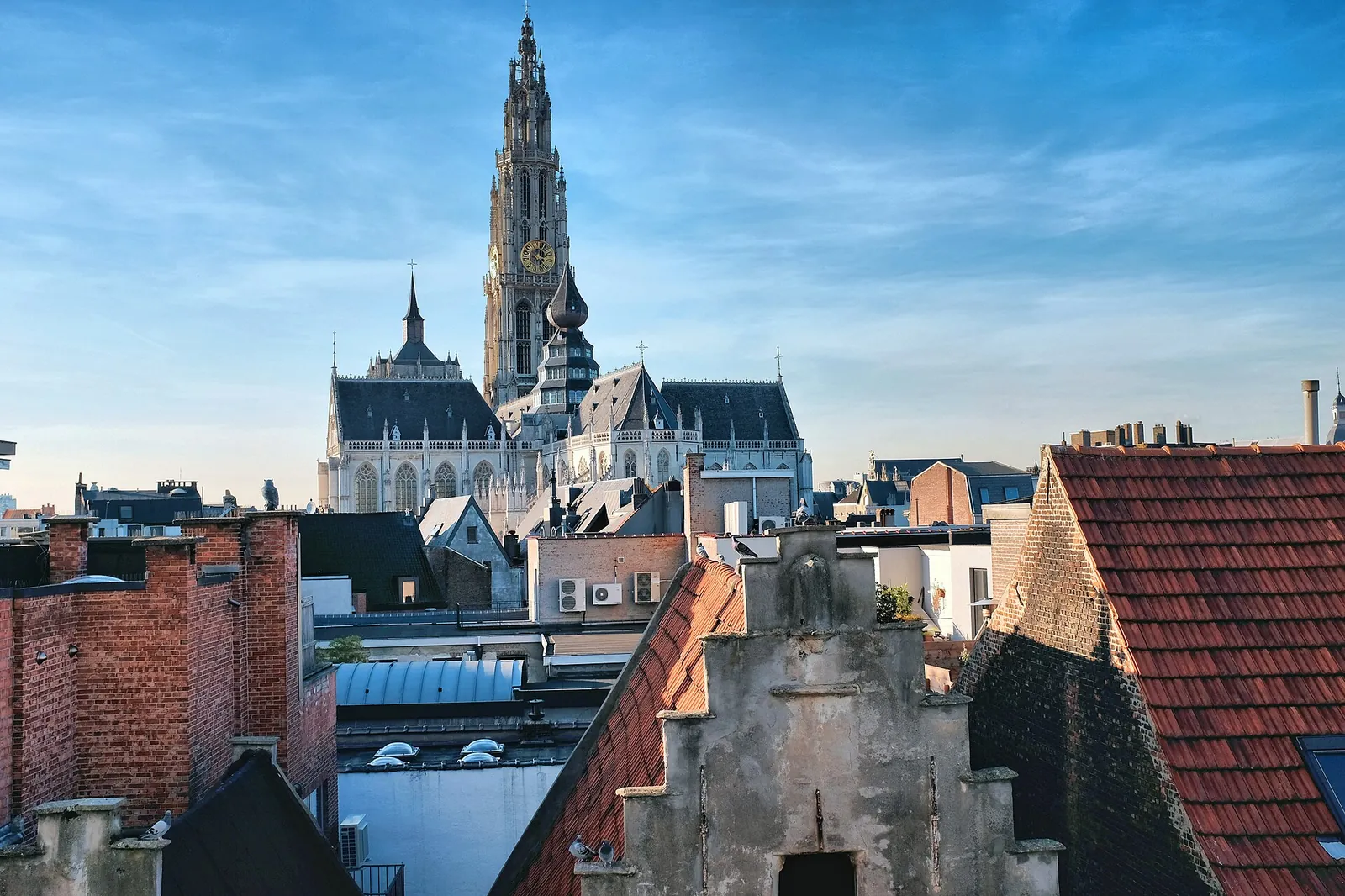
Your Antwerp day starts big: head to the Cathedral of Our Lady (Onze-Lieve-Vrouwekathedraal), just off the Grote Markt. The cathedral calls itself world heritage in Antwerp and a Gothic gem, and inside you will find masterpieces by Peter Paul Rubens.
The cathedral opens weekdays from 10:00 am to 5:00 pm, Saturday from 10:00 am to 3:00 pm and Sunday from 1:00 pm to 5:00 pm, every day except 1 January. It lists several exceptions in November and December 2026 (for example, Tuesday 3 November from noon, and Sunday 20 December closed to tourism all day), so check the official visit page for your dates. Admission is EUR 12 for adults, EUR 10 for students, over-60s and groups of 20 or more, and free for under-18s. The cathedral’s reception volunteers offer free guided tours at set times that you can join on the spot. Note that Rubens’ epitaph triptych is currently away for restoration and not on display.
Trams 3, 4, 5, 9 and 15 stop at Groenplaats, right beside the cathedral.
Late morning
Walk about 15 minutes east to the Rubenshuis on Hopland 13. The artist’s historic residence is temporarily closed for renovation, but the new Rubens Experience and Rubens’ garden are open, both from 10:00 am to 6:00 pm according to the museum’s site. The Rubens Experience uses immersive projections, interactive tools and real works by Rubens and Van Dyck, including his famous self-portrait. Check the official site for ticket prices and opening days, as these were not shown in a form we could verify.
About the Museum Plantin-Moretus: this printing house is normally a highlight, with the world’s two oldest printing presses and a copy of the 36-line Gutenberg Bible. It is closed for renovation from 3 August to 4 December 2026 while the permanent exhibition is updated. If your trip is after it reopens, slot it in here: it is open Tuesday to Sunday from 10:00 am to 5:00 pm (closed Mondays), adult admission is EUR 12, under-18s are free, and payment is cashless only.
Afternoon
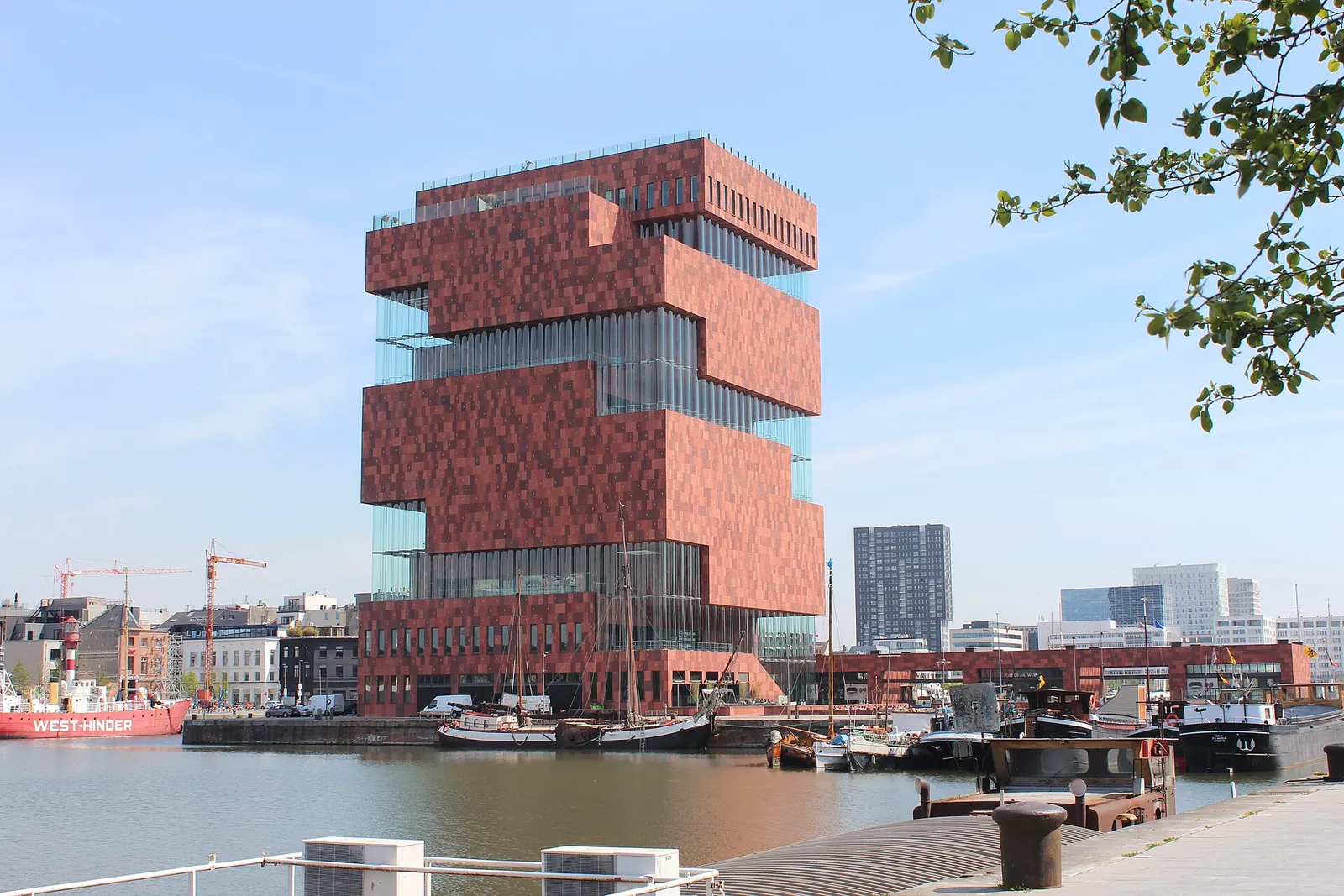
Take tram 7 to its final stop, MAS, in the Eilandje harbour district (from Antwerpen-Centraal, tram 24 towards Havenhuis also works, then a short walk). The MAS (Museum aan de Stroom) is a red stone tower stacked with galleries on Antwerp’s history, the port and the wider world.
The galleries are open Tuesday to Sunday from 10:00 am to 5:00 pm, last access 4:00 pm, and closed on Mondays (except Easter Monday and Whit Monday). Tickets are EUR 12 standard and EUR 8 for visitors aged 18 to 25, and under-18s go free. Reserve a time slot online in advance, even for free entry. Allow 90 minutes to two hours.
Here is the best part: the boulevard and the rooftop panorama are free without a ticket. They are open Tuesday to Sunday from 9:30 am to 10:00 pm, and until midnight from 1 April to 31 October. The panorama can close temporarily in bad weather.
Evening
Stay in Eilandje for sunset over the docks, then head back to the old centre for your last dinner.
Getting there and getting around
From Brussels Airport: The airport has its own railway station beneath the arrivals hall, with a direct train to Ghent. Visit Gent puts the journey at approximately 45 minutes. Trains also link the airport with Antwerp. Check the SNCB (belgiantrain.be) website for current fares and timetables, as we could not verify them from the official source today.
From Charleroi airport: According to Visit Gent, a Flibco bus runs from Brussels South Charleroi airport to Gent-Sint-Pieters station several times a day.
Getting around both cities: Both Ghent and Antwerp use De Lijn trams and buses. A single ticket costs EUR 3, a day ticket (24 hours) EUR 9 and a 3-day ticket (72 hours) EUR 18 for anyone 12 and over. Children under 6 travel free with a paying passenger. You can also tap a contactless bank card, phone or smartwatch on the white terminal on board: Visit Gent says one ride costs EUR 3 and you can change for free within the hour, using only one payment method per person. Both old towns are compact, so you will walk most of the time.
CityCard Gent: It costs EUR 49 for 48 hours or EUR 55 for 72 hours and gives one free entry to the city’s attractions, monuments and museums, plus trams, buses, a boat trip and bike use. It covers the Gravensteen and the Belfry, and gives EUR 10 off the Ghent Altarpiece ticket (you still need to book the altarpiece slot online). For a day and a half in Ghent, add up your planned visits first: the Belfry, castle and altarpiece alone come to about EUR 40.50 to 44.
Antwerp City Pass: Antwerp has its own city pass with museum entry and public transport. Several museums in this plan accept it, but check current prices on the official Visit Antwerpen site before buying.
Where to stay
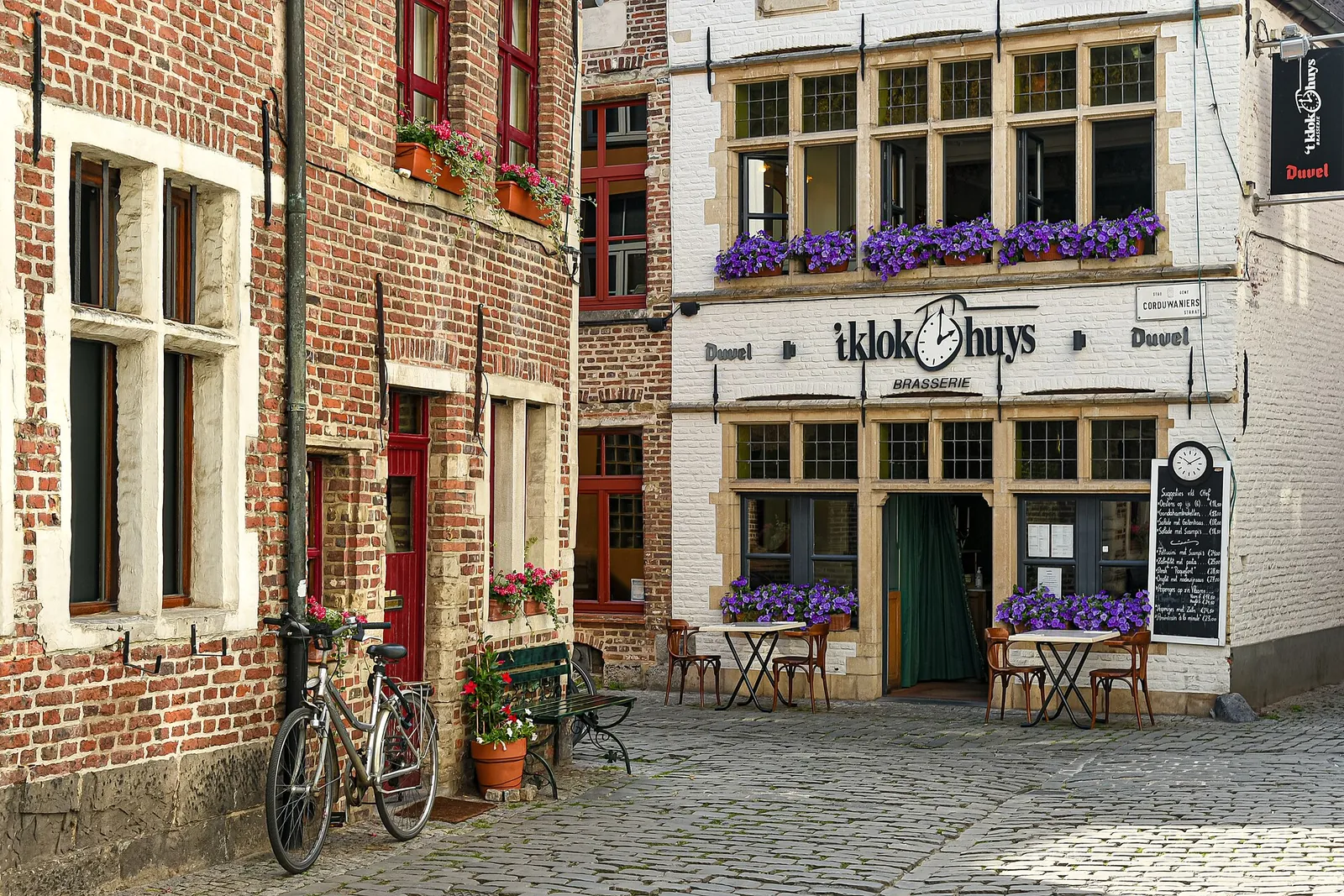
- Ghent old centre (Korenmarkt, Graslei, Patershol): Walk everywhere, with the castle, cathedral and canals on your doorstep. Best for a romantic first night.
- Around Gent-Sint-Pieters: Practical if you arrive by train and want an easy morning departure to Antwerp, with trams 1 and 3 to the centre.
- Antwerp old town (Grote Markt, cathedral area): The most atmospheric base, close to the cathedral, the Scheldt and the restaurants.
- Around Antwerpen-Centraal and the Meir: Convenient for trains and shopping, with trams in every direction.
Budget
| Item | Typical cost |
|---|---|
| Ghent Altarpiece only | EUR 12.50 |
| Ghent Altarpiece plus AR tour | EUR 16 (EUR 8 under 12) |
| Belfry of Ghent | EUR 13 |
| Gravensteen castle | EUR 15 |
| Ghent canal boat (basic price listed by Visit Gent) | EUR 7.50 |
| CityCard Gent, 48 h / 72 h | EUR 49 / EUR 55 |
| De Lijn single / day / 3-day ticket | EUR 3 / EUR 9 / EUR 18 |
| Cathedral of Our Lady, Antwerp | EUR 12 |
| MAS museum | EUR 12 (rooftop and boulevard free) |
| Museum Plantin-Moretus (after reopening) | EUR 12 |
| Rubens Experience, train fares, Antwerp City Pass | Check the official sites |
Paying as you go, the ticketed sights in this plan come to roughly EUR 72 to 76 per adult over three days (Rubens Experience extra), plus a De Lijn 3-day ticket. Our daily summary figure covers sights and city transport only. It excludes accommodation, meals, drinks, flights, the airport train and the Ghent to Antwerp train.
Practical tips
- Book ahead: the Ghent Altarpiece (sells out on weekends), a MAS time slot (required even for free entry), and the Gravensteen if you visit in high season.
- Plan around Mondays in Antwerp: MAS and Plantin-Moretus are closed. Ghent’s Belfry and Gravensteen open every day.
- Churches are working churches: Antwerp’s cathedral keeps shorter hours on Saturdays and Sundays because of services. Dress respectfully and keep your voice down during Mass.
- SIM and eSIM: EU roaming covers European SIMs. Other visitors can buy a local SIM or an eSIM before arrival.
- Visa and entry: Belgium is in the Schengen area, and the rules depend on your nationality. Check the official Belgian Foreign Affairs “Travel to Belgium” page (diplomatie.belgium.be) well before you book.
Heads-up
Ghent and Antwerp are friendly, easy cities, but a few things are worth knowing so nothing spoils your trip:
- Pickpockets: The UK government’s travel advice for Belgium says theft and pickpocketing are common in crowded areas. It advises taking extra care in major railway stations and on public transport, particularly at night, and being wary of attempts to distract you. Keep your bag zipped and your phone out of back pockets, especially at Antwerpen-Centraal.
- Strikes: The same advice warns that strikes are an ongoing issue in Belgium, can be announced at short notice and can cause severe travel disruption, including to trains. Check the news the evening before your Ghent to Antwerp transfer.
- Security: Belgium’s national threat level is set at 3, “Serious”, according to GOV.UK. Expect a visible police presence and follow the instructions of local authorities. You can sign up to BE-Alert for emergency SMS alerts.
- Bad weather: The MAS rooftop panorama may close temporarily in bad weather. Keep a museum as a backup.
- Emergencies: Call 112.
FAQ
Is 3 days enough for Ghent and Antwerp?
Yes, for the highlights. A day and a half in each city covers the Ghent Altarpiece, the Belfry, the castle, a canal boat, Antwerp’s cathedral, Rubens and the MAS at a comfortable pace. Add a day if you want more museums or shopping in Antwerp.
Do I need to book the Ghent Altarpiece in advance?
It is strongly recommended. Visit Gent says tickets sell out quickly on weekends and holidays, and CityCard holders must book online too.
Is the CityCard Gent worth it?
If you visit the Belfry, the Gravensteen, take a boat trip and use trams, the 48-hour card at EUR 49 usually pays off, and it also gives EUR 10 off the altarpiece. If you only plan one or two sights, pay as you go.
What can I see for free?
The Graslei, Korenlei and St Michael’s Bridge in Ghent, plus Antwerp’s Grote Markt, Antwerpen-Centraal station and the MAS boulevard and rooftop panorama. Under-18s enter Antwerp’s cathedral and the MAS for free.
When is the best time to visit?
April to June and September bring mild weather for walking and long evenings by the water. Winter is quieter, but check holiday closures around Christmas and New Year.
Sources
Prices, hours and rules change. We checked these on 1 November 2026; please confirm on the official page before you book.
- Saint Bavo's Cathedral Ghent: Opening hours
- Saint Bavo's Cathedral Ghent: Ghent Altarpiece tickets (type of tour)
- Visit Gent: The Ghent Altarpiece
- Historische Huizen Gent: Gravensteen, info en tarieven
- Historische Huizen Gent: Belfort, info en tarieven
- Visit Gent: CityCard Gent
- Visit Gent: Boat trips on Ghent's inland waterways
- Visit Gent: To Ghent by train
- Visit Gent: To Ghent by plane
- Visit Gent: Public transport in Ghent
- De Lijn: Tickets (vervoerbewijzen)
- Cathedral of Our Lady Antwerp: Plan your visit
- Cathedral of Our Lady Antwerp (official site)
- Rubenshuis (official site)
- Museum Plantin-Moretus (official site)
- Museum Plantin-Moretus: Plan your visit
- MAS: Tickets and rates
- MAS: How and when to get here
- Safety and security: Belgium travel advice (GOV.UK, FCDO)
- Travel to Belgium (FPS Foreign Affairs, Belgium)
Photo credits (11)
- Guild houses and tour boats along the Graslei in Ghent: Martinvl, CC BY-SA 4.0, via Wikimedia Commons
- Ghent's three towers seen from St Michael's Bridge: Michielverbeek, CC BY-SA 4.0, via Wikimedia Commons
- Graslei and Ghent's towers glowing at dusk: Giles Laurent, CC BY-SA 4.0, via Wikimedia Commons
- Gravensteen castle in warm evening light, Ghent: Trougnouf (Benoit Brummer), CC BY 4.0, via Wikimedia Commons
- Canal boats moored on the Korenlei in Ghent: Michielverbeek, CC BY-SA 4.0, via Wikimedia Commons
- Cathedral of Our Lady rising above Antwerp's rooftops: Julien Grandgagnage, CC BY-SA 4.0, via Wikimedia Commons
- The red stone MAS tower by the Eilandje docks: Zinneke, CC BY-SA 3.0, via Wikimedia Commons
- The grand clock wall inside Antwerpen-Centraal station: Fred Romero from Paris, France, CC BY 2.0, via Wikimedia Commons
- Cosy cobbled corner with flower boxes in Ghent: Jorge Franganillo, CC BY 2.0, via Wikimedia Commons
- Brabo fountain and guild houses on Antwerp's Grote Markt: Zeete, CC BY-SA 4.0, via Wikimedia Commons
- Het Steen castle lit up at dusk in Antwerp: Maros M r a z (Maros), CC BY-SA 3.0, via Wikimedia Commons
More Belgium itineraries
 3 days
3 Days in Brussels and Bruges: A Day-by-Day Itinerary
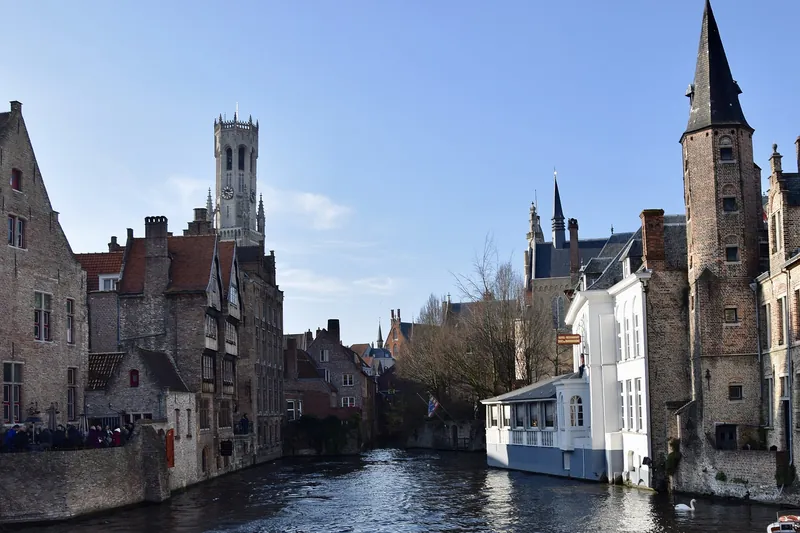
3 days in Brussels and Bruges: Grand-Place, Magritte and the Atomium, plus a Bruges day trip with the Belfry climb and a canal boat. Prices checked.
 3 days
3 Days in Amsterdam: A Day-by-Day Itinerary
A 3-day Amsterdam itinerary: Anne Frank House and the Jordaan, Rijksmuseum, Van Gogh Museum and free ferries to Noord, with verified 2026 prices.
 3 days
3 Days in Athens: A Day-by-Day Itinerary
A 3-day Athens itinerary: the Acropolis and its museum, Ancient Agora, Plaka, Panathenaic Stadium and the National Archaeological Museum.
Compare all Belgium itineraries →
This is a researched plan, not a personal trip report. How we research · Affiliate disclosure