
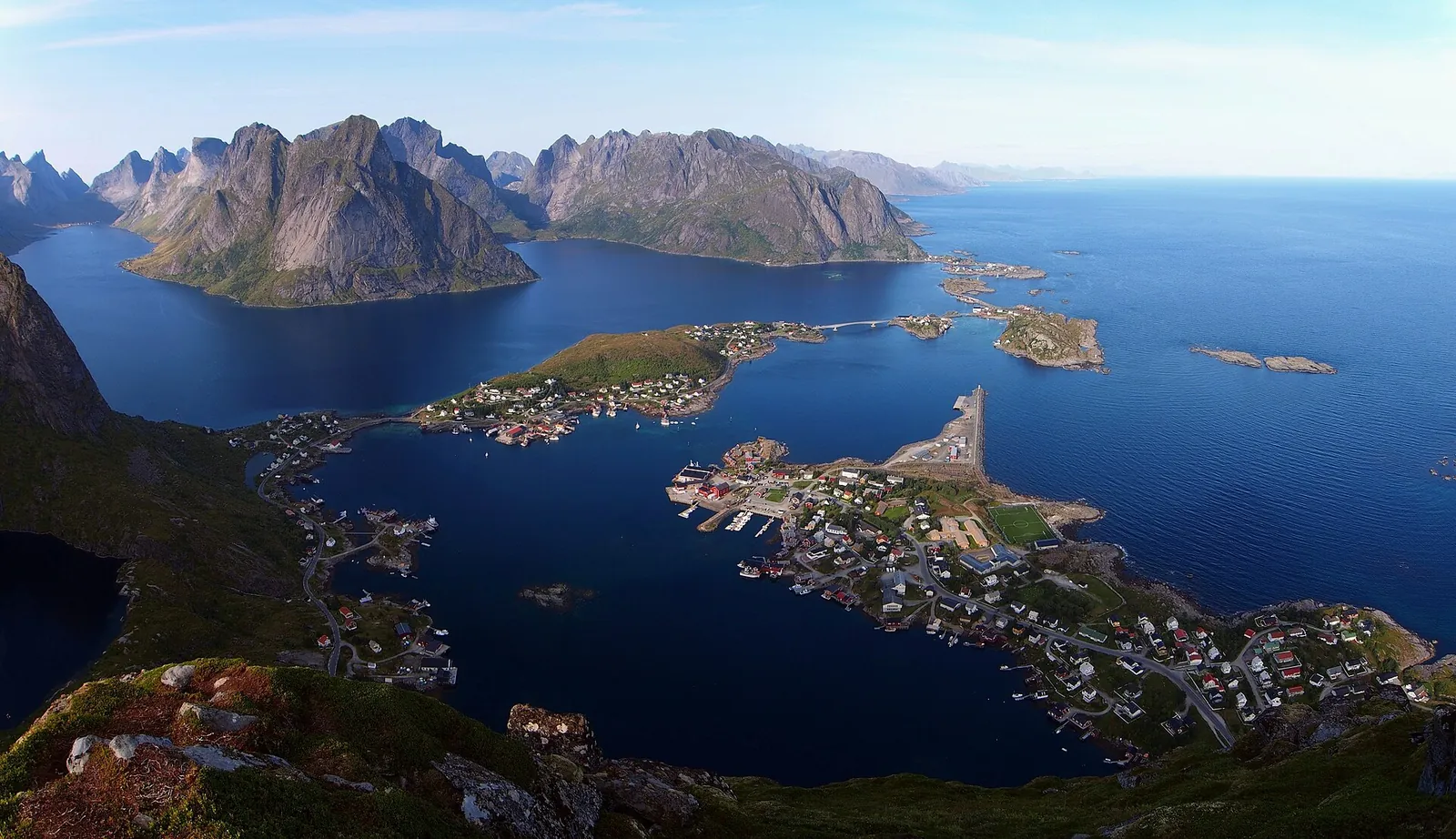
5 Days in the Lofoten Islands: A Day-by-Day Itinerary
A 5-day Lofoten road trip: Reine and Hamnøy, the Reinebringen hike, Nusfjord and Kvalvika beach, the Lofotr Viking Museum and Henningsvær, with ferry and flight tips.
- 🗓️ Trip length
- 5 days
- ☀️ Best time
- June to August for hiking and midnight sun, late September to March for the aurora
- 💰 Daily spend
- NOK 600-1,500 for car costs, fees and sights (excl. car hire, stay and meals)
- ✅ Facts checked
- 1 November 2026
Get ready for jagged peaks rising straight out of the sea, red fishing cabins on stilts, white sand beaches with turquoise water and a light that seems to change every ten minutes. The Lofoten Islands sit well above the Arctic Circle off the coast of Northern Norway, and one road, the E10, threads them together from east to west across bridges and tunnels.
This cheerful five-day plan is a road trip for first-timers who want the classic Lofoten scenery at a steady pace. You start in the far west around Reine and Hamnøy, climb Reinebringen for the famous view, walk to Kvalvika beach, step into Viking history at Lofotr, and finish in Henningsvær and Svolvær in the east. It works best from June to August, but you can follow the same route in winter if you skip the steep hikes (more on seasons below).
At a glance
| Day | Area | Highlights |
|---|---|---|
| 1 | Moskenes, Reine and Hamnøy | Arrive by ferry from Bodø, the view of Hamnøy’s red cabins, an evening walk in Reine |
| 2 | Reine and Å | Reinebringen hike (484 m), the village of Å at the end of the E10 |
| 3 | Flakstad | Nusfjord fishing village, the hike to Kvalvika beach |
| 4 | Vestvågøy | Lofotr Viking Museum at Borg, drive east to Henningsvær |
| 5 | Henningsvær and Svolvær | Harbour stroll, then fly or sail home from Svolvær or drive to Evenes |
One planning rule before you start: you really want a car. Buses exist, but they run on a few main roads and the best viewpoints, trailheads and villages are spread out along the E10 and its side roads. Book the car early in summer, because rental cars on the islands can run short.
Day 1: Arrive in the west, Reine and Hamnøy
Morning
Welcome to Lofoten! The classic way in is the car ferry from Bodø to Moskenes, which lands you right next to Reine. Visit Lofoten lists the crossing at about 3.5 hours. In summer, it asks you to order tickets at least one day in advance, and every passenger must register with full name, nationality and date of birth before boarding.
If you fly instead, see “Getting there and getting around” below and simply start this day in the afternoon.
Afternoon
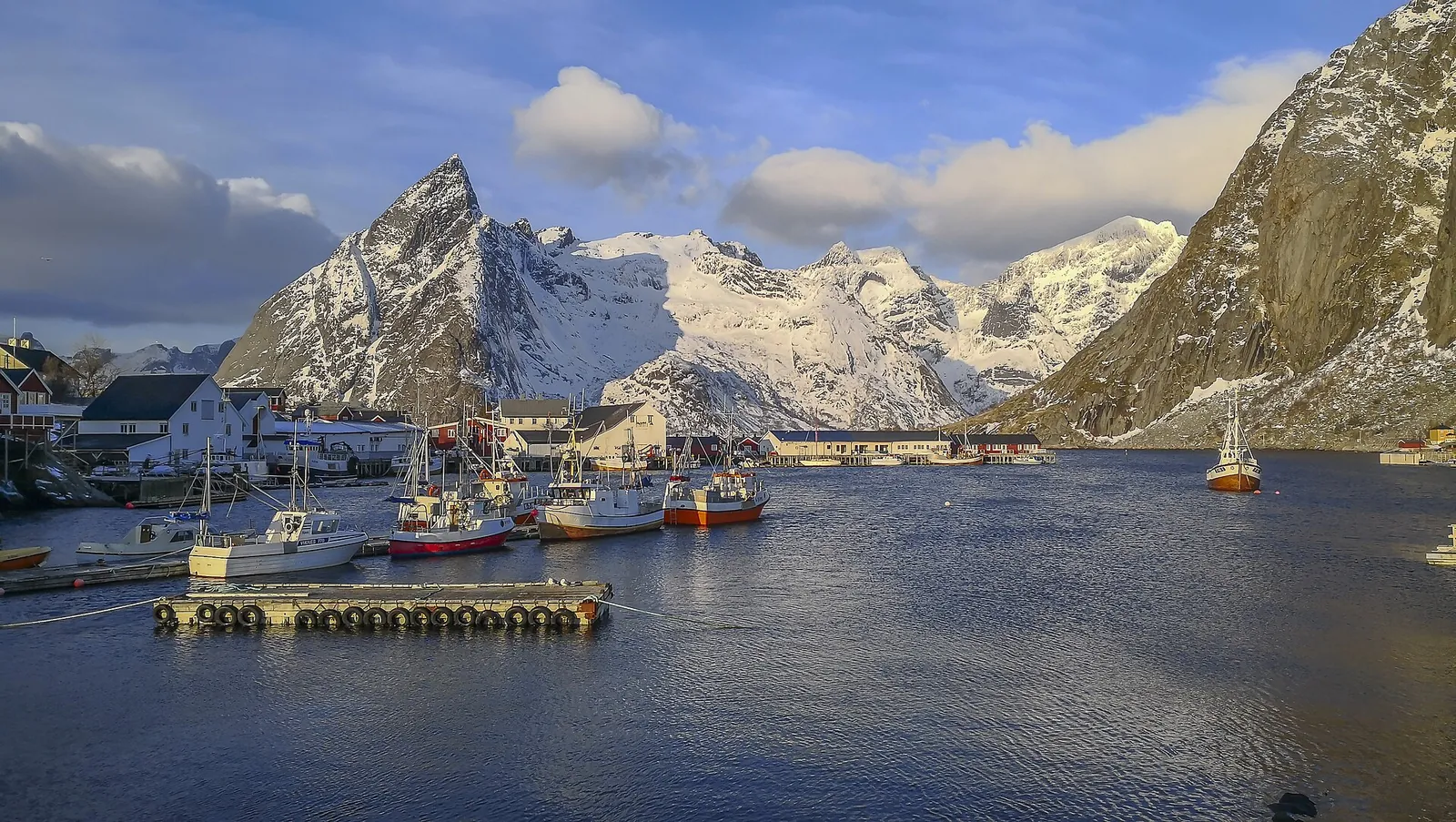
From the ferry quay at Moskenes it is a short drive north along the E10 to Hamnøy. Pull over at a safe parking spot near the bridge and enjoy the view everyone comes for: bright red fishermen’s cabins (rorbuer) on the water, with sharp granite peaks behind them. Please park only in marked areas; the roadsides here are narrow and busy in summer.
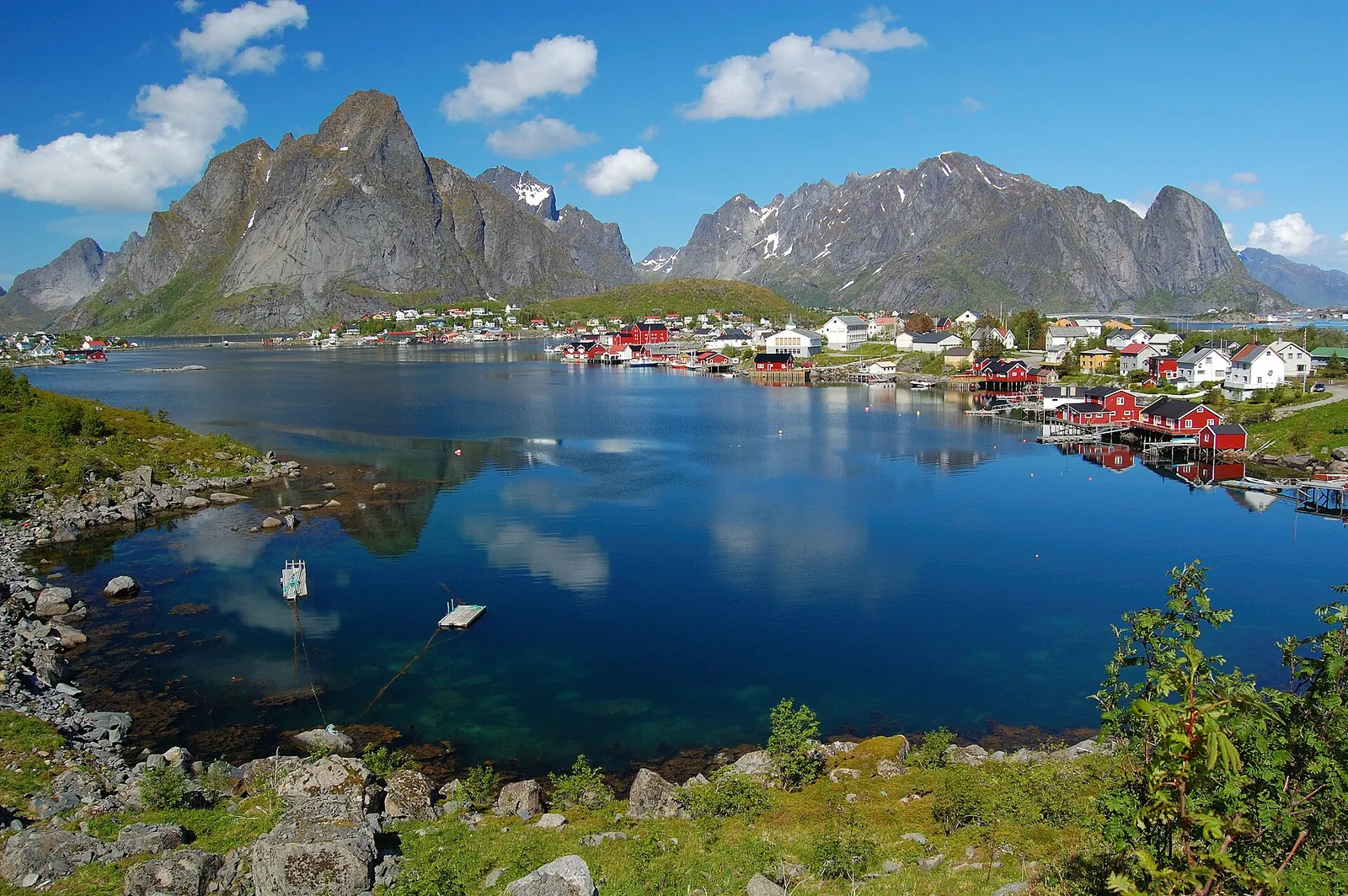
Continue to Reine, one of the most photographed villages in Norway. Wander along the harbour and over the small bridges, and look up at Reinebringen, the mountain you will climb tomorrow.
Evening
Check in to a rorbu or guesthouse in or near Reine and have an easy dinner. In June and early July the sun will not set at all, so do not be surprised if it still feels like afternoon at midnight. Get some sleep before tomorrow’s stairs.
Day 2: Reinebringen and the end of the road at Å
Morning
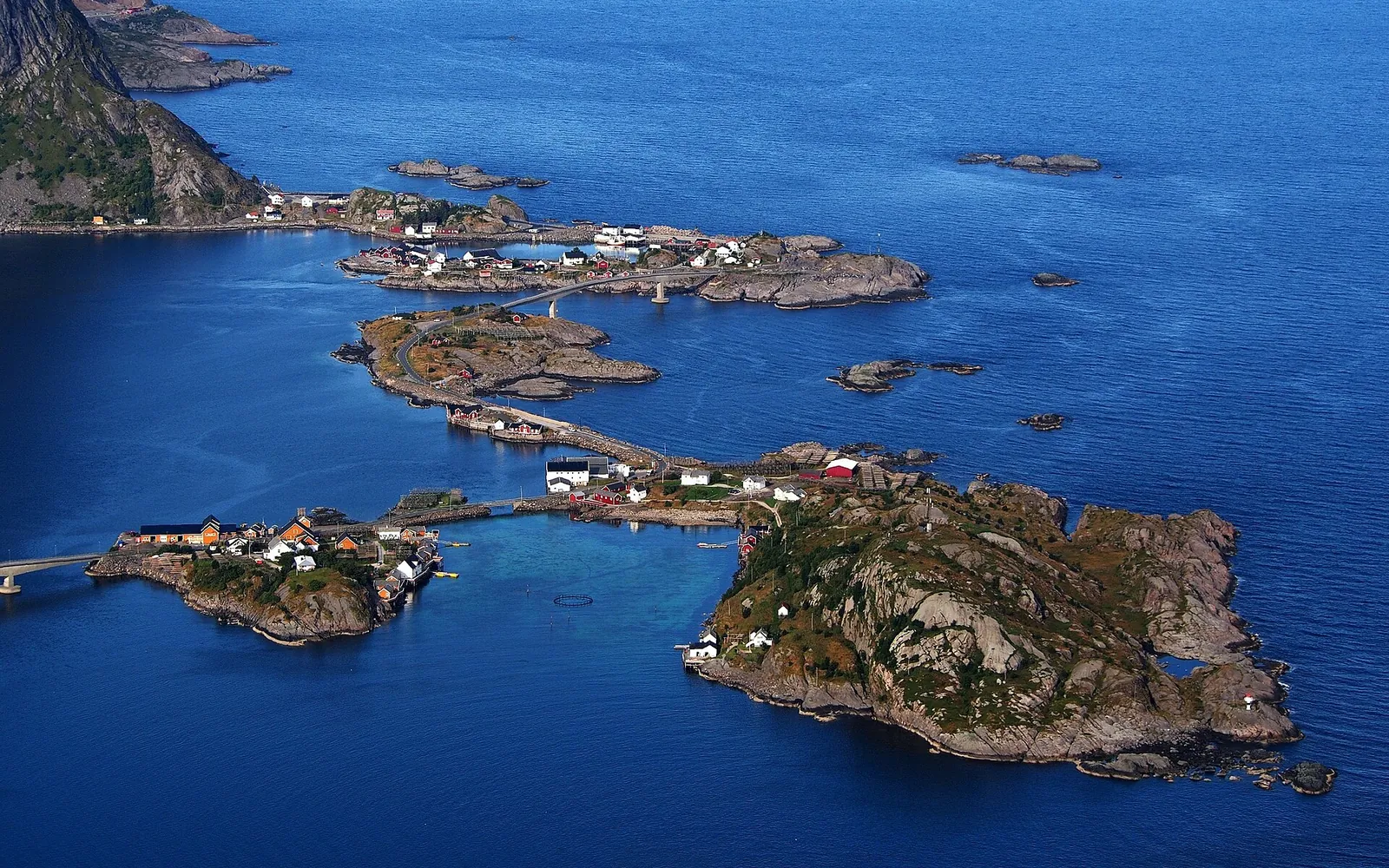
This is the day for the big view, and it is worth every step. Reinebringen rises to 484 metres above sea level, and Visit Lofoten describes the route as about 2 km round trip, taking roughly 1 to 2 hours for the hike itself. The path is a long stone staircase built by Sherpas; Visit Lofoten counted 1,974 steps as of January 2024.
Practical details from Visit Lofoten:
- Season: May to September. The hike is strictly not recommended in winter, especially with snow on the mountains.
- Possible closures: parts of the summer can see the trail closed for step maintenance, so check the official Reinebringen Facebook page (linked from Visit Lofoten) before you go.
- Parking: use the parking at Reine’s outer harbour. From there it is about 30 minutes (1.9 km) on foot along the old road beside the E10 to the trailhead. Buses stop at “Reine kryss”.
- Bring water: there is nowhere to fill up on the trail.
- Footwear and safety: wear proper shoes, stay on the stairs and check the forecast first. It is not suitable for young children or dogs.
Go early in the day. The stairs get busy, and in rain or low cloud you lose both the grip and the view, so be ready to swap this with Day 3 if the weather is better tomorrow.
Afternoon
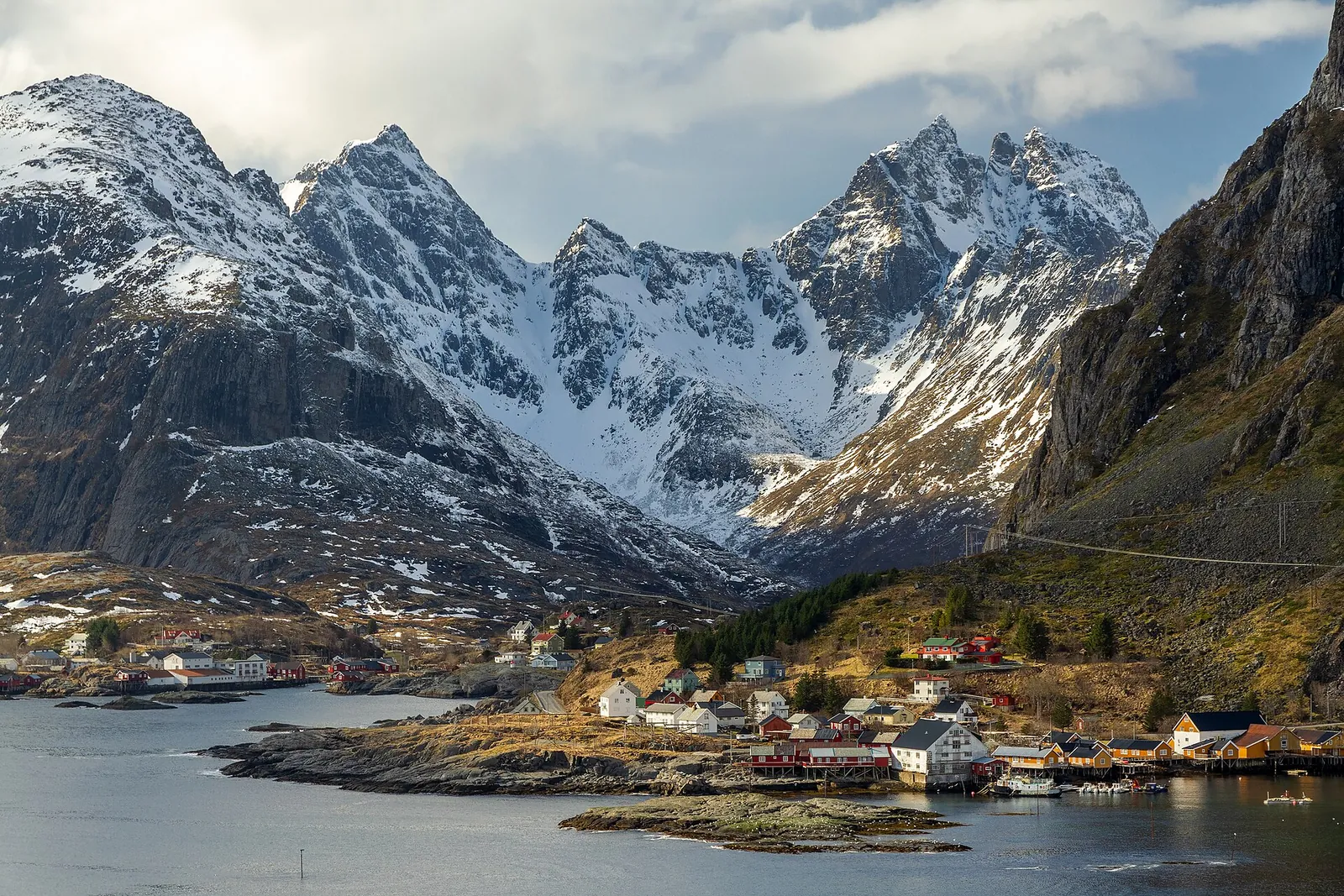
After lunch, drive to the very end of the E10 at Å, a tiny fishing village with old drying racks, boathouses and wide sea views. Walk to the shoreline behind the village for a look towards the open sea. Several small museums and cafés operate here in season; check opening hours locally, as many are reduced outside summer.
On the way back, stop at Sakrisøy and the bays around Reine for more photos of yellow and red cabins against the mountains.
Evening
Return to your base. If the evening is clear, the light on the peaks around Reinefjorden is wonderful late in the evening in summer.
Day 3: Nusfjord and Kvalvika beach
Morning
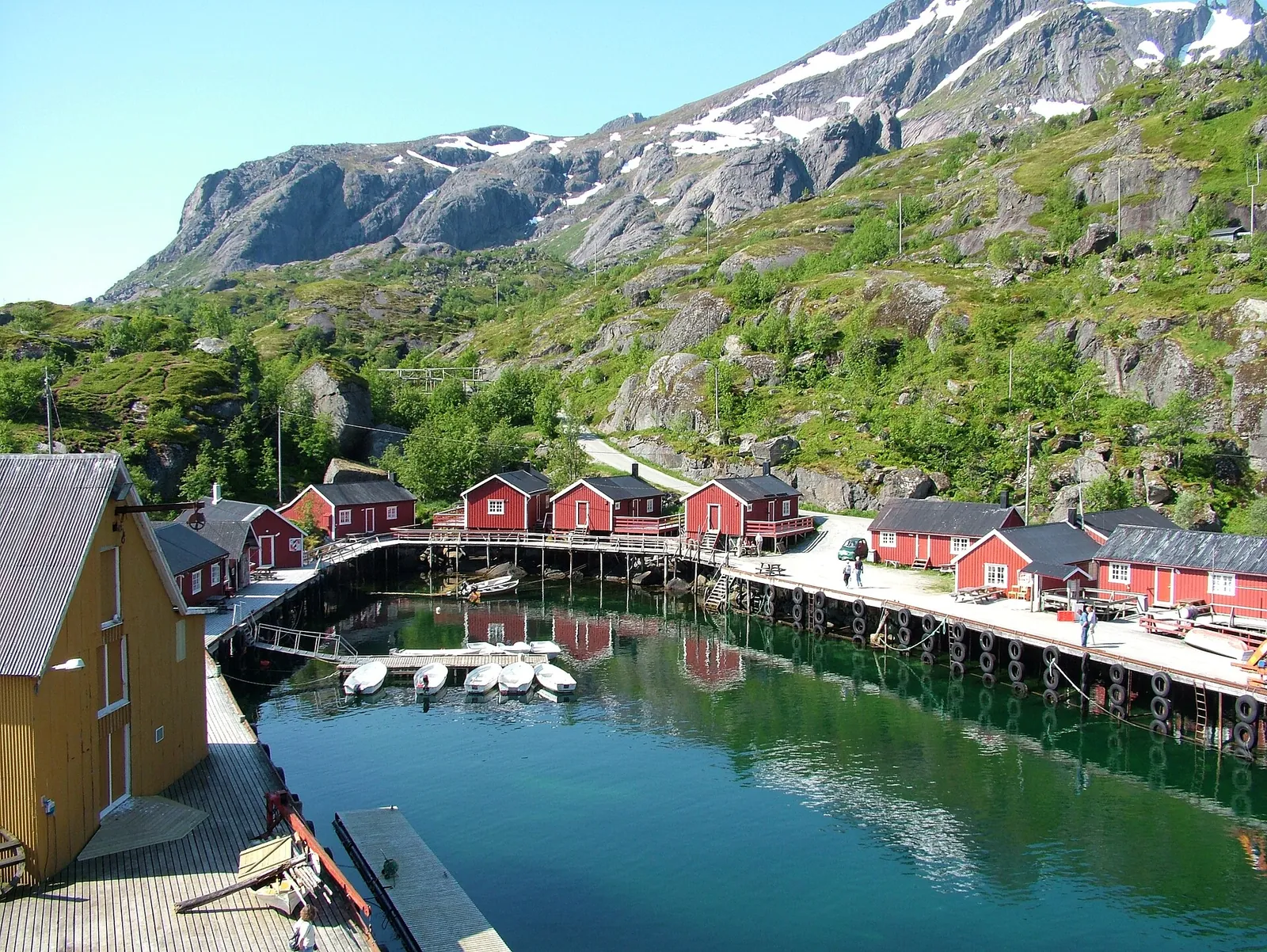
Get ready for fishing village charm and white sand today! Drive east on the E10 to Nusfjord, which Visit Lofoten calls “one of the oldest and best-preserved fishing villages in Norway”. It sits about 6.2 km off the E10, and the village did not get its first road until the 1960s. According to Visit Lofoten, settlement here goes back to 425 BC, and in the early 1900s more than 1,500 fishermen lived in Nusfjord during the season.
Stroll past the old smithy, smokehouse and red and ochre buildings around the tight little harbour. Note that Nusfjord is run as a resort village, and visitors are often reported to pay an entrance fee; Visit Lofoten does not list a price, so check the official site (Nusfjord Arctic Resort) before you go.
Afternoon
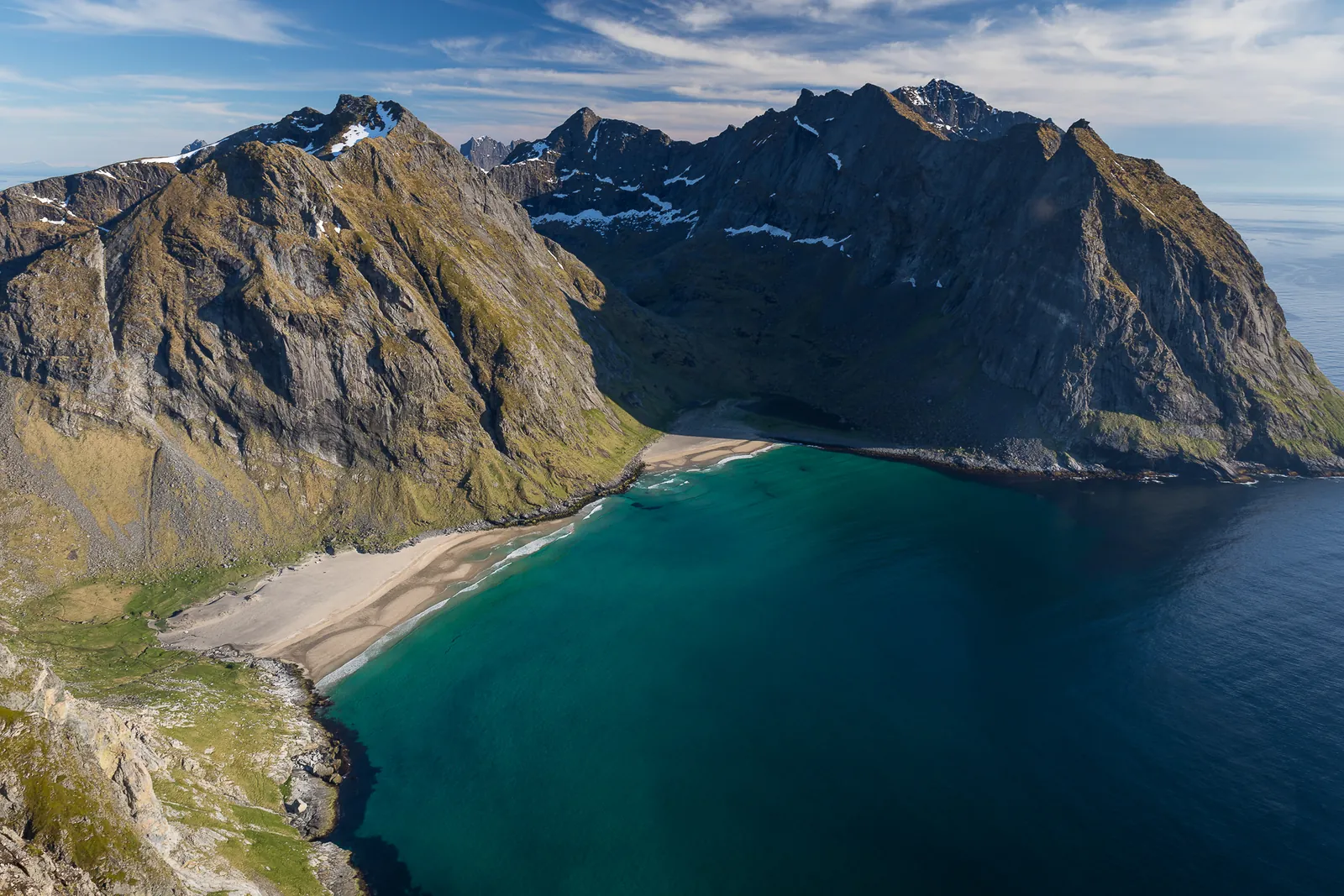
Continue to Fredvang for the walk to Kvalvika beach, a white sand bay tucked between steep mountains on the ocean side of the islands. Visit Lofoten’s details:
- Start: Fredvang school is the recommended starting point (signposted after you cross the Fredvang bridges), with Innersand parking as an alternative. In summer the school car park has EV charging points, drinking water and rubbish bins.
- Distance and time: about 3 km directly to the beach, roughly 1.5 hours one way.
- Bonus summit: the trail also leads up Ryten (543 m), about 3.5 km and 2 hours one way, with a famous view down onto the beach.
- Difficulty: graded “easy”, and possible in spring, summer and autumn (with skis or snowshoes in winter).
- Trail work: Visit Lofoten noted fenced-off sections and detours in summer 2025, so follow the posted signs.
Allow at least three to four hours for the beach and back, more if you add Ryten. The nearest shops, fuel and accommodation are in Ramberg, 7 km from Fredvang, so fill your water bottles and buy snacks before you set off.
Evening
On the way back, stop at the white sand beaches around Ramberg and Flakstad for an easy evening walk. Visit Lofoten lists Kvalvika itself as a midnight sun spot from around 27 May to 17 July, if you have the energy for a late hike.
Day 4: The Vikings at Borg, then east to Henningsvær
Morning
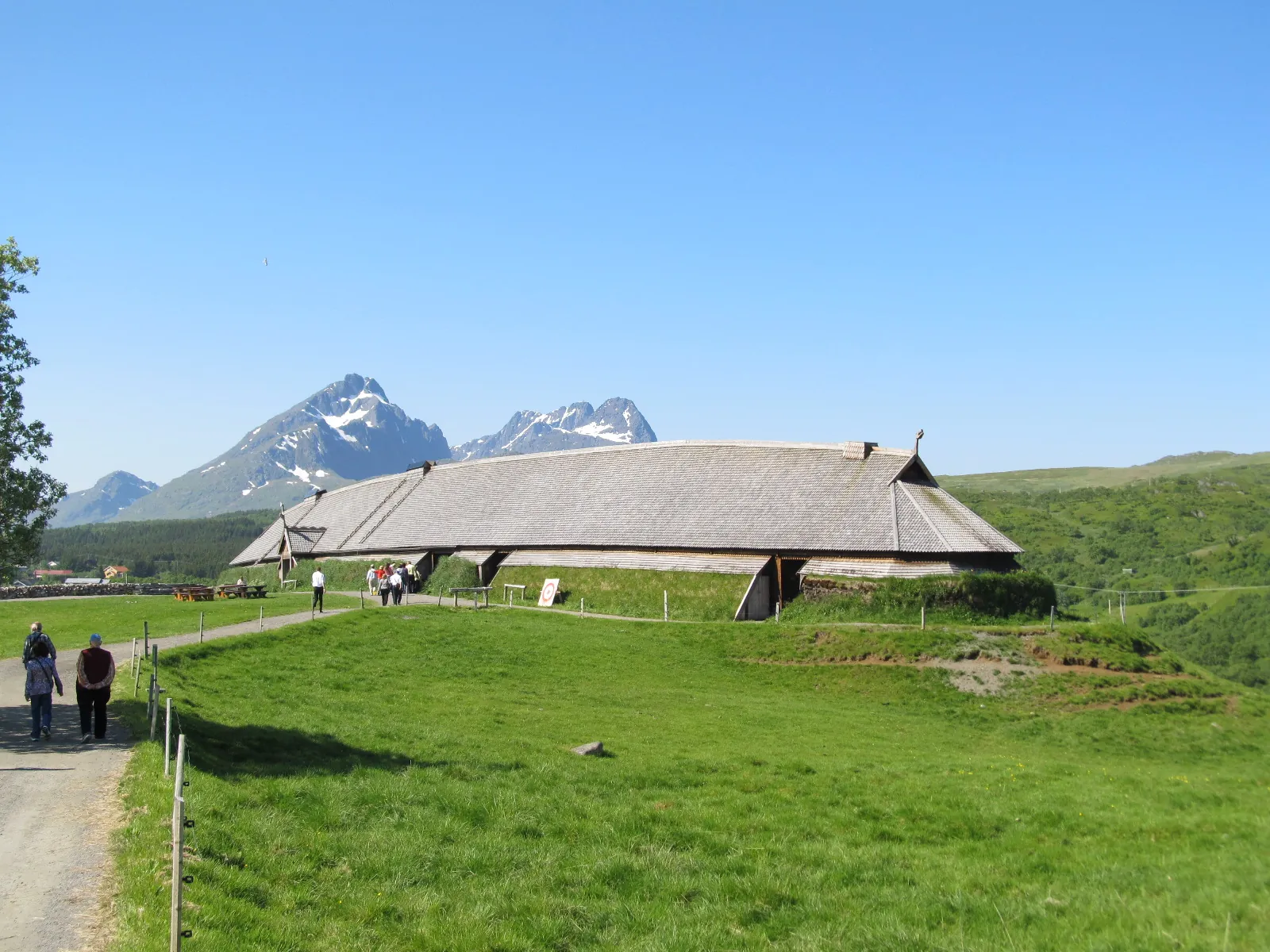
Today swaps mountains for Vikings. Pack up and drive east to Vestvågøy, passing Leknes. Your stop is the Lofotr Viking Museum at Borg (address: Prestegårdsveien 4, 8360 Bøstad). Its centrepiece is a reconstruction of the original chieftain’s house found at Borg, which the museum describes as the world’s longest reconstructed longhouse. Inside you will find artefacts, craftspeople and guides, and outside there is a harbour area with seasonal activities.
Museum Nord lists these prices for 16 September to 31 December 2026:
- Adult NOK 210
- Child (6 to 15) NOK 160, under 6 free
- Concession or student NOK 200
- Family (2 adults, 3 children) NOK 620
Watch the opening days. From 1 November to 31 December 2026, the museum is open only on Wednesdays and Saturdays, 11:00 to 17:00, and closed on 26 December. Summer hours are longer but were not yet published when we checked, so look at the official site for your dates. There is a café and a shop in the arrival building, which makes this an easy lunch stop.
Afternoon
Continue east on the E10 towards Svolvær and turn off for Henningsvær, a fishing village spread over small islands at the tip of a narrow side road. The drive in is part of the fun, with sea on both sides and mountains rising behind.
Evening
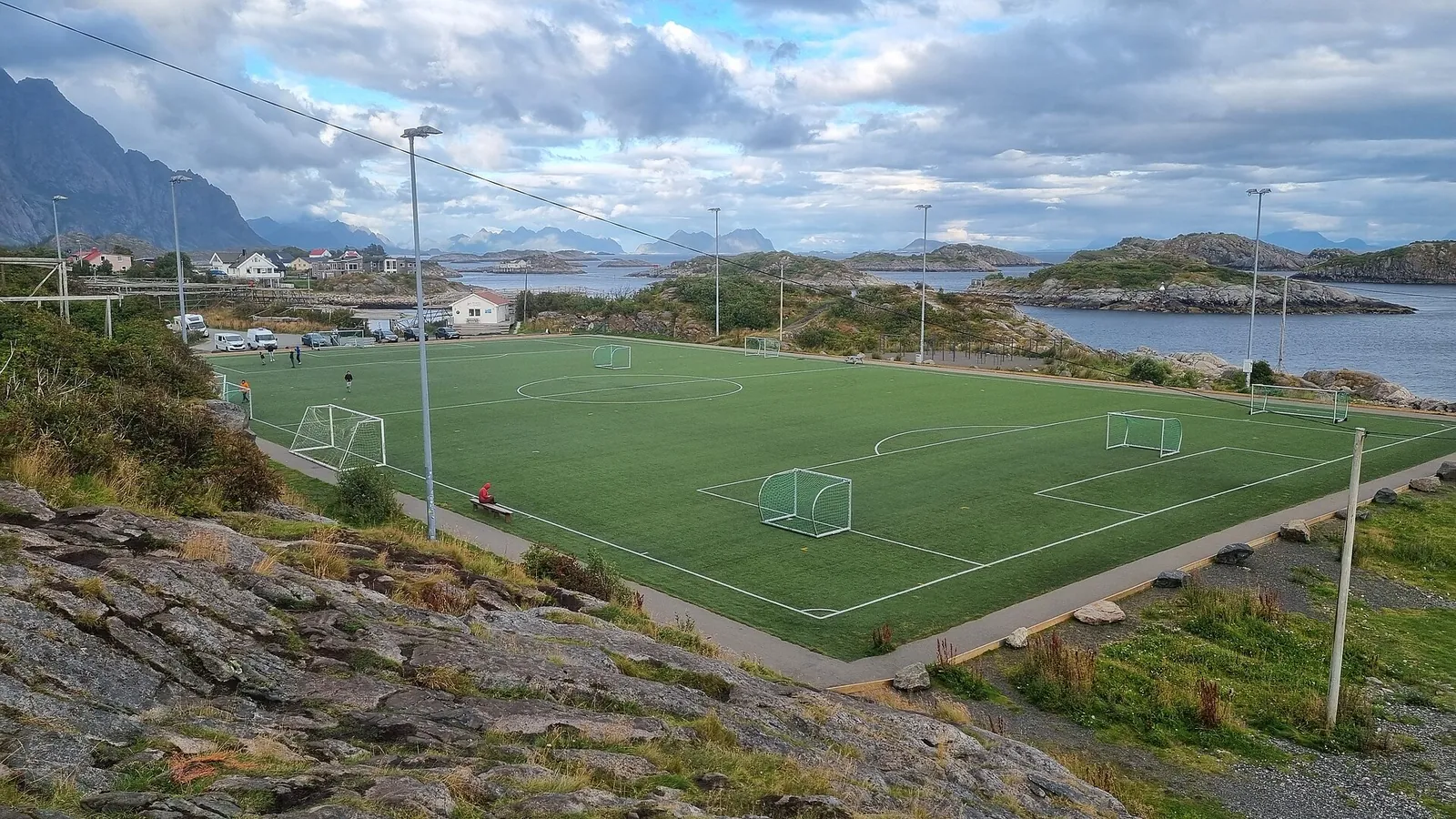
Spend the night in Henningsvær or nearby. Wander the harbour, browse the galleries and small shops, and look out for the village’s well-known football pitch on the rocks. Opening hours of shops and galleries vary by season, so check locally.
Day 5: Henningsvær and Svolvær, then home
Morning
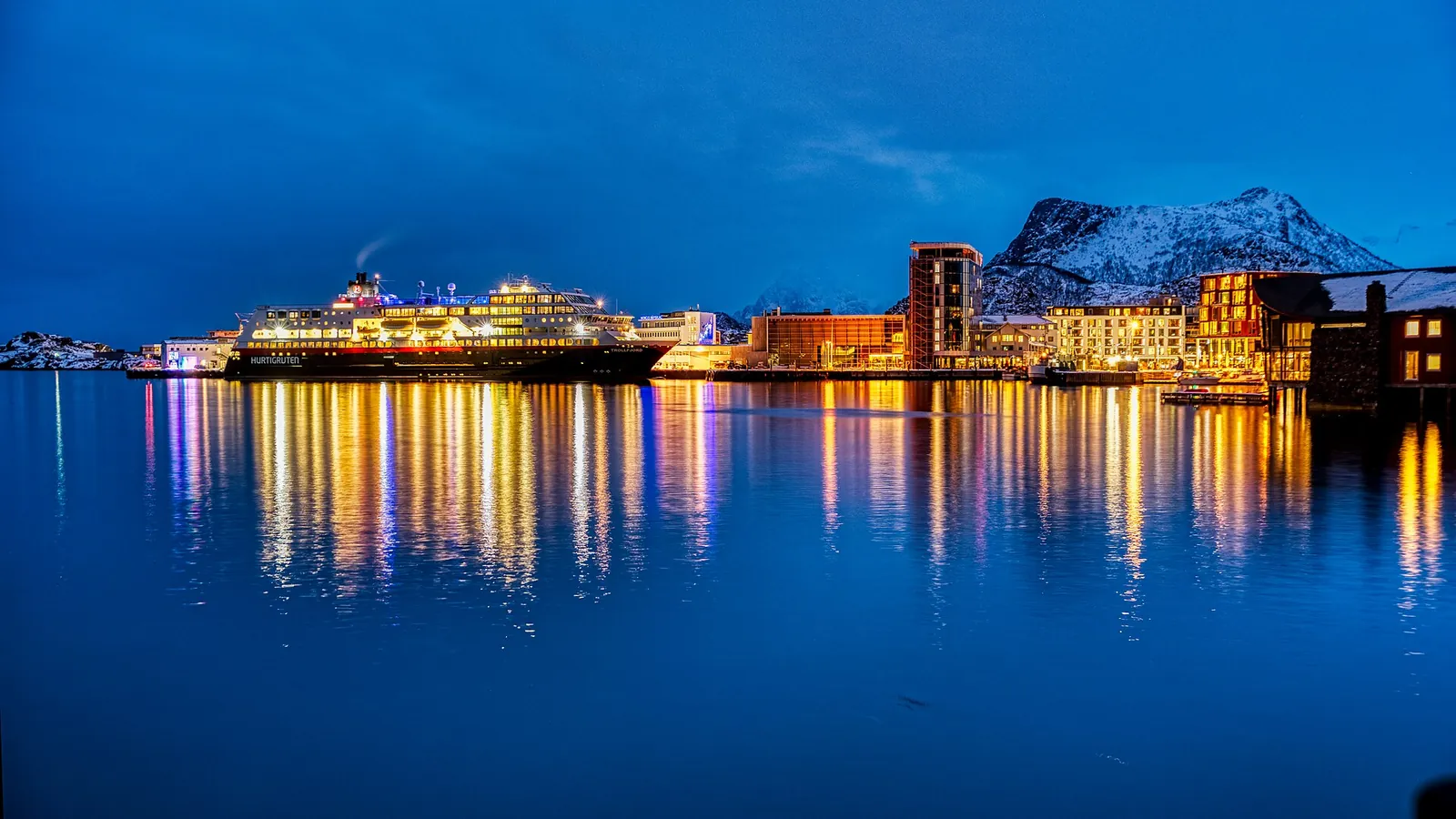
Savour a slow, happy last morning in Henningsvær with a coffee by the water. Then drive the short way to Svolvær, the largest town in Lofoten and a hub for flights, boats and buses.
Afternoon
Depending on your onward plan:
- Flying from Svolvær: small regional flights connect to Bodø (and onwards to Oslo).
- Driving to Evenes: Visit Norway puts the trip between Lofoten and Lofoten/Harstad/Narvik airport (Evenes) at 2.5 to 4 hours by car or bus, so leave plenty of margin.
- By sea: Hurtigruten calls daily at Svolvær and Stamsund, and Havila Voyages calls at the same ports two days a week, according to Visit Norway.
Want more time? Add a night in Svolvær for boat trips into the Trollfjord or a day in Vesterålen to the north.
Getting there and getting around
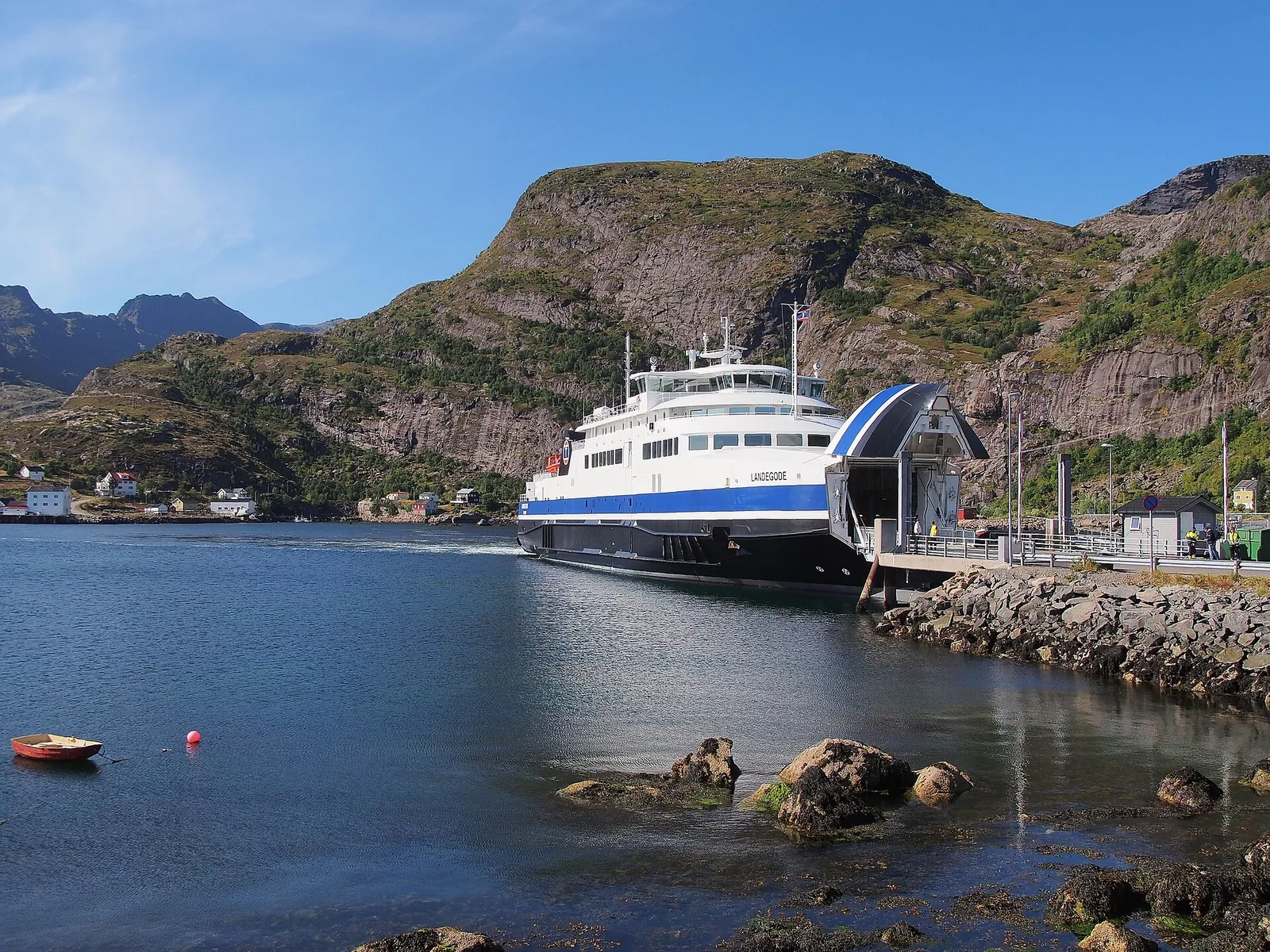
By ferry from Bodø. Car ferries run all year from Bodø to Moskenes (some sailings call at Værøy and Røst). Visit Lofoten gives the crossing as about 3.5 hours and links registration and booking to Torghatten Nord. Reserve at least a day ahead in summer and arrive in good time. The 2026 fare table on the Ferge Ruter timetable and fare site lists a car up to 6 m at NOK 605 and shows foot passengers and passengers in vehicles travelling free. Fares and rules can change, so confirm everything when you book.
By air. Visit Norway notes that the flight from Oslo to Bodø takes about 1.5 hours, followed by a 20 to 30 minute hop to Lofoten. The local airports are Leknes and Svolvær, served by small regional aircraft (mainly Widerøe). The larger Lofoten/Harstad/Narvik airport at Evenes is on the mainland side, 2.5 to 4 hours from the islands by road. A practical combo for this plan: arrive at Moskenes by ferry or into Leknes, and leave from Svolvær or Evenes, so you never double back. Check one-way car hire fees if you pick up and drop off in different places.
By train. Visit Norway notes you can ride the Nordland Railway to Bodø (the final stretch from Trondheim takes about 10 hours) and continue by ferry or express boat.
Car hire. Visit Lofoten says you must be at least 19 (varies by car category) and have held a licence for a year, and a young driver surcharge may apply under 25. Rental cars should have AutoPASS installed for tolls and ferries, and winter tyres in the winter season. For live road conditions, use the Statens vegvesen traffic map.
Buses. The main public route is Lofotekspressen, route 300, linking Å, Leknes, Svolvær, Evenes airport and Narvik. Visit Lofoten lists departures from Evenes airport at 10:50 and 17:05 daily (check the Reis app for current times). Buying tickets in the Reis app is cheaper; paying on board costs NOK 20 extra for adults. A Travel Pass in the Reis app gives seven days of unlimited bus and express boat travel. The buses are fine for moving between towns, but they do not reach most trailheads at convenient times.
Taxis. Visit Lofoten recommends pre-booking a taxi for Svolvær and Leknes airports (Lofoten taxi: +47 07550).
Midnight sun or northern lights?
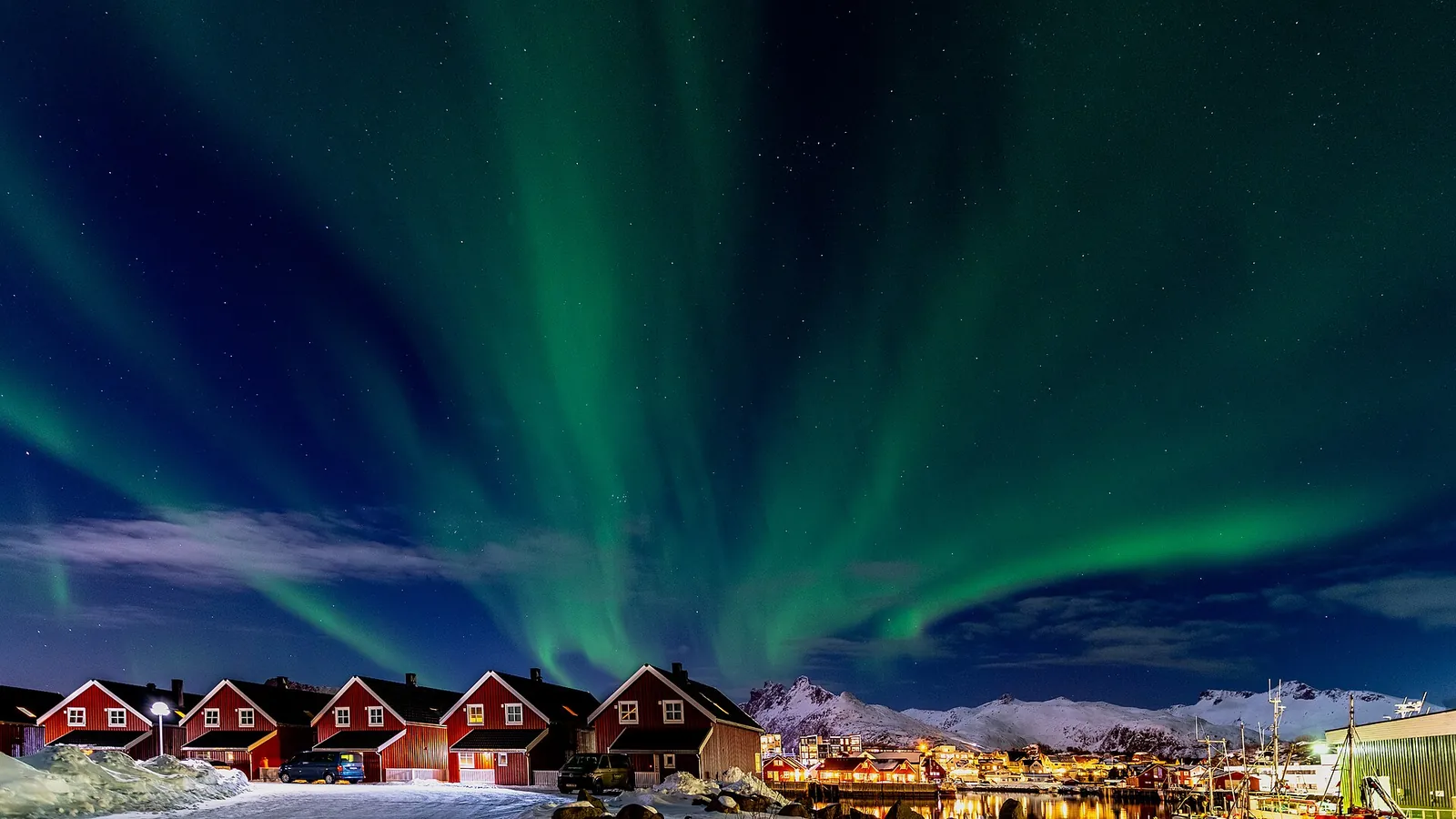
- Midnight sun: Visit Norway and Visit Lofoten both give roughly 28 May to 14 July for the Lofoten Islands, with exact dates varying slightly from place to place. This is peak season for hiking, with the busiest roads and fullest parking.
- Northern lights: Visit Norway says they can be seen from September to mid-April, while Visit Lofoten’s FAQ says from late August. You need darkness and clear skies, so the aurora is impossible to see in the bright summer nights.
- Polar night: Visit Norway lists the polar night in Lofoten from the start of December to the start of January, when the sun stays below the horizon and days are short and blue-tinted.
- Weather: Lofoten weather changes fast in every season. Summer is cool by most standards, and rain, wind and fog roll in quickly, so build in a spare half day and swap hikes to the clearest day.
Travelling in winter? The same route works for villages, beaches, Lofotr and aurora hunting, but skip Reinebringen (strictly not recommended in winter) and treat any hike as conditional on snow and avalanche risk.
Practical tips
- Book early for summer: ferry space, rental cars and rorbuer fill up from June to August.
- Fuel and shops: away from Leknes and Svolvær, shops and fuel stations are spread out. Top up when you can, and carry water and snacks on hiking days.
- Parking: many viewpoints and trailheads have paid parking, often by app. Never park on the narrow E10 shoulders or private land.
- Pack layers: a waterproof jacket, a warm layer and sturdy shoes are useful even in July.
- Money: prices are in Norwegian krone (NOK), and card payment is the norm.
- Leave no trace: carry out all rubbish, use proper toilets and respect fishing equipment and drying racks, which are working property.
Heads-up
Norway is a safe and welcoming country, and a little care keeps it that way. These points come from the UK government’s official travel advice:
- Weather can turn fast. Conditions can change quickly, producing Arctic conditions even in summer on exposed mountain tops. Check the forecast and turn back if it closes in.
- Winters are harsh, with temperatures that can fall to -25°C and below and strong wind chill in exposed areas. Check the Norwegian Avalanche Warning Service before any winter outing.
- Rescue is limited in remote Arctic areas, so stick to marked trails and tell someone your plans.
- Driving: winter tyres with at least 3 mm tread are required when snow or ice covers the road, dipped headlights must be on day and night all year, and on unmarked roads you yield to traffic from the right. Drink-driving is taken very seriously, and on-the-spot fines can reach NOK 10,000.
- Campfire bans are enforced by police in many hiking areas in summer.
FAQ
Can I do Lofoten without a car?
Partly. Route 300 links Å, Leknes and Svolvær, and the Reinebringen trailhead has a nearby bus stop at Reine kryss. But Nusfjord, Henningsvær and the Kvalvika trailhead are much easier by car, and you would need to plan around a limited timetable.
How hard is the Reinebringen hike?
It is short (about 2 km round trip) but steep, with nearly 2,000 stone steps up to 484 m. Visit Lofoten calls it demanding and not suitable for young children or dogs. Go only from May to September, in dry weather.
Is Kvalvika beach hard to reach?
Not very. Visit Lofoten grades the walk from Fredvang as easy, about 3 km and 1.5 hours one way. Wear proper shoes, as the path can be muddy.
When is the Lofotr Viking Museum open?
It depends on the season. From 1 November to 31 December 2026 it opens on Wednesdays and Saturdays only, 11:00 to 17:00. Check the Museum Nord site for summer hours and current prices.
Should I take the ferry or fly?
The ferry suits a road trip because your car comes with you and lands at Moskenes, right where this plan starts. Flying into Leknes or Evenes is faster if you rent a car on arrival. Many travellers combine both: ferry in, fly out.
Sources
Prices, hours and rules change. We checked these on 1 November 2026; please confirm on the official page before you book.
- Visit Lofoten: Ferry and express boat timetables to Lofoten (official tourism site)
- Visit Lofoten: Travel within Lofoten (buses, car hire, taxis)
- Visit Lofoten: Reinebringen (484 m.o.s.)
- Visit Lofoten: Hike to Kvalvika and Ryten (543 m)
- Visit Lofoten: Nusfjord, Lofoten's hidden gem
- Visit Lofoten: Midnight Sun in Lofoten
- Ferge Ruter: Prices for Bodø to Moskenes 2026 (route operated by Torghatten Nord)
- Museum Nord: Lofotr Viking Museum (official)
- Visit Norway: Plan your trip to Lofoten
- Visit Norway: The polar night
- GOV.UK: Norway travel advice, Safety and security
Photo credits (12)
- Reine and its fjord seen from the top of Reinebringen: rheins, CC BY 3.0, via Wikimedia Commons
- Fishing boats and snowy peaks in Hamnøy harbour: El Coleccionista de Instantes Fotografía & Video, CC BY-SA 2.0, via Wikimedia Commons
- Reine's red cabins reflected in a calm blue bay: Petr Šmerkl, Wikipedia, CC BY-SA 3.0, via Wikimedia Commons
- Islands and bridges below Reinebringen in bright sunshine: rheins, CC BY 3.0, via Wikimedia Commons
- Tind and Å by the sea below snowy mountains: Ximonic (Simo Räsänen), CC BY-SA 3.0, via Wikimedia Commons
- Red rorbuer around Nusfjord's turquoise little harbour: Unknown, CC BY-SA 3.0, via Wikimedia Commons
- Kvalvika beach seen from the top of Ryten: Svein-Magne Tunli - tunliweb.no, CC BY-SA 4.0, via Wikimedia Commons
- The long Viking chieftain's house at Lofotr, Borg: Jorge Andrade from Rio de Janeiro, Brazil, CC BY 2.0, via Wikimedia Commons
- Henningsvær's football pitch on the rocks by the sea: Paul W, CC0, via Wikimedia Commons
- Svolvær harbour lit up at blue hour: Christoph Strässler, CC BY-SA 2.0, via Wikimedia Commons
- The Bodø ferry docked at Moskenes on a sunny day: rheins, CC BY 3.0, via Wikimedia Commons
- Northern lights over red cabins near Svolvær: Christoph Strässler, CC BY-SA 2.0, via Wikimedia Commons
More Norway itineraries
 6 days
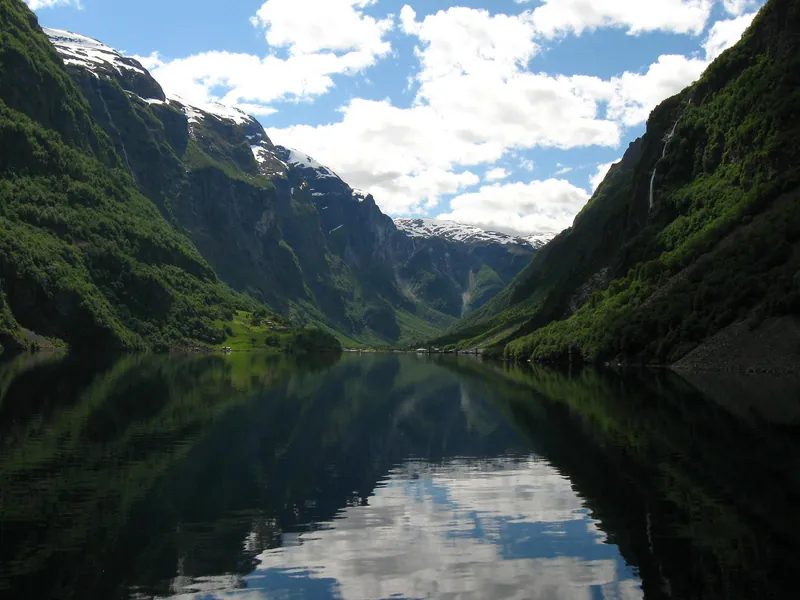
6 Days in the Norwegian Fjords: Bergen, Flåm and the Nærøyfjord
A 6-day Norwegian fjords plan from Bergen: the Bergen Railway, the Flåm Railway, a Nærøyfjord cruise and a Sognefjord boat ride, with checked fares.
 3 days
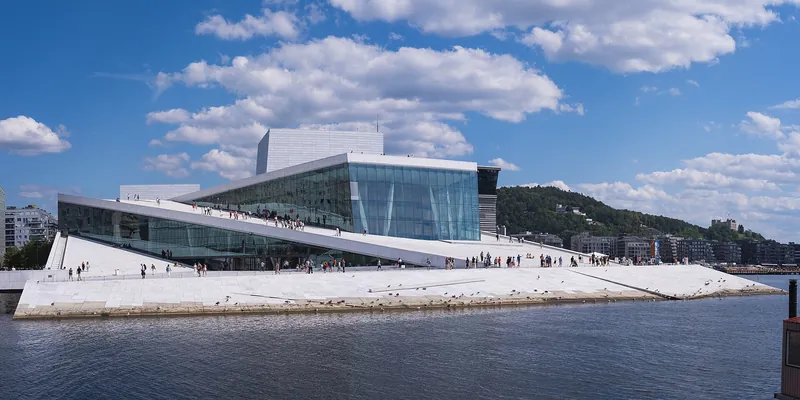
3 Days in Oslo: A Day-by-Day Itinerary
A 3-day Oslo itinerary: Opera roof and MUNCH, Bygdøy's polar and Kon-Tiki museums, Vigeland Park and Holmenkollen, with 2026 prices and transport tips.
 3 days
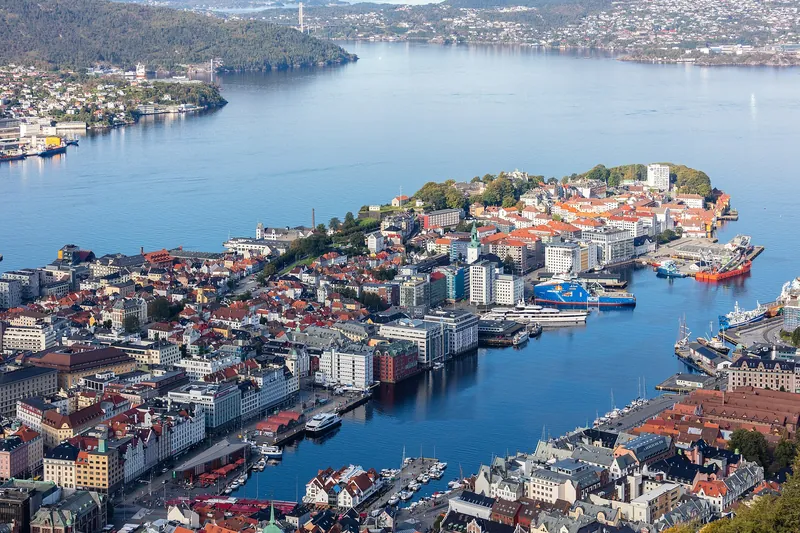
3 Days in Bergen: A Day-by-Day Itinerary with a Fjord Cruise
A 3-day Bergen plan: Bryggen and Fløyen, a Mostraumen fjord cruise, KODE art museums and the Ulriken cable car, with fares and November hours checked.
Compare all Norway itineraries →
This is a researched plan, not a personal trip report. How we research · Affiliate disclosure