
5 Days in Mallorca: A Day-by-Day Itinerary
A 5-day Mallorca plan: Palma's palace and castle, Valldemossa and Deià, the vintage Sóller train, Cap de Formentor and the Drach caves, with 2026 low-season hours.
- 🗓️ Trip length
- 5 days
- ☀️ Best time
- Spring and autumn; quieter in winter
- 💰 Daily spend
- EUR 10-50 (sights and transport tickets only)
- ✅ Facts checked
- 1 November 2026
Get ready for an island that packs a wonderful amount into a small space. In one short, happy trip you can go from a Gothic cathedral on the seafront to stone villages in the Tramuntana mountains, ride a wooden train built in 1912, and stand on a lighthouse cape above the open sea. Mallorca is the largest of Spain’s Balearic Islands, and five days is the sweet spot: long enough to leave Palma behind, short enough to keep one base.
This plan uses Palma as its base and is built for a moderate pace. Two days run on public transport (the Sóller train and buses), and two are easiest with a hire car. It works especially well in autumn and winter, when the island is calm and roads are open, but some attractions run shorter hours. We flag those as we go, using hours checked on the official sites for November 2026.
5 days in Mallorca at a glance
| Day | Area | Highlights |
|---|---|---|
| 1 | Palma | Royal Palace of La Almudaina, cathedral, old town lanes, Bellver Castle at golden hour |
| 2 | West Tramuntana | Valldemossa, the Deià coast road, sunset viewpoints |
| 3 | Sóller valley | Vintage train from Palma, tram to Port de Sóller, orange groves |
| 4 | North | Pollença, Cap de Formentor lighthouse road, Alcúdia old town |
| 5 | East | Coves del Drac (Drach Caves) with lake concert, Porto Cristo |
One timing rule before you start: both the Almudaina palace and Bellver Castle close on Mondays, so don’t put Day 1 on a Monday.
Day 1: Palma’s palace, cathedral and castle
Morning
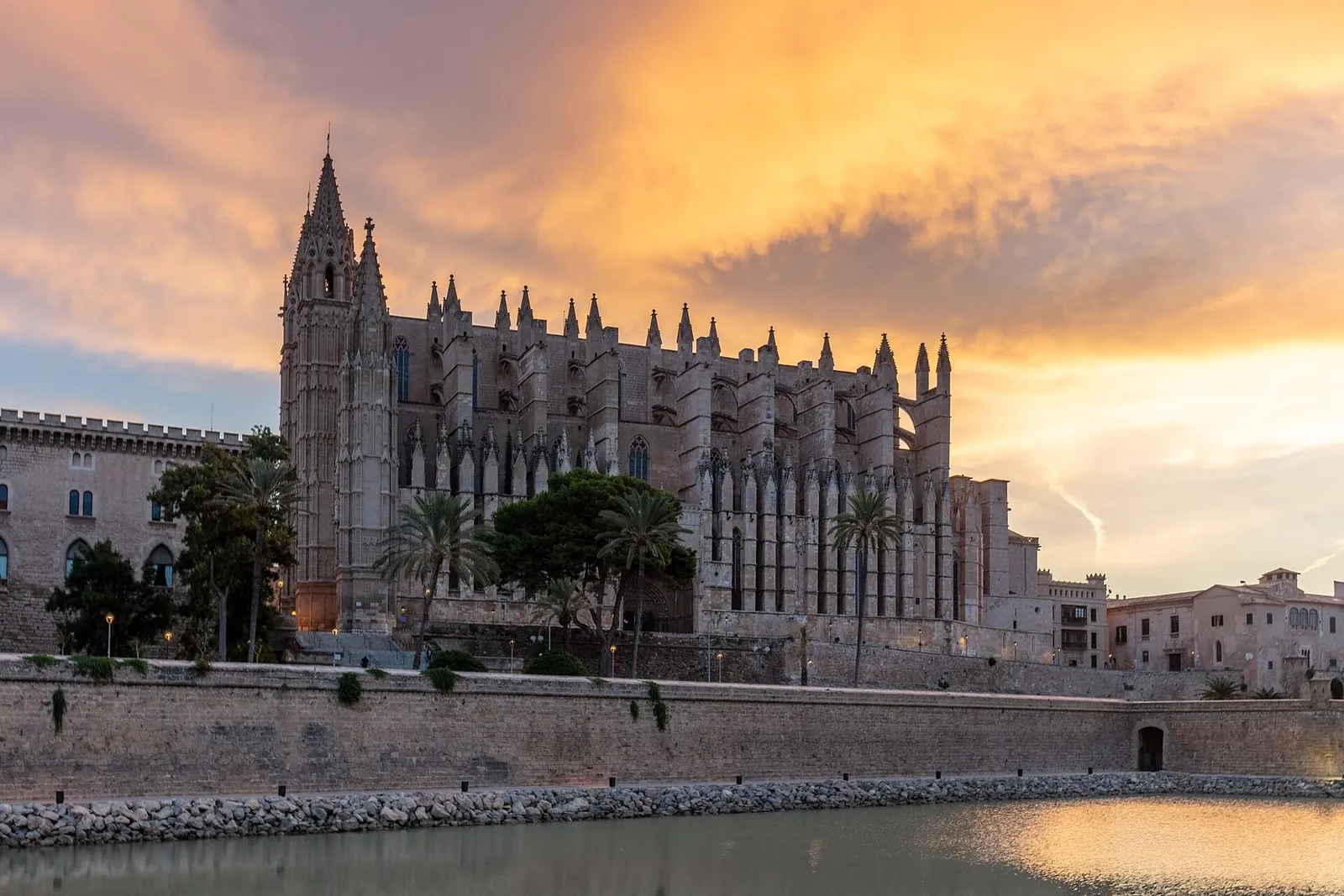
Welcome to Mallorca! Your first day is all about Palma’s golden stone landmarks. Start at the Royal Palace of La Almudaina, the old royal fortress right beside the cathedral, overlooking the bay. In winter (October to March) it opens Tuesday to Sunday from 10:00 to 18:00, and the ticket office and entry close an hour earlier. The standard self-guided ticket is EUR 8 and the reduced ticket is EUR 5 (ages 5 to 16, over 65s and students up to 25 with a card). The official booking page adds a small booking fee of EUR 0.77. Book a time slot on the Patrimonio Nacional ticket site to skip the queue.
Next door is La Seu, Palma’s cathedral, famous for its huge rose window and the light that pours through its stained glass on sunny mornings. Visiting hours and ticket prices change by season and we could not confirm them on an official source today, so check the official cathedral site before you go. Even from outside, the walk along the old sea walls below it is one of the best views in the city.
Afternoon
Have lunch in the old town, then wander the lanes between the cathedral and Plaça Major. Look out for the carved courtyards (patios) of the old mansions, the arcades of Plaça Major, and the Passeig des Born for a coffee stop. Everything here is walkable within about 15 minutes.
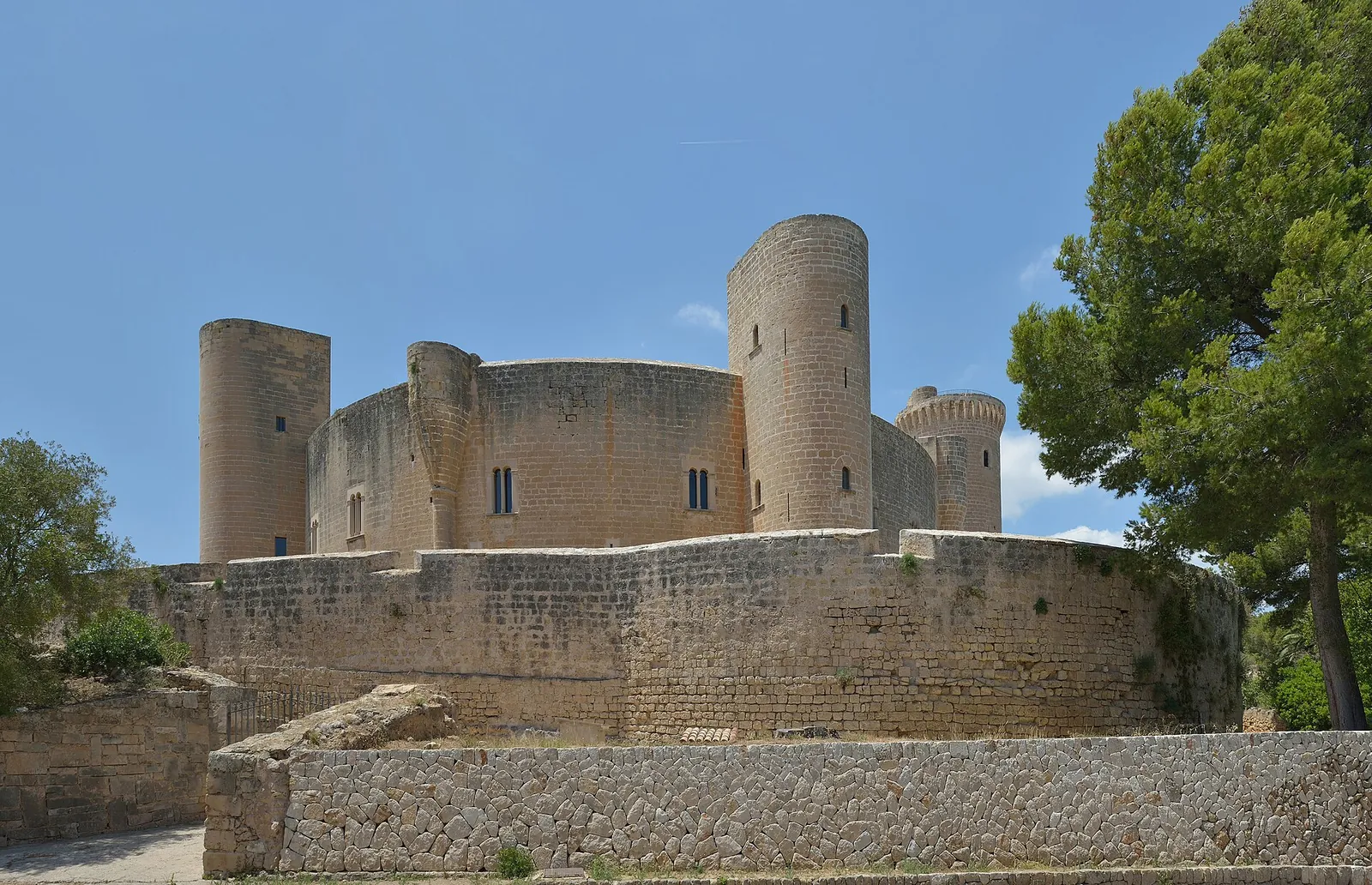
Late in the afternoon, take a taxi or ride-hail up to Bellver Castle, a rare round Gothic castle in pine woods above the city. From October to March it opens Tuesday to Saturday from 10:00 to 18:00, and on Sundays and holidays from 10:00 to 15:00. Last entry is 30 minutes before closing. General admission is EUR 4, reduced EUR 2, and entry is free on Sundays and for children under 14. The roof terrace looks out over the whole bay of Palma, so time it for the low afternoon sun.
Evening
Head back down to the Santa Catalina neighbourhood for dinner. It’s a lively, local area with tapas bars and its own food market, and a short walk from the old town.
Day 2: Valldemossa and the Deià coast
Morning
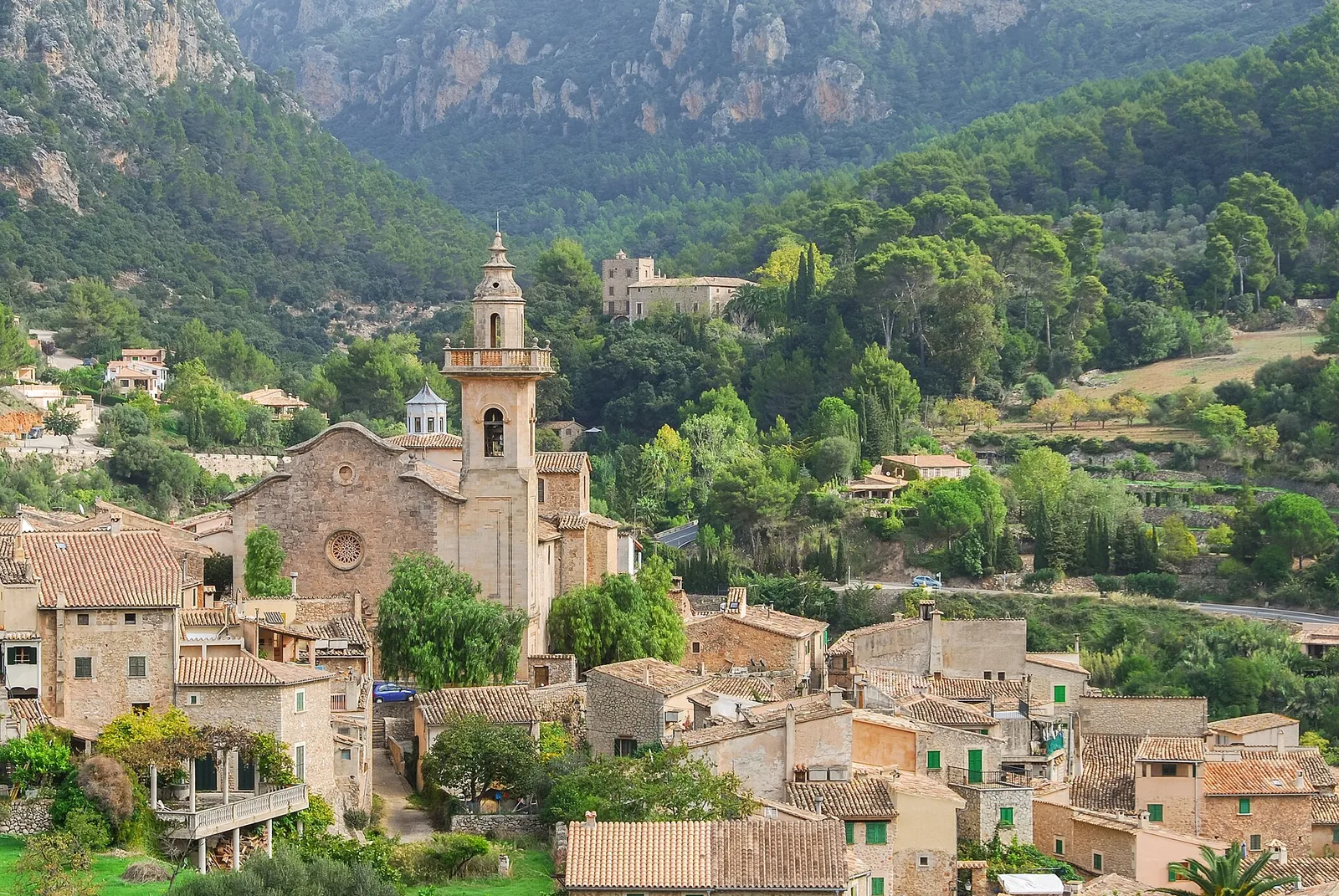
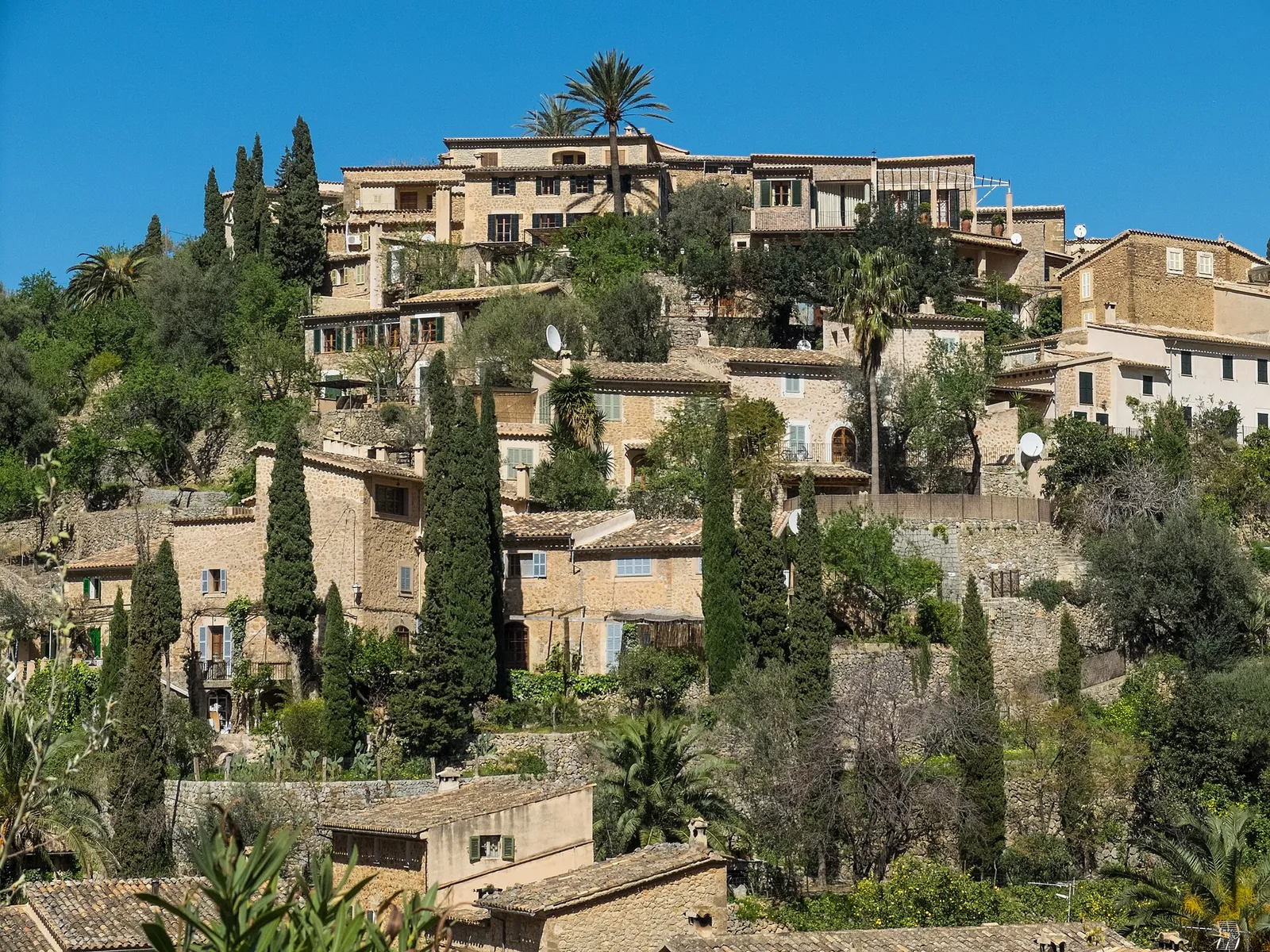
This is the day for mountain villages and sea views. Today you climb into the Serra de Tramuntana, the mountain range along the north-west coast that is a UNESCO World Heritage cultural landscape. Valldemossa is the first stop, a stone village of green shutters and potted plants, about half an hour’s drive from Palma. TIB intercity buses also serve it. Note that TIB’s winter bus timetables started on 1 November 2026, with changes on several lines, so check the current timetable in the TIB app or on the TIB website before you rely on a specific departure.
The village’s best-known sight is the Real Cartuja de Valldemossa, the former monastery where the composer Frédéric Chopin and the writer George Sand spent a winter. We couldn’t find official winter hours or prices for it, so check the official site before you go. Afterwards, walk the lanes and try a coca de patata, the soft local potato bun.
Afternoon
Drive on along the gorgeous coast road towards Deià, one of the most photographed villages on the island, climbing up a hill towards its parish church with the mountains behind and the sea below. On the way, look for signposted viewpoints (miradors) where you can pull over safely. The road is narrow and winding, so allow extra time and drive slowly.
From Deià, a steep lane leads down to Cala Deià, a small rocky cove. In low season, don’t count on beach bars or facilities being open.
Evening
Catch the sunset from one of the coastal viewpoints between Deià and Valldemossa, then drive back to Palma for dinner. If you’d rather not drive in the dark on mountain roads, plan to be back before nightfall.
Day 3: The Sóller train and Port de Sóller
Morning
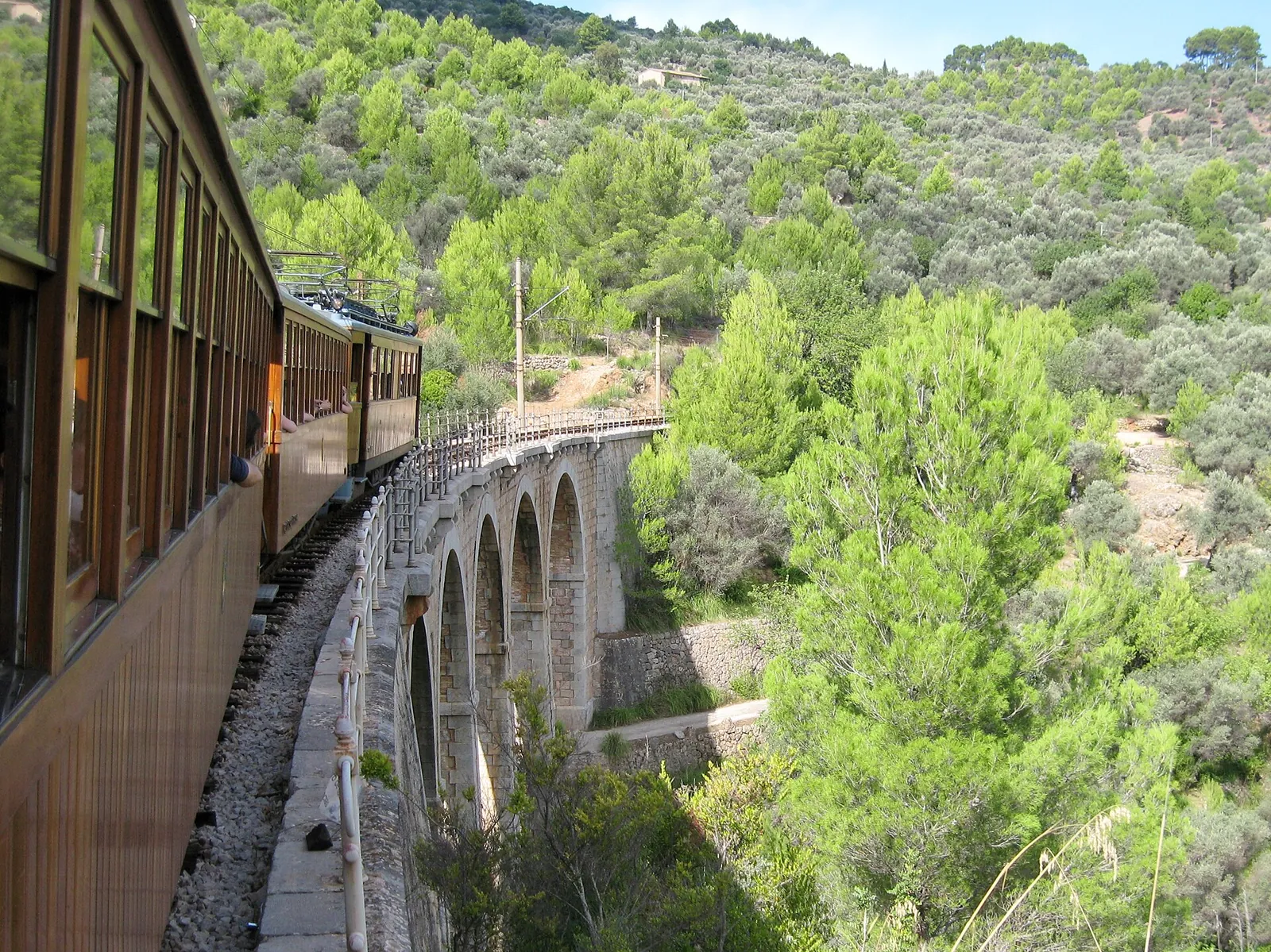
All aboard: this is the day many visitors remember most. The Ferrocarril de Sóller, a wooden train inaugurated in 1912, runs from Palma through the mountains to the town of Sóller. From 2 November 2026 the timetable is shorter: trains leave Palma at 10:30, 12:50, 15:10 and 18:00, and the trip takes about an hour (the 10:30 arrives at 11:30). The official fares are EUR 23 one way and EUR 30 return between Palma and Sóller. A combined ticket for train plus tram (Palma, Port de Sóller and back) costs EUR 40. Book on the official site, and take the 10:30 to get a full day.
Arrive in Sóller, a valley town of orange and lemon groves, and spend an hour around the main square, Plaça de sa Constitució, with its church and modernist buildings.
Afternoon
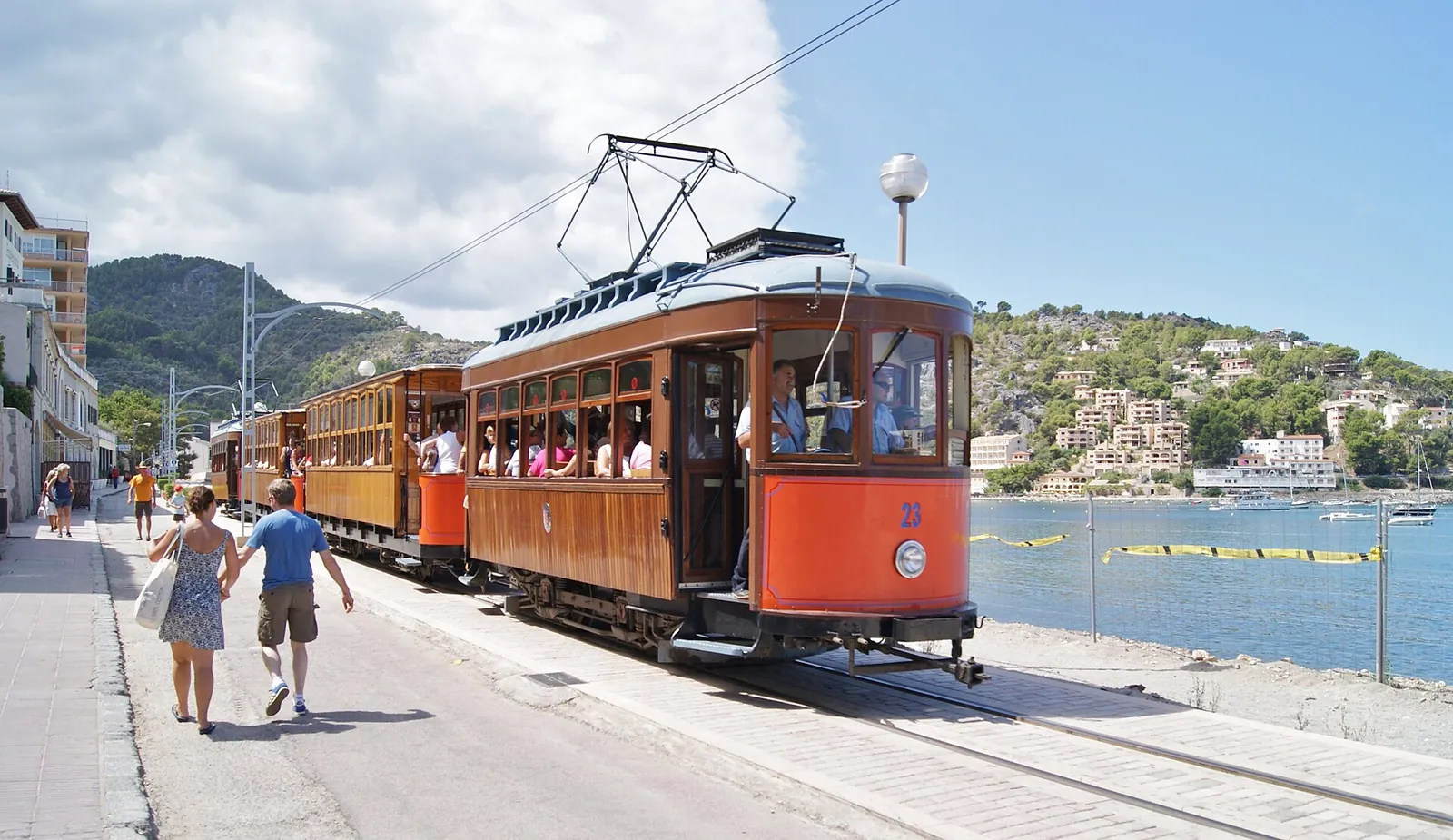
Hop on the cheerful old tram from Sóller down to Port de Sóller, a horseshoe bay with a seafront promenade. The tram fare is EUR 10 each way if you didn’t buy the combined ticket. Have lunch by the water and walk out along the promenade towards the lighthouse side of the bay.
Head back up to Sóller in time for the train. Winter return trains leave Sóller at 09:00, 11:40, 14:00 and 17:00, with a 17:30 service marked “to consult at the box office”. The 17:00 gets you back to Palma at 18:00. Check the timetable on the day, as the operator can change it.
Evening
A relaxed evening in Palma. The Paseo Marítimo along the harbour is pleasant for a stroll, with views back to the lit-up cathedral.
Day 4: Pollença, Cap de Formentor and Alcúdia
Morning
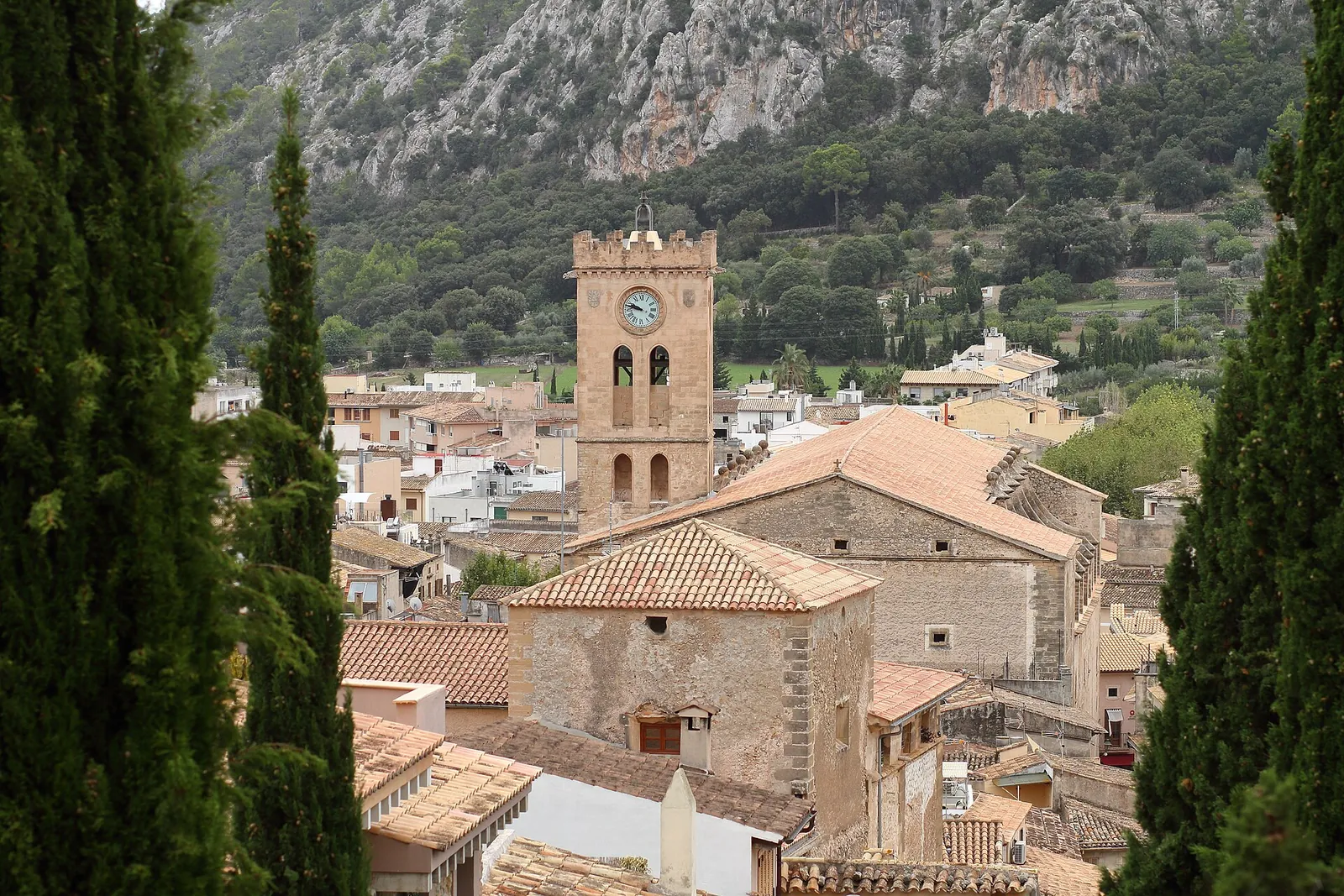
Save your camera battery for today’s big views. Pick up a hire car and drive north to Pollença, about an hour from Palma. Its old town has a pretty square and the Calvari steps, a long stairway of stone steps lined with cypress trees, leading up to a small chapel and a view over the countryside. Allow about an hour here.
Afternoon
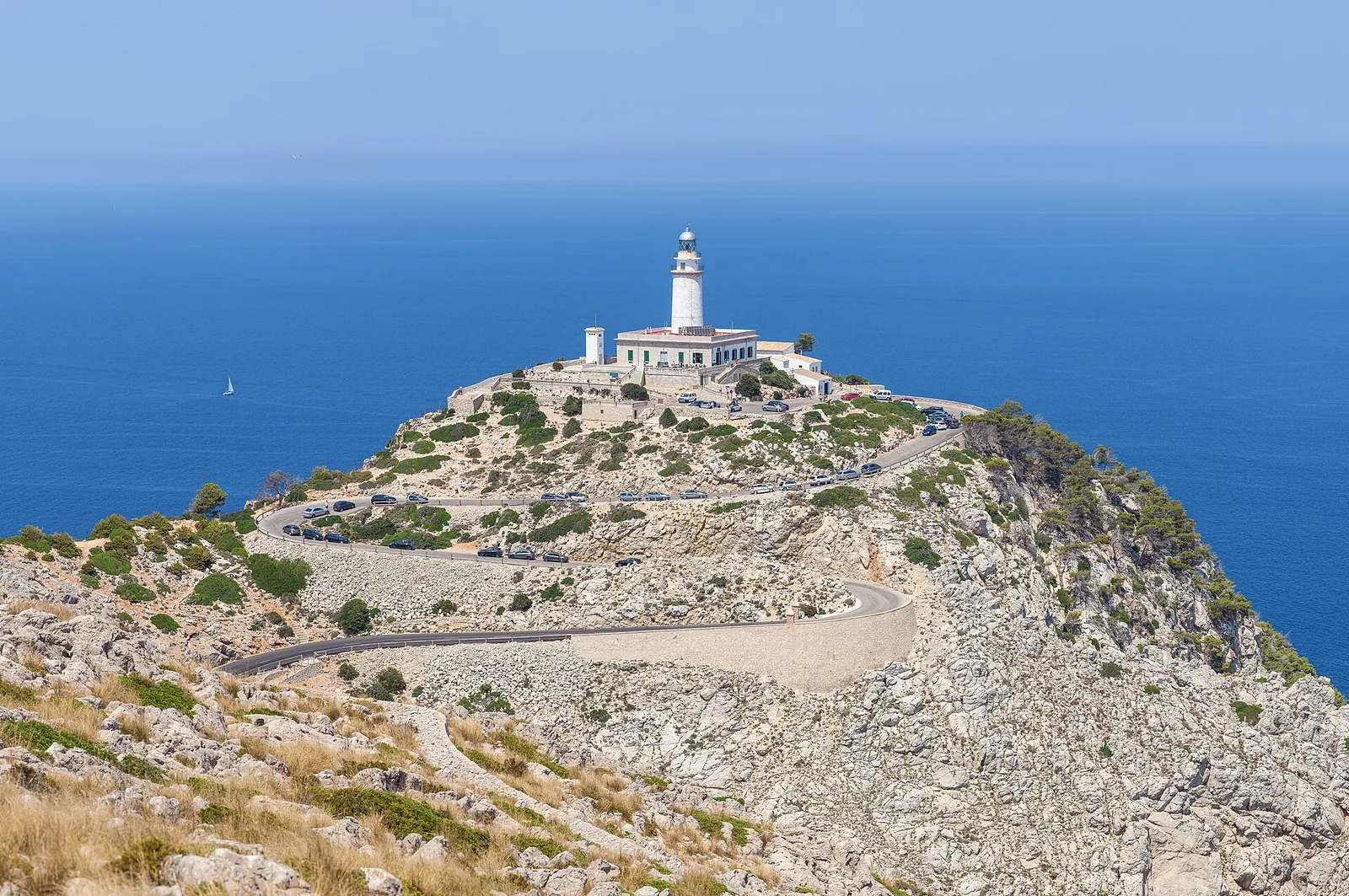
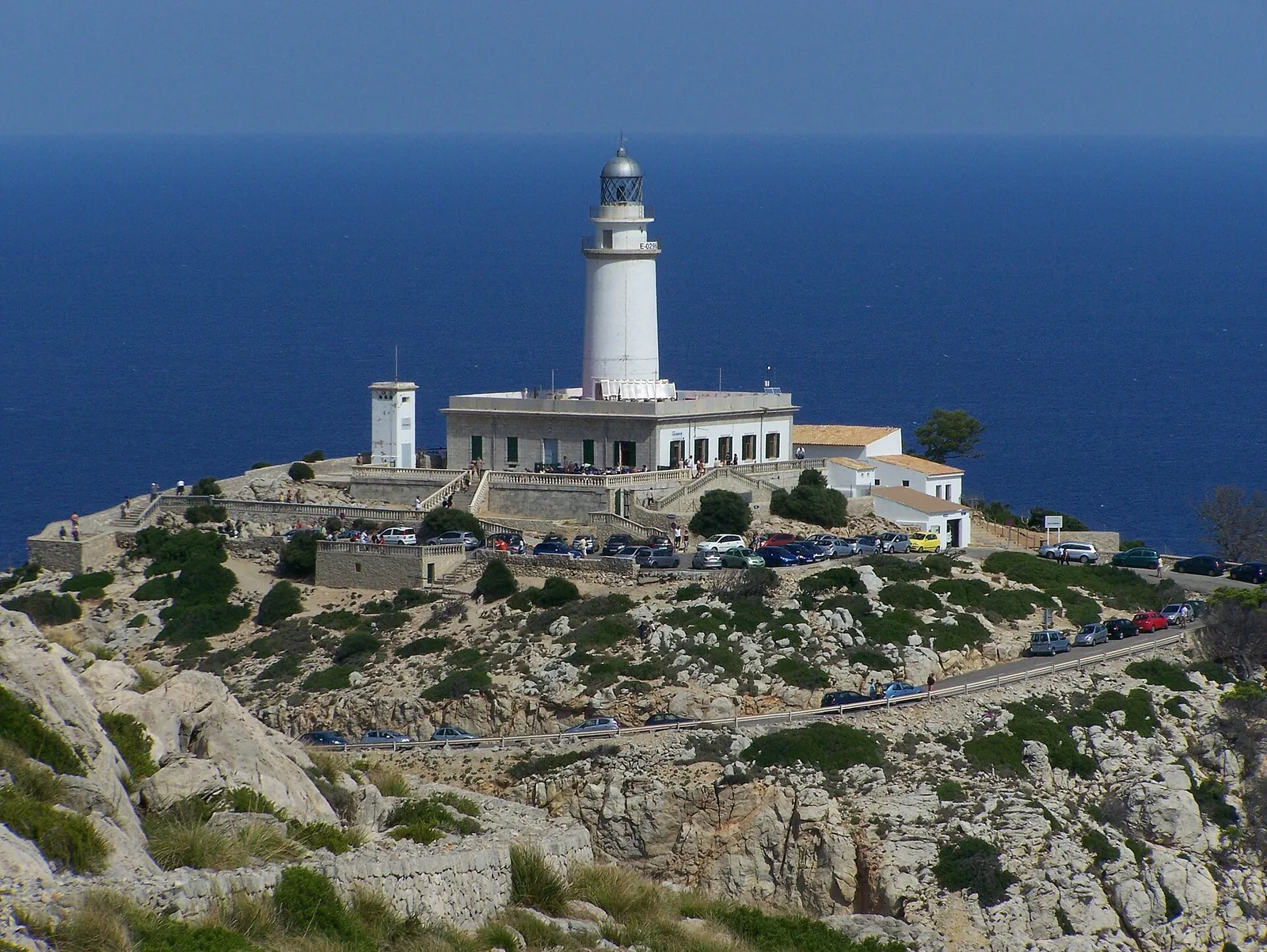
Continue to Port de Pollença and take the spectacular Ma-2210 road out along the Formentor peninsula. In the busy season this road is restricted: in 2026 private cars were limited from 15 May to 18 October, between 10:00 and 22:00, and the stretch to the lighthouse was open only to authorised vehicles. Those dates have passed, so in November you can drive it, but check the DGT (Spanish traffic authority) page in case of changes. Stop at the Mirador des Colomer viewpoint near the start, then follow the road to the Cap de Formentor lighthouse at the tip. The road is narrow, with sharp bends and cyclists, so take it slowly.
Evening
On the way back, stop in Alcúdia, a short drive from Port de Pollença. Its old town is still wrapped in medieval walls and gates, and it’s a good place for dinner before the drive back to Palma (about 45 minutes to an hour).
Day 5: The Drach Caves and the east coast
Morning
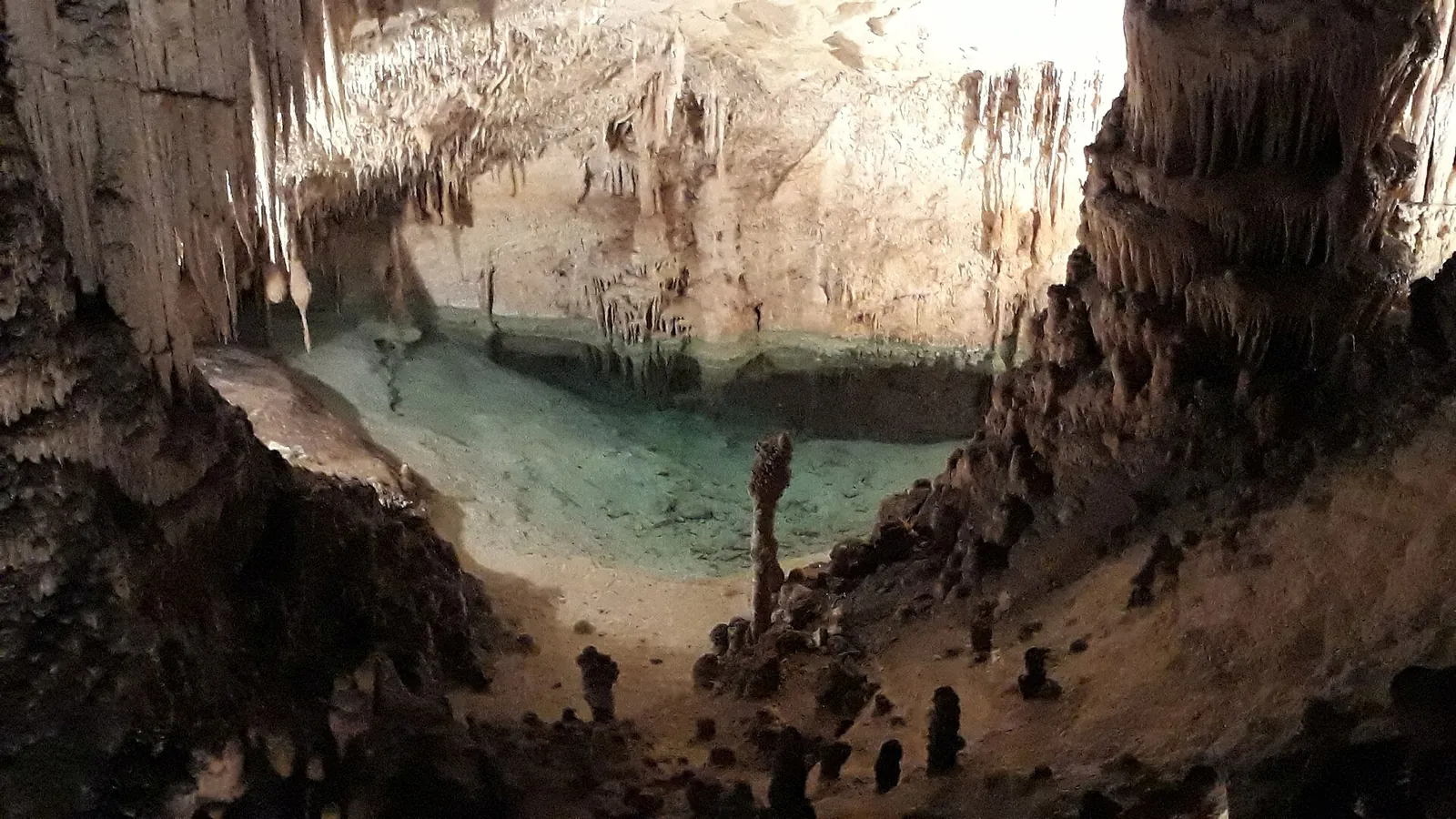
Your last day saves a magical finale. Drive east to Porto Cristo, about an hour from Palma, for the Coves del Drac (Caves of Drach). The visit takes about an hour and includes a live concert on Lake Martel, the underground lake inside the caves. In the winter season (1 November to 15 March), visits run only at 10:30, 12:00, 14:00 and 15:30, and the caves close on 25 December and 1 January. Adult tickets (13+) cost EUR 18.50 online or EUR 19.50 at the box office. Children aged 3 to 12 pay EUR 11.50 online, and under-3s are free. Book a timed ticket on the official site and aim for the 12:00 visit.
Afternoon
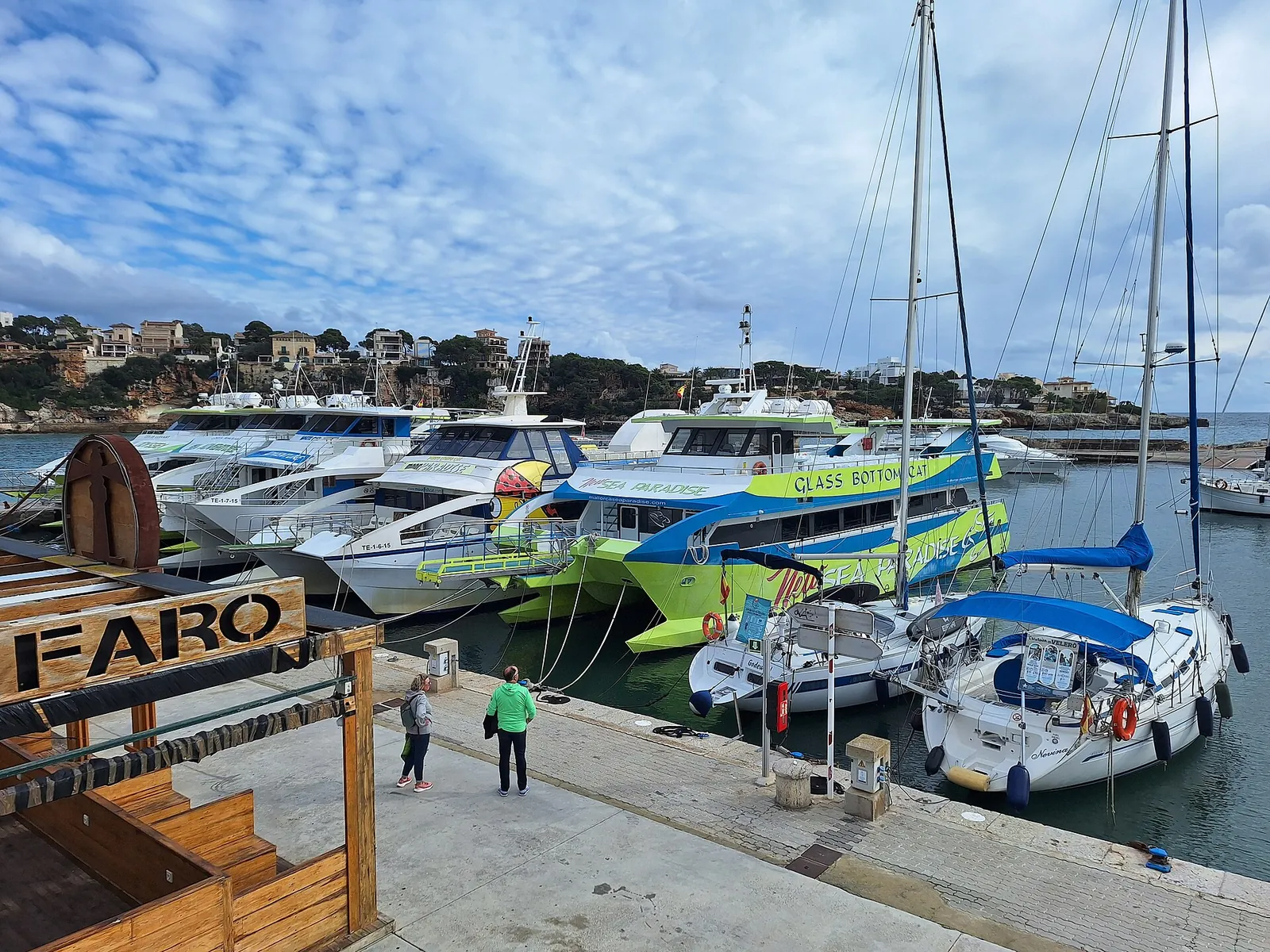
After the caves, have lunch in Porto Cristo, a small fishing port at the end of a narrow inlet. If you have energy left, the east coast is dotted with small coves (calas) along this stretch; in winter they are quiet and good for a walk rather than a swim.
Evening
Drive back to Palma for a final dinner. Toast your trip with a glass of Mallorcan wine and a slice of ensaïmada, the island’s spiral pastry, for dessert.
Getting there and getting around
From the airport. Palma de Mallorca Airport (PMI) is close to the city. According to Aena, EMT Palma’s line A1 runs from the airport (stops at Arrivals and Departures) to Palma centre, and TIB runs intercity airport lines to resort towns, such as A11 to Camp de Mar and A32 to Can Picafort. We couldn’t confirm the current A1 fare on an official source today, and Palma’s city council announced in October 2026 that bus fares are being revised, so check the official EMT Palma site for the fare and timetable before you fly. Taxis wait outside the terminal.
Around Palma. The old town is walkable. EMT city buses cover longer hops, and taxis are easy to find.
Around the island. TIB runs the intercity buses, train and metro. The network uses the Tarjeta Única fare card, and TIB also explains how to travel paying with a bank card on its website. The winter bus timetable began on 1 November, so check routes in the TIB app. For Days 4 and 5 a hire car is the simplest option, because bus connections to Formentor and the east coast are less frequent in low season.
Entry rules. Spain is part of the Schengen Area. Many visitors can stay up to 90 days in any 180-day period, but visa needs depend on your nationality. Check the official conditions of entry on the Spanish Ministry of Foreign Affairs website or your nearest Spanish consulate before you book.
Where to stay
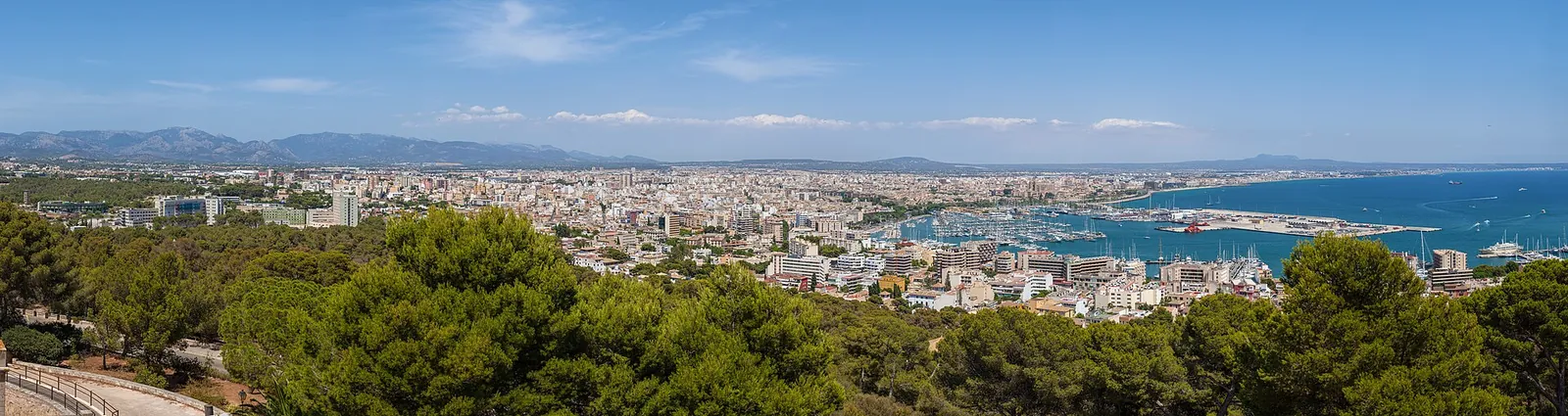
Palma old town. Best for first-timers and anyone without a car: you can walk to the cathedral, restaurants and the Sóller train station.
Santa Catalina. A lively neighbourhood west of the old town, good for food lovers who want bars and a market on the doorstep.
Portixol and Es Molinar. Quieter seafront areas east of the centre, with a promenade and easy road access towards the airport and the east coast. Good if you’ll have a car.
Sóller. If you’d rather wake up in the mountains, Sóller works as a second base, though you’ll spend more time driving on Days 4 and 5.
Budget
These are the official ticket prices used in this plan. They exclude flights, accommodation, food, car hire and fuel.
| Item | Typical cost |
|---|---|
| Royal Palace of La Almudaina | EUR 8 (reduced EUR 5), plus EUR 0.77 booking fee online |
| Bellver Castle | EUR 4 (reduced EUR 2), free on Sundays |
| Sóller train, Palma to Sóller return | EUR 30 |
| Train plus tram combined ticket | EUR 40 |
| Sóller tram, one way | EUR 10 |
| Coves del Drac, adult | EUR 18.50 online, EUR 19.50 at the box office |
| Cathedral and Real Cartuja de Valldemossa | check the official sites |
| Airport bus A1 | check the official EMT Palma site |
On a typical day of this plan, tickets and transport alone come to roughly EUR 10 to 50 per person, depending on whether you buy the combined train ticket.
Practical tips
- Low-season hours. Winter means shorter days and shorter opening hours. Bellver Castle closes at 15:00 on Sundays, the Drach Caves run only four visits a day, and the Sóller train runs four times a day from 2 November. Plan the day around these fixed times.
- Monday closures. The Almudaina palace and Bellver Castle are both closed on Mondays.
- Sóller train in deep winter. The timetable changes during the year. If you’re travelling in December or January, check the official site for the current schedule and any maintenance closures.
- Driving. Mountain roads in the Tramuntana and on Formentor are narrow and busy with cyclists. Drive slowly and park only in marked spaces.
- Money and connectivity. Spain uses the euro, and cards are widely accepted. EU SIM cards work across the island; visitors from outside the EU can buy a local SIM or an eSIM.
- Emergencies. Call 112 in any emergency, as GOV.UK advises.
Heads-up
Mallorca is a friendly, easy place to travel, but keep these points from official advice in mind:
- Pickpocketing. GOV.UK warns that thieves often work in groups and use distractions. Don’t carry all your valuables in one place, especially in busy squares and on crowded transport.
- Fake police. Real police may ask to see ID, but they will not ask you to hand over your wallet or purse. Be wary of anyone who does.
- Hire cars. GOV.UK notes that thieves target hire cars. If someone signals that your car has a problem, only stop in a lit public place such as a service station.
- The sea. People drown in Spain every year, and GOV.UK specifically mentions strong undercurrents around the islands. Follow the beach flag system, never swim on a red flag, and in winter many beaches have no lifeguards.
- Resort rules. Parts of Playa de Palma and Magaluf restrict alcohol sales (including off-licence sales between 21:30 and 08:00), and hotels can evict guests who behave dangerously on balconies. Fines are possible.
- Fire and mountains. Causing a wildfire is a criminal offence in Spain, even by accident. In the mountains, weather can change quickly, so check the forecast before a hike.
FAQ
Is November a good time to visit Mallorca?
Yes, if you’re after sightseeing rather than beach days. Roads like Formentor are open to private cars again, the villages are quiet, and attractions stay open, but with shorter winter hours and fewer train and bus departures.
Do I need a car in Mallorca?
Not for Palma, Valldemossa or Sóller, which you can reach by bus and train. For Formentor and the Drach Caves in low season, a car makes the day much easier.
How long is the Sóller train ride?
About an hour from Palma to Sóller. Add the tram if you want to continue down to Port de Sóller.
Should I book the Drach Caves in advance?
Yes. Tickets are timed and cheaper online (EUR 18.50 for adults versus EUR 19.50 at the box office), and in winter there are only four visit times a day.
Can I drive to the Formentor lighthouse?
Outside the summer restriction period, yes. In 2026 the restriction ran from 15 May to 18 October, between 10:00 and 22:00. Check the DGT website for future dates.
Is Bellver Castle free?
Entry is free on Sundays for everyone and for children under 14 on any day. Otherwise general admission is EUR 4.
Sources
Prices, hours and rules change. We checked these on 1 November 2026; please confirm on the official page before you book.
- Ferrocarril de Sóller: official site, schedules and prices
- Castell de Bellver: opening hours and prices
- Coves del Drac (Cuevas del Drach): times and prices
- Patrimonio Nacional: Royal Palace of La Almudaina tickets
- DGT: Traffic regulation on the access to Formentor lighthouse
- TIB (Transport de les Illes Balears): Mallorca public transport
- Aena: Palma de Mallorca Airport, getting there by bus
- GOV.UK: Spain travel advice, safety and security
- Spanish Ministry of Foreign Affairs: Conditions for entry into Spain
- Mallorca Magazin: Palma raises bus fares (23 October 2026)
Photo credits (12)
- Winding road to the Cap de Formentor lighthouse above a deep blue sea: Thomas Wolf, www.foto-tw.de, CC BY-SA 3.0 de, via Wikimedia Commons
- Palma Cathedral glowing under a golden sunset sky: Diego Delso, CC BY-SA 4.0, via Wikimedia Commons
- Round towers of Bellver Castle under a clear blue sky: Wolfgang Moroder, CC BY-SA 3.0, via Wikimedia Commons
- Stone houses and church tower of Valldemossa below green mountains: Abrget47j, CC BY-SA 3.0, via Wikimedia Commons
- Golden stone houses of Deià stacked on a hillside with cypresses: Michal Osmenda from Brussels, Belgium, CC BY 2.0, via Wikimedia Commons
- Wooden Sóller train crossing a stone viaduct through pine woods: Olaf Tausch, CC BY 3.0, via Wikimedia Commons
- Vintage orange tram rolling along the bay in Port de Sóller: Alain Gavillet from Chêne-Bougeries, Suisse, CC BY 2.0, via Wikimedia Commons
- Pollença's church tower and rooftops seen from the Calvari: Malopez 21, CC BY-SA 4.0, via Wikimedia Commons
- White lighthouse on Cap de Formentor above the sea: Ralf Houven, CC BY 3.0, via Wikimedia Commons
- Turquoise underground lake among stalactites in the Coves del Drac: Rikki Mitterer, CC BY-SA 4.0, via Wikimedia Commons
- Boats and sailing yachts moored in Porto Cristo harbour: Steffen Mokosch, CC BY-SA 4.0, via Wikimedia Commons
- Palma and its bay seen from above the pine woods: Thomas Wolf, www.foto-tw.de, CC BY-SA 3.0 de, via Wikimedia Commons
More Spain itineraries
 5 days
5 Days in Tenerife: A Day-by-Day Itinerary
A 5-day Tenerife plan: Santa Cruz and La Laguna, Anaga's laurel forest, Mount Teide by cable car, the green north coast and the cliffs of the west.
 4 days
4 Days in the Basque Country: A Day-by-Day Itinerary
A 4-day Basque Country plan: Bilbao's Guggenheim and old town, the steps to San Juan de Gaztelugatxe, San Sebastián's bay and pintxos, then Getaria and Zarautz.
 7 days
7 Days in Andalusia: A Day-by-Day Road Trip Itinerary
A 7-day Andalusia itinerary by road from Seville to Málaga via Córdoba and Granada, with checked ticket prices, opening hours and booking tips.
Compare all Spain itineraries →
This is a researched plan, not a personal trip report. How we research · Affiliate disclosure