
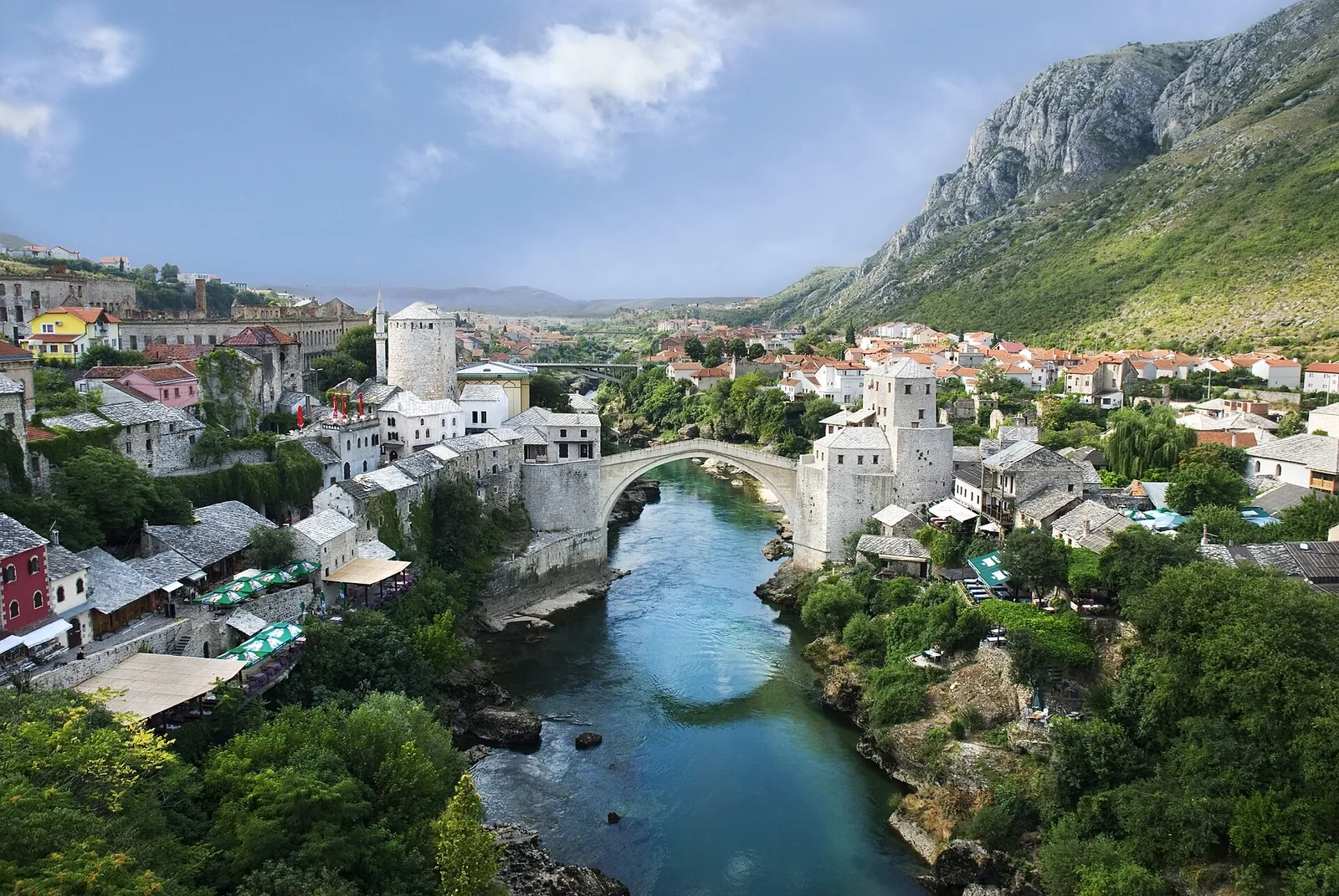
3 Days in Sarajevo and Mostar: A Day-by-Day Itinerary
3 days in Bosnia and Herzegovina: Sarajevo's old bazaar, war history and Trebević cable car, then the scenic train to Mostar and its Old Bridge.
- 🗓️ Trip length
- 3 days
- ☀️ Best time
- May to June, September to October
- 💰 Daily spend
- BAM 25-60 for sights and local transport (excl. stay and meals)
- ✅ Facts checked
- 1 November 2026
Get ready for one of Europe’s most moving and most delicious short trips. In three days you will sip strong Bosnian coffee in Sarajevo’s old bazaar, see where the Ottoman and Austro-Hungarian cities meet in a single street, learn how the city survived the 1990s siege, and ride a cable car into the pine forests above town. Then a scenic train takes you south through the Neretva valley to Mostar, where the famous Old Bridge arches over an emerald river.
This plan is perfect for first-time visitors to the Balkans, couples, history lovers and anyone happy to walk. The pace is relaxed: two nights in Sarajevo and one in Mostar, no car needed. Some of the history is heavy, so we have balanced it with markets, viewpoints and long meals.
At a glance
| Day | Area | Highlights |
|---|---|---|
| 1 | Sarajevo Old Town | Baščaršija bazaar, Sebilj fountain, Gazi Husrev-beg Mosque area, Ferhadija street, War Childhood Museum |
| 2 | Sarajevo hills and history | Trebević cable car and the old Olympic bobsled track, Tunnel of Hope, Latin Bridge |
| 3 | Mostar | Morning train down the Neretva valley, Old Bridge, Kujundžiluk bazaar, Koski Mehmed Pasha Mosque viewpoint |
If you prefer to finish in Sarajevo, you can swap Day 2 and Day 3 and return from Mostar by the afternoon train. We explain the timetable below.
Day 1: Sarajevo’s Old Town and the stories it holds
Morning
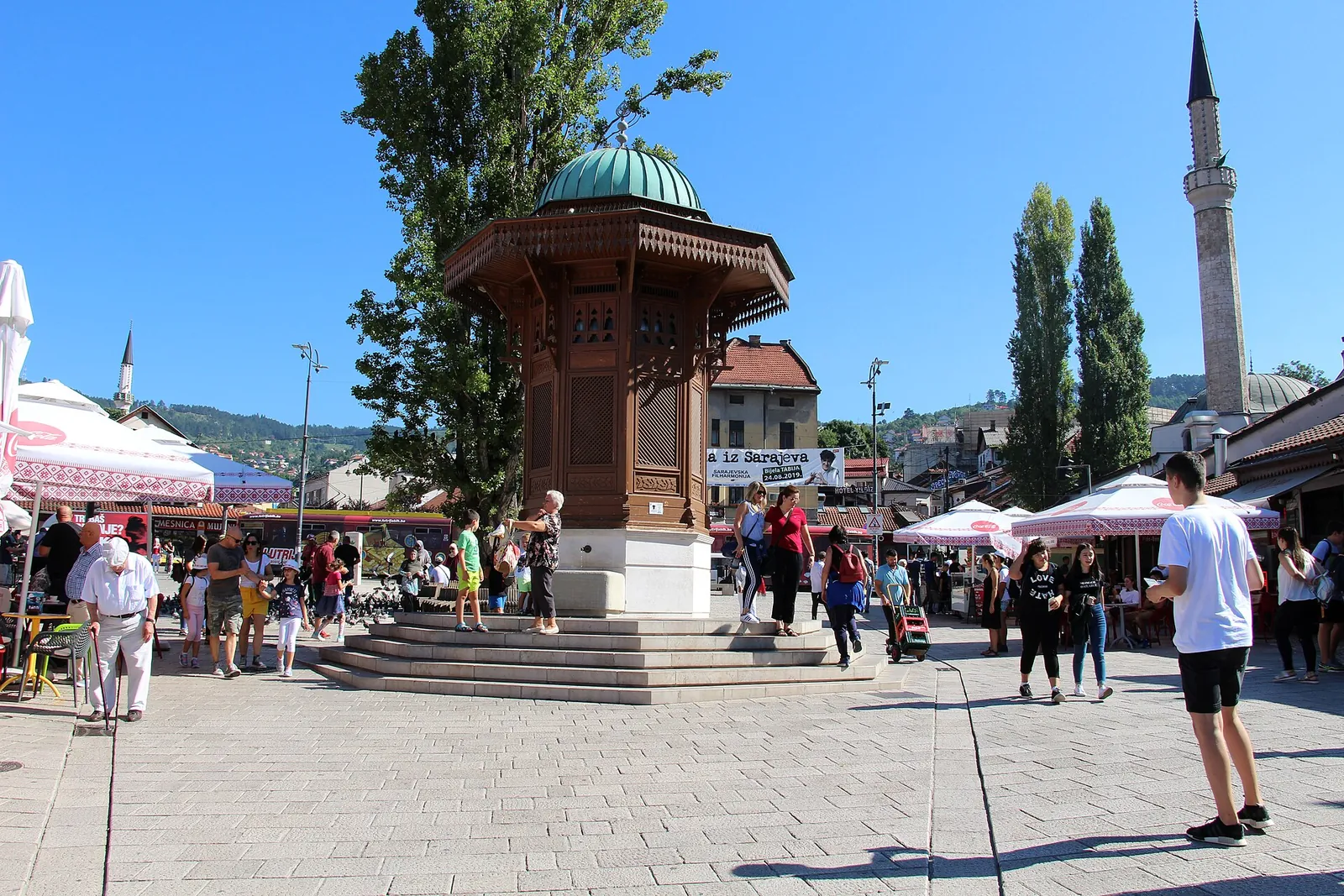
This is the day to fall for Sarajevo, and it begins where the city itself began: Baščaršija, the old Ottoman market quarter. Head for the Sebilj, the wooden fountain kiosk in the main square, and let the pigeons, coppersmiths and coffee smells set the mood. The lanes around it are lined with workshops where craftsmen still hammer copper trays and coffee sets, and with tiny cafés serving coffee in a traditional džezva.
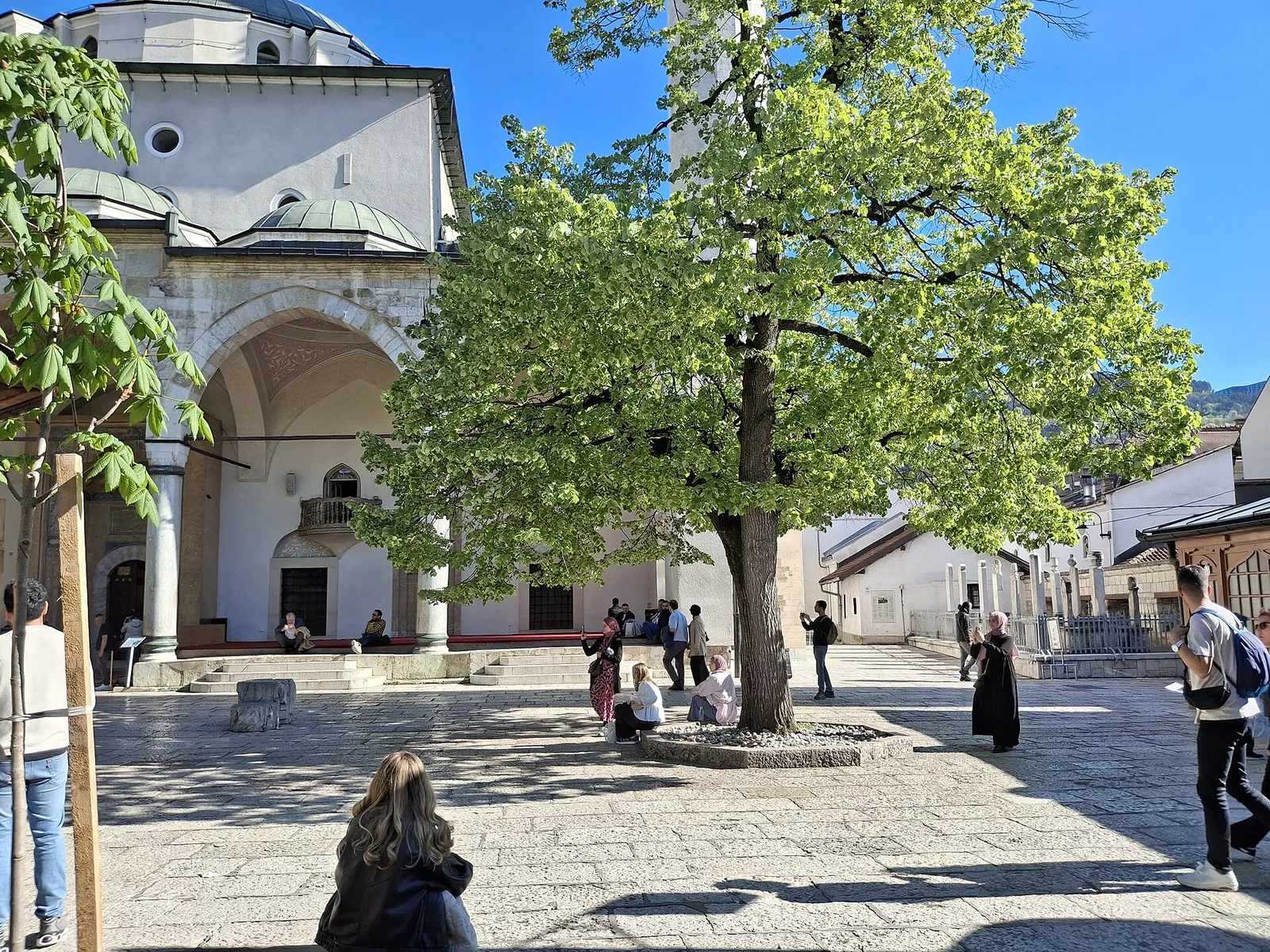
From the square it is a short walk to the Gazi Husrev-beg Mosque complex, the centrepiece of Ottoman Sarajevo, with its courtyard fountain and the covered bazaar nearby. Visitors are welcome outside prayer times. Dress modestly (shoulders and knees covered, a scarf for women inside the mosque) and check visiting arrangements on site, as they can change around prayers and on Fridays.
Afternoon
Walk west along Ferhadija, the pedestrian street that is the city’s favourite stroll. Keep an eye on the pavement: a line marked “Sarajevo Meeting of Cultures” shows where the Ottoman old town ends and the Austro-Hungarian city begins. Within a few steps you go from low wooden shops to grand European facades, and you will pass churches, a synagogue and mosques within a few hundred metres of each other.
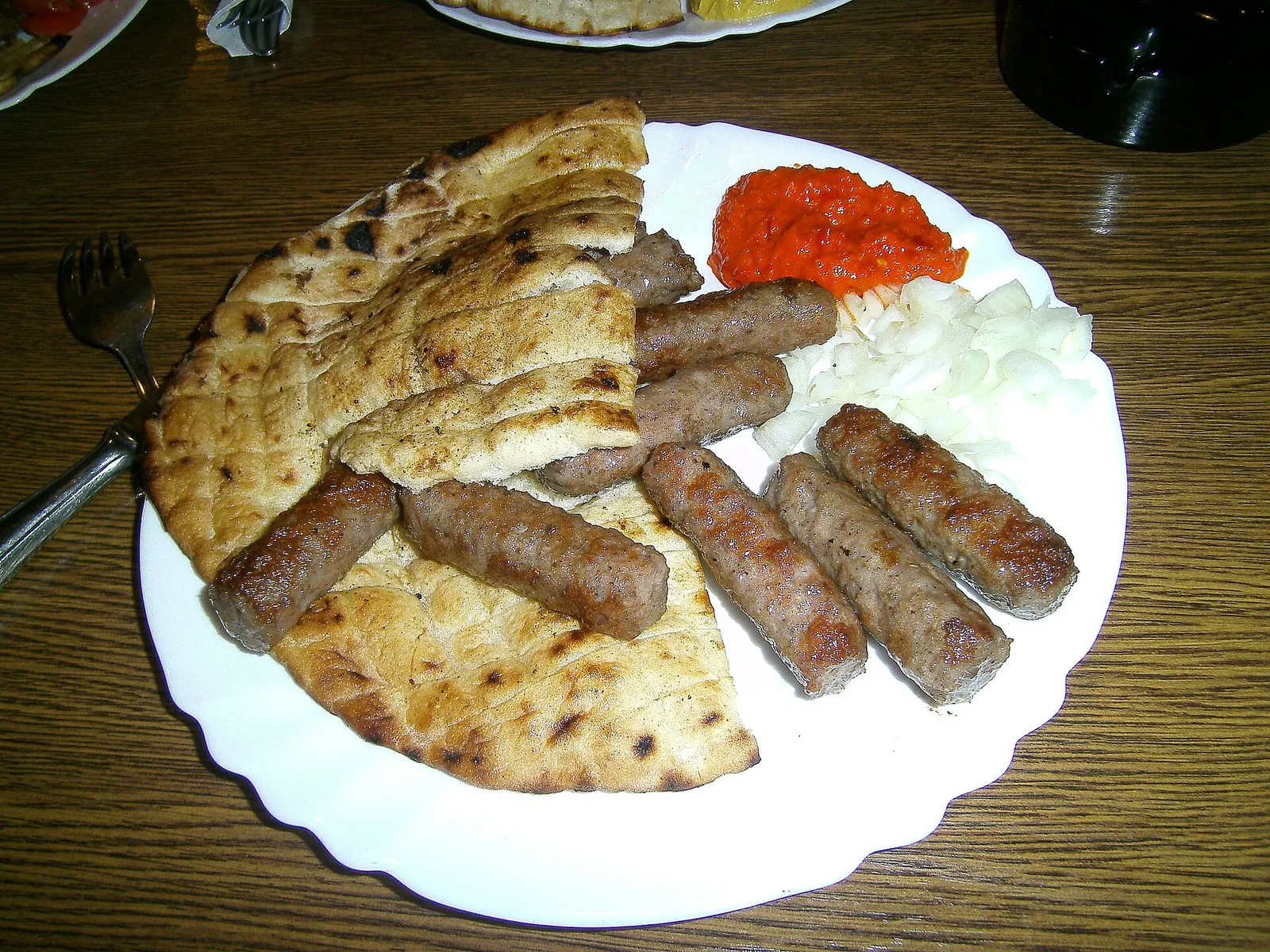
Have lunch on the way. Ćevapi (small grilled meat rolls in flatbread with onions) are the classic, and buregdžinica bakeries sell flaky burek pies filled with meat, cheese or spinach.
Then climb the short, steep lanes north of Baščaršija to the War Childhood Museum at Logavina 32. It tells the story of the 1992-1995 war through objects and memories donated by people who were children at the time: a toy, a diary, a ballet shoe. It is quiet, personal and unforgettable. The museum is open Monday to Sunday 11:00-19:00, with last entry at 18:30. Adult tickets are 15 KM, university students 12 KM, youth aged 6-17 pay 7 KM, children 5 and under go free, and a family pass is 35 KM. It closes on 1 January, 1 March, 1 May and 25 November, and early on 31 December, so check the official site if your dates are near those.
Evening
Go back down into Baščaršija as the lights come on. This is the time for a slow dinner and something sweet: try baklava or tufahija (a poached apple stuffed with walnuts and topped with cream). If you want a view, walk up to one of the old town’s hillside viewpoints at sunset, staying on paved streets.
Day 2: Trebević mountain, the Tunnel of Hope and the Latin Bridge
Morning
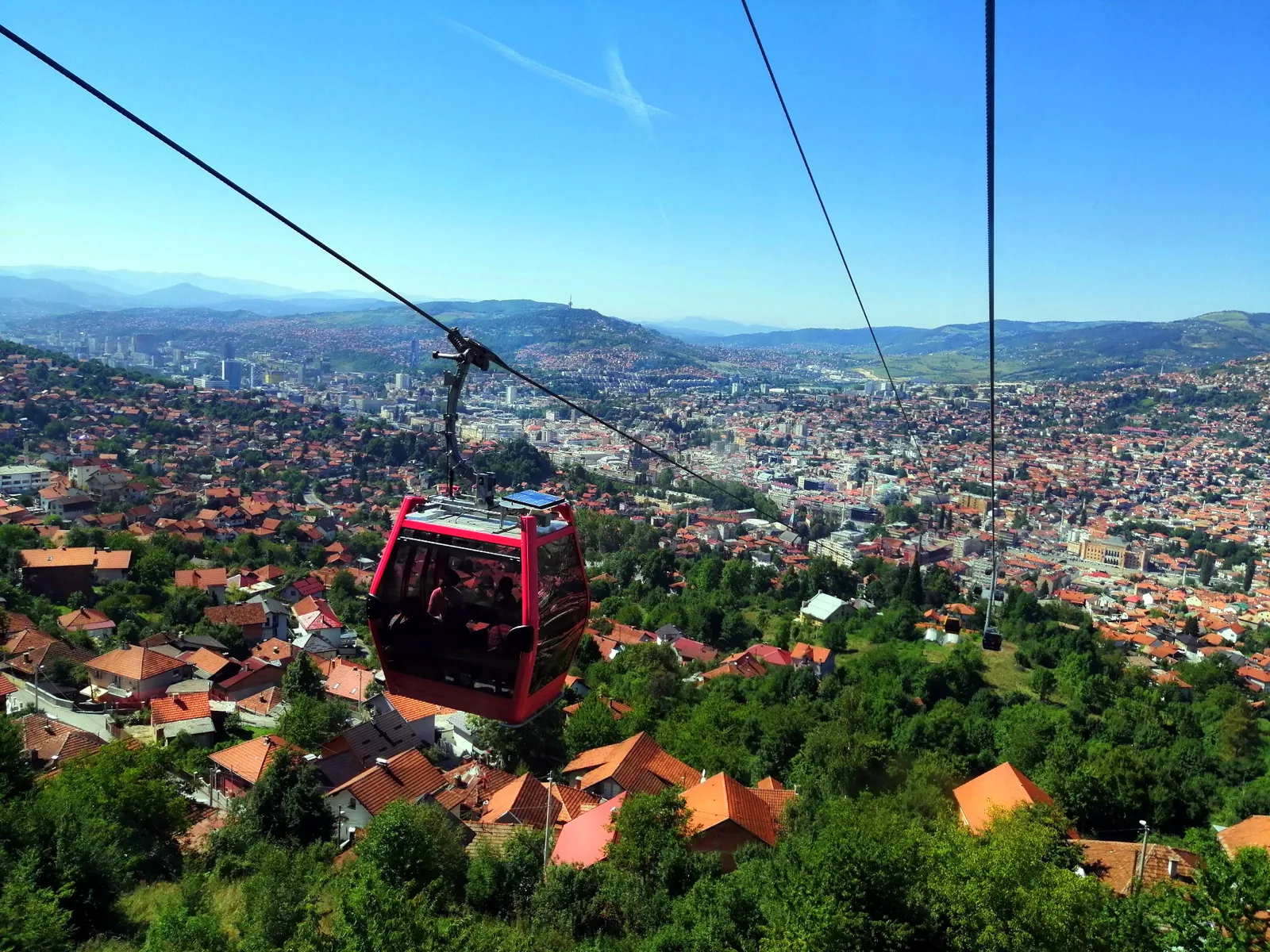
Get ready for a day of big views and big stories, and it kicks off with a ride. The Trebević cable car climbs from the riverside district just east of the old town up to Mount Trebević, which hosted events during the 1984 Winter Olympics. The views over the Sarajevo valley are superb. At the time of checking, the official site lists opening hours of 09:00-17:00, except Mondays when it runs 12:00-17:00. Hours change by season, so check the official site the day before. The ticket price list is published on the operator’s website; check it there, as we could not confirm today’s foreign-visitor fare.
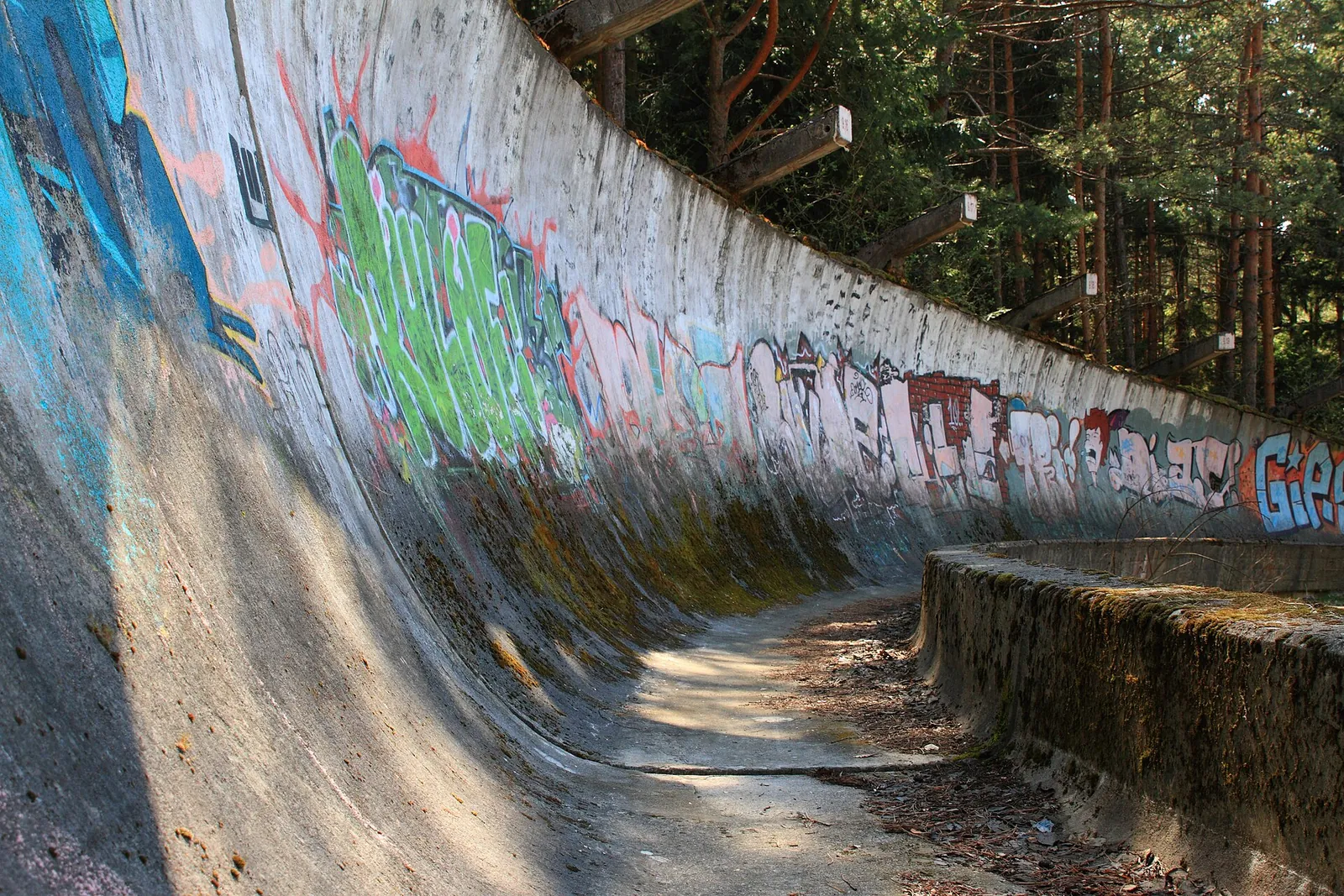
At the top, the paved paths lead toward the old Olympic bobsled track, now covered in colourful graffiti and slowly being reclaimed by the forest. Stay on paved surfaces and marked paths here. This is not decoration: official UK and Canadian travel advice both warn that landmines and unexploded ordnance still exist in rural and mountain areas, and the UK advice specifically says not to step off roads and paved areas without an experienced guide.
Afternoon
Ride back down and grab a quick lunch in town. Then head out to the Tunnel of Hope (Tunnel D-B, Dobrinja-Butmir), on the edge of the city near the airport. During the siege, an underground passage dug beneath the airport runway was the city’s lifeline for food, supplies and people. Today a short section of the tunnel and a family house above it form a museum.
The Sarajevo tourism portal lists admission at 10 KM per person and gives summer hours that ran until 31 October. Winter hours were not published there, so check before you go. The tunnel is not close to the old town, so most visitors go by taxi or on a guided tour. Agree the fare or make sure the meter is on before you set off (see Heads-up below).
Evening
Back in the centre, end the day at the Latin Bridge over the Miljacka river. On the street corner next to it, in June 1914, Archduke Franz Ferdinand was assassinated, an event that helped trigger the First World War. From here, a riverside walk east brings you back toward Baščaršija for dinner. Pack your bag tonight, as tomorrow starts early.
Day 3: The train to Mostar and the Old Bridge
Morning
Today is travel day, and what a beautiful one. Catch the morning train from Sarajevo railway station. The ŽFBH timetable lists train 723 departing Sarajevo at 07:15 and arriving in Čapljina at 09:40, calling at Mostar on the way. ŽFBH publishes only end-to-end times, so confirm the exact Mostar arrival time when you buy your ticket. Tickets are bought at the station counter; ŽFBH does not publish a domestic price list online, so check the fare at the window.
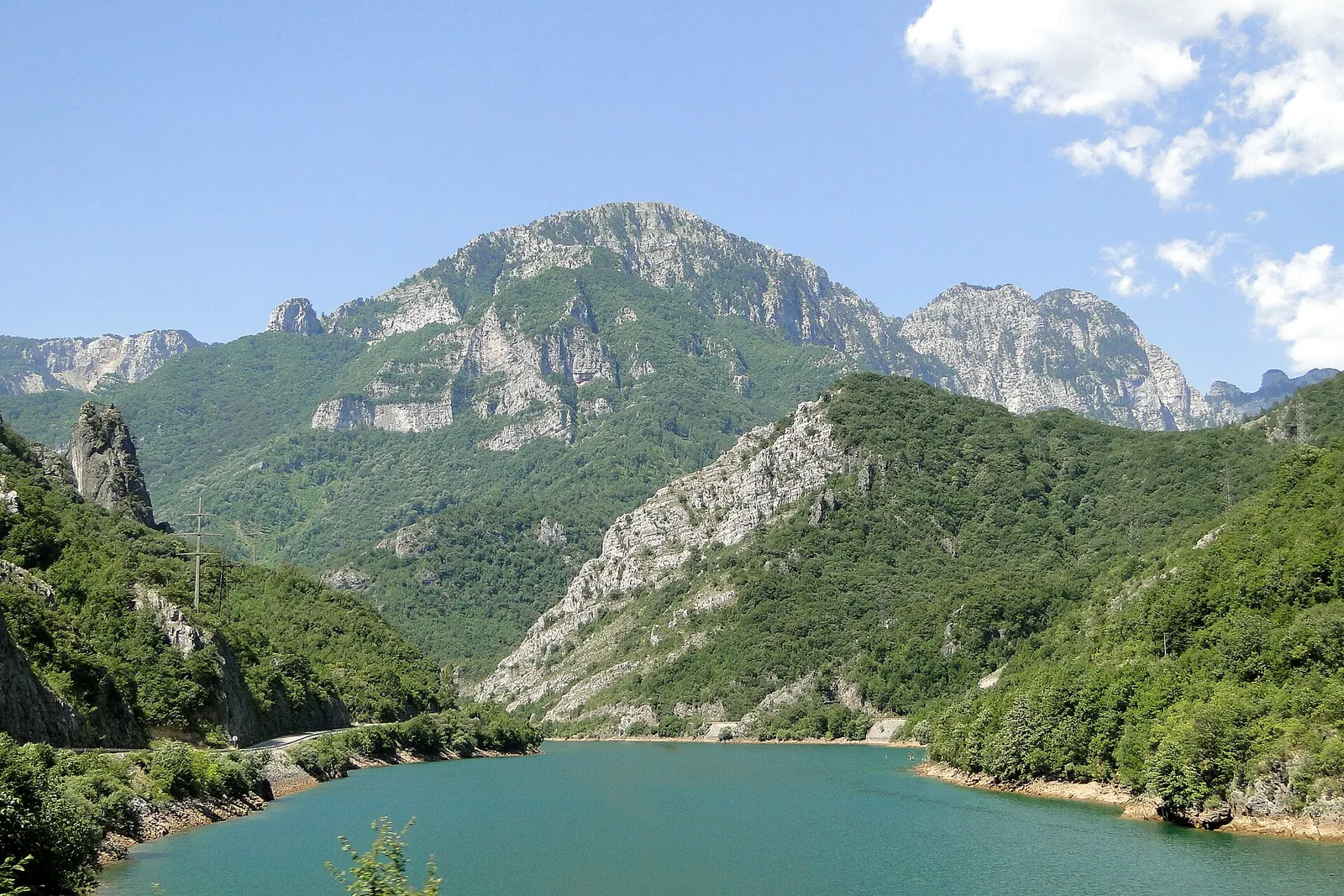
Grab a window seat for the views as the line follows the Neretva valley past Lake Jablanica, through tunnels and over bridges. It is widely considered one of the most beautiful rail journeys in the region.
Afternoon
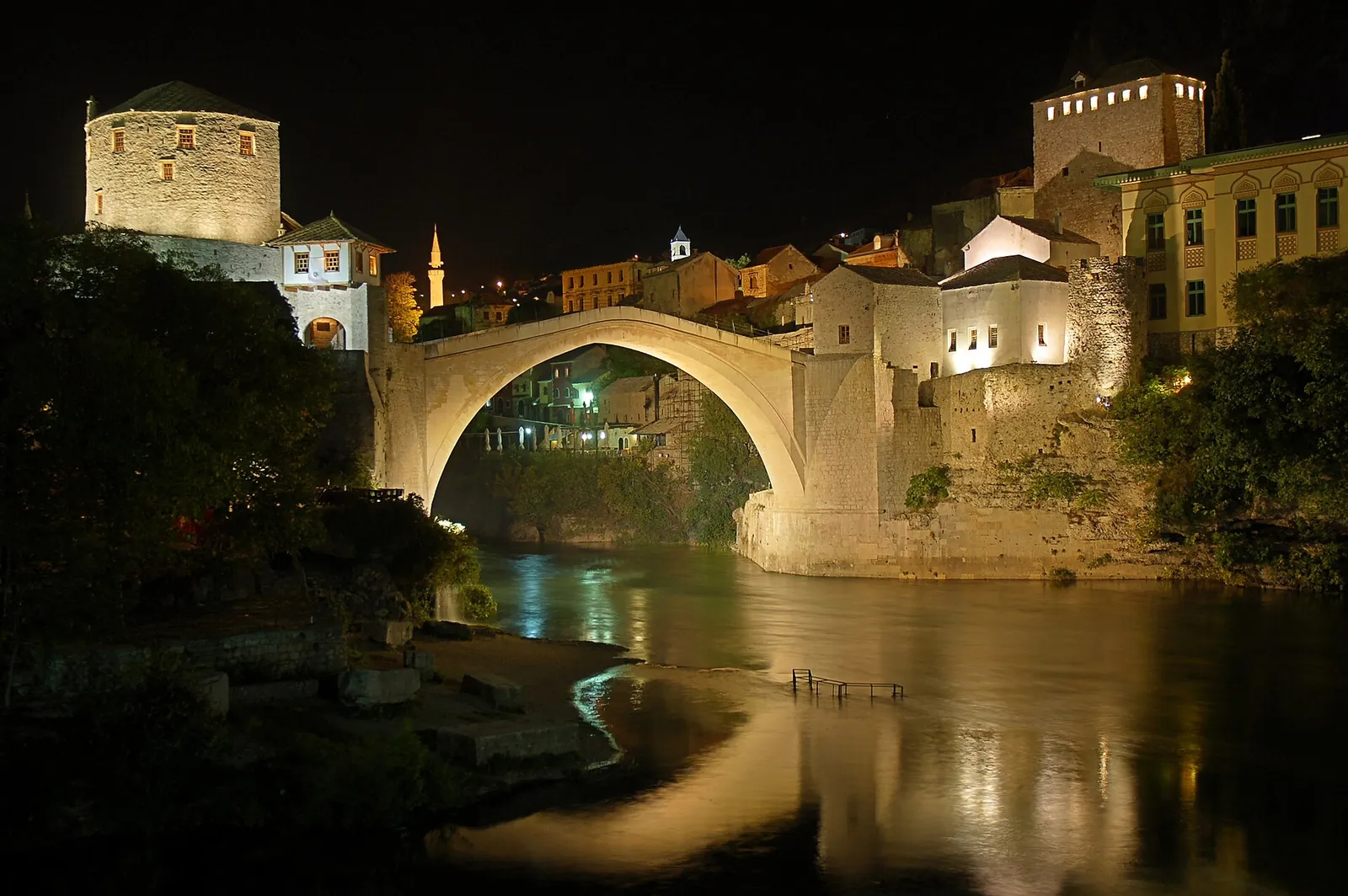
From Mostar station, walk or take a short taxi ride to the old town. Then it is time for the star of the show: Stari Most, the Old Bridge, the elegant Ottoman stone arch over the Neretva. The original was destroyed during the war in 1993 and rebuilt after it; the bridge and old town are a UNESCO World Heritage Site. Walking across is free. The stones are polished smooth and can be slippery, so wear shoes with grip.
In summer you may see local divers jump from the top of the bridge into the river far below, a tradition going back centuries. Do not try it yourself.
Wander the Kujundžiluk, the old bazaar street on the eastern bank, full of copper workshops and souvenir stalls. Then cross to the Koski Mehmed Pasha Mosque, whose courtyard and minaret give one of the best views of the bridge. We could not find an official price for the mosque or minaret, so check at the entrance. The Museum of the Old Bridge, inside one of the towers at the end of the bridge, explains how it was built and rebuilt; check the ticket price on site.
Have a late lunch on one of the riverside terraces with a bridge view. Trout from the Neretva and grilled meats are local favourites.
Evening
Mostar’s old town is at its most beautiful at dusk, when the bridge glows and the crowds of day-trippers have gone. Stay the night here to enjoy it.
If you need to return to Sarajevo today instead, the ŽFBH timetable lists train 722 departing Čapljina at 16:42 and arriving in Sarajevo at 19:07, calling at Mostar shortly after leaving Čapljina. Confirm the Mostar departure time at the station. There is also an early train, 720, leaving Čapljina at 06:03 and arriving in Sarajevo at 08:35, useful if you stay overnight and want to be back for a flight from Sarajevo.
Getting there and getting around
Arriving. Sarajevo International Airport is on the southwestern edge of the city, not far from the Tunnel of Hope. Options into the centre include an airport shuttle bus, local city buses and taxis. We could not confirm today’s shuttle fare and timetable on an official page, so check the airport’s official channels before you fly. If you take a taxi, use a licensed one and agree on the price before you set off: UK travel advice notes that airport drivers may quote a fixed fare instead of using the meter.
Sarajevo to Mostar. The train is the scenic choice and our recommendation. From the timetable checked today:
| Train | Route | Departs | Arrives |
|---|---|---|---|
| 723 | Sarajevo to Čapljina (via Mostar) | 07:15 | 09:40 |
| 721 | Sarajevo to Čapljina (via Mostar) | 16:46 | 19:18 |
| 720 | Čapljina to Sarajevo (via Mostar) | 06:03 | 08:35 |
| 722 | Čapljina to Sarajevo (via Mostar) | 16:42 | 19:07 |
Intermediate Mostar times are not published, so ask at the station. A seasonal summer train to Ploče on the Croatian coast ran on weekends until late September 2026; check ŽFBH notices for next year’s dates. Buses also link the two cities through the day; check operators at the bus stations.
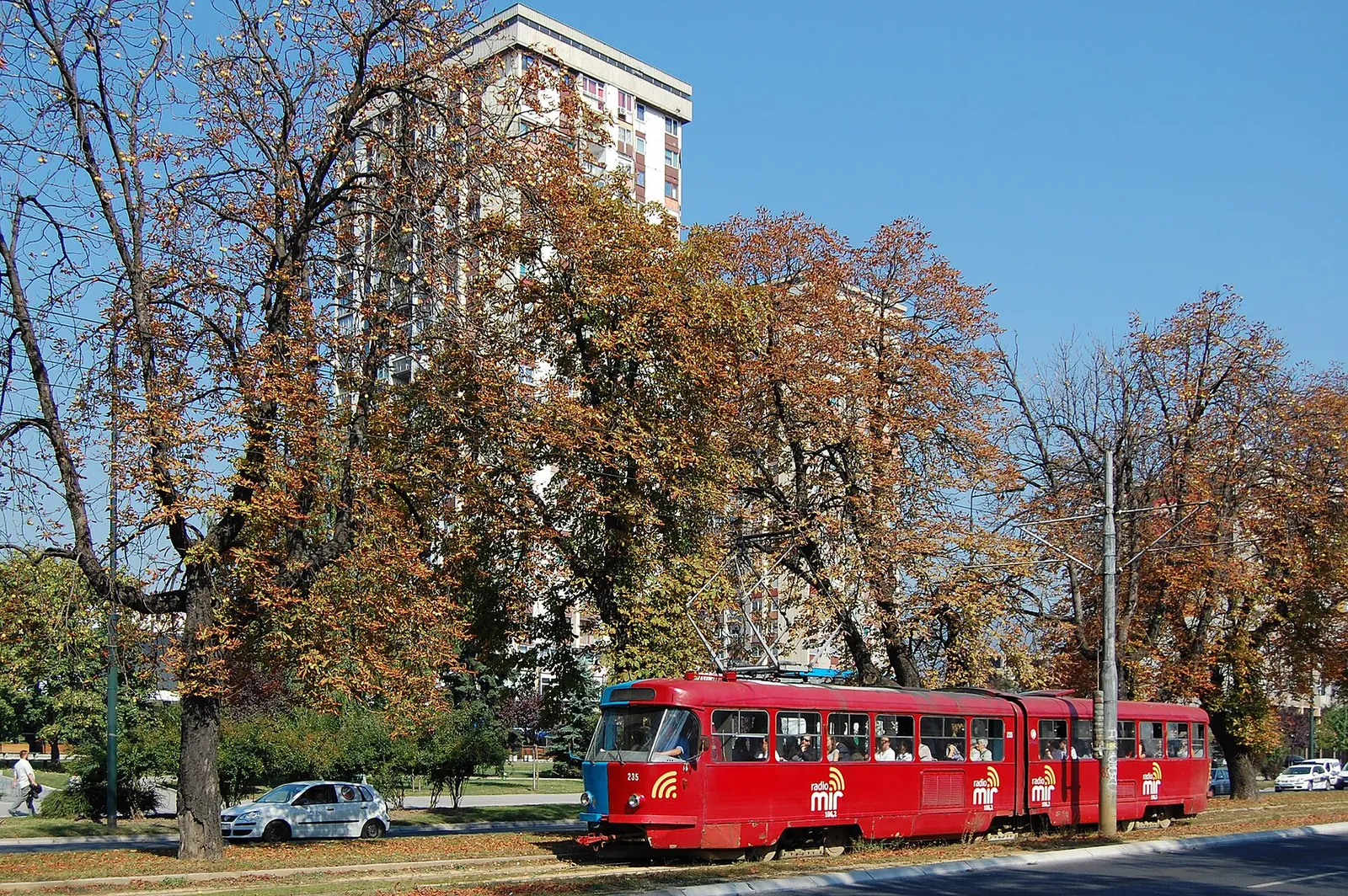
In the cities. Both old towns are compact and best explored on foot. In Sarajevo, trams run along the river from Baščaršija through the city. Ask at a kiosk or your accommodation how to buy and validate tickets, and keep your ticket until you get off. Only use registered taxis: Canada’s travel advice notes they have license plates beginning with “TA” and recommends making sure the meter is running.
Where to stay
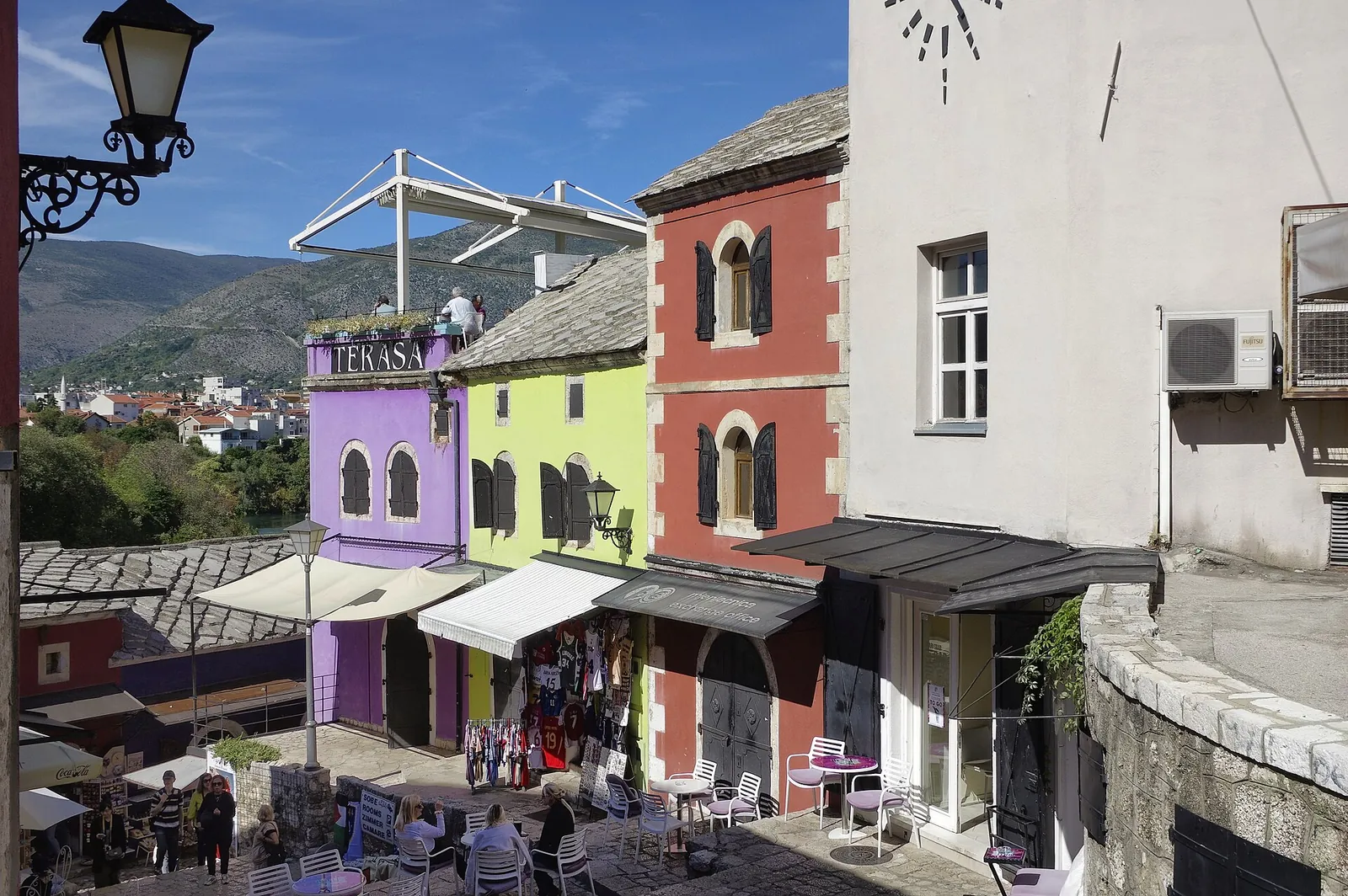
- Baščaršija and the Old Town (Sarajevo). Best for first-timers. You are steps from the bazaar, mosques, cafés and the War Childhood Museum, and evenings are lively. Expect some noise and cobbles.
- Around Ferhadija and the Austro-Hungarian centre (Sarajevo). A little calmer and more modern, still walkable to everything, with good restaurant choice and tram access along the river.
- Mostar Old Town. Stay as close to the Old Bridge as your budget allows. Early mornings and evenings, when day-trip groups have left, are the magic hours.
- Central Mostar beyond the old town. Quieter streets and often better value, a short walk from the bridge and closer to the railway station.
Budget
These figures cover the paid sights and transport in this plan, per person. Accommodation, meals and flights are excluded.
| Item | Typical cost |
|---|---|
| War Childhood Museum, adult | 15 KM (student 12 KM) |
| Tunnel of Hope museum | 10 KM per person, as listed by the Sarajevo tourism portal; check before you go |
| Trebević cable car | Check the official price list |
| Sarajevo to Mostar train | Check at the ŽFBH ticket counter |
| Old Bridge | Free to walk across |
| Old Bridge Museum, Koski Mehmed Pasha Mosque minaret | Check on site |
| Taxis to the Tunnel of Hope and airport | Use the meter or agree the price first |
The local currency is the convertible mark (BAM, written KM locally). Carry some cash for small cafés, bakeries, mosque entries and taxis.
Heads-up
Bosnia and Herzegovina is a warm, welcoming destination, and most visits are trouble-free. A few things are worth knowing before you go, all from official government travel advice:
- Landmines. Unmarked landmines and unexploded ordnance remain in rural and mountainous areas. Stay on roads, paved surfaces and marked paths, do not enter abandoned buildings, and never touch war relics or unknown objects. This matters on Trebević and on any countryside walk.
- Pickpockets. Petty theft happens in crowded tourist areas and on public transport. Keep your passport and phone secure, especially in busy Baščaršija and on trams.
- Fake ticket controllers. Canada’s advice mentions people posing as ticket controllers on public transport. Real controllers carry identification; ask to see it.
- Unlicensed taxis. Do not use them. Use registered taxis with the meter running, and at the airport agree the fare before you get in.
- Car break-ins. Thefts from cars are reported around Sarajevo, including on Mount Trebević. Do not leave valuables in a parked car.
- Terrorism. UK advice states that attacks cannot be ruled out. Stay alert in crowded places, as you would in any European city.
Practical tips
- Entry and visas. Visa rules depend on your passport. Check the official portal of the Ministry of Foreign Affairs of Bosnia and Herzegovina (mvp.gov.ba) or your government’s travel advice before booking. UK advice also notes that your passport should have been issued less than 10 years before arrival and be valid for at least 90 days after you leave.
- Police registration. All foreign nationals must register with the police within 72 hours of arrival. Hotels and some hostels usually do this for you; if yours does not, you must arrange it yourself.
- Dress code. Cover shoulders and knees when visiting mosques and churches. Women should bring a scarf for mosque interiors.
- Closing days. The War Childhood Museum is closed on 1 January, 1 March, 1 May and 25 November. The cable car opens later on Mondays.
- SIM and data. Local SIM cards are sold in shops and kiosks; bring your passport. Check whether your home eSIM provider covers Bosnia and Herzegovina, which is outside the EU.
- Shoes. Both old towns are cobbled and hilly, and Mostar’s bridge stones are slippery. Comfortable shoes with grip make a big difference.
FAQ
Is 3 days enough for Sarajevo and Mostar?
Yes, for the highlights. Two days give you Sarajevo’s old town, its war history and the mountain views, and one day plus a night in Mostar lets you see the Old Bridge in the quiet morning and evening hours.
Should I take the train or the bus to Mostar?
The train is our pick for the views along the Neretva valley. Buses run more often, so they are a good backup if the train times do not suit you. Confirm the Mostar times at the station, as ŽFBH publishes only the full-route times.
Can I buy train tickets online?
Plan on buying at the station counter. ŽFBH has said its seasonal Ploče tickets are not sold online, and no online option for the Mostar route was shown when we checked. Arrive a little early to queue.
Is Sarajevo safe for tourists?
Most visits are trouble-free. Follow the official advice: watch for pickpockets in crowded areas, use registered taxis, and stay on paved paths in the mountains because of old landmines.
What is the best time to visit?
Late spring (May to June) and early autumn (September to October) usually bring pleasant walking weather. Summer is hot in Mostar, and winter in Sarajevo can be cold and snowy, with shorter opening hours at some sights.
Do I need cash?
It helps. Many places take cards, but small cafés, bakeries, taxis and some sights prefer cash in convertible marks (KM).
Sources
Prices, hours and rules change. We checked these on 1 November 2026; please confirm on the official page before you book.
- Railways of the Federation of BiH (ŽFBH): Timetable
- Railways of the Federation of BiH (ŽFBH): News and notices
- Trebević Cable Car (Žičara Trebević): Service information and opening hours
- War Childhood Museum: Visit
- Sarajevo Navigator (Sarajevo tourism portal): Tunnel of Hope
- GOV.UK Foreign travel advice: Bosnia and Herzegovina, safety and security
- GOV.UK Foreign travel advice: Bosnia and Herzegovina, entry requirements
- Government of Canada: Bosnia and Herzegovina travel advice
Photo credits (10)
- The Old Bridge arching over the Neretva in Mostar: Ramirez, CC BY-SA 4.0, via Wikimedia Commons
- The wooden Sebilj fountain in Baščaršija under blue sky: Fred Romero from Paris, France, CC BY 2.0, via Wikimedia Commons
- Leafy courtyard of the Gazi Husrev-beg Mosque: Aleksandra Đuričić, CC BY-SA 4.0, via Wikimedia Commons
- A red Trebević cable car gondola above Sarajevo: MarinaSimic, CC BY-SA 4.0, via Wikimedia Commons
- Graffiti-covered Olympic bobsled track in the Trebević pines: spacebirdy(also known as geimfyglið (:> )=| made with Sternenlaus-spirit), CC BY-SA 3.0, via Wikimedia Commons
- Green mountains above the lake near Jablanica: Adam Jones, Ph.D., CC BY-SA 3.0, via Wikimedia Commons
- Mostar's Old Bridge glowing at night: BáthoryPéter (talk), CC BY-SA 3.0, via Wikimedia Commons
- A red Sarajevo tram among autumn trees: Milan Suvajac, CC BY-SA 4.0, via Wikimedia Commons
- Colourful buildings on Kujundžiluk street in Mostar: Berthold Werner, CC BY-SA 4.0, via Wikimedia Commons
- Ćevapi with flatbread, chopped onion and a red relish: amanderson2, CC BY 2.0, via Wikimedia Commons
More Europe itineraries
 3 days
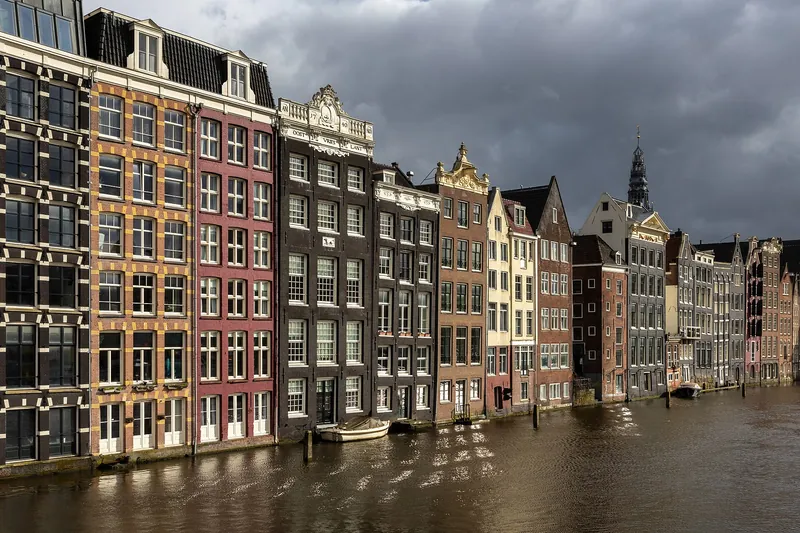
3 Days in Amsterdam: A Day-by-Day Itinerary
A 3-day Amsterdam itinerary: Anne Frank House and the Jordaan, Rijksmuseum, Van Gogh Museum and free ferries to Noord, with verified 2026 prices.
 3 days
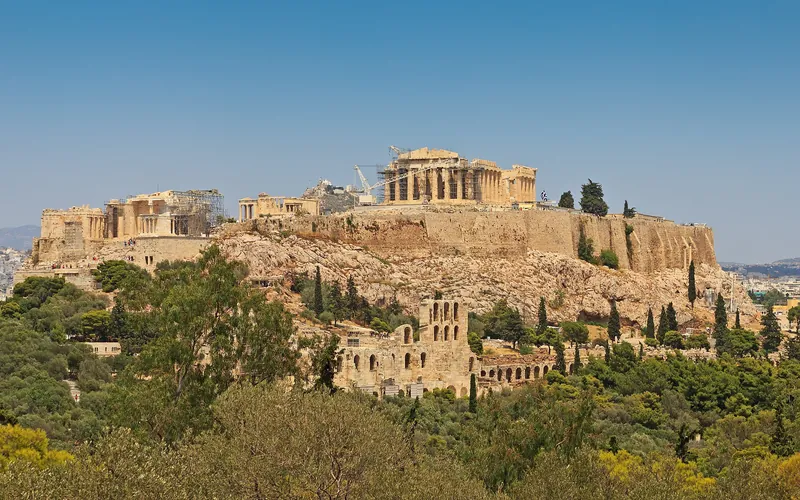
3 Days in Athens: A Day-by-Day Itinerary
A 3-day Athens itinerary: the Acropolis and its museum, Ancient Agora, Plaka, Panathenaic Stadium and the National Archaeological Museum.
 3 days
3 Days in Barcelona: A Day-by-Day Itinerary
A 3-day Barcelona itinerary: Gothic Quarter and El Born, Sagrada Família, Passeig de Gràcia, Park Güell and Montjuïc, with verified 2026 tickets.
This is a researched plan, not a personal trip report. How we research · Affiliate disclosure