
3 Days in Jeju Island: A Day-by-Day Itinerary
A 3-day Jeju itinerary: sunrise on Seongsan Ilchulbong and the Udo ferry, a booked Hallasan summit hike, then Manjanggul lava tube and Hyeopjae beach.
- 🗓️ Trip length
- 3 days
- ☀️ Best time
- April to May, September to November
- 💰 Daily spend
- KRW 10,000-30,000 for sights and local transport (excl. stay and meals)
- ✅ Facts checked
- 1 November 2026
Get ready for Korea’s volcanic island. Jeju gives you a crater rising straight out of the sea, the country’s highest mountain, kilometres of lava tubes, black basalt walls, tangerine orchards and turquoise beaches. It is also home to the haenyeo, the island’s famous women divers. The good news: three days is enough to see the volcanic highlights without rushing, as long as you group your days by area: Jeju is bigger than it looks on a map, and crossing it by bus can take well over an hour.
This plan is made for first-timers who love a good walk. Day 1 covers the east coast around Seongsan Ilchulbong and the little island of Udo, Day 2 is a full-day hike up Hallasan (with an easier option if you do not want to summit), and Day 3 takes you underground into the Manjanggul lava tube before crossing to the west coast for sunset at Hyeopjae Beach.
3 days in Jeju at a glance
| Day | Area | Highlights |
|---|---|---|
| 1 | East coast (Seongsan) | Seongsan Ilchulbong at sunrise, haenyeo culture, the ferry to Udo island |
| 2 | Hallasan National Park | Summit hike to Baengnokdam via the Seongpanak Trail (reservation required), or a shorter non-summit trail |
| 3 | Northeast and west coast | Manjanggul lava tube, a section of the Jeju Olle Trail, the Haenyeo Museum area, sunset at Hyeopjae Beach |
Two planning rules before you start. First, the Hallasan summit trails need an online reservation, and bookings open once a month, so sort this out before anything else. Second, watch the monthly closing days: listings for Seongsan Ilchulbong give the first Monday of each month as a closing day, and Manjanggul closes on the first Wednesday of each month. Swap Day 1 and Day 3 around if your dates need it, and confirm on the official site before you go.
Day 1: Sunrise peak, haenyeo and Udo island
Morning
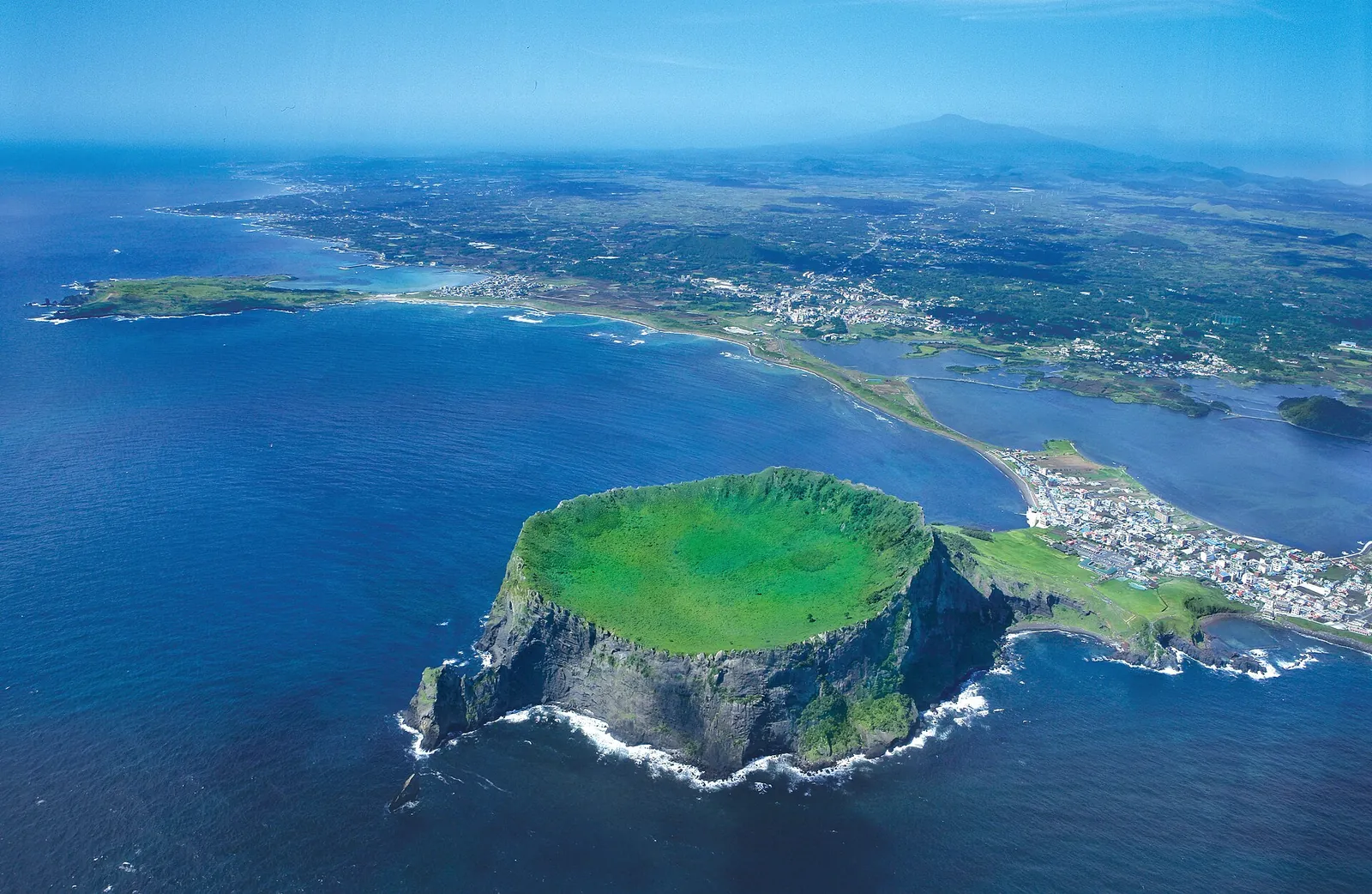
Welcome to Jeju! If you can face an early alarm, start the trip the way the island’s most famous landmark is named: Seongsan Ilchulbong means “Sunrise Peak”. This tuff cone, about 180 metres high, was formed by an underwater volcanic eruption roughly 5,000 years ago, and its bowl-shaped crater looks like a giant crown sitting on the sea. Together with Hallasan and the Geomunoreum lava tube system, it is part of the UNESCO World Heritage site Jeju Volcanic Island and Lava Tubes, inscribed in 2007.
The climb is on stairs and most people take around 20 to 30 minutes to reach the crater rim. Opening hours vary by season, and in October 2024 the Jeju World Natural Heritage Office adjusted them so visitors can watch the sunrise from the top. Adult admission is widely listed at KRW 5,000, and the site is listed as closed on the first Monday of each month. Hours, fees and closures can change, so check the World Natural Heritage Office or Visit Jeju before you set out, especially if you are planning around sunrise.
Before you leave, look out for haenyeo around the shoreline below the peak. The “Culture of Jeju Haenyeo (women divers)” was added to UNESCO’s list of Intangible Cultural Heritage in 2016: these women free-dive without breathing equipment to harvest shellfish, seaweed and sea urchins, and their knowledge is passed down through generations. Demonstrations and seafood stalls at the foot of the peak are run locally and their timing varies, so ask at the site rather than relying on a fixed schedule.
Afternoon
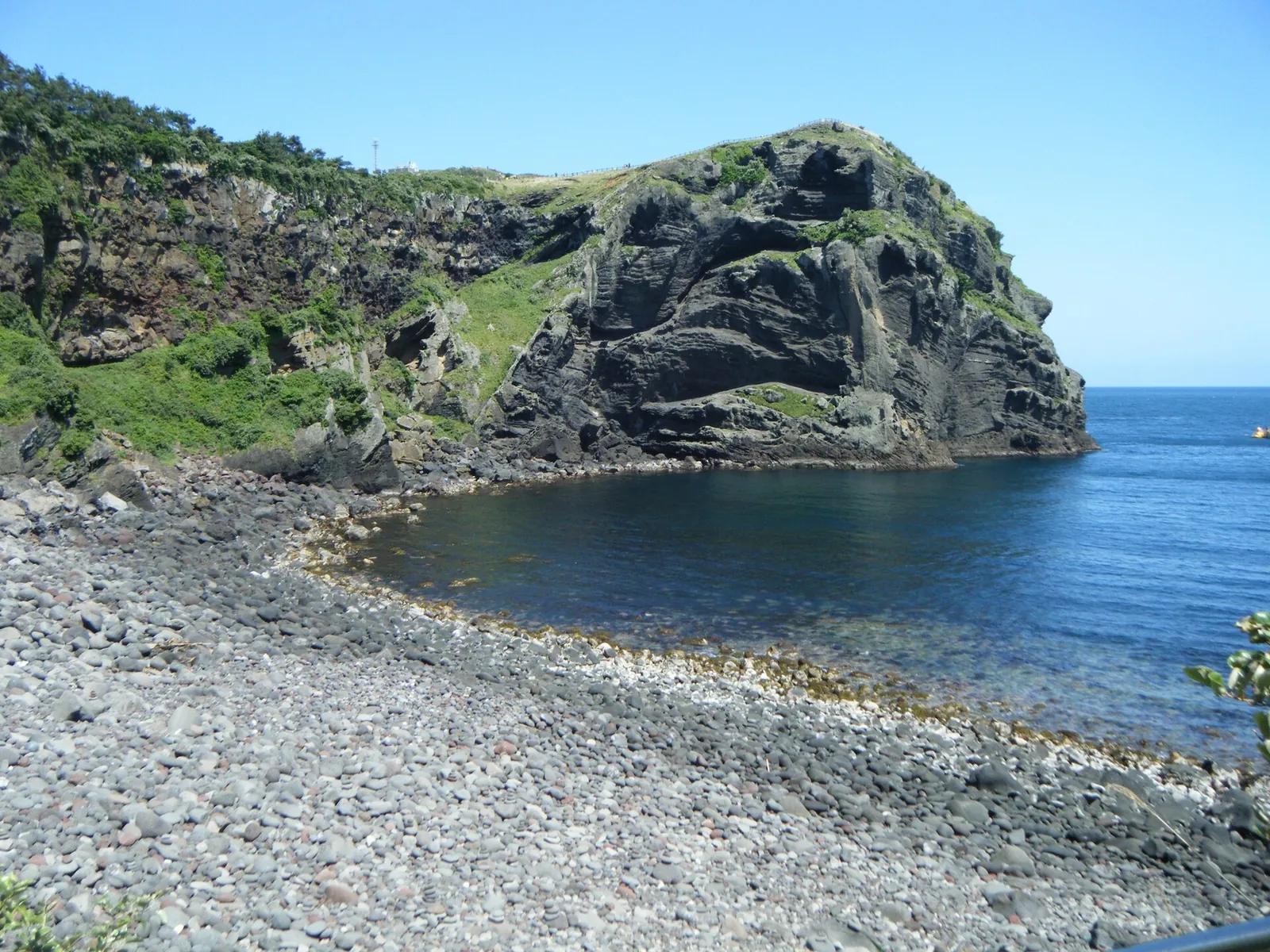
Walk down to Seongsan Port and take the short ferry to Udo, a small island just off the coast whose name means “Cow Island”. The crossing takes about 15 minutes. Recent reports put the adult return fare at around KRW 11,000, including the marine park entry charge, but go by the price posted at the terminal. You fill in a short boarding form (name, date of birth, contact number) before buying a ticket, so keep your passport handy.
Taking a rental car across is restricted for most visitors, so leave the car at the port. On Udo, get around by the island’s tour bus, a rented bicycle or an electric scooter, and allow at least three hours. Highlights include the pale sand of Seobin Baeksa beach, the views from Udobong peak back towards Seongsan Ilchulbong and the island’s famous peanut ice cream. Ferry frequency drops in the evening and the last boats leave earlier in winter, so check the return times at the ticket office when you arrive.
Evening
Back on the main island, stay around Seongsan for a well-earned dinner. The east coast is a good place to try Jeju’s local specialities, such as abalone porridge (jeonbokjuk), grilled hairtail fish and Jeju black pork barbecue. Then get an early night: tomorrow starts before dawn.
Day 2: Hiking Hallasan
Morning
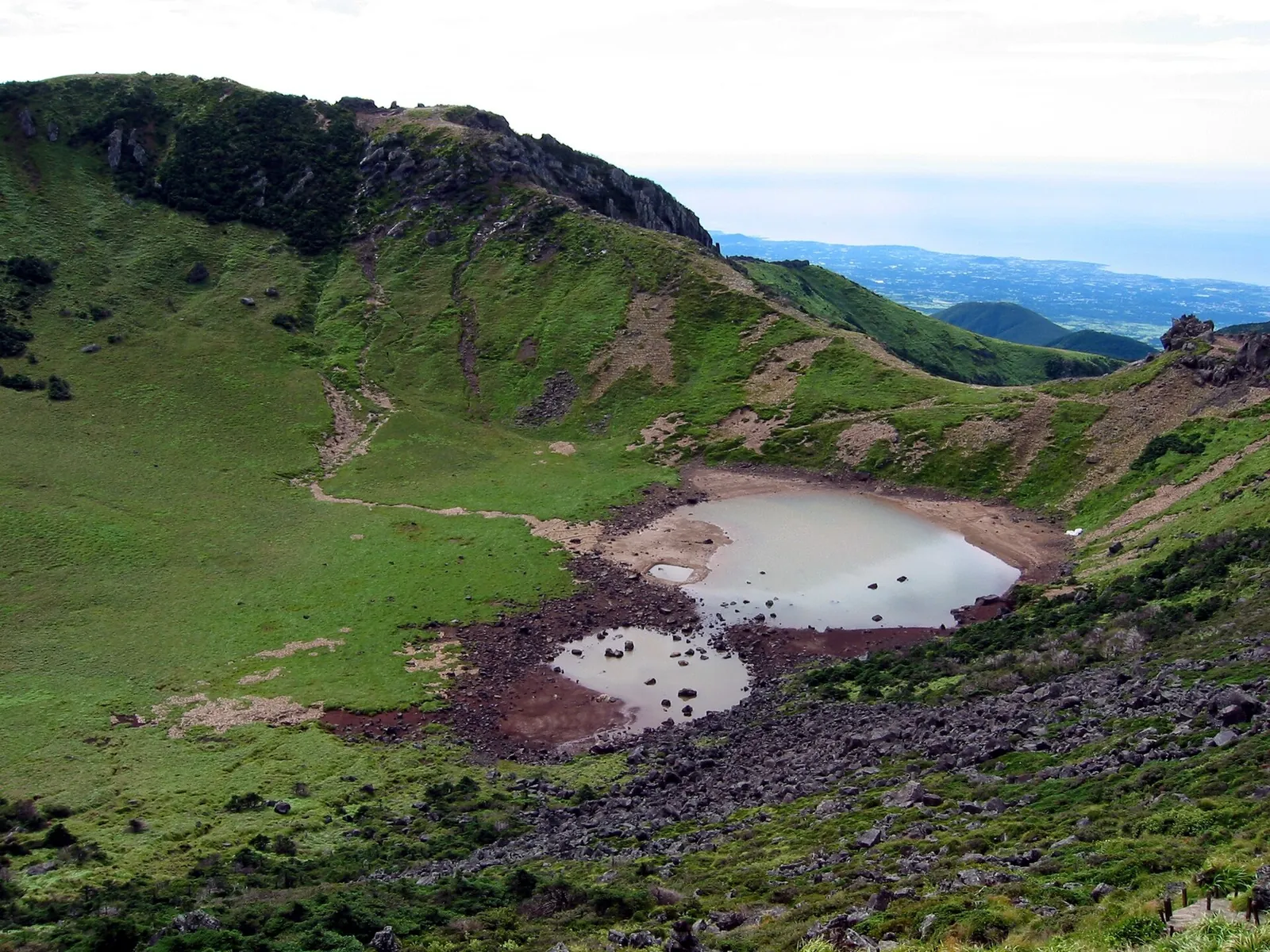
Today is the big one, and it is a real adventure. Hallasan, at 1,947 metres the highest mountain in South Korea, is a shield volcano that forms the whole centre of the island. Its summit crater lake, Baengnokdam, can only be reached on two trails, Seongpanak and Gwaneumsa, and both need an advance online reservation through the official Hallasan trail reservation system. This is how it works, according to the official reservation site:
- When booking opens: reservations for the following month open at 09:00 Korean time on the first working day of each month, and you can book up to the end of the following month. For example, a hike in March can be booked from 9am on the first working day of February.
- What you get: after booking, a QR code for entry and exit is sent to the phone number you give, so enter it carefully. Keep the QR code and your ID with you.
- One route per booking: book the trail you go up. Going up Seongpanak and coming down Gwaneumsa is fine with a Seongpanak booking.
- Cancelling: if you cannot go, cancel before your booked time slot ends. A no-show without cancelling blocks you from booking for 3 months the first time and 1 year the second time.
- Entry cut-off times: entry opens early in the morning. At the Seongpanak entrance and the Azalea Field shelter, the last entry is 11:30 in the winter season (October to March) and 12:30 in the summer season (April to September), and you must leave the summit by 13:30 in winter and 14:30 in summer.
- Weather: trails are partly or fully closed during weather warnings for heavy rain, typhoons or heavy snow, so check the national park’s control status on the morning of your hike.
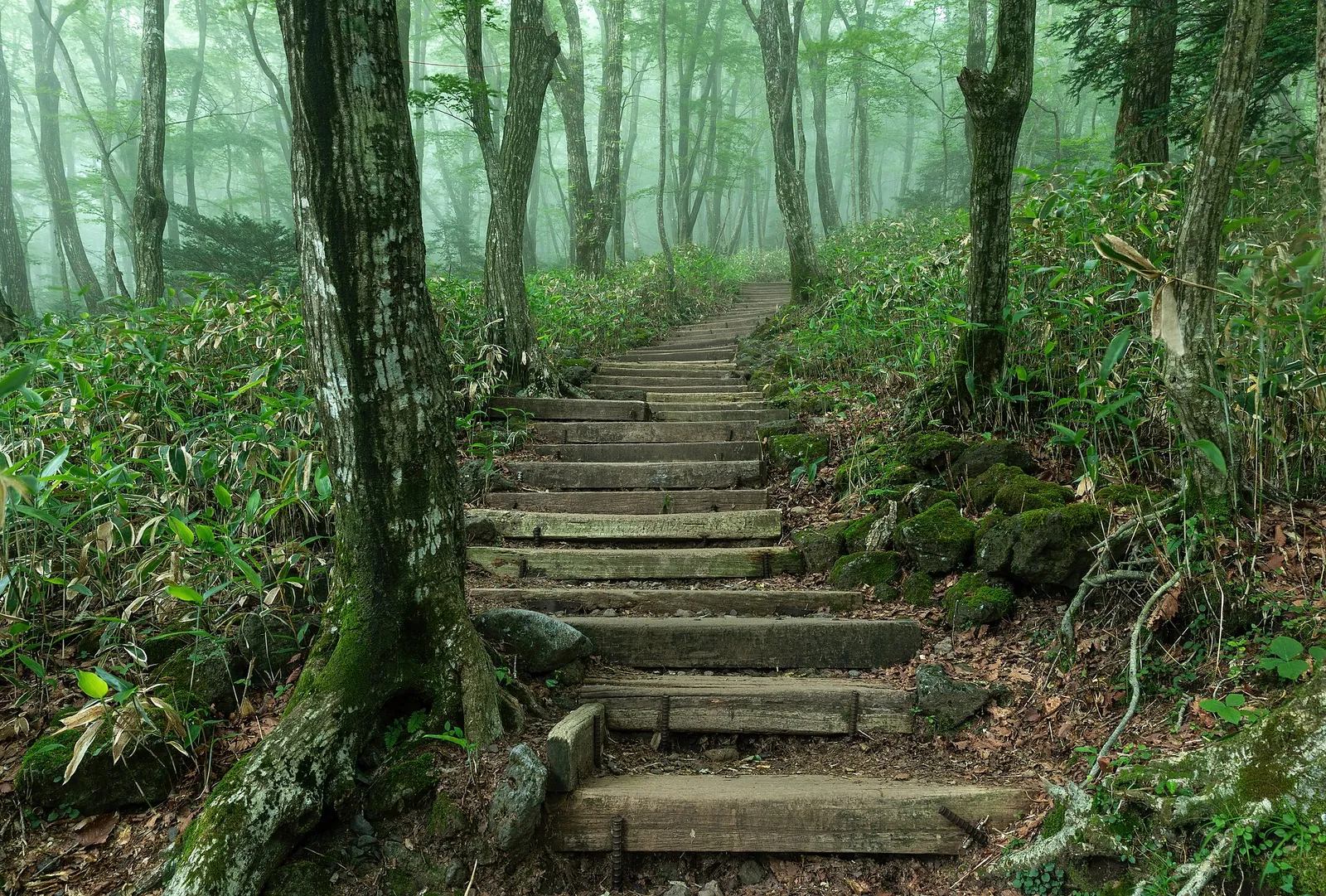
We suggest Seongpanak: at 9.6 km one way (about 4 and a half hours up), it is the longest route but has a generally gentle slope through forest, with a 600 m detour to the Saraoreum observation deck at around the 5.8 km mark. The round trip is 19.2 km, so be honest about your fitness. Gwaneumsa is steeper and more scenic; parts of it have been closed in the past for rockfall prevention work, so check the notices on the reservation site before you book.
Getting there: the official trail page says to take the intercity bus towards Seogwipo along the 516 road from Jeju Intercity Bus Terminal, about 40 minutes, and get off at the Seongpanak trail entrance. Start as early as you can.
Afternoon
There are no shops on the Hallasan trails, so carry enough water, snacks, rain gear and warm layers, plus crampons (ajen) in winter. Disposable lunch boxes, alcohol, smoking and fire are banned on the mountain, and fines apply; the park allows simple food such as gimbap. Take all your rubbish back down. If you reach the summit, the Hallasan National Park system also offers a summit certificate, which you apply for on the day with a photo taken at the top.
Not keen on a full-day summit hike? The Eorimok and Yeongsil trails on the western side of the mountain do not go to the summit and do not need a reservation. They lead up to the Witseoreum area with wide views over the volcanic cones of the island, and are a fine half-day alternative. Check the season’s entry cut-off times on the official site.
Evening
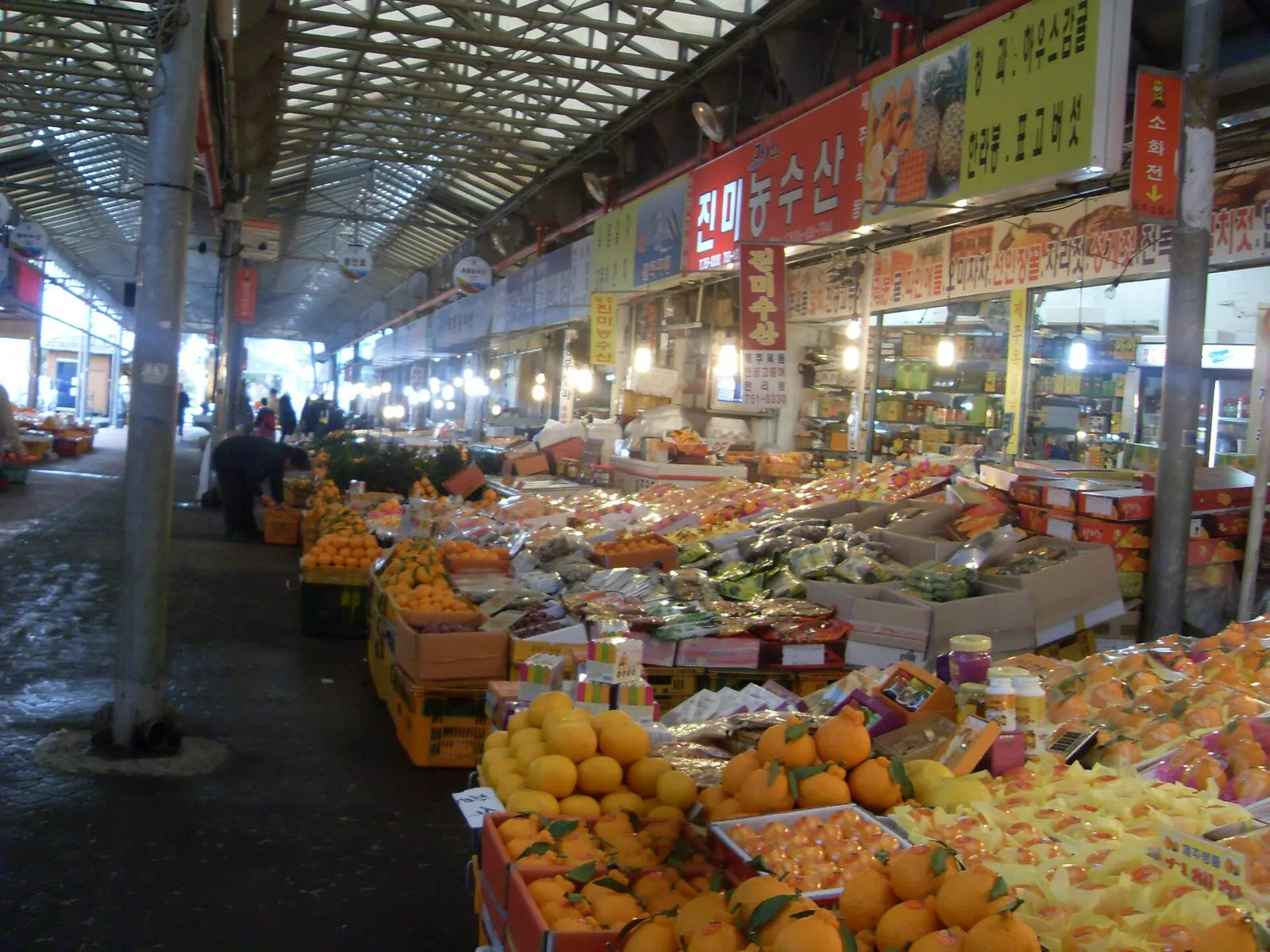
You have earned it, so rest those legs in Jeju City, which has the widest choice of places to eat and the best bus connections. Dongmun Market is a lively spot for street food and local snacks, and the area around it stays busy into the evening.
Day 3: Lava tubes and the west coast
Morning
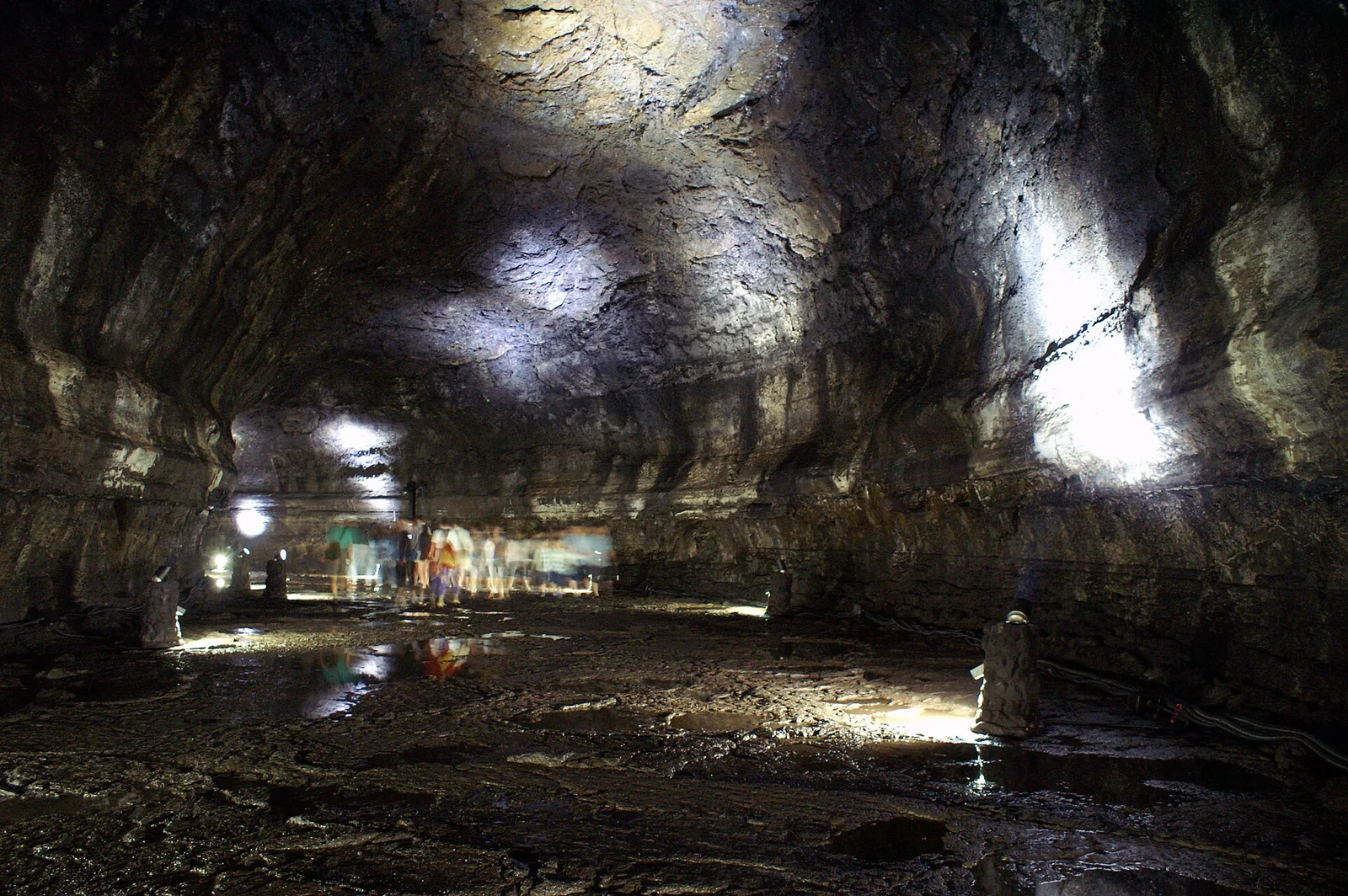
Your last day starts underground! Head to the northeast of the island for Manjanggul, one of the lava tubes of the Geomunoreum system and a key part of Jeju’s UNESCO listing. Lava flowing underground hollowed out these tunnels, leaving behind lava flow lines, lava stalactites and, at the end of the open section, a huge lava column.
Manjanggul was closed after a rockfall at the entrance in December 2023 and reopened to visitors on 30 May 2026 after safety and access works, according to the Jeju World Natural Heritage Office. The reopened walk is about 1 km, from the second entrance to the lava column. Reported opening hours are 09:00 to 18:00 with last entry at 17:10, closed on the first Wednesday of each month. Admission is KRW 4,000 for adults and KRW 2,000 for youth and children, and parking is free. The cave stays cool all year, so bring a light layer, and wear shoes with good grip as the floor can be damp. Check the official World Natural Heritage Office channels before you go, as reopened sites sometimes change hours.
Afternoon
Stay on the northeast coast for a stretch of the Jeju Olle Trail, the walking route that loops around the island. According to the Jeju Olle Foundation, it runs for 437 km along the coast in 27 routes, so you can easily walk just one short section. The coastal paths near Gimnyeong and Hado pass basalt stone walls, small harbours and shallow turquoise water. Look for the blue and orange ribbons and arrows that mark the way.
This corner of the island is also strongly linked to the haenyeo, and the Jeju Haenyeo Museum in Hado, Gujwa-eup, tells their story through tools, photos and film. Check opening days and fees on Visit Jeju before you go.
Evening
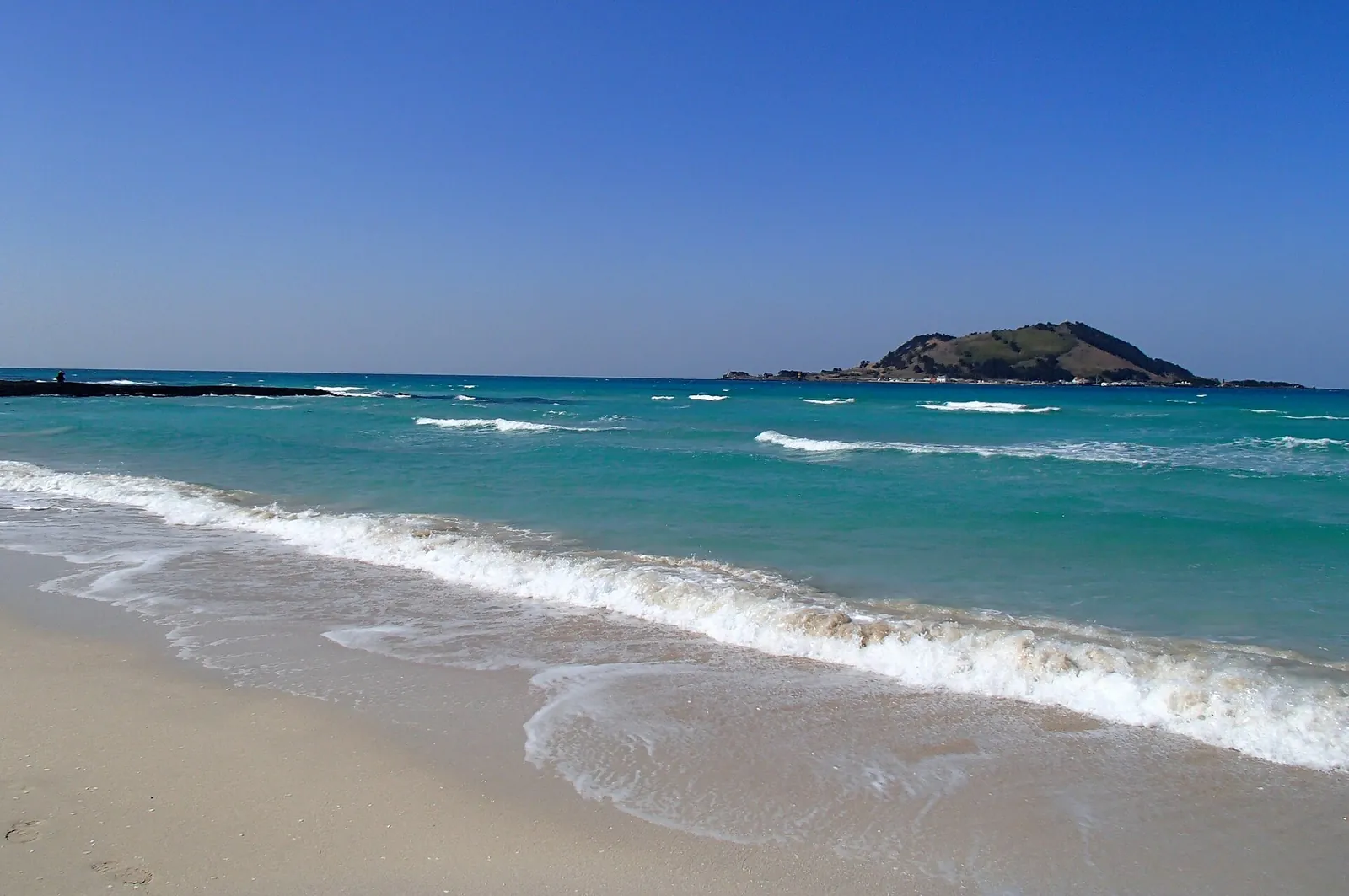
Save the best view for last on the west coast at Hyeopjae Beach in Hallim, one of Jeju’s best-loved beaches, with white sand, very clear water and the small island of Biyangdo sitting just offshore. The beach is free to visit, and the official swimming season with lifeguards is in summer only, so outside it simply enjoy the shallows and the view. Stay for sunset, when the sky turns orange behind Biyangdo, and then find seafood or Jeju black pork in Hallim or Aewol for dinner.
Note that the drive from the northeast to Hyeopjae can take well over an hour, and longer by bus. If you are short of time, swap the Olle walk for the Olle sections around Hyeopjae itself, which also run past black lava rocks and cafés.
Getting there and getting around
Arriving in Jeju
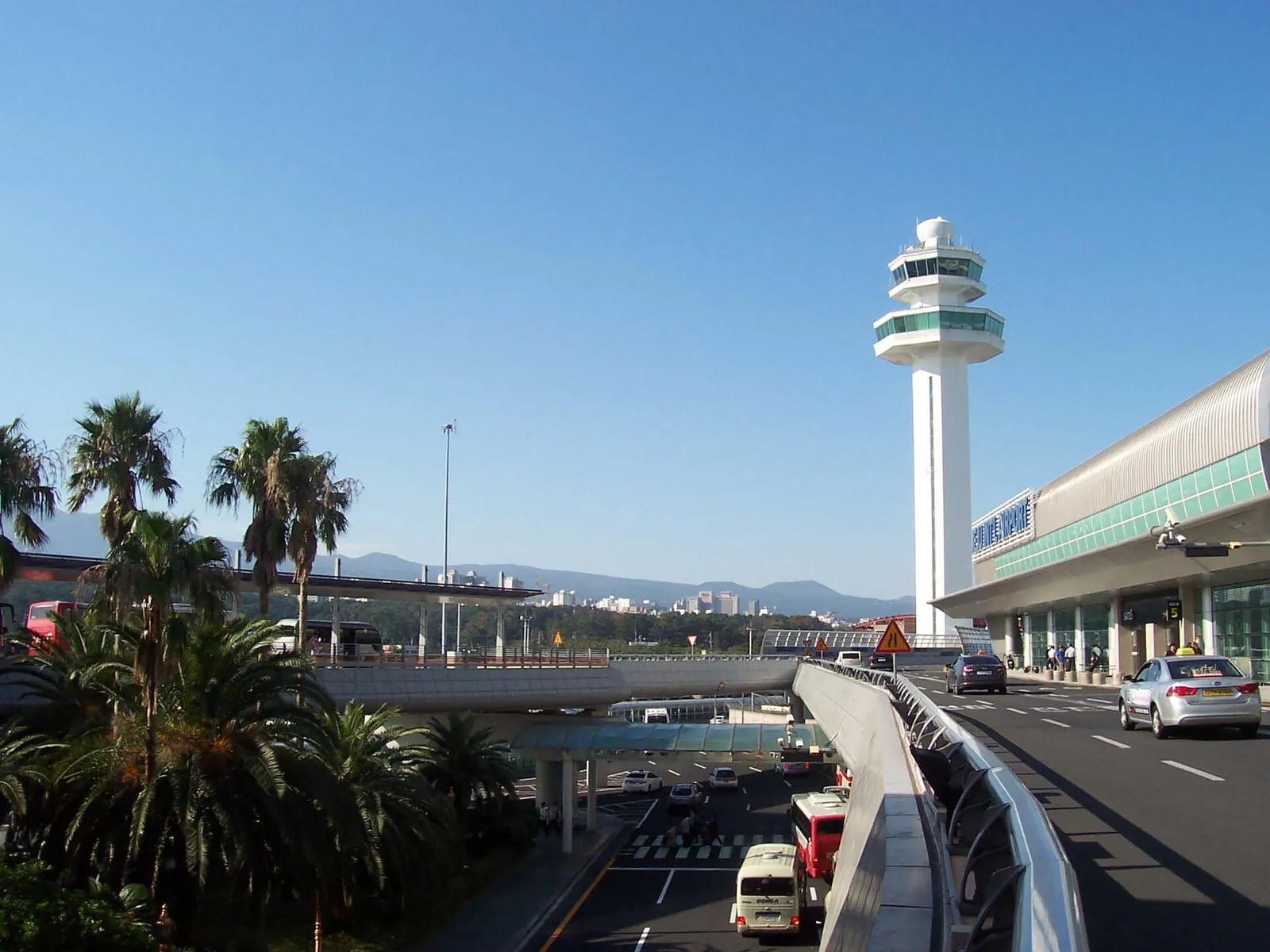
Most visitors fly into Jeju International Airport (CJU), on the edge of Jeju City, which has frequent domestic flights from Seoul and Busan as well as international routes. Ferries also link Jeju with mainland ports. Limousine and express buses run from the airport to Seogwipo, Jungmun and other parts of the island; check current routes and fares at the airport bus information desk.
Buses or a rental car?
- Buses: Jeju’s bus network covers the whole island and is cheap. Pay with a T-money card or a contactless payment card where accepted, which is cheaper than cash. Fares and routes are updated from time to time, so use a local map app such as Naver Map or KakaoMap for live times; these tend to be more accurate in Korea than international apps. Buses to the east and west coasts can take more than an hour from Jeju City, so plan one area per day as this itinerary does.
- Rental car: a car makes Day 1 and Day 3 much easier, and many visitors rent one at the airport. Traffic drives on the right. According to GOV.UK, UK drivers need both the 1949 international driving permit (IDP) and their UK driving licence, and you cannot buy an IDP outside the UK, so get one before you travel. Drivers from other countries should check the IDP rules for their own licence. Remember that a rental car generally cannot go across to Udo.
Where to stay
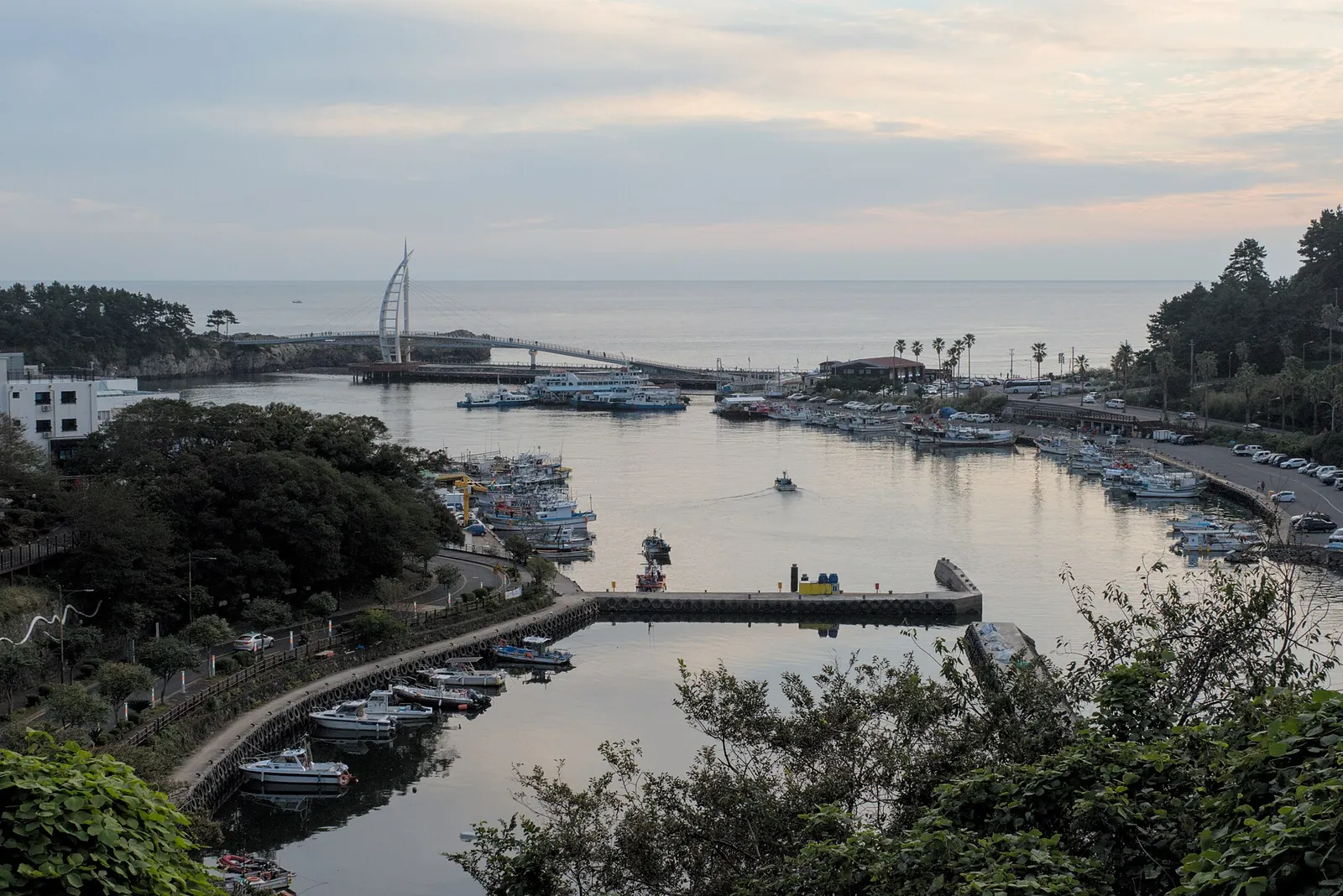
- Jeju City: the most practical base for a short trip, close to the airport, the Intercity Bus Terminal for Hallasan, and plenty of restaurants and markets.
- Seongsan: ideal if sunrise on Seongsan Ilchulbong and an early ferry to Udo are your priorities. Quieter in the evening.
- Seogwipo and Jungmun: the south coast, with waterfalls, resorts and a milder climate. A longer ride to the east and west coast sights in this plan.
- Hallim and Aewol: the west coast, good for beaches, cafés and sunsets, and handy for Hyeopjae.
Budget
These are the costs we could find in official or recent reported sources. They exclude flights, accommodation, meals, car hire and tours.
| Item | Typical cost |
|---|---|
| Seongsan Ilchulbong, adult (widely listed) | KRW 5,000 |
| Udo ferry, adult return incl. marine park entry (recently reported) | Around KRW 11,000, check at the port |
| Manjanggul lava tube, adult / youth and child | KRW 4,000 / KRW 2,000 |
| Hallasan trail reservation | Online via the official system, check the usage fee page |
| Hallasan parking, small car | KRW 1,000 for the first hour, KRW 500 per extra 20 minutes, max KRW 13,000 per day |
| Hyeopjae Beach | Free |
| Jeju Olle Trail | Free to walk |
| Island buses | Check current fares in a local map app |
Prices at popular sights and on the Udo ferry are updated from time to time, so treat these as a guide and check the official sites. Markets such as Dongmun are an easy way to keep food costs down.
Practical tips
- Visa and entry: South Korea uses an electronic travel authorisation called K-ETA for many visa-free visitors. Nationals of a list of countries, including the UK and the US, are temporarily exempt until 31 December 2026, and GOV.UK says British visitors can stay visa-free for up to 90 days for tourism. If you travel from 2027 onwards, check whether you then need a K-ETA. Rules depend on your passport, so check the official K-ETA portal at https://www.k-eta.go.kr/portal/apply/index.do before you book.
- Book Hallasan first: reservations open at 09:00 Korean time on the first working day of the month before your hike, and popular dates fill up. Book on the official Hallasan trail reservation system only.
- Monthly closures: Seongsan Ilchulbong is listed as closed on the first Monday of the month and Manjanggul on the first Wednesday. Check before you go.
- Haenyeo etiquette: the haenyeo are working divers, not a show. Keep out of fishing areas and ask before taking close-up photos.
- Transit card: buy a T-money card and keep it topped up for buses.
- Maps: Naver Map and KakaoMap usually give the most reliable bus and walking directions in Korea.
- Layers: Jeju is windy, and the weather on Hallasan can change quickly. Pack a windproof jacket, even in summer.
- Money: the currency is the Korean won (KRW). Carry a payment card plus some cash for markets, small stalls and the Udo ferry area.
Heads-up
Jeju is a relaxed and welcoming island, but a few things are worth knowing before you go:
- Summer rain and typhoons: GOV.UK notes that South Korea has heavy rainfall during the summer rainy season, usually in June and July, with possible flash floods and landslides. Typhoons can also bring ferry cancellations and Hallasan closures, so follow the Korea Meteorological Administration and local authorities, and keep your plans flexible.
- Mountain safety: Hallasan is a long, demanding day hike. The national park advises against hiking alone on the summit trails because of exhaustion and injury on the way down. If anything goes wrong, call 119 and give the number on the nearest trail location sign.
- Driving: GOV.UK says the legal alcohol limit in South Korea is less than half the limit in England, with penalties that can include prison. Do not drink and drive at all.
- Fake K-ETA websites: Korean embassies warn that unofficial sites charge far more than the official fee. Apply only through the official K-ETA website or app.
FAQ
Is 3 days enough for Jeju?
Yes, three days covers the volcanic highlights: Seongsan Ilchulbong and Udo, a Hallasan hike, and Manjanggul plus the west coast. With more time, add the waterfalls and cliffs around Seogwipo on the south coast, or walk more of the Olle Trail.
Do I need to book Hallasan in advance?
Only for the summit. The two trails to Baengnokdam, Seongpanak and Gwaneumsa, require an online reservation through the official Hallasan trail reservation system, which opens at 09:00 on the first working day of the month before your hike. The non-summit trails such as Eorimok and Yeongsil do not need a booking.
How long does the Seongpanak Trail take?
The official trail page gives about 4 and a half hours one way for the 9.6 km route to the summit, so plan for a full day. Last entry is 11:30 in winter and 12:30 in summer, and you must leave the summit by 13:30 in winter and 14:30 in summer.
Is Manjanggul open again?
Yes. Manjanggul reopened on 30 May 2026 after closing in December 2023, with a walk of about 1 km from the second entrance to the lava column. Adult admission is KRW 4,000, and it closes on the first Wednesday of each month.
Do I need a car in Jeju?
No, but it helps. The bus network reaches every sight in this plan, though journeys to the east and west coasts are long. If you rent a car, UK drivers need a 1949 international driving permit as well as their licence, according to GOV.UK.
Do I need a K-ETA to visit Jeju?
It depends on your nationality. Many nationalities are temporarily exempt until 31 December 2026. Check the official K-ETA portal at https://www.k-eta.go.kr/portal/apply/index.do and only apply there or through the official app.
Sources
Prices, hours and rules change. We checked these on 1 November 2026; please confirm on the official page before you book.
- Reservation guide, Hallasan National Park trail reservation system (Jeju Special Self-Governing Province)
- Seongpanak Trail introduction, Hallasan National Park trail reservation system
- Usage fee, Hallasan National Park trail reservation system
- World Natural Heritage Office, Jeju Special Self-Governing Province
- Jeju Volcanic Island and Lava Tubes (UNESCO World Heritage Centre)
- Culture of Jeju Haenyeo (women divers) (UNESCO Intangible Cultural Heritage)
- Manjanggul reopens after 2 years and 5 months (Financial News, 27 May 2026, citing the Jeju World Heritage Office)
- Jeju Olle Trail (Jeju Olle Foundation)
- Consulate General of the Republic of Korea in Atlanta: Extension of K-ETA Temporary Exemption
- K-ETA official application portal (Republic of Korea)
- GOV.UK Foreign travel advice: South Korea, Entry requirements
- GOV.UK Foreign travel advice: South Korea, Safety and security
Photo credits (10)
- Seongsan Ilchulbong crater rising from the sea, Jeju: Korea.net / Korean Culture and Information Service, CC BY-SA 2.0, via Wikimedia Commons
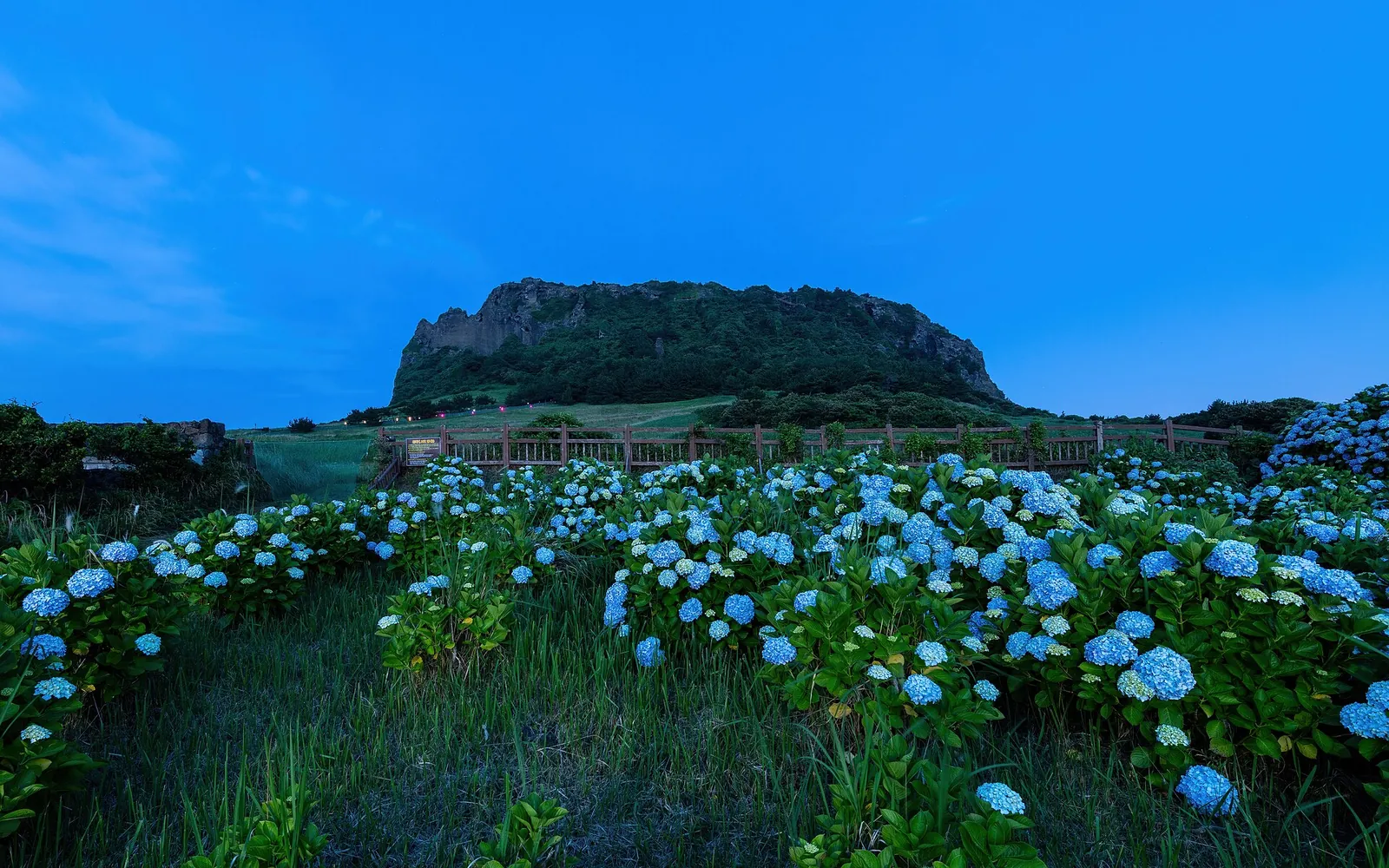
- Blue hydrangeas below Seongsan Ilchulbong at blue hour: Basile Morin, CC BY-SA 4.0, via Wikimedia Commons
- Pebble cove and green cliffs on Udo island: gary4now, CC BY 3.0, via Wikimedia Commons
- Baengnokdam crater lake on the summit of Hallasan: Unknown, Public domain, via Wikimedia Commons
- Wooden steps through the forest on the Eorimok Trail: Basile Morin, CC BY-SA 4.0, via Wikimedia Commons
- Lit walkway inside the Manjanggul lava tube: Olga Lipunova, CC BY-SA 3.0, via Wikimedia Commons
- Turquoise water at Hyeopjae Beach with Biyangdo offshore: Lcarrion88, CC BY-SA 4.0, via Wikimedia Commons
- Control tower and terminal at Jeju International Airport: 螺钉, CC BY-SA 3.0, via Wikimedia Commons
- Boats in Seogwipo harbour on the south coast: SpaceFox, CC BY 4.0, via Wikimedia Commons
- Stalls piled with citrus at Dongmun Market, Jeju City: thddbwnd, CC BY 3.0, via Wikimedia Commons
More South Korea itineraries
 3 days
3 Days in Busan: A Day-by-Day Itinerary
A 3-day Busan itinerary: Gamcheon's painted hillside, Jagalchi market, seaside Haedong Yonggungsa, Haeundae and the Yeongdo cliffs.
 3 days
3 Days in Seoul: A Day-by-Day Itinerary
A 3-day Seoul itinerary: Gyeongbokgung and Bukchon, Changdeokgung's Secret Garden and Namsan, then Gangnam, Lotte World Tower and the Han River.
 7 days
7 Days in South Korea: Seoul, Gyeongju and Busan Itinerary
A 7-day South Korea route: 3 days in Seoul, 2 in ancient Gyeongju and 2 in Busan, with verified palace, temple and transport details.
Compare all South Korea itineraries →
This is a researched plan, not a personal trip report. How we research · Affiliate disclosure